The just-launched Proton eMAS 7 will be entering the Singaporean market through VinCar Group as the EV’s the official distributor.
In a Facebook post, VinCar Pte Ltd confirmed that the e.MAS 7 will be launched in the republic in early 2025. The company also stated that it will open a flagship showroom located at Leng Kee Automotive Belt.
For its home market, the eMAS 7 is offered in two variants, namely Prime and Premium. Both are powered by a “12-in-1” electric motor at the front axle, producing 218 PS (160 kW) and 320 Nm of torque, enabling it to accelerate from 0 to 100 km/h in 6.9 seconds and reach a top speed of 175 km/h.
The main difference between the Prime and Premium variants lies in their battery capacity. The Prime variant comes with a 49.52 kWh battery, promising a driving range of 345 km on a full charge, while the Premium variant can travel up to 410 km thanks to its 60.22 kWh battery.
The eMAS 7 is equipped with Geely’s new Aegis short blade LFP battery, which is said to offer higher energy density, improved safety, and longer lifespan.
The battery supports DC fast charging with up to 80 kW for the Prime variant and 100 kW for the Premium variant, with both requiring 20 minutes to charge from 30% to 80%.
Prices start at RM109,800 for the Prime variant and RM123,800 for the Premium variant. However, in conjunction with the launch, Proton is offering a rebate of RM4,000 to the first 3,000 customers.
After several rounds of previews including test drives, Proton through its Pro-Net division has officially launched the first electric SUV, the e.MAS 7, for the local market.
Here are seven key facts you should know:
1. Dimensions
The Proton e.MAS 7 is an electric SUV in the C-segment, measuring 4,615 mm in length, 1,901 mm in width, 1,670 mm in height, and with a wheelbase of 2,750 mm.
Its turning radius is a compact 5.4 meters.
Standard features include a MacPherson strut setup at the front, complemented by a multilink configuration at the rear.
2. Power
The e.MAS 7 is powered by a single electric motor delivering 215 hp and 320 Nm of torque.
It can accelerate from 0 to 100 km/h in just 6.9 seconds, reaching a top speed of 175 km/h.
3. Two Battery Pack Options
For the local market, the Proton e.MAS 7 is available in two variants: Prime and Premium.
The Prime variant comes equipped with an LFP battery pack of 49.52 kWh, allowing a range of 345 km on a full charge (WLTP data), while the Premium variant features a 60.22 kWh battery pack with a range of 410 km.
This short blade Aegis battery supports AC charging at 11 kW and DC fast charging at 100 kW (80 kW for the smaller capacity battery), enabling the battery to be charged from 30% to 80% in just 20 minutes.
4. Exterior Features
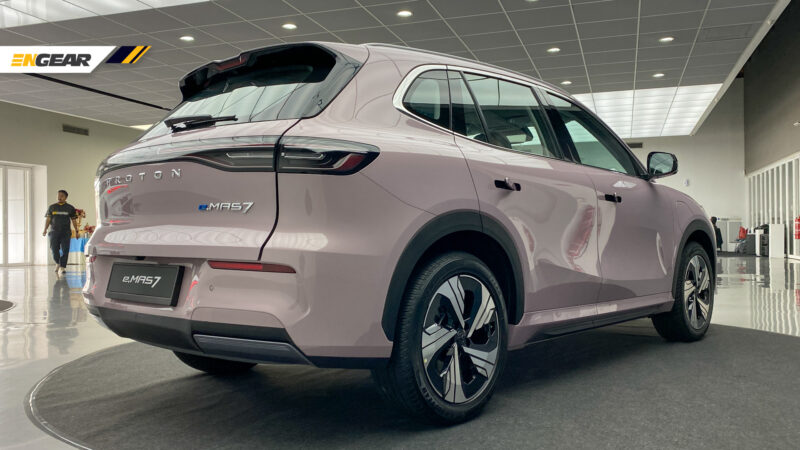
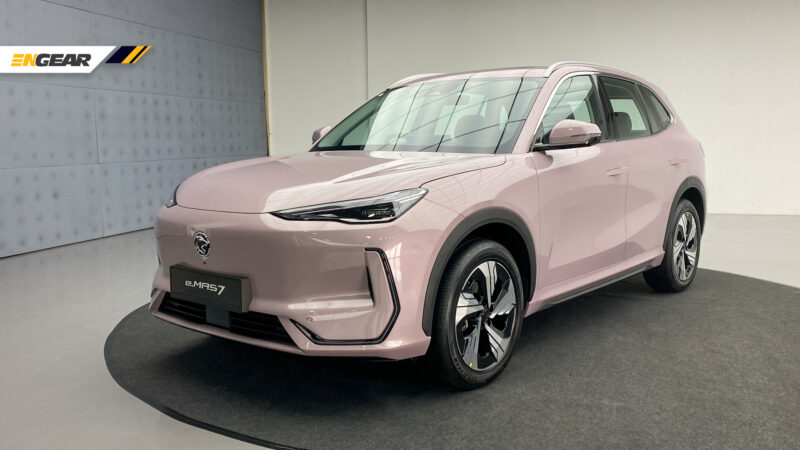
Proton has made few changes to differentiate the e.MAS 7 from its donor model, the Geely Galaxy E5.
Standard exterior features of this electric SUV include LED headlights and taillights, 18-inch alloy wheels with 225/55 R18 tires, roof rails, and adjustable side mirrors with a heating function.
The Premium variant adds features such as a panoramic glass roof, powered tailgate, and Active Grille Shutter functionality.
5. Cabin Space
Similar to the exterior, the interior equipment closely resembles that of the Geely model.
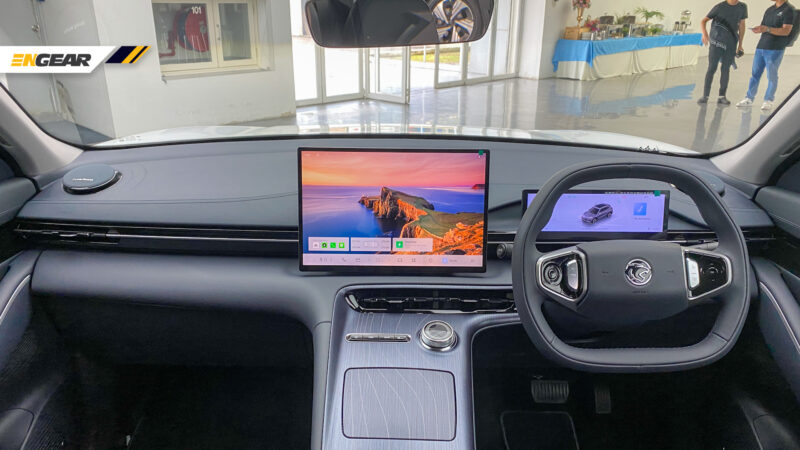
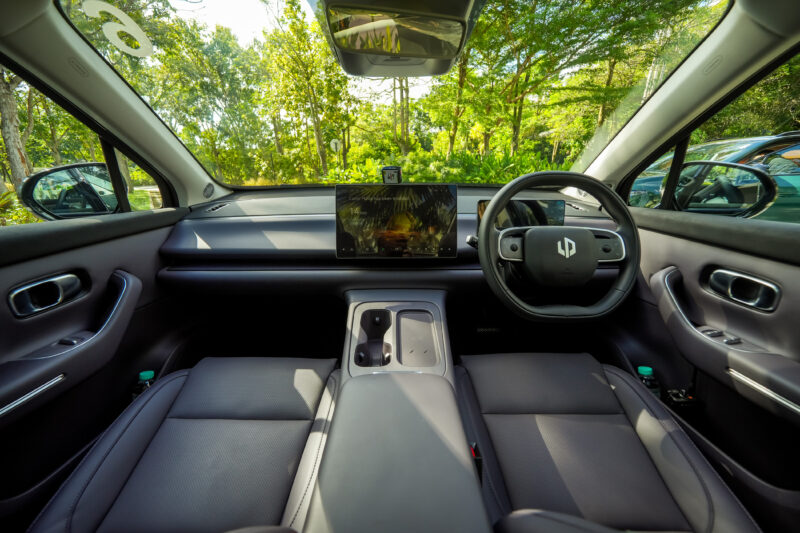
Inside, you will find features such as a 10.2-inch digital cluster display, a central 15.4-inch screen without Apple CarPlay or Android Auto support, a Flyme OS system, and a head-up display.
Additionally, the e.MAS 7 offers a six-way adjustable driver’s seat (four-way for the front passenger), ventilation functions, leatherette upholstery, ambient lighting with 256 color options, and several USB charging ports.
In the rear, the e.MAS 7 provides cargo space of 461 liters, which expands to 1,877 liters with the second-row seats folded down.
There is also 14 liters of storage space under the seats and a 10.8-liter center console drawer.
6. ADAS
For the first time, Proton offers Level 2 Advanced Driver Assistance Systems (ADAS) as standard across all e.MAS 7 variants.
This includes essential features such as an Automatic Emergency Braking (AEB) system, Forward Collision Warning (FCW), Lane Departure Warning (LDW), Lane Keeping Assist (LKA), Rear Cross Traffic Alert (RCTA), Lane Change Assist (LCA), and Adaptive Cruise Control (ACC).
Additionally, the e.MAS 7 comes equipped with six airbags, an auto hold function, front and rear radar, and a 360-degree camera system.
7. Pricing
The retail prices for the Proton e.MAS 7 are as follows:
e.MAS 7 Prime – RM109,800
e.MAS 7 Premium – RM123,800
For the first 3,000 customers, Proton is offering a rebate promotion worth RM4,000, bringing the starting price down to RM105,800 for the Prime variant, and up to RM119,800 for the Premium variant.
Here are the packages that buyers of the Proton e.MAS 7 will receive:
A 7kW home charging unit (valued at RM1,500)
V2L adapter (valued at RM500)
Financing package with interest rates starting as low as 1.98% (valued at RM3,000)
Unlimited internet data package for five years (valued at RM1,800)
RM1,200 rebate for existing Proton owners
Vehicle warranty of six years with no mileage limit, and a warranty for the high-voltage battery components of up to eight years or 160,000 km.
With just a few weeks left until the Tokyo Auto Salon 2025 opens its doors, Nissan is set to unveil something special.
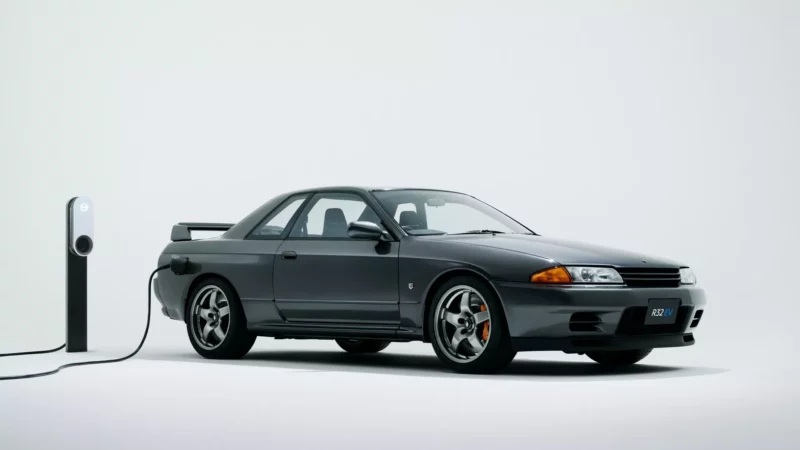
It isn’t a new generation GT-R; rather, it is a Nissan Skyline GT-R R32 without the iconic RB26DETT inline-six engine.
More precisely, it is an R32 EV!
This project actually began back in March 2023, when the legendary RB26 engine – highly regarded among JDM enthusiasts – was retired to make way for a full-time electric power unit.
At this time, Nissan has not yet disclosed details about the modifications made to this iconic model.
In terms of outward appearance, it is quite difficult to detect any changes, except for the removal of the fog lights and the absence of exhaust pipes at the rear.
What do you think about Nissan’s R32 GT-R EV project?
The New Car Assessment Program for Southeast Asian Countries (ASEAN NCAP) has announced that the Neta V has received a zero-star rating in an assessment conducted at the MIROS Provisional CRASE Crash Centre (PC3).
According to ASEAN NCAP, the Neta V is the first electric vehicle (EV) to be tested at the facility, as well as the first model to receive a zero-star rating under the ASEAN NCAP 2021-2025 protocol.
Launched in Malaysia in October last year, the EV scored a total of 28.55 points, comprising 7.89 points for Adult Occupant Protection (AOP), 13.51 points for Child Occupant Protection (COP), 7.14 points for Safety Assistance (SA), and 0 points for Motorcyclist Safety (MS).
The Neta V, which is also marketed in Brunei, Indonesia, and Thailand, comes equipped with two airbags, a seatbelt reminder system for the driver, an anti-lock braking system (ABS), and electronic stability control (ESC) as standard.
In the front offset collision test for the AOP category, the Neta V received no points as the driver received poor protection on the head, neck, chest, and right leg.
In the side impact test, it scored only 6.31 out of 8.00 points, as the crash test dummy received marginal protection for the chest. The absence of Head Protection Technology (HPT) resulted in a score of zero for this assessment.
In the dynamic assessment for the COP category, the Neta V performed well in both frontal offset and side impact tests. However, it received low marks for the installation of Child Restraint System (CRS). Although it is equipped with Isofix and a top tether, more than half of the CRS recommended by ASEAN NCAP were found to be difficult to install.
The electric hatchback also lacks features such as Autonomous Emergency Braking (AEB), Forward Collision Warning (FCW), Lane Keep Assist (LKA), and Lane Departure Warning (LDW).
Making things worse, all evaluated technologies under the MS category, including Blind Spot Technology (BST), Auto High Beam (AHB), and Pedestrian Protection (PP), are also absent.
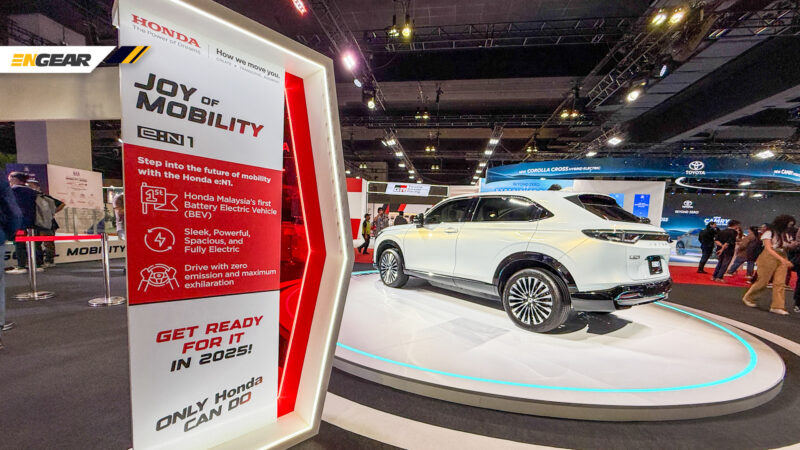
At KLIMS 2024, Honda Malaysia not only showcased the concept coupe model, Honda Prelude, but also unveiled an electric SUV – the Honda e:N1.
Despite sharing a similar appearance to the Honda HR-V, the e:N1 utilizes the e:N Architecture F platform, which offers a more rigid body structure, a lower center of gravity, and a more aerodynamic underbody.
It is powered by a front-wheel-drive electric motor that delivers 201 hp and 310 Nm of torque, paired with a 68.8 kWh battery pack.
With a full charge, the e:N1 can travel up to 412 km.
What sets the e:N1 apart from the standard HR-V is the presence of a charging port that replaces the front grille structure, along with the words “Honda” displayed in a more modern font at the rear.
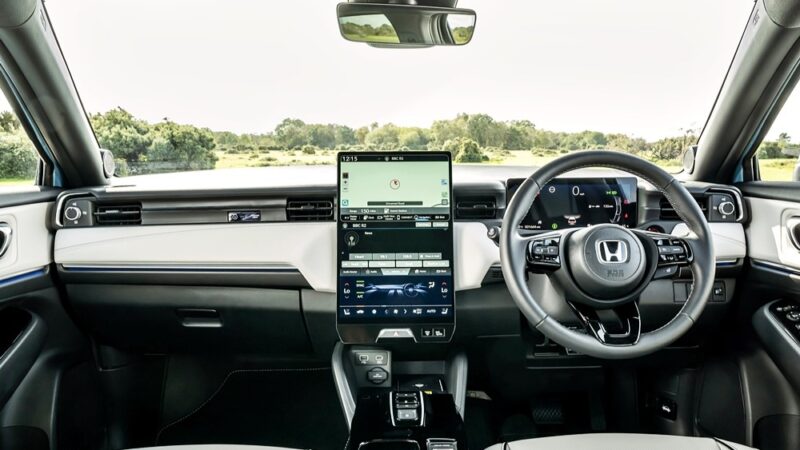
The layout of the e:N1’s cabin also appears quite different from the HR-V, featuring a 15-inch central screen, a 10.25-inch digital cluster screen, and support for Apple CarPlay and Android Auto.
At this time, Honda Malaysia has not officially revealed the detailed specifications for the e:N1 in the local market.
However, it is expected to be the first electric vehicle officially brought into the country by Honda Malaysia, with its launch scheduled for next year (2025).
For your information, Honda has already started production of the Honda e:N1 electric SUV at the Rojana Industrial Park in Prachinburi Province, Thailand by the end of 2023.
The real question is, what will be the selling price set by Honda Malaysia for the e:N1 model? Currently, the Honda HR-V e:HEV variant available in the Malaysian market is priced at RM140,800.
As a prominent name that encompasses popular brands like Alfa Romeo, Citroën, Maserati, and Peugeot, it may seem rather odd to see Leapmotor under the Stellantis umbrella.
For clarification, Leapmotor (or Ling Pao) is a Chinese automotive company founded in 2015.
In 2023, Stellantis acquired a 20% stake in Leapmotor, aligning it with the previously mentioned European brands.
Without further ado, Stellantis Malaysia announced the introduction of Leapmotor to the local market in April 2024, positioning it as an affordable EV brand.
The first model for sale is the D-segment SUV, the Leapmotor C10, which was officially launched six months later with a selling price of RM159,000.
Recently, Stellantis Malaysia invited automotive media practitioners to experience the Leapmotor C10 on a drive to Gambang, Pahang.
Here’s our notes after driving this SUV for two days:
1. Dimensions
Unlike other EV models (mostly hatchbacks, SUVs, or sedans) available in the market, the Leapmotor C10 is more suited to be classified as a family-oriented electric vehicle.
Its relatively large size measures 4,739 mm in length, 1,900 mm in width, 1,680 mm in height, with a wheelbase of 2,825 mm.
Within the same price range, the Leapmotor C10 competes with combustion-engine models such as the Chery Tiggo 8 Pro and Proton X90.
While the sizes are similar, the C10 comes with a five-seat configuration, compared to the seven seats found in the two previously mentioned models.
2. Power
Only one variant is offered in Malaysia, featuring a single rear-wheel drive electric motor producing 215 hp and 320 Nm of torque.
Though the figures appear high, after testing the drive of this electric SUV, the acceleration is not as aggressive as that of many EVs available on the market.
However, this doesn’t mean the C10 is an “elephant baby” reluctant to move; rather, you can expect smoother power delivery to ensure no family members complain of neck pain at the start of the journey.
Even on the highway, I had no issues ensuring that this electric SUV could safely overtake any slow-moving trailers in the left lane without causing fast-moving cars behind to flash their high beams—even when fully loaded with passengers.
With a 69.9 kWh battery pack, the Leapmotor C10 can travel up to 420 km on a full charge.
Based on our drive, we reached our destination with about 112 km of range remaining, averaging an energy consumption of around 20.1 kWh/100 km, slightly higher than the official figure of 19.8 kWh/100 km.
3. Driving Experience
We took the opportunity to test the handling of this SUV while traversing the KL-Karak highway and Genting Highlands.
It was surprising to find that this large-sized SUV handled well through every turn and uphill stretch of the very popular road.
Returning to the desired speed posed no problems, without causing passengers to feel dizzy from sudden acceleration.
However, although the C10 features a suspension system that excellently absorbs impacts and Dunlop e-Sport Maxx tires that keep this SUV grounded in curves, it is not matched by a satisfying steering response.
Most of the time, the vehicle obeyed every command made by the driver, but conditions became less enjoyable when the Advanced Driver Assistance Systems (ADAS) such as Emergency Lane Keeping Assistance (ELKA) and Lane Centering Control (LCC), started to intervene.
These systems would aggressively attempt to correct the steering direction if they detected that the driver was not maintaining proper control of the vehicle.
This constant ‘interference’ could make driving more exhausting than usual, as the driver must counteract the corrections attempted by the system.
Therefore, I found it easier to simply disable these functions from the start, allowing the more critical systems to operate to ensure this SUV’s safety on the road.
I would prefer if the system could remember the initial settings so that the driver wouldn’t have to waste time staring at the screen every time they needed to drive the C10.
One aspect that made driving the C10 less reassuring is the feeling of a spongy brake pedal.
This issue wasn’t as noticeable during high-speed driving, where the braking system operated effectively, but at lower speeds, there were times when it felt as if the SUV didn’t want to stop, even when the brake pedal was pressed firmly to the floor.
It felt as though there was no bite from the brakes—completely unresponsive. Surely, we can’t rely on the emergency braking system every time we need to stop, right?
4. Interior
For this test drive session, I began my journey as a passenger in the second row.
Typically, I experience dizziness and nausea when I’m not behind the wheel; however, this time I was able to relax (and even take a nap) comfortably throughout the ride.
This is because the rear seats feature adjustable backrests (with two angles) for added comfort during the journey.
Perhaps the use of silicone leather upholstery, known as Oeko-Tex, significantly contributes to a more comfortable ride due to its soft and back-friendly material.
It also has waterproof properties and does not contain any toxic substances that could be harmful to infants—a highly beneficial feature for many families in Malaysia with small children.
In addition to ample legroom, rear passengers won’t feel cramped as there is generous headroom, thanks to the spacious panoramic roof, which also has a shade to block out the intense midday sun.
While black upholstery may sound somewhat conventional, there is an option for a brighter Criollo Brown finish, should you be interested in that beautiful Glazed Green color.
The NVH (Noise, Vibration, and Harshness) aspects are also satisfactory, with wind noise from outside being well-filtered, and tire noise is less noticeable from within the cabin.
Another advantage is the cargo space of 435 liters, which can be expanded to 1,410 liters when the second-row seats are folded flat.
5. Overly Minimalist Dashboard
For someone used to a plethora of buttons and controls in a vehicle, entering the Leapmotor C10 creates a somewhat uncomfortable feeling.
This discomfort stems from the dashboard layout, which is overly simplistic and minimalistic, relying heavily on the menu embedded in the display screen, making it easier for the driver’s focus to be distracted on the road.
Therefore, if you’re interested in the C10, it’s best to avoid driving alone, so you can appreciate all the assistance provided when you wish to change a setting.
For example, adjusting the direction of the air conditioning, temperature settings, turning off the headlights, or simply disabling specific functions in the ADAS.
It is also unfortunate that side mirror adjustments must be accessed through the main screen.
Fortunately, Leapmotor has not adopted Tesla’s approach of eliminating the turn signal stalk entirely in favor of a button on the steering wheel.
Additionally, if you’re accustomed to pressing a start button, you will need to learn a new method on the C10, which involves scanning a card-shaped key on the center console before shifting the transmission lever to the D position.
Yes, you must do this every time before you begin your journey.
Another drawback that we find hard to accept is the absence of Apple CarPlay/Android Auto support.
6. ‘Healing’ mode inside
An interesting feature that can be beneficial for drivers after each trip is the Nap Mode.
When this mode is activated, you can enjoy ambient sounds such as rain, flowing river water, crickets, and ocean waves while you relax.
You can also set the desired nap duration, and the system will wake you up once the session ends.
With the ventilation function in the seats, your brief nap will be more comfortable while you wait for prayer time or for your spouse to finish shopping.
At the end of the day, in a market flooded with various EV models, the Leapmotor C10 certainly stands out with its spaciousness, making it suitable for everyday family use.
That is, if you don’t mind the overly minimalist dashboard design and the routine needed every day before starting your journey.
With a selling price below RM160,000, is it a worthwhile purchase? Perhaps, yes.
Leapmotor C10 Specifications
Electric Motor: Single, rear-wheel drive (RWD)
Power: 215 hp, 320 Nm
Acceleration: 0-100 km/h in 7.5 seconds
Top Speed: 170 km/h
Battery: LFP 69.9 kWh
Range: 424 km (WLTP data)
Suspension: MacPherson/Multi-Link
Ground Clearance: 180 mm
Cargo: 435 liters/1,410 liters
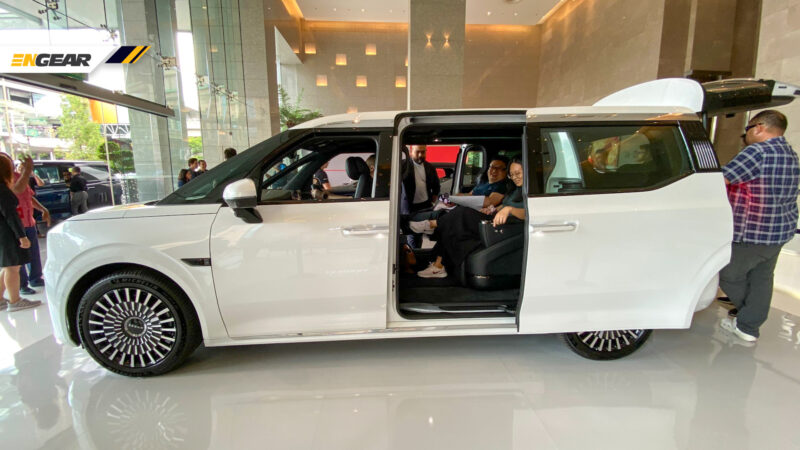
In addition to the X, Zeekr Malaysia has also launched a luxury MPV set to compete in the local EV market – the Zeekr 009.
The newcomer is poised to compete with popular models such as the Toyota Alphard/Vellfire, the Maxus Mifa 9, as well as upcoming models like the GWM Wey 80 and the Denza D9.
The 009 is available in two variants, namely Luxury and Ultra Luxury. The former is a seven-seater with a 2-2-3 seating configuration while the latter has six seats in a 2-2-2 layout.
Regardless of the chosen variant, the 009 is powered by a pair of electric motors that produce a total output of 603 hp and 693 Nm of torque, allowing it to accelerate from 0 to 100 km/h in 4.5 seconds.
The 116 kWh battery pack offers a range of up to 582 km (WLTP cycle) and supports DC fast charging at 150 kW, enabling charging from 10% to 80% in 30 minutes.
The driving experience of the Zeekr 009 is enhanced by a double-wishbone multilink suspension system, electromagnetic air suspension, and automatic leveling functions, alongside matrix LED headlights with adaptive driving beam (ADB) functionality and smart zone lighting.
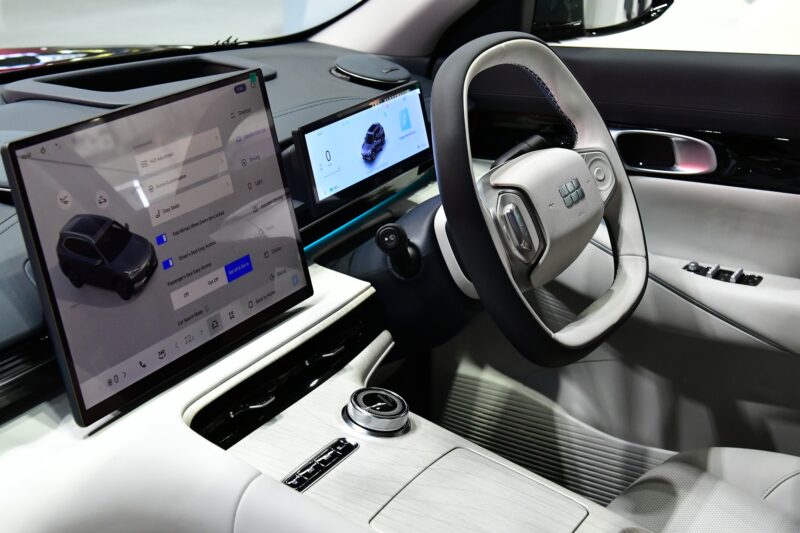
Inside, you will find a 10.25-inch instrument cluster, a 15.05-inch infotainment screen, a 35.95-inch augmented reality head-up display, a 17-inch OLED roof screen, a Yamaha audio system, 50W wireless device charging, support for Apple CarPlay and Android Auto, and up to 9 USB-C ports.
The driver and front passenger seats feature 12-way adjustment with massage, ventilation, and memory functions.
Second-row passengers enjoy Sofaro First Class Aeronautics seats with an Ultra Long Electric Slide Rail function extending 1.1 metres, adjustable leg rests, and ventilation, massage, and memory functions. There’s also a 8.6-litre fridge with cooling and warming functions.
For safety, the 009 includes an ADAS system featuring lane centering control (LCC), adaptive cruise control (ACC), forward (CMSF) and rear collision mitigation support (CMSR), lane departure avoidance, blind spot detection (BSD), door opening warnings, and a driver performance monitoring system (DPM).
The 009 Luxury is priced at RM349,800, while the Ultra Luxury version costs RM359,800. Like the X, the 009 comes with a five-year/150,000 km vehicle warranty and an eight-year/160,000 km battery warranty.
Also included is 6GB of free internet data for two years, which provides access to the Zeekr app, onboard navigation, and over-the-air (OTA) software updates.
The first 500 buyers of the 009 will receive an exclusive package that includes a home charger, a mobile charger, and solar film.
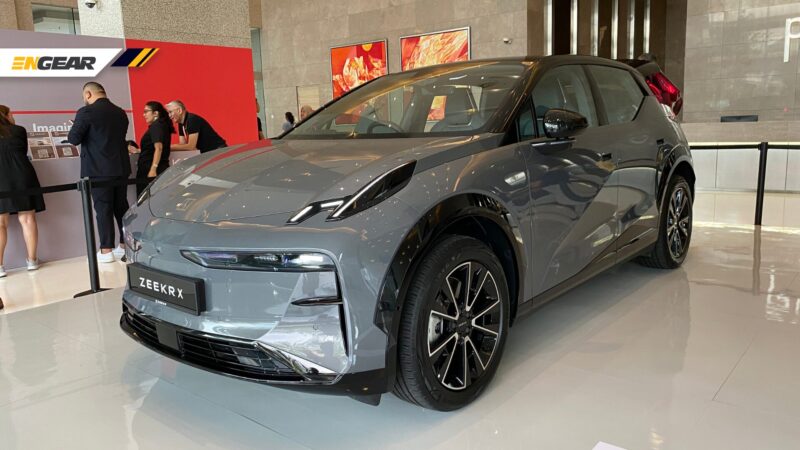
Zeekr Malaysia has officially marked its entry into the local EV market with the launch of two new models: the Zeekr X and the 009. Both models were opened for orders earlier in October.
The X is offered in two variants, the Premium priced at RM155,800 and the Flagship AWD priced at RM172,800.
These prices include a five-year/150,000 km vehicle warranty and an eight-year/160,000 km battery warranty. Owners will also receive two years of complimentary connected services offering 6GB internet data.
To further sweeten the deal, the first 500 owners will receive an exclusive package that includes a home charger, protable charger, solar film, and sunshade cover.
Like the smart #1/#3 and the Volvo EX30, the X is built on Geely’s Sustainable Experience Architecture (SEA) platform.
With dimensions of 4,432 mm in length, 1,836 mm in width, and 1,566 mm in height, it is longer than the #1 and the EX30 but its width and height are quite similar to those of the EVs from smart and Volvo.
In terms of mechanical specifications, the Premium variant is powered by a rear-wheel-drive electric motor with an output of 268 hp, achieving 0-100 km/h in 5.6 seconds.
The Flagship AWD variant features two electric motors that generate 422 hp, allowing it to reach the same speed in just 3.8 seconds.
Both variants come with a 66 kWh battery pack that offers a range of 440 km based on the WLTP cycle. They support DC fast charging at 150 kW, which can restore energy from 10% to 80% in 30 minutes.
The safety system includes ADAS features such as adaptive cruise control (ACC), automatic lane changing (ALC), lane keeping assist (LKC), lane departure warning (LDW), forward collision mitigation support (FCM), rear collision mitigation support (RCM), and front (FCTA) and rear (RCTA) traffic crossing assistance.
Additionally, there are seven airbags, a 360-degree camera system, and a digital video recorder.
For the Malaysian market, the X is available in Crystal White, Mist Grey, Grid Grey, Palace Beige, and Pine Green. The cabin space can be had in either Charcoal Black or Stone Grey.
SAIC Motor Malaysia has announced the official sale price of the MG Cyberster at the 2024 Kuala Lumpur International Mobility Exhibition (KLIMS).
The battery electric roadster, which made its debut in the country last August, is priced at RM319,900 on-the-road without insurance.
It comes with a vehicle warranty of seven years/150,000 km, an eight-year/180,000 km high-voltage battery warranty, and an eight-year/160,000 km motor drive and motor control unit warranty.
In addition, SAIC Motor Malaysia is also offering a special package that includes one year of unlimited charging with JomCharge and a 7 kW Wallbox charger.
The Cyberster is available in a single variant powered by two electric motors, which together produce a total power output of 503 PS (375 kW) and 725 Nm of torque. This allows it to accelerate from 0 to 100 km/h in 3.2 seconds.
With a battery capacity of 77 kWh, the Cyberster is said to achieve a range of 446 km on a full charge based on the WLTP cycle.
Charging from 10% to 80% takes 38 minutes using a 150 kW DC fast charger, while a 7 kW AC charger requires approximately 10.5 hours to charge from 10% to full.
In terms of design, the Cyberster features a low and wide silhouette, along with a convertible soft-top roof. The equipment includes 20-inch Jetstream alloy wheels, red brake calipers, and automatic LED headlights with daytime running lights (DRL).
Inside, it boasts sport seats with Alcantara inserts, a Nappa leather-wrapped steering wheel, a seven-inch touchscreen, a 10.25-inch instrument panel, two additional seven-inch screens, and a Bose audio system with eight speakers.
For safety, the Cyberster is equipped with the MG Pilot ADAS system, which includes the following features:
Front Collision Warning (FCW)
Automatic Emergency Braking (AEB) with Pedestrian and Bicycle Detection
Adaptive Cruise Control (ACC)
Traffic Jam Assistance (TJA)
Lane Departure Warning (LDW)
Lane Keeping Assistance (LKA)
Blind Spot Detection (BSD)
Lane Change Assist (LCA)
Rear Cross Traffic Alert (RCTA)
Intelligent High Beam Assist
The Cyberster is available in four colours: Dynamic Red, Camden Grey, Inca Yellow, and English White. Dynamic Red and Camden Grey come with black and red interiors, while Inca Yellow and English White feature grey interiors. All colour options are complemented by a black roof.
WTC Automotif (WTCA), the official distributor for the GAC Aion brand in Malaysia, has rather surprisingly launched the Aion ES electric sedan at the Kuala Lumpur International Mobility Show (KLIMS) 2024.
Built on the Aion Electric Platform (AEP) 2.0, the ES boasts dimensions of 4,810 mm in length, 1,880 mm in width, and 1,545 mm in height, with a wheelbase measuring 2,750 mm. This makes it slightly larger than popular C-segment sedans such as the Honda Civic and the Toyota Corolla Altis.
For the Malaysian market, the ES is equipped with a single electric motor powering the front wheels, producing 136 PS and 225 Nm of torque.
The motor draws power from a 55.2 kWh LFP battery, offering a driving range of 442 km based on the NEDC cycle.
Charging the battery to full capacity with a 6.6 kW AC charger takes approximately 11 hours. Alternatively, with a 60 kW DC fast charger, it can be replenished from 30% to 80% in just 30 minutes, or fully charged in 1.5 hours.
The Aion ES also features Vehicle-to-Load (V2L) capability with a capacity of 3.3 kW, a single-pedal driving function called i-Pedal, and regenerative braking with three levels.
Specifications-wise, the ES is fitted with front and rear LED lights, 17-inch alloy wheels, and an electric tailgate providing access to a 450-litre boot space.
Inside, the car gets leatherette upholstery, a rotary gear knob, six-way adjustable driver’s seat, a 3.5-inch LCD instrument cluster, and an 8.0-inch touchscreen that supports Apple CarPlay. It also includes keyless entry and dual-zone climate control with built-in PM2.5 filter.
No ADAS here. Instead, the ES is fitted with basic safety features such as ABS with EBD, Electronic Stability Programme (ESP), Hill Hold Control, Seat Belt Reminder, Tyre Pressure Monitoring System (TPMS), and two airbags.
The Aion ES is priced at RM106,800 and is available in three colours: Pure White, Glamour Black, and Holographic Silver.
It comes with a warranty of eight years or 160,000 km for the vehicle, alongside an eight-year or 200,000 km warranty for the EV battery, motor, and electric control.
To celebrate the launch, buyers will receive a complimentary Wallbox charger worth RM3,500.
Perodua is set to showcase something special at the Kuala Lumpur International Mobility Show (KLIMS) taking place this week.
Last weekend, Perodua began airing a teaser video for its electric concept model, EMO-II (Electric Mobility Online).
The 30-second video highlights the sporty design elements intended for the EMO-II.
Unique features include a glowing Perodua logo, a full-width front and rear LED light bar, and an aggressive bumper design.
Additionally, the rear of the EMO-II features a large diffuser component, along with a single fog light positioned in the center of the bumper.
According to previously revealed specifications, the Perodua EMO-II is powered by a single front-wheel-drive electric motor generating 68 PS/220 Nm, with a range of up to 450 km on a full charge.
The development of the EMO-II EV prototype was undertaken in collaboration with three local universities: UNITEN, UniKL, and UPM.
Meanwhile, the development of the powertrain technology was executed with a company based in Australia, as there are currently no similar EV models produced by Toyota or Daihatsu at this scale.
Perodua is expected to launch its first electric vehicle (EV) by the end of 2025.
As we await the official launch of the Proton eMas 7, Geely has made a significant move by launching the Galaxy E5 model (or Geely EX5) in the Thai market.
Two variants are offered in the neighboring country: the Pro variant, priced at THB 859,000 (approximately RM111,000), and the Max variant, which costs THB 949,000 (approximately RM123,000).
The Geely EX5 shares similar specifications with the eMas 7, equipped with a single electric motor delivering 218 PS and 320 Nm of torque.
The Aegis 60.22 kWh battery pack provides a driving range of up to 495 km on a full charge, based on NEDC standards.
The Geely EX5 also supports 11 kW AC charging, allowing it to fully charge in 6.1 hours, as well as 100 kW DC fast charging, which enables charging from 30% to 80% in just 20 minutes.
Unlike the Proton eMas 7, the Geely EX5 comes standard with Apple CarPlay connectivity.
With the official entry of the Geely brand into the Thai market, what will happen to the plans of the Chinese automotive giant to use the Proton brand for the ASEAN market and other right-hand drive markets?
Sime Darby Auto Performance (SDAP), the exclusive Porsche vehicle distributor in Malaysia, has launched the second-generation Porsche Macan SUV for the local market.
Unlike the first-generation model, the second-generation Macan is now offered exclusively in a fully electric version.
Here are some key facts you need to know about the 2025 Porsche Macan EV:
1. Four Variants
The Porsche Macan EV is available in four main variants:
Macan – RM430,000
Macan 4 – RM445,000
Macan 4S – RM525,000
Macan Turbo – RM635,000
With current EV incentives, the Macan EV is priced lower than the first-generation Macan.
2. RWD or AWD Options
Depending on the specifications, the Macan EV is equipped with either a single electric motor for rear-wheel drive (RWD) or a dual-motor version with an all-wheel drive (AWD) system.
3. Performance
Macan:
340 PS / 563 Nm (boost 350 PS)
0-100 km/h in 5.7 seconds
Top speed: 220 km/h
Macan 4:
387 PS / 650 Nm (boost 408 PS)
0-100 km/h in 5.2 seconds
Top speed: 220 km/h
Macan 4S:
448 PS / 820 Nm (boost 516 PS)
0-100 km/h in 4.1 seconds
Top speed: 240 km/h
Macan Turbo:
584 PS / 1,130 Nm (boost 639 PS)
0-100 km/h in 3.3 seconds
Top speed: 260 km/h
4. Range
All Macan variants come standard with a 100 kWh NMC (nickel manganese cobalt) battery pack.
According to Porsche, the Macan EV can achieve a range of up to 641 km for the base variant, 613 km for the Macan 4, 606 km for the Macan 4S, and 591 km for the Macan Turbo.
5. Charging
The Macan EV supports AC charging at 11 kW, allowing the battery to charge from 0 to 100 percent state of charge (SoC) in approximately 10 hours.
Additionally, DC fast charging of up to 270 kW enables users to charge the battery from 10 to 80 percent in as little as 21 minutes.
6. Dimensions
Compared to the previous model, the Porsche Macan EV measures 4,784 mm in length (+58 mm), 1,938 mm in width (+11 mm), 1,622 mm in height (+26 mm), and has a wheelbase of 2,893 mm (+86 mm).
7. Exterior Design
As an electric vehicle (EV), the exterior design of the Porsche Macan is heavily inspired by the electric sedan, the Taycan.
It features distinctive elements such as separated headlamps, with the upper cluster structure acting as the daytime running light (DRL) unit, while the main headlights are positioned in the bumper.
The rear is equipped with a full-width LED light bar, complemented by an adaptive spoiler that is cleverly integrated.
All four doors come with a frameless window design.
In addition, the Porsche Macan EV is also equipped with a system called Porsche Active Aerodynamics (PAA), which includes components such as active cooling flaps, underheadlight air curtains, Gurney flaps, and diffuser blades that allow this SUV to achieve a drag coefficient as low as 0.25.
8. Cabin Features
Similar to the exterior, the interior of the Macan is also inspired by the Taycan’s cabin.
It includes a 12.6-inch digital instrument cluster, a central 10.9-inch screen, and an optional 10.9-inch display in front of the passenger seat.
The infotainment system of the Porsche Macan runs on the Android Automotive OS and supports both Apple CarPlay and Android Auto.
The center console still features a cluster of physical buttons necessary for climate control.
9. Practicality
The Porsche Macan offers 540 liters of cargo space behind the second-row seats. If the rear seat backrest is folded down completely, the rear luggage compartment capacity increases to up to 1,348 litres.
In addition, there is an extra 84 liters of storage available in the front trunk (frunk).
As a global giant in the telecommunications industry, Huawei has surprised the world by entering the automotive space through the AITO brand.
However, in the middle of last year, Huawei sold the AITO trademark and patents to the Seres Group.
In addition to AITO, Huawei has formed several collaborations focusing on premium electric vehicle (EV) products, including Avatr (Changan), Luxeed (Chery), Stelato (BAIC), and the latest ultra-luxury EV brand known as Maextro.
Maextro is a joint venture established between Huawei and JAC Group, targeting premium brands such as Bentley, Maybach, and Rolls-Royce with the introduction of its first model, the S800.
Essentially, the Maextro S800 is a premium electric sedan with a design heavily inspired by the sedans of Bentley, Rolls-Royce, and Maybach.
Features include a two-tone paint scheme resembling that of a Maybach, wheel designs similar to Rolls-Royce models, and chrome accents that evoke Bentley styles.
Moving to the rear, we see headlights that resemble those found on the Porsche Panamera.
The S800 boasts dimensions of 5,480 mm in length, 2,000 mm in width, 1,536 mm in height, and a wheelbase of 3,370 mm, allowing it to compete with the size of the Maybach S-Class, though it is slightly smaller than the Rolls-Royce Ghost and Phantom EWB.
The S800’s cabin features a four-seat configuration and is equipped with several luxurious amenities, including starry LED accents on the headliner and high-quality upholstery.
As a joint venture supported by Huawei, we expect the S800 to also come with several of the latest driver assistance technologies, including an AI-based system and Level 3 autonomous driving capabilities.
At this time, Huawei has not yet disclosed the details of the powertrain used in the Maextro S800 sedan, which is built on the Tuling Intelligent Chassis platform.
However, potential buyers can already reserve this electric sedan by placing a deposit as low as RMB 20,000 (approximately RM12,256), with the estimated sale price ranging from RMB 1 million to 1.5 million (approximately RM613,000 to RM919,000).
This positions the S800 directly in competition with the Mercedes-Benz EQS and BMW i7 in the luxury electric vehicle segment.
The reluctance of luxury car buyers to switch to electric vehicles (EVs) has prompted Lotus to cancel its original plan to become a fully electric brand by 2028.
This change was confirmed by Lotus CEO Feng Qingfeng when he addressed media representatives at the recent Guangzhou Motor Show.
“I believe that fuel-powered vehicles still have a long life cycle,” he stated, noting that most Lotus drivers average 30,000 kilometers per year.
This means that driving range is an important factor for customers, which leads some of them to be less interested in switching to EVs.
According to Qingfeng, range anxiety is not the only issue raised.
“The penetration rate of pure electric vehicles in the luxury car segment is slow because luxury car engines are already powerful, and the driving experience similar to eight-cylinder and twelve-cylinder engines shows strong performance.
“The increase in power offered is not significant, so some customers are not particularly interested in making the switch,” he added.
Feng Qingfeng explained that Lotus will develop “Super Hybrid” technology that features ultra-fast 900-volt charging, as well as an internal combustion engine with forced induction turbo to provide a range of up to 1,094 kilometers.
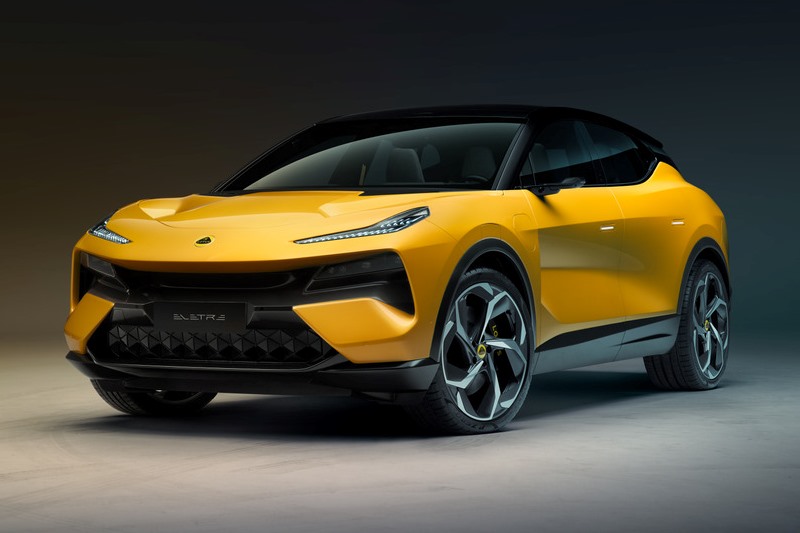
Currently, Lotus has not disclosed which model will receive this new hybrid system, but it is likely to be better suited for models such as the Eletre and Emeya, rather than sports cars like the Emira.
The government has stated that incentives for the development of electric vehicle (EV) charging infrastructure will continue, even though these incentives were not specifically mentioned in Budget 2025.
According to the Ministry of Investment, Trade and Industry (MITI), among the incentives are Green Investment Tax Allowance (GITA) programme, which allows charging point operators (CPOs) who meet the tax incentive criteria to receive a 100% tax exemption in the form of an Investment Tax Allowance for five years.
This allowance can be used to offset up to 100% of statutory income for each tax assessment year.
“In addition, incentives in the form of income tax exemptions are also being offered to companies manufacturing EV charging equipment in the form of a full income tax exemption on statutory income from the assessment year 2023 until the assessment year 2032,” MITI said.
The ministry said this in a written reply on the Parliament website on Monday in response to a question from Tan Kok Wai (PH-Cheras) regarding the specific allocations for EV charging infrastructure development in the current budget.
MITI also said the government expects the total number of electric-powered vehicles (xEV) on the road to reach at least 400,000 passenger and commercial vehicles by 2030.
As of 30 September, the total annual sales rate for vehicles, including hybrids, plug-in hybrids, battery electric vehicles (BEVs), and fuel cell electric vehicles (FCEVs), stood at 33,319 units. The overall figure for 2023 was 35,723 units.
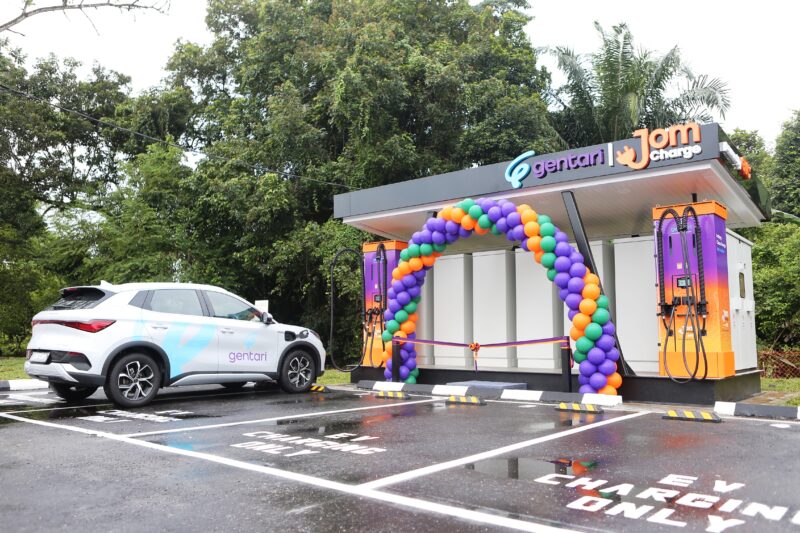
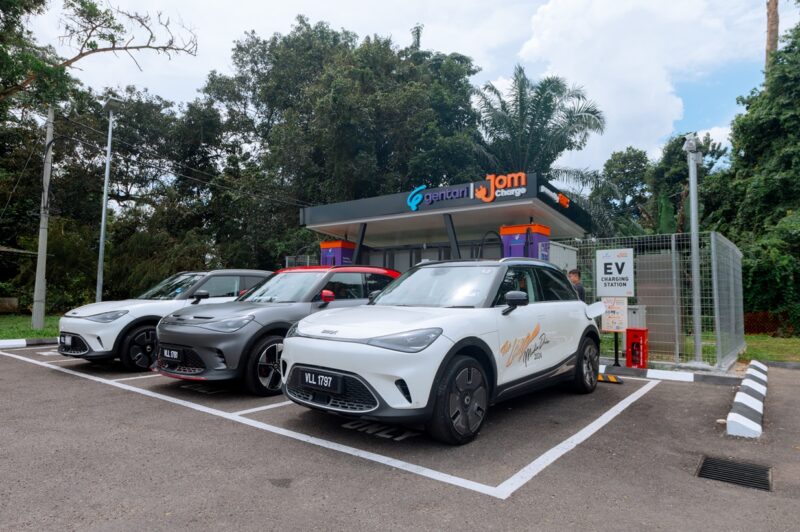
Meanwhile, to support the development of EV charging bays (EVCB), the ministry noted that Petronas subsidiary Gentari and Tenaga Nasional Bhd have committed to making investments and had spent approximately RM76 million up to June 2024.
With the significant financial involvement of both companies, more EVCBs are expected to be built across Malaysia, supported by other CPOs that also provide EV charging services to the public.
“This positive development has helped boost the confidence of EV enthusiasts in purchasing and using these vehicles,” MITI added.
Sime Darby Motors, the official distributor of BYD in Malaysia, has launched another new electric vehicle, the 2025 BYD Sealion 7.
Available in two main variants, the BYD Sealion 7 is priced starting from RM183,800 for the Premium variant and from RM199,800 for the Performance variant.
The BYD Sealion 7 Premium features a single rear-wheel drive (RWD) electric motor with an output of 308 hp and 380 Nm of torque, enabling acceleration from 0 to 100 km/h in just 6.7 seconds.
Meanwhile, the Performance variant is equipped with a dual all-wheel drive (AWD) electric motor that delivers 523 hp and 690 Nm of torque, achieving 0 to 100 km/h in as little as 4.5 seconds.
Both variants are equipped with an 82.56 kWh battery pack. The driving range for the Premium variant is up to 567 km, while the Performance variant has a range of up to 542 km.
The Sealion 7 supports AC charging at 11 kW and fast DC charging up to 150 kW, allowing the battery to be charged from 10% to 80% in just 32 minutes.
Standard features for the Sealion 7 include 19-inch alloy wheels, while the AWD version comes with 20-inch wheels and red brake calipers.
The cabin is well-equipped with a 10.25-inch digital cluster screen, a 15.6-inch central display with adjustable orientation, a 50-inch augmented reality head-up display, leather-wrapped seats, dual-zone climate control, and a PM2.5 air filtration system.
In addition, the Sealion 7 supports Apple CarPlay and Android Auto connectivity, a 50W wireless charging system for smart devices, and features a Dynaudio sound system with 12 speakers.
Both variants come standard with safety features including nine airbags, front and rear parking sensors, a 360-degree camera system, and Advanced Driver Assistance Systems (ADAS) featuring adaptive cruise control, automatic emergency braking, front and rear cross-traffic alerts, high beam assist, and driver attention warnings.
In terms of practicality, the Sealion 7 offers a cargo space of 500 liters, which expands to 1,769 liters with the rear seats folded down. Additionally, it includes a 58-liter front trunk (frunk).
There are four color options available: Cosmos Black, Aurora White, Atlantis Grey, and Shark Grey.
BYD Malaysia is offering an early booking package (valid until November 17), allowing customers to receive a complimentary home charger and RM800 charging credit, provided they register their vehicle by December 31, 2024.
Chery Auto Malaysia has announced that it has commenced local assembly operations for the Chery Omoda E5, eight months after it was launched in CBU form. The first unit of the EV has rolled off the production line at the Inokom Plant in Kulim, Kedah.
The accomplishment demonstrates Chery’s commitment to improving local manufacturing capabilities, promoting Malaysia’s industrial growth, and contributing to the country’s transition to a sustainable, electrified automotive future.
The Omoda E5 is the Chery’s fourth vehicle to be assembled in the country, following the Tiggo 7 Pro, Tiggo 8 Pro, and Omoda 5.
“By assembling our cars locally, it not only allows us to provide more competitive pricing but also signifies Chery’s long-term commitment in Malaysia, fostering job creation and skill development within the local workforce,” said Leo Chen, President of Chery Auto Malaysia.
Leo Chen added that the initiative is in-line with the government’s policy of localisation compliance and will support and assist Malaysia to become a regional hub for electric vehicles.
Dato’ Jeffri Salim Davidson, Group Chief Executive Officer of Sime Darby Berhad said the significant milestone reflects the strengthening partnership and shared vision between Sime Darby and Chery.
“Our expertise spans the entire automotive value chain, and assembly is a crucial area of growth and a key enabler for our Motors division. We look forward to achieving many more milestones together as we expand our facility and reaffirm our commitment to advancing sustainable mobility solutions,” he added.
During the line-off event YB Liew Chin Tong, Deputy Minister of Investment, Trade and Industry said, “Chery should be congratulated for the fact that 99% of their assembly workforce here are Malaysians. The industrialisation of Malaysia must mean better jobs and better pay for Malaysians, not more jobs for unskilled foreign workers. Whenever possible, we should automate more and use more technology, instead of hiring unskilled foreign workers.”
He added that, as of 30 September 2024, there were 32,543 Battery Electric Vehicles (BEVs) registered on Malaysian roads. However, 98% of these BEVs are imported as Completely Built-Up (CBU) units.
“With this line-off ceremony, Chery joins the ranks of brands assembling EVs in Malaysia, marking a significant advancement in localizing electric vehicle production.
“Localising as much as possible in terms of manufacturing of vehicles has a balance of payment dimension. In 2023, the automotive sector recorded a total import value of RM62.14 billion, while total export value was RM18.01 billion,” said YB Liew.
The Austrian manufacturer of fire and rescue vehicles, Rosenbauer, has unveiled a new model specifically designed for airport operations: the Panther 6×6 Electric.
This vehicle is classified as an Aircraft Rescue and Firefighting (ARFF) vehicle and serves as a zero-emission version of the diesel-powered Panther 6×6.
Despite being powered by an electric powertrain, the Panther 6×6 Electric maintains the same capabilities as its diesel counterpart, featuring a 12,000-liter water tank, a 1,450-liter foam tank, and a 250 kg powder tank.
To propel this 40-ton truck, the Panther 6×6 Electric is powered by four electric motors generating 980 hp (or up to 1,200 hp in boost mode).
Acceleration from 0 to 80 km/h can be achieved in just 19.7 seconds, with a maximum speed of 120 km/h.
Its 256 kWh battery pack provides sufficient energy to carry out tasks within the airport area.
A fast-charging DC system of 300 kW allows the battery to be charged from zero to 100 percent in just 45 minutes.
According to Rosenbauer, over 90 percent of the Panther’s daily operations can be performed solely on electric power.
There is also a backup power system utilizing a diesel engine to provide the necessary power for high-performance pumps during emergency operations.
With this zero-emission truck alternative, it is sure to become a preferred choice among airport operators and the aviation industry in their efforts to achieve decarbonization goals.
Back in October, BYD’s premium sub-brand Denza has been confirmed to be entering the Malaysian market, with Sime Darby Auto Imports as the official importer and BYD Malaysia as the official distributor.
The first model to be offered will be the Denza D9, which is expected to arrive in the local market some time in the first quarter of 2025. It will be pitted against the likes of the Zeekr 009, Maxus Mifa 9, and the popular Toyota Alphard/Vellfire duo.
Specifications for the Malaysian market are yet to be announced, but we can confirm that BYD Malaysia will introduce the battery electric vehicle (BEV) version, as it is currently the only version available in right-hand drive.
In China, in addition to the BEV variant, the D9 is also available in a plug-in hybrid electric vehicle (PHEV) version featuring a 1.5-litre engine.
For the BEV, there are two powertrain configurations: front-wheel drive (FWD) and all-wheel drive (AWD). The former features a single electric motor that produces 313 PS (280 kW) and 360 Nm of torque, allowing it to accelerate from 0 to 100 km/h in 9.5 seconds.
Meanwhile, the latter, with its twin-motor setup, offers a healthy 374 PS (275 kW) and 470 Nm, enabling a 0-100 km/h acceleration time of just 6.9 seconds.
Regardless the variant, the D9 is equipped with a 103 kWh LFP battery, providing a WLTP range of 520 km for the FWD and 480 km for the AWD.
In terms of size, the D9 measures 5,250 mm in length, 1,960 mm in width, 1,920 mm in height, and has a wheelbase of 3,110 mm. This makes it longer than the Zeekr 009, although its wheelbase is 95 mm shorter than its closest competitor.
The electric MPV can accommodate up to seven adult passengers (each 180 cm tall), thanks to a 2-2-3 seating configuration featuring sliding captain’s seats in the second row.
Its cargo space is big enough to hold seven 20-inch luggage cases and seven business backpacks.
In keeping with its status as a premium MPV, the D9 boasts a range of luxury features such as Nappa leather upholstery, ventilation and heating functions, massage functions, a panoramic glass roof, and a 7.5-litre fridge.
For the infotainment system, there is a 10.25-inch digital instrument panel, a 15.6-inch touchscreen, a Dynaudio sound system with 14 speakers, and three 50W wireless chargers, to name a few.
Pricing for the Malaysian market has yet to be announced. For reference, the D9 BEV is priced between 379,800 yuan and 469,800 yuan (approximately RM233,648 to RM289,015) in its home country.
Malaysia’s Leading Automotive News | ENGEAR ENGLISH