Pro-Net marked a significant milestone in the company’s dealership expansion efforts with the official launching of four Proton e.MAS dealerships in Sabah and Sarawak.
In Kota Kinabalu, the Minister of Industrial Development and Entrepreneurship of Sabah, YB Datuk Phoong Jin Tze, officiated the opening of Harapan Maju Sabah Sdn. Bhd.’s Proton e.MAS showroom on February 8.
In Sarawak, Ybhg. Dato Wee Hong Seng, Mayor of Kuching South, launched the e.MAS dealership by Melinau EV Sdn. Bhd. on February 11.
The expansion continues with Ghee Hua Co. Sdn. Bhd. opening its showroom in Sarawak on February 13, followed by Fook Loi Eurocar Sdn. Bhd. in Sabah on February 28.
Zhang Qiang, Chief Executive Officer of Pro-Net said the opening of Pro-Net’s first dealerships in Sabah and Sarawak reflects their commitment to making electric mobility accessible to all Malaysians.
“With strong partners, we are confident that this milestone will accelerate the EV revolution in the region, bringing innovation, sustainability, and an exceptional EV ownership experience to our customers,” he added.
These new dealerships reflect Pro-Net’s ongoing commitment to expanding the EV ecosystem in East Malaysia.
The openings in Sabah and Sarawak are part of a larger vision to provide Malaysians with access to sustainable and innovative automotive solutions, while contributing to the region’s economic growth through job creation and the introduction of advanced technology.
The contemporary showrooms were crafted to both display cutting-edge electric vehicle technology from Proton and function as essential hubs for education and customer interaction.
Proton e.MAS dealerships aim to offer customers a more seamless experience by integrating sales with after-sales services, ensuring long-term support for EV owners.
A few weeks ago, Xiaomi unveiled its second electric vehicle (EV) model set to launch this year, known as the YU7.
This electric SUV is expected to pose a strong challenge to the popular Tesla Model Y.
According to data obtained from Chinese government ministry websites, the Xiaomi YU7 measures 4,999 mm in length, 1,996 mm in width, 1,600 mm in height, and has a wheelbase of 3,000 mm, making it larger than the Model Y.
The all-wheel-drive (AWD) version of the Xiaomi YU7, boasting 691 PS, will be offered with range options of 670 km, 750 km, and 760 km.
Currently, Xiaomi has not yet disclosed the range for the rear-wheel-drive (RWD) variant (320 PS) or the capacity of the NMC (nickel manganese cobalt) battery pack that will be available for each variant.
The selling price has also yet to be finalized, but local media suggest that the Xiaomi YU7 will start at around RMB 250,000 (RM 151,958), making it significantly cheaper than the Tesla Model Y, which starts at RMB 263,500 (RM 160,163).
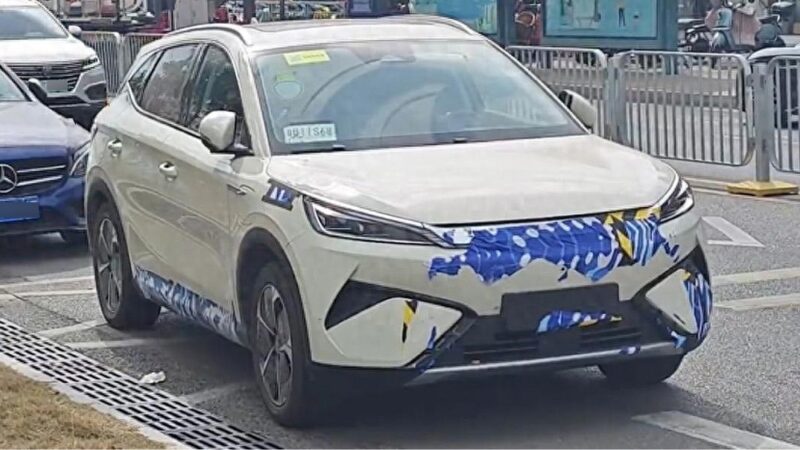
The 2025 model year BYD Atto 3 has been spotted undergoing road tests in China, where it is sold as the Yuan Plus.
According to CarNewsChina, the new Atto 3 will feature an updated exterior and advanced driver assistance systems (ADAS). It is expected to be launched in the country around the second quarter of this year.
This is not the first time the world has seen the 2025 Atto 3 – the Ministry of Industry and Information Technology of China had previously revealed the full design of the electric SUV, which is why only a small portion of the car remains covered in camouflage.
As can be seen, the Atto 3 now boasts a fresher front fascia thanks to a sportier bumper design and larger trapezoidal air intakes.
The side profile showcases new chrome trim on the C-pillars and the lower body. At the rear, the bumper has been given a redesign to keep it fresh but what stands out more is the new roof spoiler that incorporates a pair of vertical brake lights.
For 2025, the Atto 3 will be available in a new shade of beige while existing colour options—including white, black, purple, blue, green, and grey—are expected to be retained.
Additionally, the new Atto 3 appears to have a new camera on the front bumper, indicating that its ADAS has been enhanced.
There are no changes to the powertrain. In Malaysia, the Atto 3 is available in a single Extended Range variant equipped with a front axle electric motor producing 204 PS/310 Nm, and a Blade LFP battery with a capacity of 60.48 kWh, offering a range of up to 480 km (NEDC).
In September last year, I had the opportunity to drive the twin model of the Proton eMAS 7, the Geely Galaxy E5.
Rather than putting the Galaxy E5 through its paces at the Proton Centre of Excellence (COE) test track, we hit the roads around Puncak Alam for a more authentic experience.
As I observed, the suspension system of the Galaxy E5 is not particularly suited to the road conditions we face here. It is a tad too soft and tends to bounce and sway on undulating surfaces.
While this kind of setup may cater to customers in China, Proton needs to draw upon its expertise to ensure that the eMAS 7 is equipped to handle the more challenging roads of Malaysia.
Which is why I was quite excited when invited to test drive the eMAS 7 from Shah Alam to Melaka. I was eager not only to experience Proton’s magic firsthand but also because this was my first time getting up close with the nation’s very first EV.
Exterior Design
Many are already aware that the exterior appearance of the eMAS 7 does not differ significantly from that of the Galaxy E5. Both models feature the same headlight and taillight designs, L-shaped daytime running lights (DRLs), and identical bumpers.
Of course, the front bumper of the Proton showcases the Proton eMAS logo, which is slightly different from the traditional Proton logo. Meanwhile, the ‘PROTON’ lettering beneath the rear lights and the ‘eMAS 7’ badge on the tailgate solidify the identity of this EV at the back.
I have no complaints about this, as the eMAS 7 certainly looks sharp and robust in the metal. Its sleek headlights and wide taillights give it an air of sophistication that belies its price.
Interior Space
It comes as no surprise that the interior layout of the eMAS 7 closely resembles that of the Galaxy E5. However, Proton has opted for a darker colour scheme in the eMAS 7 instead of the lighter white found in its twin.
While light colours can create a sense of spaciousness, the darker tones lend the eMAS 7 a more sophisticated feel. This choice is also more popular among Malaysian buyers simply because it is easier to maintain.
In terms of material quality, there are no substantial differences. The leather upholstery that covers much of the dashboard, seats, and steering wheel is delightfully soft to the touch.
However, I was somewhat disappointed to find that the footrest for the front passenger seat has been omitted, likely for cost-saving reasons.
Features
Despite this, the eMAS 7 boasts all the features offered in the Galaxy E5. This includes a 15.4-inch touchscreen, a 10.2-inch driver’s instrument panel, and a Wanos audio system with 16 speakers from Flyme Sound.
These include those integrated into the driver’s headrest, which serves to channel navigation instructions directly to the driver’s ears.
Unfortunately, the systems for Apple CarPlay and Android Auto are still not available, though an update is expected this year via an over-the-air (OTA) release.
This is not too much of a concern, as the built-in navigation system of the eMAS 7 is user-friendly, despite the map’s appearance being in need of some refinement.
What I find most interesting about this system is its ability to locate nearby charging stations.
According to Proton, the system can identify over 1,700 charging points nationwide, thanks to partnerships with various charging point operators such as Gentari, JomCharge, chargEV, DC Handal, Carput Zap, and ChargeSini.
The system provides detailed information about the selected charging stations, including the operator, type, number, capacity and availability of chargers, rates, and much more.
Performance
Both the Prime and Premium variants of the eMAS 7 feature a single electric motor on the front axle, generating 218 PS (160 kW) and 320 Nm of torque.
The key difference between these variants lies in battery capacity: 49.52 kWh for the Prime and 60.22 kWh for the Premium. The Prime offers a WLTP driving range of 375 km, while the Premium extends this by an additional 65 km.
Driving from Shah Alam to Melaka, I had no worries about the vehicle’s range, as the distance is about 160 km, which is less than half the capacity offered by the Premium variant.
To assess the efficiency of this ‘12-in-1’ powertrain, I drove leisurely at speeds of around 90 to 100 km/h. Upon arriving at my destination, the energy consumption indicated a figure of around 10 to 11 kWh per 100 km, meaning I had used less than 30% of the battery’s energy for this journey.
Handling
Proton’s engagement in the eMAS 7/Galaxy E5 project is evident in the real-world performance of the eMAS 7’s suspension system.
The differences between the two models are notably pronounced, with the eMAS 7 demonstrating superior ride quality and handling characteristics.
The retuned dampers provide greater stability and tranquility at high speeds, while still managing to maintain comfort at lower speeds.
The steering feel is commendable for an EV, and the NVH (noise, vibration, and harshness) levels are impressive, with exterior noise being effectively muted. Road noise is minimal, even though this variant is fitted with 19-inch rims.
Conclusion
Personally, I find the eMAS 7 quite intriguing. Priced between RM109,800 and RM129,800, it offers excellent value for those keen to explore the world of EVs.
While the relatively short driving range may be a concern for frequent long-distance travellers, for those who do not regularly embark on such journeys, the eMAS 7 is definitely worth considering.
The MG4 XPower was launched in Malaysia nearly ago as the most affordable vehicle capable of sprinting from 0 to 100 km/h in 3.8 seconds.
Say what you want about EVs, but there’s no denying that said performance is absolutely remarkable—years ago, achieving such speeds was the realm of sports cars and supercars costing hundreds of thousands, if not millions, of ringgit.
Now, thanks to technological advancements in EVs, you can experience the same thrilling sensation for just under RM160,000.
Of course, there are a few other EV models that can reach 100 km/h a touch faster, like the Volvo EX30 Ultra Twin Performance (3.6 seconds) and the Smart #3 Brabus (3.7 seconds), but both of these come with a price tag exceeding RM200,000.
But does the MG4 XPower’s advantage lie solely in its speed? What about other aspects such as design, comfort, range, and technology? Read on to find out.
Design
The MG4 is a five-door hatchback with somewhat unique proportions. To the eye, it appears fairly large, yet it is actually 3 mm shorter than the cutesy BYD Dolphin. Comparatively, it is 17 mm longer than the Smart #1, but its wheelbase is 45 mm shorter.
What stands out, however, is that the MG4 is noticeably lower and wider than both models, giving it a more aggressive stance and an aerodynamic edge.
Its sporty appearance is complemented by its very sharp front-end design, a double roof spoiler, and striking orange brake caliper covers emblazoned with ‘XPower.’
It’s a bit odd, though, that apart from the brake calipers, there’s no other part of the car adorned with the XPower logo. Were this vehicle crafted by BMW or Mercedes-Benz, you’d no doubt find M and AMG badges scattered across the bodywork.
Interior
Unlike its exterior, the cabin design of the MG4 offers a more understated aesthetic. Those hoping for a modern, futuristic design might find themselves a bit disappointed, as nothing particularly cutting-edge stands out.
However, this isn’t necessarily a downside. A simple layout is easier to the eyes and can actually facilitate the transition from ICE (Internal Combustion Engine) vehicles to EVs.
What’s available is just what you need for everyday driving – a touchscreen complemented by a row of physical buttons beneath it, a floating centre console housing the gear knob and a wireless charger, steering wheel controls on either side, and a digital instrument panel.
Much like other EVs on the market, most features are accessed via the touchscreen. However, fear not—the MG4’s steering wheel comes equipped with star (shortcut) buttons, which can be configured for various functions such as climate control, energy recuperation, and driving modes.
One aspect that I found less appealing was the overly generous use of hard plastic for the dashboard and door panels. Not only that, but the gear knob also feels somewhat loose but I’d take this over having to select gears via the touchscreen any day.
Practicality and comfort
Hatchbacks generally offer limited cabin space, but with the MG4, you needn’t fret if you’re carting around extra passengers, as the interior feels rather spacious for its size.
It boasts ample storage in the centre console and each door, and the boot holds a decent capacity of 363 litres, which can expand further with the rear seats folded flat if the boot isn’t quite large enough.
Speaking of the back seats, I found them quite comfortable and not overly upright. Legroom and headroom are adequate for those of average build, though it would have been nice if MG had considered air vents for rear passengers.
Performance
As mentioned, the MG4 excels in acceleration. This is a welcome trait if you find yourself challenged by the car next to you at traffic lights, but to be honest, such ‘mad’ performance can become a bit exhausting.
This is because the car accelerates effortlessly, without the drama typically experienced in ICE vehicles. While this isn’t an issue on the motorway, in urban environments, the body movement due to inertia when accelerating (and braking) can leave you feeling worn out after some time.
To overcome this, I found using the ECO mode offered a more controlled acceleration.
In terms of range, the XPower variant isn’t the best choice if driving range is your top priority. It comes equipped with a 64 kWh battery that delivers a WLTP range of 385 km on a full charge.
While this is reasonable for city driving, it’s essential to remember that range can also depend on driving style and other factors. If your right foot tends to be heavy, that number will plummet significantly.
For peace of mind, you might opt for the Lux Extended Range variant, which sports a larger 77 kWh battery, promising a range of up to 520 km. That should be enough for four to five days, depending on your usage.
Conclusion
In summary, the MG4 XPower offers incredible value for money for EV enthusiasts craving performance without breaking the bank.
However, personally, I see the Lux Extended Range variant as a more rounded choice overall. It is RM10,000 cheaper, and with a century sprint of 6.1 seconds, it’s still plenty quick for most drivers out there. Moreover, with a larger battery, range anxiety won’t be something to lose sleep over.
It appears that more manufacturers are recognising that an all-EV approach may not be the best long-term strategy.
Recently, Alfa Romeo has reportedly made a U-turn regarding its intention to sell only EVs by 2027.
The Italian manufacturer joins brands such as Audi, Lotus, Mercedes-Benz, Porsche, and Volvo in backpedaling its EV-only plans, following a decline in demand and tight competition from Chinese brands.
Speaking to Automotive News, Alfa Romeo’s North America chief Chris Feuell, acknowledged that it is challenging for Alfa Romeo’s 110-strong dealer network in the United States to survive with a portfolio consisting solely of battery electric vehicles (BEVs).
As an alternative, Alfa Romeo will adopt a recently finalised “multi-power” strategy. This strategy includes a combination of petrol, hybrid, and electric powertrains.
“The biggest thing in our product and technology roadmap is transitioning from what was a BEV-only strategy for Alfa to one that us multi-energy,” Feuell said.
To ring in the Lunar New Year and celebrate the delivery of the first Proton e.MAS 7 to our customers, Pro-Net is offering a 30% discount on public charging fees.
From January 25 to February 3, Proton e.MAS and smart owners can enjoy this special offer at over 80% of public charging stations.
Just use the Proton e.MAS or Hello smart apps to start your charging session, and the discount will be applied automatically.
Proton e.MAS is all about making EV ownership easy and enjoyable with smart features like live charging station availability and route planning based on your car’s battery level.
This would be a significant expansion of its charging map coverage as the charging network operated by Shell Recharge includes High-Performance Charging Stations along major highways, with most of the stations can deliver 180kW of charging power.
Plus, thanks to Pro-Net’s partnership with Shell Recharge, the company is adding even more charging points across highways and city hotspots, including high-speed chargers for quicker stops.
This highly anticipated addition follows the recent integration of the ChargeSini Network, which was also the first in Malaysia to be accessible via a roaming arrangement.
Currently, the charging networks accessible on both Proton e.MAS and Hello smart apps include Gentari, Jomcharge, chargEV, DC Handal, CarputZap, and ChargeSini.
Who would have thought that the premium-looking Audi Q6 Sportback e-tron electric SUV could transform into a more serious off-road vehicle?
That’s what Audi aims to showcase with the Q6 e-tron Offroad Concept, featuring a higher ground clearance and a wider body dimension.
Audi has also hinted that this model is ready to be realized as a production vehicle.
In terms of power, the Q6 e-tron Offroad is equipped with two electric motors producing 510 hp, driving all four wheels.
With an increased track width of 250 mm and a ground clearance raised by 160 mm, thanks to the use of four portal axles directly connected to the wheel hubs, this SUV is designed for enhanced off-road performance.
The newly designed portal axles allow this SUV to increase wheel torque by 50% compared to the 20 to 30% achieved with conventional designs.
As a result, the torque at all four wheels can reach 13,400 Nm, though the top speed is limited to just 175 km/h.
Overall, these upgrades enable this off-road SUV to tackle steep slopes with angles of up to 45 degrees.
The original design of the Q6 Sportback e-tron has been retained, but the front bumper has been fitted with extra LED lighting units, and the wheel arches have been enlarged to accommodate off-road tires.
Audi has previously unveiled several off-road concept models, such as the Activesphere and the AI:Trail Quattro, and they also participated in the 2024 Dakar Rally using the RS Q e-tron.
In recent years, rumors have circulated that the Civic Type R FL5 will be the last pure internal combustion engine (ICE) hot hatch model from Honda.
What is the future of the Civic Type R? Will it become an electric-powered hot hatch?
The unfortunate news is that Honda is indeed exploring the process of creating an EV Type R.
However, this process is not as simple as Toshihiro Akiwa, head of Honda’s BEV development unit, admitted when unveiling two 0 Series prototypes at CES Las Vegas this month.
“An electric motor and battery have different characteristics, so we cannot produce something that is the same as before.
“As an EV, how can we offer the joy of driving? Of course, we have not given up, but it is not just about sheer power. It’s about sound, vibrations, acceleration, and human experience.
“All of these are part of the joy of driving,” he added.
While showcasing the large sedan and mid-size SUV prototypes, Honda has no plans to offer the 0 Series EV, even though the electric motor setup can achieve around 480 hp.
For comparison, the Honda Civic Type R FL5 is a pure ICE hot hatch with a 2.0-liter turbo engine capable of generating up to 329 hp.
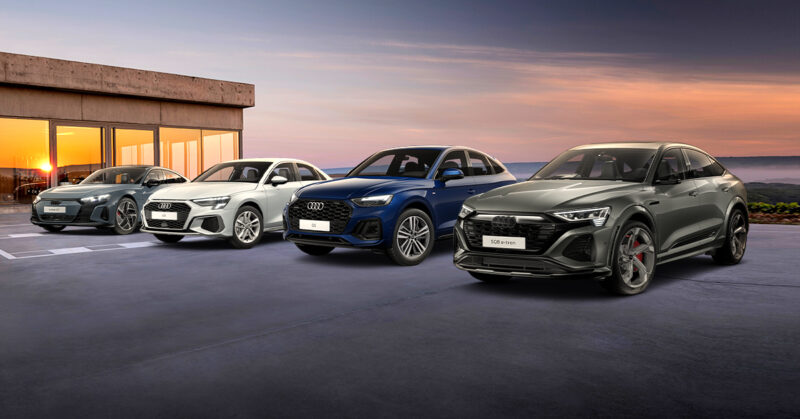
Effective January 1, 2025, Audi Malaysia has announced a new retail price list for its range of internal combustion engine (ICE) vehicles and electric vehicles (EVs).
The new pricing structure also includes the Audi Assurance Package, which now offers a five-year maintenance service (up from three years in the previous package), along with a five-year warranty (with a mileage limit of 150,000 km) and five years of roadside assistance.
The following is the new pricing for the 2025 model year vehicles involved:
Audi Q3 Sportback S line 2.0 TFSI quattro – RM358,990
Audi Q5 Sportback S line 2.0 TFSI quattro – RM388,490
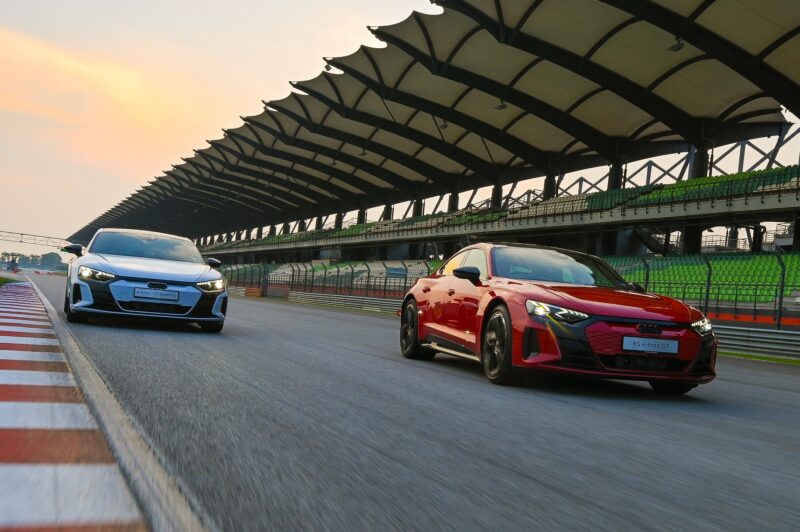
Audi e-tron GT quattro with Dynamic Package – RM412,890
Audi SQ8 Sportback e-tron quattro – RM511,990
Audi RS e-tron GT – RM515,290
Audi A7 Sportback S line 3.0 TFSI quattro – RM740,390
Audi A8 S line 3.0 TFSI quattro – RM1,103,790
Audi RS6 Avant Performance 4.0 TFSI quattro – RM1,338,690
For a limited time, from January 1 to February 28, 2025, there are eight vehicle models offered at special prices (excluding AAP), as follows:
Audi A3 S line 2.0 TFSI – RM279,990
Audi Q8 e-tron advanced 50 quattro – RM339,990
Audi Q8 Sportback e-tron advanced 50 quattro – RM349,990
Audi Q8 e-tron S line 55 quattro – RM373,990
Audi Q8 Sportback e-tron S line 55 quattro – RM382,990
Audi A5 Sportback S line 2.0 TFSI quattro – RM419,990
Audi RS3 Sedan 2.5 TFSI quattro – RM499,990
Audi RS Q8 4.0 TFSI quattro – RM1,400,000
For more information regarding the price list, special offers, and the Audi Assurance Package, please visit www.audi.com.my or visit your nearest Audi Centre.
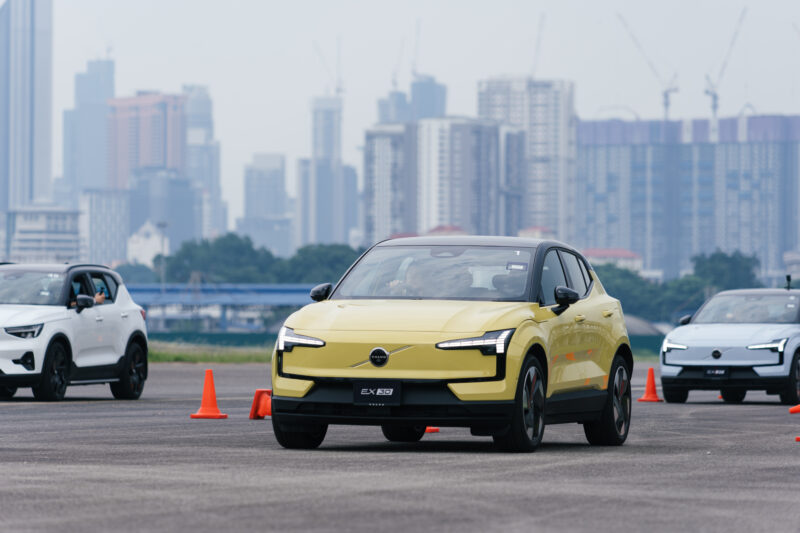
Volvo Car Malaysia has officially opened bookings for the locally assembled (CKD) electric SUV model, the Volvo EX30.
For the 2025 model year, the Volvo EX30 is available in two variants: Ultra (RM208,888) and Ultra Twin Performance (RM228,888). It comes in three color options: Cloud Blue, Vapour Grey, and Crystal White.
The first unit deliveries are expected in the second week of January 2025.
In terms of specifications, the Volvo EX30 Ultra is powered by a single electric motor producing 272 PS and 343 Nm of torque, with an acceleration from 0 to 100 km/h in just 5.3 seconds.
In contrast, the Volvo EX30 Ultra Twin Performance features a dual electric motor setup delivering 428 PS and 543 Nm of torque, achieving 0 to 100 km/h in a swift 3.6 seconds.
Both variants are equipped with a 69 kWh NMC battery pack, offering a driving range of 450 km for the Ultra Twin Performance version and up to 476 km for the Ultra version.
The vehicle supports fast DC charging at 175 kW, allowing the battery pack to be charged from 10 to 80 percent in just 28 minutes.
Each Volvo EX30 comes with a five-year/unlimited mileage vehicle warranty, alongside an 8-year/160,000 km high-voltage battery warranty.
Volvo Car Malaysia also provides the Volvo Service Package (VSP), which covers essential services such as cabin air filter replacement, brake fluid inspections, windshield wiper replacement, and software updates for up to five years or 100,000 km. This package also includes components like brake pads and discs to ensure peace of mind for owners.
Customers will also be protected by a 24-hour roadside assistance program for five years, guaranteeing towing services to the nearest authorized Volvo service center.
BYD concluded 2024 on a high note, achieving a remarkable milestone by selling over 4 million vehicles within a single year for the first time.
According to the company, a total of 514,809 new energy vehicles (NEVs) were sold in December alone, bringing the total sales for 2024 to 4,272,145 units—a 41.3% increase compared to the 3 million units recorded in 2023.
Of this total, 1,764,992 units were passenger battery electric vehicles (BEVs), 2,485,378 units were plug-in hybrid electric vehicles (PHEVs), while the remaining 21,775 units were commercial vehicles.
Compared to the performance in 2023, BEV sales for 2024 increased by 12% from 1.6 million units, while PHEV sales rose by a whopping 72.8% from 1.4 million units. BEVs accounted for 41.5% of BYD’s total sales last year, while PHEVs made up 58.5%.
BYD’s export market also experienced encouraging growth, with 57,154 units sold in December, marking a 58% increase compared to the same month last year. This brought the total number of vehicles exported for 2024 to 417,204 units, a 71.9% rise compared to 2023.
In addition to manufacturing vehicles, BYD is also the second-largest battery supplier in China. Among its notable clients are big names such as Tesla, Toyota, and Nio.
Overall, the company installed 23.5 GWh of battery capacity in December (32% higher than in 2023) or a total of 194.7 GWh throughout 2024 (an increase of 29% compared to 2023). This includes batteries installed in electric vehicles (EVs) and stationary energy storage units.
At least one person has been killed and seven others injured after a Tesla Cybertruck exploded outside the Trump International Hotel in Las Vegas, Nevada.
According to reports, the explosion occurred shortly after the electric pickup truck was parked in front of the hotel lobby on Wednesday morning.
Police stated that the incident resulted in the death of one person who was inside the truck, while seven others sustained injuries.
So far, the cause of the explosion remains unknown, and police are still investigating whether it originated from the truck itself or from external factors.
🚨New footage of the Tesla Cybertruck exploding in front of the Trump hotel
However, there are reports stating that the Cybertruck was carrying fireworks at the time of the explosion. The reports say that investigators are working to determine the motive and whether the driver intended to set off the blast.
Following the incident, all guests staying at the Trump International Hotel have been evacuated to Resorts World Las Vegas.
Meanwhile, in a post on X, Tesla CEO Elon Musk said, “The whole Tesla senior team is investigating this matter right now. Will post more information as soon as we learn anything. We’ve never seen anything like this.”
Radar Auto, another brand under the Geely umbrella, has launched an electric pickup truck known as the King Kong in China.
Replacing the previous model, the RD6, the Radar King Kong is offered with a single electric motor driving the rear axle and a dual electric motor configuration for four-wheel drive (4WD).
The single motor version delivers 245 PS and 309 Nm, enabling it to accelerate from 0 to 100 km/h in 8.1 seconds. It is available with LFP battery capacities of 42 kWh, 55 kWh, 73 kWh, and 86 kWh, with a CLTC range from 310 km to 605 km.
Meanwhile, the dual electric motor version packs 381 PS and 485 Nm, achieving a 0 to 100 km/h acceleration in 5.7 seconds. There are three battery pack options: 55 kWh, 73 kWh, and 86 kWh, providing ranges between 330 km and 520 km.
In addition to its various electric motor configurations and battery pack options, the King Kong demonstrates versatility by offering both standard and long wheelbase versions.
The standard wheelbase version measures 5,260 mm in length, 1,900 mm in width, and 1,865 mm in height, with a wheelbase of 3,120 mm. The long wheelbase version, on the other hand, measures 5,500 mm in length and has a wheelbase of 3,310 mm.
In terms of design, the King Kong appears quite similar to the RD6, while still retaining the exterior and interior styling inspired by the Geely Haoyue, which is the sibling of the Proton X90.
In China, the King Kong is available in seven trim levels: four for the single motor version and three for the 4WD version.
The single motor version is priced between 99,800 and 149,800 yuan (approximately RM60,982 to RM91,525), while the 4WD version ranges from 119,800 to 159,800 yuan (around RM73,196 to RM97,635).
In comparison, the price of the previous RD6 started from 136,800 to 209,800 yuan (approximately RM83,590 to RM128,196).
Pro-Net has announced that the Proton e.MAS 7 electric vehicle has received over 2,500 orders since reservations for the electric segment C SUV opened at the end of October.
According to Zhang Qiang, the CEO of Pro-Net, “The enthusiasm shown by Malaysians for the Proton e.MAS 7 reflects their readiness to embrace sustainable mobility.”
“With a combination of innovative features and exceptional value, the Proton e.MAS 7 is designed to be the ideal choice for those looking to transition to electric vehicles.”
The Proton e.MAS 7 is available in two main variants: the Prime, which features a 49.52 kWh battery offering a driving range of 345 km, and the Premium variant with a 60.22 kWh battery pack that provides a driving range of up to 410 km.
Specially for the first 3,000 customers, Proton offers a rebate of RM4,000, along with a special package that includes:
Power Home: 7 kW home charger (valued at RM1,500)
Power Plus: V2L adapter (valued at RM500)
Power Online: 5-year internet data package (valued at RM1,800)
Power Thru: Unlimited vehicle warranty for 6 years, and a warranty of 8 years or 160,000 km for the battery and high-voltage components.
Power Financing: Interest rate of 1.98% from Proton Commerce (up to RM3,000)
Power Exchange: Exclusive rebate of RM1,200 for the exchange program for current Proton owners.
Malaysians living around Shah Alam who are interested in viewing the Proton e.MAS 7 can visit the Proton e.MAS showroom located at the Ideal Convention Centre (IDCC) in Shah Alam.
Operated by SG Cars Sdn Bhd, it is the first distribution center for Proton’s new energy vehicle (NEV) brand.
It is reported that 37 dealers have been appointed nationwide, with 30 expected to be fully operational by the end of this year.
This expansion effort has been bolstered by a knowledge-sharing R&D visit to the Geely Research Institute in Hangzhou, China, attended recently by more than 40 principal dealers and executives.
During the visit, participants were introduced to Geely’s latest technology and gained valuable insights into premium EV maintenance, staff training, sales strategies, and operational excellence.
Pro-Net is also seeking partners interested in joining the expanding Proton e.MAS dealer network.
The launch of Proton’s first electric SUV, the e.MAS 7, took place last week.
Despite being teased for a long time on social media, the e.MAS 7 remains a hot topic of discussion among netizens even now.
Opinions are varied, with some expressing positive thoughts while others share negative feedback.
For those contemplating whether to choose the more affordable Prime variant or the more fully-featured Premium variant, we are here to help.
With a price difference of approximately RM14,000, here are five key differences between the Proton e.MAS 7 Prime and e.MAS 7 Premium:
1. Battery Capacity
Both variants are equipped with an electric motor producing 215 hp and 320 Nm of torque, allowing for a 0-100 km/h acceleration in about 6.9 seconds.
However, the e.MAS 7 Prime is fitted with a short-blade Aegis LFP (Lithium Iron Phosphate) battery pack with a capacity of 49.52 kWh for a driving range of 345 km, while the e.MAS 7 Premium comes with a 60.22 kWh battery pack, providing a range of 410 km.
2. Charging Capability
For the smaller battery, the e.MAS 7 supports DC fast charging up to 80 kW, while the e.MAS 7 Premium can achieve a DC charging capacity of up to 100 kW.
Unfortunately, there appears to be no significant difference in charging times, with both variants recording approximately 20 minutes for DC charging from 30% to 80%.
3. Exterior
The e.MAS 7 Prime variant features 18-inch wheels wrapped in 225/55 R18 Giti tires.
In contrast, the e.MAS 7 Premium variant comes equipped with more aggressive 19-inch wheels, fitted with 235/50 R19 Goodyear tires.
Additionally, the e.MAS 7 Premium variant includes several extra features such as a panoramic glass roof, powered tailgate, and an Active Grill Shutter system.
4. Cabin Features
The standard features included in the Proton e.MAS 7 are quite extensive.
However, for the Premium model, it includes specific features such as a driver’s seat memory function, adjustable front passenger seat (four-way), front seat ventilation, ambient lighting supporting up to 256 colors, a head-up display, and a sound system with 16 speakers.
5. Safety Features
Typically, the lower variant may be lacking in comprehensive safety equipment compared to the premium variant.
However, for the e.MAS 7, both variants are equipped with a comprehensive safety suite that includes advanced driver-assistance systems (ADAS) Level 2, featuring important functions such as Autonomous Emergency Braking (AEB), Forward Collision Warning (FCW), Rear Cross Traffic Alert (RCTA), Lane Departure Warning (LDW), and Adaptive Cruise Control (ACC).
Moreover, the e.MAS 7 is also equipped with a 360-degree surround camera system.
The only minor difference is that the e.MAS 7 Prime variant does not come with front parking sensors.
Sime Motors is continuously expanding the BYD brand network in the country as part of its efforts to meet the growing demand for electric vehicles (EVs).
According to the company, BYD currently operates 21 service centres nationwide, focusing on customer accessibility spanning key regions such as Penang, Klang Valley, Johor Bahru, East Coast, Sarawak and Sabah.
17 out of the 21 BYD service centres in Peninsular Malaysia and East Malaysia feature body and paint (B&P) centres that offer body repair services using state-of-the-art equipment. Trained technicians ensure every repair meets original manufacturer standards.
Customers’ vehicles are serviced by a team of BYD certified high-voltage (HV) technicians, who undergo ongoing multi-level training programmes to ensure 100% certification.
In addition to specialised tools for EV maintenance, all BYD service centres provide premium lounge areas and workspaces for customers to relax or work while waiting for their vehicles to be serviced.
BYD also operates a digitally managed centralised Parts Distribution Centre (PDC) that ensures timely and sufficient parts delivery to service centres and dealers nationwide. With optimised inventory and streamlined distribution systems, BYD guarantees minimal downtime for vehicle repairs.
Moreover, every new vehicle undergoes rigorous quality assurance checks at the pre-delivery inspection (PDI) centre to ensure it is in top condition before being handed over to the customer.
The PDI facility is equipped with a three-level mechanical parking system, optimising space efficiency while securely accommodating vehicles during the inspection and preparation process.
Each BYD vehicle comes with a six-year/150,000 km warranty for the vehicle, an eight-year/160,000 km warranty for the battery (with the battery to be replaced if its health falls below 70%), and an eight-year/150,000 km warranty for the drive unit.
For any queries or feedback, customers can contact the BYD Customer Care Line at 1300-38-1888, available Monday to Friday, from 8 am to 5 pm. A 24/7 roadside assistance service is also provided throughout Malaysia.
Additionally, BYD offers service packages available in three-, six- and eight-year options, along with Standard and Plus options, to accommodate both customer’s high and low usage patterns. These packages can be purchased separately or bundled with car loans for added convenience.
When it comes to EV, options available in the Malaysian market are rather exciting if you have a budget between RM150,000 and RM200,000. For those willing to stretch their budget further—specifically between RM200,000 and RM250,000—the available candidates are significantly more impressive, particularly on the performance front.
Well, two out of the five models we’ve listed here include ‘Performance’ in their names and one is a Brabus, underscoring that acceleration is a key focus in this price range.
So, without further ado, let’s delve into these models. You might just find one that you like.
Volvo EX30 Ultra Twin Performance (RM228,888)
If you can live without physical buttons, the Volvo EX30, a sibling to the smart #1 and Zeekr X, is worth considering. Despite its compact size, it has a robust and sturdy appearance, perfectly matching the performance level offered by the Ultra Twin Performance variant.
As suggested by its name, this particular variant comes with a pair of electric motors producing a total power output of 428 PS and 543 Nm, allowing it to accelerate from 0 to 100 km/h in a mere 3.6 seconds. It utilizes the same NMC 69 kWh battery found in the other EX30 variants, offering a driving range of 450 km—only 26 km shorter than the Ultra variant.
Tesla Model 3 Performance AWD (RM243,700)
With a price tag of RM243,700, fans of Elon Musk can cement their loyalty to the Tesla CEO by acquiring the Model 3 Performance AWD. Its price is only slightly higher than the Long Range AWD variant (RM218,000), yet it comes with plenty of added benefits.
It goes without saying that its main trump card is its performance; this variant boasts 460 PS and 723 Nm. I could be wrong but with an acceleration time of 0-100 km/h in just 3.1 seconds and a top speed of 261 km/h, this is likely the fastest new car you can purchase at this price point. The driving range is also commendable at 529 km.
Tesla Model Y Long Range AWD (RM246,000)
For those who prefer an SUV over a sedan, the Model Y Long Range AWD is an excellent choice. Though priced at RM42,000 less than the Performance AWD variant, the performance of this compact crossover should not be underestimated.
Two electric motors (one on each axle) come together to deliver a total power output of 444 hp and 559 Nm. Although it’s not as quick as its sedan counterpart, many drivers will find that a 0-100 km/h time of 5.0 seconds is quite adequate. Equipped with a 78.1 kWh battery, it offers a range of 533 km on a full charge.
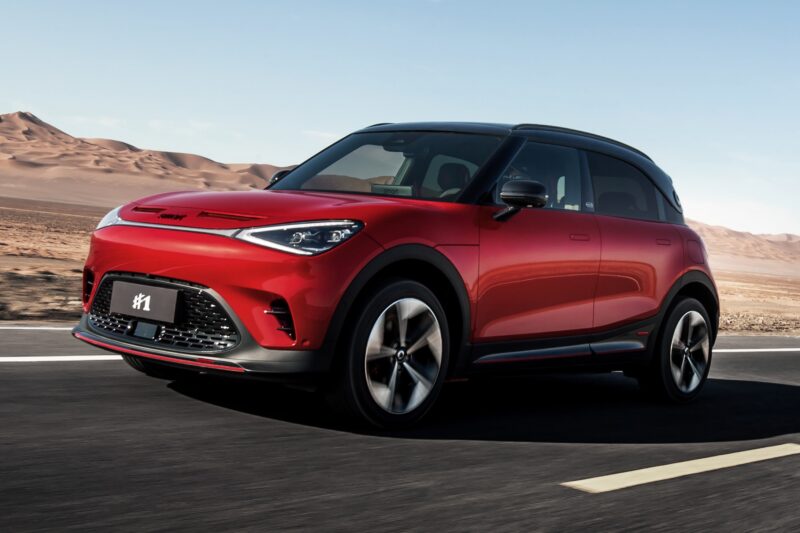
smart #1 Brabus (RM249,000)
Is a 0-100 km/h time of 3.9 seconds fast enough for you? If the answer is a yes, the smart #1 Brabus will undoubtedly catch your attention. As the flagship variant in the #1 lineup, it doesn’t compromise drastically on range—it can travel up to 400 km, just 40 km shorter than the Premium variant.
In addition to its face-melting acceleration, it stands out on the road thanks to with the Brabus styling elements and striking red accents. To top it off, its suspension has also been retuned accordingly to provide a more agile handling performance in corners.
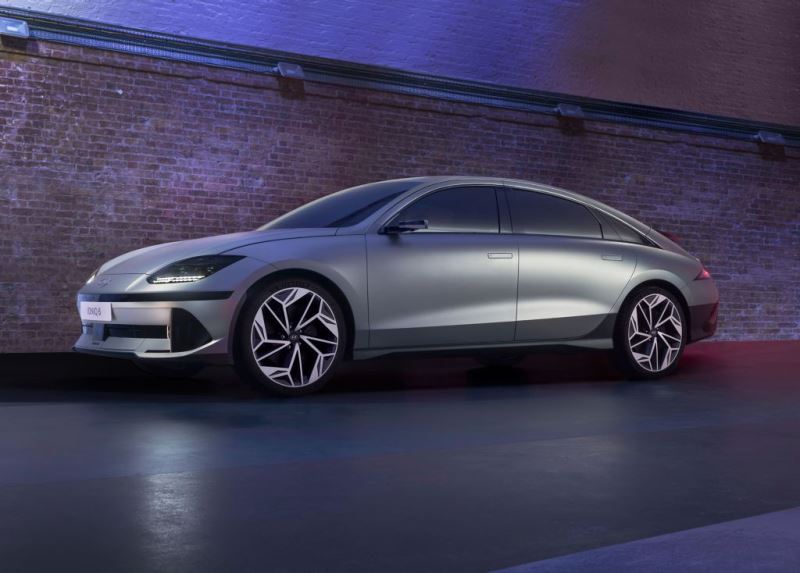
Hyundai Ioniq 6 Lite RWD & Plus RWD (RM219,888 & RM249,888)
Launched in September last year, the Ioniq 6 Lite RWD and Plus RWD present a more affordable alternative to the Max RWD and AWD variants.
Both variants are equipped with a rear-axle electric motor that produces 151 PS and 350 Nm, enabling them to accelerate from 0 to 100 km/h in 8.8 seconds and reach a maximum speed of 185 km/h—on par with the Max variants. The driving range, while shorter than that of the Max RWD (614 km) and AWD (519 km), is perfectly adequate at 429 km. On top of that, you’re getting an EV with a distinctive design that sets it apart from the crowd.
MAN Truck & Bus is setting another milestone in the electrification of freight transport with the handover of the first MAN eTruck to the Duvenbeck Group,
The Ultra Low Liner eTGX semitrailer tractor, specially developed for the loading volume requirements of automotive logistics, is set to make Volkswagen plant logistics particularly climate-friendly in the future.
In accordance with the letter of intent (LOI) signed by both parties, Duvenbeck intends to put up to 120 units of the MAN eTGX into service by 2026.
Duvenbeck will deploy the MAN eTruck in various areas of the Rhine-Ruhr and BeNeLux freight forwarding region as part of VW’s plant logistics.
“With the Ultra Low Liner eTruck, MAN has developed a solution that is perfectly tailored to the requirements of the automotive industry. No other series produced electric semitrailer tractor can pull trailers with an interior height of three meters. This makes it the ideal choice for transports with high volume requirements,” explains Friedrich Baumann, Chief Sales & Customer Solutions Officer at MAN Truck & Bus.
“We are delighted to have two strong partners at our side, Duvenbeck and Volkswagen, to bring this innovation to the road.”
The Ultra Low Liner eTruck MAN eTGX features a semitrailer height of just 950 mm, a very short wheelbase of 3.75 meters and a battery that offers a range of around 500 km.
This makes it perfect for use in automotive logistics, where maximum load volume up to three meters in interior height is more important than high load weights.
Thanks to its modular battery concept with a choice of four, five or six battery packs and power levels of 449 and 544 hp, it can be optimally adapted to any transport task.
In addition to the standard CCS charging technology (up to 375 kW), it can also be ordered with the new MCS standard with up to one megawatt charging power, which enables even faster intermediate charging during the driver’s break from driving.
Auto Bavaria has announced a strategic collaboration with Affin Group to enhance electric vehicle (EV) charging infrastructure in the country.
This partnership aligns with both organisations’ environmental, social and governance (ESG) goals aimed at fostering more responsible mobility solutions.
Through this collaboration, Auto Bavaria, the authorised dealer for BMW, is set to accelerate the availability and accessibility of EV charging facilities across the region.
The company’s efforts began with the installation of seven AC charging units and one DC charging unit at the EV charging station at Menara Affin in Tun Razak Exchange, which serves as Malaysia’s International Financial Centre.
Vi Thim Juan, Managing Director of Auto Bavaria, stated, “This partnership with Affin underscores our dedication to enhancing EV infrastructure development and supporting Malaysia’s shift towards a low-carbon economy.
“Together, we are empowering drivers to make responsible mobility choices and contribute to a lower carbon footprint in their automotive ownership needs.”
Datuk Wan Razly Abdullah, President & Chief Executive Officer of Affin Bank Berhad, added, “Our collaboration reaffirms Affin’s unwavering commitment to our ESG agenda, creating a positive impact for the future while providing a seamless and convenient customer experience.
“This initiative aligns with the ‘Unrivalled Customer Service’ and ‘Responsible Banking with Impact’ pillars of our AX28 Strategic Plan,” he said.
Wan Razly further stated that customers can explore Affin’s range of EV offers, including tailored financing options designed to simplify the purchase journey and enhance affordability.
Malaysia’s Leading Automotive News | ENGEAR ENGLISH