Less than two months after the announcement was made, Honda and Nissan have decided to cancel their merger plans.
According to the original plan, the merger between Honda and Nissan was set to create the world’s third-largest automotive group, following Toyota and Volkswagen.
Citing a report from Japan News, Nissan rejected Honda’s proposal to make it a wholly-owned subsidiary, causing the merger discussions to become disrupted.
In a previous announcement, both parties signed a memorandum for cooperation in electric vehicles (EVs) and several related areas, including vehicle software.
In December, Honda and Nissan announced plans to form a holding company that would oversee the operations of their respective brands.
The merger was originally intended to reduce costs and alleviate financial burdens, thus enabling both brands to compete with global players like Tesla and BYD.
Both Honda and Nissan were expected to announce the results of their discussions at the end of January; however, this was postponed to mid-February.
Despite the cancellation of the merger plans, Honda and Nissan are reportedly set to continue their strategic partnership along with Nissan’s partner, Mitsubishi.
After four months of pre-orders, today, Motosikal & Enjin Nasional Sdn Bhd (MODENAS) delivered the all-new Kawasaki Ninja ZX-6R mid-range supersport model to the first 100 owners.
The delivery event, held at the Petronas Sepang International Circuit, was attended by Kawasaki dealers, loyal fans, and representatives from the media.
Initially, MODENAS targeted only 50 units; however, due to overwhelming demand, this number was doubled to 100 units.
This also marked the completion of sales for the first two batches in a short period.
In terms of specifications, the Ninja ZX-6R is powered by a 636 cc inline four-cylinder engine that produces 122 hp and 69 Nm of torque, paired with a 6-speed transmission that features an assist and slipper clutch.
The suspension system comprises Showa SFF-BP 41 mm front forks, followed by a single rear shock absorber.
The braking system relies on four-piston calipers and dual 310 mm rotors at the front, as well as a single-piston caliper and 220 mm rotor at the rear.
Electronic assistance features include traction control (KTRC), a quickshifter, three riding modes (Road, Rain, Sport), and a 4.3-inch TFT display that can connect to smart devices.
Assembled at the MODENAS factory in Gurun, Kedah, the Kawasaki Ninja ZX-6R is priced starting from just RM59,900.
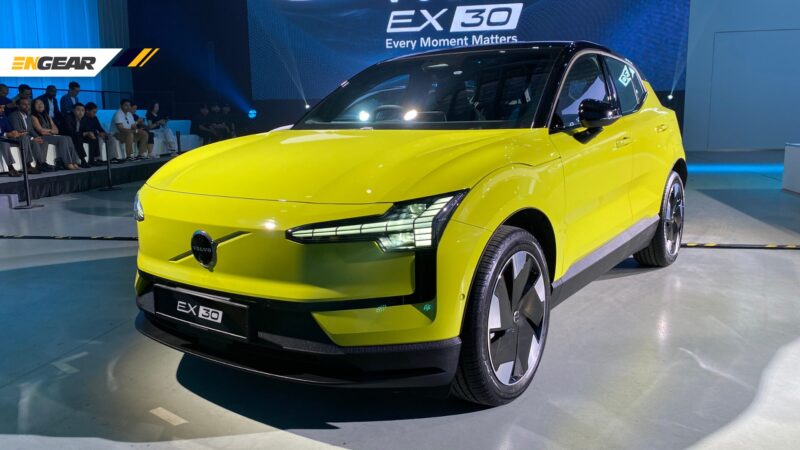
In the past, the name “Cross Country” was used by Volvo to bridge the gap between wagon models and SUVs.
However, it is now being applied to the brand’s most compact SUV, the Volvo EX30 Cross Country.
This rugged version of the Volvo EX30 features unique characteristics, such as matching protective plastic paneling, a skid plate, and exclusive 18-inch rims fitted with all-terrain tires.
Additionally, Volvo has modified the rear suspension settings of the EX30 Cross Country to better handle more challenging terrains.
At the front, a black panel displays a relief map of the Kebnekaise mountain range in Sweden.
As standard, the Volvo EX30 Cross Country is equipped with a dual electric motor producing 422 hp and 542 Nm of torque, paired with a 69 kWh battery pack.
While the originally stated range of 427 km may be difficult to achieve with the aforementioned all-terrain tire setup, there’s no need to worry.
The Volvo EX30 supports DC fast charging at 153 kW, allowing the battery to charge from 10 to 80 percent in just 28 minutes.
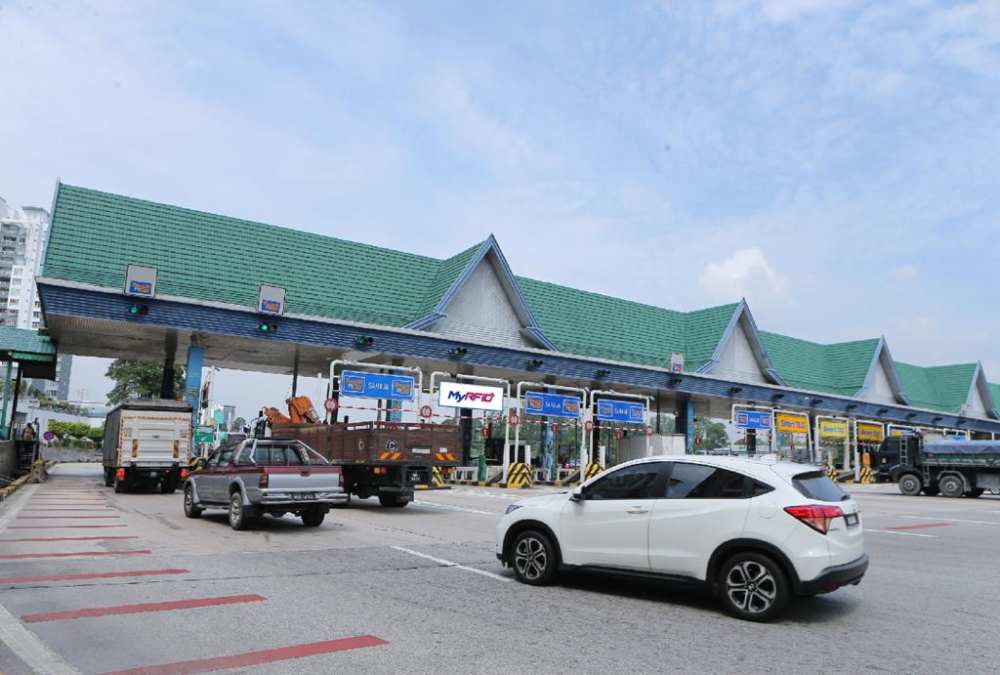
The Edge news portal reports that highway concessionaire PLUS Expressways Bhd will start a pilot trial of its own barrierless toll system beginning this April.
The Multi-Lane Free Flow (MLFF) system, developed in-house, aims to prevent misuse and exploitation of profits during its implementation.
Additionally, the company will collaborate with the Road Transport Department (JPJ) to impose penalties on users who fail to pay their outstanding tolls.
According to an industry executive, the objective of the partnership with JPJ is to ensure that users with outstanding toll payments settle their debts before they are allowed to renew their road tax.
The Edge also reported that PLUS has a unique advantage, as the company owns a subsidiary, Teras Teknologi Sdn Bhd, which currently provides electronic toll payment systems to other highway concessionaires.
In addition to PLUS, other concessionaires that have already begun trials of the MLFF system include Projek Lintasan Kota Holdings Sdn Bhd (Prolintas) and Amanat Lebuhraya Rakyat (ALR).
The Ministry of Finance (MOF) has asserted that there will be no increases in vehicle prices starting in 2026.
In a report by Bernama, MOF addressed the anticipated significant rise in vehicle prices beginning in 2026, following the full enforcement of the new excise tax regulation, P.U. (A) 402/2019 – Excise Tax Regulation (Determination of the Value of Locally Produced Goods for Excise Tax Purposes).
Additionally, MOF, along with the Ministry of Investment, Trade and Industry (MITI) and the automotive industry, is examining vehicle valuation methods to ensure the fair, uniform, and consistent implementation of the tax.
No final decisions have been announced at this time.
Previously, a local financial news portal cited industry sources indicating that the automotive sector has successfully secured an extension for the proposed review of excise duties for local assembled cars (CKD) until December 31 of this year.
The sources indicated that although a deferral has been granted for now, it is unlikely that any further extensions will be available after 2026, with vehicle prices expected to rise significantly starting in 2026.
Buyers in Malaysia seeking a B-segment sedan are quite fortunate, as we are presented with several attractive models including the Honda City, MG5, Nissan Almera, Proton Persona, and not to forget the Toyota Vios.
This segment is precisely suitable for those looking to upgrade to a larger daily vehicle after enjoying the experience of using a budget hatchback.
It offers a comfortable cabin for the whole family, ample cargo space, and a variety of modern technologies in line with current developments.
Most importantly, the annual road tax costs remain within the financial reach of most buyers.
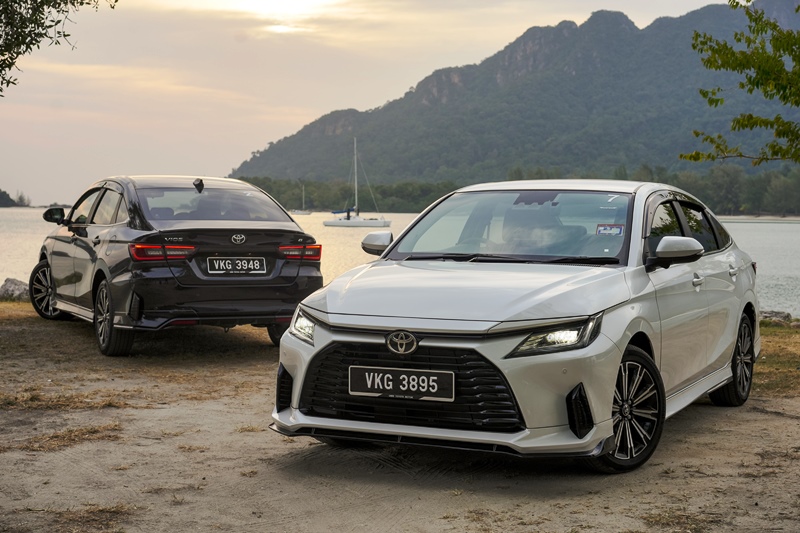
The Toyota Vios was officially launched in 2023, but at that time, many may not have been fully receptive to its somewhat aggressive design.
However, the Vios has certainly found a place in the hearts of netizens, as it became one of the 10 most popular models in Malaysia for 2024, trailing the Honda City by just 1,900 units.
After two years have passed, is the Vios still worth owning in 2025? If you ask us, the answer is: Yes!
Here are five reasons why we believe the Vios should be considered by young people.
1. More Premium Appearance
In the past, the Vios had a rather ordinary sedan appearance. In fact, one generation of the Vios was likened to a dugong due to its round design.
However, this new generation of the Vios presents a bolder look, reminiscent of larger Toyota sedans like the Corolla and Camry.
Have you noticed that the front design of the Vios notably features elements inspired by the hammerhead shark, even before Toyota popularized it through models like the Prius and Crown?
The fastback sedan design, 17-inch wheels, diffuser, aerodynamic elements, and body kit contribute to the aggressive aesthetic of this sedan.
More importantly, the Vios can now proudly stand alongside the two sedans mentioned earlier.
2. More Fun to Drive
The Vios is not just a new exterior; it now boasts a foundation built on a brand-new platform developed in collaboration with Daihatsu.
The Daihatsu New Global Architecture (DNGA-B) platform, shared with models like the Perodua Alza/Toyota Veloz, provides significant benefits in terms of handling and comfort.
In short, the Vios is now more enjoyable to drive compared to its predecessors!
The author personally tested the harmonious tuning of steering, suspension, and chassis recently on a trip back to their hometown.
The improved driving dynamics are attributed to the more precise steering response, offering more feedback in any situation.
It is very easy to anticipate the sedan’s body movements, particularly when driven a bit aggressively, aided by well-tuned suspension that ensures stability on winding roads.
At times, the author found it exhilarating to tackle every curve before being reminded by the lane departure warning system (LDW) present in the Vios.
What about the engine performance?
As you may know, the Vios is equipped with a 1.5-liter engine producing 104 hp and 138 Nm of torque — on paper, this seems less powerful compared to competing models.
Yes, we admit there is still some engine noise that enters the cabin when the engine is pushed, but this occurs only occasionally. However, if you have a heavy right foot, that’s a different story.
Most of the time, the Vios has no trouble reaching the desired speed, and tackling mountainous areas is also not a significant issue.
This is because the Vios has been tuned for more economical fuel consumption, with Toyota claiming it can achieve a fuel efficiency rate of 5.2 liters/100 km.
One aspect that clearly sets the Vios a step above a competing local brand.
My experience returning to my hometown, which is located at the midpoint of Peninsular Malaysia, did not require frequent fuel refills.
3. Comfort is Paramount
In addition to driving factors, what makes the Vios feel more premium is the remarkably quiet cabin environment throughout the journey.
The standard suspension tuning provided in the Vios not only enhances driving pleasure but also minimizes any harshness and vibrations resulting from tire and road surface interactions.
As a result, the cabin remains comfortable and quiet, even the sound of the wind is difficult to hear at normal highway speeds.
One notable drawback of the Vios is the manual seat adjustment for both the driver and front passenger.
However, we believe this shortcoming can be overlooked due to the very supportive cushion dimensions, especially in the thigh area.
For those who enjoy long journeys, this feature is crucial for ensuring comfort throughout the drive, preventing excessive fatigue.
The cabin design of the Vios represents a significant upgrade introduced by Toyota to differentiate it from the previous Vios model.
The use of higher-quality materials and finishes, along with a more streamlined dashboard layout, successfully gives the Vios a more premium appearance, even though it shares many components with Daihatsu models.
One thing the author noticed is that although there are panel gaps on the dashboard, it is difficult to detect vibrations when the sedan traverses uneven surfaces, indicating a good level of factory assembly quality.
However, I hope the air conditioning control knobs can be improved in appearance to align better with the premium image that the dashboard aims to convey.
The quality of the air conditioning system in the Vios is not to be taken lightly; it is highly effective in keeping the cabin comfortable in Malaysia’s hot daytime temperatures.
4. Modern Features in the Vios
In line with current developments, the Vios also showcases several advanced features compared to competing models.
One of them is the digital cluster screen with various graphic display options that can be changed. If you prefer not to have an analog display, you can opt for the GR Corolla meter display.
The Vios is also equipped with a 360-degree camera system, enhancing its premium feel over competing models.
The resulting display image is quite clear, aiding owners in ensuring that the Vios’ beautiful body remains free from scratches, especially in tight areas.
Finally, the Vios includes an electronic parking brake (EPB) complete with an Auto Hold function, which is particularly helpful when caught in traffic congestion.
The Vios’s safety features are noteworthy as well; it includes a pre-collision system (PCS) that effectively prevents unintended collisions, adaptive cruise control (ACC), and forward motion alerts (FDA) to warn drivers who might lose focus at traffic signals.
The lane departure warning (LDW) feature also functions well, and I particularly enjoyed the notification sound reminiscent of warnings that pilots hear in an aircraft cockpit.
Additionally, the blind spot monitoring system (BSM) and rear cross traffic alert (RCTA) ensure day-to-day driving remains safe at all times.
5. Forgivable Weaknesses
As you may know, the Vios does have a few shortcomings, such as the absence of a spare tire and non-folding rear seats.
According to Toyota, most users do not utilize either of these functions, so they are not offered in the new Vios.
The absence of a spare tire allows for more hidden storage space in the rear.
What about the rear seating issue mentioned earlier?
Two years ago, the Chief Development Engineer of the Vios, Kamino Hideyuki, revealed that the lack of a rear seat folding mechanism was replaced with a brace to enhance the rigidity of the new Vios chassis.
Overall, the Vios is 110 kg lighter than its predecessor. As the saying goes: Weight reduction, bro!
In our opinion, these two weaknesses can be overlooked because the benefits of driving experience and handling are significantly improved in this Vios compared to earlier models.
In conclusion, the Toyota Vios is a B-segment sedan that is still worth considering and owning in 2025 if you have a budget of around RM100,000 and wish to upgrade to a larger, more practical vehicle.
More importantly, the Vios is now a car that is more enjoyable to drive!
Prime Minister Datuk Seri Anwar Ibrahim received an electric SUV as a gift from Turkish President Recep Tayyip Erdogan yesterday (February 11).
The Togg T10X was presented as a symbol of friendship between the two countries during President Erdogan’s recent official visit to Malaysia.
The Togg T10X is a segment C electric SUV produced by the Turkish automotive manufacturer Togg.
There are two powertrain configurations available: a rear-wheel drive (RWD) version with 218 hp and 350 Nm of torque, and an all-wheel drive (AWD) version with 436 hp and 700 Nm of torque.
The 52.4 kWh lithium-ion battery pack allows for a range of up to 314 km, while the 88.5 kWh version offers a range of up to 523 km on a full charge.
Jaecoo Malaysia has commenced the delivery process for 500 units of the Omoda C9 SUV to customers nationwide.
According to Emily Lek, the Vice President of Jaecoo Malaysia, “It is extremely gratifying to see the market’s positive reception for the C9.
“It affirms our concerted effort and commitment to introduce best-in-class vehicles that suit the needs and preferences of drivers here.
“We’re ready to take our customers on the next phase of their ownership journey with JAECOO with the support of our extensive network of exceptional dealers.”
Officially launched in December, the Omoda C9 is a premium off-road coupe SUV offered in two main variants: the 2WD version, priced at RM168,800, and the AWD version, priced at RM188,800.
The Omoda C9 is powered by a 2.0-liter turbo engine that produces 261 PS and 400 Nm, paired with an eight-speed automatic transmission.
Similar to the Jaecoo J7 model, the Omoda C9 is also assembled at the Jaecoo manufacturing facility located in Shah Alam.
Volvo Car Malaysia wrapped up the year 2024 with a record sales figure of 1,953 vehicles. Of this total, 30 percent were battery electric vehicle (BEV) models, representing an 18 percent increase compared to 2023.
Overall, BEV and plug-in hybrid (PHEV) models accounted for 83 percent of total sales for the year 2024, up from 71 percent the previous year.
This achievement aligns with the brand’s ambition to sell between 90 to 100 percent electric vehicles by 2030.
Less than 20 percent of Volvo Car Malaysia’s total sales were comprised of mild hybrid electric vehicles (MHEV), down from one-third recorded in 2023.
Globally, Volvo Cars reported total sales of 763,389 vehicles, marking an 8 percent increase.
There was a growth in sales within the electric vehicle segment, with 175,194 BEVs and 177,593 PHEV models sold, representing increases of 54 percent and 16 percent, respectively.
In total, 46 percent of Volvo’s global sales were electric vehicles, while BEV sales alone accounted for 23 percent, up from 16 percent in 2023.
For 2025, Volvo Car Malaysia plans to launch another BEV model, the Volvo EX90, a luxurious seven-seater SUV.
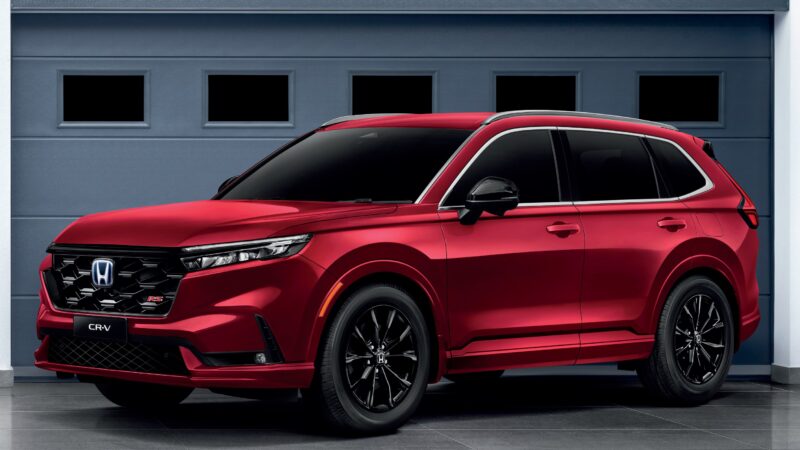
Honda Malaysia has announced an impressive achievement, with the sixth-generation Honda CR-V SUV recording sales exceeding 11,300 units throughout 2024.
This achievement solidifies the CR-V’s status as the number one model in the mid-size SUV segment, capturing approximately 36 percent of the market share.
According to Hironobu Yoshimura, Managing Director and Chief Executive Officer of Honda Malaysia, “Since its launch in December 2023, the Honda CR-V has experienced strong demand, further reinforcing its dominant position in the market.”
He further stated that the CR-V is the third best-selling model throughout 2024.
Of the total CR-V sales, the 2.0L e:HEV RS hybrid variant accounted for 20 percent, leading with an 87 percent share in the mid-size hybrid SUV segment.
The petrol variants also performed well, with the E variant being the customers’ top choice, contributing to 40 percent of total CR-V sales.
For the Malaysian market, the Honda CR-V is available with the option of a 1.5-liter turbo engine producing 193 PS and 243 Nm, or a 2.0L e:HEV hybrid engine with 184 PS and 335 Nm.
The exterior design of the CR-V features LED headlights and taillights, a distinctive front grille, and specific functions for the top variant, such as Active Cornering Lights and an Active Shutter Grille.
In addition to a spacious and comfortable cabin, the CR-V also offers a cargo space of 589 liters, which can expand to 1,072 liters when the second-row seats are folded flat.
Notably, it includes comprehensive safety features such as Honda CONNECT, Honda SENSING, and additional features for the e:HEV variant like Adaptive Driving Beam and a 360-degree camera system.
The year 2024 saw Perodua not only achieving the highest vehicle registration record for the local market but also successfully ranking second in the ASEAN passenger vehicle sales chart for the same year.
This announcement was shared directly by Perodua with media practitioners during the ‘Up-Close & Casual With Perodua’ event yesterday.
According to the ASEAN passenger vehicle sales data for 2024, Perodua recorded sales of 358,000 units, surpassing Honda, which is now in third place with 303,000 units.
For the record, in 2023, Perodua ranked third with total vehicle sales of 330,000 units, behind Honda’s 351,000 units and Toyota, which was first with 752,000 units.
Since its establishment, Perodua has recorded a total of 5.1 million vehicles on the road.
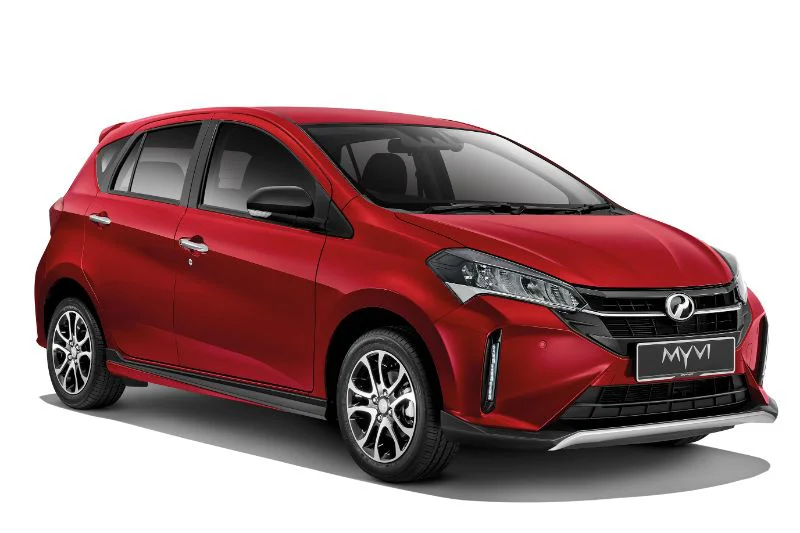
Among these, the Myvi remains the king of the road, with 1.487 million units, followed by the Perodua Axia (746,000 units), Perodua Kancil (709,000 units), and Perodua Alza (503,000 units).
Additionally, 2024 also saw Perodua exceeding its original production capacity of 320,000 units, with a total of 368,100 vehicles produced that year.
According to Dato’ Sri Zainal Abidin Ahmad, President and CEO of Perodua, “The record of 368,100 units was achieved by minimizing downtime according to the maintenance schedule, through dynamic coordination and planning with suppliers and distributors, and swiftly addressing challenges.”
For 2025, Perodua has allocated RM1.6 billion for model expenditure, much of which will be dedicated to factory improvements, stamping capacity upgrades, as well as new model development and tooling.
Meanwhile, Perodua anticipates a 4.9 percent decrease in production for 2025, forecasting a total of 350,000 units, along with a projected 3.7 percent reduction in registrations to 345,000 units.
“However, demand for our vehicles remains strong, with current back orders reaching 68,000 units, of which 28,000 orders have commitment letters issued without stock,” he further explained.
In terms of after-sales service, Dato’ Sri Zainal stated that the company aims to increase vehicle maintenance numbers this year to 3.7 million, representing a rise of 7.6 percent.
Perodua will also continue to support the nation’s automotive ecosystem with an estimated RM10.8 billion in local component purchases from suppliers in the country.
“2025 will be an exciting year for Perodua as we prepare the company and our strategic partners for any forthcoming changes. We believe that once these changes are complete, we will be able to strengthen our position both in this country and in the region,” he said.
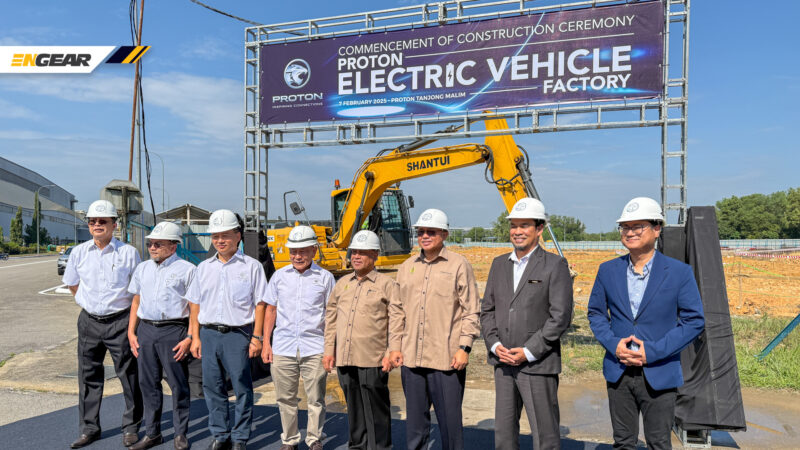
Today marked the groundbreaking ceremony for the construction of the first phase of Proton’s electric vehicle (EV) assembly plant, which is located in the high-tech facility in Tanjung Malim.
With an investment of RM82 million, the first phase of this EV assembly plant is expected to be completed by the end of 2025, with an initial production capacity of approximately 20,000 units per year.
The plant will serve as the assembly location for various types of new energy vehicles (NEVs) for both the domestic and export markets, based on the Global Modular Architecture (GMA) platform, starting with the Proton e.MAS7 model.
Various smart manufacturing technologies will be employed to ensure the plant is ready for NEV production, including robotics, cloud-based factory management, the Internet of Things (IoT), and technologies related to Industry 4.0.
At the same time, Proton’s new plant is expected to create over 200 new job opportunities for the local community.
Proton has also planned for a second phase of production as preparation for the increasing demand for EVs both domestically and internationally, with production capacity set to rise to 45,000 units per year.
According to Dr. Li Chunrong, CEO of Proton, “PROTON is transitioning to become an OEM that offers both Internal Combustion Engine (ICE) and EV models as we established PRO-NET to sell smart vehicles before launching the Proton e.MAS 7.
“With the experience we have gained over the past few years in all aspects of these vehicles and customer needs, today we take the next step in realizing our dream of producing and developing EV models in Malaysia.
“The vehicles manufactured at this new plant will meet the needs of customers in the local and export markets and will help drive the growth of the EV market.
“Once completed, production at this new facility will focus on the Proton e.MAS 7 and future NEV offerings as PROTON expands its model range. Ultimately, we hope our success will create a modern and capable automotive ecosystem to encourage more OEMs to consider Malaysia and AHTV as a regional base for EVs,” he further stated.
Automotive company Hyundai has announced a collaboration with TVS Motor Company to develop last-mile mobility solutions for the Indian market.
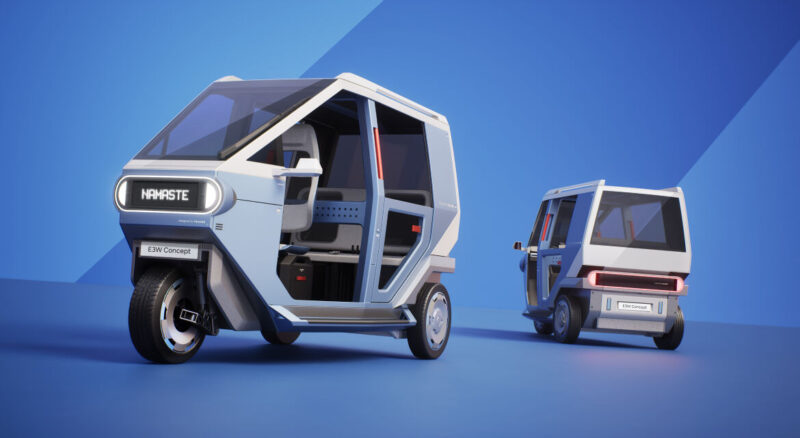
Two concept models have been showcased: a three-wheeled rickshaw concept (E3W) and a more suitable four-wheeled concept (E4W) designed for vehicle-sharing services.
Both vehicles feature a minimalist design reminiscent of the tuk-tuks commonly found on the congested roads of India.
To ensure lower manufacturing costs, Hyundai plans to use recycled plastic and flatter body panels, thereby reducing the burden on owners when replacing damaged parts.
Compared to typical rickshaws, the E3W boasts dimensions that are 200 mm longer and 35 mm taller to facilitate easier entry and exit.
Other features included are bottle holders and smart device storage, a USB charging port, and storage space under the seat.
Another concept model, named E4W, has a four-wheel configuration and a cabin space that appears larger than that of the E3W.
The handling characteristics are more akin to those of a real car, featuring a minimalist digital display and a round steering wheel equipped with a cluster of control buttons.
Under the bench-style second-row seat, there is storage space for goods, as well as a special board that can be used to hang items like fans or umbrellas.
An auto rickshaw speeds through heavy rain in Agartala, India on June 1st (Reuters/Jayanta Dey) pic.twitter.com/IQCW6GAQUZ
According to Hyundai, the ground clearance for both models can be adjusted as needed, particularly when navigating waterlogged routes during the monsoon season.
No specifications regarding the powertrain have been provided at this time.
However, it is worth noting that TVS has launched the three-wheeled King EV Max rickshaw priced at INR 295,000 (RM 14,928), which offers a range of 179 km and a top speed of 60 km/h.
A few weeks ago, Xiaomi unveiled its second electric vehicle (EV) model set to launch this year, known as the YU7.
This electric SUV is expected to pose a strong challenge to the popular Tesla Model Y.
According to data obtained from Chinese government ministry websites, the Xiaomi YU7 measures 4,999 mm in length, 1,996 mm in width, 1,600 mm in height, and has a wheelbase of 3,000 mm, making it larger than the Model Y.
The all-wheel-drive (AWD) version of the Xiaomi YU7, boasting 691 PS, will be offered with range options of 670 km, 750 km, and 760 km.
Currently, Xiaomi has not yet disclosed the range for the rear-wheel-drive (RWD) variant (320 PS) or the capacity of the NMC (nickel manganese cobalt) battery pack that will be available for each variant.
The selling price has also yet to be finalized, but local media suggest that the Xiaomi YU7 will start at around RMB 250,000 (RM 151,958), making it significantly cheaper than the Tesla Model Y, which starts at RMB 263,500 (RM 160,163).
Astro Awani reports that an Indonesian national died in a helicopter accident on the Old KL-Bentong Road after being struck by the rotor blade.
According to the National Fire Operations Center, the Malaysian Fire and Rescue Department (JBPM) reported that two individuals were on board the helicopter, and the pilot was reported safe.
Based on a report from Berita Harian, the Bell 206L-4 Long Ranger transport helicopter caught fire while attempting to land, before it lost control and overturned.
The helicopter was completely engulfed in flames during the incident, which occurred at 10:39 AM, and the fire was brought under control and fully extinguished by 11:06 AM.
According to reports, the helicopter was on duty for the installation of cables for the Tenaga Nasional Berhad (TNB) project.
Unlike the electric motorcycle and scooter segment, it can be challenging to find two-wheeled machines powered by hybrid engines.
Kawasaki has previously unveiled two hybrid models, the Ninja 7 Hybrid and Z7 Hybrid.
What about Yamaha?
At the Bharat Mobility Expo 2025, which took place last month, Yamaha Motor India showcased a naked motorcycle that was once popular in Malaysia—the FZ.
More specifically, it’s the all-new Yamaha FZ-S Hybrid, powered by a single-cylinder 149 cc air-cooled engine that produces 12.4 hp and 13.3 Nm of torque.
Unlike the hybrid systems found in Kawasaki machines, the FZ-S Hybrid relies on a mild-hybrid system, where extra power is supplied by an Integrated Starter Generator (ISG).
While there is no benefit in terms of zero-emission riding, assistance from the electric motor can enhance the characteristics of the 150 cc engine to feel more like a 200 cc, especially during acceleration or when overtaking vehicles.
With this mild-hybrid system, it’s possible for the 13-liter fuel tank to achieve a riding range of over 480 km.
Other features include:
41 mm front telescopic forks
Single shock absorber with 7-level preload adjustment
17-inch alloy wheels
Seat height of 790 mm
Traction control system (TCS)
282 mm front brake rotor, 220 mm rear
Single-channel ABS braking system
In the Indian market, the Yamaha FZ-S Hybrid is priced at INR 130,700 (approximately RM 6,600).
Based on registration data released by the Department of Road Transport (JPJ) through the website data.gov.my, 2024 has been an excellent period for Perodua.
During this time, the brand recorded vehicle registrations totaling 358,100 units, securing the top spot once again.
In second place is Proton, with a total of 147,587 units registered, while Toyota comes in third with 127,202 units registered.
Interestingly, among the top 10 manufacturers, Chinese automotive brands have started to emerge, surpassing brands that were previously popular.
For example, Chery ranks fifth, beating out Mitsubishi and Mazda, while BYD has managed to secure the tenth position, ahead of Nissan, which ranks eleventh.
But do you know the list of the 10 most popular cars in Malaysia for 2024?
While the global passenger vehicle market is dominated by the industry giant Toyota, the global motorcycle segment appears to be led by Honda.
According to a report from Japan Times, Honda’s global motorcycle sales are projected to reach 20.2 million units for the fiscal year ending in March this year.
This means that Honda currently holds as much as 40 percent of the global motorcycle market share!
This development is supported by strong demand from several markets, including India, Indonesia, the Philippines, Brazil, and several countries in Central and South America.
Honda is also determined to increase its market share target to 50 percent, which will include electric motorcycles, with total sales aiming to hit 60 million units by 2030.
To achieve this, a new assembly plant dedicated to electric-powered motorcycles will be established in India and is set to begin operations in 2028.
As part of a serious drive toward electrification, the manufacturer also plans to launch up to 30 electric models in order to reach an annual sales target of four million units for electric motorcycles (EVs) by 2030.
Other initiatives in the pipeline include developing battery usage and recycling, reducing e-bike costs, ensuring that existing facilities are more environmentally friendly, and further expanding the network of existing battery-sharing and swapping stations.
To date, Honda operates 37 assembly facilities across 23 countries.
The Asahi Shimbun reported today that the proposed merger between two major Japanese automotive companies, Nissan and Honda, may be canceled.
According to sources close to the matter, the two companies are planning to hold a meeting to discuss the cancellation of the merger negotiations.
It is understood that Honda wanted to turn Nissan into a subsidiary; however, this plan was met with strong opposition as it did not align with previous arrangements.
When the merger plan was announced at a joint press conference last December, a holding company was set to be formed to oversee both brands, which would become the third-largest automotive company in the world, following Toyota and Volkswagen
Further surprising developments have emerged just days after reports stated that Honda and Nissan aimed to postpone their merger announcement until mid-February.
Nissan is currently grappling with a restructuring effort that includes cutting up to 9,000 jobs globally.
However, the company has not provided detailed explanations of the plan to its potential business partners, and Honda’s upper management has also complained that Nissan is moving too slowly.
In a press conference last December, Nissan President Makoto Uchida emphasized that both companies would be on equal footing.
Didi Group, the official distributor and importer of Aprilia motorcycles in Malaysia, held a ‘Meet & Greet’ session yesterday (February 4, 2025) with MotoGP riders Jorge Martin and Marco Bezzecchi.
The event, which took place at the RUD Karting Circuit in Sepang, also featured Massimo Rivola, the director of the Aprilia MotoGP team, and test rider Lorenzo Savadori.
At the same time, Didi Group showcased the limited edition SR GT 200 Replica, which features a striking red and purple livery inspired by the graphics on the MotoGP bikes for the 2024 season.
The basic specifications remain unchanged, including a single-cylinder 174 cc SOHC engine with liquid cooling that generates 17.4 hp and 16.5 Nm of torque.
The suspension system consists of a 33 mm front telescopic fork, supported by dual shock absorbers with preload adjustment.
Other features include 14-inch and 13-inch rims, a 220 mm front brake rotor with single-channel ABS, LED lighting, a digital meter display, 25 liters of storage space, and connectivity to smart devices via the Aprilia MIA app.
The Aprilia SR GT 200 Replica is priced at RM20,900, limited to 32 units only.
Malaysia’s Leading Automotive News | ENGEAR ENGLISH