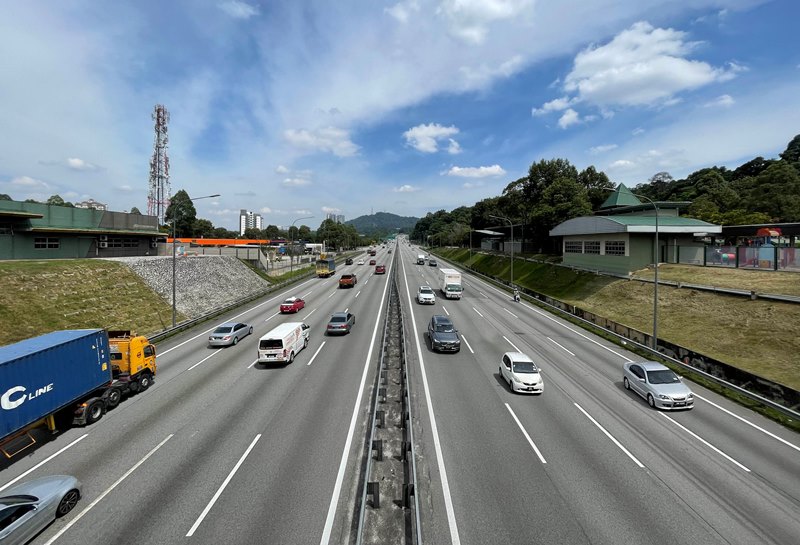
Many may still not be aware that driving slowly in the middle or right lanes is an action that inconveniences many other road users.
This driving attitude, known as lane hogging, can actually increase the risk of accidents.
According to a report by BuletinTV3, which cites the words of the Director of the Traffic Investigation and Enforcement Department (JSPT) Bukit Aman, Datuk Seri Mohd Yusri Hassan Basri, this lane hogging behavior is irresponsible and can be met with strict actions.
“If drivers wish to reduce their speed, they should move to the left lane to allow other drivers to continue their journey smoothly,” he said.
KENAL PASTI FUNGSI LORONG DI LEBUHRAYA PLUS
Elak menjadi Lane Hogger, Galakkan Aliran Trafik yang Lancar!
Ketika musim perayaan terutamanya, akan berlaku lonjakan trafik di mana semua kereta beratur untuk menuju ke destinasi tertentu mengikut aturan dan pic.twitter.com/2HD7yPjuPG
He added that fines and penalties ranging from RM300 to RM2,000 can be imposed on drivers found guilty of this offense.
This matter is further supported by a study conducted by the Malaysian Institute of Road Safety Research (MIROS), which finds that lane hogging often stems from a lack of driving discipline and awareness of the functions of each lane.
According to Senior Research Officer at MIROS, Norfaizah Mohamad Khaidir, many drivers believe they have the right to use the fast lane as long as they do not exceed the speed limit.
“When asked, Malaysians know that speeding is wrong, but many do not realize that driving slowly in the fast lane is also an offense,” she said.
A few days before the Chinese New Year celebrations, Dinamijaya Motors, the sole distributor of Kia vehicles, invited automotive media practitioners to test the newly launched C-segment SUV – the 2025 Kia Sportage.
For your information, our market has been somewhat slow to embrace this Sportage model, as the fifth generation was introduced as early as 2021.
However, there is no need for concern, as the launched Sportage units are CKD (Completely Knocked Down) vehicles produced at the Inokom plant in Kulim, Kedah, meaning they come with a very competitive price.
We had the opportunity to test drive the two highest variants, the Sportage 1.6T 2WD High and 1.6T AWD High.
Here are our first insights based on the short test drive we conducted recently:
1. A More Striking Exterior Design
The exterior design of the Kia Sportage represents a significant shift from the previous generation.
Employing an approach known as “Opposites United,” the Kia Sportage features an aggressive front design, beginning with its signature tiger nose grille and boomerang-shaped LED daytime running lights (DRL) that separate the grille from the main headlights.
This boomerang element is also mirrored in the rear lights, though with a smaller opening.
The SUV’s side profile is enhanced by an elongated chrome strip that adorns the lower edge of the glass housing, as well as black finishes at each wheel arch.
This aggressive design could be a ‘plus point’ for owners seeking something different on the road, and may particularly appeal to those weary of the ubiquitous Chinese SUVs.
Nonetheless, it’s wise to introspect and consider personal tastes before making a decision.
2. Driver-Oriented Cockpit Design
I am quite fond of the layout of the all-new Kia Sportage dashboard.
It is neat and, most importantly, designed with the driver in mind, as the central screen and control panel at the base of the air conditioning vents are angled towards the driver.
With an optimal driving posture, there’s no difficulty in reaching the aforementioned components to adjust settings while driving.
Although there are no physical buttons for the air conditioning system, the touch-based panel is user-friendly, allowing drivers to avoid digging through settings embedded in the main display.
What makes the front row seem more spacious is the presence of a rotary PRND knob in the central console.
Additionally, physical buttons remain in that area for essential functions like drive mode selection, Auto Hold, and the surround camera.
For fans of Apple CarPlay and Android Auto, rest assured that these features are indeed available in the Kia Sportage.
3. Comfortable and Practical Cabin
Positioned as a C-segment SUV, the Kia Sportage serves as an alternative for those who aren’t fond of larger SUVs like the Kia Sorento.
With dimensions close to those of a Honda CR-V, space is certainly not an issue for the Kia Sportage.
Importantly, rear passengers can enjoy a more generous recline angle, whether they prefer a more upright position or a comfier angle during their journey.
One feature that I appreciate about the Kia Sportage is the presence of a large hook on the headrest structure that can be used to hang jackets, shopping bags, or scarves.
The cargo space measures a generous 543 liters as standard, and can expand to 1,829 liters when the second-row seats are folded.
4. Driving Performance
To be honest, the driving experience offered by the Kia Sportage meets expectations.
With precise and responsive steering, I encountered no issues while handling this C-segment SUV, whether on the highway, at the Karak Circuit, or on winding rural roads.
Moreover, the steering correction system operates in a driver-friendly manner, not too aggressively to the point of annoyance, unlike some competitors’ models.
The Kia Sportage 1.6T can generate a power output of up to 177 hp and 265 Nm, paired with a seven-speed dual-clutch transmission (DCT).
Starting with the 1.6T AWD unit, the acceleration response felt somewhat less spirited compared to the 2WD variant we tested after lunch.
However, this isn’t a significant downside if you’re not a heavy-footed driver.
You should also know the next advantage of the Kia Sportage: a quiet cabin at normal speeds.
With a suspension setup effective for varying road conditions in Malaysia, it is also challenging to perceive significant vibrations and harshness in the cabin, unless driven more aggressively.
5. Price
The Kia Sportage 2025 for the Malaysian market is sold starting at RM149,781.78 for the 2.0G variant, while the unit we test drove starts at RM179,599 for the 1.6T 2WD variant, and from RM189,599 for the AWD variant.
What are the differences between the 1.6T 2WD and 1.6T AWD variants?
Only three aspects differentiate these two variants: the all-wheel drive system with a differential lock, roof rails, and an eight-speaker Harman Kardon audio system.
Therefore, choosing the 1.6T 2WD model is perfectly valid as it is also equipped with comprehensive safety features, including six airbags, a blind-spot collision warning (BCW), high beam assist (HBA), blind-spot monitoring (BVM), and intelligent cruise control (SCC).
We will share more information in a more comprehensive test drive article coming soon.
Do you know which car was the best-selling in Europe for the year 2024?
It is neither a Japanese car nor a German compact car, but rather a vehicle from Romania.
More specifically, it is the Dacia Sandero (“good news!” as James May would say).
According to data from industry analyst Jato Dynamics, a total of 268,101 units of the Dacia Sandero were registered in Europe over the past year.
In second place is the Renault Clio, with a difference of over 50,000 units compared to the Dacia Sandero, followed by the Volkswagen Golf, which had 215,715 units sold.
Sales of the most popular model in 2023, the Tesla Model Y, fell by 17 percent to 209,214 units; however, it remains the leader in the category of the most popular electric vehicles.
Speaking of EVs, the market share for these zero-emission vehicles decreased from 15.7 percent in 2023 to 15.4 percent last year, while the percentage for petrol engine models increased from 47.8 percent to 48.4 percent.
The decline in EV sales is attributed to the withdrawal of incentives and the average selling price still being high and unaffordable, according to Jato Dynamics’ analysis.
Meanwhile, demand for hybrid vehicles increased from 9.9 percent to 11.8 percent, while plug-in hybrid electric vehicles (PHEVs) accounted for only 7.3 percent (down from 7.7 percent).
The Suzuki Jimny Nomade, or more precisely, the more practical 5-door Jimny, has just been officially launched for the Japanese market.
However, within just four days, the demand has been overwhelming, with 50,000 orders already recorded.
This situation has forced Suzuki Japan to temporarily close the order books for this model.
In a message posted on the official website, Suzuki apologized for the inconvenience faced by customers wishing to order the Suzuki Jimny Nomade.
“The (Suzuki) Jimny Nomade has received a very positive response, and we have received orders that far exceed the production capacity.”
“As a result, we will temporarily close the order books and will update when orders can be reopened, taking into account future production circumstances.”
The high popularity among Japanese buyers is due to the 5-door Jimny’s offering, which is significantly more practical.
The addition of two extra passenger doors and a longer wheelbase creates a more spacious cabin, which is beneficial for family activities, unlike the Jimny (kei car) and Jimny Sierra, without compromising the off-road driving advantages that are synonymous with the Jimny name.
It is worth noting that, unlike the 3-door Suzuki Jimny produced in Japan, the Suzuki Jimny 5-door (including units that have already arrived in Malaysia) is built at the Gurugram factory located in India.
With production limited to 1,200 units for the Japanese market, the wait time now reaches up to three and a half years!
The first deliveries of the Suzuki Jimny Nomade in Japan will take place on April 3.
Due to the extremely encouraging demand, Suzuki has also had to cancel all planned exhibition events for the Suzuki Nomade in Japan.
Japan Today reported yesterday (February 2) that Honda and Nissan will announce their merger plan in mid-February.
According to the original plan, the second and third largest automotive manufacturers intended to make the announcement by the end of January.
During a press conference held last month, both parties agreed to start discussions to form a new company by 2026.
Honda’s CEO, Toshihiro Mibe, stated that they expect Nissan to take appropriate actions in restructuring as a prerequisite for the merger.
In November, Nissan announced a reduction of up to 9,000 jobs worldwide and a 20 percent cut in global production capacity after the company reported a profit decline of over 90 percent for the period from April to September.
As part of its restructuring efforts, Nissan is also planning to offer early retirement programs for workers at three plants in the United States and to reduce the workforce in Thailand.
Honda appears to be somewhat skeptical and is calling for more drastic measures to ensure Nissan’s successful recovery.
According to another source, Nissan’s alliance partner, Mitsubishi, is less inclined to join the new merged entity.
In conjunction with the launch of the Suzuki Jimny Nomade (5-door) for the Japanese market, tuning company DAMD is offering up to three body kit packages to customize the off-road SUV.
Owners of the 5-door Suzuki Jimny in Japan can choose to customize their vehicles with the “little D,” “little G. ADVANCE,” and “little G. TRADITIONAL” body kits.
The “little D” kit features a new front and rear bumper, as well as lighting units that are clearly inspired by the classic Land Rover Defender.
For those who desire the G-Wagen look, there are two body kit options available.
The “little G. TRADITIONAL” presents an exterior appearance resembling that of the earliest generation Mercedes-Benz G-Wagen, complete with a new front grille structure and wider fender flares.
Owners who want a more modern and sporty G-Wagen image can opt for the “little G. ADVANCED,” which comes with city-appropriate tires, a front fascia similar to that of the G63 AMG, turn signal lights mounted on the engine hood, and a more compact rear spare tire cover.
According to a report from Response.jp, DAMD has already begun the development project for all three body kits for the Suzuki Jimny Nomade, aiming for a launch within this year.
Throughout 2024, Toyota Motor Corp sold a total of 10.82 million vehicles, allowing the automaker to maintain its global leadership for the fifth consecutive year.
Despite this figure representing a 3.7 percent decline compared to 2023, Toyota explained that there is still strong demand for its hybrid vehicles.
The second place was secured by the Volkswagen Group, with total sales of 9.03 million units, while the Hyundai Group recorded sales of 7.23 million units.
For the first time, BYD surpassed Honda, Nissan, and Suzuki with sales of 4.27 million units last year.
In comparison, Honda sold 3.81 million units, followed by Nissan with 3.35 million units and Suzuki with 3.25 million units.
Excluding brands under its umbrella such as Hino and Daihatsu, the sales figures for Toyota-branded vehicles alone reached 10.16 million units, a drop of 1.4 percent, following its involvement in a vehicle certification scandal, which led to a temporary halt in the production of certain models.
In key markets, Toyota recorded a 4.3 percent increase in sales, reaching 2.73 million vehicles in North America, followed by a 3.6 percent increase to 1.17 million vehicles in Europe.
However, Toyota’s sales in China saw a decline of 6.9 percent, totaling 1.78 million vehicles, due to ongoing price wars among major domestic manufacturers.
Porsche is one of the few sports car manufacturers that remains committed to offering models with a manual transmission.
In some markets, you can still obtain a manual 718, but for the 911 family, this option is now limited to the GT3 and Carrera T variants only.
Despite being described as a nearly extinct transmission, Andreas Preuninger, Director of the GT Model Line at Porsche, believes it is important to continue fighting to preserve the manual transmission at Porsche.
Citing a report from Motor1, Preuninger stated, “From a personal point of view, it is very important to have a manual model.”
“I prefer manual and don’t mind shifting gears myself, especially on the track, knowing exactly that the PDK transmission is faster,” he added.
Preuninger also does not believe that stricter emissions laws will eliminate manual transmissions.
“(Manual) is lighter, which contributes to reductions in emissions and more efficient fuel consumption, and you also have more power at the wheels because the power loss in a manual transmission is lower compared to PDK,” he explained.
“In the real world, manual cars use less gasoline and produce fewer emissions compared to PDK. That is a fact.”
Suzuki has officially launched a more practical five-door off-road SUV variant of the Jimny, known as the Jimny Nomade for the Japanese market.
Compared to the three-door Jimny Sierra still available there, the Jimny Nomade measures 3,890 mm in length, making it 340 mm longer, and resulting in a wheelbase of 2,590 mm.
The benefits? More spacious rear passenger seating, as well as increased cargo capacity, making it more practical.
The Jimny Nomade can be distinguished by its honeycomb grille structure with a Gun Metallic finish, as well as new color options including Sizzling Red Metallic and Celestial Blue Pearl Metallic.
In terms of power, the Suzuki Jimny Nomade retains the 1.5-liter engine that produces 103 hp and 134 Nm of torque, paired with either a 5-speed manual transmission or a 4-speed automatic transmission.
Additionally, the Jimny Nomade comes standard with a part-time four-wheel drive (4WD) system and maintains a 36-degree approach angle and a 47-degree departure angle.
In Japan, Suzuki sells the Jimny Nomade starting at ¥2,651,000 (approximately RM75,643).
For reference, the Suzuki Jimny Nomade is a completely imported unit from the Gurugram assembly plant in India, unlike the Jimny Sierra (3-door variant) which is assembled in Japan.
Who would have thought that the premium-looking Audi Q6 Sportback e-tron electric SUV could transform into a more serious off-road vehicle?
That’s what Audi aims to showcase with the Q6 e-tron Offroad Concept, featuring a higher ground clearance and a wider body dimension.
Audi has also hinted that this model is ready to be realized as a production vehicle.
In terms of power, the Q6 e-tron Offroad is equipped with two electric motors producing 510 hp, driving all four wheels.
With an increased track width of 250 mm and a ground clearance raised by 160 mm, thanks to the use of four portal axles directly connected to the wheel hubs, this SUV is designed for enhanced off-road performance.
The newly designed portal axles allow this SUV to increase wheel torque by 50% compared to the 20 to 30% achieved with conventional designs.
As a result, the torque at all four wheels can reach 13,400 Nm, though the top speed is limited to just 175 km/h.
Overall, these upgrades enable this off-road SUV to tackle steep slopes with angles of up to 45 degrees.
The original design of the Q6 Sportback e-tron has been retained, but the front bumper has been fitted with extra LED lighting units, and the wheel arches have been enlarged to accommodate off-road tires.
Audi has previously unveiled several off-road concept models, such as the Activesphere and the AI:Trail Quattro, and they also participated in the 2024 Dakar Rally using the RS Q e-tron.
Kawasaki recently sent shockwaves through the online community by posting a teaser video on their social media platform.
The video, lasting less than 10 seconds, sparked comments from Kawasaki’s social media followers, urging the manufacturer to bring back the glory days of two-stroke engines.
The post concluded with the words “We Heard You,” hinting that Kawasaki is listening to and wants to fulfill the demands of its fans.
So far, not much information has been revealed.
However, according to the Visordown website, Kawasaki previously filed a patent document published in July 2024, indicating that the manufacturer is developing an all-new two-stroke engine.
In addition to reviving this long-lost technology, Kawasaki’s new two-stroke engine will be equipped with technologies such as a fuel injection system, a turbocharger unit, and intake valves operated by a power valve.
These enhancements could significantly increase engine efficiency while retaining the advantages of two-stroke engines over four-stroke ones.
For now, Kawasaki has not decided whether this new two-stroke engine will be offered in street motorcycles or reserved for other uses.
One thing is certain: this latest development will surely delight those who have previously experienced owning 2T motorcycles, such as the Yamaha 125Z, Yamaha RX-Z, Modenas Dinamik, and Kawasaki Ninja 150RR (just to name a few popular models).
Although the Toyota Hiace has entered a new generation since 2019, the fifth generation of the cab-over version remains popular and continues to be offered in several markets.
If you’re feeling bored with the standard appearance of the Hiace, Japanese tuning company Auto Motive Japan (AMJ) is now offering the Vanace cosmetic package inspired by the rear-engine Volkswagen Transporter T3 (1979-1992).
There are three front design options available: Type 1 features round headlights similar to the specifications of the T3 in the European and Japanese markets; Type 2 includes twin round headlights inspired by the South African model; and Type 3 has square headlights resembling the North American version.
In addition to halogen headlights, the Vanace kit also includes yellow turn signals, a flat hood design, redesigned front fenders, and chrome wheel hub covers, all contributing to a retro image for the Hiace.
Customers can choose from up to 10 paint options, including gunmetal, beige, and two-tone combinations.
For the cabin, AMJ offers retro seat covers (available in blue, green, or beige), vintage-style steering wheels, and gear knobs made of wood.
Wood finishing is also available as an option for the floor and cargo ceiling, complemented by an LED lighting system, making it ideal for those looking to convert their Hiace into a campervan.
According to a review on AMJ’s website, the selling price for the Vanace kit starts from ¥3.75 million to ¥4.64 million (approximately RM105k-RM130k), depending on the donor van and the level of customization set by the customer.
In addition to AMJ, Hiace owners can also obtain a retro body kit inspired by the Land Rover Defender, known as Deface, produced by another Japanese tuner, DAMD.
This month alone, we have been presented with several interesting scooter models for the local market.
One of them is the Moda Sporter S, a scooter that features a design inspired by renowned superbikes.
Priced at RM17,888, the Moda Sporter S is powered by a single-cylinder 250 cc engine that produces 24.8 hp and 22.5 Nm of torque.
In mid-January, we were invited by Moda Malaysia to experience the ride on the Moda Sporter S maxi scooter.
The route, spanning over 30 km around the Sepang International Circuit and Kuala Lumpur International Airport (KLIA), provided ample space for us to assess the performance of this locally manufactured scooter.
Is it worth purchasing and owning?
From the first impression, the Moda Sporter S indeed boasts a sportier look compared to its competitors in the market, enhanced by elements inspired by the coveted Italian superbike brand.
Just look at its dual LED headlights, followed by the dual disc brakes on the front wheels, an aggressive racing livery, and the sharply designed rear end.
It comes with a 6.2-inch TFT display screen that is easy to read under bright sunlight, while the seat is cushioned for added comfort.
The windscreen can also be adjusted manually for height.
As we began our journey, the 250 cc single-cylinder engine performed without any issues, delivering power smoothly in response to the throttle twist, which was particularly satisfying for those who like to push the limits.
The riding position is also quite comfortable, with ample foot space that allows riders to adjust their foot positioning as needed.
Some media colleagues complained that the seat material felt a bit slippery, but I did not encounter that issue—perhaps the type of pants worn contributed to preventing any slipping.
In addition to the gripping tires, the suspension setup is excellent, allowing us to enjoy a more aggressive ride, especially on winding roads.
However, one must be patient when traversing bumpy roads filled with potholes, due to the sportier suspension tuning.
Some media colleagues reported achieving an average speed exceeding the national speed limit, and I must admit that this holds true.
What concerns me is that the handlebar feels somewhat light, and the ride feels unstable when reaching triple-digit speeds, even though this scooter is relatively heavy.
At high speeds, the side mirrors vibrated quite significantly, making it difficult for those of us who prioritize safety to see vehicles approaching from behind.
One positive aspect that I must emphasize is the strong operation of the dual front disc brake system, which ensures the scooter stops safely.
Additionally, this scooter comes standard with safety features such as a two-channel anti-lock braking system (ABS) and traction control system (TCS).
We will share a more in-depth riding review if given the chance to take this scooter home for an extended period.
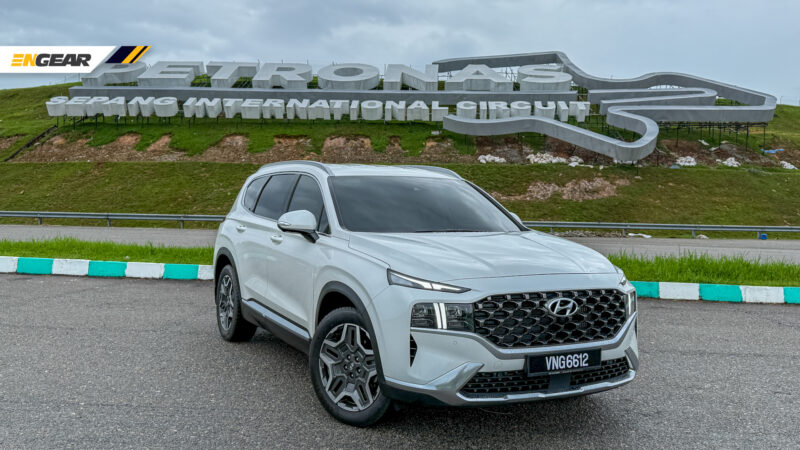
Officially launched a few months ago, it seems that many netizens have overlooked the fact that we actually have an equally impressive family SUV alternative— the Hyundai Santa Fe Hybrid.
We were given the opportunity to test drive this hybrid SUV at the end of last year, and we were quite satisfied with the package offered to consumers in Malaysia.
However, there are a few aspects that we found less favorable about the Santa Fe Hybrid, which could influence potential buyers’ decisions regarding its purchase.
1. Exterior Design That’s Too Bold for Some
Most family SUVs on the market tend to have a more conservative design approach that isn’t overly prominent.
This is not the case for the Santa Fe Hybrid, which, in its facelifted version, features a rather bold front end that some might find too aggressive.
Children with strong imaginations might see the Santa Fe Hybrid as a giant fish waiting to devour its prey.
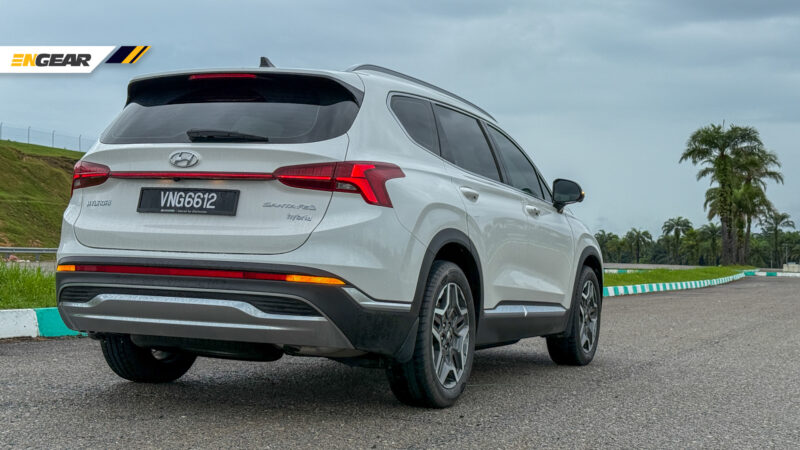
2. Relatively Low Position of the Turn Signal Lights at the Rear
I personally appreciate the modern and simplistic design of the rear light units.
However, it would be preferable if the turn signal function were incorporated into the main light housing.
Their relatively low position may lead some road users to overlook a driver’s intention to change lanes, even when the signal has been activated for a few seconds.
This contrasts sharply with the front view, where the turn signal lights, resembling graphic hammers, are bright and clear.
3. Cabin Design That Looks Outdated
Many manufacturers have started adopting a more simplistic and minimalist design approach for cabin interiors.
Unfortunately, this is not the case with the Hyundai Santa Fe Hybrid, which displays a design that feels several years behind that of its competitors.
This is largely because the Hyundai Santa Fe Hybrid still relies on a generation that is now one step behind; specifically, the fourth generation that was introduced to the global market in 2018.
In contrast, several markets around the world, particularly in ASEAN, such as Indonesia, the Philippines, and Singapore, have already begun offering the fifth generation of the Hyundai Santa Fe, which is far more sophisticated and modern-looking than the Santa Fe Hybrid available in Malaysia.
The news outlet Japan Today reports that Mitsubishi Motors Corp will not be joining the planned merger formed between Nissan Motor Co and Honda Motor Co.
Instead, the company will focus on strengthening its cooperation with the two firms, according to a source close to the matter last Friday.
This latest development reflects Mitsubishi’s concerns about the risks of losing management control if they were to join the Honda-Nissan alliance.
In a statement released last Friday, Mitsubishi mentioned that it is considering various possibilities and has not yet decided on a specific direction.
Mitsubishi CEO Takao Kata told reporters in Tokyo, “Nothing has been decided.”
Honda and Nissan, the second and third largest automotive manufacturers in Japan, announced a merger plan last year to form a new company that will create the world’s third-largest automotive group, in order to compete against the electric vehicle manufacturers from the United States and China.
At that time, Mitsubishi Motors was not ready and stated that a decision about joining the new alliance would be made by the end of January 2025.
Throughout 2023, the combined sales of Honda, Nissan, and Mitsubishi reached eight million units, which still fell short of Toyota’s sales figures (11.23 million units) and Volkswagen AG’s (9.24 million units).
Honda and Nissan aim to finalize all merger discussions by June 2025.
In addition to the Xpeng X9 MPV, Bermaz Auto also showcased another electric crossover model, the Deepal S07.
In the Chinese market, Deepal is a subsidiary owned by Changan Automobile, and the S07 model was developed in collaboration with Huawei and CATL.
In terms of dimensions, the Deepal S07 measures 4,750 mm in length, 1,930 mm in width, 1,625 mm in height, and has a wheelbase of 2,900 mm.
This makes the size of the Deepal S07 comparable to the Xpeng G6 electric crossover, which is also sold by Bermaz.
In the Chinese market, the Deepal S07 is offered with single electric motor options producing either 218 hp or 258 hp.
There are two battery pack options available, featuring NMC chemistry: one with a 66.8 kWh capacity that offers a range of 520 km, and another with a 79.97 kWh capacity that reaches a range of up to 620 km (CLTC data).
The exterior design of the Deepal S07 presents an aggressive image, with a sporty front bumper, headlight units with a three-petal flower pattern at both the front and rear, a floating roof design, and 20-inch rims.
Inside, the cabin features a single 15.6-inch screen at the center of a minimalist dashboard, a two-spoke steering wheel, a high center console, and separate air conditioning controls for second-row passengers.
Similar to the Xpeng X9, Bermaz has yet to reveal detailed specifications, launch dates, and the pricing for the Deepal S07.
Bermaz Auto has showcased its new electric vehicle (EV) model, the Xpeng X9, which is set to launch this year.
The second EV model after the Xpeng G6, the Xpeng X9 is an all-electric minivan that offers a three-row seating configuration and is poised to compete with electric MPVs such as the Denza D9 and Zeekr 009.
In terms of dimensions, the Xpeng X9 measures 5,293 mm in length, 1,988 mm in width, 1,785 mm in height, and has a wheelbase of 3,160 mm.
Currently, Bermaz has yet to finalize the specifications that will be offered for the Malaysian market.
However, the Xpeng X9 will be available in a front-wheel-drive version with an output of 315 hp, or an all-wheel-drive (AWD) version with an output of 500 hp.
There are two battery pack options: a lithium iron phosphate (LFP) 84.5 kWh battery with a range of 610 km (CLTC data), or a nickel manganese cobalt (NMC) 101.5 kWh battery with a range of up to 702 km.
The Xpeng X9 platform also supports 800V fast charging, allowing for an addition of 300 km of range in just 10 minutes of charging.
Interior features include a 12.3-inch digital cluster display, a 17.3-inch infotainment screen, a 21.4-inch rear passenger screen, and rear passenger seats equipped with zero-gravity technology, heating, ventilation, and massage functions.
On the exterior, this electric MPV showcases a unique design, with a rear section featuring sharper and more angular shapes compared to most MPVs currently available on the market.
When we talk about off-road driving, several brands and models of vehicles suitable for this purpose inevitably come to mind.
However, it’s important to note that Chinese automotive manufacturers are no longer lagging far behind as they once were.
In fact, with the advent of various new and rugged technologies, they are now able to stand shoulder to shoulder with leading brands around the world.
From January 9 to 15, GWM held an event known as the Ice & Snow Festival in the mountainous region of Changbai, Jilin Province.
There, we were given the opportunity to personally test the capabilities of the Haval, Tank, and Poer off-road vehicle lineup as they maneuvered through extreme icy and snowy paths in temperatures plummeting to negative 30 degrees Celsius.
Despite being equipped with standard factory specifications without any modifications, all of these off-road vehicles proved their true capabilities by successfully navigating a variety of terrains around the Huamei Resort.
A major highlight of the Ice & Snow Festival was the introduction of a new plug-in hybrid system through the Tank 500 Hi4-Z model.
Compared to the more “hardcore” Hi4-T hybrid system, the Hi4-Z no longer features a drive shaft connecting the engine to the rear axle.
Instead, the rear wheels are now powered by an electric motor.
As a result, GWM is able to include a larger capacity battery pack (59.05 kWh) that offers an emission-free range of up to 200 km!
With a 2.0-liter turbo engine (248 hp/380 Nm) paired with two electric motors, the Hi4-Z system can produce a total power output of 852 hp and torque of 1,195 Nm.
This allows the Tank 500 Hi4-Z to accelerate from 0 to 100 km/h in just 4.6 seconds.
In addition, GWM also launched the GWM Off-Road Alliance initiative.
This latest initiative aims to strengthen the global off-road community by offering various activities such as off-road driving technique training and optimizing vehicle performance for different terrain types.
GWM also introduced an off-road trail grading system (on a scale of 1 to 10) that provides a clearer framework for tackling various terrain conditions.
For drivers in Malaysia, this grading system can serve as a reference for preparing to face challenges such as sandy coastal areas, muddy farm tracks, and steep mountainous roads.
All of this is designed to ensure that the off-road community can enjoy challenging journeys more safely while also having a fun experience.
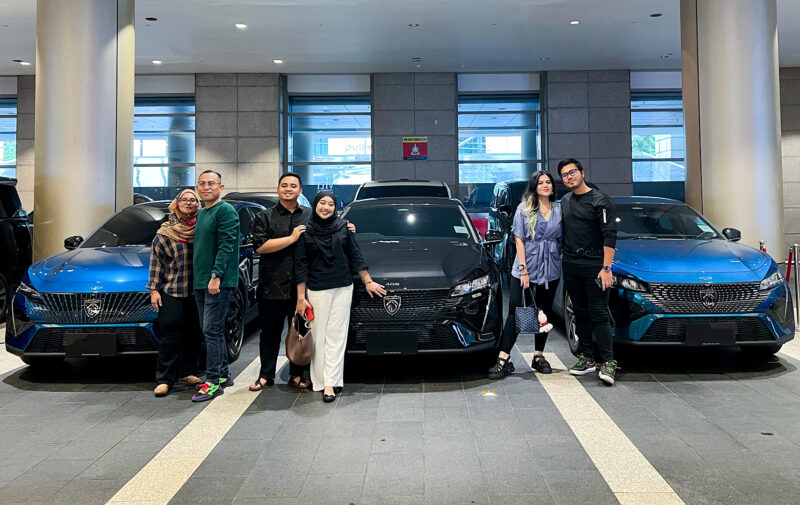
Peugeot Malaysia has announced the three lucky winners of the Buy and Win campaign held from July 9 to October 31 last year.
In this campaign, customers who booked and registered their purchase of a Peugeot 408 had the chance to win a Business Class holiday package to Paris for three days and two nights, as well as to participate in the prestigious Paris Fashion Week 2025.
The three winners are Nurfhatiah Zulkarnaini from Seremban who purchased a Peugeot 408 GT, Mohamad Faris bin Harun from Ipoh, who bought a Peugeot 408 Premium, and Muhammad Izzul Aiman bin Zahir from Penang who purchased a Peugeot 408 Allure.
All three winners will fly to Paris with their partners from March 8 to 10.
The winners expressed their excitement and described their victory as a once-in-a-lifetime opportunity.
As part of the preparations for Paris Fashion Week 2025, all the winners and their partners will attend a personal styling session hosted by the founder of KL Fashion Week.
The year 2024 marks a significant period for Lotus Cars Malaysia.
Over the past 12 months, Lotus Malaysia has successfully sold more than 200 units of the Lotus Eletre electric SUV, along with 20 units of the Lotus Emira sports car.
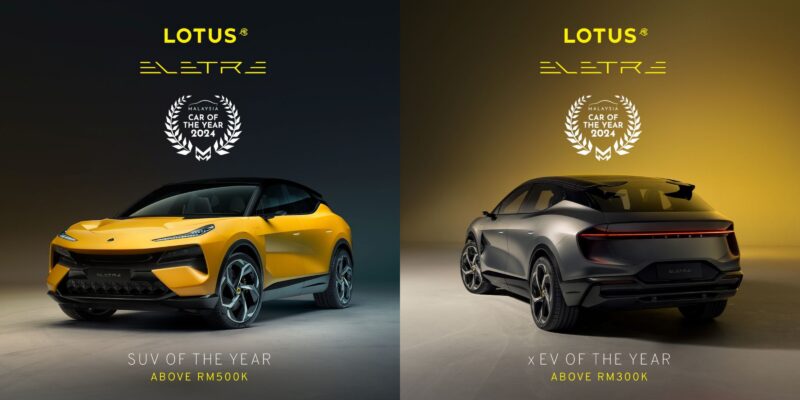
Not only that, the Lotus Eletre has triumphed in not one, but two categories at the 2024 Malaysia Car of the Year Awards, namely SUV of the Year (above RM500,000) and xEV of the Year 2024 (above RM300,000).
Officially launched in the Malaysian market in 2023, the Lotus Eletre is the brand’s first electric SUV, delivering a remarkable performance with up to 905 hp and 985 Nm of torque.
With a 112 kWh battery pack, the Lotus Eletre can achieve a driving range of 600 km, or 490 km for the Eletre R.
Malaysia’s Leading Automotive News | ENGEAR ENGLISH