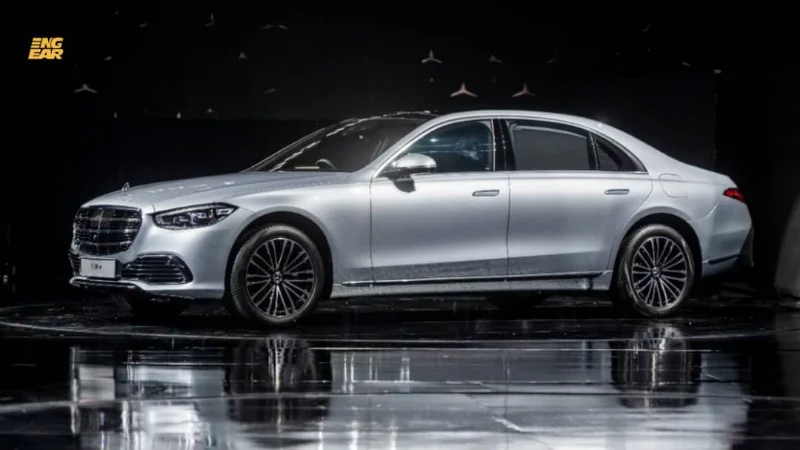
Mercedes-Benz Malaysia today officially launched the ultra-luxurious Mercedes-Maybach EQS 680 SUV, with a starting price of RM1,088,888, excluding customization costs.
Powering the Maybach EQS 680 SUV are dual electric motors, delivering 658 hp and 950 Nm of torque.
The vehicle features several driving modes, including Eco, Sport, Offroad, and Individual.
A special MAYBACH mode replaces the traditional Comfort mode, prioritizing maximum comfort for rear passengers.
A 118 kWh battery pack provides a driving range of 500-608 km on a full charge and supports 22 kW AC charging and DC fast charging up to 200 kW.
Standard equipment on this luxury SUV includes AIRMATIC adaptive suspension, rear-wheel steering, 21-inch Maybach alloy wheels, DIGITAL LIGHT headlights, and illuminated running boards.
The Mercedes-Maybach EQS 680 SUV boasts a first-class rear cabin experience, complete with MANUFAKTUR leather upholstery, a Nappa leather headliner, electric sunshades, a dedicated infotainment system, and adjustable seats with heating, massage, and memory functions.
The driver is provided with a steering wheel featuring galvanized paddle shifters, wood trim, and heating, the MBUX Hyperscreen multimedia system, Apple CarPlay and Android Auto integration, and an augmented reality head-up display.
Additional features include a Burmester 4D surround sound system, ambient lighting, under-console storage, a cabin air filter, and Maybach-specific trim throughout the cabin.
Safety features encompass 11 airbags, the Driving Assistance Package Plus, Distronic Plus, Active Lane Keeping Assist, Active Steering Assist, Pre-Safe, Active Parking Assist, and Remote Parking functionality.
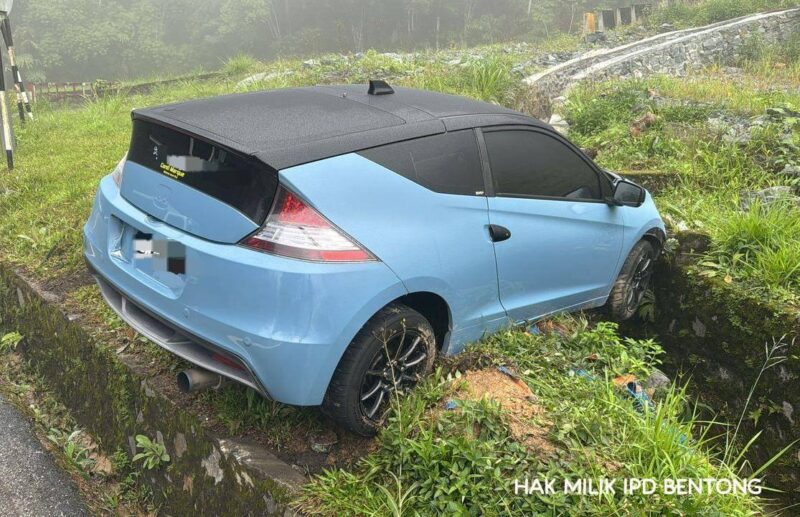
The action of a man who filed a police report claiming that the car he was driving lost control at KM 14.7 Genting Highlands has proven ineffective as a video of his reckless driving recently went viral on social media.
In a statement issued by the Bentong District Police Headquarters, the 27-year-old man made the police report at the Goh Tong Jaya Police Station, Hulu Selangor, at 11:05 AM on February 23, 2025 (Sunday).
The police also became aware of a 12-second video circulating on social media that shows the same car being driven recklessly, which led to it losing control.
The driver has been contacted again by the Traffic Investigation and Enforcement Unit of Bentong District Police Headquarters to provide a statement.
This case is being investigated under Section 42(1) of the Road Transport Act 1987.
The Chief of Bentong Police, Supt. Zaiham Mohd Kahar, has also urged anyone with information to come forward and assist with the investigation.
Leading dealer group Harmony Auto has now opened the first Denza showroom at Menara Atlan, Kuala Lumpur.
Strategically located in Kuala Lumpur’s golden triangle, the showroom offers easy access for customers to closely examine the newly launched Denza D9 model.
With a floor plan of 5,500 square feet that can accommodate up to six vehicles, this showroom also features a clean, modern minimalist aesthetic with contemporary finishes.
The use of high-quality materials, luxurious lighting, and interactive digital displays is aimed at providing a premium experience for customers.
In addition to the showroom, there are facilities such as a coffee bar and a souvenir merchandise counter.
The Denza showroom is open daily from 9:00 AM to 9:00 PM.
Harmony Auto is also planning to open a 3S Denza center in Skudai, Johor, in the near future.
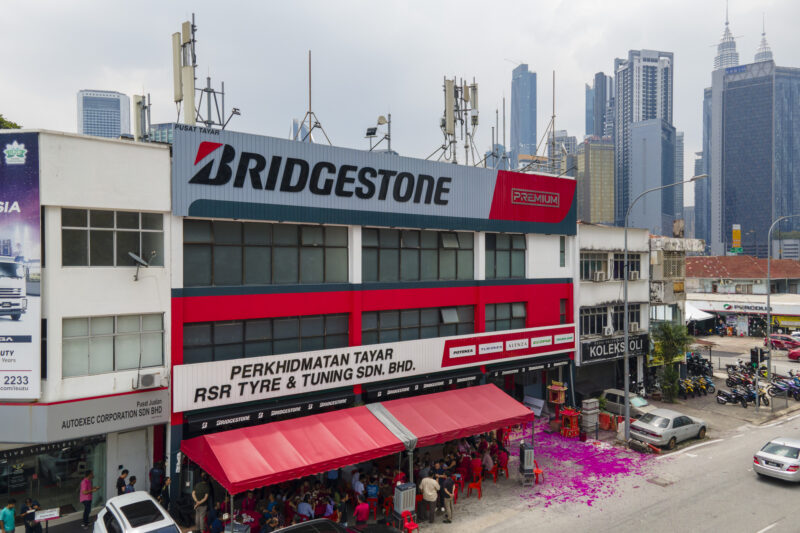
Bridgestone Tyre Sales (Malaysia) Sdn Bhd recently announced the official opening of the Bridgestone Premium facility located on Jalan Semarak, Kuala Lumpur.
The facility, operated by RSR Tyre & Tuning Sdn Bhd, offers a wide range of high-quality premium tires and comprehensive automotive services for various types of vehicles, including high-performance cars.
Located just 4 km from the PETRONAS Twin Towers, the Bridgestone Premium store provides easier access for customers around the capital city.
Bridgestone Premium is also committed to ensuring that every customer receives the highest standard of care, safety, and performance with each visit, reinforcing its dedication to excellence in automotive service.
According to Michael Chung, Managing Director of Bridgestone Tyre Sales (Malaysia) Sdn Bhd, “In line with the Bridgestone E8 Commitment, particularly the value of ‘Ease,’ we are dedicated to offering a smooth and premium retail experience while providing peace of mind for customers making their tire choices.”
“Through expert guidance and product availability, we aim to enhance mobility by offering a comfortable and hassle-free tire selection process.
“Our collaboration with RSR Tyre & Tuning Sdn Bhd reflects a strategic approach to partnering with experienced and trusted dealers, ensuring a more valuable retail experience for our customers,” he added.
PETRONAS Sprinta is now the strategic partner of the Ducati Official Club Malaysia (DOCM) for the year 2025.
The announcement was made during the 8th Annual General Meeting (AGM), which currently has a membership of 1,600 individuals.
The collaboration between both parties is expected to further elevate the status of DOCM while strengthening its position as a leading Ducati community in Malaysia and Asia.
According to Zameer Zahur Hussain, Chief Executive Officer of PETRONAS Lubricants Marketing Malaysia (PLMM), “We are very excited to partner with DOCM and be their main partner for 2025.
“Our goal is to enhance our brand presence within the local motorcycle community and showcase the superior quality of PETRONAS Sprinta products.
“Through this collaboration, we intend to support the Ducati community while strengthening the market penetration of our Malaysian-made products in the domestic market.”
The annual gathering, held at the Movenpick Hotel and Convention Centre KLIA, also featured 301 Ducati motorcycles from various models on display.
Edaran Modenas Sdn Bhd (EMOS) has officially launched the retro motorcycle Kawasaki Z650RS for the Malaysian market, coinciding with the opening of the Kawasaki Puncak Alam showroom earlier today.
The Kawasaki Z650RS is powered by the same 649 cc parallel-twin engine found in the Ninja 650 and Z650 models, producing 67 hp and 65.7 Nm of torque.
Power is transmitted to the wheels via a six-speed transmission, complemented by an assist and slipper clutch.
The Z650RS features a high-strength steel trellis frame, along with a 41 mm front fork and a horizontal back-link rear suspension, allowing for wheel travel of 100 mm and 125 mm, respectively.
The braking system consists of dual 300 mm discs at the front paired with a two-piston caliper, and a single 220 mm rotor with a single-piston caliper at the rear.
Other features include a 12-liter fuel tank, an 820 mm seat height, LED front and rear lights, an analog speedometer with a digital LCD screen, as well as dual-channel ABS and Traction Control (KTRC) for added safety.
The Kawasaki Z650RS is priced at RM37,200 and is available at all Kawasaki All-Star showrooms across the country.
The Kawasaki Puncak Alam 4S center is the seventh facility in Malaysia and the second in Selangor operated by Puncak Alam Motoworld Sdn Bhd.
For 2025, MODENAS plans to establish 13 more Kawasaki 4S centers throughout Malaysia.
Not just building on the simple hybrid systems that already used in its existing production models, Yamaha has now presented the Series Parallel Hybrid Electric Vehicle (SPHEV) prototype, specifically engineered for the mid-class scooter segment.
This parallel hybrid system combines an engine with two electric motors fitted onto a modified XMAX scooter.
One of the electric motors is used to drive the wheels, while the other is directly connected to the engine to generate electric power.
Similar to any hybrid powertrain, the SPHEV system offers an electric driving mode that operates without engine assistance, a series hybrid driving mode for more efficient riding, and an engine operation mode for higher speeds.
Interestingly, the SPHEV system also features a boost mode.
The dual boost mode will harness power from both the engine and the drive motor, while the triple boost mode will utilize power from the generator motor.
In addition to scooters, Yamaha is also exploring the potential of this powertrain unit for integration with other models, such as street bikes and sports bikes.
Following the reveal of the Kia EV4, Kia has unveiled another purpose-built electric vehicle, the Kia PV5.
In terms of design, the Kia PV5 does not present significant differences compared to the PV5 Concept that was showcased over a year ago.
The Kia PV5 is available in both passenger van and cargo van versions.
The main difference between the two models is the presence of side windows in the passenger van, while the cargo van features sliding doors on both the left and right sides of the vehicle, along with twin tailgate openings at the back.
In addition, both models share similar design elements, such as LED daytime running lights (DRL) located at the end of the windshield, followed by the charging port and headlight unit in the center of the front fascia.
It also features relatively large door handles and vertical rear light units.
According to Kia, in addition to the passenger van and cargo van configurations, buyers will also have the option to choose from several other configurations for the PV5 or customize specifications according to their needs.
The full specifications of the Kia PV5 will be officially revealed on February 27.
The Road Transport Department (JPJ) recently announced a recall campaign involving 41,688 vehicles.
In a press release, the department stated that this initiative aims to inspect the vehicles due to defects in their structure, equipment, or systems, in addition to preventing potential accidents.
According to JPJ, each affected owner will be contacted by their respective vehicle manufacturers to schedule an inspection appointment.
Any components associated with the identified issues will be replaced, and the cost of replacements will be borne by the respective vehicle manufacturers.
JPJ will also monitor the implementation of this recall campaign to ensure that all affected vehicles are confirmed as safe.
A list of the affected vehicles can be referenced in the gallery below:
The second-generation mid-size premium SUV Volvo XC60 has been on the market since 2017.
This best-selling Volvo model has been updated for the 2026 model year, featuring several cosmetic changes borrowed from the XC90.
For instance, it has a redesigned grille structure, darker rear light units, and new wheel designs.
In addition, the Volvo XC60 is now offered in two new colors: Forest Lake and Aurora Silver, along with Mulberry Red for the first time.
Stepping inside the cabin, the XC60 is equipped with a larger infotainment screen (11.2 inches), supported by the latest software, over-the-air (OTA) updates, and upgraded hardware.
Thanks to the use of Qualcomm’s new-generation Snapdragon Cockpit Platform, this infotainment system is significantly faster than the existing one.
There have been no changes to the engine offerings, meaning the XC60 continues to feature the B5 mild hybrid variant with 250 PS, the T6 PHEV with 350 PS, or the T8 PHEV with 461 PS, depending on the market.
The new generation of the Kia Sportage was officially launched at the end of last year as a locally assembled unit (CKD), although it actually arrived somewhat late compared to other markets.
With a competitively priced package accompanied by appealing specifications, the Kia Sportage has the potential to be an alternative in a market dominated by Japanese SUVs such as the Honda CR-V and Toyota Corolla Cross.
Based on a short test drive recently, the writer was generally satisfied with what the Kia Sportage offers.
Not all vehicles are perfect in their offerings; there are a few minor weaknesses present in this C-segment SUV.
However, for us, these are minor issues if you can tolerate the shortcomings and prioritize driving satisfaction.
Not Everyone is Fond of the Rotary PRND Dial
The variant we tested is equipped with a 1.6-liter turbo engine paired with a dual-clutch transmission (DCT) and e-shift functionality.
This means it does not come with the conventional gear lever commonly found in other SUV models.
The benefit of using a rotary dial is that it creates a more spacious cockpit appearance, but not everyone appreciates this feature.
Personally, I prefer a physical PRND gear lever, which is easier to control and aligns better with the muscle movements we are accustomed to.
Empty Function Buttons on the Center Console
Kia Sportage Euro spec
Located next to the rotary PRND dial, you will notice a cluster of empty function buttons on the center console.
It is unfortunate that these function buttons are not assigned any features, unlike international specifications that offer features like heated steering wheels and heated or ventilated seats.
It appears empty and gives the impression that the Sportage 1.6T is a lower variant.
Climate Control Panel May Be Difficult to Use
Another interesting feature of the Kia Sportage 1.6T is the touch-based climate control panel and infotainment system located below the central air vents.
Essentially, the driver no longer needs to dig through control menus typically embedded in the infotainment screen.
However, it operates using a touch system, and at times it can be a bit difficult to control, especially for drivers with larger fingers.
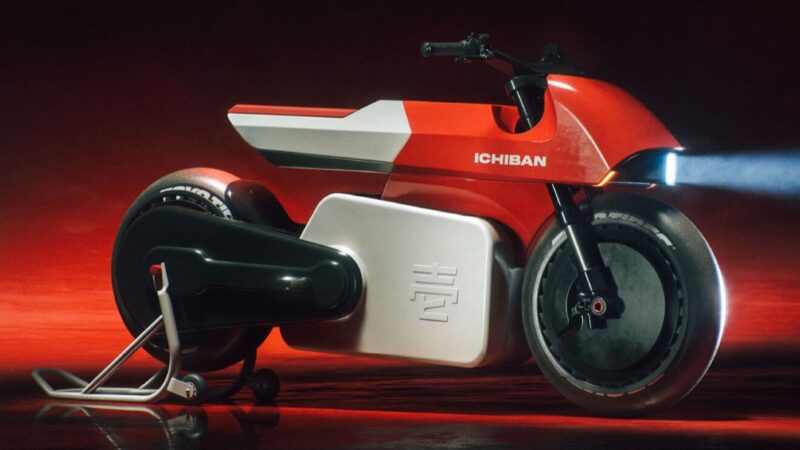
At first glance, one might mistake this for a futuristic motorcycle straight out of the 1988 animated film Akira that has been brought to life in the real world.
In reality, this motorcycle is crafted by the Japanese design firm Ichiban, drawing inspiration from the fictional motorcycle mentioned earlier.
Unlike the fictional motorcycle from Akira, Ichiban’s two-wheeled machine takes a more minimalist approach.
In addition to the angular body panels and engine cover, it features a simple handlebar complete with a digital display screen reminiscent of 1980s video game graphics.
It is also equipped with LED headlights shaped like pills and a rear light that features overlapping horizontal line graphics.
Finally, the Ichiban motorcycle is dressed in a striking red and white two-tone color scheme—once again reminding us of the bikes from the Akira anime.
According to information on its official website, the Ichiban motorcycle is powered by two electric motors with 6.7 hp, accelerating from 0 to 100 km/h in just 3.5 seconds and boasting a riding range of 250 km.
Interestingly, there is a “Godzilla” mode that allows riders to maintain a speed of 100 km/h for up to 10 seconds.
Safety features included are an anti-lock braking system (ABS) and traction control.
It should be noted that Ichiban’s electric two-wheeled machine is still a concept model, but it is highly likely to enter the prototype production phase before being sold to the public.
Following the launch of the maxi adventure scooter Vanguard 250 earlier this year, Aveta Malaysia has now introduced two more affordable scooters from the Nova series: the Nova 125 and the Nova 160.
Aveta Nova 125
The Nova 125, priced at RM5,188, is designed to meet the needs of various groups, including students looking for a more budget-friendly vehicle.
It is powered by a single-cylinder, air-cooled 125 cc engine that produces 9.0 hp at 8,000 rpm and a torque of 8.6 Nm at 6,500 rpm, paired with a CVT transmission.
The suspension system features telescopic front forks and a swing arm with a mono-shock absorber at the rear.
Additionally, it comes equipped with a Combined Brake System (CBS), comprising a front disc brake and a rear drum brake, along with 14-inch wheels shod with 80/90-14 tires in front and 90/90-14 tires at the rear.
Other features include a 6-liter fuel tank, an LCD digital meter panel, a USB charging socket, and a seat height of 765 mm.
The Aveta Nova 125 is available in Peach Berry, Grey Lemon, and Blue Lemon colors.
Aveta Nova 160
Fans of a sportier scooter can opt for the Aveta Nova 160, with a starting price of RM7,988.
This model is powered by a single-cylinder, liquid-cooled 154.4 cc engine that delivers 15.8 hp at 8,500 rpm and a torque of 14.7 Nm at 6,500 rpm, also combined with a CVT transmission.
The suspension includes telescopic front forks and dual shock absorbers with a sub-tank at the rear.
The Nova 160 comes with front and rear disc brakes, but unfortunately, it does not feature anti-lock braking system (ABS) for safety.
Additional features include a 10-liter fuel tank, keyless system, Idling Stop System (ISS), a digital meter panel, LED lighting system, a USB charging socket, and a seat height of 778 mm.
The Nova 160 is available in Raven Red, Aveta Blue, and Copper Blaze colors.
Both the Nova 125 and Nova 160 models will be available in the Malaysian market starting March 2025.
After making its debut in Singapore last month, the 2025 facelift version of the Tesla Model Y has officially arrived in the Malaysian market.
According to specifications provided by Tesla Malaysia, this electric SUV is available in two main variants: the RWD priced at RM195,450 and the Long Range All Wheel Drive (AWD) priced at RM242,450.
The base RWD variant offers a range of up to 466 km (WLTP data), accelerates from 0-100 km/h in 5.9 seconds, and has a maximum speed of 201 km/h.
Meanwhile, the Long Range AWD variant allows for a driving range of up to 551 km on a full charge, with an impressive acceleration from 0-100 km/h in just 4.3 seconds.
Buyers can choose between 19-inch Crossflow wheels or upgrade to 20-inch Helix 2.0 wheels for an additional RM10,000. There are also five color options available: Stealth Grey, Pearl White Multi-Coat (+RM5,000), Glacier Blue (+RM7,500), Quicksilver, and Ultra Red (+RM11,000).
Several changes have been implemented in this facelift version of the Tesla Model Y:
Horizontal LED light bars at the front and rear inspired by the Tesla Cybertruck
Double-glazed windows for a quieter cabin
A silver film layer on the panoramic glass roof to reduce UV and heat impact
New wheel designs and a rear diffuser to decrease aerodynamic drag, enhancing driving stability and reducing noise
The cabin features ambient lighting, ventilated seats, and a display screen for the second row, similar to the Tesla Model 3
For the Malaysian market, there is also a limited edition Tesla Model Y Launch Edition available.
It features a unique badge on the rear, logoed puddle lights, the words “Launch Series” on the door sills, vegan suede trims, and special finishes on the charging console and floor mats.
Basic Autopilot features are provided as standard equipment; however, buyers can opt for the Enhanced Autopilot package (+RM16,000), which adds functionalities such as Navigate on Autopilot, Auto Lane Change, Autopark, Smart Summon, and Actually Smart Summon.
The Full Self-Driving (FSD) package is priced at RM32,000 and includes all the features available in both Basic Autopilot and Enhanced Autopilot, along with additional functionalities like Autosteer and Traffic Light & Stop Sign Control.
This is Kia’s latest electric model, the Kia EV4, the fifth model in the Kia “EV” series, following the EV3, EV5, EV9, and EV6 models.
Built on the E-GMP platform and featuring a design approach similar to its siblings, the Kia EV4 will be available in both hatchback and sedan (fastback) versions.
Both hatchback and sedan models share the same front design, including the EV Tiger Face, headlight units, and LED daytime running lights at the end of the bumper, along with protective plastic cladding on the wheel arches.
The key distinguishing factor between the two models is undoubtedly the design at the rear.
For the sedan version, the Kia EV4 showcases a ‘long tail’ design concept inspired by iconic supercars, followed by a more streamlined roofline towards the back and vertical taillight units.
In contrast, the hatchback version features a more conventional and dramatic light structure, a smaller rear window, and is topped off with a roof spoiler.
Buyers will also have the opportunity to purchase the Kia EV4 in the GT-Line variant, which offers 19-inch wheels, along with sportier front and rear bumpers.
More details, including the cabin design, will be revealed ahead of the official global launch at the end of this month.
To this date, the use of electric vehicles with hydrogen fuel cell systems (FCEVs) is still not as widespread compared to electric vehicles (EVs).
Take, for instance, the Toyota Mirai, a hydrogen-powered sedan that has been available since 2014, with over 28,000 units sold in more than 30 countries.
This is a relatively small figure.
However, in addition to the passenger car market, Toyota has also been supplying this fuel cell system for other uses, such as buses, trains, and stationary power generation systems since 2019.
Looking ahead, Toyota still believes that this hydrogen system can serve as a better alternative to internal combustion engine (ICE) vehicles and EVs.
The third-generation fuel cell system was officially introduced recently, promising a more compact unit and a driving range that is 20 percent longer (up to 772 kilometers).
Furthermore, Toyota claims that this third-generation system can achieve durability comparable to that of diesel engines while offering maintenance-free design benefits.
Through innovations in cell design and manufacturing processes, this system is also cheaper to produce, contributing to a more affordable sales price.
The third-generation fuel cell system will not only be used for the passenger vehicle segment but is also expected to be expanded to the heavy-duty commercial vehicle segment for markets in Japan, Europe, North America, and China by 2026.
When the name Zontes is mentioned, many will certainly recall the Zontes 368G ADV adventure scooter that recently entered the Malaysian market early last year.
However, if we look back five years ago, it was a name that was quite unfamiliar, especially at a time when many well-known motorcycle brands had already established themselves here.
For your information, Zontes is one of over 200 motorcycle brands in the Chinese market and is also one of the brands owned by Guangdong Tayo Motorcycle Technology Co. Ltd, which was established in 2003.
There, Zontes is responsible for producing a range of medium and large displacement motorcycles, and the brand has now established a presence in several key markets worldwide.
At the end of 2024, our team along with a group of other automotive media had the opportunity to visit the Tayo factory located in Guangdong, China.
There were several interesting things we noticed during our visit to this state-of-the-art factory:
1. Before entering the factory, one must go through a door that resembles a military base seen in sci-fi stories. It can be activated through a facial recognition process.
2. Tayo Factory has nearly 4,000 employees, with 60 percent being graduates with college degrees or higher—primarily young people!
It is not surprising that we see their product lineup consistently featuring fresh specifications.
3. Of that number, approximately one thousand are placed in the research and development (R&D) department. Some were seated in front of computers, while we noticed some of them working on motorcycle models made of clay.
Unfortunately, we were not allowed to photograph those models.
4. Zontes also handles complaints about motorcycle components received from owners, including those from overseas, where the responsible engineers must resolve the issues within 24 hours (only on working days).
5. The Tayo Factory has up to 12 production lines responsible for manufacturing various motorcycle and scooter models.
6. According to the officials on duty, Zontes produces all engine components (including the crankshaft, engine outer casing, gears, and balancers) used in their motorcycle model lineup without assistance from third parties.
7. 60 to 70 percent of motorcycle components (excluding engines) are also produced in-house at this factory, including swingarm units, body panels, seats, and display screens.
Only components like tires and suspension systems are imported from external suppliers.
8. As a sophisticated factory, advanced robotic technology is fully utilized for manufacturing tasks such as forming aluminum and plastic components, welding frames and fuel tanks, as well as painting parts.
9. To ensure high-quality workmanship, the Tayo factory imports several special robots from overseas and programs them specifically for the factory.
For example, there are plastic component printing machines from Germany, painting robots from Japan, CNC machines from Germany, and Panasonic-weld robots (from Japan).
10. The welding unit in the factory can complete an entire Zontes 368 scooter frame in just 210 seconds, without human assistance!
11. To ensure that every produced component meets standards, there are rapid scanning machines available to check quality while the manufacturing process is still ongoing.
If the machines detect any issues, production on that line will be halted immediately.
12. Is the existing technology sufficient?
No, because we were informed that Tayo has invested RMB 5 billion (approximately RM3 billion) to fully utilize autonomous robots to help increase production volumes.
Moreover, during our visit, we also witnessed the installation processes for new machines and robots that were underway in the factory.
Given the level of sophistication and precision displayed, and hopefully with solid sales and after-sales support, it is not impossible for the Zontes brand to one day stand out even more in the Malaysian market.
Last weekend, Sentinel Automotive Sdn Bhd officially opened the first Zeekr Space exhibition center located in Petaling Jaya.
Spanning approximately 660 square meters, Zeekr Space invites customers to explore a vision of cleaner and smarter mobility.
In addition to showcasing the latest models, customers are also encouraged to test-drive existing Zeekr models, including the Zeekr X and the Zeekr 009 minivan.
According to Alex Bao, Managing Director of Zeekr Southeast Asia, “Zeekr is committed to offering high-quality, premium products with advanced technology designed to enhance the driving experience for customers worldwide.”
“Our focus remains on delivering vehicles with unparalleled performance, sophisticated design, and cutting-edge technology.”
Since the official launch in December last year, Zeekr Malaysia has distributed approximately 200 units of the Zeekr X and Zeekr 009 models.
In his opening speech, Alex Bao also revealed that the company plans to launch another new model, the Zeekr 7X SUV, in the third quarter of this year.
The Zeekr 7X is a mid-size electric SUV with dimensions similar to the EQE SUV and offers a range of nearly 780 kilometers on a full charge.
Buyers can choose between a single rear-wheel drive (RWD) version with a power output of 421 PS and 440 Nm, or an all-wheel drive (AWD) version featuring two electric motors with a combined power output of 646 PS and 710 Nm.
At this time, Zeekr Malaysia has not yet determined which version will be offered in the local market.
Zeekr Space Petaling Jaya is located at 58, Jalan Profesor Diraja Ungku Aziz, PJS 12, 46200 Petaling Jaya, Selangor.
Production of the limited edition 911 Dakar model wrapped up last November, with only 2,500 units produced worldwide.
However, don’t be disheartened, as reports indicate that Porsche is working to reintroduce the 911 Dakar with a more powerful engine.
According to a report from Autocar citing several sources, the new Porsche 911 Dakar is currently being developed at the Weissach engineering center and will be offered in limited units.
The report also states that this “facelifted” 911 Dakar will feature an innovative T-Hybrid engine that has already debuted in several facelift variations of the 911 launched for the 2025 model year.
The T-Hybrid powertrain in question combines a brand new 3.6-liter turbo flat-six engine with an electric motor and a 1.9 kWh battery pack.
This setup is capable of producing up to 534 hp and 750 Nm of torque, significantly more powerful than the existing 3.0-liter flat-six engine with 437 hp found in the current 911 Dakar.
This increased power will help the new 911 Dakar achieve a faster 0-100 km/h acceleration time compared to the previous model’s 3.4 seconds.
For reference, the facelifted 911 GTS with the new T-Hybrid engine can accelerate from a standstill to 100 km/h in just 2.9 seconds.
More details are expected to be announced ahead of the official launch scheduled for later this year.
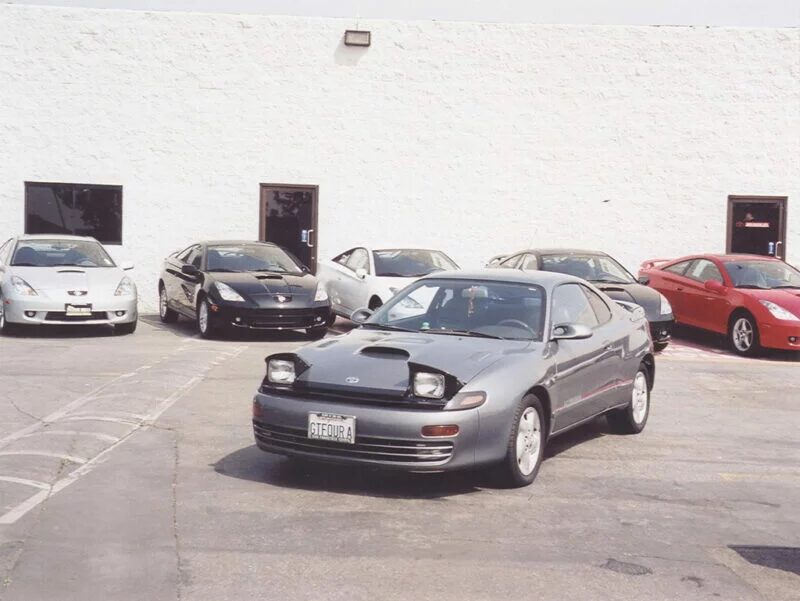
If you have been closely following Toyota’s developments, you may have come across some news about the comeback of an iconic name – Celica.
Rumors about the return of the Celica name have been circulating online for years.
However, all speculation was finally put to rest when Vice President Yuki Nakajima confirmed the news of a new Celica model’s development to the public during the Rally Japan event in November 2024.
This news was further strengthened by a recent report indicating that the manufacturer has registered the trademark “GR Celica” in the Brazilian market, dated January 15, and officially published on February 4, according to Carscoops.
With this development, it suggests that the GR Celica model will also be offered in South America alongside primary markets such as Europe and Japan.
Several reports suggest that the GR Celica will be powered by a 2.0-liter inline-four turbo engine, generating around 400 hp and paired with the GR-Four all-wheel drive system.
This new engine has already been showcased by Toyota in the GR Yaris M Concept, featuring the G20E code positioned mid-ship.
Two questions arise: Is the GR Yaris M Concept actually an indication of the engine configuration for the GR Celica, or does it refer to another model, namely a successor to the MR2?
Malaysia’s Leading Automotive News | ENGEAR ENGLISH