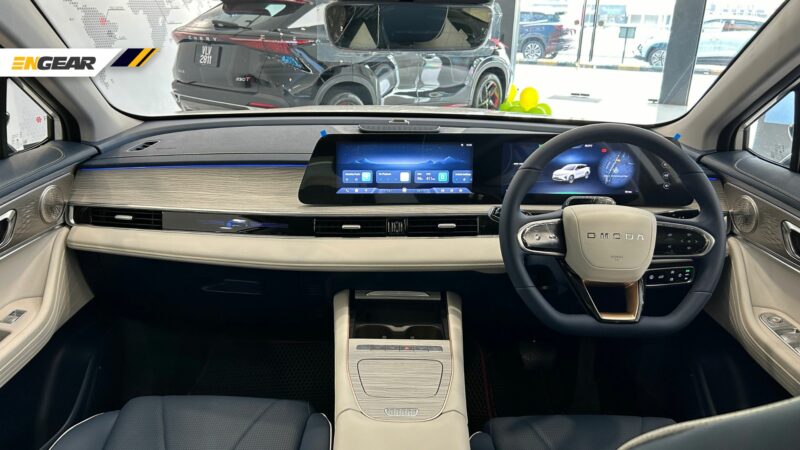
Proton New Energy Technology Sdn Bhd (Pro-Net) recently delivered three Proton e.MAS 7 electric SUVs to the management of Northport (Malaysia) Sdn Bhd for use by its auxiliary police force.
This achievement marks Northport as the first port operator in the country to utilize the e.MAS 7 in its fleet management, reinforcing its commitment to corporate ESG initiatives and sustainable transportation solutions.
The use of the Proton e.MAS 7 electric SUV will not only reduce fuel consumption, carbon emissions, and noise pollution, but its quiet and smooth ride will also make patrol operations more comfortable and reduce officer fatigue.
According to Zhang Qiang, CEO of Pro-Net, “We are delighted to be working with Northport, an organization that exemplifies sustainability.”
“Its use in Northport’s operations proves that electric vehicles are not just a vision of the future, but a solution that can be adopted today.”
Fakhrul Azhar Tajudin, CEO of Northport, said, “At Northport, we are committed to practicing a sustainable approach and supporting clean energy solutions.”
“As a port that is proud of its Malaysian identity, the selection of the Proton brand also reflects our support for local innovation and national industry development. With its balance of performance, safety and technology, the Proton e.MAS 7 is a suitable choice to meet the demanding operational needs of the port.”
While other manufacturers have begun to pull the handbrake, Zeekr is ready to reignite the sporty wagon segment with the introduction of the 007 GT model.
The Zeekr 007 GT (also known as the Zeekr 7 GT in global markets) is built on the Zeekr 007 electric sedan and is the second shooting brake model after the Zeekr 001.
It features dimensions of 4,864 mm in length, 1,900 mm in width, a height of up to 1,445 mm, and a wheelbase approaching 3 meters (2,925 mm).
In comparison, the Zeekr 001 measures 4,977 mm in length, 1,999 mm in width, and has a wheelbase of 3,005 mm.
The Zeekr 007 GT is available in a single motor variant that produces 416 hp and 440 Nm of torque, accelerating from 0 to 100 km/h in just 5.2 seconds.
Meanwhile, the dual motor variant generates power up to 637 hp and 710 Nm, with a 0 to 100 km/h acceleration time of 3.8 seconds.
The Zeekr 007 GT utilizes a 75 kWh lithium iron phosphate (LFP) battery, offering a range of 650 km (CLTC data), while the 100 kWh nickel cobalt manganese (NCM) battery provides a driving range of 825 km.
The LFP battery supports the fastest charging in the world, where charging from 10% to 80% can be completed in just 10.5 minutes!
Inside the cabin, there is a 15.4-inch touchscreen, a digital cluster screen, and an augmented reality (AR) head-up display for driver use.
The center console features a cluster of function buttons located at the bottom of the screen, storage space, cup holders, and two wireless device charging slots.
The front seats have 14-way adjustability with heating, cooling, massage functions, and Nappa leather upholstery.
In terms of practicality, the Zeekr 007 GT cabin offers up to 36 storage spaces, an optional hidden refrigerator, and a cargo space of 1,737 liters when the second-row seats are folded.
Not stopping there, the Zeekr 007 GT also features an intelligent driving system, thanks to 31 sensors including LiDAR, 11 cameras, and 3 radar units that enable it to avoid obstacles at high speeds and stop automatically under certain conditions.
In China, the Zeekr 007 GT is priced starting from RMB 202,900 (approximately RM 121,876).
Batik Air, in collaboration with Leapmotor Malaysia, has announced a private terminal transfer service for business class passengers at Kuala Lumpur International Airport (KLIA), Sepang.
Five units of the electric SUV Leapmotor C10 will be used to transport business class passengers from Gate G1 in the Main Terminal Building to Gate C1 in the Satellite Building and vice versa.
The Leapmotor C10 is a D-segment electric SUV capable of offering a driving range of up to 424 km (WLTP data).
To ensure guaranteed travel comfort, this SUV features ergonomic seating and OEKO-Tex Standard 100 textile material that is more durable and environmentally friendly.
In addition, the vehicle offers a spacious and comfortable cabin, along with a cargo space of 415 liters, which can be expanded to 1,410 liters to accommodate larger items.
This exclusive service provided by Batik Air is expected to reduce waiting times while complementing the bus services offered by Malaysia Airports during the temporary suspension of the aerotrain service.
Honda Malaysia has officially opened booking for their first electric SUV model, the Honda e:N1, which is set to launch in the second quarter (Q2) of 2025.
Built on the e:N Architecture F platform, the Honda e:N1 is powered by a front-wheel-drive electric motor producing 201 hp and 310 Nm of torque.
Its 68.8 kWh lithium-ion battery pack allows for a driving range of up to 500 km on a full charge (NEDC data).
With dimensions measuring 4,380 mm in length and 1,592 mm in height, and a wheelbase of 2,610 mm, it matches the size of the petrol version of the HR-V.
Features included in the e:N1 comprise two-tone 18-inch alloy wheels, LED headlights and taillights, a charging slot in the front grille, a white Honda badge, and the word ‘Honda’ emblem on the rear.
Safety features also include blind spot information (BSI), a cross-traffic monitoring system (CTM), in addition to nine advanced Honda SENSING safety functions.
Honda customers can place orders for the e:N1 on the website https://prebook.honda.com.my/ or via the HondaTouch app.
Honda Malaysia has also appointed eight authorized dealerships to handle any matters related to the e:N1 as follows:
Following the launch of the electric sedan EZ-6, the collaboration between Mazda and automotive manufacturer Changan continues with the introduction of another new crossover model – the Mazda EZ-60.
Like the previously showcased EZ-6 sedan, the Mazda EZ-60 is fundamentally built on the modular platform EPA1 developed by Changan. This means it shares very similar specifications with the Deepal S07 crossover.
The exterior design of the Mazda EZ-60 aligns with Mazda’s modern Kodo design philosophy.
Notable features include a grid structure and illuminated front logo, separated headlight design, hidden door handles, and the presence of side cameras.
A striking feature is the air vent located on the C-pillar, designed to reduce drag coefficient, thereby aiding in achieving a longer driving range.
The minimalist approach is also reflected at the rear, where the Mazda EZ-60 features elongated LED tail lights that extend towards the center, along with the word “MAZDA” replacing the traditional logo.
Based on its dimensions, it is highly likely that the Mazda EZ-60 shares nearly identical measurements with the Deepal S07 SUV, as previously presented by Bermaz earlier this year.
In terms of dimensions, the Deepal S07 measures 4,750 mm in length, 1,930 mm in width, 1,625 mm in height, and has a wheelbase of 2,900 mm.
In the Chinese market, the Deepal S07 is available with a single electric motor option producing either 218 hp or 258 hp.
There are two battery pack options available: a 66.8 kWh pack offering a range of 520 km, or a 79.97 kWh pack providing a range of up to 620 km (CLTC data).
More information about this electric SUV will be revealed ahead of the Shanghai Auto Show 2025, which is set to take place later this month.
MG Motor Malaysia has recently unveiled an upcoming electric SUV model, the 2025 MGS5 EV.
In terms of dimensions, the MGS5 EV measures 4,476 mm in length, 1,849 mm in width, and has a wheelbase of 2,730 mm.
The cargo space is 452 liters, which expands to 1,441 liters when the second-row seats are folded down.
The MGS5 EV is powered by a rear-wheel drive electric motor that produces 170 PS and 250 Nm of torque.
There are two battery options available: a 49 kWh battery that offers a driving range of 340 km, and a 62 kWh battery that provides a driving range of 430 km.
The MGS5 EV supports 11 kW AC charging as well as fast DC charging up to 88 kW, and it includes a Vehicle-to-Load (V2L) function of up to 6.6 kW.
In the cabin, the MGS5 EV features a 10.25-inch display cluster, a 12.8-inch infotainment screen, and connectivity for wireless Apple CarPlay and Android Auto.
The premium variant comes with additional features such as 18-inch alloy wheels, a panoramic glass roof, powered tailgate, leather and perforated fabric seats, a heated steering wheel, power-adjustable driver’s seat, a premium audio system with six speakers, and a 360-degree surround camera.
Safety features include seven airbags and Advanced Driver Assistance Systems (ADAS).
There are five attractive color options available: Arctic White, Monument Silver, Camden Grey, Dynamic Red, and Elegant Latte.
Slated for launch soon, the MGS5 EV is expected to be priced around RM115,000.
The Nissan LEAF battery electric vehicle has been on the global market since 2010 and has endured through two generations in a hatchback body style.
However, for the third generation, the Nissan LEAF has been redesigned as a crossover to align with the market demand, which leans more towards larger-bodied models.
Built on the CMF-EV platform owned by the Renault-Nissan-Mitsubishi alliance, the new LEAF features increased overall dimensions, though it is slightly shorter compared to the existing LEAF.
From the showcased design, it is evident that the LEAF borrows many styling elements from the Ariya EV and boasts a drag coefficient of 0.25.
Nissan has not disclosed further specifications for the LEAF.
However, according to Nissan Europe’s product chief, Francois Bailly, the new LEAF is capable of offering a real-world driving range exceeding 598 km.
He added that the LEAF will also receive the latest Google-based infotainment system, complemented by advanced driver assistance systems.
CelcomDigi is proud to announce a strategic partnership with JomCharge and chargEV, leaders in electric vehicle charging in Malaysia, as the leading operators of electric vehicle (EV) charging stations in the country. They will install more than 100 charging stations in residential and commercial areas by the end of 2025.
This is part of CelcomDigi’s commitment to support the EV ecosystem in Malaysia while facilitating the transition of Malaysians to sustainable mobility.
Additionally, CelcomDigi customers can enjoy a rebate of RM10 when charging at JomCharge and chargEV stations. Check the MyDigi and Celcom Life apps today for more information on participating station locations. Rewards will be available for redemption on April 1, 2025.
The celebration of Hari Raya Aidilfitri becomes more meaningful with close ties and harmony between generations. In conjunction with this festive season, CelcomDigi presents the #EratkanIkatan campaign with the theme “Raya Bersama, Lebih Bermakna” inviting us to gather and create memories with family, friends, and the community.
In celebration of Hari Raya Aidilfitri 2025, CelcomDigi presents:
Syukur: A Tale of Dreams & Determination
‘Syukur’ tells the story of Melor, a busker from a small town with big ambitions. Set against the backdrop of the Ramadan month, this short film portrays the challenges faced by Melor that test his patience and resilience.
The climax of the film features a cameo appearance by Yuna, who inspires the main character while also depicting CelcomDigi’s role in empowering the next generation.
Special promotions for Raya
Enjoy exclusive offers such as subscriptions to Disney+ Hotstar, Viu, and iQiyi starting from RM11.90/month, as well as smart devices with the Easy360 5G package for as low as RM1/month.
Good news for Proton eMAS 7 and smart EV owners returning home for Aidilfitri. Pro-Net, a subsidiary of Proton, is offering a special discount of 30% on EV charging fees from March 29 to April 7, 2025.
According to the company, this initiative ensures a smoother and more affordable balik kampung experience.
Established in 2022 as the official distributor of smart and Proton eMAS electric vehicles, Pro-Net provides access to over 2,000 public charging points across the country, which is the largest integrated charging network in Malaysia.
Pro-Net’s Chief Executive Officer, Mr. Zhang Qiang, expressed his excitement for this initiative: “At Pro-Net, we are focused on making electric driving practical and enjoyable for all. As we celebrate Raya, we want to thank our customers by making it easy and affordable for them to get home.”
Proton eMAS and smart EV owners can enjoy this special offer at over 85% of public charging stations. Just use the Proton eMAS or Hello smart apps to start your charging session, and the discount will be applied automatically.
Introduced for the first time in June last year, the Hyundai Inster is a rather cutesy subcompact electric vehicle.
Soon, it will have a more aggressive and ferocious-looking twin known as the Insteroid.
According to Hyundai, the name Insteroid is derived from a combination of ‘Inster’ and ‘Steroid’. While full reveal will only happen sometime in early April, this official teaser provides a glimpse of the model’s design.
From what we can see, the Insteroid features round headlights and the brand’s signature pixel LED lights similar to the Inster. But beyond that, it is an entirely different machine.
This is due to the Insteroid being fitted with a wide body kit and a massive rear spoiler designed based on racing video games. To these eyes, it looks exactly like a WRC car.
Additionally, the Insteroid boasts a roof scoop, air vents on the wheel arches, a prominent rear diffuser, and 21-inch disc wheels. The interior has yet to be revealed, but it is clear that space has been stripped out to make room for a roll cage.
The technical specifications of the Insteroid are also still unknown but given that it is equipped with a Boost button and Track mode, it is undoubtedly more powerful and exciting to drive compared to the car it’s based on.
As a refresher, the Inster, which Hyundai claims is enjoying strong sales in South Korea and Europe, is powered by a single electric motor delivering 97 PS in the Standard version or 115 PS in the Long Range version.
The Chery Omoda E5 came with a price tag of RM146,800 when it was launched in Malaysia back in March last year. Now, you can own this electric crossover for under RM120,000.
More specifically, the Omoda E5 is now available at an on-the-road price (excluding insurance) of RM119,818, meaning customers can enjoy savings of RM27,000.
However, hold your horses as this attractive offer coincides with the upcoming Aidilfitri celebrations and is limited to units manufactured only in 2024.
To further sweeten the deal, Chery Malaysia is also including a free wallbox charger valued at RM3,500, a free Vehicle-to-Load (V2L) cable valued at RM500, and RM1,000 in charging credit.
On top of that, owners can also charge their Omoda E5s for free at all Chery dealerships throughout the country.
The Omoda E5 is propelled by a single electric motor on the front axle, generating 201 hp and 340 Nm of torque. The motor gets its juice from a 61 kWh battery pack that promises a driving range of up to 430 km based on the WLTP cycle.
In addition to AC charging at 9.9 kW, the battery supports DC charging of up to 80 kW, which can replenish battery power from 30% to 80% in just 28 minutes.
The EV price war heats up in Malaysia
In addition to the Omoda E5, buyers with the budget of under RM150,000 can opt for the BYD Atto 3 Ultra, which is priced at RM123,800, representing a reduction of RM26,000 compared to the 2024 model. This does not include a cash rebate of RM5,000 for the first 1,000 buyers.
Both models will go toe to toe with the best-selling EV in Malaysia for the month of February, the Proton eMAS 7. This EV is available at a price of RM105,800 for the Prime variant and RM119,800 for the Premium variant, after discounting a cash rebate of RM4,000 offered to the first 6,000 buyers.
The Proton e.MAS7 convoy, along with four X Series vehicles showcased by Proton and Pro-Net, embarked on a journey spanning 9,000 km last Thursday (March 20).
The ASEAN Unity Drive 2025 (AUD 2025) is an initiative that highlights Malaysia’s leadership in driving green mobility, cross-border collaboration, and automotive innovation across Southeast Asia.
The Proton e.MAS7 has been chosen as the official vehicle for AUD 2025, symbolizing Malaysia’s commitment to electric mobility and supporting the national EV agenda and broader ASEAN sustainability goals.
Two main routes have been planned:
Northern Route: Starting in Hanoi, Vietnam, passing through Laos, Cambodia, and Thailand before arriving in Malaysia.
Southern Route: Starting in Manila, Philippines, through Sabah, Brunei, Sarawak, Indonesia, and Singapore before reaching Malaysia.
The AUD 2025 convoy will converge at the Malaysia Autoshow 2025 (MAS 2025), which will take place at MAEPS, Serdang from May 9 to 15.
The launch ceremony was held at the MITI Tower and officiated by the Minister of Investment, Trade, and Industry, YB Senator Tengku Datuk Seri Utama Zafrul Tengku Abdul Aziz.
“The ASEAN Unity Drive 2025 represents the collective strength of the region in advancing sustainable mobility while reinforcing economic integration and environmental management.
“Malaysia, through initiatives such as the ASEAN Automotive Institute Alliance, is committed to forming a unified mobility ecosystem that accelerates innovation, aligns standards, and strengthens ASEAN’s position as a global leader in next-generation transportation.
“This initiative is a significant step towards a future-ready automotive industry and brings benefits to the entire region,” he added.
In addition to the launch of new models and exhibitions of EV and ICE technology, this year’s MAS 2025 will feature a Women in Automotive segment, a Career Day exhibition, and the ASEAN Automotive Debate.
A total of 55 leading brands are scheduled to participate in the Malaysia Autoshow 2025, which is expected to attract a larger audience compared to previous editions.
Proton has made its debut in the international electric vehicle (EV) market with the launch of the Proton eMAS 7 in Nepal.
According to the automaker, the launch follows the model’s strong performance in Malaysia since its debut on December 16 and helps to pave the way of a broader international strategy.
In the Nepalese market, the eMAS 7 is distributed by the brand’s authorised distributor, Jagdamba Motors. Similar to Malaysia, it is available in Prime and Premium guises, priced at NPR 5,699,000 (RM 183k) and NPR 6,799,000 (RM 218k), respectively.
There are six colours to choose from, namely Platinum Silver, Turquoise Green, Slate Grey, Quarts Rose, Moyu Black, and Lithium White. Notably, Moyu Black is not offered in Malaysia.
Aside from the addition of the black colour, the specifications of the eMAS 7 for the Nepali market are the same as those for the Malaysian market. The Prime variant comes with a 49.52 kWh Aegis Short Blade battery that promises a WLTP range of 345 km, whereas the Premium variant, equipped with a 60.22 kWh battery, offers a range of 410 km.
According to Proton, the eMAS 7 embarked on a tour in Nepal from February 21 to March 4, prior to its official launch. The tour covered all seven provinces and included 18 stops, such as Janakpur, Birtamod, and Itahari.
The company said its entry to the market is timely and aligns well with Nepal’s Green Mobility Vision. Over the past four years, the EV penetration rate in the country has increased from 6% of its total industry volume (TIV) in 2021 to 73% in 2024, equivalent to a nine-fold increase from 1,138 units to 10,794 units during that period.
Currently, Jagdamba Motors has three operational dealers, with plans to finalise agreements with 12 dealers nationwide by the end of 2025. It also has plans to establish charging infrastructures and build a robust service center network nationwide.
“Nepal is just the beginning. Plans are already in motion to introduce the Proton eMAS 7 to other international markets to support the brand’s global growth ambitions,” said Dr Li Chunrong, Chief Executive Officer, Proton.
“Going forward, we will be bringing our EV model to Trinidad & Tobago, Mauritius as well as Singapore,” he added.
Volvo Car Malaysia has announced that it has opened orders for its two soon-to-be-launched seven-seat SUVs: the Volvo EX90 and the XC90.
The official pricing for both models has not yet been disclosed; however, according to Volvo, the EX90 and XC90 are expected to retail at around RM450,000.
Details regarding the variants and specifications remain undisclosed, but for the EX90, it is likely that Volvo Car Malaysia will offer the range-topping Twin Motor Performance variant, which was previewed to the media last week.
With a pair of electric motors (one on each axle) delivering 517 PS and an earth-shattering 910 Nm, the EX90 Twin Motor Performance can accelerate from 0 to 100 km/h in just 4.9 seconds.
The Twin Motor variant also features two electric motors, but with lower output at 408 PS and 770 Nm. That being so, the century sprint time is also longer, at 5.9 seconds.
For the battery, the EX90 is equipped with an NMC battery with a capacity of 111 kWh, providing a range of up to 600 km for the Twin Motor and 590 km for the Twin Motor Performance. Charging from 10% to 80% takes approximately 30 minutes via a DC fast charger.
Built on the SPA2 platform (in contrast to the XC90 which uses the SPA platform), the EX90 measures 5,037 mm in length, 1,964 mm in width, and 1,747 mm in height, meaning it is longer, wider, and lower compared to the XC90. Its wheelbase measures 2,985 mm, just 1 mm longer than that of the XC90.
As can be seen, the exterior design closely resembles that of the EX30, featuring the Iron Mark logo at the front, Thor’s Hammer-shaped LED pixel daytime running lights, and C-shaped LED tail lights. Unless turned on, the main headlight units are not visible, as they are ‘hidden’ behind the row of pixel lights.
Inside, the EX90 showcases a minimalist theme that has become synonymous with the Swedish brand. Key features include a 14.5-inch touchscreen, a 9.0-inch digital instrument panel, a Bowers & Wilkins audio system, and a panoramic glass roof.
Volvo XC90 facelift
As for the XC90, the facelift version is expected to continue being offered here in a PHEV variant known as the T8. It is powered by a combination of a 2.0-litre four-cylinder engine and an electric motor at the rear axle, producing 455 PS and 709 Nm of torque.
Chris Wailes, Managing Director of Volvo Car Malaysia commented, “With the imminent introduction of the Volvo EX90 and new XC90 for Malaysia, we are making good progress towards our global ambitions of 90 to 100 percent electrified car sales before the end of the decade. Last year, our BEV and PHEV models already made up more than 80 percent of our sales.”
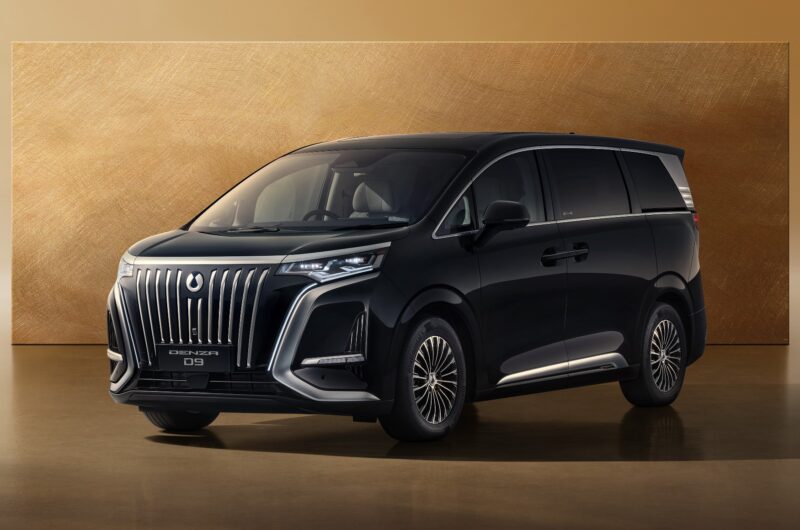
Denza, the premium sub-brand of BYD, has delivered the first 200 units of the Denza D9 at the ‘Denza and BYD Electrifying Experience’ event held at Plaza Arkadia, Desa Parkcity, last weekend.
The special event welcomed early customers who had purchased the premium electric MPV during its launch phase last month.
Eagle Zhao, Managing Director of BYD Malaysia, stated that the delivery of the first 200 units of the Denza D9 marks a significant milestone for Denza in Malaysia.
“This overwhelming response reflects the growing demand for premium electric mobility and reaffirms our dedication to innovation, craftsmanship, and customer experience.
“We are committed to shaping the future of high-end EVs and look forward to delivering even more exceptional vehicles to our customers in Malaysia,” he said.
Launched on February 20, the D9 is priced starting from RM259,000 for the Advanced FWD variant and RM309,000 for the Premium AWD.
The Advanced FWD variant is powered by a single electric motor on the front axle, generating 308 hp and 360 Nm, allowing it to accelerate from 0 to 100 km/h in 9.5 seconds.
Meanwhile, the Premium AWD features two electric motors delivering a total output of 369 hp and 470 Nm, reducing the century sprint time to 6.9 seconds.
Both variants are equipped with a Blade LFP battery with a capacity of 103 kWh, offering a driving range (NEDC cycle) of 600 km for the Advanced FWD and 580 km for the Premium AWD.
Those purchasing the D9 at the event or at any Denza Malaysia outlet before 16 March will receive an exclusive launch package, which includes a complimentary wall box along with an installation card and a six-year free service package.
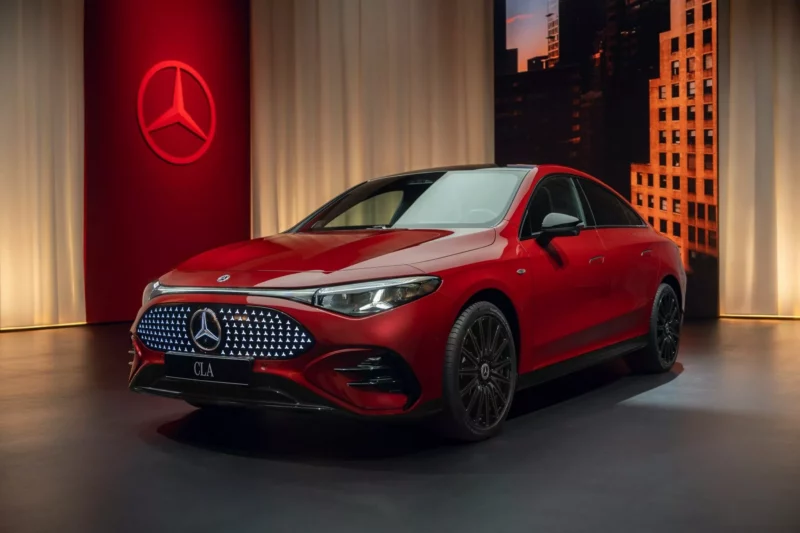
With the A-Class sedan no longer on offer, the third-generation CLA-Class coupe sedan now bears the heavy responsibility of being Mercedes-Benz’s entry-level sedan.
Competing against the BMW 2 Series Gran Coupe, the CLA features larger dimensions, measuring 4,722 mm in length (+41 mm) and with a wheelbase now increased by 61 mm to 2,789 mm.
However, these dimensional changes primarily benefit the driver and rear passengers, who will enjoy more legroom.
Rear passengers, on the other hand, will have to contend with slightly reduced leg space.
To start, the CLA-Class is available in a fully electric (EV) version with two variants offered.
The Mercedes-Benz CLA 250+ with EQ Technology comes equipped with a rear-wheel-drive electric motor producing 268 hp and 335 Nm of torque, enabling acceleration from 0 to 96 km/h in just 6.6 seconds before reaching a top speed of 209 km/h.
Meanwhile, the CLA 350 4MATIC with EQ Technology features a dual-motor setup (349 hp/515 Nm) and an all-wheel-drive system, allowing it to accelerate from 0 to 96 km/h in 4.8 seconds.
With an 85 kWh lithium-ion battery pack, this entry-level electric sedan can achieve a range of 672-771 km, or up to 694-792 km for the 250+ variant.
The 800-volt electrical architecture provides DC fast-charging capabilities of up to 320 kW, allowing owners to add up to 325 km of range in just 10 minutes.
A hybrid variant is also expected to be introduced later, which will feature a 1.5-liter engine paired with a 1.3 kWh battery pack, 48-volt technology, and an electric motor integrated into an 8-speed dual-clutch transmission.
In terms of exterior design, the EV variant of the CLA features a grille panel adorned with a glowing three-pointed star, while the hybrid variant sports a more traditional grille structure.
The Mercedes star element is also incorporated into the front and rear headlight units.
Compared to its predecessor, the 2026 CLA has an impressively low drag coefficient of 0.21, thanks to its flush door handles, sleeker roofline, and more aerodynamic wheel designs (ranging from 17 to 19 inches).
To make the cabin feel more luxurious, Mercedes offers the MBUX Superscreen system, which includes a 10.25-inch instrument cluster display and a pair of 14-inch screens.
The MBUX Superscreen is powered by the Mercedes-Benz Operating System and features artificial intelligence capabilities, showcasing ChatGPT-4, Microsoft Bing, and Google Gemini.
In addition to its focus on screens, the 2026 CLA will also come equipped with a leather-wrapped sports steering wheel, heated front seats, a fixed panoramic glass roof, and a single-zone climate control system.
For the first time, a Mercedes vehicle offers a front trunk (frunk) with a capacity of 71 liters, complementing the rear cargo space of 405 liters.
For fans of internal combustion engines (ICE), unfortunately you cannot enjoy this feature.
Denza, the premium sub-brand owned by BYD, will be holding the ‘Denza and BYD Electrifying Experience’ event this weekend at Plaza Arkadia, Desa Parkcity.
The special event will showcase the premium MPV Denza D9, along with the handover of the first batch to early new owners.
As previously reported, a total of 800 units of the D9 were successfully sold within a week of its launch.
The all-electric people mover was launched locally in February at a price of RM259,000 for the Advanced FWD variant and RM309,000 for the Premium AWD variant.
Both variants use a Blade LFP battery with a capacity of 103 kWh, offering a NEDC range of up to 600 km for the for the former and 580 km for the latter.
The ‘Denza and BYD Electrifying Experience’ event will take place over three days from March 14 to 16, from 10 am to 10 pm.
The public is welcome to test drive the Denza D9, as well as enjoy Denza’s technology showcase and various family-friendly activities.
Additionally, the event will feature an exclusive preview and presentation of the Denza Z9 GT occurring every two hours.
Customers who purchase the Denza D9 at this event or at any Denza dealership branch until March 16, 2025 can enjoy exclusive launch privileges—including a complimentary wall box with an installation card and a six-year free service package.
Volkswagen Group CEO Oliver Blume has revealed that the first electric vehicle from Lamborghini could have up to 2,000 PS on tap.
The figure is significantly higher than the 1,341 hp (1,360 PS or 1 MW) touted by the Italian automaker when introducing the Lanzador concept car nearly two years ago.
As a refresher, the Lanzador is an electric grand tourer with a high ground clearance and a 2+2 seating configuration. It will serve as the basis for Lamborghini’s first EV, which is slated to enter the market in 2028.
The aforementioned substantial power increase may be attributed to “a joint electric kit that will benefit from synergies across brands” that the EV is expected to adopt.
He also added that the EV will be built on a platform that development of is being led by Porsche for Audi, Bentley, Lamborghini and Porsche.
The platform in question is said to be capable of supporting power outputs of up to 2,000 PS and 980 volts for faster charging and improved energy efficiency. Currently, EVs under the Volkswagen Group use a 400V and 800V architecture.
Blume also confirmed that the EV will be produced at Lamborghini’s headquarters in Sant’Agata in Italy, although details regarding the battery are still under wraps.
Alongside the C-HR+, Toyota Motor Europe has also introduced another electric vehicle, though this one is significantly more teeny and occupies only half a parking space.
Known as the FT-Me, it is a concept vehicle that embodies Toyota’s vision for all-electric micromobility that combines premium design with affordability.
The EV is indeed very small, measuring less than 2.5 metres in length and featuring just two seats. Its rather eccentric design is inspired by a jet helmet, and most components you see here are made using recycled materials, helping to reduce carbon emissions by up to 90%.
Battery specifications have not been disclosed but according to Toyota, its propulsion system consumes three times less energy per kilometre than a high-capacity battery electric car.
The propulsion system is complemented by solar panels on the roof that can add an extra 20 to 30 km of range, depending on weather conditions.
In addition to being small enough to fit in the narrow European streets, the FT-Me can be operated via hand controls, making it usable to wheelchair users without any aftermarket modification.
It is uncertain whether the FT-Me is intended for production, but Toyota states that the vehicle is designed for people with entry-level driving licences, including those as young as 14 years old in some markets.
This means that the FT-Me will be classified as a quadricycle, similar to the Citroën Ami and Opel Rocks-e, if it ever sees the light of day.
This isn’t the first time news of accidents involving Xiaomi’s electric sedan has been reported.
If you recall, last year a Xiaomi SU7 Max was reported to have skidded off the track due to an unsuitable braking system.
According to Xiaomi, the electric sedan is not designed for serious driving on the circuit.
So what about the fast sedan, the Xiaomi SU7 Ultra?
According to Xiaomi, the SU7 Ultra, with specifications of 1,526 hp and a price tag of RMB 529,900 (approximately RM 324,000), is confirmed to be suitable for track use.
However, just a few days after the first small batch of SU7 Ultra vehicles was distributed to owners, one of them was reported to have skidded on the racetrack.
In a video that surfaced on the social media platform Weibo, the sedan was seen traveling at over 120 km/h on a straight section of the track.
However, the driver of the vehicle braked too late, causing the SU7 Ultra to skid off and collide with a barrier made of tires.
As a result, the hood, front bumper, fender, and headlight unit were severely damaged. Fortunately, the airbag deployed correctly, ensuring the driver remained safe.
According to Lei Jun, the founder and CEO of Xiaomi Auto, SU7 Ultra owners need to focus entirely on safety and are advised to undergo formal training before entering the track.
Despite the Xiaomi SU7 Ultra boasting a power output of up to 1,526 hp and 1,770 Nm of torque, those figures are limited to 900 hp with a maximum speed of 140 km/h for the initial 300 km driving range.
At full power, the SU7 Ultra can accelerate from 0 to 100 km/h in just 1.98 seconds before reaching a top speed of 359 km/h.
Malaysia’s Leading Automotive News | ENGEAR ENGLISH