Another electric SUV has been launched by UMW Toyota Motor (UMWT), the 2026 Toyota bZ4X.
Designed under the Beyond Zero (bZ) philosophy, this SUV is priced at RM220,000.
Specifications of the bZ4X
The Toyota bZ4X is the first model built on the e-TNGA platform.
It is powered by a single electric motor that produces 224 hp and 269 Nm of torque, featuring two driving modes: Normal and Eco.
The 73.1 kWh lithium-ion battery offers a driving range of up to 525 km on a full charge.
The bZ4X also supports AC charging at 22 kW and DC fast charging at 150 kW, allowing the battery to be charged up to 80% in just 30 minutes.
Exterior
The exterior design of the bZ4X features a Hi-Tech & Emotion theme, showcasing a front inspired by a hammerhead shark.
It comes equipped with features such as LED headlights with daytime running lights (DRL), a roof spoiler, a ducktail spoiler, and 20-inch alloy wheels.
There are five color options available: Precious Metal, Attitude Black MC, Emotional Red, DK. Blue MC, and Platinum White Pearl MC.
Interior
The cabin of the bZ4X is equipped with features such as:
A 7-inch digital cluster screen
A 14-inch infotainment screen
Support for Apple CarPlay and Android Auto
Perforated leather upholstery with built-in ventilation
8-way power-adjustable front seats
Lumbar support for the driver
nanoe X particle filter
Ambient lighting with 64 color options
A fixed panoramic glass roof
To ensure the cabin remains quiet, the bZ4X features soundproof glass and wind noise reduction functionalities.
Safety Features
As standard, the bZ4X comes with Toyota Safety Sense (TSS), which includes the following features:
Pre-Collision System (PCS)
Full-Speed Dynamic Radar Cruise Control (DRCC)
Lane Tracing Assist (LTA)
Adaptive High Beam System (AHS)
Blind Spot Monitor (BSM)
Intelligent Parking Assistance (IPA)
Parking Brake Support (PSB)
Safe Exit Assist (SEA)
Traffic Sign Recognition (RSA)
Additionally, this SUV is equipped with a 360-degree around-view monitoring system (PVM) and eight SRS airbags.
UMW Toyota Motor (UMWT) has just launched the 2026 Toyota Hilux BEV electric pickup truck for the local market.
The units, assembled in Thailand, are priced starting from RM226,300.
It comes with a 5-year warranty with a mileage limit of up to 150,000 km, and an 8-year battery warranty, which can be extended for the 9th and 10th years.
Hilux BEV Performance
This electric pickup truck is powered by twin electric motors, generating 206 Nm at the front and 267 Nm at the rear.
In total, it can deliver a maximum power output of 196 PS.
The 59.2 kWh lithium-ion battery pack offers a driving range of up to 315 km (NEDC data) on a full charge.
The Hilux BEV supports 10 kW AC charging, with a charging time of 10-100% in just 6.5 hours.
With 150 kW DC fast charging, this time is reduced to just 30 minutes (10-80%).
Exterior
The Hilux BEV measures 5,320 mm in length, 1,855 mm in width, 1,865 mm in height, and has a wheelbase of 3,085 mm.
It features a ‘Cyber Sumo’ theme, with a front design that showcases a closed grille structure, accompanied by unique 17-inch alloy wheels.
Additionally, it includes an LED lighting system that encompasses projector units and daytime running lights (DRL) with secondary illumination features.
Cabin
The Hilux BEV’s cockpit includes the following features:
Electric Power Steering (EPS)
A combination of leather upholstery and soft-touch trim
10-way adjustable driver’s seat
6-way manual adjustment for the front passenger seat
12.3-inch digital cluster screen
12.3-inch infotainment screen
Apple CarPlay & Android Auto compatibility
Two USB Type-C charging ports
Capability
The Hilux BEV has a payload capacity of 750 kg, in contrast to the diesel Hilux, which can carry loads of up to 1,000 kg.
According to Toyota, this capacity strikes an optimal balance between driving range, power, and utility.
The approach and departure angles of the Hilux BEV are similar to those of the standard Hilux, and it can wade through water up to 700 mm deep.
Driving dynamics are further enhanced by the addition of a crossmember structure and de Dion rear suspension setup.
Moreover, the Hilux BEV features a Multi-Terrain Select (MTS) system with five available modes for different driving scenarios.
Drivers can choose settings such as Rock, Sand, Mud, Dirt, and a Mogul mode specifically for uneven terrain.
Safety
This pickup truck comes standard with Toyota Safety Sense (TSS) features, including:
Dynamic Radar Cruise Control (DRCC)
Lane Tracing Assist (LTA)
Blind Spot Monitoring (BSM)
Rear Cross Traffic Alert (RCTA)
Automatic High Beam (AHB)
The electric Hilux is also equipped with a surround monitoring system (PVM), which is extremely useful in parking situations.
Volvo Car Malaysia has just launched the electric sedan, the Volvo ES90 for the local market.
Assembled at the Shah Alam plant, the Volvo ES90 is priced starting from RM339,888.
Here are some key facts about the ES90 that you need to know:
Dimensions
The ES90 measures 5,000 mm in length, 2,120 mm in width, and 1,550 mm in height, with a wheelbase exceeding 3 meters (3,102 mm), contributing to a more spacious cabin.
Standard cargo space is 424 liters, which can expand to 904 liters when the second-row seats are folded down.
The front trunk has a capacity of 27 liters.
All four wheel arches are fitted with 22-inch rims.
The drag coefficient is an impressive low of just 0.25.
Single Motor Extended Range variant
For the Malaysian market, the Volvo ES90 is available in a single variant, the Single Motor Extended Range.
This sedan is powered by a rear-wheel-drive electric motor that produces 333 hp and 480 Nm of torque.
It accelerates from 0 to 100 km/h in 6.6 seconds and has a top speed of 180 km/h.
Battery & Charging
The ES90 is equipped with a 92 kWh NCM battery pack and an 800-volt electrical architecture, allowing a range of up to 651 km (WLTP data).
This electric sedan supports AC charging at 11 kW (a full charge at 100% in 10 hours) and DC fast charging of up to 350 kW.
This means the battery can be charged from 10% to 80% state of charge (SoC) in as little as 22 minutes.
Standard features
The Volvo ES90 comes with active air suspension, headlights designed with Thor’s hammer graphics, and C-shaped LED taillights.
The cabin features include a panoramic glass roof with electrochromatic functionality, a 9-inch digital display, a center screen measuring 14.5 inches, a Bowers & Wilkins sound system with 1,610 watts and Dolby Atmos and Abbey Road Studios sound experiences, as well as a 4-zone climate control system.
The ES90 is also the first Volvo model equipped with the NVIDIA DRIVE AGX Orin computing system, featuring 5G capabilities and support for over-the-air updates.
Safety
In addition to a robust frame, the Volvo ES90 comes with seven cameras, five radars, and 12 ultrasonic sensors, as well as a system that can detect the driver’s level of attention on the road.
Safety features included in the Volvo ES90 consist of nine airbags, a collision avoidance system, automatic emergency braking, rear collision warning, blind spot information system, rear cross-traffic alert, door opening warning, and emergency stop assist.
Additionally, this sedan is equipped with a 360-degree three-dimensional surround camera system to ease maneuvering in tight spaces.
Mercedes-Benz Malaysia has recently announced the opening of bookings for the all-new 2026 Mercedes-Benz CLA electric sedan.
The vehicle is available in a single variant, the CLA 250+ with EQ Technology, with an estimated on-the-road selling price starting at RM295,888, excluding insurance.
Here are some key facts you need to know:
Powertrain
The CLA 250+ features a single electric motor with rear-wheel drive, delivering 272 horsepower and 335 Nm of torque.
Paired with a 2-speed automatic transmission, the CLA 250+ can accelerate from 0 to 100 km/h in just 6.7 seconds and reach a top speed of 210 km/h.
Battery & Charging
The CLA 250+ can travel up to 792 km on a full charge (WLTP data), thanks to its NMC 85 kWh battery pack.
With an 800-volt architecture and a DC charging capability of 320 kW, CLA owners can add up to 325 km of range in just 10 minutes.
Dimensions
As a compact sedan, the CLA measures 4,723 mm in length, 1,855 mm in width, 1,468 mm in height, and has a wheelbase of 2,790 mm.
Compared to the previous generation, this new CLA is 35 mm longer, 25 mm wider, and offers a more spacious cabin.
For the first time, a Mercedes features a front cargo space (frunk) of 101 liters in addition to a rear cargo space of 405 liters.
Exterior
In terms of exterior design, the CLA exhibits a sporty appearance, characterized by features such as short overhangs, a GT-style rear design, and a long wheelbase.
The front is adorned with a grille panel illuminated by 142 three-pointed star LEDs.
Mercedes’ star element is also present in the headlight units, both front and rear.
Interior
The interior of the CLA boasts the wide MBUX Superscreen display, which consists of a 10.25-inch digital cluster screen and two 14-inch screens.
The MB.OS operating system also offers AI features supported by ChatGPT-4, Microsoft Bing, and Google Gemini for navigation-related queries.
More details about this model will be revealed ahead of its upcoming official launch.
Proton New Energy Technology (Pro-Net) has announced the opening of bookings for the 2025 smart #5 electric SUV model, which will be launched soon.
Interested Malaysians can reserve the smart #5 through the Hello smart app or the official smart Malaysia website, with a reservation fee of RM2,000.
Two variants are available: Premium and Brabus.
The smart #5 Premium features a rear-wheel-drive electric motor delivering 358 hp and 373 Nm of torque, with acceleration from 0 to 100 km/h in just 6.5 seconds.
On the other hand, the smart #5 Brabus comes with a dual-motor setup providing 637 hp and 710 Nm of torque, allowing for acceleration from 0 to 100 km/h in as little as 3.8 seconds.
Equipped with a 100 kWh NMC battery pack, this SUV can travel up to 590 km (WLTP data) on a full charge, or up to 540 km for the Brabus variant.
With an 800V electric architecture, the smart #5 supports AC charging at 22 kW, as well as DC fast charging at 400 kW, enabling the battery to charge from 10% to 80% state of charge in just 15 minutes.
Other features include:
1,530 liters of cargo space and a 72-liter frunk
Dual 13-inch OLED display screens
25.6-inch augmented reality head-up display
Apple CarPlay and Android Auto support
Sennheiser audio system with 20 speakers and Dolby Atmos technology
Nappa leather upholstery
Oak wood trim
1.7 square meter panoramic glass roof
Built-in cooler in the center console storage compartment
The Brabus variant also includes additional features such as Launch Mode, Dinamica microfiber upholstery, red brake calipers, 21-inch Brabus Monoblock Z rims, and sport-tuned suspension.
The smart #5 offers safety features including a 360-degree camera and Smart Pilot Assist, which includes Highway Pilot Assist (HWA) with Stop & Go functionality for semi-automatic driving on highways.
As of this writing, the presence of the Denza D9 electric minivan is increasingly noticeable on the roads.
If you visit any major shopping center, you’ll see this electric vehicle confidently parked alongside Malaysia’s popular boxy MPV choices, the Alphard and Vellfire.
With similar dimensions, height, and importantly, an impressively luxurious appearance on the road, the writer is convinced it can serve as the best alternative to the Alphard/Vellfire twins—provided you don’t mind spending time at charging stations.
Here are our thoughts after several days of testing the Denza D9.
Appearance
As previously mentioned, the Denza D9 has become a favored choice among Malaysians looking for a spacious and comfortable commuter vehicle.
Its significant advantages include larger dimensions compared to its competitors and a longer wheelbase, complemented by a premium overall look.
There’s no need for aggressive body lines or a fierce front end.
With its understated elegance, the Denza D9 stands out on the road, featuring a chrome grille, stylish 18-inch multi-spoke wheels, and slim LED daytime running lights that extend downward.
The rear design is simpler, although the graphics on the main light unit can be somewhat busy.
Driver’s Cockpit
For drivers, the Denza D9 is equipped with features that facilitate a seamless driving experience.
The front seats come with eight-way adjustments, lumbar support, ventilation, adjustable headrests, and crucially, a cushion that supports the thighs—especially important for long-distance driving.
Physical controls remain available despite the Denza D9 being an EV.
The central console hosts several important function switches, such as those for opening side sliding doors, selecting driving modes, and accessing the rear passenger fridge.
The gear knob is large and premium-feeling, though the placement of the P and Start/Stop buttons could be improved, leading to occasional confusion while trying to shift gears.
Climate control relies on a 15.6-inch central screen.
Overall, I have no complaints about this setup—all essential functions are easily accessible, ensuring maximum comfort for rear passengers.
Space for the Boss
Speaking of rear passengers, or rather the boss, they will undoubtedly appreciate the features offered in the second-row seating. Upon opening the door, you are greeted with captain’s chairs that boast rare amenities, including:
Heating and ventilation functions
A 10-point massage feature
Head and footrests
Zero-gravity settings for ultimate relaxation
All these functions can be activated via control screens for both seats.
Additionally, the left-side rear passenger can maximize space by activating a “boss switch.”
Working from the cabin is also made easy with folding tables and storage for cool beverages, with temperatures adjustable from -6 to 50 degrees Celsius.
Thanks to premium Nappa upholstery, the travel experience is made even more comfortable, complemented by excellent noise and vibration isolation.
For the first time, I spent more time in the second row of the Denza D9 than in other test models, simply to enjoy its luxurious features.
Driving Experience
Despite its larger dimensions, I had no trouble handling this premium MPV.
It offers excellent visibility, responsive steering, and is aided by a surround camera system that provides clear, sharp images, thus ensuring the Denza D9 remains free of scratches.
As discussed in previous brief test drive articles, the Denza D9 offers settings for the drive system, steering, brake system, and MacPherson/Multi-link suspension configurations.
Notable features include adaptive Disus-C suspension settings for driving control and comfort tailored to your needs.
Most of the time, I preferred using Sport mode to ensure the comfort that rear passengers require, as body roll is more pronounced in Comfort mode, which could lead to discomfort.
It might be better to use Comfort mode on high-quality paved roads.
Despite being equipped with dual electric motors (outputting 369 hp and 470 Nm with acceleration times as quick as 6.9 seconds), I didn’t feel the need to drive the Denza D9 aggressively; a gentle throttle response sufficed for reaching desired speeds—all in the name of VIP passenger comfort.
Suitable for Long Journeys
The Denza D9 comes in two variants.
The version I tested is the AWD model, which has a moderate range of about 480 km (WLTP data).
If power isn’t a priority, you can opt for the FWD variant, producing 309 hp and 360 Nm, with a range of 520 km.
Fast charging is also a non-issue, as the Denza D9 supports DC charging up to 166 kW.
With fast charging stations available along major routes, long-distance driving in the Denza D9 is no longer a significant concern, especially when tasked with transporting VIPs to their destinations.
Price
Another advantage of the Denza D9 is its more affordable price.
Compared to competing models, the Denza D9 is available from as low as RM259,000, or slightly more for the Premium AWD variant, priced at RM309,000.
So, are you still considering purchasing a premium MPV from Japanese brands?
Denza D9 Specifications
Powertrain: Dual electric motors
Power: 369 hp, 470 Nm
Drivetrain: All-wheel drive (AWD)
Acceleration: 6.9 seconds (0-100 km/h)
Battery: LFP Blade, 103.36 kWh capacity
AC Charging: 11 kW
DC Charging: 166 kW
Range: 580 km (NEDC data)
Suspension: MacPherson/Multi-link, adaptive DiSus-C system
As BMW begins to reduce the size of its front grilles, its competitor Mercedes-Benz takes an opposite approach with the new GLC with EQ Technology.
This completely new GLC is set to go on sale in the first half of 2026, replacing the EQC model.
Here are some key facts about the GLC with EQ Technology:
1. Dimensions
The electric GLC measures 4,845 mm in length, 1,913 mm in width, and 1,644 mm in height, with a wheelbase of 2,972 mm.
This means it is longer, wider, and offers a more spacious cabin compared to the petrol-powered GLC.
It features a cargo space of 570 liters to 1,739 liters, along with a frunk (front trunk) of 128 liters.
2. Chassis
The electric GLC can tow loads weighing up to 2,400 kg when equipped with a trailer hitch.
Among the new features is the option to pair it with the Airmatic air suspension borrowed from the S-Class, complete with a rear-axle steering system.
This intelligent suspension system will communicate with traffic infrastructure and Google Maps data to determine optimal settings, including the SUV’s height based on current road conditions.
3. Performance & Charging
Initially, Mercedes will offer the GLC 400 4MATIC with a dual electric motor setup producing 483 hp and paired with a 94 kWh lithium-ion battery pack.
With a full charge, it can achieve a range of 713 km according to the WLTP cycle.
Supporting fast DC charging of up to 330 kW, this GLC can add 300 km of range in just 10 minutes of charging.
4. Exterior
The GLC with EQ Technology retains a shape similar to the existing GLC, but can be distinguished by its unique front and rear designs.
A standout feature of this electric GLC is its larger front grille, adorned with 942 illuminated points, including the central logo.
The three-pointed star theme is also present in the design of both the front and rear headlights.
5. Interior
Inside the cabin, the Mercedes GLC features upholstery certified by The Vegan Society, alongside premium options like Soft Torino leather and Nappa leather.
The MBUX Hyperscreen has been updated with a 39.1-inch screen that integrates a digital cluster display, a central infotainment screen, and a screen for the front passenger.
The center console includes a wireless charging slot for smart devices and two cup holders.
Rest assured, Mercedes has maintained the presence of physical function buttons, especially on the center console, door panels, and steering wheel.
Introducing the smallest electric car produced by Honda: the Honda N-One e:.
With dimensions that place it within the kei car class, it replaces the Honda e, which ceased production in January of last year.
Here are some key facts you should know:
1. Honda’s second electric kei car
This is not the first ultra-compact electric car, as Honda previously launched the commercial EV N-Van e: last year.
The specifications of the N-One e: are expected to mimic those of the N-Van e:, featuring a single electric motor that drives the front wheels (64 hp).
2. Driving Range
Equipped with a 29.6 kWh battery pack, the N-Van e: can travel up to 245 km; however, when paired with the N-One e:, it has an estimated range of over 270 km based on WLTC data.
The N-Van e: also supports DC fast charging at 50 kW, allowing the battery to charge in 30 minutes or 4.5 hours using AC charging at 6.0 kW.
3. Nostalgic features from the 1960s
Honda employs the e:Daily Partner approach for the N-One e, offering an attractive exterior design along with a spacious cabin.
The N-One e: also provides the benefit of easy handling—evoking features from Honda’s classic kei car, the N360, of the 1960s and 70s.
4. Cabin space
The cabin of the N-One e: follows the Man Maximum Machine Minimum philosophy, showcasing a minimalist design.
It comes with an LCD cluster screen, a nine-inch central display, USB charging ports, a PRND selection button, and central climate controls, along with a two-spoke steering wheel similar to that of the N-Van e:.
Practicality is enhanced by a small tray on the dashboard, cup holders in the driver’s area and center console, as well as foldable rear seats to suit various needs.
5. Variations
Two variants are offered for the Japanese market: the e: L, which is more fully equipped, and the base e: G.
Both variants come standard with front and rear LED lights and an ADAS system (complete with cameras).
The base e: G features 14-inch steel rims with hub covers.
Its cabin appears more minimalist, as it includes only a simple audio system with Bluetooth support.
The e: L variant, on the other hand, is equipped with sporty 14-inch six-spoke aluminum rims and a cabin that includes the infotainment screen mentioned in point four.
6. Honda Access Accessories
As always, no Honda car offering would be complete without a wide array of accessories.
Honda Access provides a V2L adapter kit that offers up to 1,500W of power for emergency use.
A charging indication light module is also available, allowing owners to see the battery charge level from outside, even when the car is locked.
The Premium Style package adds decorative racing stripes to the hood, tailgate, sides of the car, and front grille.
7. Sales
Honda Japan will begin sales of the N-One e: starting this September.
Interestingly, this kei car will also make its official debut in the European market at the IAA event in Munich during the same month.
A few months ago, Isuzu announced that production of the electric D-Max EV pickup truck had begun at its factory in Thailand.
The truck is expected to hit the European market as early as 2026, carrying a surprisingly high price tag.
The Isuzu D-Max EV is priced at £59,995 (RM341,913), which is double the price of the diesel version of the D-Max, starting at £27,755 (RM158,176).
Furthermore, with a price of £62,495 (RM356,000) for the more premium variant, it is still considered expensive compared to the D-Max AT35 pickup, which comes loaded with various off-road accessories priced at £57,005 (RM325,000).
The Isuzu D-Max EV is powered by two electric motors, producing an output of 188 hp and 325 Nm, while still retaining the Rough Terrain Mode feature from the diesel model.
Acceleration from 0 to 100 km/h takes just 10.1 seconds, with a maximum speed of only 129 km/h.
As a workhorse, the D-Max EV offers a payload capacity of 1,000 kg and can tow loads of up to 3.5 tons, matching the capabilities of the diesel pickup.
The 66.9 kWh battery pack allows for a driving range of just 263 km; however, it supports 50 kW DC fast charging, enabling a quick recharge from 20% to 80% in just one hour.
The Isuzu D-Max EV retains the ladder-frame chassis like the standard model, but the rear suspension has been adapted to a De-Dion setup for improved ride quality.
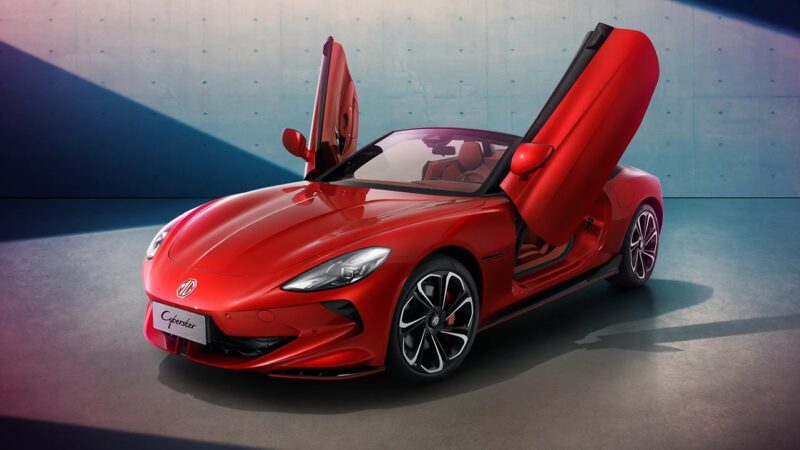
MG Motor Malaysia has announced the introduction of a new rear-wheel drive (RWD) variant of the electric roadster, the MG Cyberster.
With the arrival of the RWD variant, the MG Cyberster is now available starting at a price of RM299,900, while the Cyberster 4WD is priced at RM319,900.
In terms of specifications, the Cyberster RWD is powered by a rear-wheel drive electric motor that produces 340 PS and 475 Nm of torque.
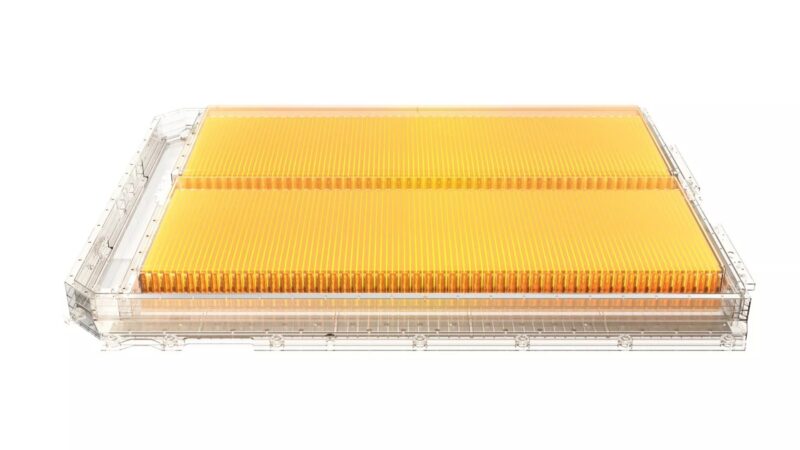
It accelerates from 0 to 100 km/h in just five seconds, while the 77 kWh battery pack offers a driving range of up to 508 km.
The Cyberster RWD also supports DC fast charging, allowing the battery pack to be charged from 10% to 80% in just 38 minutes.
Other features include 19-inch alloy wheels and a Brembo braking system that provides control corresponding to its performance.
In terms of design, both the Cyberster RWD and 4WD variants showcase similar styling elements, including LED headlamps and a low silhouette that highlights a Kammback-style rear design.
The cabin of the Cyberster is inspired by motorsports, featuring leather and Alcantara finishes, sport seats with lumbar support, a 10.25-inch digital display, a seven-inch touchscreen, and two additional seven-inch screens.
Four attractive color options are available: Dynamic Red, Camden Grey, Inca Yellow, and English White.
MG Malaysia also offers a red soft top as a RM2,000 option in addition to the standard black roof.
Malaysians can take a closer look at the all-new MG Cyberster RWD during the “Dare to Love” roadshow series, taking place at 1 Utama (Old Wing) from July 9 to July 13.
Customers who place an order for the MG Cyberster during this period will receive a one-year unlimited JomCharge charging package, a complimentary 7kW AC wall charger, and a limited edition diecast MG Cyberster model.
In addition to the bZ model, Toyota America has launched another electric SUV designed for outdoor enthusiasts, the bZ Woodland.
The Toyota bZ Woodland fundamentally shares the same platform as the previously introduced Subaru Trailseeker.
Compared to the standard bZ model, the bZ Woodland features larger dimensions, measuring 4,830 mm in length (+140 mm), 1,860 mm in width, 1,670 mm in height (+20 mm), and a wheelbase of 2,850 mm.
These dimensional changes contribute to a larger cargo space, around 850 liters.
Additionally, the ground clearance has increased by 2.54 mm to 210 mm, thanks to the use of higher suspension.
This mid-size SUV can tow a weight of 1,588 kg and can be equipped with All-Terrain tires.
Toyota has also streamlined the offerings for the bZ Woodland, which is only available in a dual electric motor configuration producing 375 hp.
Acceleration performance has not been disclosed; however, it is noted that the Subaru Trailseeker can accelerate from 0 to 96 km/h in just 4.4 seconds.
The all-wheel-drive (AWD) system is complemented by a driving mode selection known as X-Mode and a Grip-Control feature for enhanced off-road performance.
The 74.7 kWh battery pack allows this SUV to be driven up to 418 km and supports NACS plug charging for compatibility with the Tesla Supercharger network.
Fast DC charging takes only 30 minutes to go from 10 to 80 percent state of charge (SoC).
The exterior appearance of the bZ Woodland resembles that of the standard bZ model, except for the addition of black body cladding, 18-inch aluminum wheels with removable covers, and roof rails.
The rear features a more minimalist light housing, followed by a Woodland badge on the tailgate.
Inside, the bZ Woodland cabin includes a 14-inch central screen, a wireless smartphone charging slot, USB Type-C charging ports, and SofTex-wrapped seating with heating functions for the front row.
There is also a Premium package that adds a JBL audio system, a panoramic glass roof, a digital rearview mirror, and front seat ventilation.
Lastly, the Toyota Safety Sense features a suite of safety functions, including a Pre-Collision System (PCS), Dynamic Radar Cruise Control (DRCC), Lane Departure Alert (LDA), Road Sign Assist (RSA), Automatic High Beams (AHB), Blind Spot Monitoring (BSM), Safe Exit Alert (SEA), Rear Cross-Traffic Alert (RCTA), and a Surround View Camera system.
Toyota’s electric SUV is now presented with a new, simpler name that rolls off the tongue more easily: the Toyota bZ.
For the 2026 model year, several enhancements have been made, particularly in terms of driving range to alleviate range anxiety among owners.
There are two battery pack options available: 57.7 kWh and 74.7 kWh.
The base front-wheel drive (FWD) version with 168 hp and a 57.7 kWh battery can now travel up to 380 km (EPA data).
There is also a more powerful FWD variant (221 hp) which has an impressive range of up to 505 km when paired with the 74.7 kWh battery pack.
Toyota also offers an all-wheel drive (AWD) version with 338 hp, capable of covering up to 463 km on a full charge.
Notably, the 2026 Toyota bZ is now equipped with a North American Charging Standard (NACS) plug, allowing owners to charge their vehicles at Tesla Supercharger stations at a capacity of up to 150 kW.
Unlike the bZ4X model, the bZ now features a more streamlined front fascia similar to that of the Camry and Prius.
The previously black-painted wheel arch protective plastics have now been color-matched to the body of the vehicle.
Upon entering the cabin, one will find a redesigned center console that includes a slot for wireless smartphone charging and a 14.0-inch infotainment screen.
Additional features include SofTex upholstery, a six-speaker audio system with an option for a JBL Premium nine-speaker audio system, and Toyota Safety Sense 3.0 safety features.
Isuzu Motors Limited has recently announced that production of the electric pickup model, the D-Max EV, has officially begun at its factory in Thailand.
The zero-emission pickup was first showcased at the Bangkok Motor Show 2024.
According to specifications, the D-Max EV is equipped with two electric motors and an all-wheel-drive system, with the front motor producing 58 hp and 108 Nm, while the rear motor produces 132 hp and 217 Nm.
The total power output reaches 190 hp and 325 Nm, allowing for acceleration from 0 to 97 km/h in just 10.1 seconds, with a maximum speed of 130 km/h.
The D-Max EV’s capabilities are on par with the diesel version of the D-Max, boasting a payload capacity of 1,010 kg and a towing capacity of 3,500 kg.
The 66.9 kWh lithium-ion battery pack enables the vehicle to travel up to 361 km for city driving (WLTP data).
The D-Max EV also supports 11 kW AC charging (0-100 percent in 10 hours) and 50 kW DC fast charging, where the battery can be charged from 20 to 80 percent in one hour.
In terms of dimensions, the D-Max EV measures 5,280 mm in length, 1,870 mm in width, and 1,810 mm in height, with a wheelbase of 3,125 mm. The vehicle weighs approximately 2,350 kg.
Additionally, the D-Max EV features a ground clearance of 210 mm, the capability to wade through 600 mm of water, and approach and departure angles of 30.5 degrees and 24.2 degrees, respectively.
Unlike the standard D-Max, which uses leaf spring suspension in the rear, the handling of the D-Max EV is enhanced by the use of De-Dion suspension.
According to Isuzu, the left-hand drive (LHD) version of the D-Max EV will be distributed to major European markets in the third quarter (Q3) of this year.
The right-hand drive (RHD) version is set to begin production at the end of this year and is expected to be sold in the UK market in 2026, before being expanded to other markets.
As we know, Nissan has been one of the early pioneers of electric vehicles for the mass market.
However, relying solely on the Nissan Ariya and somewhat outdated LEAF could cause Nissan to fall significantly behind, especially when competing with rivals like BYD and Tesla.
Recently, the Dongfeng Nissan partnership showcased the Nissan N7 EV, an electric sedan designed specifically for the Chinese market.
Built on a modular platform, this mid-size sedan measures 4,930 mm in length, 1,895 mm in width, 1,487 mm in height, and has a wheelbase of 2,915 mm.
The V-motion design elements are still present in the N7, but with a more modern approach.
It features an LED light strip that spans the width of the vehicle, consisting of 710 LED units, followed by boomerang-shaped headlights, while the rear showcases a light structure composed of 882 OLED units.
The aerodynamic design of the Nissan N7 allows it to achieve a drag coefficient (Cd) as low as 0.208, aided by the sleek design of its door handles.
The Nissan N7 also features frameless door construction.
Although no images of the cabin have been provided, Nissan confirms that the N7’s cockpit will utilize a Qualcomm Snapdragon 8295P processing chip, with 256GB of storage and 32GB of memory.
Through a collaboration with Momenta, Dongfeng Nissan will equip the N7 with an advanced driver assistance system named ‘Navigate on Autopilot.’
The arrival of the N7 EV electric sedan is expected to restore Nissan’s reputation in the Chinese market when it goes on sale in the first half of 2025.
Further details, such as specifications and the range of this electric sedan, will only be revealed ahead of the official launch next year.
If your car is an expression of your style, the MINI is your perfect match. With its iconic design and sporty drive, it’s where fashion meets function.
These qualities shine in the latest MINI models like the new Countryman S Electric, combining iconic style and go-kart-like sportiness with a modern twist.
Eco-friendly material
In the latest generation, the MINI Countryman S Electric introduces fabric made from high-quality recycled materials, featured on the dashboard and door panels. This fabric, sewn with unique 2D techniques, offers a distinct, stylish appearance and a refined texture. The dashboard fabric also serves as a canvas for ambient lighting, transforming with each MINI Experience Mode to enhance the unique interior vibe.
If you’re concerned about maintaining this stylish fabric, rest assured—MINI designed it to be easy to clean. So, feel free to bring the kids along without any worries in your MINI Countryman.
Modern technology with classic look
The MINI Countryman S Electric is modernized with the first circular OLED display in any car. This high-resolution screen delivers crystal-clear information while seamlessly blending with MINI’s signature high-style aesthetic.
The OLED display also offers MINI Experience Modes, featuring themes like Vivid, Core, Go-Kart, Timeless, Balance, Trail, and Personal. Each mode creates a distinct atmosphere and driving experience to match your mood. For instance, if you’re feeling tired after work, you can switch to Balance mode for a more relaxing vibe.
If you love vintage and retro vibes, choose the Timeless mode, which features a display meter inspired by the classic MINI Cooper from Mr. Bean’s era. Plus, you’ll even hear sounds from the classic MINI through the audio system, adding to the nostalgic experience!
Agile like a go-kart
A MINI wouldn’t be a MINI without that signature go-kart-like handling, and the new MINI Countryman S Electric is no exception. Even as the largest MINI ever produced, it retains the iconic driving feel that makes every ride a thrill.
The suspension system and steering have been finely calibrated for agile and precise responses, ensuring a dynamic driving experience. The thick steering rims add to the excitement, inviting you to fully enjoy the drive in the Countryman S Electric.
With 313PS and 494Nm of torque from its dual electric motors, the ALL4 all-wheel drive system delivers instant acceleration and thrills. It rockets from 0-100km/h in just 5.6 seconds, ensuring a grin every time you accelerate from a traffic light or toll booth.
Overall, the MINI Countryman S Electric offers super-responsive acceleration, precise steering feedback, and a finely-tuned suspension, making it feel like a five-seater go-kart. You’ll find yourself eager to seek out corners where the regenerative braking system enhances the sporty handling, before effortlessly accelerating out with a smile.
Like other electric vehicles, the 66.5kWh battery pack in the Countryman S Electric is positioned under the chassis, lowering the center of gravity and enhancing stability in all driving situations.
Stylish, fun to drive, from only RM2,777 per month
Overall, I thoroughly enjoyed test driving the new MINI Countryman S Electric. It’s stylish, eye-catching, and effortlessly handles both traffic jams and highway cruising.
Heading to a campsite or beach is a breeze with the Countryman’s higher ground clearance and rugged bumpers and side skirts.
This vehicle adds joy and excitement to your daily drive, making it anything but boring. With sustainable materials in the cabin and an electric power system that offers up to 433km on a single charge, you can enjoy peace of mind knowing you’re driving a car that contributes to environmental preservation.
Interested in test driving the new MINI Countryman S Electric? Visit any MINI showroom nationwide. With Easy Drive Financing, you can own the Countryman for just RM2,777 per month, and for a limited time, receive a free Wallbox charger.
The MINI Cooper Electric is also available with Easy Drive Financing from RM2,021 per month and includes free Wallbox installation. For more details about MINI in Malaysia, follow their social media pages.
Zeekr has launched the 2025 electric sedan model 007, bringing several improvements such as faster charging time, new-generation batteries, and a smart cockpit.
There have been no changes in terms of power, as the standard rear-wheel-drive version is still capable of producing up to 415 hp, while the all-wheel-drive version is capable of generating 636 hp.
However, Zeekr has reprogrammed the algorithm, with the 0-100 km/h acceleration now at a rapid 5.0 seconds for the RWD version.
Meanwhile, the AWD version maintains its acceleration at a swift 2.84 seconds.
The Zeekr 007 can be equipped with a 100 kWh CATL Qilin ternary lithium battery pack with fast charging at 5C.
There is also the second-generation 75 kWh Golden Brick lithium iron phosphate battery with improved charging speed from 4.5C to 5.5C, theoretically achieving a 10-80 percent SoC charge in 10.5 minutes.
Zeekr claims that the Golden Brick battery is the world’s fastest mass-produced charging battery, offering a range of up to 688 km.
For the cabin space, Zeekr has upgraded the operating system to the Zeekr OS AI, which can actively provide recommendations based on current scenarios.
Zeekr 007 is also equipped with the Haohan 2.0 smart driving system assisted by LiDAR sensors, Nvidia Orin X processors, and over 30 sensors to enable it to handle various traffic situations on the road.
The electric vehicle (EV) market under RM150,000 is heating up, with Neta X now entering the competition. Recently showcased at the Malaysia Autoshow 2024, the Neta X has been officially launched with the following variants and prices:
Neta X 400 Comfort: RM119,888
Neta X 400 Luxury: RM127,888
Neta X 500 Luxury: RM135,888
All variants are powered by a single front electric motor, making it a front-wheel drive SUV. The output is 120kW (163hp) and 210Nm, sufficient for acceleration from 0-100 km/h in 9.5 seconds.
For the two 400 variants, they are equipped with a 52kWh battery, while the 500 variant comes with a 62kWh battery. This provides a driving range of up to 323km for the 400 variants and 410km for the 500 variant.
In terms of charging, the Neta X can charge its battery at a rate of 6.6kW for AC, requiring nine hours for a full charge. With fast DC charging at 65kW, charging from 30 to 80 percent requires 30 minutes. It also features V2L function for charging external devices.
The Neta X measures 4,619mm in length, 1,860mm in width, and 1,628mm in height, with a wheelbase of 2,770mm.
Standard features of the Neta X include LED lights, a panoramic roof, roof rack, power side mirrors, and 18-inch rims. Inside, the EV comes with a 15.6-inch touchscreen for infotainment, over-the-air software update function (OTA), voice commands, Bluetooth connectivity, and an eight-speaker audio system. It offers three driving modes: Eco, Comfort, and Sport, as well as one-pedal driving function.
Safety features include Forward Collision Warning, Autonomous Emergency Braking, Lane Departure Warning, Lane Change Assist with Blind Spot Detection. It also comes with Rear Cross Traffic Alert, Adaptive Cruise Control, Traffic Sign Recognition, and High Beam Assist.
The Neta X is available in five color options: Pearl White, Sky Grey, Jet Black, Glacier Blue, and Amber Brown. Additionally, the cabin color can be selected in either black or brown.
What are your thoughts on the Neta X so far? Can it challenge the BYD Atto 3 and Chery Omoda E5?
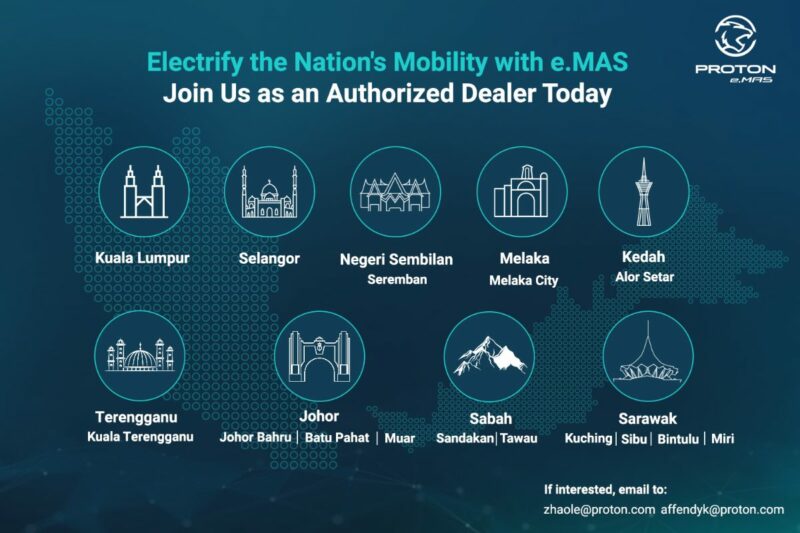
A few weeks ago, Proton announced the appointment of the first 17 official e.MAS dealers during the brand’s launch on June 12.
To date, this number has increased to 18 dealers across Malaysia.
The establishment of 18 Proton e.Mas branches, represented by 16 dealers, signifies a significant step towards leading the development of an extensive and comprehensive network.
Seventeen of these branches are strategically located throughout Peninsular Malaysia: 3 in Kuala Lumpur, 4 in Selangor, 2 in Johor, 3 in Perak, 2 in Penang, 1 in Kedah, 1 in Kelantan, and 1 in Pahang. One branch is situated in East Malaysia, specifically in Sabah.
These branches operate under a comprehensive network model, ranging from 1S centers to 3S centers to ensure customers receive holistic services from every aspect.
This development demonstrates PRO-NET’s dedication to establishing a complete and comprehensive ecosystem to ensure readiness for prospective Proton e.MAS owners.
PRO-NET aims to achieve 30 dealer branches by 2025, with a flexible expansion plan based on high demand.
PRO-NET is seeking interested and committed partners to join the Proton e.MAS dealer network in the following areas:
After realizing that their electrification goals may be too ambitious, Mercedes is now allocating a significant portion of their budget to internal combustion engines.
According to an interview with the German media Wirtschaftswoche, Mercedes CEO Ola Källenius stated that ICE (internal combustion engine) technology “will persist until after 2030”. Significant investments are needed to ensure that these engines continue to comply with increasingly stringent standards.
Källenius mentioned that the S-Class and its facelift are expected in 2026, stating, “We have invested significantly more in updating the S-Class model with combustion engines than we typically do for a facelift.”
Mercedes’ goal is to ensure that their conventional engines are at the “highest level of technology”. Without significant investment in petrol and diesel engines, the luxury brand “will abruptly halt combustion engine sales around 2027 or 2028”.
Mercedes realized the need to acknowledge that the transition to EVs was not progressing as planned. Three years ago, they mentioned that PHEV and EV vehicles would represent approximately 50 percent of annual sales by 2025.
However, it seems unlikely. At one point, Mercedes stated they would be fully electric by 2030 in some countries “if market conditions allow”.
Now, their new goal is for PHEV and EV to represent half of sales by the end of this decade (2030). However, according to Källenius, the objective for carbon neutrality by 2040 remains unchanged.
Several years ago, vehicle manufacturers presented their plans to transition their model lineups to electric vehicles (EVs). Some even set dates for phasing out the production of oil-based vehicles (diesel and petrol).
However, many are now reassessing the future. Sales are dwindling, customer interest is waning, and now nearly half of EV owners in America are considering switching back to petrol. What is happening?
According to a study by McKinsey & Co.’s 2024 Mobility Consumer Pulse, they found that 46 percent of EV owners in the United States want to revert back to petrol due to inadequate charging infrastructure.
This figure is significantly higher than the global average of 29 percent who want to switch back to fossil fuels. 35 percent of global respondents said public charging networks are not good enough.
34 percent said the ownership costs of EVs are still very high, and 32 percent said EVs heavily impact their long-distance driving habits. As of May, the U.S. had 183,000 EV public chargers, but it is still insufficient.
The Bipartisan Infrastructure Law in 2021 allocated a $5 billion grant to build fast chargers, but the implementation is taking too long.
Other reasons given by owners for switching back to petrol include the inability to charge at home (24 percent), concerns about charging (21 percent), and the need for charging mobility (16 percent).
Only 13 percent said they dislike the driving experience. Some drivers prefer combustion engine vehicles, such as 18 percent in the U.S. and 28 percent in Germany.
Interestingly, Americans are not the largest group considering a switch back to petrol, but Australia, with 49 percent of EV owners. On the other hand, Japan has the lowest percentage, with only 13 percent of EV owners willing to revert to petrol.
Other countries with low percentages include Italy (15 percent), France (18 percent), Germany (24 percent), and China (28 percent).
Malaysia’s Leading Automotive News | ENGEAR ENGLISH