Tag Archives: featured

The 2024 MINI Countryman S Electric is modernized and environmentally-friendly while retaining its sporty characteristics

If your car is an expression of your style, the MINI is your perfect match. With its iconic design and sporty drive, it’s where fashion meets function.

These qualities shine in the latest MINI models like the new Countryman S Electric, combining iconic style and go-kart-like sportiness with a modern twist.

Eco-friendly material

In the latest generation, the MINI Countryman S Electric introduces fabric made from high-quality recycled materials, featured on the dashboard and door panels. This fabric, sewn with unique 2D techniques, offers a distinct, stylish appearance and a refined texture. The dashboard fabric also serves as a canvas for ambient lighting, transforming with each MINI Experience Mode to enhance the unique interior vibe.

If you’re concerned about maintaining this stylish fabric, rest assured—MINI designed it to be easy to clean. So, feel free to bring the kids along without any worries in your MINI Countryman.

Modern technology with classic look

The MINI Countryman S Electric is modernized with the first circular OLED display in any car. This high-resolution screen delivers crystal-clear information while seamlessly blending with MINI’s signature high-style aesthetic.

The OLED display also offers MINI Experience Modes, featuring themes like Vivid, Core, Go-Kart, Timeless, Balance, Trail, and Personal. Each mode creates a distinct atmosphere and driving experience to match your mood. For instance, if you’re feeling tired after work, you can switch to Balance mode for a more relaxing vibe.

If you love vintage and retro vibes, choose the Timeless mode, which features a display meter inspired by the classic MINI Cooper from Mr. Bean’s era. Plus, you’ll even hear sounds from the classic MINI through the audio system, adding to the nostalgic experience!

Agile like a go-kart

A MINI wouldn’t be a MINI without that signature go-kart-like handling, and the new MINI Countryman S Electric is no exception. Even as the largest MINI ever produced, it retains the iconic driving feel that makes every ride a thrill.

The suspension system and steering have been finely calibrated for agile and precise responses, ensuring a dynamic driving experience. The thick steering rims add to the excitement, inviting you to fully enjoy the drive in the Countryman S Electric.

With 313PS and 494Nm of torque from its dual electric motors, the ALL4 all-wheel drive system delivers instant acceleration and thrills. It rockets from 0-100km/h in just 5.6 seconds, ensuring a grin every time you accelerate from a traffic light or toll booth.

Overall, the MINI Countryman S Electric offers super-responsive acceleration, precise steering feedback, and a finely-tuned suspension, making it feel like a five-seater go-kart. You’ll find yourself eager to seek out corners where the regenerative braking system enhances the sporty handling, before effortlessly accelerating out with a smile.

Like other electric vehicles, the 66.5kWh battery pack in the Countryman S Electric is positioned under the chassis, lowering the center of gravity and enhancing stability in all driving situations.

Stylish, fun to drive, from only RM2,777 per month

Overall, I thoroughly enjoyed test driving the new MINI Countryman S Electric. It’s stylish, eye-catching, and effortlessly handles both traffic jams and highway cruising.

Heading to a campsite or beach is a breeze with the Countryman’s higher ground clearance and rugged bumpers and side skirts.

This vehicle adds joy and excitement to your daily drive, making it anything but boring. With sustainable materials in the cabin and an electric power system that offers up to 433km on a single charge, you can enjoy peace of mind knowing you’re driving a car that contributes to environmental preservation.

Interested in test driving the new MINI Countryman S Electric? Visit any MINI showroom nationwide. With Easy Drive Financing, you can own the Countryman for just RM2,777 per month, and for a limited time, receive a free Wallbox charger.

The MINI Cooper Electric is also available with Easy Drive Financing from RM2,021 per month and includes free Wallbox installation. For more details about MINI in Malaysia, follow their social media pages.

Instagram: mini_malaysia
FB: https://www.facebook.com/MINImalaysia
Youtube: https://www.youtube.com/@minimalaysia/featured

Click here to book your test drive now.

What happens if you mistakenly put petrol into a diesel engine or vice versa?

IF you own a car or have a driving license, you surely know that there are generally two main types of fuel, namely petrol and diesel. Both of these fuels are very different and serve as the fuel for two different types of engines.

However, errors in filling fuel are quite common, such as mistakenly filling petrol into a diesel engine vehicle or vice versa.

This mistake can be caused by various factors such as forgetfulness, frequently changing cars, lack of awareness, or any other reason that could be the cause.

In this article, we will explore what happens if you mistakenly fill fuel or oil into a vehicle. Most importantly, we will also look at what can be done to ‘fix’ that mistake.

What are the consequences of the wrongdoing?

The consequences or effects of this error essentially involve damage to engine components. Each petrol or diesel engine operates differently, and petrol and diesel have different properties.

It’s like if you were supposed to add sugar to a drink, but mistakenly added flour, the drink would surely be ‘spoiled’, right?

Diesel in a petrol car

In actuality, it’s quite difficult to include diesel in a petrol car. This is because diesel nozzles mostly do not fit into a petrol car’s fuel inlet. However, if diesel is included, it will damage the internal engine components and fuel system.

Petrol is thinner and diesel is denser. If diesel is introduced into a petrol engine, it will cause blockages in the system since petrol engines are not designed to handle the denser diesel fuel.

Subsequently, the fuel injectors will be blocked, the spark plugs will also be damaged. The engine will stutter, there might be white smoke before the engine dies and cannot be restarted.

Petrol in a diesel car

The likelihood of filling petrol in a diesel vehicle is higher. This is because petrol nozzles are smaller and can easily fit into a diesel tank inlet. Unfortunately, filling petrol into a diesel tank will cause greater damage to the diesel engine.

In a diesel engine, compression ignites the fuel. Therefore, the fuel will enter the internal engine parts, and the fuel also acts as a lubricant.

So, if petrol enters this engine, its evaporation properties can damage the engine components. Fuel injectors that require lubrication will not function properly as well. The worst part is, it’s not easy for us to realize the presence of petrol in a diesel engine.

By the time you realize it, it is likely too late, and the engine is severely damaged.

What can be done if a mistake is made?

Now, let’s also look at what can be done if a mistake is made.

Diesel in a petrol car

If you realize it while filling, don’t worry, if it’s still a small amount, continue filling the tank with petrol. If a little diesel has mixed in, you can still safely drive the petrol car.

The best course of action is to remove all the diesel from the tank and refill it with petrol.

If you filled it up completely, do not start the engine. Immediately contact a tow truck to take your car to a workshop for further action.

Lastly, if you’ve already started the engine, turn it off immediately. Contact a tow truck and take it to a workshop.

If you have driven a long distance, stop and turn off the engine immediately as well. This is the worst-case scenario, and if you realize it, the car’s fuel system needs to be inspected and cleaned. Components like fuel filters and spark plugs may need to be replaced.

Petrol in a diesel car

Handling this situation is almost the same as above. When you realize you have filled petrol, immediately tow the vehicle so the fuel system can be cleaned and refilled with diesel.

If you’ve already started the engine, petrol might have flowed further in. Your diesel engine will need a thorough inspection.

The worst situation is if you have driven the vehicle for some time. Petrol may have entered all areas of the engine and many components will be damaged. Immediately stop the vehicle, turn off the engine, and contact a tow truck to take the vehicle to a workshop.

Tips to prevent filling errors

Some tips to prevent the above situations from happening are:

  1. Use fuel stickers – These act as quick warnings so you do not mistakenly fill the wrong fuel.
  2. Double-check when entering a gas station – Always be aware of the station and pump you are entering.
  3. Get out of the vehicle when refueling – It’s better to step out of the vehicle than to let the attendant do everything for you. Also, make sure they are filling the correct fuel into your vehicle.

Chery Tiggo 8 Pro – When value meets perception

IT has been a year since the Chery Tiggo 8 Pro officially entered the Malaysian market. Although we have just received a test unit for evaluation, this segment-D SUV is not unfamiliar to Engear, as we previously conducted a brief test drive when Chery first arrived in Malaysia at the end of 2022.

Since then, for some reason, we focused on the Omoda 5 and Omoda E5. However, it is certainly not too late to thoroughly test the Tiggo 8 Pro. In fact, until now, we still receive inquiries about it, whether through social media DMs or during coffee shop conversations.

Attractive package, worth it?

One of the main attractions that led you to include the Tiggo 8 Pro on your list is its appealing price. It’s “only” RM159,800 for a seven-seater segment-D SUV.

And it certainly doesn’t feel cheap at all. You get high-end features such as a 2.0-liter turbo engine, three driving modes, full LED front and rear lights, 19-inch rims, a pair of 24.6-inch wide display panels with two screens, wood and chrome trim, leather seats, electronic gear knob, Apple Carplay and Android Auto connectivity, and a full ADAS package.

Not only that, everything you can see and touch feels premium and is worth its price, such as the wood and chrome trim on the dashboard and door panels, and switches and buttons with satisfying movements, and interior lighting.

If you were to scrutinize the Chery Tiggo 8 Pro in detail and later told someone that it was worth RM240,000, they might still believe it.

Not satisfied with that, the Tiggo 8 Pro can be equipped with automatic side steps for an additional RM2,999. These steps open automatically every time you open the door, just like in a Range Rover, which costs three or four times as much.

This is the cheapest non-national segment-D SUV, even cheaper than some segment-C SUVs. This makes the writer wonder how they can sell it at this price. Is there no profit at all?

Brand perception

However, it cannot be denied that there is a significant issue that balances the value offered above, that is brand perception.

We all know where Chery comes from, and if you are of the same age as the writer, growing up listening to Limp Bizkit and wearing Adidas Superstar on the weekends, you would certainly know that this is not Chery’s first time in Malaysia.

However, you must know that industrialization in China has progressed rapidly. They started later than Malaysia, but just look at their technological advancements today. And this also has an impact on the automotive industry.

You would likely agree if the writer were to say that vehicles from China can no longer be underestimated. They are now serious in the industry, striving to be the best, and developing rapidly.

For example, look at the mobile phone industry. Apart from their own brands, there are leading global brands that have opened manufacturing plants in China. Are the quality of their products different from those produced in other countries?

If you are truly interested in vehicles like the Chery Tiggo 8 Pro, brand perception is indeed something you cannot avoid.

Ehem, Proton X90, how is it?

Oh yes, when talking about the Tiggo 8 Pro, you can’t avoid discussing the Proton X90 as well. The prices are quite close, ranging from RM123,800 for the Standard to RM152,800 for the Flagship.

The engines are different, with the X90 having a 1.5-liter turbo direct-injection (TGDI) powertrain with a hybrid system, while the Tiggo 8 Pro has a 2.0-liter turbo. Of course, the outputs are different, with the X90 at 177hp and 255Nm, while the Tiggo 8 Pro offers 257hp and 390Nm of torque.

Both SUVs are in the same segment, similar in size, and both can accommodate seven passengers.

Which one to choose? In terms of design, the writer finds the Tiggo 8 Pro to be more stylish overall and with more attractive details. However, you certainly get better value for the X90, as its price is lower due to its national car status (even though both SUVs are designed and developed in China).

Okay, the X90 may not be 100 percent developed in China, as Proton engineers have provided input for the suspension tuning. This is why the Proton X90 has a multi-link rear suspension compared to the Geely Haoyue.

The X90 also benefits from lower road tax, but if you need power and frequently carry many passengers, you might be willing to spend more and choose the Tiggo 8 Pro.

Solid and high-quality feel

Even more enticing, the Chery Tiggo 8 Pro feels very solid, sturdy, and high-quality. Whether examining the exterior details, simply sitting inside the cabin, or driving it, all these aspects give you a premium feeling.

For example, on the exterior, there is an illuminated front logo, automatic side steps as mentioned earlier, and just the right amount of chrome trim, not excessive. The cabin is spacious and the front seats are very comfortable. The first time the writer sat in the driver’s seat of the Tiggo 8 Pro, it felt like being in a car that costs twice as much.

Then, the high dashboard and center console reinforce the premium feel of this SUV. At the same time, all buttons and switches are easily accessible. As for driving, the writer felt that it has more than enough power for daily driving. The writer gained good confidence in handling this Chery Tiggo 8 Pro even on sharp corners.

Only the steering wheel feels a bit light, but the gas pedal and transmission are all quite responsive and have good tuning. In terms of fuel consumption, the writer recorded around 9.9km per liter, considered very good considering the size and driving style of the Tiggo 8 Pro.

Of course, such fuel consumption is not very suitable for daily city driving, unless you can afford it. But it is perfect for taking the family on weekend outings outside the city. Overall, the package offered by the Chery Tiggo 8 Pro is quite appealing with a combination of size, features, and price. This makes the writer excited to see the future Chery models. Perhaps we will also test drive the recently launched Tiggo 7 Pro.

Specifications of Chery Tiggo 8 Pro

Price: RM159,800
Engine: 2.0-liter petrol turbo
Gearbox: 7-speed dual-clutch auto
Power: 257hp @ 5,500rpm
Torque: 390Nm @ 2,000rpm

Just got rear-ended? Here’s what you need to do

Imagine your car comes to a stop at a traffic light. And then, suddenly, you hear a loud bang from behind, and at the same time, you are thrown forward but thank God, you have your seatbelt fastened.

It turns out that your car has been rear-ended by another car. What should you do in this situation? Here are some tips that you may find useful.

  • First and foremost, do not panic and stay calm. Take a breath and check if you or your passengers have sustained any injuries.
  • Drive your car to the roadside to avoid traffic congestion. Make sure it is safe to stop.
  • If the car that hit you also pulls over to the side of the road, take out your smartphone and get out from your car.

  • Do not carry any objects that could be considered as weapons because you could be accused of attempting to attack and cause harm to others and public property.
  • Take photos of the registration number and road tax of the car that hit you earlier.
  • If the driver of that car gets out of their vehicle, avoid any provocation or using harsh words that could lead to an argument.

  • Ask for the driver’s permission to see and take photos of their identification card or driver’s license. Also, get contact details such as a phone number or email address.
  • If the driver does not admit fault, do not force them to do so or ask for any payments from them.
  • Inform them that in most cases, the driver of the car that hits someone from behind is to blame in a rear-end collision.
  • If they admit fault, ask them to cover the cost of repairing your car. But do not ask for money from them. Invite them to the workshop to assess the damage to your car.

  • If they insist on not admitting fault and not wanting to cover the cost of repairing your car, go to the police station to make a report.
  • Take the report to any Road Transport Department (JPJ) branch to perform a vehicle search to find out the insurance company of the car that hit you.
  • Go to the insurance company’s panel workshop and ask them to make a third-party claim to repair the damage to your car.

Mazda CX-5 2.5T AWD: The letter T that makes it all – test drive

The writer did not expect that the 2024 Mazda CX-5 facelift would still be offered with the 2.5T variant, or its full name, the CX-5 2.5G Turbo AWD. It’s not that the writer didn’t want or like it, but there wasn’t really a need for a high-performance variant for the CX-5.

However, high-performance vehicles usually show up uninvited and unexpectedly, which is what makes them intriguing.

The writer had driven the old CX-5 2.5T a few years ago, but had not yet shared the experience here, so let’s follow the writer’s journey. We will also examine the updates and determine if it’s worth buying.

Simple appearance with hidden weapons

Interestingly, it is difficult to determine whether the CX-5 you see is the regular version or the turbo petrol one. From the outside, there is only an emblem at the back that reads “2.5T”. No fins, spoilers, decals, stickers, or large markings.

It’s like a hidden weapon. Looks ordinary, but if you mess around, here you go! Some people may like this, but not the Type R FK8 owners. It’s a ‘you know it if you know it’ situation.

The CX-5 still receives the facelift updates like the other variants, including a new front end, grille, paddle shifters, and the most noticeable change, the DRL graphics shaped like two Ls on each side.

It still looks sleek like the CX-5 we all know, just the mentioned updates make it slightly fresher for 2024. Is it enough to compete with the CR-V?

The 2.5T variant is also equipped with a 7-inch instrument display with new graphics, seats with cooling functions, Android Auto and Apple Carplay connectivity (wireless), a 360-degree camera, and wireless charging.

The writer also noticed a new Off-Road driving mode, in addition to the existing Normal and Sport modes. However, the infotainment screen in the middle with an 8-inch size feels a bit ‘stingy’, too small for a car like this. A 12.3-inch screen would be more fitting.

Power in mind all the time

Driving this Mazda CX-5 2.5 turbo petrol, the writer frankly admits that power is at the forefront of their thoughts. The 4-cylinder DOHC engine produces 228hp at 5,000rpm and 420Nm at 2,000rpm.

This is generous power, ladies and gentlemen. While the infotainment screen may be lacking, the power is abundant, surpassing the 2.5 naturally-aspirated (192hp and 258Nm) or the 2.0 (162hp and 213Nm) engines.

The 420Nm torque of the 2.5 petrol engine is almost on par with the 450Nm torque from the 2.2 diesel engine. However, the diesel model is only 2WD, while the 2.5 petrol is AWD, which the writer finds more balanced. The power is distributed more effectively, with both the front and rear axles receiving engine output.

Driving the CX-5 2.5T is quite straightforward. It’s quiet, can stay in any gear, even in 4th gear at 2,000rpm, and when you gently press the accelerator, it doesn’t need to downshift. The car continues to move forward smoothly.

The writer tested it on high-speed twisty roads in Karak and low-speed twisty corners around Jengka, Pahang. This high power can be seen as a safety feature, providing the confidence to overtake on highways. Less time is needed to be in the opposite lane. What do you think?

The handling is not as sporty as the Mazda MX-5 even though the CX-5 is much more powerful. It’s still an SUV.

However, it’s enjoyable to control the heavy and large body smoothly with braking while downshifting, steering inputs while releasing the steering, keeping the right foot on the pedal for positive traction in corners, and then gradually pressing the pedal to the floor when the road straightens.

Upshift as the rpm approaches redline, then repeat as the next corner approaches.

Yes, Mazda is equipped with G-Vectoring Control Plus (GVC Plus) and the Jinba-Ittai philosophy. Both these elements provide controlled, precise, calm, and non-fatiguing driving, in the writer’s opinion.

Even though it ‘only’ comes with a six-speed gearbox, all gears are sufficient for powerful acceleration even with a heavy load (passengers and cargo), while allowing the engine to operate at reasonable rpms when cruising on highways.

However, the compromise for the abundant power is its fuel consumption. The writer can report that the Mazda CX-5 2.5T is not fuel-efficient. The writer struggled to achieve over 10km per liter. After around 1,10km of driving, the writer only managed 9.4km per liter (and a smile). AWD becomes more significant.

Earlier, the writer mentioned that the CX-5 2.5T now comes with an Off-Road driving mode. Although the pre-facelift version also had AWD, it did not have an Off-Road mode.

The writer had the chance to briefly test this mode on a sandy beach. The delivery of its power can be felt smoother and more relaxed. This mode should assist you in crossing mild off-road terrains without any incidents of tires ‘digging’ into the ground/sand.

Is it worth buying?

If you desire an SUV that appears modest but has the ability to outshine hot hatches at traffic lights, you should consider checking out this CX-5 2.5T AWD. It is a unique offering by Bermaz Auto Berhad, with hardly any close competitors.

It still maintains its power and capability, but the upgrades make it more current, sophisticated, easier to use daily, and safer.

All variants of the Mazda CX-5 2024 in Malaysia come with a 5-year or 100,000km warranty, with a complimentary maintenance package for the same duration and distance.

Mercedes-AMG C43 4Matic arrives – 408hp and 500Nm, CKD, RM444k

Mercedes-Benz Malaysia (MBM) today introduced the most powerful version to date for the C-Class, the Mercedes-AMG C43 4Matic. It is assembled at MBM’s assembly plant in Pekan and is offered at a price of RM443,888.

Unlike its previous generation which had a V6 biturbo engine, the 2024 C43 is powered by the M139I 2.0-liter turbo engine that remains powerful, with an output of 408hp at 6,750rpm and 500Nm of torque at 5,000rpm.

This longitudinally-mounted 4-cylinder engine is the first production engine with a turbocharger that uses an electric exhaust gas charger. Technology derived from the world of Formula 1 is designed for quick response at all rpm levels.

The Mercedes-AMG C43 4Matic also features a 10kW and 150Nm powerful electric motor. Paired with the 4Matic all-wheel-drive system and the AMG Speedshift MCT 9G 9-speed gearbox, this sedan can accelerate to 100km/h in just 4.6 seconds. The top speed is 250km/h.

Other features of this new C43 chassis include Dynamic Body Control with Adaptive Damping System, and 19-inch 5-spoke AMG rims.

It also receives other AMG equipment such as a special display, seats, steering wheel, special buttons, Nappa leather upholstery, silver-colored sports brake system with black “AMG” lettering, and a special exhaust system.

The exterior package consists of an AMG grille with vertical slats, an AMG front lip, sporty air intakes, a diffuser, and quad exhausts. The C43 also comes with a panoramic roof featuring Digital Light technology.

The standard AMG Dynamic Select drive mode is included. The AMG Track Pace is a data logging system for track use that can record more than 80 car parameters such as speed, acceleration, steering angle, brake inputs, all of which can be used for analysis (if you want to feel like a race driver).

The technology in the 2024 C43 4Matic includes the latest MBUX system, fingerprint sensor, Apple CarPlay and Android Auto integration, as well as ambient lighting.

Safety features include the Driving Assistance Package Plus, Active Parking Assist with Parktronic, a 360-degree camera, and Guard 360.

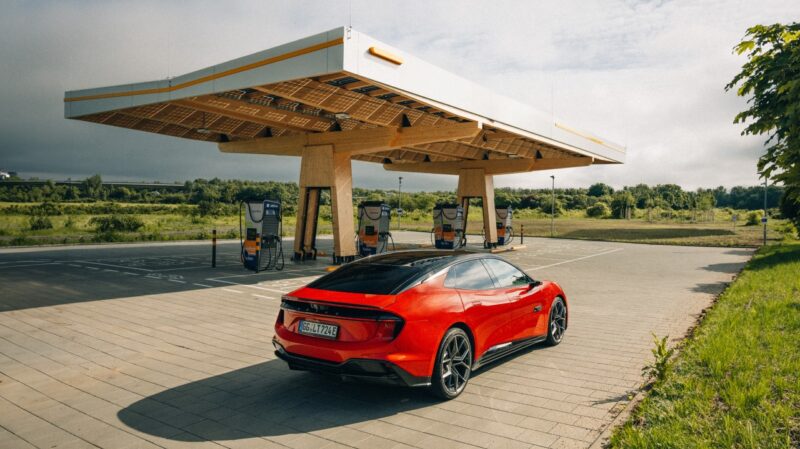
Lotus Emeya broke DC charging record, 10 to 80 percent in just 14 minutes

Announced officially last year, the Lotus Emeya is a powerful electric hyper-GT intended to challenge fast electric sedans such as the Tesla Model S, Porsche Taycan, and Audi e-Tron GT.

With twin electric motors producing 905 hp/984 Nm, the Emeya is capable of accelerating from 0-100 km/h in just 2.8 seconds.

Did you know that not only is the Emeya swift in acceleration, but this hyper-GT is also capable of offering the fastest DC charging rate?

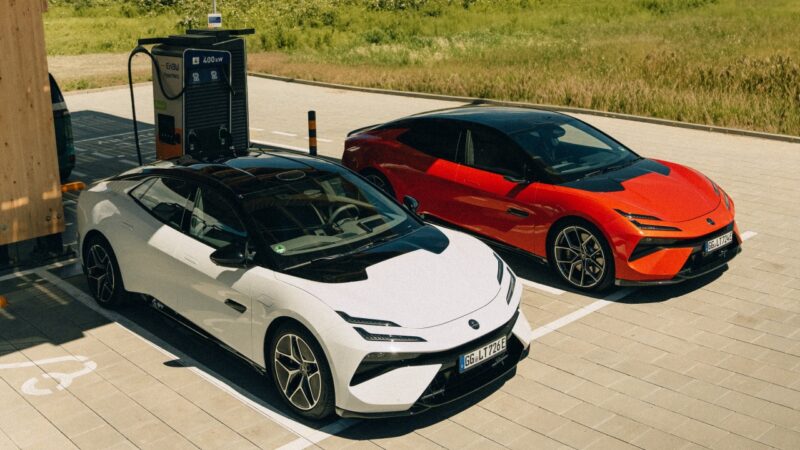
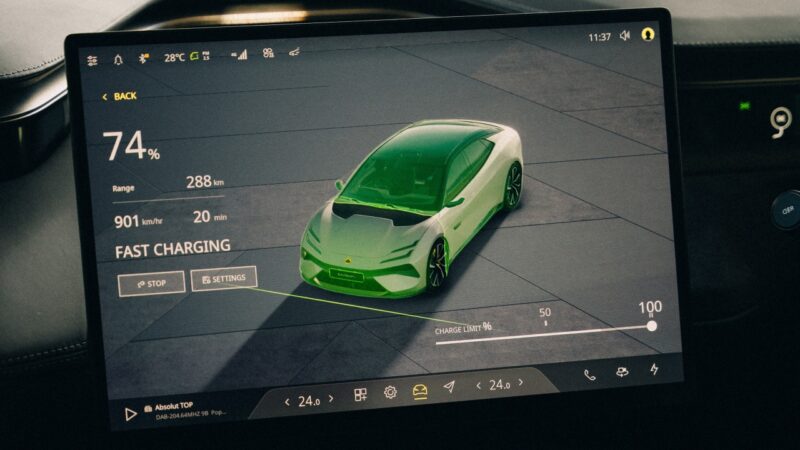
Based on tests conducted by the global consulting firm P3 Group, the Lotus Emeya set a record for the fastest 10-80 percent battery charging time, achieving it in just 14 minutes when using a 400 kW DC charger.

This is an impressive feat, as the Lotus Emeya managed to outperform leading EV models such as the Mercedes-Benz EQS, BMW i7, Tesla Model Y, Genesis G80, Xpeng G9, Kia EV9, Hyundai Ioniq 6, Nio ET5, and BYD Atto 3.

The P3 Group report also found that the Emeya is capable of reaching a peak charging power of 402 kW, with an average charging power of around 331 kW during the 10-80 percent charging period.

Coupled with an energy consumption rate of 18.7 kWh/100 km, the Lotus Emeya can offer a range of 310 km after just a 10-minute charging session—a time frame nearly equivalent to refueling a gasoline-powered car at a petrol station.

According to Lotus, the Emeya utilizes a cell-to-back battery structure, containing 20 percent more cell content that can be packed into the same space compared to a standard module design.

As standard, the 102 kWh battery pack provided with the Emeya allows the sedan to travel up to 600 km on a single full charge.

Similar to the Eletre, the Lotus Emeya also features an active aerodynamic system to reduce drag and at the same time acts as a cooling system for the battery and brakes.

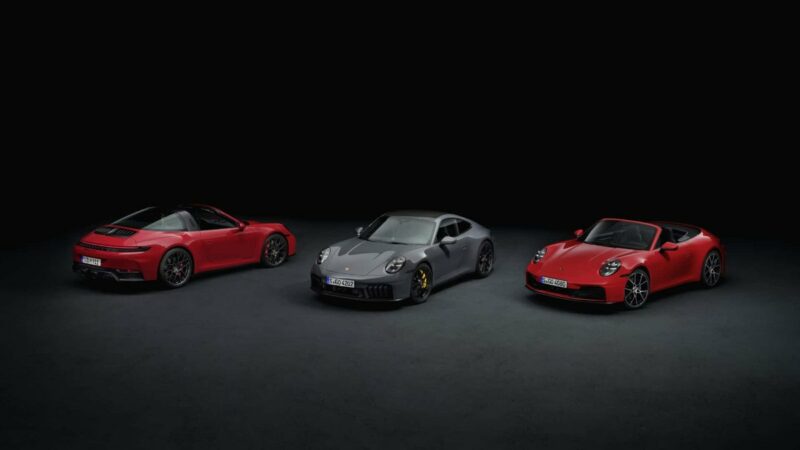
Porsche 911 hybrid arrives – Carrera GTS guise, 3.6-litre, 0-100 in 2.9s

THIS is big news. Despite only a facelift, the Porsche 911 is now entering a new era. This is because the sports car has received a hybrid for the first time in its history.

As we reported earlier, the Porsche 911 will become a hybrid, and it arrives to update the 992 generation (called 992.2) in the Carrera GTS variant.

For 2025, the Porsche 911 Carrera GTS retains its identity with the rear-mounted flat-six engine, but now with an electric motor and an electric turbocharger. This boosts power to 532hp and 608Nm of torque.

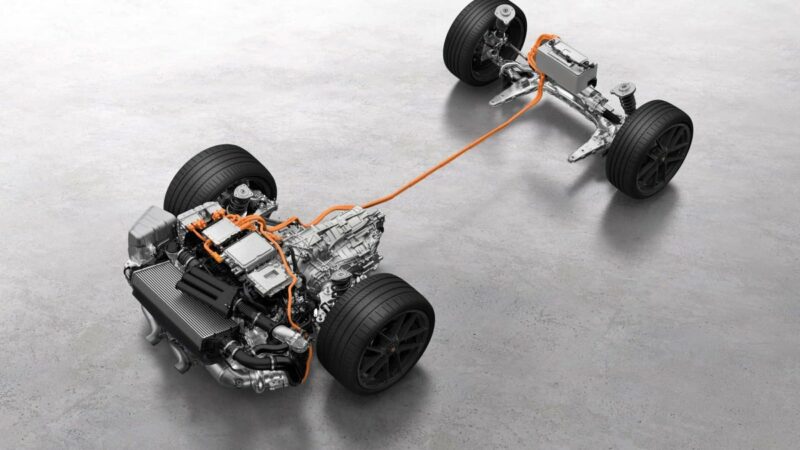
The engine used is a new 3.6-liter unit replacing the previous 3.0-liter one. This engine alone produces 478hp and 569Nm of torque. The hybrid system replaces the previous twin-turbo package with a single electric turbocharger.

It functions like a traditional exhaust-gas turbocharger but with an 11kW (14.7hp) motor positioned between the turbine and the compressor. This motor can spin the turbo very quickly for a fast response, drastically reducing turbo lag. It can also send power back to the 400-volt battery.

There is also a generator motor of 32.6hp sandwiched between the flat-six engine and the 8-speed dual-clutch gearbox. Both are powered by a very small 1.9kWh battery located under the front hood.

The T-Hybrid powertrain is designed to enhance performance at all rpm ranges while operating at the ideal air-fuel ratio of 14.7:1 at almost all times. This hybrid also means no more manual transmission for the 911 Carrera GTS.

This new Porsche 911 Carrera GTS is heavier than the previous model, partly due to standard features like rear-wheel steering, but the additional power overcomes this weight increase. It is also the first Carrera GTS capable of accelerating to 100km/h in less than 3 seconds, specifically 2.9 seconds.

In addition to the T-Hybrid, the 2025 Carrera GTS receives a new active aerodynamic flap at the front for better cooling without compromising drag. There are also cosmetic changes on the front and rear, as well as new wheel options.

The rear tires are wider now, measuring 315/30/21, while the front remains at 245/35/20. Inside, the biggest change is the fully digital instrument cluster. Yes, no more analog tachometer needle.

The base 911 (992) Carrera 2025 receives turbos and an intercooler from previous GTS and Turbo models. This provides an additional 9hp while torque remains at 448Nm.

For 2025, only the Carrera and Carrera GTS receive facelifts, while other variations such as Turbo, GT3, GT3 RS, and GT2 will follow later. The Porsche 911 992.2 2025 is expected to arrive towards the end of this year.

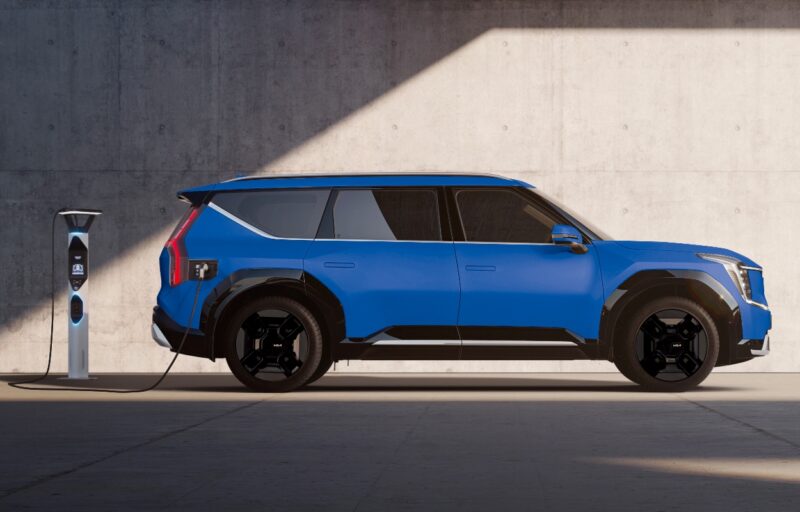
Kia EV9 launched in Malaysia – two GT-Line variants, priced from RM370k

The official distributor of Kia, Dinamikjaya Motors, has launched its third electric vehicle for the Malaysian market, the Kia EV9.

The fully electric SUV is available in two variants, namely the GT-Line AWD 6-seater and the GT-Line AWD 7-seater, priced at RM369,668 and RM374,668, respectively.

Both variants feature a twin electric motor configuration producing a total system output 380 hp and 700 Nm, allowing it to reach a maximum speed of 200 km/h.

The battery specifications are also the same, with both variatns utilising a 99.8 kWh lithium-ion battery that offers a driving range of up to 505 km on a full charge.

For charging, the EV9 is equipped with DC fast charging that can handle up to 350 kW, enabling the battery to be charged from 10% to 80% in just 24 minutes. It also supports 11 kW AC charging, which requires 10.5 hours for a full charge.

The EV9 is the second Kia model built using the Electric Global Modular Platform (E-GMP) after the EV6. It measures 5,015 mm in length, 1,980 mm in width, 1,780 mm in height, with a wheelbase of 3,100 mm.

Its exterior design is highlighted by the Digital Tiger Face, featuring the Digital Pattern Lighting Grille, vertical LED headlights with two clusters of small cube lamps, and Star Map daytime running lights at the rear. Both variants come with 21-inch wheels.

Inside, there is a floating panoramic dashboard housing two 12.3-inch screens and an additional 5-inch segment display that gives the driver access to all vehicle functionalities. There are also two small displays on the door panels that display video feed from the exterior cameras.

Other features include Apple CarPlay, Android Auto, wireless charging, USB-C charging ports in the front, middle, and rear, ambient lighting, and a Meridian audio system with 14 speakers.

Thanks to the flexible Integrated Charging Control Unit (ICCU) charging system, the EV9 also has Vehicle-to-Load (V2L) capability, supplying up to 3.6 kWh of power to charge various electronic devices.

There’s also Advanced Driver Assistance Systems (ADAS), consisting features such as High Beam Assist (HBA), Parking Collision-Avoidance Assist (PCA), Blind-Spot Collision-Avoidance Assist (BCA), Rear Cross-Traffic Collision Assist (RCCA), Blind-Spot View Monitor (BVM), Lane Keeping Assist (LKA), Driver Attention Warning (DAW), Forward Collision-Avoidance Assist (FCA2), Lane Following Assist (LFA2), and Smart Cruise Control (SCC).

The EV9 is fully imported from South Korea and is available in five colours – Ocean Blue, Snow White Pearl, Pebble Grey, Aurora Black Pearl, and Iceberg Green. It comes with a manufacturer’s warranty for five years/150,000 km and a battery warranty for eight years/160,000 km.

This is the final ICE Nissan GT-R that Malaysians won’t be able to buy

NISSAN Malaysia, under the umbrella of Edaran Tan Chong Motor, has recently slowed down their operations. There have been no new model launches, and several promised SUV models are still yet to make an appearance in the Malaysian market.

Meanwhile, in the Japanese market, Nissan has recently introduced updates for the high-performance GT-R 2025. Speculations suggest that this model might mark the conclusion of the R35 series before production ceases.

The updated version closely resembles the exterior of the previous year’s facelift model. Additionally, the GT-R Premium Edition now offers the option of Blue Heaven upholstery, giving its cabin a classic appearance.

One of the notable changes brought by the update is the inclusion of exclusive engine components that were previously only available for the Nismo Special Edition. This includes the use of Nismo components such as piston rings, connecting rods, and a balanced crankshaft.

Consequently, the 3.8-liter twin-turbo V6 engine in the Nissan GT-R Premium Edition T-Spec and Track Edition now provides quicker engine revs and turbo spooling. The horsepower remains the same, standing at 565 hp for the standard model and 600 hp for the Nismo edition.

Despite these minor changes, the selling price of the Nissan GT-R 2025 has significantly increased, ranging from ¥14,443,000 (~RM457,361) for the standard version to ¥30,613,000 (~RM969,411) for the GT-R Nismo Special Edition.

Looking towards the future of the GT-R, there are recent indications. At the Japan Mobility Show late last year, Nissan unveiled the fully electric concept model, Hyper Force.

Although its appearance may seem overly aggressive for a supercar, the Nissan GT-R “R36” is reported to be capable of generating up to 1,341 hp with an all-wheel-drive e-4ORCE system and two driving modes: GT (Grand Touring) and R (Racing).

In all likelihood, the newly launched Nissan GT-R 2025 in Japan will only enter the Malaysian market through third-party channels, provided there is a demand.

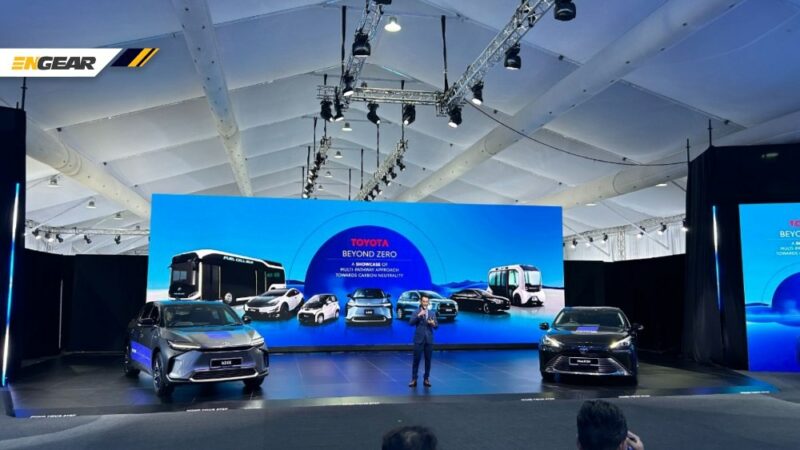
Beyond Zero showcases Toyota’s ideas on carbon neutrality

If you have been following the developments in the automotive industry, you will notice that Toyota does not believe that battery electric vehicles (BEVs) or EVs are the sole solution to carbon neutrality.

Instead, they are confident that there are several other ways to achieve it. Thus, Toyota is presenting Beyond Zero, an initiative of the brand towards Carbon Neutrality by 2050.

The event, which runs from February 20th to 28th and held at the Malaysia Technology Park, showcases a transformation initiative that demonstrates the brand’s commitment to sustainable and environmentally friendly practices.

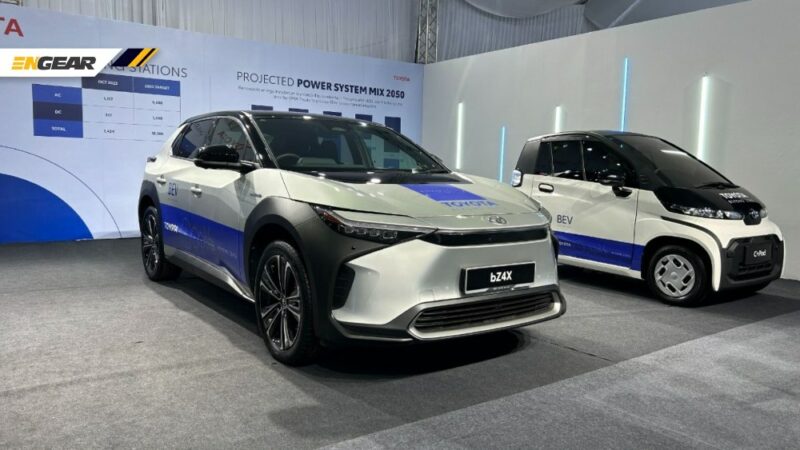
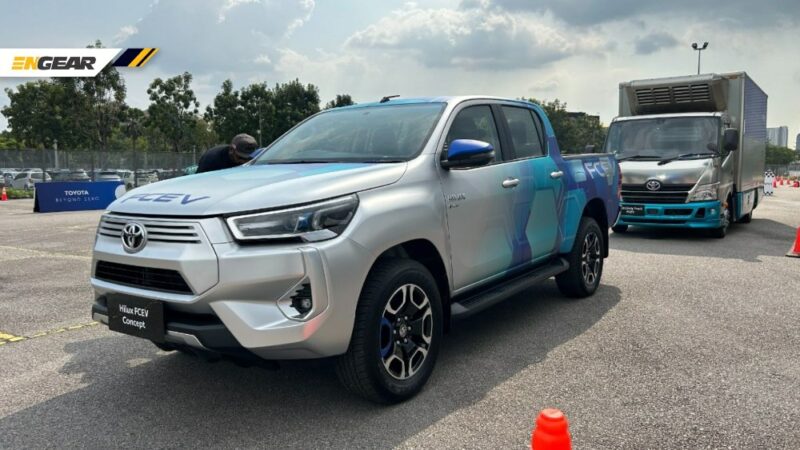
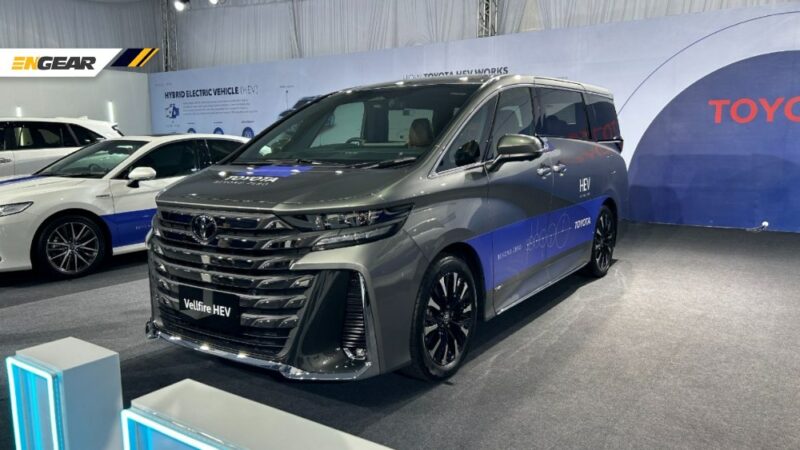
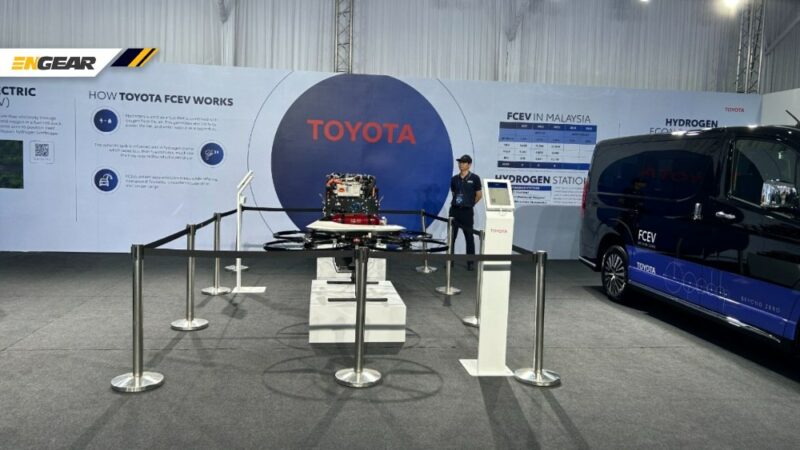
The Beyond Zero event was symbolically launched to showcase a diverse approach with various electrification technologies, including Hybrid Electric Vehicles (HEVs), Battery Electric Vehicles (BEVs), and Fuel Cell Electric Vehicles (FCEVs).

Among the BEV models presented are bZ4X, Hilux BEV REVO-e, and C+pod. For FCEVs, the models featured include Mirai, GranAce FCEV, and Hilux FCEV.

The Beyond Zero event is open to various guests to learn about sustainability initiatives and new technologies, and to test drive specific vehicles from February 20th to 28th, 2024.

The Minister of Investment, Trade, and Industry, YB Senator Tengku Datuk Seri Utama Zafrul Tengku Abdul Aziz, who officiated the event, praised UMW Toyota (UMWT) for the company’s commitment to sustainable practices and environmental conservation.

“Recognizing the importance of Malaysia’s transition to sustainable energy, we are driven by global commitments and the potential for economic diversification and energy security,” he said.

“Malaysia, recognized as the best country in Southeast Asia in the 2023 Energy Transition Index by the World Economic Forum, is on the right track to become a regional leader in energy transition.”

“Toyota’s innovative efforts in clean energy, through its diverse approach, are indeed aligned with our nation’s goals.”

The President of UMWT, Datuk Ravindran K. said, “We acknowledge the existence of various challenges and opportunities nationwide in our efforts to pursue a multi-pathway approach and implement appropriate life cycle actions in line with each national interest and Sustainable Development Goals (SDGs) of the country.”

“Recognizing the unique landscape of the Malaysian automotive industry, as well as its position as a major producer of electrical and electronic products in Southeast Asia, it is important for us to position ourselves appropriately in this journey.”

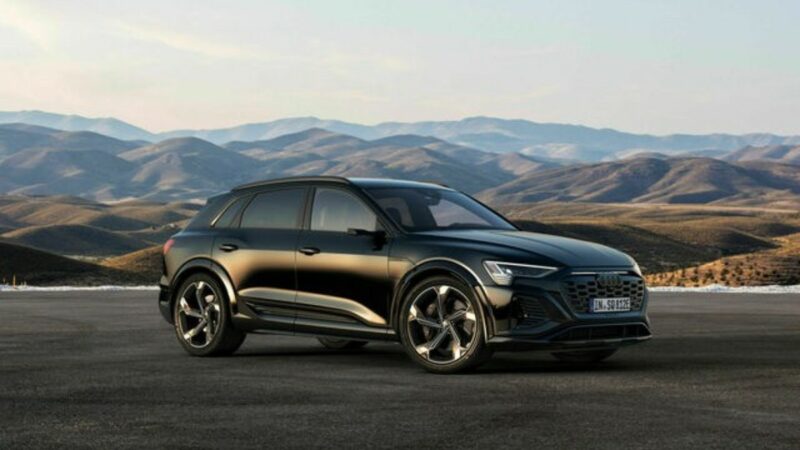
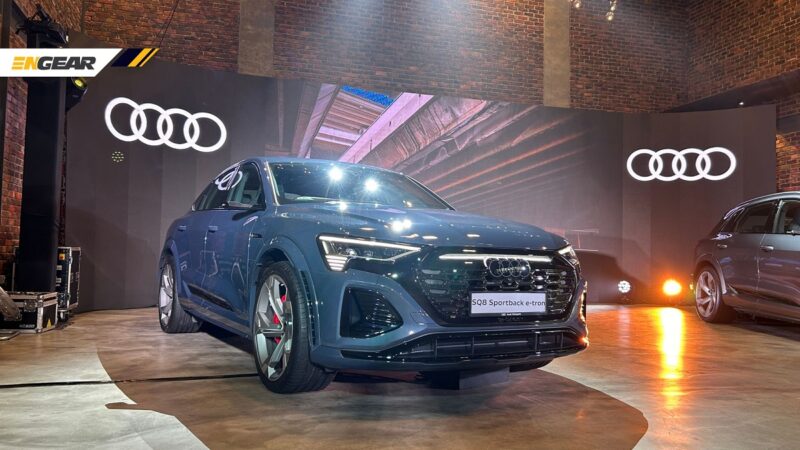
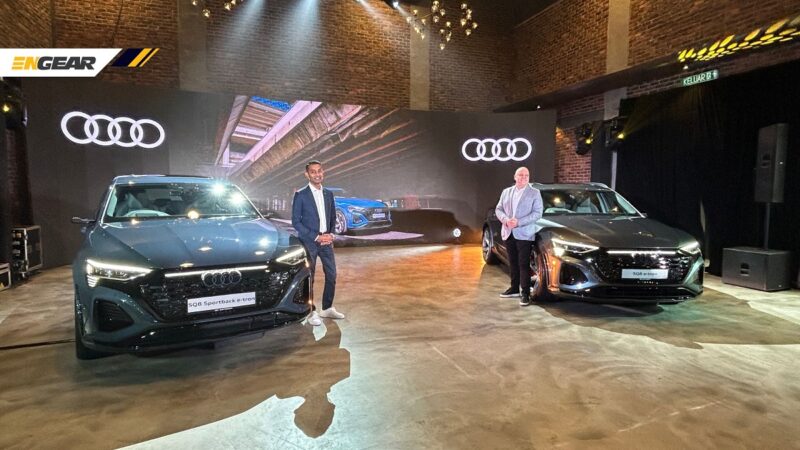
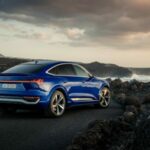
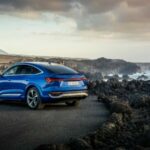
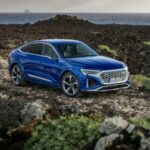
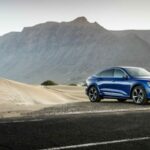
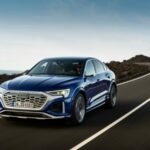
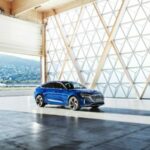
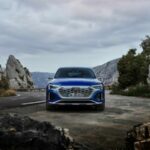
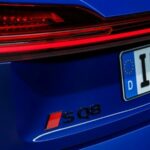
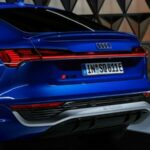
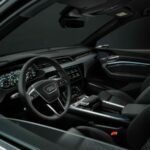
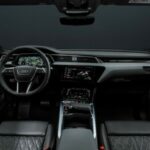
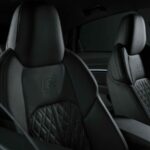
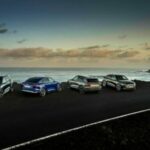
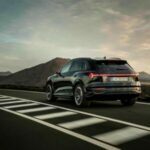
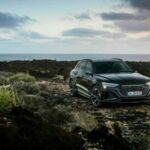
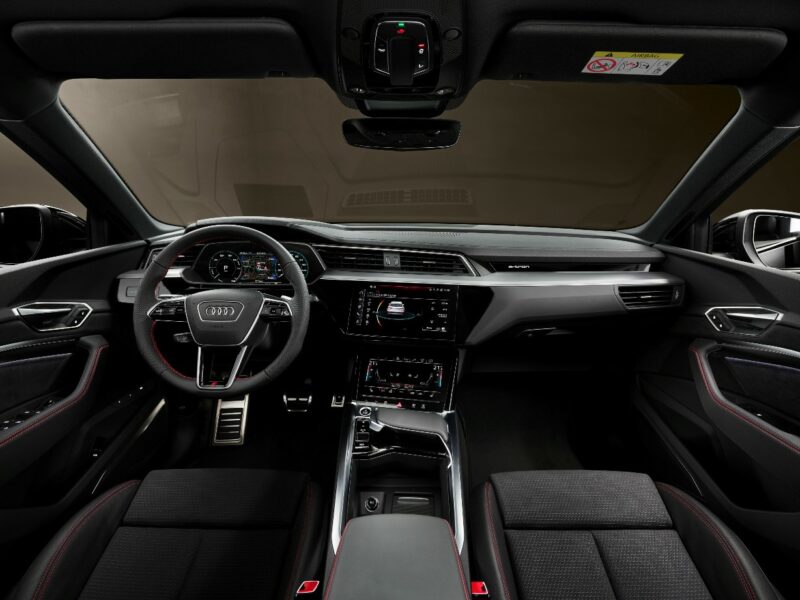
Audi SQ8 e-tron and SQ8 Sportback e-tron unveiled in Malaysia, first EV with three motor setup

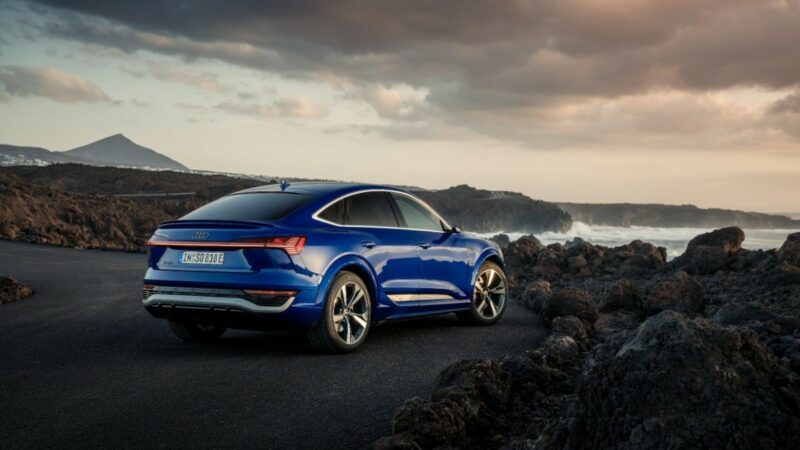
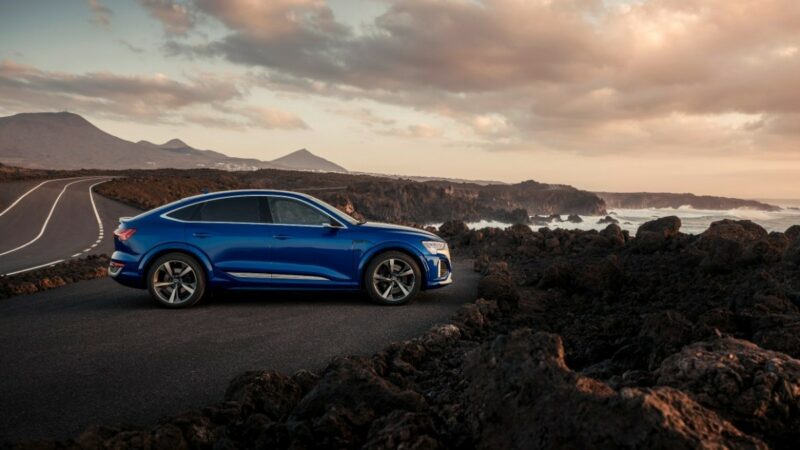
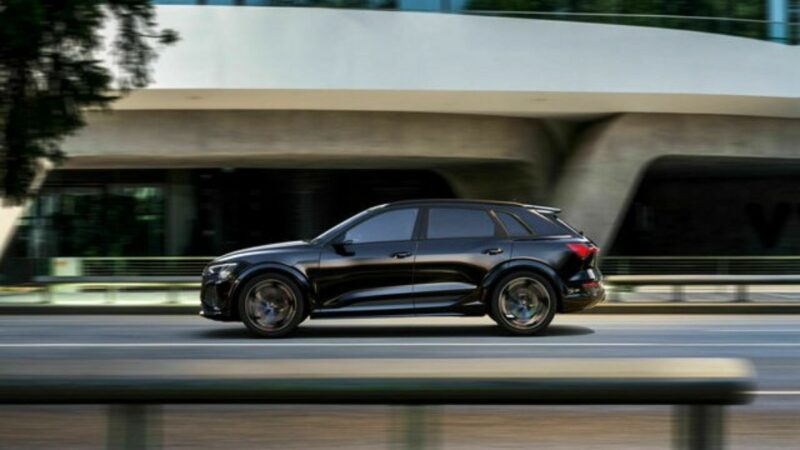
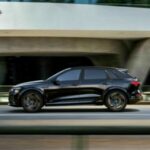
PHS Automotive Malaysia (PHSAM) today launched two new electric (EV) models for the Malaysian market, namely the Audi SQ8 e-tron and SQ8 Sportback e-tron. Both models are distinguished by their body shapes, with the Sportback being the more sporty coupe version.

The Audi SQ8 e-tron is offered at a starting price of RM519,990, while the SQ8 Sportback e-tron is priced at RM529,990.

Three electric motors

The Audi SQ8 e-tron becomes the first officially introduced EV model in Malaysia with a three-electric motor setup – one at the front axle and two at the rear. These three electric motors are asynchronous, operating independently.

The front motor generates 166hp, while each of the rear motors produces 131hp. The total output for the SQ8 e-tron reaches 496hp and 973Nm of torque.

This allows the heavy SUV EV to accelerate to 100km/h in just 4.5 seconds, with a maximum speed of 210km/h.

The two independent rear electric motors are used to precisely distribute power based on driving conditions such as uneven roads or corners.

Charging

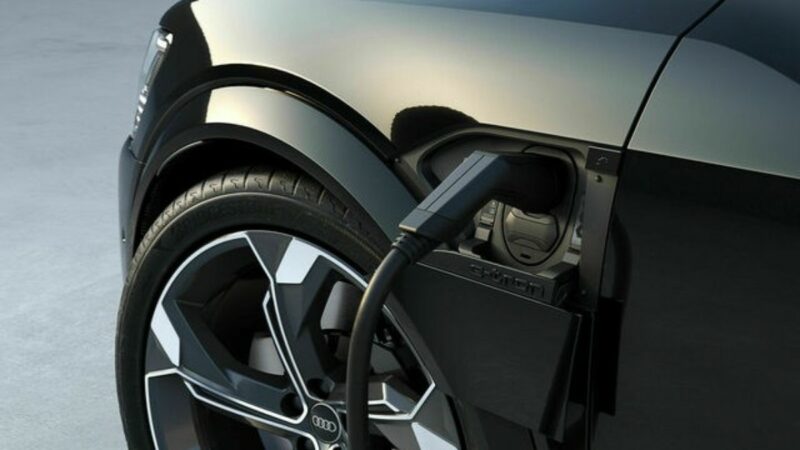
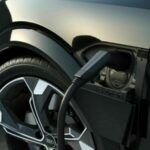
The Audi SQ8 e-tron and SQ8 Sportback e-tron can be charged up to 170kW for DC, enabling the battery to reach from 10 to 80 percent in just 31 minutes. With a full charge, this SUV can be driven for up to 471km.

For AC charging, it uses a 22kW capacity, requiring nine to 11 and a half hours depending on various factors.

Luxurious and sporty aesthetics

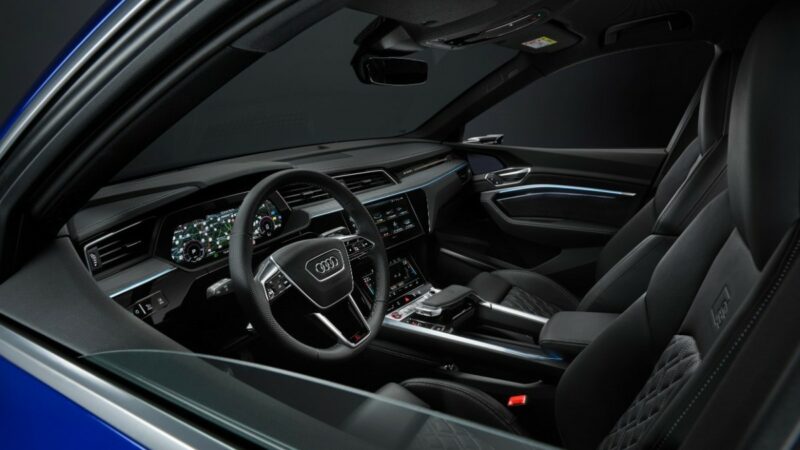
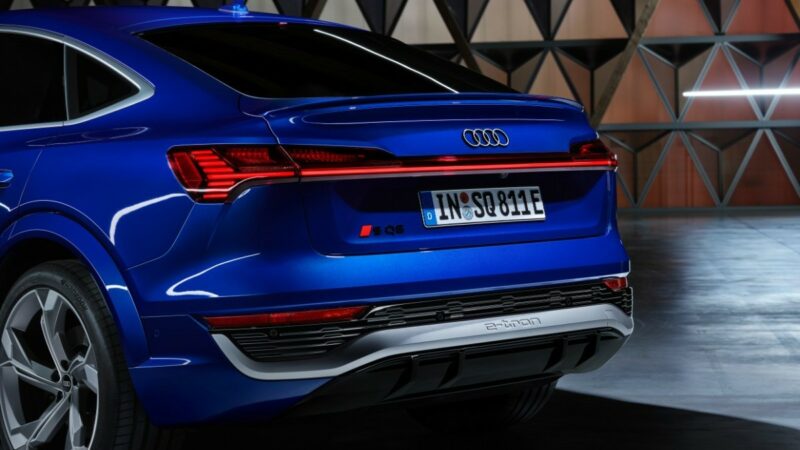
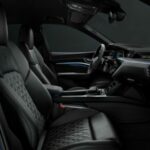
Both models come in an S package, indicating a sportier design. The widened bumper design is now more expressive, while the wheel arch panels with optimized air flow present a more muscular image.

The Singleframe grille, which is an Audi signature (with projector lights), is further emphasized by the Digital Matrix LED headlights. Interestingly, these lights have 1.3 million micro mirrors that can be adjusted up to 5,000 times per second to provide optimal illumination without dazzling other drivers.

Aerodynamics are crucial for EVs, and the Audi SQ8 e-tron has a low drag coefficient (Cd) of between 0.24 and 0.27, helping to achieve longer driving distances.

Other features include red brake calipers, carbon fiber side mirror housings, black roof rails, and 22-inch Interferenz Audi Sport rims.

“With the introduction of the new SQ8 e-tron through the classic SUV design and the more sporty Sportback design, we are now offering a high-powered Q8 e-tron variant for those seeking a more exhilarating driving experience with Audi’s dynamic and efficient technology,” said PHSAM CEO, Denyu Bostandzhiev.

“The Q8 e-tron and e-tron GT model families were launched in Malaysia in June last year and have received positive feedback,” he added.

The SQ8 e-tron comes in seven color options – Magnet Gray, Ultra Blue, Chronos Gray, Mythos Black, Plasma Blue, Daytona Gray, and Glacier White.

Both models are covered by a 5-year warranty, a 3-year scheduled maintenance package, and 5-year roadside assistance.

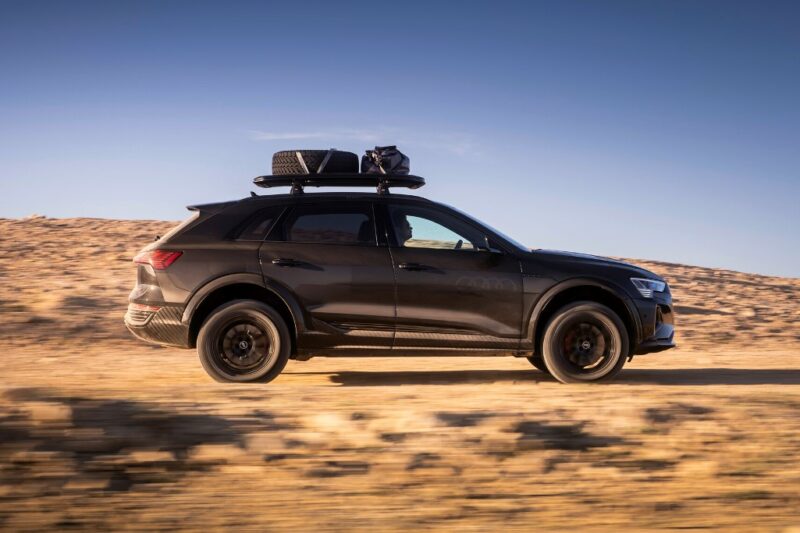
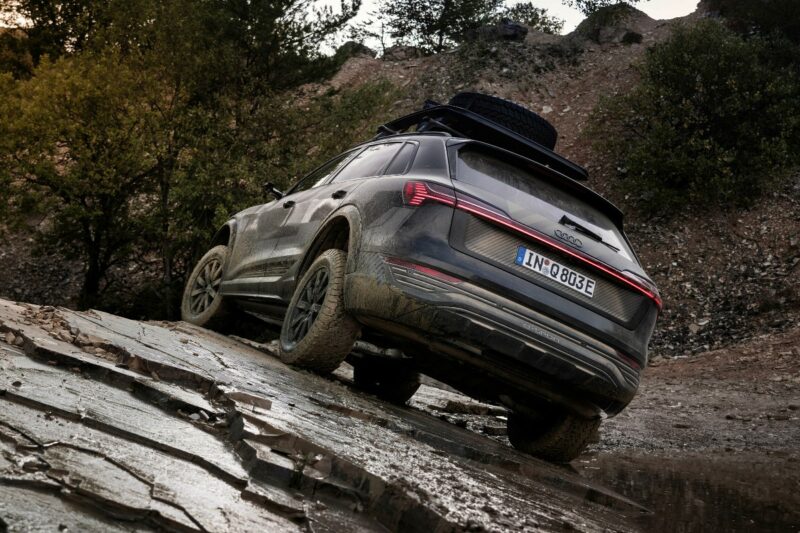
Audi Q8 e-tron edition Dakar boasts off-road ruggedness

AUDI will be competing in this year’s Dakar Rally with a RS Q e-tron designed specifically for the gruelling endurance race. To mark its participation, the automekr has introduced the new Q8 e-tron edition Dakar, inspired by the rally car.

According to Audi, only 99 units of the edition Dakar will be made available. It will open for booking in the first quarter of this year, with a starting price of 120,000 euros (RM608,211) in Germany.

The Q8 e-tron edition Dakar is based on a Q8 advanced 55 e-tron quattro. It is equipped with a 114 kWh battery offering a driving range of up to 487 km. The battery powers a pair of electric motors making 402 hp (300 kW) and 664 Nm of torque.

With standard tyres, the Q8 e-tron edition Dakar can accelerate from 0 to 100 km/h in 5.8 seconds. All-terrain General Grabber AT3 tyres increases the century sprint time by a tenth of a second to 5.9 seconds. The top speed is limited to 200 km/h.

While the chunky tyres render the SUV a little slower, they provide a higher ground clearance (+31 mm) and better grip on rocky or snowy surfaces.

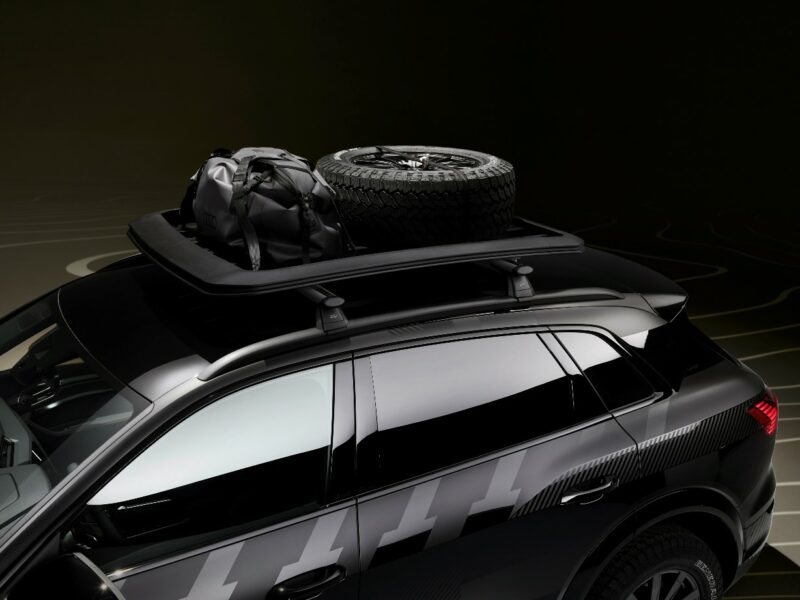
The edition Dakar also comes standard with a roof rack capable of carrying up to 40 kg of load. Included are a bag for the rack and straps for attaching accessories.

In the base setting, the vehicle has a ground clearance of 206 mm. At higher speeds, it gradually lowers – by 15 mm at 85 km/h, 17 mm at 100 km/h, and 13 mm at 120 km/h.  Audi says the control strategy for the air suspension was revised for off-road driving.

Meanwhile, its approach, ramp, and departure angles are 20, 26, and 19 degrees, respectively. Audi also claims a water wading depth of up to 300 mm.

The four rings brand also offers plenty of optional acessories, which include decals inspired by the RS Q e-tron, ambient light package plus, second high-voltage heater to monitor heating power, Bang & Olufsen Premium Sound System with 3D sound and virual side mirros.

In addition to the AT rubbers, each unit of the Q8 e-tron edition Dakar comes with a set of summer tyres along and 20-inch wheels in 5-V spoke S design.