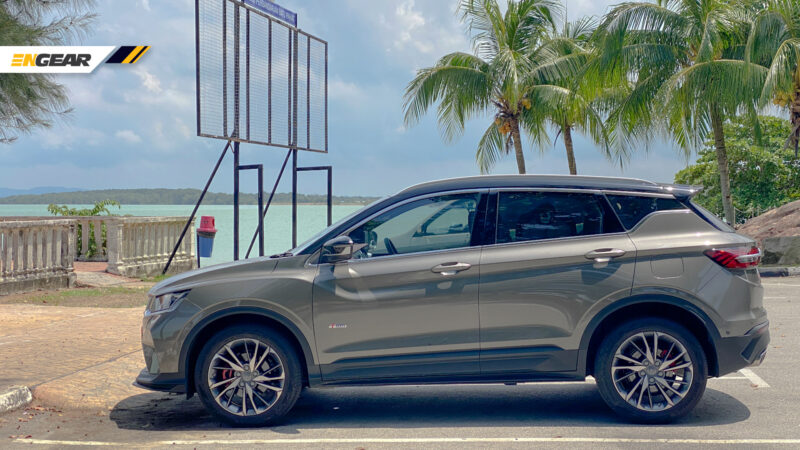
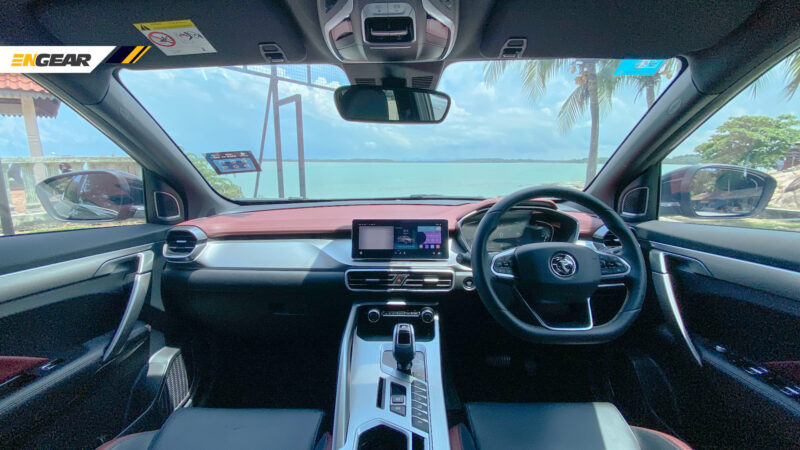
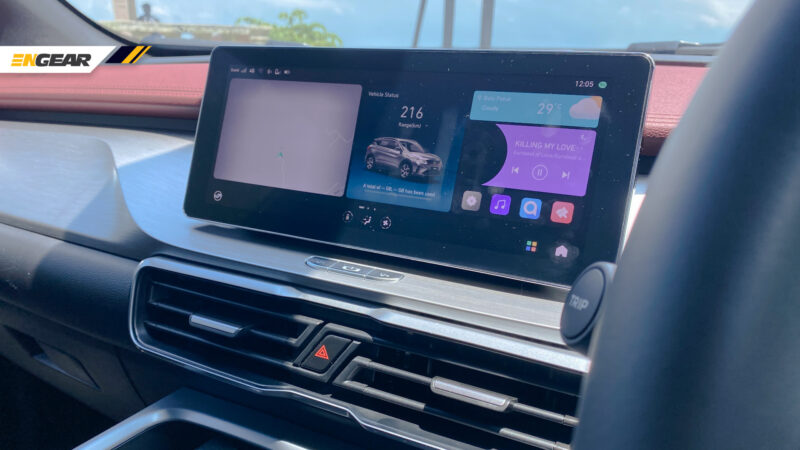
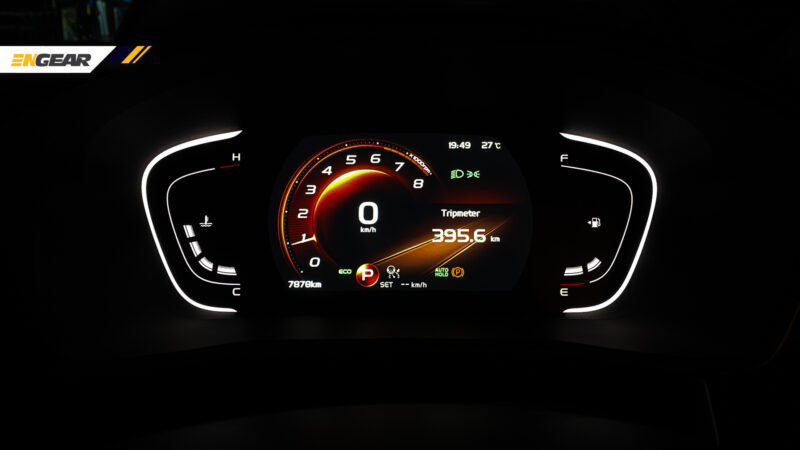
Launched in December last year, Malaysia’s first national EV Proton eMAS 7 has hit the mark with the market with 421 units delivered to customers for its first month.
According to Proton, this places the eMAS 7 as the best-selling EV in Malaysia with a 25% share of the overall EV market for January.
“It took just one month for the Proton e.MAS 7 to lead national EV sales, proving Malaysians will make the switch to EVs when the product and price proposition are correct,” said Zhang Qiang, Deputy Chief Executive Officer of Proton Edar.
Current bookings for the eMAS 7 now exceed 4,000 units, and as a result, Proton is offering the launch package benefits to an additional 3,000 units.
The automaker said over 80% of bookings are for the Premium model and the numbers are set to go up over coming months as more units arrive and more dealerships are opened.
Meanwhile, Proton also announced its sales performance for January 2025, totalling 9,914 units for both domestic and export markets, including eMAS and smart cars.
This compares to 12,882 units (ICE cars only) reported for January 2024. Based on the estimated TIV figure, the company’s market share is therefore forecast at 19.7%, an increase from the overall figure of 18.7% last year.
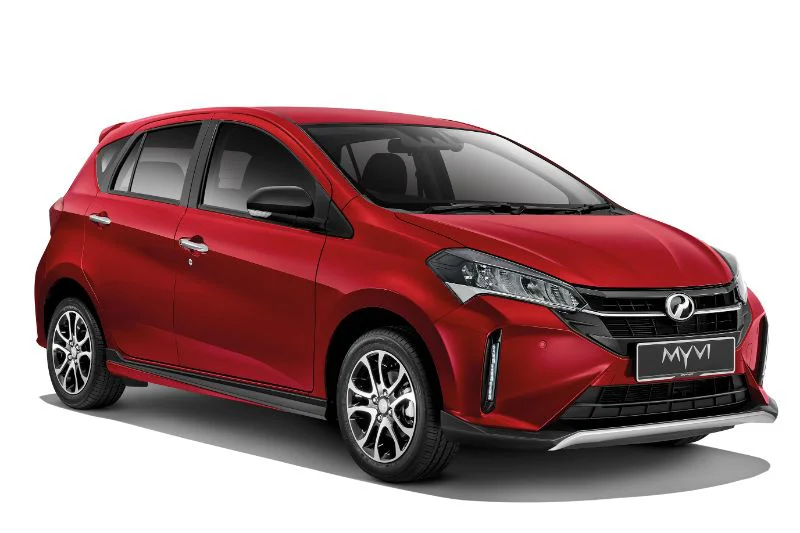
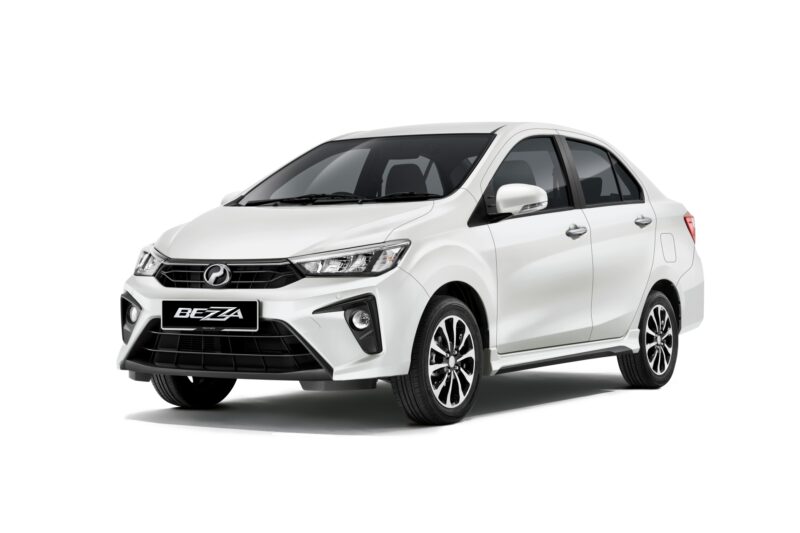
The year 2024 saw Perodua not only achieving the highest vehicle registration record for the local market but also successfully ranking second in the ASEAN passenger vehicle sales chart for the same year.
This announcement was shared directly by Perodua with media practitioners during the ‘Up-Close & Casual With Perodua’ event yesterday.
According to the ASEAN passenger vehicle sales data for 2024, Perodua recorded sales of 358,000 units, surpassing Honda, which is now in third place with 303,000 units.
For the record, in 2023, Perodua ranked third with total vehicle sales of 330,000 units, behind Honda’s 351,000 units and Toyota, which was first with 752,000 units.
Since its establishment, Perodua has recorded a total of 5.1 million vehicles on the road.
Among these, the Myvi remains the king of the road, with 1.487 million units, followed by the Perodua Axia (746,000 units), Perodua Kancil (709,000 units), and Perodua Alza (503,000 units).
Additionally, 2024 also saw Perodua exceeding its original production capacity of 320,000 units, with a total of 368,100 vehicles produced that year.
According to Dato’ Sri Zainal Abidin Ahmad, President and CEO of Perodua, “The record of 368,100 units was achieved by minimizing downtime according to the maintenance schedule, through dynamic coordination and planning with suppliers and distributors, and swiftly addressing challenges.”
For 2025, Perodua has allocated RM1.6 billion for model expenditure, much of which will be dedicated to factory improvements, stamping capacity upgrades, as well as new model development and tooling.
Meanwhile, Perodua anticipates a 4.9 percent decrease in production for 2025, forecasting a total of 350,000 units, along with a projected 3.7 percent reduction in registrations to 345,000 units.
“However, demand for our vehicles remains strong, with current back orders reaching 68,000 units, of which 28,000 orders have commitment letters issued without stock,” he further explained.
In terms of after-sales service, Dato’ Sri Zainal stated that the company aims to increase vehicle maintenance numbers this year to 3.7 million, representing a rise of 7.6 percent.
Perodua will also continue to support the nation’s automotive ecosystem with an estimated RM10.8 billion in local component purchases from suppliers in the country.
“2025 will be an exciting year for Perodua as we prepare the company and our strategic partners for any forthcoming changes. We believe that once these changes are complete, we will be able to strengthen our position both in this country and in the region,” he said.
The MG4 XPower was launched in Malaysia nearly ago as the most affordable vehicle capable of sprinting from 0 to 100 km/h in 3.8 seconds.
Say what you want about EVs, but there’s no denying that said performance is absolutely remarkable—years ago, achieving such speeds was the realm of sports cars and supercars costing hundreds of thousands, if not millions, of ringgit.
Now, thanks to technological advancements in EVs, you can experience the same thrilling sensation for just under RM160,000.
Of course, there are a few other EV models that can reach 100 km/h a touch faster, like the Volvo EX30 Ultra Twin Performance (3.6 seconds) and the Smart #3 Brabus (3.7 seconds), but both of these come with a price tag exceeding RM200,000.
But does the MG4 XPower’s advantage lie solely in its speed? What about other aspects such as design, comfort, range, and technology? Read on to find out.
Design
The MG4 is a five-door hatchback with somewhat unique proportions. To the eye, it appears fairly large, yet it is actually 3 mm shorter than the cutesy BYD Dolphin. Comparatively, it is 17 mm longer than the Smart #1, but its wheelbase is 45 mm shorter.
What stands out, however, is that the MG4 is noticeably lower and wider than both models, giving it a more aggressive stance and an aerodynamic edge.
Its sporty appearance is complemented by its very sharp front-end design, a double roof spoiler, and striking orange brake caliper covers emblazoned with ‘XPower.’
It’s a bit odd, though, that apart from the brake calipers, there’s no other part of the car adorned with the XPower logo. Were this vehicle crafted by BMW or Mercedes-Benz, you’d no doubt find M and AMG badges scattered across the bodywork.
Interior
Unlike its exterior, the cabin design of the MG4 offers a more understated aesthetic. Those hoping for a modern, futuristic design might find themselves a bit disappointed, as nothing particularly cutting-edge stands out.
However, this isn’t necessarily a downside. A simple layout is easier to the eyes and can actually facilitate the transition from ICE (Internal Combustion Engine) vehicles to EVs.
What’s available is just what you need for everyday driving – a touchscreen complemented by a row of physical buttons beneath it, a floating centre console housing the gear knob and a wireless charger, steering wheel controls on either side, and a digital instrument panel.
Much like other EVs on the market, most features are accessed via the touchscreen. However, fear not—the MG4’s steering wheel comes equipped with star (shortcut) buttons, which can be configured for various functions such as climate control, energy recuperation, and driving modes.
One aspect that I found less appealing was the overly generous use of hard plastic for the dashboard and door panels. Not only that, but the gear knob also feels somewhat loose but I’d take this over having to select gears via the touchscreen any day.
Practicality and comfort
Hatchbacks generally offer limited cabin space, but with the MG4, you needn’t fret if you’re carting around extra passengers, as the interior feels rather spacious for its size.
It boasts ample storage in the centre console and each door, and the boot holds a decent capacity of 363 litres, which can expand further with the rear seats folded flat if the boot isn’t quite large enough.
Speaking of the back seats, I found them quite comfortable and not overly upright. Legroom and headroom are adequate for those of average build, though it would have been nice if MG had considered air vents for rear passengers.
Performance
As mentioned, the MG4 excels in acceleration. This is a welcome trait if you find yourself challenged by the car next to you at traffic lights, but to be honest, such ‘mad’ performance can become a bit exhausting.
This is because the car accelerates effortlessly, without the drama typically experienced in ICE vehicles. While this isn’t an issue on the motorway, in urban environments, the body movement due to inertia when accelerating (and braking) can leave you feeling worn out after some time.
To overcome this, I found using the ECO mode offered a more controlled acceleration.
In terms of range, the XPower variant isn’t the best choice if driving range is your top priority. It comes equipped with a 64 kWh battery that delivers a WLTP range of 385 km on a full charge.
While this is reasonable for city driving, it’s essential to remember that range can also depend on driving style and other factors. If your right foot tends to be heavy, that number will plummet significantly.
For peace of mind, you might opt for the Lux Extended Range variant, which sports a larger 77 kWh battery, promising a range of up to 520 km. That should be enough for four to five days, depending on your usage.
Conclusion
In summary, the MG4 XPower offers incredible value for money for EV enthusiasts craving performance without breaking the bank.
However, personally, I see the Lux Extended Range variant as a more rounded choice overall. It is RM10,000 cheaper, and with a century sprint of 6.1 seconds, it’s still plenty quick for most drivers out there. Moreover, with a larger battery, range anxiety won’t be something to lose sleep over.
This month alone, we have been presented with several interesting scooter models for the local market.
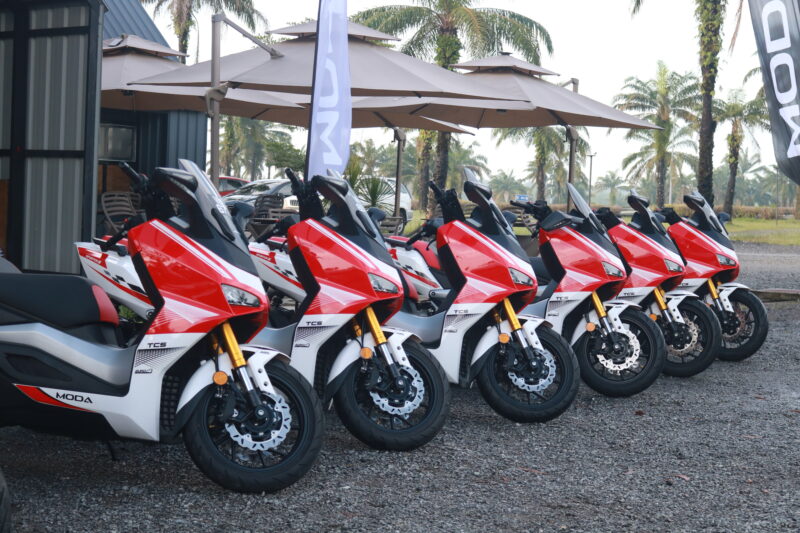
One of them is the Moda Sporter S, a scooter that features a design inspired by renowned superbikes.
Priced at RM17,888, the Moda Sporter S is powered by a single-cylinder 250 cc engine that produces 24.8 hp and 22.5 Nm of torque.
In mid-January, we were invited by Moda Malaysia to experience the ride on the Moda Sporter S maxi scooter.
The route, spanning over 30 km around the Sepang International Circuit and Kuala Lumpur International Airport (KLIA), provided ample space for us to assess the performance of this locally manufactured scooter.
Is it worth purchasing and owning?
From the first impression, the Moda Sporter S indeed boasts a sportier look compared to its competitors in the market, enhanced by elements inspired by the coveted Italian superbike brand.
Just look at its dual LED headlights, followed by the dual disc brakes on the front wheels, an aggressive racing livery, and the sharply designed rear end.
It comes with a 6.2-inch TFT display screen that is easy to read under bright sunlight, while the seat is cushioned for added comfort.
The windscreen can also be adjusted manually for height.
As we began our journey, the 250 cc single-cylinder engine performed without any issues, delivering power smoothly in response to the throttle twist, which was particularly satisfying for those who like to push the limits.
The riding position is also quite comfortable, with ample foot space that allows riders to adjust their foot positioning as needed.
Some media colleagues complained that the seat material felt a bit slippery, but I did not encounter that issue—perhaps the type of pants worn contributed to preventing any slipping.
In addition to the gripping tires, the suspension setup is excellent, allowing us to enjoy a more aggressive ride, especially on winding roads.
However, one must be patient when traversing bumpy roads filled with potholes, due to the sportier suspension tuning.
Some media colleagues reported achieving an average speed exceeding the national speed limit, and I must admit that this holds true.
What concerns me is that the handlebar feels somewhat light, and the ride feels unstable when reaching triple-digit speeds, even though this scooter is relatively heavy.
At high speeds, the side mirrors vibrated quite significantly, making it difficult for those of us who prioritize safety to see vehicles approaching from behind.
One positive aspect that I must emphasize is the strong operation of the dual front disc brake system, which ensures the scooter stops safely.
Additionally, this scooter comes standard with safety features such as a two-channel anti-lock braking system (ABS) and traction control system (TCS).
We will share a more in-depth riding review if given the chance to take this scooter home for an extended period.
Before the curtain falls on January, the Malaysian market has already been flooded with several scooter models that have caught the attention of netizens.
With comprehensive specifications and affordable prices, potential buyers might find themselves momentarily puzzled when it comes to choosing the best option.
Without further ado, here is the list of new scooters launched in the Malaysian market this month:
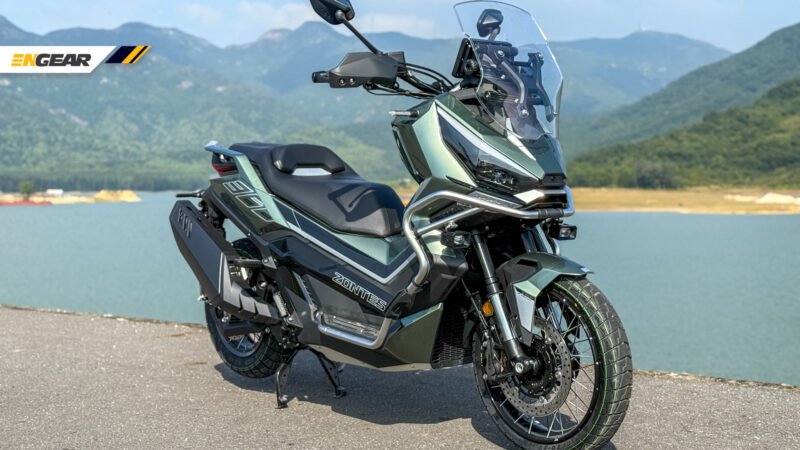
Zontes 368G ADV
The Zontes 368G ADV boasts specifications that could shame competitors from Japan.
In addition to a powerful 368 cc engine generating 38 hp and 40 Nm of torque, an USD front fork, and J.Juan braking system, the 368G ADV also comes equipped with various standard features, including a crash bar, a riding recorder camera, a tire pressure monitoring system, and heated handlebars!
Price: RM28,800
MODA Sporter S
A new local motorcycle brand made its debut at the beginning of this year with the maxi scooter Sporter S.
This 250 cc scooter can produce a power output of up to 24.8 hp, alongside a sporty appearance that is sure to turn heads on the road.
Price: RM17,888
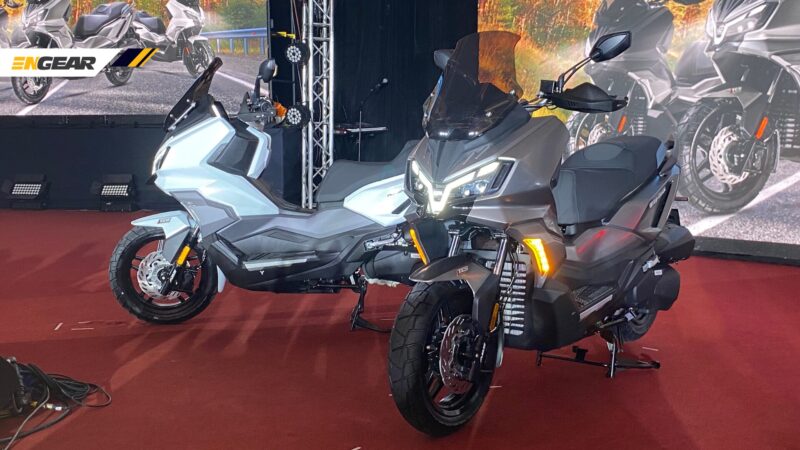
SYM Husky ADV 300
MForce presents the latest SYM Husky ADV 300 scooter, featuring a 278 cc engine that produces 25.8 hp and 26 Nm of torque, all wrapped in an aggressive body design.
Notable features include a digital display screen, a smart key system, hand guards, and the presence of USB-A and USB-C charging ports.
Price: RM23,888
Aveta Vanguard 250
Looking for something more budget-friendly? Aveta has just launched the adventure scooter Vanguard 250, offering impressive features.
In addition to a 244 cc engine with 24.8 hp and 22.5 Nm of torque, the Vanguard 250 comes with features such as an adjustable windscreen, adjustable handlebars, a riding recorder camera, and a digital TFT display screen.
MForce Bike Holdings is expanding its motorcycle offerings in the country with the launch of the new SYM Husky ADV 300.
Featuring an adventure style similar to the Husky 150 launched last April, the Husky ADV 300 is priced at RM23,888, excluding insurance.
It is powered by a 278.3 cc single-cylinder engine that produces 25.8 hp at 8,000 rpm and 26 Nm of torque at 6,000 rpm. The engine employs electronic fuel injection technology and liquid cooling.
For your information, the scooter has dimensions of 2,185 mm in length, 810 mm in width, 1,325 mm in height, and a wheelbase of 1,510 mm. It tips the scales at approximately 138 kg.
Suspension-wise, it comes equipped with telescopic forks at the front and adjustable twin shock absorbers at the rear.
The wheels measure 15 inches at the front and 14 inches at the rear, while the braking system consists of a single disc at both the front and rear, complete with dual-channel ABS. Traction Control is also included.
Additionally, the Husky ADV 300 comes with LED headlight and taillight, USB Type A and Type C ports, hand guards, a smart key system, a digital display, under-seat storage, and a 16-litre fuel tank.
There are three colours to choose from, namely Space Grey, White, and Matte Black.
Honda Malaysia has launched the facelifted version of the 11th generation Honda Civic, approximately a month after the sedan was made available for booking.
As before, the Civic is offered in four variants: E, V, RS, and e:HEV RS. The prices (OTR without insurance) are as follows:
E – RM133,900
V – RM144,900
RS – RM149,900
e:HEV RS – RM167,900
In terms of appearance, the facelifted Civic features a new, more aggressive front bumper and a larger grille. Thanks to its protruding design, the new bumper makes the C-segment sedan 3 mm longer compared to its predecessor.
There are no changes to the rear apart from the taillights, which now have a darkened smoked effect.
As for the rolling stock, the e:HEV RS variant gets new 18-inch alloy wheels, while the other variants retain their previous designs.
The design and layout of the interior remain unchanged, although there have been several updates on the equipment front.
For example, a 9-inch audio display is now included as standard across all variants. It is now equipped with Google built-in that allows users to access services such as Assistant, Maps, and Play Store.
Additionally, features such as wireless Android Auto and Apple CarPlay, front and rear USB Type C ports, the Honda Connect telematics system, and solar film are included in all four Civic variants. The top two variants, RS and e:HEV RS, also gain wireless charging.
There are no changes under the bonnet. The petrol variants—E, V, and RS—are still powered by a 1.5-litre VTEC Turbo engine that produces 182 PS and 240 Nm, transmitted to the front wheels via a CVT gearbox.
The Civic e:HEV RS retains its hybrid powertrain, which consists of a 2.0-litre Atkinson cycle engine with 143 PS/184 Nm, and an electric motor that generates 184 PS and 315 Nm.
In addition to the Econ, Normal, and Sport driving modes, the hybrid variant now features a new Individual mode.
It also combines Active Noise Control (ANC) with Active Sound Control (ASC) to reduce outside noise while enhancing engine sound.
The Honda Sensing system, which is included as standard on all variants, offers Low Speed Follow (LSF), Lead Car Departure Notification System (LCDN), Adaptive Cruise Control (ACC), Forward Collision Warning (FCW), Collision Mitigation Braking System (CMBS), Lane Keep Assist System (LKAS), Road Departure Mitigation (RDM), Lane Departure Warning (LDW), and Auto High Beam (AHB).
CMBS can now detect pedestrians and cyclists, while ACC accelerates and brakes more smoothly. LKAS has also been improved, providing better control when driving straight and turning.
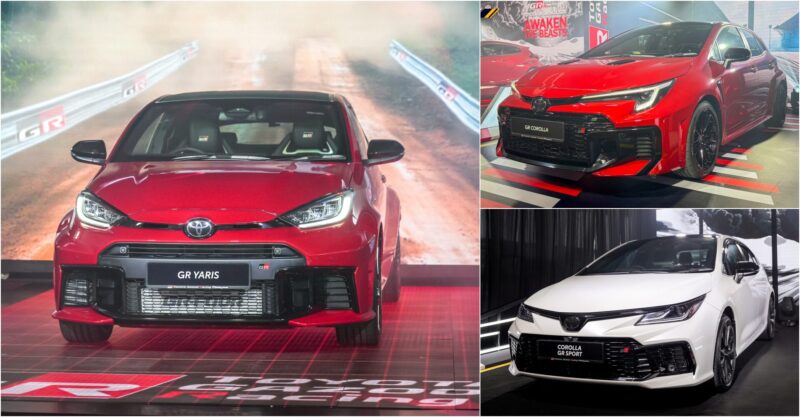
In conjunction with the closing ceremony of the seventh season of Toyota Gazoo Racing, UMW Toyota Motor has launched three high-performance models for the Malaysian market: the 2025 GR Yaris, 2025 GR Corolla and the Corolla GR Sport.
According to UMW Toyota Motor President, Datuk Ravindran K, “Driving is not just about moving from one destination to another, but an emotional experience that connects the soul with the road, bringing joy to every journey.”
“With the launch of the GR and GR Sport models, Toyota continues its legacy by elevating the driving experience to extraordinary levels. Developed with a spirit of performance, these models are designed to inspire and excite every Malaysian.”
2025 Toyota GR Yaris facelift
The hot hatch, born from Toyota’s involvement in WRC racing, is still powered by a 1.6-liter inline three-cylinder turbo engine that generates 300 PS and 400 Nm of torque.
For the Malaysian market, it is still offered in a six-speed manual version, along with the GR-Four all-wheel-drive system.
Engine performance is enhanced with the addition of a sub-radiator and an intercooler spray system for optimal operation under extreme pressure.
It has been reported that the GR Yaris with an eight-speed automatic transmission (DAT) is expected to follow later.
Changes to the exterior include a completely new front bumper structure with the Functional Matrix Grille Ver. 2, designed to maximize airflow and cooling, followed by new rear lamp units, an exhaust system, and a diffuser.
Inside the cabin, the dashboard layout has been completely revamped, incorporating elements from rally racing and the Super Taikyu Series.
In comparison to the previous GR Yaris, the control panel and display screen have been positioned at a 15-degree angle, allowing the driver easier access to the desired functions.
Additionally, the driving position has been improved, now with the driver sitting 25 mm lower and the rearview mirror raised.
There is also a full 12.3-inch TFT digital cluster display.
The GR Yaris 2025 facelift is priced at RM315,600.
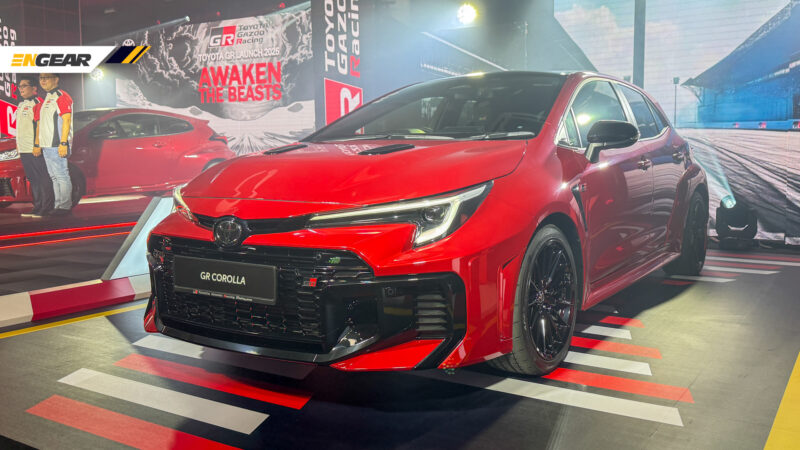
2025 Toyota GR Corolla facelift
Like the GR Yaris hot hatch, the GR Corolla facelift is also powered by the G16E-GTS three-cylinder engine, producing 300 PS and 400 Nm, paired with a six-speed manual transmission and the GR-Four all-wheel-drive system.
The driving aspects of the GR Corolla have been enhanced with upgraded suspension systems, providing benefits in grip levels, agility, and stability.
Aerodynamically, the GR Corolla features a completely new bumper design for improved airflow, while the wheel arches have been widened for a bolder appearance.
The hot hatch image, inspired by rally sports, is complemented by an updated interior featuring performance-oriented seats, gun-metallic finishes, a 9-inch central display, and a 12.3-inch digital cluster screen.
There are several attractive color options available, including Platinum White Pearl Mica, Precious Black, Precious Metal, and Emotional Red 2.
The Toyota GR Corolla 2025 is priced starting from RM367,000.
2025 Toyota Corolla GR Sport
Another model launched is the Corolla GR Sport 2025, which is a more practical yet sporty option.
This C-segment sedan is still powered by a 1.8-liter engine producing 139 PS and 172 Nm, but it comes with a Sport Sequential CVT transmission that offers 10 virtual speeds.
In terms of appearance, the Corolla GR Sport features a two-tone color scheme, a unique GR Sport grille with a hexagonal pattern, aerodynamic accents on the bumper, 18-inch GR Sport alloy wheels, and a rear spoiler.
Inside the cabin, the Corolla GR Sport showcases suede and premium leather-trimmed seats, a GR steering wheel, and a 10-inch central screen equipped with Apple CarPlay and Android Auto.
This sedan is available in several two-tone color options, including Platinum White Pearl Mica, Red Mica Metallic, and Attitude Black Mica.
The Toyota Corolla GR Sport 2025 is priced starting from RM149,800.
What happens when the world’s most beautiful supercar receives a magical touch from Liberty Walk?
You don’t even need to imagine the outcome, as the renowned Japanese tuner has already unveiled computer-generated images of their latest work on the Lamborghini Miura.
Set to be officially revealed at the Tokyo Auto Salon 2025, the LB-Silhouette Works GT Lamborghini Miura boasts a more aggressive and daring appearance.
You can see the aggressive body kit paired with wide fender flares, as well as aftermarket rims on all four corners of the wheel arches.
Not to be overlooked, there is a large rear wing and an aggressive diffuser, all finished in white with sponsor liveries and the red Liberty Walk logo on the side.
At this time, Liberty Walk has not disclosed any modifications made to the original 4.0-liter V12 engine, which produces 345 hp and 355 Nm of torque in this Miura.
The special body kit for the Lamborghini Miura will officially go on sale next year, and rest assured, it won’t come at a price as low as you might expect.
The Tiggo 7 Pro marks the fourth model launched by Chery Malaysia, following the Omoda 5, Tiggo 8 Pro, and Omoda E5.
Like its three predecessors, the Tiggo 7 Pro plays a crucial role in Chery’s efforts to cement its brand presence in Malaysia for the second time. It enters the fiercely competitive C-segment SUV market, going head-to-head with well-established rivals like Proton’s X70 and the immensely popular Honda CR-V.
As a newcomer, the Tiggo 7 Pro faces significant challenges, as its closest competitors boast impressive credentials proven by encouraging sales figures. However, this Chinese SUV has proven itself capable of standing up to the competition.
What makes the Tiggo 7 Pro particularly compelling is its pricing, which falls below RM130,000. It offers exceptional value, especially in terms of features, performance, and safety, making it a worthy alternative for those seeking quality without breaking the bank.
Aesthetics-wise, the Tiggo 7 Pro may not be as striking as the 2025 X70 or CR-V, but it certainly exudes a stylish, mature image that is capable of appealing to professionals.
While it may not scream for attention, pleasant details such as the Mercedes-esque diamond studs in the grille, the full-width rear light, and tasteful blue accents on the front bumper help it stand out subtly.
The vehicle sports attractive 18-inch alloy wheels, which hide red brake calipers—an unexpected touch for a family-oriented SUV, yet appealing to those who has a desire for sporty touches on their vehicles.
Measuring 4,513 mm in length, 1,862 mm in width, and 1,696 mm in height, the Tiggo 7 Pro is slightly shorter than the X70 and CR-V but boasts greater height compared to both models. Its wheelbase spans 2,670 mm, matching that of the X70 but falling 30 mm short of the CR-V.
Despite its smaller dimensions, the Tiggo 7 Pro’s cabin feels remarkably spacious and accommodating for a family of five. The materials used throughout convey quality rather than cheapness, justifying the already wallet-friendly price tag.
You’ll find leatherette upholstery enveloping much of the dashboard, seats, and steering wheel, complemented by touches of wood trim and glossy black and aluminium accents.
Notably, the dashboard is accented with nice-looking faux carbon fibre trim, complementing the sporty image initiated by those red brake calipers.
In terms of features, buyers will find everything they could possibly desire in a vehicle of this market category. For example, the infotainment system and essential vehicle information are displayed on a sizeable 24.6-inch screen, which actually comprises two separate displays of 12.3 inches each.
Additional offerings include wireless Apple CarPlay and Android Auto, a Sony audio system with eight speakers, a 50W wireless charger, and ambient lighting with 64 colour options.
Convenience features such as dual-zone climate control, six-way power adjustments for the driver’s seat, four-way adjustments for the front passenger, a panoramic sunroof, and Keyless Entry with Walk-Away Auto Lock make for a comfortable and user-friendly driving experience.
Don’t let the Tiggo 7 Pro’s smaller footprint fool you; it’s well-suited for family use. The rear seats are spacious, providing ample thigh support and a comfortable seating angle. The conventional SUV body shape also grants generous headroom for taller passengers.
The boot space, while smaller than that of the X70 and CR-V at 475 litres, remains plentiful. If you need extra room, simply fold down the rear seats for a vast total capacity of 1,672 litres.
On the safety front, there’s no cause for concern, as Chery has equipped this SUV with a host of active and passive safety features, including Autonomous Emergency Braking, Multi-Collision Braking, Blind Spot Detection, Traffic Jam Assist, Adaptive Cruise Control, Lane Change Assist, and more.
If that’s not enough, it also boasts seven airbags and a comprehensive 540-degree camera system complete with markers to assist drivers in tight spaces.
Despite its Chinese origins, the Tiggo 7 Pro does not compromise on quality; the camera displays are notably bright and sharp, outshining some of the more expensive SUVs on the market.
The design is appealing and the features provided are more than adequate but how does the Tiggo 7 Pro perform on the road?
Open the bonnet, and you won’t see much, as the 1.6-litre turbo engine and its associated components are neatly concealed beneath a large plastic cover.
That said, you won’t have any problem feeling the power as the four-cylinder engine produces 197 PS and 290 Nm of torque, surpassing the outputs offered by the three-cylinder engines found in Proton and Honda’s X70 and CR-V.
With a seven-speed DCT transmission driving the front wheels, this SUV is claimed to sprint from 0 to 100 km/h in just 8.3 seconds, reaching a top speed of 205 km/h.
Undeniably, the combination of engine and transmission endows the Tiggo 7 Pro with impressive acceleration, making it a joy to drive on wide-open motorways.
However, navigating busy city streets, I found the powertrain to be less smooth at times, with occasional jerks when initially pulling away.
According to Chery, the powertrain should achieve fuel consumption figures of around 7 l/100 km (14.2 km/l). In my mixed driving of both highways and urban areas, I recorded a consumption of about 8.9 l/100 km (11.2 km/l)—not too shabby considering the slightly aggressive driving style.
The suspension system is quite typical for a Chinese brand; it’s soft and comfortable, providing satisfactory shock absorption, which inspires confidence when tackling uneven roads.
Nevertheless, the softness of the suspension can make the Tiggo 7 Pro feel a bit precarious at higher speeds. While it handles corners well for an SUV, overly spirited driving can lead to the vehicle struggling to maintain composure.
In other words, I believe the Tiggo 7 Pro is better suited for relaxed and leisurely driving, even though it boasts a rather powerful engine and features aggressive design elements like red brake calipers and carbon fibre trim.
Conclusion
If you’re on the lookout for a versatile C-segment SUV that doesn’t cost an arm and a leg, the Chery Tiggo 7 Pro might just be your ideal choice.
While its design may not be the most eye-catching in its class, it makes up with an impressive list of features and satisfying performance.
Concerned about after-sales support? Rest easy, as Chery Malaysia offers a generous seven-year/150,000 km warranty, 24/7 free towing service, and a five-year complimentary service package for the Tiggo 7 Pro.
On a global scale, the trend of electric vehicle ownership appears to be slowing down.
Major automotive manufacturers worldwide are starting to pull the handbrake and make a U-turn to resume producing fossil fuel vehicles for their customers.
What is certain is that this “ancient” technology has not yet reached its end point and is now being enhanced with the help of hybrid systems for longer ranges compared to battery electric vehicles (BEVs) and certainly compared to pure internal combustion engine (ICE) cars.
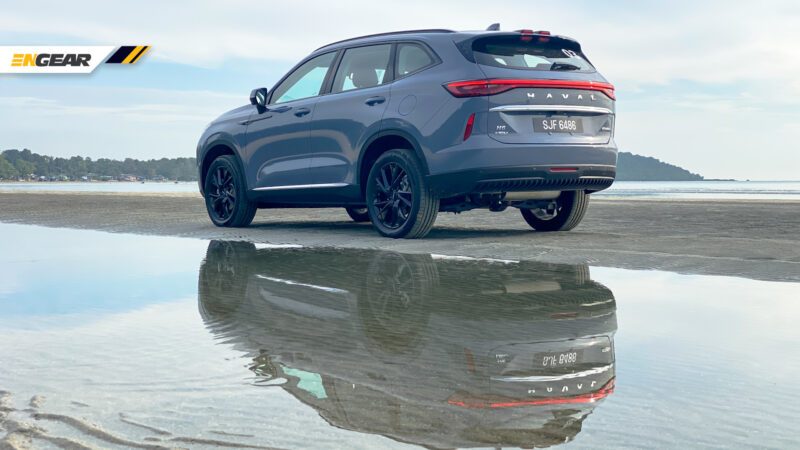
One of the hybrid vehicles made in China that has already entered the Malaysian market is the Haval H6 HEV.
Officially launched a few months ago, the Haval H6 HEV is a newcomer in the C-segment SUV category, competing against rivals such as the Honda CR-V, Mazda CX-5, and Proton X70.
Apart from its size, the Haval H6 HEV also comes with an attractive price package—RM139,800—making it as more affordable compared to the Toyota Corolla Cross Hybrid.
Will this low pricing strategy be enough to attract buyers away from the Corolla Cross, or the more sophisticated CR-V?
We managed to obtain a test drive unit of the Haval H6 HEV for a few days, and here are our findings:
1. Exterior Design
Among the C-segment SUVs available, the Haval H6 HEV features a relatively safe design.
There are no aggressive sharp lines; the design is rounded, but not excessively so like the Proton X70.
The front end looks fierce with the presence of LED headlights and a wide ‘Star Matrix’ grille, though the 19-inch wheels appear somewhat small beneath the SUV’s wheel arches.
At the rear, it boasts a full-width LED light bar, along with a cluster of four brake lights positioned on the spoiler.
In short, the design is quite ordinary. There is nothing really “wow” about it, except for the HEV badge indicating that it is not an SUV that lumbers along like a baby elephant.
This rather conservative appearance also successfully conceals the fact that it is actually a fairly large SUV!
Measuring 4,683 mm x 1,886 mm x 1,730 mm, the Haval H6 is significantly wider and taller than the Honda CR-V, benefitting from a longer wheelbase.
2. Interior Design
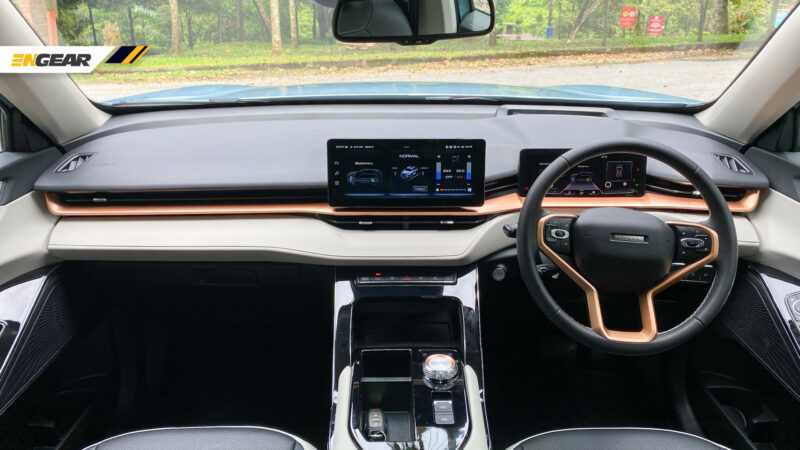
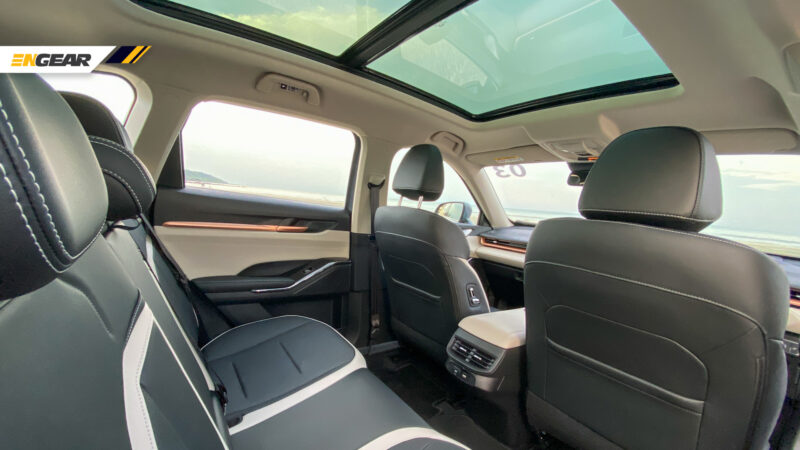
Following current trends, the Haval H6 HEV presents a more minimalist cabin layout.
Its features are comprehensive, with a 10.25-inch digital screen in front of the driver, a 12.3-inch infotainment screen complete with Apple CarPlay and Android Auto support (important features for a modern car!), dual-zone climate control, wireless device charging slots, a panoramic sunroof, a head-up display, and an audio system with eight speakers.
On the central console, there are several important function buttons, but unfortunately, it lacks a more crucial feature—controls for temperature and fan speed.
You have to navigate these functions through the central screen. This could be inconvenient, especially when driving alone.
The author also isn’t particularly fond of the three-tone finish featuring rose gold, which feels somewhat distracting while driving.
Moving to the front screen, we appreciate GWM’s decision not to clutter it with various logos and symbols that can be visually overwhelming.
The layout and graphics are sharp and easy to read, though it is unfortunate that there are fewer customization options available for those who prefer an analog speedometer display.
3. Exciting Power Package
This is one of the most powerful hybrid SUVs in its class.
The Haval H6 HEV is equipped with a hybrid engine system producing 243 PS and 530 Nm of torque, consisting of a 1.5-liter turbocharged inline-four engine (150 PS/230 Nm) and a single electric motor (177 PS/300 Nm), a two-speed Dedicated Hybrid Transmission (DHT), and front-wheel drive.
With the available Sport mode, the Haval H6 HEV can accelerate from a standstill to 100 km/h in just 7.75 seconds.
In comparison, the Corolla Cross Hybrid features a naturally aspirated 1.8-liter Atkinson cycle engine producing 98 PS/142 Nm and a single electric motor generating 72 PS/163 Nm, for a combined output of 122 PS.
Meanwhile, the CR-V e:HEV has a 2.0-liter naturally aspirated hybrid engine paired with two electric motors for a total output of 181 PS and 335 Nm.
4. Driving Experience
On paper, it certainly looks powerful, but the power delivery of the Haval H6 HEV is not as aggressive as that of sports cars or electric vehicles (EVs) with their intense torque.
When you press the accelerator pedal firmly to the floor, you can feel the responsive and smooth acceleration without straining your neck from high G-forces.
This power is particularly needed when driving with a cabin full of passengers and cargo, especially when overtaking a slow-moving eighteen-wheeler on a busy road due to overloading.
One thing we can commend about this SUV is the remarkable lack of engine vibrations felt inside the cabin.
Even at times when this SUV requires extra power, the operation of the 1.5-liter turbo engine is very efficient, devoid of the noise and vibrations mentioned earlier.
Despite its considerable size, this SUV remains easy to control, although the steering wheel feels somewhat oversized—it almost feels like driving a truck.
The handling is also satisfactory, as it is more tuned for the comfort of all passengers.
The Haval H6 HEV’s suspension system works effectively to absorb all the bumps and potholes from the road surface, while also avoiding excessive swaying on winding roads.
The braking system functions well to bring this heavy SUV to a stop; however, at low speeds, it takes a while to get used to the pedal response to avoid sudden stops.
According to GWM, a full tank of the Haval H6 HEV can cover distances of up to 1,000 km.
This figure has indeed been achieved by some media colleagues who have tested this SUV.
Based on personal experience, I managed to achieve a driving range exceeding 700 km—an impressive figure that can be attained even without driving conservatively to maximize fuel savings.
This is certainly beneficial for long-distance driving, where you won’t need to stop as frequently for refueling.
5. Comfort
While I am quite satisfied with the power delivery from this hybrid SUV, there is a key area that GWM needs to focus on—comfort.
For short drives, what the Haval H6 HEV offers won’t cause significant discomfort.
However, for families who often make long journeys (for instance, returning to their hometowns), this SUV may be a difficult choice.
What I noticed is that the seats in the Haval H6 HEV do not provide sufficient thigh support.
As a result, the legs of both the driver and passengers may feel dangling, leading to quicker fatigue.
The spacious dimensions allow the Haval H6 to provide ample legroom and headroom, but this is not complemented by comfortable upholstery.
There is a ‘boss switch’ feature that allows the driver to adjust the position of the front passenger seat if the passenger dozes off due to fatigue—a much-needed feature for any dedicated husband.
In terms of practicality, the Haval H6 HEV provides a cargo space of 560 liters, which is ample for carrying items such as luggage and shopping bags from major retailers.
If you need more space, simply fold down the second-row seats, and you will have a cargo space of 1,485 liters.
Finally, we found the NVH (Noise, Vibration, and Harshness) aspect of the Haval H6 HEV to be quite satisfactory.
With the use of quieter tires, it somewhat contributes to making the cabin of the Haval H6 more comfortable, effectively filtering out wind noise as well.
However, one point to note is that, despite being quiet, the standard tires on the Haval H6 HEV are not suitable for those who prefer aggressive driving styles.
A significant investment in higher-performance tires would be necessary to enjoy a more balanced driving experience in the Haval H6 HEV.
6. Hybrid, Yet Drives Like an EV!
You might be wondering why the Haval H6 HEV is equipped with only a two-speed gearbox.
The answer is simple: the Haval H6 HEV relies almost entirely on the electric motor for propulsion that doesn’t need too much gear ratio.
While the 1.5-liter turbo engine only engages when the driver requires extra power for aggressive driving.
The battery pack capacity is relatively small, at around 1.7 kWh, but it is sufficient to allow the Haval H6 HEV to behave like a pure EV!
The available electric range is not particularly long, stretching just a few kilometers, but I noticed that the Haval H6 HEV does not use engine power at all when driving in the city at low speeds.
In fact, some have even asked, “Is this SUV electric?” due to its remarkably quiet operation.
7. Value for Money
Currently, the selling price of the Haval H6 HEV in the Malaysian market starts at RM139,800, making it slightly cheaper than the Toyota Corolla Cross Hybrid (RM142,000).
Another popular C-segment SUV, the Honda CR-V e:HEV RS, is priced at RM195,900, offering a more aggressive appearance but less power compared to the Haval H6 HEV.
This indirectly positions the Haval H6 HEV as a formidable contender against those two Japanese models, with advantages in price, power, and practicality.
The question remains, with these advantages mentioned, can the presence of the Haval H6 HEV shake the foundations established by those two Japanese manufacturers?
For me, the true answer to this question may be difficult to please everyone.
This is because, after evaluating all three SUVs, I prefer the driving experience offered by the Japanese models, which feel more lively and connected to the driver, provide much better passenger comfort, and feature essential functions that are easier to operate without relying completely on the central screen.
I do not entirely dismiss the advantages present in the Haval H6 HEV; however, the factor of driving satisfaction is more important, far outweighing what GWM tries to promote with this model.
Specifications of the Haval H6 HEV:
Engine: 1.5-liter turbo inline-4 Power: 150 PS/230 Nm Electric motor: 130 PS/300 Nm Total power: 243 PS/530 Nm Transmission: Dedicated Hybrid Transmission (DHT) with two speeds Acceleration 0-100 km/h: 7.7 seconds Top speed: 175 km/h
At the 2024 Kuala Lumpur International Mobility Show 2024 (2024 KLIMS), Perodua took the opportunity to showcase the eMO-II electric prototype model this afternoon.
According to Dato’ Sri Zainal Abidin Ahmad, the President and CEO of Perodua, this prototype unit is a continuation of the previous prototype model and has been improved in terms of styling and features.
As revealed in a teaser video earlier, the Perodua eMO-II boasts a much sportier design compared to the eMO model.
From the front, the eMO-II features an aggressive bumper design, a full-width LED light bar, a illuminated Perodua logo on the front hood, and the eMO-II branding on the lower bumper.
On the sides, there are sharp air intakes, followed by aerodynamic wheel rims and side cameras that will typically be replaced with side mirrors for the actual production model.
The sporty theme continues at the rear, where the bumper components are adorned with a sizable diffuser design, a single brake light at the center of the bumper, a full-width LED light bar, and the presence of LED graphics resembling traditional songket patterns.
The interior design of the eMO-II deviates from the typical layouts seen in Perodua’s production cars.
In addition to the sporty seating, the eMO-II features a more modern steering wheel design, a wide digital cluster screen, PRND buttons positioned at the top of the center screen, and geometric graphics on the central console.
Currently, Perodua has not revealed the full specifications of the eMO-II, but based on preliminary information, this electric vehicle (EV) is powered by a single front-wheel-drive electric motor with an output of 68 PS and 220 Nm of torque, offering a range of 450 km on a full charge.
However, Dato’ Sri Zainal Abidin Ahmad confirmed that Perodua’s first EV will be priced within a range not exceeding RM90,000.
Sime Darby Auto Performance (SDAP), the exclusive Porsche vehicle distributor in Malaysia, has launched the second-generation Porsche Macan SUV for the local market.
Unlike the first-generation model, the second-generation Macan is now offered exclusively in a fully electric version.
Here are some key facts you need to know about the 2025 Porsche Macan EV:
1. Four Variants
The Porsche Macan EV is available in four main variants:
Macan – RM430,000
Macan 4 – RM445,000
Macan 4S – RM525,000
Macan Turbo – RM635,000
With current EV incentives, the Macan EV is priced lower than the first-generation Macan.
2. RWD or AWD Options
Depending on the specifications, the Macan EV is equipped with either a single electric motor for rear-wheel drive (RWD) or a dual-motor version with an all-wheel drive (AWD) system.
3. Performance
Macan:
340 PS / 563 Nm (boost 350 PS)
0-100 km/h in 5.7 seconds
Top speed: 220 km/h
Macan 4:
387 PS / 650 Nm (boost 408 PS)
0-100 km/h in 5.2 seconds
Top speed: 220 km/h
Macan 4S:
448 PS / 820 Nm (boost 516 PS)
0-100 km/h in 4.1 seconds
Top speed: 240 km/h
Macan Turbo:
584 PS / 1,130 Nm (boost 639 PS)
0-100 km/h in 3.3 seconds
Top speed: 260 km/h
4. Range
All Macan variants come standard with a 100 kWh NMC (nickel manganese cobalt) battery pack.
According to Porsche, the Macan EV can achieve a range of up to 641 km for the base variant, 613 km for the Macan 4, 606 km for the Macan 4S, and 591 km for the Macan Turbo.
5. Charging
The Macan EV supports AC charging at 11 kW, allowing the battery to charge from 0 to 100 percent state of charge (SoC) in approximately 10 hours.
Additionally, DC fast charging of up to 270 kW enables users to charge the battery from 10 to 80 percent in as little as 21 minutes.
6. Dimensions
Compared to the previous model, the Porsche Macan EV measures 4,784 mm in length (+58 mm), 1,938 mm in width (+11 mm), 1,622 mm in height (+26 mm), and has a wheelbase of 2,893 mm (+86 mm).
7. Exterior Design
As an electric vehicle (EV), the exterior design of the Porsche Macan is heavily inspired by the electric sedan, the Taycan.
It features distinctive elements such as separated headlamps, with the upper cluster structure acting as the daytime running light (DRL) unit, while the main headlights are positioned in the bumper.
The rear is equipped with a full-width LED light bar, complemented by an adaptive spoiler that is cleverly integrated.
All four doors come with a frameless window design.
In addition, the Porsche Macan EV is also equipped with a system called Porsche Active Aerodynamics (PAA), which includes components such as active cooling flaps, underheadlight air curtains, Gurney flaps, and diffuser blades that allow this SUV to achieve a drag coefficient as low as 0.25.
8. Cabin Features
Similar to the exterior, the interior of the Macan is also inspired by the Taycan’s cabin.
It includes a 12.6-inch digital instrument cluster, a central 10.9-inch screen, and an optional 10.9-inch display in front of the passenger seat.
The infotainment system of the Porsche Macan runs on the Android Automotive OS and supports both Apple CarPlay and Android Auto.
The center console still features a cluster of physical buttons necessary for climate control.
9. Practicality
The Porsche Macan offers 540 liters of cargo space behind the second-row seats. If the rear seat backrest is folded down completely, the rear luggage compartment capacity increases to up to 1,348 litres.
In addition, there is an extra 84 liters of storage available in the front trunk (frunk).
In Malaysia, when discussing luxury MPVs, whether one likes them or not, the vehicles that invariably come to mind are the Toyota Alphard and Vellfire.
From time to time, names like the Mercedes-Benz Vito and Lexus LM may cross the lips of those with a penchant for the luxurious, but ultimately, the Alphard and Vellfire are consistently top of the list.
This is hardly surprising, as this writer is certain that both models are indeed impressive and worthwhile purchases. However, if you are seeking something different, their closest competitor, the Kia Carnival, proves to be a worthy alternative.
Why, you may ask?
First and foremost, it’s about size. In this writer’s opinion, those who purchase MPVs often rank size as one of the highest criteria before making a decision.
Therefore, if you desire a vehicle that is spacious and roomy, look no further than the Carnival, which is appreciably larger than the Alphard/Vellfire.
For comparison, the Carnival measures 5,155 mm in length, 1,995 mm in width, and 1,740 mm in height, with a wheelbase of 3,090 mm.
In contrast, the Alphard/Vellfire duo is somewhat smaller, with a length of 5,010 mm (5,005 mm for the Vellfire), a width of 1,850 mm, a height of 1,950 mm, and a wheelbase of 3,000 mm.
In terms of design, the Carnival boasts a sportier appearance that resembles a sleek long wagon due to its lower and wider body shape. This is further accentuated by 19-inch black alloy wheels replacing the previous 18-inch versions.
While the Toyota MPVs are not unattractive, their boxy design does come across as somewhat conventional when positioned alongside their Korean counterpart.
As for the interior, this writer can confidently assert that the quality and features offered by the Carnival are on par with those of the Japanese models, even though the price difference among these vehicles can be as much as RM300,000.
It’s true that the Alphard/Vellfire feel a touch more luxurious due to their Lexus-like touches and higher-grade materials such as genuine Nappa leather upholstery. However, the Carnival still impresses.
The materials covering the seats, dashboard, and door panels feel sufficiently high-quality, as do all the physical buttons present throughout.
The Carnival is replete with features, including a 12.3-inch digital instrument cluster, a 12.3-inch touchscreen, Apple CarPlay, Android Auto, a three-zone climate control system, heating and ventilation functions for the front seats, and a Bose audio system with 12 speakers.
Moreover, the High variant of the Carnival is now equipped with Blind Spot View Monitor (BVM) that displays video feed from the side mirror cameras on the digital instrument cluster, a feature that can be activated when you use the turn signals.
In summary, this writer can confidently say that the quality and features provided by the Carnival justify its price tag of almost RM250,000.
The unit that this writer recently test drove was the eight-seat variant featuring a 2-3-3 configuration. The centre seat in the second row is larger enough for adult passengers, and when not in use, it can fold down to create a small table complete with two cup holders.
What’s even more interesting is that this seat can be rotated backwards to face the third-row seats or can be completely removed if desired.
For any MPV, the best seat in the house is usually in the back, and the Carnival does not disappoint in this regard, ensuring passenger comfort with its individual climate control for the rear, as well as retractable sunshades and a sunroof.
Additionally, children need not dispute over charging points for their gadgets, as every seat in the Carnival comes with its own USB port.
It is common for three-row vehicles to have limited cargo space when all seats are in use, but with the Carnival, this is not a concern, as there is a generous, deep storage area located beneath the third-row seats.
Now, how does it perform on the road?
The Carnival is powered by a Smartstream 2.2-litre turbodiesel engine, paired with an eight-speed automatic transmission that drives the front wheels.
This engine generates 202 PS at 3,800 rpm and an impressive 440 Nm of torque, available from as low as 1,750 rpm. While the 2.4-litre turbo engine in the Alphard offers slightly more horsepower, the Carnival’s torque advantage (10 Nm more) does not go unnoticed.
As expected from a diesel engine, the torque is readily available in the lower rpm range, making the Carnival feel smooth from a standstill. In fact, its acceleration is fairly smooth and quick, which is not something you can always say about a vehicle weighing close to two tonnes.
On the highway, the engine remains exceptionally quiet. Should you find yourself needing to overtake, there’s no need for concern over power since it consistently feels adequate, even in Normal mode.
The gearbox is responsive, allowing you to quickly accelerate everytime the accelerator pedal is depressed. It also promptly downshifts to deliver the necessary power for easy overtaking.
With the recent diesel subsidy rationalisation, some may harbour concerns regarding the Carnival’s fuel consumption.
For your information, this writer recorded a fuel efficiency of around 15 km/l or 6.7 l/100 km during a mixed driving cycle that included both urban and highway conditions.
The Carnival boasts a 72-litre fuel tank, meaning that theoretically, the vehicle could be driven nearly 1,080 km before needing to refuel.
If you’re paying full price for diesel at RM3.35 per litre, a complete fill-up would cost approximately RM241.20. Is it worthwhile to spend RM241.20 for a driving range exceeding 1,000 km? That’s for you to decide.
Lastly, the Carnival’s suspension tuning and NVH (noise, vibration, and harshness) are noteworthy. The suspension is relatively soft, allowing for a confident ride over uneven surfaces without the constant need to apply the brakes.
Nevertheless, there is something about this suspension setup that instils a sense of confidence and stability, especially at higher speeds. This is what makes the MPV enjoyable to drive fast.
The NVH aspect has been carefully addressed, ensuring that as a passenger, you experience a comfortable journey, with wind and tyre noise significantly minimised. The sound of the diesel engine is only noticeable if you stand outside the vehicle.
In conclusion, there is little more that this writer can say about the Carnival except that it is exceptionally good, enjoyable to drive, and packed to the brim with features and tech to meet the needs of buyers in this segment. What’s even better is that its competitive pricing makes it accessible to a broader range of potential MPV buyers.
However, it cannot be denied that the rationalisation of diesel subsidy may lead some to reconsider their decision to purchase the Carnival.
But, for this writer, if you are in a position to spend over RM200,000 on a large MPV, you are likely capable of managing the fuel costs without subsidy.
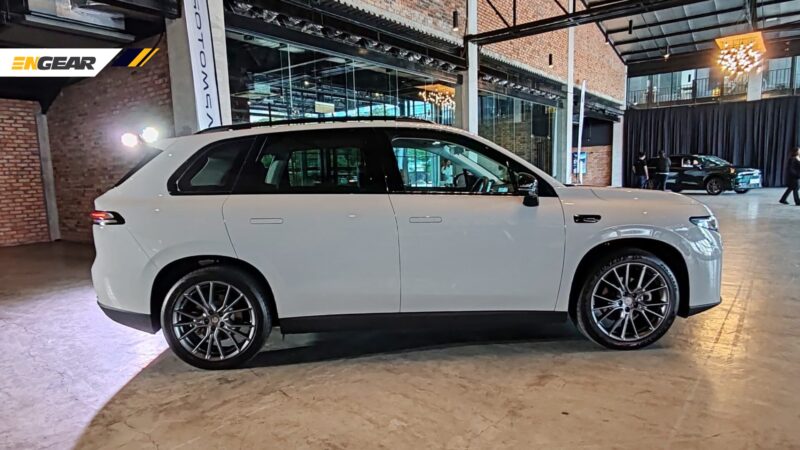
Last year, Proton updated its popular B-segment SUV model, the Proton X50 2024.
At first glance, you might find it difficult to guess what changes have been made, as its appearance remains largely the same as the original model released in 2020.
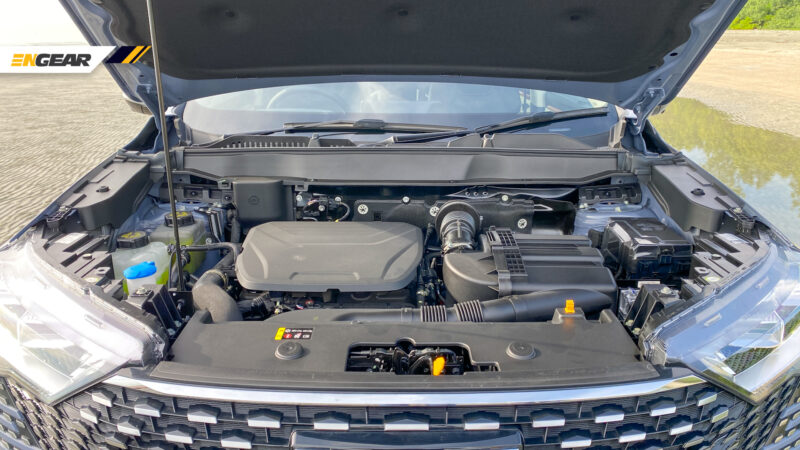
The engine offerings are also unchanged, with this flagship version we tested equipped with a 1.5-liter TGDi engine producing 177 PS @ 5,500 rpm and torque of 255 Nm @ 1,500 rpm – 4,000 rpm.
The original suspension system has also seen no changes, meaning it still offers handling characteristics nearly identical to the previous model.
So, what has actually changed?
Based on a drive from the Klang Valley down south a few weeks ago, I found one positive aspect of the X50 – improved NVH (Noise, Vibration, and Harshness)!
NVH was one of the criticisms when this model first launched.
However, after driving for several days, I acknowledged that the noise from the tires meeting the road surface has been effectively filtered, making the cabin quieter.
Wind noise is also less noticeable at lower speeds but still exists when the X50 is driven beyond the legal highway speeds.
In the cabin, the Proton X50 has been given an upgraded infotainment unit with more powerful and faster processing capabilities.
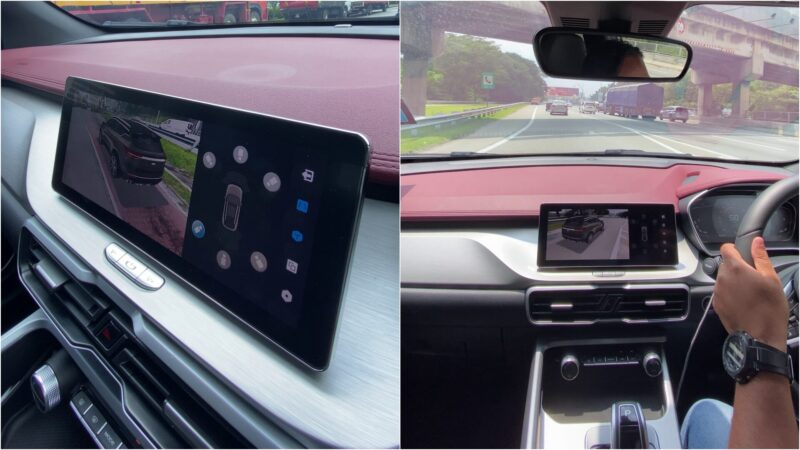
The 360-degree camera system has also been improved, now displaying live three-dimensional images of the vehicle whenever the turn signal lever is activated.
Lastly, the Proton X50 comes standard with a powered tailgate for the flagship variant, making daily driving tasks easier and more pleasant.
It has now become an almost perfect SUV model to consider, except for a few factors that might make you think twice:
1. Still Not a Fuel-Efficient SUV
I’ve tested various SUV models that are not high-performance but come with turbocharged engines. Some of those models can offer reasonable fuel consumption rates, but not the X50.
Even when driven normally without sudden acceleration, I found myself needing to refuel every 400 km.
For long-distance driving, this is not very convenient, especially when heading to areas with few fuel station facilities.
2. Still Lacks Apple CarPlay and Android Auto
ONLY FOR 2025 PROTON X70!
Yes, for now, the Proton X50 still lacks standard support for Apple CarPlay and Android Auto.
As an alternative, you can use the MirrorLink function with a charging cable; however, this system is somewhat complicated and inconvenient. If you turn off your phone’s screen, the MirrorLink connection will disconnect.
You will then need to go through the entire process again to reconnect the infotainment system with your smart device.
A more economical alternative would be to purchase a smartphone holder that can be attached to the windshield.
It’s a shame that a car costing RM100,000 still lacks the AACP features that would make driving easier.
If you recall, the Proton X70 2025 facelift was officially launched last August, about two months after the Proton X50 2024 was released.
The difference in launch timing is only a few months, so why hasn’t the Proton X50 been equipped with Apple CarPlay and Android Auto like the Proton X70 facelift?
3. 360-Degree Camera Not Very Helpful on the Road
The presence of a 360-degree camera certainly helps drivers avoid scratching body panels when entering parking areas.
The clearer and sharper display makes the X50 feel more upscale, even though it is an SUV in the RM100,000 price range.
However, I’m not too fond of the default camera angle displayed when the turn signal lever is used, as it doesn’t fully showcase the blind spots on the left and right sides of the vehicle.
You can change the 3D Live Feed display angle by accessing the menu on the touchscreen, but this action is discouraged while the vehicle is moving quickly.
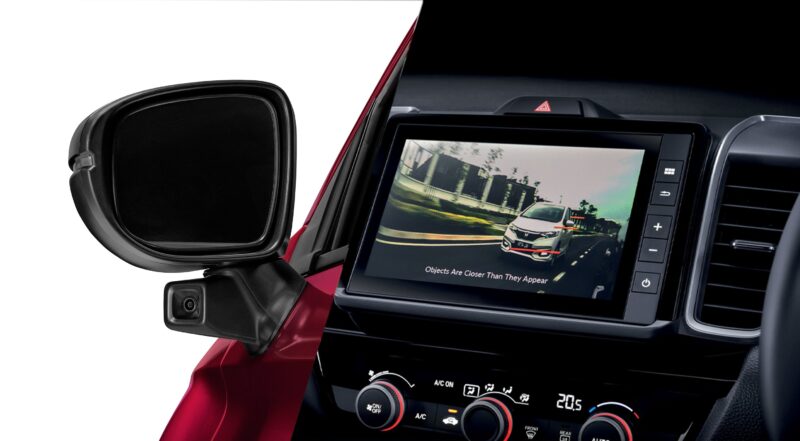
In this regard, I believe Honda’s LaneWatch feature offers more assistance, even though it only covers the left side of the vehicle.
Perhaps in future updates, Proton could adjust the default angle of the 3D Live Feed display to provide a better field of view as a driver aid to prevent unwanted incidents.
With the selling price remaining relatively unchanged at RM103,000, I still consider the X50 to be one of the more worthwhile B-segment SUV models to own.
That is, if you can accept and compromise on the three shortcomings I’ve mentioned above.
Back in October, BYD’s premium sub-brand Denza has been confirmed to be entering the Malaysian market, with Sime Darby Auto Imports as the official importer and BYD Malaysia as the official distributor.
The first model to be offered will be the Denza D9, which is expected to arrive in the local market some time in the first quarter of 2025. It will be pitted against the likes of the Zeekr 009, Maxus Mifa 9, and the popular Toyota Alphard/Vellfire duo.
Specifications for the Malaysian market are yet to be announced, but we can confirm that BYD Malaysia will introduce the battery electric vehicle (BEV) version, as it is currently the only version available in right-hand drive.
In China, in addition to the BEV variant, the D9 is also available in a plug-in hybrid electric vehicle (PHEV) version featuring a 1.5-litre engine.
For the BEV, there are two powertrain configurations: front-wheel drive (FWD) and all-wheel drive (AWD). The former features a single electric motor that produces 313 PS (280 kW) and 360 Nm of torque, allowing it to accelerate from 0 to 100 km/h in 9.5 seconds.
Meanwhile, the latter, with its twin-motor setup, offers a healthy 374 PS (275 kW) and 470 Nm, enabling a 0-100 km/h acceleration time of just 6.9 seconds.
Regardless the variant, the D9 is equipped with a 103 kWh LFP battery, providing a WLTP range of 520 km for the FWD and 480 km for the AWD.
In terms of size, the D9 measures 5,250 mm in length, 1,960 mm in width, 1,920 mm in height, and has a wheelbase of 3,110 mm. This makes it longer than the Zeekr 009, although its wheelbase is 95 mm shorter than its closest competitor.
The electric MPV can accommodate up to seven adult passengers (each 180 cm tall), thanks to a 2-2-3 seating configuration featuring sliding captain’s seats in the second row.
Its cargo space is big enough to hold seven 20-inch luggage cases and seven business backpacks.
In keeping with its status as a premium MPV, the D9 boasts a range of luxury features such as Nappa leather upholstery, ventilation and heating functions, massage functions, a panoramic glass roof, and a 7.5-litre fridge.
For the infotainment system, there is a 10.25-inch digital instrument panel, a 15.6-inch touchscreen, a Dynaudio sound system with 14 speakers, and three 50W wireless chargers, to name a few.
Pricing for the Malaysian market has yet to be announced. For reference, the D9 BEV is priced between 379,800 yuan and 469,800 yuan (approximately RM233,648 to RM289,015) in its home country.
Pro-Net has finally revealed the details and specifications for the first national electric vehicle, the Proton e.MAS 7.
We know that the e.MAS 7 is developed using the Global Modular Architecture (GMA) platform and measures 4,615 mm in length, 1,901 mm in width, 1,670 mm in height, and has a wheelbase of 2,750 mm.
Recent testing results indicate that the e.MAS 7 can traverse water up to a depth of 400 mm, which is higher than the Geely Galaxy E5.
Now, Pro-Net has confirmed that there will be two variants of the e.MAS 7 available: Prime and Premium. Both are equipped with the same electric motor but differ slightly in battery capacity and features.
The e.MAS 7 is powered by a “12-in-1” electric motor on the front axle, producing 218 PS (160 kW) and 320 Nm of torque, enabling it to accelerate from 0 to 100 km/h in 6.9 seconds and achieve a top speed of 175 km/h.
As previously reported, the e.MAS 7 features an Aegis short blade battery, claimed to have higher energy density, greater safety, and longer lifespan.
The Prime variant comes with a 49.52 kWh version of said battery, offering a range of 345 km, while the Premium model is equipped with a 60.22 kWh version, reaching a distance of up to 410 km. Both figures are according to WLTP standards.
For charging, the e.MAS 7 supports DC fast charging of up to 80 kW for Prime and 100 kW for Premium—both requiring 20 minutes to charge from 30% to 80%.
There is also an onboard AC charger capable of up to 11 kW that can recharge the battery from 30% to 80% in 4.9 hours for Prime and 6.1 hours for Premium.
The equipment list for both variants is largely similar. The e.MAS 7 comes standard with LED headlights featuring Follow-me Home and Active High Beam Control, roof rails, power windows with anti-trap, rain sensors, electrically adjustable and heated side mirrors.
Wheel sizes differ, with the Prime variant featuring 18-inch wheels fitted with 225/55 Giti tyres, while the Premium comes with 19-inch wheels and 235/50 Goodyear tyres. Additionally, a panoramic roof, powered tailgate, and Active Grille Shutter are exclusive to the Premium variant.
Inside, both variants are fitted as standard with a 10.2-inch LCD instrument cluster, multifunction steering wheel, leatherette upholstery, and six-way power adjustment for the driver’s seat.
The Premium variant gains several additional features such as an auto-dimming rear-view mirror, memory function for the driver’s seat, four-way power adjustment for the front passenger seat, ventilation for the front seats, and 256-colour ambient lighting.
Convenience features include Intelligent Keyless Entry and Start, Walk Away Auto Lock, wireless charging, automatic climate control with N95 filtration, and Vehicle-to-Load (V2L) capabilities.
Infotainment-wise, the e.MAS 7 comes standard with the Flyme Auto system alongside a 15.4-inch touchscreen with 2.5K resolution; however, only the Premium variant receives a head-up display (HUD) and Wanos audio system with 16 speakers.
In terms of safety, ADAS is equipped as standard on the e.MAS 7. It includes the following features:
Intelligent Cruise Control (ICC)
Adaptive Cruise Control (ACC)
Automatic Emergency Braking (AEB)
Forward Collision Warning (FCW)
Dynamic Brake Support (DBS)
Lane Departure Warning (LDW)
Lane Departure Prevention (LDP)
Emergency Lane Keeping Assist (ELKA)
Rear Collision Warning (RCB)
Rear Cross Traffic Alert (RCTA)
Rear Cross Traffic Braking (RCTB)
Lane Change Assist (LCA)
Blind Spot Detection (BSD)
Door Open Warning (DOW)
Traffic Sign Identification (TSI)
Both variants also include a 360-degree camera and rear radar, with the front radar available exclusively on the Premium variant.
The Proton e.MAS 7 is expected to launch in Q4 this year. It is now open for booking with an estimated price of RM120,000.
Evolvelectric Motors, the official distributor of JAC Motors vehicles in Malaysia, has launched the mid-size pickup truck model 2025 JAC T9 today.
For the local market, there are two powertrain options offered, namely the 2.0L turbo diesel version and the electric (BEV) variant.
Both versions of the T9 have the same dimensional size, measuring 5,330 mm in length, 1,965 mm in width, and 1,920 mm in height with a wheelbase of 3,110 mm.
The ground clearance is as high as 210 mm, with an approach angle of 27 degrees, departure angle of 23 degrees, and the capability to ford water up to 800 mm in depth.
The JAC T9 Grand-ES features a 2.0-liter turbo diesel inline-four engine with 167 hp @ 3,600 rpm and torque of 410 Nm @ 1,500-2,500 rpm, paired with a four-wheel-drive (4WD) system and an eight-speed ZF automatic transmission.
Meanwhile, the JAC T9 Grand-BEV is equipped with a combination of two electric motors.
The front axle motor produces 94 hp/176 Nm while the rear axle motor generates 215 hp/342 Nm, with a combined power reaching 516 Nm.
The CATL LFP battery pack with an 88 kWh capacity allows a range of up to 340 km (WLTP data).
The JAC T9 Grand-BEV also supports 11 kW AC charging (15-100% charge in 6 hours 50 minutes), as well as fast DC charging at 88 kW, allowing the battery to be charged from 30-80% in just 35 minutes.
Externally, the JAC T9 comes with features such as LED headlights, LED daytime running lights (DRL), LED taillights, side step boards, rear sports bar, and roof rails.
Moving into the cabin, the JAC T9 offers amenities such as a 7-inch cluster screen, a 10.4-inch center screen, Apple CarPlay and Android Auto support, six-way power-adjustable front seats, ambient lighting system, wireless device charging, and six speakers.
For the rear passengers, there are second-row air vents, additional USB ports, and power sockets for electronic devices.
JAC T9 Grand-BEV
JAC T9 Grand-ES
Loaded safety features include seven airbags, a 360-degree surround-view camera, tire pressure monitoring system (TPMS), autonomous emergency braking (AEB), lane departure warning (LDW), lane-keep assist (LKS), adaptive cruise control (ACC), and traffic sign recognition system (TSRS).
It’s no surprise that both versions of the JAC T9 pickup truck received a five-star rating in the Australasian NCAP (ANCAP) new vehicle assessment.
The estimated selling price for the JAC T9 2025 pickup truck starts below RM120,000 for the diesel version, valid until December 31 for the first 300 customers, with a five-year unlimited mileage warranty.
Meanwhile, the JAC T9 Grand-BEV is priced below RM200,000 and comes with a six-year manufacturer’s warranty or a limit of 200,000 km. It is valid for the first 100 customers who book before December 31, 2024.
As previously reported, Stellantis Malaysia, which handles the brands Peugeot, DS, and Citroen, will introduce the Chinese EV brand Leapmotor to the local market.
The first Leapmotor model to be introduced here is the C10, which has been previewed to the Malaysian media earlier today.
The C10 is a five-seater battery electric SUV measuring 4,739 mm in length, 1,900 mm in width and 1,680 mm in height. It has a wheelbase of 2,825 mm.
As you can see, it features a minimalist design language combined with modern and premium elements, such as horizontal LED light strips at the front and rear, 20-inch wheels, and flush door handles.
The minimalist concept continues inside, where you will find a two-spoke steering wheel, a 10.25-inch digital instrument panel, and a 14.6-inch touchscreen infotainment system powered by a Qualcomm Snapdragon chip.
However, we were informed that the C10 will not come with Apple CarPlay and Android Auto, which is quite a shame.
Additionally, the unit previewed showcases Oeko-Tex silicone leather upholstery, wireless charging, dual-zone climate control, ambient lighting, seat heating/ventilation, and a panoramic sunroof, to name a few.
On the safety front, the C10 is equipped with Level 2 ADAS (Advanced Driver Assistance Systems) featuring 16 functions as well as a 360-degree camera.
Specifications for the powertrain in the local market have yet to be revealed, but for the global market, the C10 is driven by a single electric motor on the rear axle, generating 218 PS.
The motor gets its juice from a Lithium Iron Phosphate (LFP) battery with a capacity of 69.9 kWh, offering a driving range of up to 420 km based on the WLTP cycle.
Details regarding charging remain unknown, but the Leapmotor global website says that the battery can be charged from 30% to 80% in 30 minutes.
The official launch of the Leapmotor C10 is expected to take place in October. Pricing is still a hush hush, but it should be in the ballpark of its closest rivals such as the BYD Atto 3 and Chery Omoda E5.
A few days ago, GWM Malaysia invited us to experience firsthand driving an upcoming hybrid SUV, the Haval H6 HEV.
Priced at an estimated RM145,000, it may very well be a very worthwhile purchase for those looking for a fuel-efficient, spacious, and comfortable SUV for the whole family.
Let’s briefly discuss the specifications of the Haval H6 HEV SUV.
Starting with the powertrain unit, the Haval H6 HEV is powered by a 1.5-liter turbocharged four-cylinder engine, paired with a single electric motor and a Dedicated Hybrid Transmission (DHT) with two-speed ratios.
The engine is capable of producing 150 PS/230 Nm, while the electric motor can generate an additional 130 PS/300 Nm of power.
Overall, the Haval H6 HEV boasts 243 PS of power and 530 Nm of torque, making it one of the most powerful in its class.
During a brief two-day drive across south borders that didn’t require a passport, the writer found that the power delivered by this SUV was consistent, especially when extra power was needed to overtake trucks ahead.
On paper, the 530 Nm figure might seem high, but during our drive, we didn’t feel any sudden surges of power that could cause neck discomfort.
This is because the power delivered when the accelerator pedal was pressed was smooth and seamless, unlike the aggression often experienced with most electric cars.
The hybrid system is also very efficient, as the writer and colleagues hardly felt the engine start-up process. There were no noticeable engine vibrations, and the engine noise was well-filtered from entering the cabin.
With a fuel consumption rate of around 5.8 liters/100 km, GWM claims that the Haval H6 HEV can cover a distance of up to 1,000 km on a full tank.
Perhaps we can test this further if given the opportunity to drive this SUV in the future.
The NVH aspect is also satisfactory, as we were able to chat comfortably inside the cabin without raising our voices or using a microphone.
The wind noise attempting to penetrate the cabin didn’t disrupt our conversation; only the tire noise was audible. This was partly due to the unsatisfactory quality of the tires used in some areas.
Equipped with a suspension system consisting of MacPherson struts at the front and a multi-link setup at the rear, this SUV didn’t pose any significant handling or comfort issues.
For Malaysian highway networks, it offers a balanced suspension setup for slightly aggressive driving while maintaining comfort for the whole family.
Additionally, the body roll generated during cornering was acceptable, not making the SUV sway excessively.
In terms of dimensions, the Haval H6 HEV offers a much larger size compared to popular C-segment SUVs like the Honda CR-V and Proton X70.
The long wheelbase also contributes to a more spacious cabin to accommodate five people at a time.
Furthermore, the Haval H6 HEV provides a cargo space of 560 liters, or up to 1,485 liters when the second-row seats with a 60:40 ratio are folded.
The layout of the dashboard is quite neat, but the combination of three colors (black, white, and rose gold) may not be favored by some.
There is a 10.25-inch cluster screen (with somewhat limited theme options) and a 12.3-inch infotainment screen that supports Apple CarPlay and Android Auto.
With a starting price below RM145,000, along with a package of specifications, the Haval H6 HEV could indeed be a very worthwhile purchase, especially for those who don’t have the budget to buy a hybrid SUV priced over RM200,000.
We will share more details and insights once given the opportunity to further test drive the Haval H6 HEV in the future.
Haval H6 HEV Specifications:
Engine: Four-cylinder in-line, 1.5-liter turbo
Power: 150 PS/230 Nm
Electric motor: 130 PS/300 Nm
Total power: 243 PS/530 Nm
Transmission: Dedicated Hybrid Transmission (DHT) two-speed
0-100 km/h acceleration: 7.7 seconds
Maximum speed: 175 km/h
Malaysia’s Leading Automotive News | ENGEAR ENGLISH