Pro-Net, a wholly-owned subsidiary of Proton, has announced the new Emerald Green colour for the 2026 Proton e.MAS 7 PHEV model.
According to Salawati Yusoff, Chief Branding Officer of Pro-Net, this new color not only provides more options but also enhances the design and identity of this SUV.
The e.MAS 7 PHEV features Geely’s Super Hybrid EM-i powertrain, which consists of a 1.5-liter naturally aspirated engine (98 hp/125 Nm) and a single electric motor (215 hp/262 Nm).
The total power output reaches 258 hp and 262 Nm, driving the front wheels.
There are two battery capacity options for the e.MAS 7 PHEV.
The Premium Plus variant uses a short-blade Aegis 29.8 kWh battery, offering a range of 170 km (NEDC data) and supporting 60 kW DC fast charging.
Charging from 30% to 80% takes less than 16 minutes.
Meanwhile, the Premium and Prime variants are equipped with a CATL 18.4 kWh battery, providing a driving range of 105 km and supporting up to 30 kW DC charging.
This PHEV system offers three hybrid modes: Series Hybrid Mode, Parallel Mode, and Direct Drive Mode.
Overall, the e.MAS 7 PHEV can travel up to 1,065 km.
In addition to Emerald Green, customers can choose from colours such as Obsidian Black, Lithium White, Mercury Silver, Galena Grey, and Azure Blue.
The ASEAN New Car Assessment Program (ASEAN NCAP) has officially revoked the five-star rating for the newly launched 2026 Proton X90.
The SUV is now rated only one star due to the removal of the Advanced Driver Assistance Systems (ADAS) in the updated model.
In 2023, the Proton X90 received a five-star rating with an overall score of 83.79 points, covering the following performance areas:
Adult Passenger Protection (37.75/40.00)
Child Protection (17.79/20.00)
Safety Assistance (15.71/20.00)
Motorcycle Rider Safety (12.50/20.00)
Reduction in safety features
ASEAN NCAP found that a significant portion of the ADAS technology assessed in 2023 has been removed from the X90 2026, including:
Autonomous Emergency Braking (AEB)
Forward Collision Warning (FCW)
Lane Departure Warning (LDW)
Lane Keeping Assistance (LKA)
Rear Cross Traffic Alert (RCTA)
Blind Spot Monitoring (BSM)
Under the ASEAN NCAP 2021-2025 Protocol, a vehicle’s star rating will be limited if it performs poorly in any single category.
The removal of these technologies caused the Safety Assistance (SA) score to drop to a four-star level.
Meanwhile, the Motorcycle Rider Safety (MS) category, which heavily relies on Blind Spot Detection, has drastically fallen to one star.
As a result, the overall rating for the Proton X90 is now limited to just one star.
2023-2025 Proton X90 still rated five stars
ASEAN NCAP confirmed that the X90 models manufactured between 2023 and 2025 still retain their five-star rating.
This is because the mentioned models are still equipped with the ADAS technologies mandated by the 2021-2025 evaluation protocols.
According to Prof. Madya Ir. Ts. Dr. Siti Zaharah binti Ishak, the Director-General of MIROS, “We are deeply disappointed by Proton’s decision to remove life-saving ADAS technologies from this new facelift model.
“To protect consumers and maintain the integrity of safety standards, we had no choice but to revoke the five-star rating.
“This serves as a reminder to all manufacturers: safety is not something to be compromised.
“Do not sacrifice proven safety technologies for mere external luxury, such as infotainment systems or leather upholstery,” she added.
Ts. Yahaya Ahmad, the Technical Head of ASEAN NCAP, further stated, “Blind Spot Detection (BSD) is a critical weighting factor in our Motorcycle Safety (MS) category.
“The removal of it, along with other advanced aids, has stripped away the points that previously granted the X90 its highest rating.
“ASEAN NCAP will continue to monitor all evaluated manufacturers, and we will not hesitate to revoke the ratings of any brand that neglects vehicle safety after assessments are made.”
Pro-Net has announced a special promotion for the e.MAS electric vehicle in anticipation of the upcoming festive season.
The promotion, featuring a rebate worth RM500, is valid for all bookings made between October 31, 2025, and March 23, 2026.
To qualify, customers must complete their vehicle registration by September 30, 2026, at the latest.
Strong Sales Performance
As of February 2026, Proton recorded over 5,000 registrations for the e.MAS 5 nationwide.
Of that total, 3,068 units were delivered to customers in January, followed by another 1,562 units in February.
These figures reflect sustained demand and growing consumer confidence in the model.
The Proton e.MAS 5 was officially launched last year, with prices starting from RM59,800 for the Prime variant and from RM72,800 for the Premium variant.
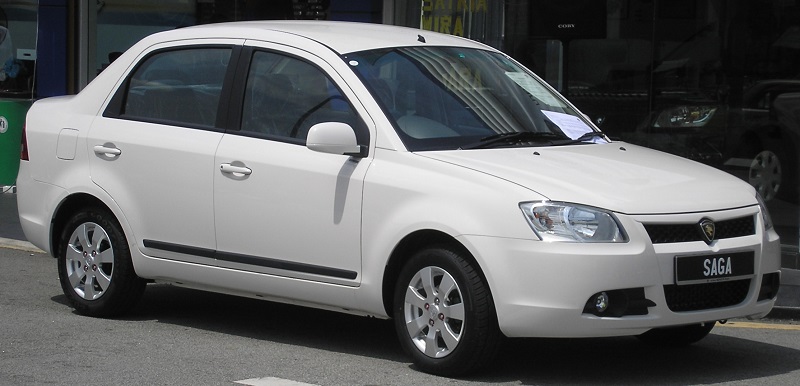
First introduced in 1985, the Proton Saga remains one of the most important models in Malaysia’s automotive landscape.
The Saga is not merely a mode of transport from point A to point B — it’s a necessity for those who want a comfortable, modern, and safe car.
The third facelift (MC3) launched last year, arrived with a strong package that easily embarrasses its rivals.
This was proven when Saga sales surpassed the Perodua Bezza throughout January 2026.
We had the chance to test-drive the Saga, and here are our thoughts on Proton’s new sedan.
A More Premium Saga Design
This entry-level sedan has gone through three design eras:
Mitsubishi’s boxy design (1985)
Proton’s original design (2008)
Geely-influenced design (2025)
There’s no denying that the new Saga offers a more sophisticated image, especially with a front fascia aligned with Proton’s other X models (X70 & X90).
Previously, DRLs came as a separate package, but the new Saga integrates DRLs into the main headlamp unit.
It also features bright LED projector headlamps for night driving.
The Saga’s image is further elevated with full-width LED taillights, matching current automotive design trends.
Unfortunately, the sedan’s side profile still reveals that it sits on the existing platform.
New Saga owners should probably thank the Proton Savvy for that.
A More Advanced and Premium Cabin
Since the original dimensions haven’t changed much, the cabin doesn’t feel significantly more spacious than before.
The dashboard layout has been refreshed.
Our Premium variant test unit comes with a 7-inch digital instrument cluster and a 9-inch infotainment screen in the centre.
Physical climate control buttons are retained, but with a simpler design and smaller knobs and switches.
There’s no denying that the new Saga delivers a more premium-feeling experience for an entry-level sedan.
The climate control knobs don’t feel cheap when turned, and the indicator/wiper stalks feel solid during use.
The air-conditioning system is excellent — a long-standing Proton trademark.
Another point, Saga now supports Apple CarPlay and Android Auto. Wirelessly.
The audio system also delivers pleasant sound quality, complementing the quiet cabin during drives.
Driving Experience
One of the biggest highlights of the new Saga is its new 1.5-litre i-GT engine.
This 1,499 cc engine produces 120 PS @ 6,100 rpm and 150 Nm @ 4,000 rpm — far more powerful than the old Campro’s 94 hp/120 Nm.
Fuel efficient? Absolutely.
A full tank can take the Saga more than 500 km, which is more than sufficient.
Fuel consumption is recorded at around 6.5 litres per 100 km.
Ride and handling have also been improved, making the Saga more exciting to drive, especially on winding roads.
The MacPherson strut and torsion beam suspension tuning feels just right — sporty yet still prioritising comfort.
Rough surfaces and vibrations are well-filtered, giving the Saga a surprisingly premium feel even when the road outside resembles the moon’s surface.
Engine noise no longer roars like the old Campro days.
The naturally aspirated i-GT engine produces only a low-frequency hum that doesn’t distract the driver even under heavy throttle.
Saga Is Not a Perfect Car
Despite the many positives, the Saga isn’t perfect.
A few things need attention to make it even better:
First, the CVT transmission response can be frustrating, especially at low rpm.
At normal speeds it’s fine, but the Saga can test your patience on roads with many traffic lights. Or Shah Alam, the Land of Roundabouts.
It’s hard to achieve smooth driving patterns because of this.
As someone used to manual cars, the writer hopes Proton will one day offer a six-speed transmission.
Second, the brake pedal bite point feels too far forward. Not that the braking system is bad — it still stops the car effectively.
But if you plan to drive the Saga fast, keep your foot ready for anything unexpected.
Third, the tyres. The standard Atlas tyres aren’t terrible, and they’re okay in the wet, but there are better options in the market.
If you’re buying a Saga, set aside some budget for tyre upgrades if you want a more confidence-inspiring drive.
Cabin weaknesses that can be improved
A few cabin improvements would make the Saga even better:
One, the instrument cluster brightness can be lowered further — it’s too bright at night, to the point the car next to you might notice.
Two, although Saga now supports wireless Apple CarPlay and Android Auto, the Altas operating system isn’t very stable.
Sometimes it restarts on its own, which is troublesome when you’re relying on navigation.
Three, the solution to sudden CarPlay/Android Auto disconnections is using a USB cable.
But the USB port is positioned too close to your knee, making driving uncomfortable — and the Saga doesn’t even have a left footrest.
Four, the driving position feels quite high, even at the lowest seat setting.
Your eye level ends up close to the rear-view mirror height.
This makes it difficult when going up or down multi-storey car parks.
Maybe this is a preview of the upcoming Saga Cross. Maybe.
Safety: Better Than Iriz and Persona
After a long wait, Proton has finally equipped an entry-level car with all the necessary safety features.
Six airbags come standard on the Premium variant, along with advanced safety features such as:
Autonomous Emergency Braking (AEB)
Lane Departure Warning (LDW)
Rear Cross Traffic Alert (RCTA)
Rear Collision Warning (RCW)
Door Opening Warning (DOW)
Auto High Beam (AHB)
And finally, the Saga now gets Blind Spot Monitoring (BSM) — a very welcome addition. Even the Iriz and Persona don’t get this.
Saga also gets front and rear parking sensors, which are quite sensitive and annoying in traffic jams.
There’s also a speed limit warning if the system detects the car exceeding the allowed limit.
One feature worth praising is the alert reminding drivers about children (and valuables) in the back seat whenever the engine is turned off.
The sound is loud and clear to ensure no Saga owner suffers from “forgotten child syndrome.”
Lose items and you can replace them. Lose a child and regret will haunt you.
Conclusion
Looking at the package and specifications offered, the Proton Saga is no longer a model you can take lightly.
It has everything needed in an entry-level sedan — power, comfort, space, and technology that makes daily life easier.
Most importantly, it’s priced within reach for most first-time car buyers.
Just like the Iriz in 2014, the Proton Saga has now set a new benchmark for the entry-level sedan segment.
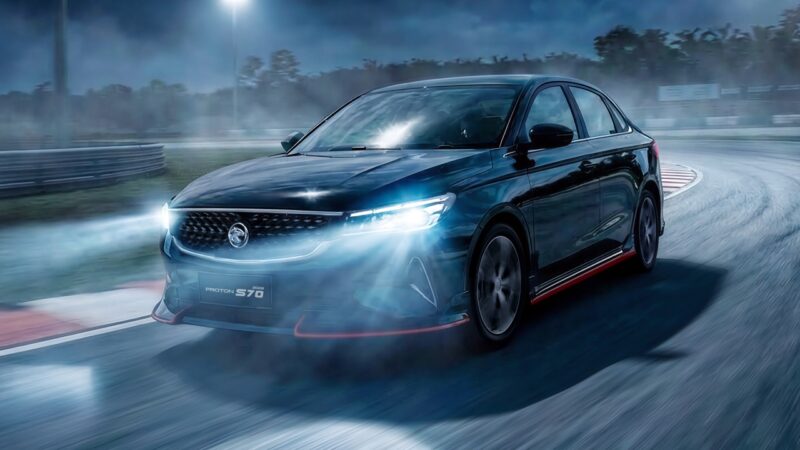
Proton has officially launched the 2026 Proton S70 for the local market.
Four variants are available, with the following prices:
1.5TD Executive – RM73,800
1.5TD Premium – RM79,800
1.5TD Flagship – RM89,800
1.5TD Flagship X – RM94,800
With a special launch rebate of RM5,000, the Proton S70 2026 can be purchased for as low as RM68,800.
Specifications
Among the major changes made to the S70 is the introduction of a 1.5-liter inline 4-cylinder i-GT turbo engine, replacing the original 3-cylinder engine.
This new engine produces 181 PS and 290 Nm of torque, paired with a 7-speed DCT (Dual Clutch Transmission).
Acceleration from 0 to 100 km/h is now achieved in just 7.5 seconds, with fuel consumption rated at only 5.7 liters per 100 km.
According to Proton, the S70 sedan also features Proton’s Ride & Handling tuning and enhanced Electronic Stability Control (ESC) software.
In terms of exterior design, the S70 comes with revised headlight units, daytime running lights (DRL), and 17-inch alloy wheels.
An aerodynamic kit is also available for a more stylish appearance.
The cabin is equipped with a 12.3-inch infotainment screen that now supports wireless Apple CarPlay and Android Auto.
The S70 features 13 Advanced Driver Assistance System (ADAS) Level 2 attributes, which include functions such as:
Autonomous Emergency Braking (AEB)
Lane Keeping Assistance (LKA)
Rear Cross Traffic Alert (RCTA)
Adaptive Cruise Control (ACC)
Lane Change Assistance (LCA)
Smart High Beam Control (IHBC)
Lastly, features like a 360-degree camera system and a Tire Pressure Monitoring System (TPMS) are also included.
Launch Package
For the first 2,000 customers, a special launch package is available, including:
RM5,000 rebate
Pro-Trade-In support with trade-in assistance of up to RM2,000
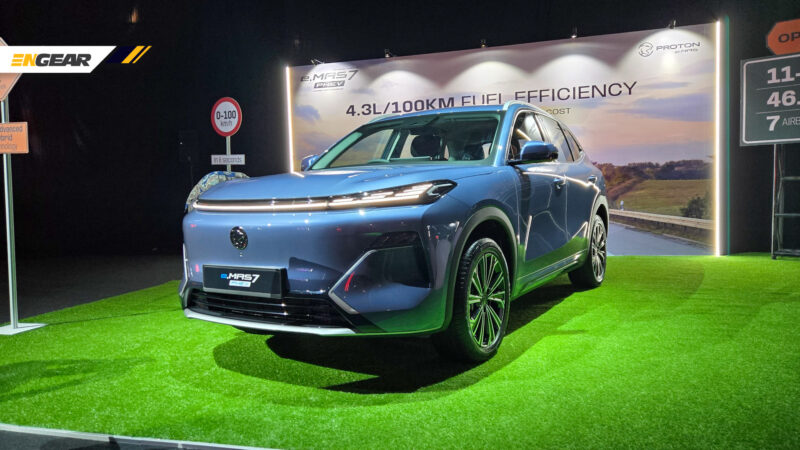
Proton New Energy Technology (Pro-Net) has officially launched its newest plug-in hybrid SUV model, the 2026 e.MAS 7 PHEV for the local market.
Offered in three variants, the selling prices for the Proton e.MAS 7 PHEV 2026 are as follows:
Proton e.MAS 7 PHEV Prime – RM109,800
Proton e.MAS 7 PHEV Premium – RM123,800
Proton e.MAS 7 PHEV Premium Plus – RM129,800
The first 5,000 customers will enjoy a special launch rebate of RM4,000, bringing the selling price of the e.MAS 7 PHEV to as low as RM105,800.
Power Pack Package
Pro-Net also introduced a Power Pack package worth up to RM7,500, which includes:
Power Home: 7 kW home charger (valued at RM1,500)
Power Online: Free 2GB/month internet data for 5 years (valued at RM1,000)
Power Trade-in: Trade-in rebate via Carsome (valued at RM1,000)
Power Exchange: Replacement for a vehicle that is no longer suitable for use (valued at RM4,000)
Power Protection: e.MAS Care insurance package (valued at RM1,000)
Dimensions
The e.MAS 7 PHEV boasts dimensions of 4,740 mm in length, 1,905 mm in width, and 1,685 mm in height.
Its wheelbase measures 2,755 mm.
Compared to the e.MAS 7 EV version, the PHEV version is 125 mm longer, 39 mm wider, 15 mm taller, and has a wheelbase that is 5 mm longer.
The cargo space measures 528 liters and can expand to 2,065 liters when the second-row seats are folded.
PHEV System
The e.MAS 7 PHEV utilizes Geely’s Super Hybrid EM-i powertrain, which consists of a 1.5-liter naturally aspirated engine (98 hp/125 Nm) and a single electric motor (215 hp/262 Nm).
The total power output reaches 258 hp and 262 Nm, powering the front wheels.
There are two battery capacity options for the e.MAS 7 PHEV.
The Premium Plus variant features a short blade 29.8 kWh battery that offers a range of 170 km (NEDC data) and supports fast DC charging of 60 kW.
Charging from 30% to 80% takes less than 16 minutes.
The Premium and Prime variants are equipped with an 18.4 kWh CATL battery, offering a driving range of 105 km, along with DC charging of up to 30 kW.
The PHEV system provides three hybrid modes: Series Hybrid Mode, Parallel Mode, and Direct Drive Mode.
Overall, the e.MAS 7 PHEV can travel up to 1,065 km on a single charge.
Features
As standard, the e.MAS 7 PHEV features a MacPherson strut front suspension and a multi-link rear axle.
It also boasts a different headlight design compared to the e.MAS 7 EV.
The Prime variant comes with 18-inch rims, while two higher variants are fitted with 19-inch rims.
In terms of cabin features, it includes:
10.2-inch LCD display
13.8-inch head-up display
15.4-inch central screen with Flyme Auto operating system
Direct charging map support
Apple CarPlay/Android Auto compatibility
WANOS surround sound system with 16 speakers
Panoramic glass roof
Leatherette-wrapped seats with memory, ventilation, and electronic adjustments
Ambient lighting system
Wireless charging slot for smart devices
There are up to 30 storage compartments available, including a hidden 100-liter storage space under the rear cargo floor.
The cargo area offers a capacity of 528 liters and can reach a maximum capacity of 2,055 liters.
Safety
The e.MAS 7 PHEV is equipped with seven airbags and Level 2 Advanced Driver Assistance Systems (ADAS), which include the following features:
Adaptive Cruise Control (ACC)
Forward Collision Warning (FCW)
Automatic Emergency Braking (AEB)
Emergency Brake Assistance (EBA)
Lane Departure Warning (LDW)
Lane Keeping Assistance (LDP)
Leading Vehicle Departure Alert (LVDA)
Rear Collision Warning (RCW)
Rear Cross Traffic Alert (RCTA)
Emergency Lane Keeping Assistance (ELKA)
Traffic Sign Recognition (TSR)
Safe Lane Change Warning (LCW)
Blind Spot Monitoring (BCW)
Door Opening Warning (DOW)
Colors
The Proton e.MAS 7 PHEV is available in the following color options: Obsidian Black, Lithium White, Mercury Silver, Galena Grey, and Azure Blue.
Proton has announced an incentive offer of up to RM4,000 for all its current models, in line with the Malaysian Government’s implementation of the Vehicle Replacement Grant Matching Program.
This program aims to reduce the number of old vehicles on the road and encourage the use of safer, more energy-efficient cars.
Through this initiative, customers who trade in their old cars will be eligible to receive incentives from PROTON, which will be matched by the Ministry of Transport for up to RM2,000.
For the Proton Saga and Proton e.MAS 5 models, PROTON offers incentives of up to RM1,000, and up to RM2,000 for the X50, X70, and e.MAS 7 models.
According to Dr. Li Chunrong, the Chief Executive Officer of Proton, “The incentives offered by Proton are a continuation of the Proton Xchange Program introduced in May 2025.”
He further stated that by the end of 2025, a total of 4,344 transactions had been recorded, involving the disbursement of approximately RM6.68 million to assist in the purchase of new vehicles.
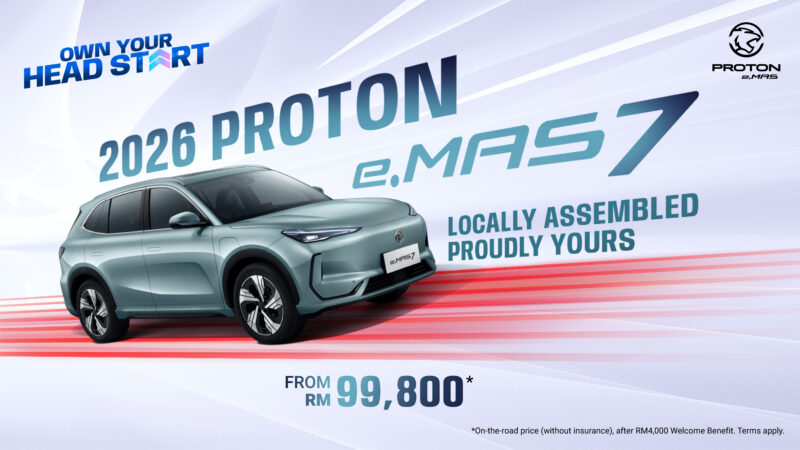
Pro-Net has announced the arrival of the Proton e.MAS 7 electric SUV in a locally assembled (CKD) version, with a starting price of RM99,800 after rebates.
Several new features have been added to both variants of the e.MAS 7, detailed as follows:
Prime Variant:
Addition of an electric tailgate.
Premium Variant:
Upgraded Advanced Driver Assistance System (ADAS), which includes features such as Forward Collision Traffic Alert (FCTA), Active Lane Change Assistance (ALCA), and Evasive Maneuver Assist (EMA).
Pro-Net also announced an additional benefits package, which includes:
Power Home: A 7 kW wall charger (valued at RM1,500)
Power Plus: A Vehicle-to-Load (V2L) adapter (valued at RM500)
Power Online: 5 years of unlimited internet data (valued at RM1,800)
Power Thru: Unlimited vehicle warranty for 6 years and an 8-year/160,000 km warranty on the battery and high-voltage components
Power Exchange: Exclusive trade-in rebate for Proton owners (valued at RM5,000)
Proton New Energy Technology (Pro-Net), the new energy vehicle division of Proton, has announced the specifications for the upcoming e.MAS 7 PHEV SUV model.
Here are some key facts you need to know:
Dimensions
The e.MAS 7 PHEV measures 4,740 mm in length, 1,905 mm in width, and 1,685 mm in height, with a wheelbase of 2,755 mm.
Compared to the electric version of the e.MAS 7, the PHEV version is 125 mm longer, 39 mm wider, and 15 mm taller, with a wheelbase that is 5 mm longer.
The cargo space is 528 liters, which can expand to 2,065 liters when the second-row seats are folded down.
PHEV System
The e.MAS 7 PHEV uses Geely’s Super Hybrid EM-i powertrain unit, which consists of a 1.5-liter NA engine (98 hp/125 Nm) and a single electric motor (215 hp/262 Nm).
The total power output reaches 258 hp and 262 Nm, driving the front wheels.
There are two battery capacity options for the e.MAS 7 PHEV.
The Premium Plus variant features a short blade Aegis 29.8 kWh battery that offers a range of 170 km (NEDC data) and supports fast DC charging of 60 kW.
Charging from 30% to 80% takes less than 16 minutes.
Meanwhile, the Premium and Prime variants use an 18.4 kWh CATL battery, providing a driving range of 105 km and DC charging up to 30 kW.
This PHEV system offers three hybrid modes: Series Hybrid Mode, Parallel Mode, and Direct Drive Mode.
Overall, the e.MAS 7 PHEV can travel up to 1,065 km.
Exterior
The e.MAS 7 PHEV features a MacPherson strut suspension setup in the front and a multi-link system in the rear axle.
It also has unique lighting designs compared to the e.MAS 7 EV.
The Prime variant comes equipped with 18-inch rims, while the two higher variants feature 19-inch rims.
Interior
The cabin offers up to 30 storage compartments, including a hidden 100L storage space under the rear cargo floor.
It features a 15.4-inch central screen with the Flyme Auto operating system, direct charging map support, Apple CarPlay and Android Auto, a 13.8-inch head-up display, and WANOS surround audio system with 16 speakers.
Additional features include a panoramic glass roof, leatherette-wrapped seats with power adjustment, memory, and ventilation, ambient lighting, and a wireless device charging slot.
Safety
The e.MAS 7 PHEV comes with seven airbags and 15 Level 2 Advanced Driver Assistance Systems (ADAS) functions, including Adaptive Cruise Control (ACC), Forward Collision Warning (FCW), Automatic Emergency Braking (AEB), Lane Departure Warning (LDW), Lane Keeping Assist (LKA), Rear Collision Warning (RCW), Rear Cross Traffic Alert (RCTA), and Traffic Sign Recognition (TSR) systems.
The Proton e.MAS 7 PHEV will be available in Obsidian Black, Lithium White, Mercury Silver, Galena Grey, and Azure Blue colors.
The estimated selling price ranges from RM110,000 to RM130,000. This Proton plug-in hybrid SUV will be officially launched next month.
Proton has officially launched the updated 2026 X70 SUV for the local market.
In terms of exterior design, the new X70 appears almost identical to what was offered two years ago.
However, the significant change is the replacement of the original 3-cylinder engine with a 4-cylinder i-GT 1.5-liter turbo engine.
This new engine delivers a power output of 181 PS at 5,500 rpm and a torque of 290 Nm at 2,000-3,500 rpm, paired with a 7-speed DCT transmission.
Proton claims that the fuel consumption rate is approximately 6.9 liters per 100 km, which is 5.5 percent more economical compared to the previous X70.
The NVH (Noise, Vibration, and Harshness) levels have improved by 4.5 percent, thanks to the use of a geared timing chain that is said to be 25.24 percent quieter than the standard timing chain.
Proton has also addressed the X70’s handling and comfort by enhancing the steering response and improving the ratio, followed by a retuned suspension.
Safety features included are six airbags, a Tire Pressure Monitoring System (TPMS), a 360-degree camera, and ADAS functions specific for Premium variant that encompass:
Autonomous Emergency Braking (AEB)
Forward Collision Warning (FCW)
Adaptive Cruise Control (ACC)
Intelligent Cruise Control (ICC)
Lane Departure Warning (LDW)
Lane Departure Prevention (LDP)
Lane Keeping Assist (LCC)
Lane Change Assist (LCA)
Door Open Warning (DOW)
High Beam Control (IHBC)
Traffic Sign Information (TSI)
Rear Collision Warning (RCW)
Rear Traffic Cross Alert (RTCA)
The cabin of the 2026 X70 still offers the same features as the previous model, such as a 12.3-inch infotainment screen, Apple CarPlay and Android Auto support, along with the “Hi Proton” voice command feature.
However, it is unfortunate that some previously available features, like Nappa leather upholstery and a panoramic sunroof have been removed.
The 2026 Proton X70 Premium variant continues to feature the original 19-inch wheel design, although the Continental UC6 tires have been replaced with Giti Comfort F50 tires (225/55R19).
The selling price (after RM7,000 rebate for the first 1,500 units, valid until March 31) starts from RM99,800 for the Executive variant to RM112,800 for the Premium variant.
Proton has officially announced the sales prices for the 2026 Proton Saga in the Malaysian market.
The following are the sale prices for each variant offered:
1.5 Standard – RM37,990
1.5 Executive – RM43,990
1.5 Premium – RM48,990
The 2026 Proton Saga is powered by a 1.5-liter inline four-cylinder i-GT engine that produces 120 PS at 6,100 rpm and 150 Nm of torque at 4,000 rpm.
There are two transmission options available: a 4-speed automatic for the Standard and Executive variants, while the Premium variant features a CVT.
In terms of dimensions, the new Saga measures 4,390 mm in length, 1,690 mm in width, and 1,525 mm in height, with a wheelbase of 2,465 mm. The turning radius is a compact 5.2 meters.
The suspension system consists of MacPherson struts in the front, complemented by a torsion beam setup in the rear.
Exterior features include LED projector headlights, LED daytime running lights, 15-inch alloy wheels (14 inches for the Standard variant), electrically adjustable side mirrors, and a full-width LED rear light.
Inside the cabin, the Saga boasts a seven-inch instrument cluster display, a nine-inch infotainment screen, support for Apple CarPlay and Android Auto, four speakers (two for the Standard variant), leatherette seat upholstery (fabric for the lower two variants), and USB charging ports.
Safety features include six airbags, ABS, EBD, Brake Assist, Electronic Stability Control (ESC), Traction Control System (TCS), Hill Hold Assist (HHA), and various Advanced Driver Assistance Systems (ADAS) such as:
Proton has officially announced that bookings for the new Saga sedan model are now open.
The 2026 Proton Saga will be available in three variants: Standard, Executive, and Premium, with estimated selling prices ranging from RM40,000 to RM50,000.
Proton is also offering exclusive rewards for customers who make reservations before the official launch.
The first 20,000 buyers who place their reservations from November 10, 2025, until the official launch date and complete their registration by December 31, 2025, will be eligible for the following offers:
Free Service Package for 1 Year or up to 20,000 km (whichever comes first)
New Touch ‘n Go Saga Limited Edition Card
Details about the 2026 Proton Saga can be found through the following link:
Proton has unveiled the specifications for the 2026 Proton Saga A-segment sedan, set to launch soon.
While it still utilizes the same platform, the Saga now features a refreshed look, a new engine, and a more modern dashboard layout.
Here are some key facts you should know:
Engine
The lifespan of the Campro 1.3-liter engine has come to an end; the Saga is now equipped with a new 1.5-liter naturally aspirated inline-four engine producing 120 PS and 150 Nm of torque.
According to Proton, this Atkinson cycle engine, equipped with DVVT technology, can offer the following benefits:
Fuel consumption as low as 4.9 liters per 100 km, representing a 14.04 percent improvement in efficiency.
A 25.24 percent reduction in noise, contributing to better NVH (Noise, Vibration, and Harshness) levels.
There are two transmission options available: a CVT specifically for the Premium variant and a 4-speed automatic transmission for the Executive and Standard variants.
Safety
The 2026 Proton Saga now offers significantly enhanced safety features compared to its predecessor.
It comes equipped with six airbags (likely for the higher variants), as well as nine ADAS functions assisted by a monocular camera system and rear side radar (RSRS), including:
Autonomous Emergency Braking (AEB)
Forward Collision Warning (FCW)
Forward Vehicle Moving Alert (FDA)
Intelligent High Beam Control (IHBC)
Lane Departure Warning (LDW)
Door Opening Warning (DOW)
Rear Collision Warning (RCW)
Lane Change Assistance (LCA)
Rear Cross Traffic Alert (RCTA)
Additionally, the Saga’s chassis is reinforced with four RESS (Reinforced Safety Structure) components.
Cabin
The Saga’s cabin is now outfitted with a 16-inch horizontal screen featuring two integrated displays: a 7-inch digital meter screen and a 9-inch infotainment screen.
Good news—the Saga now supports wireless connectivity for Apple CarPlay and Android Auto.
The air conditioning vents have also received a fresh design along with the gear knob, while the steering wheel remains the same unit found in the Proton X50.
Unlike previous versions which relied on hydraulic steering, the 2026 Saga now features an Electric Power Steering (EPS) system.
Other features include two-tone leatherette seats, storage in the center console, a Type-A USB charging port, a tea hook, and physical climate control knobs.
According to Proton, the dimensions of the front and rear seats are now larger and wider.
Exterior
From the side, the Saga does not showcase major changes, except for the all-new 15-inch wheel design (14-inch for the Standard variant).
From the front, the Saga comes with LED projector headlights complete with LED daytime running lights (DRL), followed by a grille adorned with songket embroidery elements and the Ethereal Bow design.
The rear lights have also been updated with neater 3D graphics.
With all these new features and improvements valued at RM12,000, what price will Proton set for this new Saga?
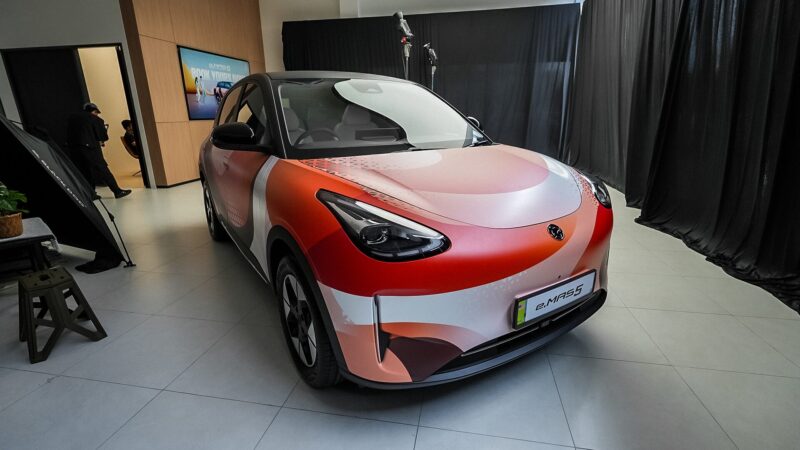
To be frank, the Proton e.MAS 5 is currently one of the most interesting small electric vehicles to consider.
With an estimated selling price ranging from RM60,000 to RM80,000, the e.MAS 5 is highly suitable as a daily use vehicle.
A brief test drive conducted recently revealed some insights into what you can expect from the e.MAS 5.
Here is our concise review:
1. Compact Size, Yet Ample Space
It’s true that the e.MAS 5 appears compact when seen in person, even smaller than the BYD Dolphin.
However, as an electric vehicle, the e.MAS 5 offers adequate storage space, featuring a 70-liter frunk and a 375-liter cargo area (which can expand to 1,320 liters with the rear seats folded down).
Need more space? There are up to 32 storage compartments around the cabin, including a 28-liter drawer beneath the rear seats and a 20-liter space under the center console.
2. Comfortable Driving Position
Upon entering the cabin, I found the seats in the e.MAS 5 to be quite comfortable.
The dimensions of the driver’s seat cushion provide ample support for the thighs, making for a comfortable and less fatiguing drive.
It’s worth noting that the e.MAS 5 only features manual seat adjustments, which I personally don’t mind—fewer electronic systems to depend on.
The steering wheel is adjustable only up and down, with no telescopic adjustment.
For me, the driving position is quite comfortable, although it may not suit those with larger, taller physiques.
3. Acceleration and Braking
The variant I test drove was the e.MAS 5 Premium, equipped with a 114 hp/150 Nm electric motor.
While it isn’t the most powerful EV, it is sufficient for comfortable city driving and remains agile.
The e.MAS 5 can accelerate from 0 to 50 km/h in just 3.9 seconds. However, from my brief experience, it takes a bit longer to reach a top speed of 100 km/h.
What impressed me was the braking system, which can bring the vehicle to a stop from 100 to 0 km/h in just 36.9 meters without making the driver break a sweat.
4. Handling
Next, we were subjected to slalom and figure-eight handling tests.
With a turning radius as tight as 4.95 meters, a multi-link suspension setup, and rear-wheel drive, the e.MAS 5 displayed nimble characteristics and was easy to control.
The steering feel was adequate—not too light and quite precise.
Changing direction suddenly posed no issue; the e.MAS 5’s steering response was reassuring.
I also didn’t have to make frequent steering corrections when navigating through winding roads.
5. How Does It Handle on Highways?
In the next session, I experienced driving the e.MAS 5 on a high-speed track.
My conclusion? The e.MAS 5 is very stable at speeds reaching three digits.
I was pleasantly surprised to find that the suspension tuning of the e.MAS 5 felt superior compared to its larger sibling, the e.MAS 7, with significantly less body roll in corners.
Additionally, the steering was confidently tuned even at high speeds, needing minimal corrections to keep the EV on track.
The only downside I noticed was wind noise at 110 km/h, and you’ll have to be content with a maximum speed limit set at 140 km/h.
The Proton e.MAS 5 is set to launch soon, so what are your thoughts on this affordable Malaysian EV?
After nearly four decades, Proton has officially closed its vehicle assembly plant in Shah Alam, marking the end of a glorious era in the history of the nation’s automotive industry.
The last unit of the Proton Saga was reported to roll off the production line on September 30, 2025.
Manufacturing operations have now been fully relocated to Tanjong Malim, where a total of 1,400 production staff have already moved.
A special celebration event was recently held at Proton Tanjong Malim to honor the 1,400 workers and was officiated by Ainol Azmil, Acting Deputy Chief Executive Officer, along with the senior management team of PROTON.
According to Ainol Azmil, “Today is a historic moment for PROTON as 1,400 colleagues from Shah Alam embark on a new journey in Tanjong Malim.
“With their experience and dedication, PROTON is now ready to step into the next phase, establishing this plant as the main hub for the new generation of PROTON vehicles,” he added.
Production of the Saga model will continue in Tanjong Malim along with the Persona model, the X series SUVs, and the S70 sedan at the high-tech manufacturing hub AHTV, which also houses Proton’s new energy vehicle (NEV) assembly plant.
The Tanjong Malim facility has an annual production capacity of 250,000 units and consists of five main production divisions: Engine and Transmission Machining, Pressing, Body Assembly, Painting, and Final Assembly.
The Proton Shah Alam plant has been in operation since 1985, covering an area of approximately 83.48 hectares with an investment of RM370 million.
In addition to housing a research and development (R&D) center, it is also equipped with comprehensive testing facilities, including a semi-high-speed test track.
Throughout its operational period, the plant has produced over 4 million units of vehicles, including the iconic models Saga, Wira, Perdana, and Exora.
Within 24 hours of the official opening of bookings, Pro-Net announced that it had received 1,607 bookings for the soon-to-be-launched e.MAS 5 model.
According to Zhang Qiang, Chief Executive Officer of Pro-Net, “We are truly overwhelmed by the extraordinary response from Malaysians towards the Proton e.MAS 5.
“From the beginning, our mission has been clear. We want everyone to be able to own an EV. With the e.MAS 5, that dream is now a reality. This is the first affordable EV in Malaysia, specially designed for the people.”
The Proton e.MAS 5 is a B-segment electric car with an estimated price range starting from RM60,000 to RM80,000.
Despite its compact size, the e.MAS 5 offers interior space comparable to C-segment models, along with features such as the best-in-class turning radius, rear-wheel drive, and a real-time charging status display.
Malaysians can express their interest in the Proton e.MAS 5 through the official website or via any of the 43 dealerships nationwide.
With a booking fee as low as RM99, buyers will receive exclusive perks such as a limited edition Touch ‘n Go card with RM100 credit and a RM500 rebate, applicable for the first 5,000 customers.
Pro-Net has recently announced the opening of bookings for the Proton e.MAS 5 electric SUV model.
During a live streaming session, Pro-Net also revealed the estimated selling price starting from RM60,000 to RM80,000.
This positions the e.MAS 5 as one of the most affordable electric vehicles in Malaysia.
With a reservation fee as low as RM99, the first 5,000 customers will also have the opportunity to receive a limited edition Touch ‘n Go NFC card preloaded with RM100 credit, along with an additional rebate of RM500.
The Proton e.MAS 5 is equipped with an 11-in-1 drive unit, complemented by MacPherson strut and multi-link suspension settings, offering a driving range of up to 325 km.
It also comes with features such as innovative storage space, a crystal gear knob, bilingual voice commands (in English and Malay), LED lights, ADAS safety systems, a 360-degree camera, and support for Apple CarPlay and Android Auto.