Porsche Malaysia, through Sime Darby Auto Performance (SDAP), recently organized the Porsche Esports Sprint Challenge Malaysia 2024 competition in conjunction with the Porsche Carrera Cup Asia (PCCA) event to be held at the Sepang International Circuit next month.
The competition is open to all Malaysian citizens and aims to identify the top 10 simulation racers through the fastest lap time format.
There are three age categories being contested: 10-14 years, 15-17 years, and 18 years and above, where each participant is given the opportunity to pilot the 911 GT3 Cup race car generation 992 using the Assetto Corsa platform.
The first qualifying round took place earlier, where only the top 30 fastest racers were selected based on a five-lap time-trial format at the Buriram Circuit.
The second qualifying round recently took place at the Porsche Centre Ara Damansara on 27-28 July, where each participant received special racing guidance followed by a 20-minute practice session at the Suzuka Circuit.
The 10 finalists with the fastest lap times will advance to the final stage at the Sepang International Circuit on 9-11 August, concurrently with the PCCA 2024 race on the same dates.
There, all participants will have the opportunity to familiarize themselves with the Sepang Circuit during a 30-minute free practice session, before attempting to secure pole position in a 15-minute qualifying session and the chance to earn an additional 10 race points for the overall standings.
We at Engear.tv also had the opportunity to participate in the second qualifying session recently held at the Porsche Centre Ara Damansara.
Before being allowed to ‘drive’, we were taken through a simulation racing guidance class by young racer Mika Hakimi, covering driving techniques to be applied on the Suzuka Circuit.
Additionally, participants were taught how to approach each corner within the circuit, starting from T1 all the way to the last corner, T18.
We were also given the chance to experience racing on simulation racing rig provided at the Porsche Centre Ara Damansara.
Although not achieving a faster lap time, the valuable experience gained throughout the day spent there will be unforgettable.
It was also satisfying to be able to try out the simulation racing rig setup, which is much more expensive than what the writer has at home. It is hoped that more events like this can be organized in the future to further enhance the esports scene in Malaysia.
The seat manufacturer, Recaro Automotive, reportedly filed for bankruptcy on the past July 29.
According to the local media, Heise Online, almost 1,000 employees of the company were unaware of this latest development.
The news also shocked around 215 workers affiliated with the IG Metall union working at the Kircheim unter Teck factory, near Stuttgart, Germany.
IG Metall boss Alessandro Lieb informed the Süddeutsche Zeitung news outlet, “We were not informed about this step, and only became aware of this via the intranet.”
Recaro Automotive has been a seat supplier to various automotive companies like Aston Martin, Ford, Mitsubishi, Porsche, Volkswagen, and many more for several decades.
Not many may know, but Recaro actually started as an automotive coachbuilder named Reuterr Carosserie in 1906, supplying car body constructions to companies such as Porsche and Volkswagen.
The bankruptcy filing in the Esslingen District Court will allow Recaro’s operations to continue under the supervision of an administrator.
Currently, the bankruptcy filing only applies to Recaro Automotive, while other companies responsible for producing child car seats, aircraft seats, gaming chairs, and stadium seats are unaffected.
Driving on the beloved roads of Malaysia is a form of high-risk gambling.
You may reach your destination safely but if unfortunate, you might get stranded in the middle of the road/highway due to a punctured or burst tire.
This problem can occur due to several factors such as sharp foreign objects puncturing the tire, the sidewall possibly tearing due to impact from potholes, or possibly a leakage issue within the valve structure itself.
If this problem occurs, you might experience heavy steering response, difficulty in starting, and increasingly loud tire noises.
Your car may also tend to veer to the left or right, or lose control even when driving on a straight road.
If an unexpected incident occurs (such as a tire burst), do not panic and try to follow the five steps you should take:
1. Control the braking force
Sudden braking may cause your vehicle to lose control and endanger not only your own life but also the lives of other road users.
So, the first thing you should do is gently press and pump the brake pedal until the vehicle is at a controllable speed.
For non-ABS car owners, this is the time to realize ABS by yourself – Aku Brek Sendiri!
2. Control the steering direction gently
In emergency situations, you may feel the car pulling to the left or right, depending on which tire has burst.
Just like the brakes, the steering wheel also needs to be controlled gently against the car’s tendency, and most importantly, ensure the car is in the appropriate lane.
Aggressively turning the steering wheel will cause your car to spin and lose control.
3. Use a lower gear
One way to slow down the car is to use the engine braking technique.
Manual transmission car owners are likely familiar with this technique – just switch to a lower gear position.
4. Turn on the hazard lights
Ensure the hazard lights are turned on while controlling and stopping the car to warn other road users.
Modern cars now have automatic hazard light activation in distressing situations.
If you belong to the old-school car owners, do not worry and panic because your car’s hazard lights can also be activated manually. You just need to know where the emergency light button is in your car.
What you need to worry about is drivers who intentionally turn on hazard lights while driving in the rain.
5. Warning triangle board – where to place it?
When stopping in the emergency lane, make sure to place the warning triangle 45 meters behind your car.
Most new cars are now equipped with this emergency kit, so it is not an excuse to overlook this very safety aspects while waiting for assistance.
In the previous article, we have already listed 10 production cars with the highest horsepower in the world.
Here is another list of 10 new production cars with the highest horsepower in the world.
1. Lucid Air Sapphire
The Lucid Air Sapphire is a four-door sedan designed to compete with the Tesla Model S and Porsche Taycan.
The Air Sapphire variant combines three electric motors with a total output of 1,234 hp and 1,939 Nm, allowing it to accelerate from 0-96 km/h in just 1.9 seconds.
With a full charge, the Air Sapphire can travel up to 687 km.
2. Aston Martin Valkyrie
This limited production hybrid sports car is the result of a collaboration between Aston Martin and Red Bull.
Powered by a naturally aspirated 6.5-liter V12 engine built by Cosworth paired with a hybrid system, the Valkyrie can produce 1,160 hp and 900 Nm of torque.
0-100 km/h? Just 2.6 seconds!
3. Chevrolet Corvette ZR1
Chevrolet has just unveiled the latest Corvette ZR1 model equipped with a twin-turbocharged 5.5-liter flat-plane V8 engine.
The most powerful V8 engine ever produced in America is capable of generating up to 1,064 hp and 1,121 Nm of torque powering the rear wheels only!
4. Mercedes-AMG One
The Mercedes-AMG One can be described as an F1 car that can be driven legally on the road, with production limited to only 275 units.
It features a 1.6-liter V6 F1 engine with four electric motors, producing a total power output of 1,049 hp.
Unfortunately, the engine can only last up to 50,000 km before it needs to be rebuilt.
Among the owners of the AMG One are Lewis Hamilton, Nico Rosberg, David Coulthard, and Valtteri Bottas.
5. Rivian R1T
The electric light-duty pickup truck Rivian R1T is available in three powertrain configurations, with the most powerful setup featuring four electric motors capable of producing up to 1,025 hp and 1,624 Nm, significantly more powerful than the previous 835 hp and 1,231 Nm figures.
Unlike the ladder frame chassis used by most pickup trucks, the Rivian R1T uses a skateboard-like platform combining the battery, cooling system, suspension, and brakes in a single structure.
6. Tesla Model S Plaid
Although the Model S is one of the oldest cars on this list, the Plaid variant was introduced in 2021, nine years after the launch of the Model S.
With three electric motors, the Tesla Model S Plaid can unleash up to 1,020 hp and 1,420 Nm of torque, with 0-96 km/h acceleration in 2.07 seconds followed by a top speed of 320 km/h.
7. Lamborghini Revuelto
The Lamborghini Revuelto is the first Lamborghini supercar to use a plug-in hybrid (PHEV) system compared to models like the Sian FKP 37 and Countach LPI 800-4 equipped with mild hybrid systems.
The 6.5-liter NA V12 engine (814 hp/725 Nm) is paired with three electric motors (187 hp/336 Nm) for a total power output of 1,001 hp and 1,062 Nm of torque.
Acceleration from 0-100 km/h is as fast as 2.5 seconds, with a top speed exceeding 350 km/h.
8. GMC Hummer EV Edition 1
The GMC Hummer EV is an electric battery-powered vehicle that can weigh up to 4,500 kg.
The Edition 1 variant comes with three 1,000 hp electric motors, a range of 529 km, the Extreme Off-Road package, and the Crab Walk feature.
In addition to the pickup truck version, the GMC Hummer EV is also available as a five-door SUV.
9. Ferrari SF90
The Ferrari SF90 is equipped with a twin-turbocharged 4.0-liter V8 engine, three electric motors, and a 7.9 kWh battery pack that allows for emission-free travel up to 26 km.
The total power output can reach 986 hp and a maximum torque of 800 Nm.
Interestingly, the SF90 does not have a reverse gear, as this operation is taken over by two electric motors located on the front axle.
10. Tesla Cybertruck Cyberbeast
The most controversial electric pickup truck model for 2024 also has the most powerful variant – Cyberbeast.
This three-electric motor variant is capable of producing 845 hp and 1,396 Nm of torque, with an acceleration of 0-96 km/h in just 2.6 seconds.
With the long-range option, the Cyberbeast can travel up to 710 km.
The main issue plaguing Cybertruck owners is the unsatisfactory build quality and the tendency of the stainless steel exterior to rust.
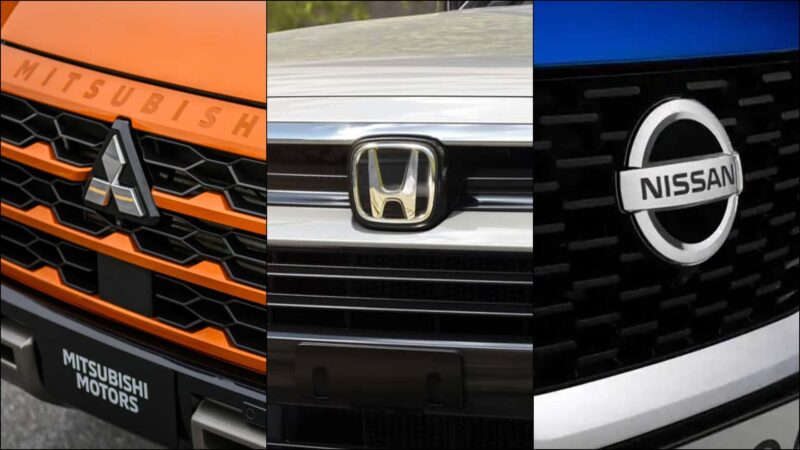
Mitsubishi Motors is reported to be joining the automotive alliance of Honda-Nissan in an effort to enhance competitiveness and sustain itself in the highly competitive market.
This latest development is perceived as dividing the Japanese automotive industry into two major groups, namely the Toyota Motor Group and the Honda-Nissan-Mitsubishi alliance.
According to Nikkei’s report, Mitsubishi Motors has signed a nondisclosure agreement (NDA) with the second and third-largest producers in Japan.
For the fiscal year ending in March 2024, Honda recorded sales of 4.1 million units globally, followed by Nissan with 3.44 million units. With Mitsubishi’s sales at around 810,000 units, the alliance would amount to a total sales figure of 8.35 million units.
By comparison, Toyota as the largest automotive producer, has formed an alliance with producers such as Daihatsu, Suzuki, Subaru, Mazda, and Hino Motors, resulting in a total sales figure reaching 16 million units.
Specific details regarding the agreement between Mitsubishi and Honda-Nissan will be finalized later.
However according to the report, the three brands are aiming to standardize vehicle software, in addition to enhancing their respective vehicle lineups, particularly in relation to powertrain electrification and the mini vehicle segment.
The Didi Group, as the sole importer and distributor of the Royal Enfield motorcycle brand in Malaysia, has recently launched the Himalayan model at the Art Of Speed 2024 event.
It is powered by a liquid-cooled Sherpa 452cc engine capable of producing 40 PS @ 8,000 rpm and a maximum torque of 40 Nm @ 5,500 rpm.
With a generous ground clearance (230 mm), the Royal Enfield Himalayan also features long-travel suspension, including a 43mm inverted front fork by Showa and a rear mono-shock absorber, to easily handle various terrains.
The Royal Enfield Himalayan maintains a combination of 21-inch front and 17-inch rear aluminum alloy rims, with a wider 140/80 rear tire for greater grip.
The 17-liter fuel tank has been redesigned to provide comfort to the rider, along with adjustable saddle height starting from 805 mm and can be raised to 845 mm depending on the rider’s height.
All essential information can be accessed via the round TripperDash display screen, which also offers mapping navigation using the Google Maps Platform and audio guidance in over 130 languages.
Riders can choose to set their riding mode to Performance or Eco through the ride-by-wire throttle control, and can deactivate the rear wheel ABS for a more enjoyable off-road riding experience.
Royal Enfield Malaysia also offers over 30 genuine accessories for the Himalayan, including aluminum storage boxes, taller windshields, LED fog lights, mudguards, rally seats, soft bags, and much more.
Three variants are offered, namely Base (Kaza Brown), Pass (Slate Himalayan Salt or Slate Poppy Blue), and Summit (Hanle Black or Kamet White), with prices ranging from RM30,600 to RM32,200.
Once upon a time, real production cars with over 1,000 hp were quite difficult to find.
However, with current technological advancements, it has now become commonplace for every manufacturer to compete in producing cars capable of unleashing up to two thousand horsepower, whether internal combustion engine or electric-powered.
As long as more advanced technologies exist, the race for the highest horsepower will not cease.
Below is a list of the most powerful new production cars that exist on this planet:
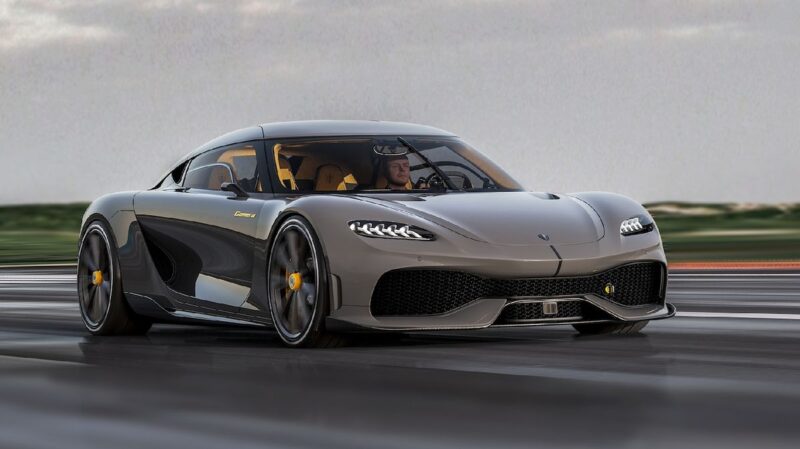
1. Koenigsegg Gemera
The Koenigsegg Gemera is a four-seater grand tourer equipped with a 5.0-liter hybrid V8 engine capable of generating up to 2,300 hp and 2,750 Nm of torque.
Looking for a less powerful version? You can opt for the inline-three-cylinder 2.0-liter hybrid variant, with a total output of 1,400 hp and 1,800 Nm of torque.
Even this might not be produced by Koenigsegg in the near future, as the majority of Gemera owners prefer the V8 engine.
2. Lotus Evija
Lotus, well-known for its lightweight cars, has ventured into producing electric sports/supercars.
Introduced in 2019, the Evija features four electric motors, each producing 503 PS of power, with a total power output of 2,011 hp and 1,704 Nm of torque.
This limited-production sports car can travel a distance of up to 346 km, thanks to its 93 kWh battery pack.
3. Aspark Owl
Despite its name not sounding Japanese, the Aspark Owl is actually an electric sports car developed by the engineering firm Aspark from the Land of the Rising Sun.
With four electric motors (one for each wheel), the Aspark Owl can deliver 1,984 hp and 2,000 Nm of torque.
Its 69 kWh battery pack allows it to travel up to 451 km on a single full charge.
4. Pininfarina Battista
Another powerful electric supercar on the list produced by Automobili Pininfarina GmbH.
It is also powered by four electric motors with a combined output reaching 1,900 hp and 2,300 Nm of torque.
A full battery charge enables this car to travel up to 450 km.
5. Rimac Nevera
This Rimac-built supercar shares the same factory used to assemble the Pininfarina Battista.
The Rimac Nevera is equipped with four electric motors driving each wheel, producing 1,888 hp and 2,360 Nm of torque, achieving a top speed of 412 km/h – one of the fastest EVs in the world.
6. Hennessey Venom F5
Hennessey Special Vehicles began producing the Venom F5 sports car in 2020, offering various options to its customers.
Regardless of the sold-out versions or the Roadster version currently being produced, each unit comes with a twin-turbocharged 6.6-liter V8 engine, generating up to 1,817 hp and 1,617 Nm of torque.
Maximum speed? Over 500 km/h!
7. Bugatti Tourbillon
The Bugatti Tourbillon is a hybrid sports car set to be produced starting from 2026.
Limited to only 250 units, the Bugatti Tourbillon features a V16 engine with a displacement of 8,355 cc paired with three electric motors.
The engine alone can produce 986 hp/900 Nm, but with the help of the electric motors, the Tourbillon can reach a power output of 1,775 hp and 3,000 Nm.
0-100 km/h in just 2.0 seconds, followed by 0-200 km/h in under five seconds, while 0-400 km/h is accomplished in less than 25 seconds before reaching a top speed of 380 km/h.
8. Koenigsegg CC850
Built as a tribute to the CC8S model, the Koenigsegg CC850 is a limited-production car celebrating the 50th birthday of its founder, Christian von Koenigsegg.
Borrowing the twin-turbocharged 5.0-liter V8 engine from the Jesko model, the CC850 outputs 1,385 hp and 1,385 Nm, or 1,185 hp when using regular fuel.
9. SSC Tuatara
The SSC Tuatara was originally powered by a twin-turbocharged 6.9-liter V8 engine, but the engine capacity has been reduced to 5.9 liters to allow it to reach a higher redline (8,800 rpm).
According to SSC, the Tuatara is capable of producing up to 1,350 hp and 1,735 Nm of torque, or up to 1,750 hp when using E85 fuel.
10. Czinger 21C VMax
The car in this final list is produced by the American automotive manufacturer, Czinger Vehicles.
The 21C is essentially a hybrid sports car with a 2.88-liter V8 engine paired with three electric motors, delivering 1,250 hp and 1,830 Nm of torque.
Acceleration from 0-96 km/h takes just 1.9 seconds before reaching a maximum speed of 407 km/h!
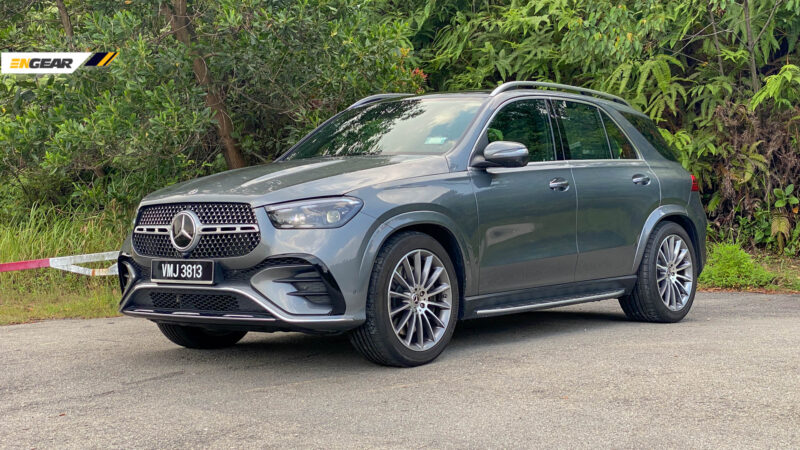
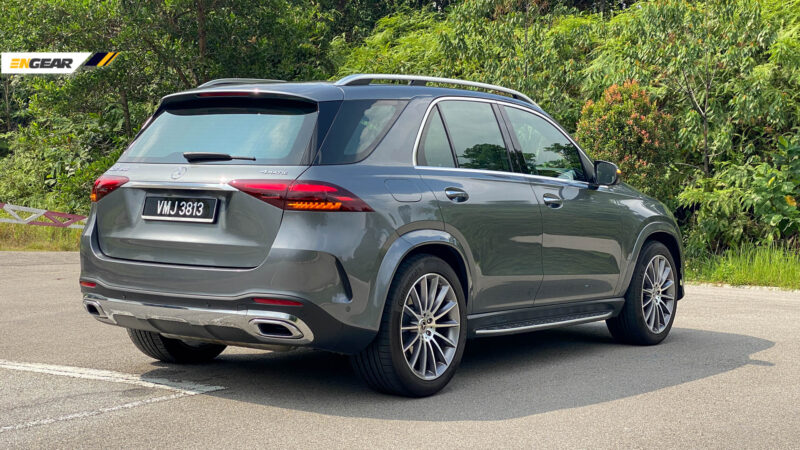
While the writer has yet to experience driving the GLS or G-wagen models, the 2024 Mercedes-Benz GLE 450 remains the largest SUV the writer has ever driven in his lifetime.
This luxurious SUV with a three-row seating configuration has been updated for the 2024 model year a few months ago.
It features several cosmetic changes on the exterior, followed by updates in the cabin space and an upgrade in power for the existing powertrain unit.
At first glance on the road, it might be difficult to distinguish it from the previous version. However, after test driving it for several days, there are a few things that make the writer find the GLE 450 CKD difficult to consider for purchase.
Simple, but too minimalistic lighting unit
Believe it or not, lighting actually plays a crucial role in ensuring the SUV’s appearance is more elegant on the road.
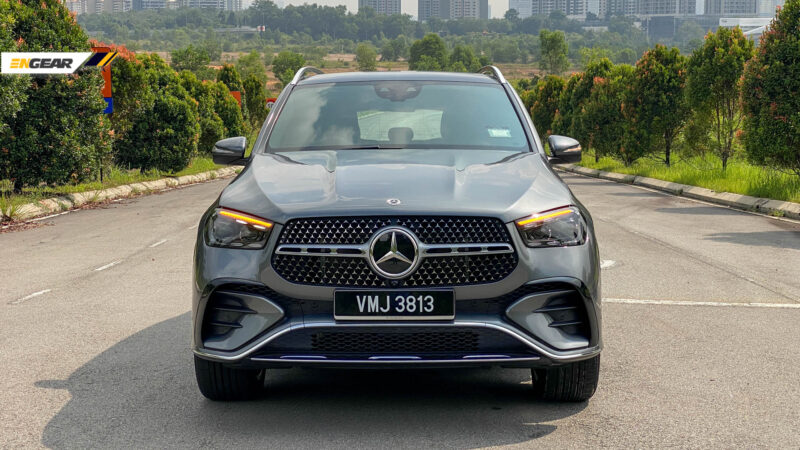
While the previous GLE model came with boomerang-shaped DRL graphics, this GLE 450 now comes with a more compact design. The same goes for the rear lights, where the LED graphics have become thinner.
It still looks sleek and elegant on the road, but its image might fade when parked next to the older GLE 450.
Same exterior appearance
If you were expecting the GLE 450 to bring more dramatic changes, forget about that expectation, as the 2024 GLE 450 still maintains an almost similar external appearance.
Yes, you can see the front bumper now looks more aggressive, and the front grille structure is more refined, but those are the only changes present.
The design of the 21-inch AMG rims is still unchanged from the previous model, and even the layout of the front fascia remains unaltered.
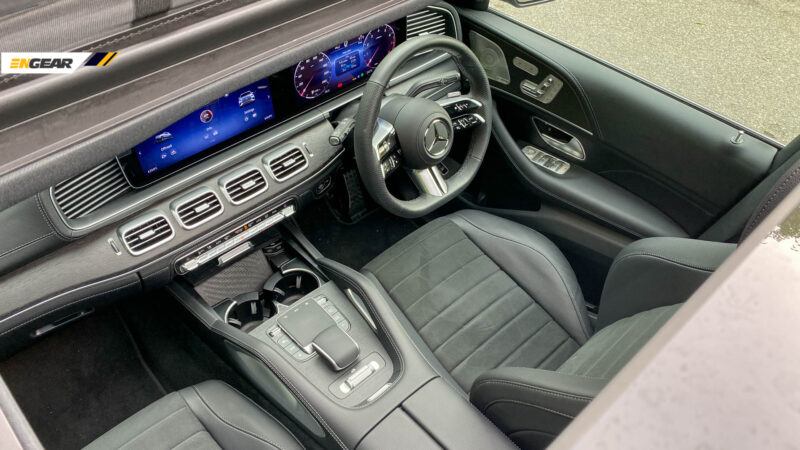
Steering wheel now dust and fingerprint friendly
Among the things the writer is less fond of regarding the GLE 450, other than the two points mentioned above, is the design of the steering wheel.
The GLE 450’s steering wheel now looks sportier and more sophisticated with touch-based operation, but it’s not the main point being emphasized.
The writer merely hopes that Mercedes-Benz would bring back a more premium finish on the steering wheel of any model to replace the use of black plastic. This is because the writer notices that the black plastic tends to trap dust and fingerprints, requiring the owner/driver to frequently wipe that area with a cloth.
Powerful engine, but jerky transmission
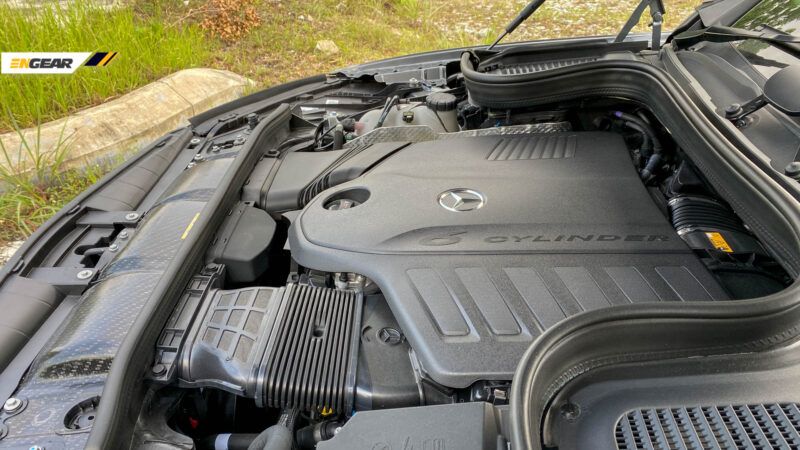
The Mercedes-Benz GLE 450 still retains its inline-six 3.0-liter turbo engine, but with an increase in power to 375 hp @ 5,800 rpm and torque of 500 Nm @ 1,800-5,000 rpm.
It also has a 48-volt mild hybrid system, featuring the second-generation ISG system capable of providing an additional 20 hp and 200 Nm of power.
On paper, it looks impressive, but there are times when the 9GTronic automatic transmission slightly disappoints when the traffic light turns green. Starting from first gear, it doesn’t pose a problem, but the drive feels not very smooth and slightly jerky when the gearbox is set to shift to the next gear (from first gear to second gear).
More expensive, despite being a CKD model
What’s certain is that the Mercedes-Benz GLE 450 CKD doesn’t come with a lower price. This SUV model assembled in Pekan, Pahang, is sold starting from RM528,888 on the road without insurance, which is RM13,000 more expensive than the previous model.
If you can compromise on the above five points, the following five aspects might make you consider this SUV for your family.
Comfortable for the whole family
The GLE 450 brings advantages that are hard to match – comfort aspects for the whole family, especially when sitting in the second row.
This is because the GLE 450 offers almost the same comfort functions as the front passengers, such as separate air conditioning vents for the left, center, and right, separate climate control, adjustable seats, as well as ample head and legroom!
The sufficiently large panoramic roof allows rear passengers to enjoy beautiful surroundings when returning home. Additionally, USB-C charging slots are provided for charging smart devices throughout the journey.
Heavy but agile
It should be noted that the Mercedes-Benz GLE 450 has always been an SUV weighing over two tonnes.
Certainly heavy, but with efficient engine and all-wheel drive systems, you may often forget that it is a heavy SUV. With its 381 hp engine and 500 Nm of torque, it only takes 5.6 seconds for a 0-100 km/h sprint, making it a fairly agile SUV, especially when pushed through winding roads.
The standard provision of Continental SportContact6 tires from the factory also helps ensure that this SUV grips well on various road surfaces.
Based on data, the author managed to achieve a fuel consumption rate as low as 9.0 liters/100 km.
Adjustable height suspension
As standard, the Mercedes GLE 450 is equipped with the Airmatic air suspension system assisted by the adaptive ADS+ damper system.
Depending on the selected driving mode, this system will raise or lower the ground clearance, besides facilitating loading cargo into the 630-liter cargo space.
Overall, the writer prefers to maintain the Comfort mode more suitable for Malaysia’s imperfect road conditions; it provides comfort and absorbs all road irregularities without any negative effects on the driver and passengers.
However, you can also customize the driving mode by adjusting the engine response, ESP, and suspension to be more sporty.
Off-road driving mode
One thing that makes the GLE 450 unique is the presence of the new Off-road driving mode.
In addition to the higher suspension setting and emphasis on an optimal grip, it also warns users not to use this mode on public roads, with the speed limited to only 110 km/h. This Off-road mode also provides an under-vehicle display so the driver can check for any obstacles in front of the vehicle, shielded beneath its bulky body.
From the driver’s perspective
Overall, the 2024 GLE 450 doesn’t bring significant changes. It offers comfortable seating that provides good support for the driver throughout the journey, with adequate steering response – not too heavy and not too light.
The NVH aspect is also quite good for a Mercedes-Benz, effectively deflecting and filtering out external noise. Engine noise is only evident when harshly revved, but not to the extent of being disruptive, and the same goes for wind noise.
Compared to other Mercedes SUV models using similar dual iPad-like setups, the writer particularly likes the conventional-looking dashboard design used in the GLE 450. It retains physical function buttons necessary on the dashboard and center console, assisted by the presence of a touchpad to facilitate menu searching on the screen without needing to touch it more often.
To avoid confusion, Mercedes-Benz Malaysia only offers a single variant for the GLE-Class, so one needs to carefully consider before deciding to invest over half a million in getting a comfortable family SUV.
2024 Mercedes-Benz GLE 450 4MATIC CKD
Engine: Inline-six 3.0-liter turbo
Power: 381 hp, 500 Nm
Hybrid system: 48V mild, 20 hp/200 Nm
Transmission: 9GTronic Automatic
Drive System: All-wheel Drive 4MATIC
Acceleration: 0-100 km/h in 5.6 seconds
Top speed: 250 km/h
Price: RM528,888
Lexus Malaysia has officially launched its first electric SUV, the Lexus RZ 450e 2024, in the local market.
Offered in limited units, the Lexus RZ450e comes with a single Luxury specification, featuring dual electric motor setup as standard.
The front motor is capable of producing 204 hp/266 Nm of power, while the rear motor delivers 109 hp/169 Nm. Overall, the Lexus RZ 450e can generate up to 308 hp of power, driving the all-wheel-drive DIRECT4 system.
The 71.4 kWh battery pack allows for a driving range of up to 440 km on a full charge, supporting 11 kW AC charging with a full charging time of 6.5 hours, or fast DC charging up to 150 kW (shortened to 30 minutes).
Notable features in the Lexus RZ 450e include MacPherson/Double Wishbone suspension system, Electronic Power Steering (EPS), 20-inch aluminum wheels, Bi-AHS LED projector headlights with adaptive high-beam function, L-Bar design taillights, exterior and interior e-Latch door handles, and Lexus Spindle grille at the front.
The cabin is equipped with a 7-inch TFT instrument cluster screen, a 14-inch infotainment screen with Apple CarPlay and Android Auto support, Ultrasuede-wrapped seats with eight-way driver and passenger adjustments, synthetic leather-wrapped steering wheel, three-zone air conditioning, and shift-by-wire gear selector buttons.
During your journey, you will be accompanied by music from the Mark Levinson Premium Surround Sound system with 13 available speakers.
In addition to passive safety features such as 7 airbags, ABS, Brake Assist, Vehicle Stability Control (VSC), Traction Control System (TCS), and more, the Lexus RZ 450e is also equipped with the Lexus Safety System+ which includes features like:
• Pre-Collision System (PCS)
• Dynamic Radar Cruise Control (DRCC) with Stop & Go and Curve Speed Reduction functions
• Lane Keeping System (LKS) with Lane Tracing Assist (LTA) and Lane Departure Alert (LDA) functions
• Adaptive High-Beam System (AHS)
There are also two Lexus-specific features, Lexus Parking Assist Monitor and Lexus Teammate Advanced Park with Surround Panoramic View Monitoring (PVM) function.
The starting price of the 2024 Lexus RZ 450e is RM429,888.
First Drive Impression
During a test drive session offered for the Lexus LBX 2024 the other day, we were also given the opportunity to experience driving this electric SUV ourselves.
Our first impression is that the Lexus RZ 450e can be considered as an alternative if you are not interested in getting a German-made electric SUV in the same price range.
The acceleration performance offered by the Lexus RZ 450e is also what you would expect from an SUV with a dual electric motor configuration.
It may not be as aggressive as electric cars tuned for performance, but it is sufficient for you to outpace any fossil fuel-powered car at traffic lights.
Based on highway driving, you can feel that the NVH level of the Lexus RZ 450e is comfortable.
However, the 308 hp power output is not balanced with suspension tuning suitable for winding roads, and you can feel the body roll of this 2-ton SUV as the front end leans out of corners.
The writer understands that the Lexus RZ 450e is not a high-performance F-Sport SUV, so these weaknesses can be forgiven, as similar feelings were also experienced when the writer test drove a German-made electric SUV before this.
Not much can be shared at this time due to the very short test drive period. More information will be reviewed if there is an opportunity to test drive the Lexus RZ 450e in the future.
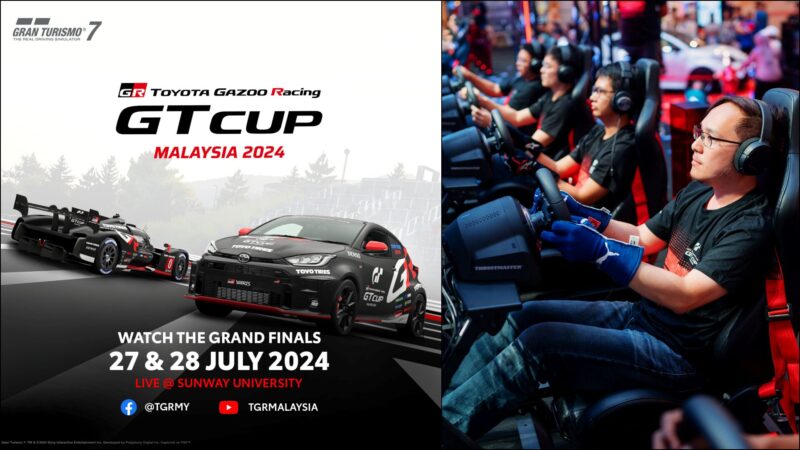
UMW Toyota Motor invites Malaysians interested in Gran Turismo 7 simulation racing to witness the final round of the 2024 Toyota Gazoo Racing GT Cup season 7 at Sunway University Campus from 27th to 28th July.
The two-day event is open to the public, where the semi-final round will be held on 27th July to select the fastest simulation racers who will compete on 28th July for a total prize of RM120,500.
The semi-final stage will see 20 racers driving the Toyota GR Corolla MORIZO Edition at Alsace circuit in France, as well as the Toyota GR Supra RZ at the Deep Forest Raceway circuit in Switzerland.
The top 10 fastest participants will advance to the final stage to race the GR010 prototype car at Monza circuit in Italy and the GR Supra Racing Concept car at Circuit De La Sarthe Le Mans circuit in France.
Notable contenders this year include Taj Izrin Aiman Taj Madira vying for his fourth championship title, competing against last year’s runner-up Danesh Wigneswaran and Chong Kai Chang, as well as 2022 champion Muhammad Iqbal.
The GR GT Cup final will also feature a special race involving TGR Rookies, media practitioners, and the top 10 fastest racers from the GR Tour, comprising students from Sunway University, USM Nibong Tebal, MMU, UKM, and UiTM Pasir Gudang.
The public is also invited to test their racing skills and stand a chance to win special prizes.
There will also be a showcase of Tomica diecast vehicle models and exclusive Gazoo Racing merchandise for purchase, as well as displays of the latest Toyota vehicles.
UMW Toyota President, Datuk Ravindran K, stated, “Simulation racing is evolving globally and is now recognized as a crucial step for individuals aspiring to transition to real racing.
“It is also a vital prerequisite in the selection and training of candidates wishing to join the Gazoo Racing Young Driver Development Program to compete as a Rookie in the GR Vios Challenge,” he added.
The smart device manufacturer Xiaomi is not satisfied with its existing SU7 car product.
In order to provide a more intense competition to high-performance EVs in the market, the manufacturer is now unveiling the full carbon prototype model Xiaomi SU7 Ultra.
At the same time, Xiaomi also announced the debut of an electric power unit called the HyperEngine V8s.
It is not a typical V8 engine, instead, the HyperEngine V8s is an electric motor capable of producing a maximum power of 578 PS and a torque of 635 Nm, with a speed reaching 27,200 rpm!
In the SU7 Ultra model, Xiaomi combines two electric motors, the HyperEngine V8s, and a V6s electric motor, with a total output reaching 1,548 PS that powers all wheels!
With Pirelli P Zero tires, the Xiaomi SU7 Ultra can accelerate from 0-100 km/h in just 1.97 seconds, 0-200 km/h in 5.97 seconds, and reach 300 km/h in just 15 seconds.
The maximum speed is about 350 km/h.
The Qilin 2.0 battery pack, sourced from CATL, is specifically designed for racing, capable of discharging a peak power of up to 1,808 PS.
Although the battery pack has a SoC of about 20 percent, it is still capable of discharging power as high as 1,088 PS!
Unlike the standard SU7, the SU7 Ultra features a full carbon fiber body construction, complete with a body kit (front splitter and diffuser, rear wing, massive diffuser) said to generate a downforce of 2,145 kg at a speed of 350 km/h.
Yet, the Xiaomi SU7 Ultra is still a high-performance sedan with a weight close to 2 tons, or more precisely 1,900 kg.
The brake system consists of six-piston AP Racing calipers on the front and rear axles, as well as racing brake pads capable of withstanding temperatures above 800 degrees Celsius.
Under full braking conditions, the Xiaomi SU7 Ultra is capable of generating over 2.36G of deceleration, with a stopping distance of just 25 meters from 100-0 km/h.
Xiaomi plans to set a new record in the four-door electric sedan category at the Nurburgring Circuit in October.
Currently, the fastest record is held by the Porsche Taycan Turbo GT with a time of 7:07.55 minutes.
This may very well be the smallest and most affordable Lexus ever offered in the market for a new Lexus car.
Despite featuring characteristics typically associated with everyday cars, the 2024 Lexus LBX still offers its own identity to become part of the renowned Japanese luxury vehicle family.
Recently, we were given the opportunity to experience firsthand the first drive of the LBX crossing the Selangor-Pahang state border.
Although the distance given was quite short, the designated route included the necessary ingredients for us to evaluate the driving experience of the Lexus LBX on real roads, rather than just circling around exhibition centers.
Here are our five discoveries:
1. Toyota Platform, but with Identical Lexus Exterior Design
This is the first Lexus model to use the TNGA-B platform, making the Lexus LBX a ‘non-identical twin’ to the European market Toyota Yaris Cross crossover model.
While the dimensions of the LBX are not much different from the Yaris Cross, the LBX looks more imposing on the road with more prominent shoulder structures, followed by the aerodynamic spindle grille.
Moreover, the LBX’s appearance is more elegant and compact; the wheel arch protectors are more rounded compared to the angular design of the Yaris Cross.
For the rear design, the LBX features a sleeker tail lamp structure connected by a horizontal LED bar. The L Lexus logo has been replaced with the word L E X U S.
The shape of the LBX’s side mirrors actually reminds the writer of another more expensive Lexus model that shares the three-letter naming format, the Lexus LFA.
2. Three-Cylinder Inline Hybrid Engine
As standard, the Lexus LBX is equipped with a three-cylinder inline engine (code M15A-FXS) paired with a hybrid system.
The engine alone produces 90 hp and 120 Nm of torque, while the electric motor contributes 93 hp and 185 Nm, with a total output of around 136 hp.
Many may be skeptical about a three-cylinder engine, but the Proton X50 enthusiasts likely have long discarded that feeling. If you don’t believe it, check which model dominates the right lane of the highway apart from the low-power Perodua models.
Despite having only a three-cylinder inline engine, for us who experienced driving the LBX the other day, we can say the response provided is very satisfying.
You can enjoy a fun acceleration moment when the car moves away from a toll booth or when the traffic light turns green at intersections.
The power delivery is always there when needed at low speeds, aided by the efficiency of the eight-speed eCVT transmission that ensures the front wheels follow the driver’s direction.
Similar to any Toyota (and Lexus) hybrid model, the Lexus LBX also has an EV mode to allow the crossover to move without using any fuel at low speeds.
3. Simple Suspension Setup, but Suitable for Malaysian Roads
As standard, the Lexus LBX is fitted with MacPherson struts in the front and a torsion beam in the rear.
It is somehow similar to B-segment crossover models in the market.
Nevertheless, the tuning of the LBX suspension system makes it enjoyable to push through winding routes, like the ‘high-speed favorite circuit of many,’ the KL-Karak Expressway.
Throughout the drive, this small SUV feels stable and grips every corner, with body lean occurring when pushed aggressively.
For regular driving, the body roll produced is quite minimal, making it suitable and comfortable for those who do not fancy spirited driving.
Most importantly, the steering response itself is very obedient to every driver input, and it is what the writer expects from a Lexus after testing larger and more expensive models before – the Lexus ES, Lexus RX, and Lexus NX.
To delve further, we need to borrow this LBX again for a more comprehensive review. In short, the LBX is one Lexus that is enjoyable to drive!
With a chassis, engine, transmission, and suspension system that work in harmony, the writer is looking forward to testing the MORIZO RR variant, which comes with a more special recipe – the three-cylinder inline pulse of the GR Yaris and manual transmission!
Hopefully, Lexus Malaysia will consider this variant in the future.
4. Tazuna Concept for the Driver
Similar to any Lexus model in the market, the Lexus LBX prioritizes the Tazuna concept in the driver’s cockpit design.
In this section, Lexus has minimized the presence of function buttons and only focused on essential operation buttons, aiming to maximize the driver’s focus on the road.
The 12.3-inch digital cluster screen offers easily readable information, similarly to the 9.8-inch central screen that also supports connections to Apple CarPlay and Android Auto.
When the writer holds the steering wheel, it offers an indescribable feeling, as if it’s designed for those who appreciate and enjoy driving a Lexus.
The front seats are also quite comfortable and can hold the driver firmly throughout the drive, aided by the power-adjustable function.
Unfortunately, the front passenger seat only has manual adjustments. This isn’t a big issue, as it is still comfortable when sitting next to the driver.
The NVH (Noise, Vibration, Harshness) aspect of this crossover is also very good, with minimal vibrations, reduced wind noise, and tire roar that seeps into the cabin.
Let’s not pretend that the engine noise isn’t audible; it still exists, but a more aggressive growl only occurs when the accelerator pedal is pressed firmly to the floor. Even then, it’s not as loud as one might imagine.
5. Lexus LBX, suitable for whom?
One thing that makes the LBX less suitable for family use is the fairly cramped rear seats.
This situation may be influenced by the somewhat bulky structure of the front seats, resulting in limited legroom for rear passengers.
It might be suitable for small children, or adults with the physique of teenagers.
The cargo area provides a space of 315 liters, large enough to accommodate daily necessities.
So, if the LBX isn’t suitable for family use, who is it more suitable for?
For us, it might be considered as a second car used specifically for urban purposes by those who do not prioritize space, or given to children and young wives who are just starting to learn driving.
Its small size, along with its ease of driving, makes the Lexus LBX a luxurious car worth considering.
At the end of the day, not everyone wants a large luxury car, right?
For the Malaysian market, the Lexus LBX is sold starting from RM238,888 and is available in two variants, Premium and Luxury.
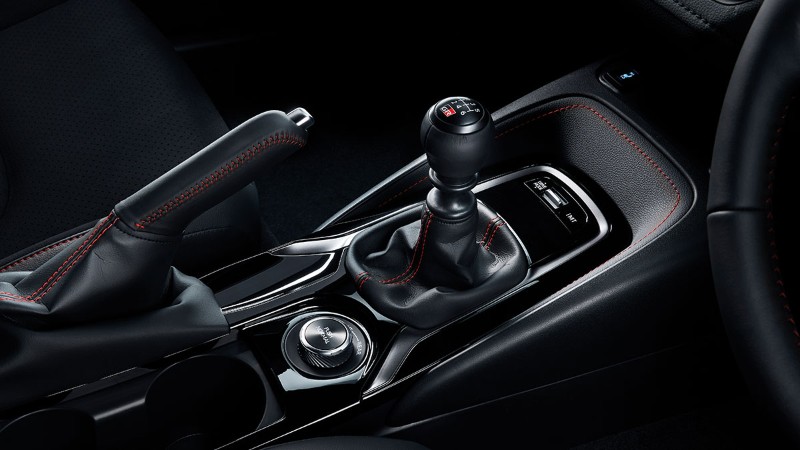
Honda North America has updated the offerings for the 2025 Civic Si variant, showcasing some cosmetic changes, a sportier chassis, and most importantly, retaining the manual transmission option!
It may be seen as an alternative to the more expensive Civic Type R, but unfortunately, the selling price of the Civic Si has increased by
$850 (RM3,972) to $29,950 (RM140k).
In terms of power, the 2025 Civic Si still retains the heartbeat of a 1.5-liter inline-four engine producing around 200 hp and 260 Nm, driving the front wheels as usual.
Certainly, the handling aspect of this ‘budget Civic Type R’ has been enhanced, now featuring a stiffer chassis including new B-pillars and door sill support.
Suspension damping components have also been recalibrated, with Honda promising improvements in terms of torsional rigidity and flexibility.
For those seeking more driving enjoyment, Honda has also enhanced the rev-match function, especially when shifting from second to first gear.
Cosmetically, what the 2025 Civic Si brings is essentially the same as the existing facelifted 2025 Civic.
However, the Civic Si has been given a set of twin-spoke black alloy wheels for a sportier look.
The cabin also receives a 9-inch infotainment display now supporting Google Assistant, along with standard support for Apple CarPlay and Android Auto integration.
For the 10.2-inch digital cluster screen, exclusive graphics are available for the Civic Si model including a digital tachometer, gear change light indicator, boost gauge, and G-force meter.
Finally, the 2025 Civic Si comes equipped with a pair of snug sports seats for the driver and front passenger, in addition to standard built-in heating function.
On a less joyful note, since its introduction in 1984, the Honda Civic Si has remained an exclusive model for certain market such as United States (and Japan for a brief period), unlike the broader market reach of the Civic Type R.
Say hello to the 2024 Lexus LBX, a compact SUV freshly launched for the Malaysian market.
The Lexus LBX (Lexus Breakthrough X-over) is positioned as the entry-level Lexus vehicle designed for younger consumers and those seeking a vehicle that caters to an active lifestyle.
It is the first Lexus vehicle built on the global TNGA-B platform, meaning it shares the same platform as the Yaris Cross model in the European market.
The Lexus LBX is designed based on the Lexus Next Chapter Design approach, retaining the signature Lexus identity with a more casual and relaxed character.
At the front, the Lexus LBX features a frameless spindle grille structure that is more aerodynamic, along with a single projector headlamp unit with Auto High Beam function integrating cornering lamps and LED daytime running lights (DRL).
The LBX’s bold appearance is also heightened by its wide shoulder structure, complemented by a sleek rear lamp design connected by a thin LED bar.
For the Malaysian market, the Lexus LBX is only offered with a 1.5-liter hybrid electric powertrain (code M15A-FXE), producing a high output of 136 hp and 185 Nm of torque paired with an 8-speed eCVT transmission. Acceleration from 0-100 km/h is around 9.2 seconds.
The Lexus LBX’s cabin adopts the Tazuna concept approach where the layout of the dashboard and controls are positioned around the driver to create a more focused driving space. Available features include a 12.3-inch digital cluster screen (7 inches for the Premium model), a 9.8-inch center screen, support for Apple CarPlay and Android Auto, and the Mark Levinson Premium Surround Sound audio system with 13 speakers (6 units for the LBX Premium).
The Lexus LBX also benefits from comprehensive safety features, thanks to the Lexus Safety System+ which includes Pre-Collision Warning, Dynamic Radar Cruise Control, Lane Tracing Assist, Lane Keeping Assist, Road Sign Assist, Safe Exit Assist, Lexus Teammate Advanced Park, Rear Cross-Traffic Alert, and Blind Spot Monitoring System.
There are two variants offered for the Malaysian market, namely Premium and Luxury, with prices starting from RM238,888.
Lotus Cars Malaysia has announced the arrival of another model of electric Hyper Grand Tourer, the Lotus Emeya, to the Malaysian market.
The electric-powered Hyper-GT machine is set to be launched in the near future, but interested customers can register for an exclusive preview session at Pavilion Kuala Lumpur starting from July 30 to August 4 through THIS link.
The Lotus Emeya is among the most powerful four-door GTs in the world.
With specifications of two electric motors, it is capable of generating up to 905 hp and 985 Nm of torque paired with a two-speed transmission.
Acceleration from 0-100 km/h is as quick as 2.78 seconds before reaching a top speed exceeding 250 km/h.
The Lotus Emeya showcases a range of advanced active aerodynamic features, such as the active front grille structure first seen on the hyper SUV model, Eletre.
The front grille structure is designed to reduce drag and increase the car’s efficiency when closed, but can be used for battery cooling and brake system purposes when opened.
Additionally, there is an active air dam that can enhance downforce at high speeds to improve handling and stability, an active rear spoiler inspired by motorsport, and a dual-layer active rear spoiler capable of generating over 215 kg of downforce.
The Lotus Emeya’s battery pack can offer a range between 490 km to 600 km depending on the variant, as well as support fast DC charging up to 350 kW.
This means owners can extend the range by up to 150 km in just five minutes, or charge from 10-80 percent in just 18 minutes.
The Lotus Emeya also comes with various ADAS features including lane departure warning, forward collision warning, and blind-spot monitoring system, where all essential data can be displayed via a 55-inch augmented reality (AR) head-up screen.
Interested customers can place a reservation deposit of RM5,000 and any inquiries can be directed to Lotus Cars Malaysia at 016-611 2388.
Leading Original Equipment Manufacturer (OEM) components manufacturer, MCE Holdings Berhad and its subsidiary company have announced the acquisition of a contract worth RM19.6 million from Perodua to supply various electronic and mechatronic components for Perodua’s first EV model.
These include multimedia display units, instrument cluster panels, advanced driver assistance systems, function switches, interior lighting systems, and many more.
According to MCE, the three-year contract will commence in the second quarter of the company’s financial year, ending on July 31, 2026.
This aligns with previous reports where Perodua planned to commence production of its first EV model by late 2025.
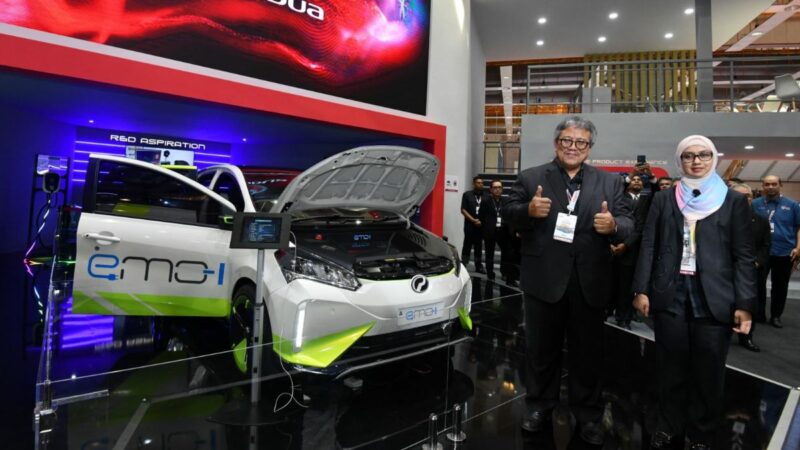
Showcased at the Malaysia Autoshow 2024, Perodua revealed a concept model named emo-1.
As per specifications, the emo-1 is powered by a 68 PS and 220 Nm electric motor, paired with a 55.7 kWh battery pack that allows for a range of up to 350 km on a full charge.
This EV also supports AC charging of up to 11 kW, or fast DC charging up to 50 kW.
Perodua had previously announced that the development of this first EV project was done in collaboration with three local universities, namely Universiti Tenaga Nasional (UNITEN), Universiti Kuala Lumpur, and Universiti Putra Malaysia (UPM).
Meanwhile, power conversion technology development was conducted with technical partners from Australia whose identity has not yet been disclosed.
It is understood that the selling price of this Perodua EV will range from RM50,000 to RM100,000.
Lotus Cars Malaysia recently reintroduced the base variant of the 2024 Lotus Eletre as a complement to the existing Eletre S and Eletre R variants.
The first deliveries are scheduled to begin as early as October, with the selling price increased to RM598,800 compared to the original price of RM578,000 at the launch in April 2023.
The base version of the 2024 Lotus Eletre retains the specifications of two powerful electric motors generating 603 hp and 710 Nm, coupled with an all-wheel-drive (AWD) system.
Acceleration from 0-100 km/h takes 4.5 seconds before reaching a top speed of 245 km/h.
The 112 kWh battery pack allows for a range of up to 600 km (according to WLTP data), in addition to supporting fast charging at 350 kW, allowing the battery to be charged from 10-80 percent in just 20 minutes.
The distinguishing features of the base Eletre variant from the Eletre S and Eletre R variants are the 20-inch aerodynamic alloy rims and a four-piston brake system. Buyers can upgrade to a six-piston brake system with 22-inch rims for an additional RM30,000.
Other options include side cameras and an active rear spoiler that further enhances the driving experience of the Eletre.
As standard, the Lotus Eletre is equipped with ADAS safety features including smart adaptive cruise control (ACC), driver monitoring system, rear collision warning, rear cross-traffic alert (RCTA), front cross-traffic alert (FCTA), lane-keeping assist, lane departure warning, blind-spot monitoring system, and parking assistance.
There are up to five driving modes included, namely Range, Tour, Sport, Off-Road, and Individual (in addition to Track for the Eletre R), assisted by Lotus’ smart dynamic chassis control.
The Lotus Eletre also comes with a 1,380-watt premium KEF audio system accompanied by 15 speakers, Uni-Q™ technology, and three-dimensional sound control.
For the Malaysian market, buyers can choose from two new colors, Akoya White and Cinnabar Red, as well as other colors including Kaimu Grey, Solar Yellow, Natron Red, Galloway Green, Stellar Black, and Blossom Grey.
Each Eletre is covered by a five-year/150,000 km manufacturer’s warranty and an eight-year or up to 200,000 km battery warranty.
In September 2021, Genesis was among the manufacturers that announced electrification plans, where every new model will receive a full electric version starting in 2025.
However, due to the weakening demand for EVs, the South Korean automotive manufacturer has conducted a review of their plans, with their current strategy being to launch as many hybrid vehicle models as possible.
In an interview with Top Gear, Genesis global boss Mike Song stated, “Many customers now prefer hybrids over EVs.”
He further expressed, “Electrification still remains our vision. We will have 100 percent electrified vehicles, but due to the market and customers leaning towards hybrids more than EVs, we will introduce more Genesis hybrid models as quickly as possible.”
Meanwhile, head of vehicle development unit Tyrone Johnson added, “We are constantly re-evaluating what we do, and sometimes you need to make slight adjustments.”
“As mentioned by Mike, the EV strategy remains strong, but you shouldn’t be rigid about specific things when the situation changes, you need to react, and that’s what should happen,” he continued.
In the interview, Mike Song did not disclose details about the specific hybrid powertrain that will be used in Genesis vehicles.
However, it is certain that in the future, Genesis customers will be presented with more options of hybrid vehicles to suit their individual needs, and not limited to purely battery electric vehicle (BEV) models.
China is one of the most essential markets for Volkswagen, and now the German manufacturer has officially launched the electric-powered SUV coupe named ID.UNYX.
Built on the MEB platform, this compact SUV features dimensions measuring 4,663 mm in length, 1,860 mm in width, 1,610 mm in height, with a wheelbase of 2,766 mm.
Externally, the ID.UNYX showcases a pair of sharp matrix LED headlights consisting of 13 LED units connected by a crossbar LED.
Meanwhile, the rear end presents a sleeker appearance with thinner light structures complemented by a crossbar LED and a glowing VW logo.
The sharp design elements are also carried over to the front dashboard where you can spot the air vent intentionally crafted to resemble the ID.UNYX’s headlights.
Among the existing features are a 5.3-inch instrument panel screen for the driver, a 2K resolution 15-inch floating screen, an augmented reality head-up display (AR), and a flat-bottomed steering wheel.
Additionally, the ID.UNYX offers conveniences such as wireless device charging, a cup holder in the center console, AI assistance, 12-way adjustable seats, and support for Apple CarPlay, Baidu CarLife, and Huawei HiCar.
In China, the ID.UNYX is available with a choice of a single electric motor producing 227 hp or a dual electric motor variant with a combined power output of 335 hp.
The 82.4 kWh ternary lithium battery pack allows for a driving range of up to 621 km, or 565 km for the dual motor version.
The selling price ranges from 209,900 yuan to 249,900 yuan (RM135,000 to RM161,000) with three available variants: Pro, Ultra, and Max.
Looking for a unique vehicle to convert into a campervan?
White House Camper, a company from the Land of the Rising Sun, has unveiled their latest project in the form of an electric-powered pop-up roof that can be fitted to the five-door Suzuki Jimny.
The project was initially revealed in blueprint form before the actual prototype unit made its debut at the 2024 Tokyo Camper Show.
With the installation of the pop-up roof, it will provide sleeping space for two adults.
Moreover, it also facilitates easy movement from the cabin to the roof without the need for an exterior ladder, although the original Jimny roof would need to be sacrificed.
White House Camper mentioned that the pop-up roof is especially useful in emergency situations such as natural disasters.
At the moment, White House Camper has yet to disclose the official release date and selling price for the pop-up roof for the Suzuki Jimny five-door.
Malaysia’s Leading Automotive News | ENGEAR ENGLISH