Goodyear Malaysia recently donated 60 units of Goodyear Cargo Marathon 2 tyres to the St. John Ambulance Malaysia, with contribution value exceeding RM25,000.
For nearly two decades, Goodyear Malaysia has played an active role in supporting St. John Ambulance to ensure their emergency vehicles are equipped with high-performance tyres.
This long-term collaboration reflects Goodyear’s mission and commitment to contribute to society by empowering those who safeguard public health and safety.
“St. John Ambulance is the foundation of emergency medical services in Malaysia, and Goodyear is proud to support their humanitarian and charitable work focused on saving lives,” said Ashwin Rajgopal, Managing Director of Goodyear Malaysia.
“Our latest donation reaffirms our dedication to ensuring that St. John Ambulance vehicles can perform at their best under any road conditions. By equipping their ambulances with advanced technology tyres, we can enhance the safety and efficiency of their operations so that aid can be delivered promptly, without any delays,” he added.
The Goodyear Cargo Marathon 2 tyre was selected to meet the needs of St. John Ambulance’s emergency response services, including at hemodialysis centers, Kuala Lumpur International Airport (KLIA) and KLIA2.
It features superior characteristics such as a polymer thread compound to ensure enhanced driving performance and braking on wet roads, as well as a closed flower pattern to ensure increased durability along with a quieter and smoother journey.
Kia Asia Pacific has unveiled the opening of the Kia Asia Pacific Training Centre, located in Glenmarie, Shah Alam.
It is the fifth global training hub established by Kia after openings in the United States, United Arab Emirates (UAE), Germany, and Russia.
According to Kevin Ahn, President and CEO of Kia Asia Pacific, “Malaysia was chosen from a list of 34 APAC markets due to its strategic location, allowing us to meet the growing industry needs.”
With an investment totaling RM3 million, this training center spans over 10,000 square feet, built to meet global standards set by the parent company Hyundai Motor Group.
The training center offers various facilities including theory classrooms equipped with high-tech displays, computer resource center, virtual repair simulations, and specialized equipment such as Kia diagnostic tools.
The latest Kia EV models such as EV6 and EV9, along with upcoming models like EV5 and EV3, are also available for training purposes.
Adjacent to the training center is the Kia 3S Flagship Centre, offering real-world exposure to trainees to further enhance their skills.
Upon completion of the program, each participant will receive a certification from Kia Asia Pacific confirming their skills and expertise within Kia’s global network.
It is understood that the training hub can accommodate up to 80 trainees at one time, with a target to train up to 3,000 individuals annually to support all 34 countries in the Asia Pacific region.
This is the fourth generation of the luxurious sedan Bentley Flying Spur Speed 2025, with a design that closely resembles the third-generation sedan.
There haven’t been many significant changes made to the exterior, except for the grille design, new 22-inch alloy rims, and the redesigned bumper openings.
Even the changes brought to the cabin space are more minimal in nature, except for the “Precision Diamond” pattern brought to the seating and door panels.
The major changes actually come in the engine space, where the discontinued W12 heartbeat has been replaced with the Ultra Performance Hybrid powertrain unit.
The 4.0-liter twin-turbo V8 engine can produce 592 hp, coupled with an 187 hp electric motor.
Overall, the Bentley Flying Spur 2025 can generate 771 hp and 1,000 Nm, allowing it to accelerate from 0-100 km/h in just 3.5 seconds.
The 25.9 kWh battery pack offers an emission-free driving range of up to 76 km.
In EV driving mode, the Flying Spur 2025 can operate with 187 hp/450 Nm power output, with a speed limit of 140 km/h.
With the combination of the battery and a full fuel tank, the Flying Spur Speed can travel up to 829 km.
As standard, Bentley equips the Flying Spur Speed model with various modern chassis technologies, including Bentley Performance Active Chassis, all-wheel steering, Bentley Dynamic Ride suspension, active torque vectoring, and limited-slip differential electronic control.
To ensure that no two Bentley Flying Spurs have the same finishing specifications, Bentley offers up to 10 billion customization options available, not including bespoke options from the Mulliner division.
For the exterior alone, there are over 101 color options, followed by 700 combinations of leather upholstery colors, eight wood veneer finishes, and three technical finishes for the cabin space.
Bentley offers a 650-watt audio system with 10 speakers as a standard feature, but buyers can upgrade to the 1,500-watt Bang & Olufsen system with 16 speakers or the 2,200-watt system with 19 speakers and Active Bass Transducers integrated into the front seats.
Not only that, the Flying Spur is also equipped with laminated glass on the front and side mirrors to make the cabin 9dB quieter.
Lastly, there is the option of the Wellness Seating Specification available for all four seats to ensure that every passenger remains comfortable at all times.
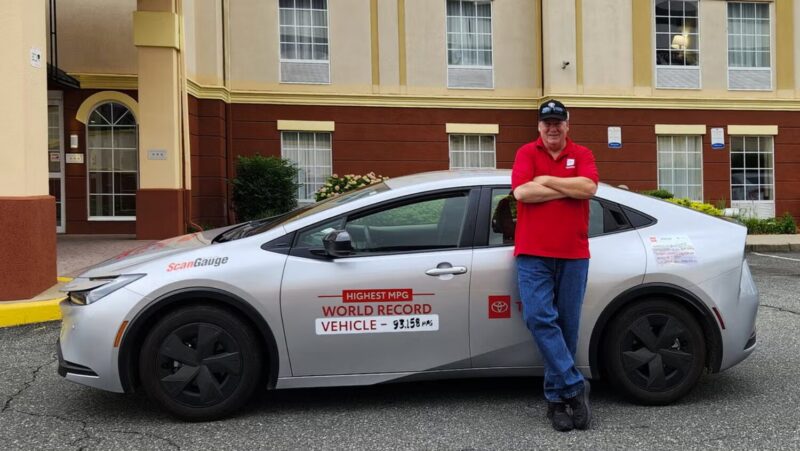
A new world record for the lowest fuel consumption rate has been set in the Guinness World Record for a driving distance exceeding 5,000 km, that is 2.5L/100 km.
This is much more efficient compared to the official figure of 57 MPG (4.12 liters/100 km) released by Toyota!
Wayne Gerdes drove a Toyota Prius LE from Los Angeles City Hall to New York City Hall, covering a distance of 5,168.7 km.
During the journey, he had to navigate routes at an elevation of 2,100 m and traverse the Mojave Desert where temperatures can reach as high as 40 degrees Celsius.
To achieve this figure, Gerdes suggested several tips that can be used to improve fuel efficiency.
These include driving slowly from stops while maintaining steady pressure on the pedal.
“For a record attempt like this, it requires meticulous planning. You need to have a plan and be able to quickly adjust that plan.
“So, if conditions change, you must alter your plan. Change your route. Think about what you can do to reach that goal,” he added.
The Toyota Prius LE has a fuel tank capacity of 43 liters, so based on a quick calculation, Gerdes may be able to achieve a distance of 1,693 km with each full tank refill.
It is indeed an impressive figure, considering Toyota’s official figure is only about 1,036 km.
Tesla Malaysia has announced the opening of a new service center located in Seberang Jaya, Penang.
The newly opened service center, which also includes a body and paint (B&P) workshop, is expected to accommodate the increasing number of customers in the northern region.
Additionally, Tesla owners can charge their electric vehicles at the V4 Supercharger station located in the B1 parking area of Gurney Plaza.
There are four 250 kW charging nozzles provided at a rate of RM1.25/kWh.
To date, Tesla has provided up to 12 Supercharger stations with a total of 56 charging nozzles, as well as 13 Destination Charger stations with 69 chargers throughout Malaysia.
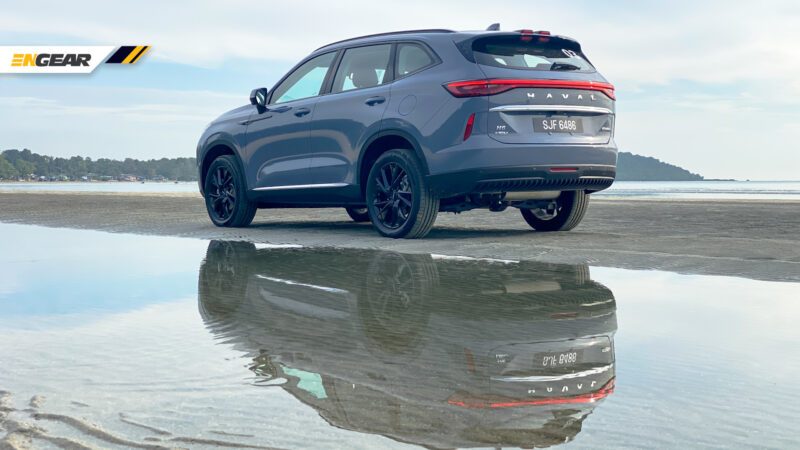
A few days ago, GWM Malaysia invited us to experience firsthand driving an upcoming hybrid SUV, the Haval H6 HEV.
Priced at an estimated RM145,000, it may very well be a very worthwhile purchase for those looking for a fuel-efficient, spacious, and comfortable SUV for the whole family.
Let’s briefly discuss the specifications of the Haval H6 HEV SUV.
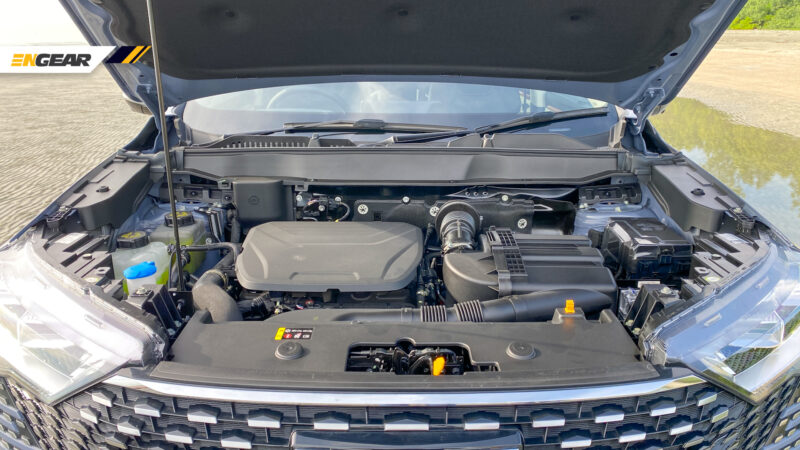
Starting with the powertrain unit, the Haval H6 HEV is powered by a 1.5-liter turbocharged four-cylinder engine, paired with a single electric motor and a Dedicated Hybrid Transmission (DHT) with two-speed ratios.
The engine is capable of producing 150 PS/230 Nm, while the electric motor can generate an additional 130 PS/300 Nm of power.
Overall, the Haval H6 HEV boasts 243 PS of power and 530 Nm of torque, making it one of the most powerful in its class.
During a brief two-day drive across south borders that didn’t require a passport, the writer found that the power delivered by this SUV was consistent, especially when extra power was needed to overtake trucks ahead.
On paper, the 530 Nm figure might seem high, but during our drive, we didn’t feel any sudden surges of power that could cause neck discomfort.
This is because the power delivered when the accelerator pedal was pressed was smooth and seamless, unlike the aggression often experienced with most electric cars.
The hybrid system is also very efficient, as the writer and colleagues hardly felt the engine start-up process. There were no noticeable engine vibrations, and the engine noise was well-filtered from entering the cabin.
With a fuel consumption rate of around 5.8 liters/100 km, GWM claims that the Haval H6 HEV can cover a distance of up to 1,000 km on a full tank.
Perhaps we can test this further if given the opportunity to drive this SUV in the future.
The NVH aspect is also satisfactory, as we were able to chat comfortably inside the cabin without raising our voices or using a microphone.
The wind noise attempting to penetrate the cabin didn’t disrupt our conversation; only the tire noise was audible. This was partly due to the unsatisfactory quality of the tires used in some areas.
Equipped with a suspension system consisting of MacPherson struts at the front and a multi-link setup at the rear, this SUV didn’t pose any significant handling or comfort issues.
For Malaysian highway networks, it offers a balanced suspension setup for slightly aggressive driving while maintaining comfort for the whole family.
Additionally, the body roll generated during cornering was acceptable, not making the SUV sway excessively.
In terms of dimensions, the Haval H6 HEV offers a much larger size compared to popular C-segment SUVs like the Honda CR-V and Proton X70.
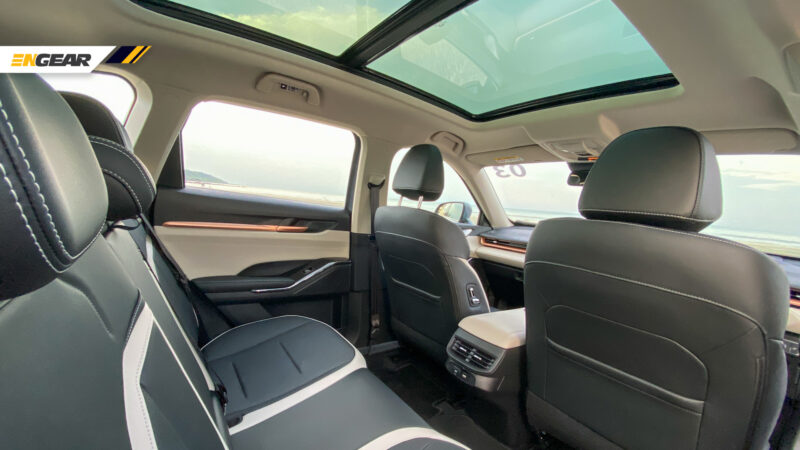
The long wheelbase also contributes to a more spacious cabin to accommodate five people at a time.
Furthermore, the Haval H6 HEV provides a cargo space of 560 liters, or up to 1,485 liters when the second-row seats with a 60:40 ratio are folded.
The layout of the dashboard is quite neat, but the combination of three colors (black, white, and rose gold) may not be favored by some.
There is a 10.25-inch cluster screen (with somewhat limited theme options) and a 12.3-inch infotainment screen that supports Apple CarPlay and Android Auto.
With a starting price below RM145,000, along with a package of specifications, the Haval H6 HEV could indeed be a very worthwhile purchase, especially for those who don’t have the budget to buy a hybrid SUV priced over RM200,000.
We will share more details and insights once given the opportunity to further test drive the Haval H6 HEV in the future.
Haval H6 HEV Specifications:
Engine: Four-cylinder in-line, 1.5-liter turbo
Power: 150 PS/230 Nm
Electric motor: 130 PS/300 Nm
Total power: 243 PS/530 Nm
Transmission: Dedicated Hybrid Transmission (DHT) two-speed
0-100 km/h acceleration: 7.7 seconds
Maximum speed: 175 km/h
Mitsubishi Motors Malaysia (MMM) has announced the opening of bookings for the seven-seater MPV model Mitsubishi Xpander 2024 facelift.
According to the CEO of Mitsubishi Motors Malaysia, Shinya Ikeda said, “Xpander has not only gained popularity in Malaysia, but it is also popular in the ASEAN region.
“MMM introduced the Xpander to the Malaysian market in 2020, and last month we celebrated 40,000 Xpander owners on the road. As the number one non-national MPV model, the Xpander is now one of the most important models for Mitsubishi Motors,” he added.
The facelift version brings cosmetic changes, where the 2024 Xpander now features more modern and aggressive lighting units, body kits along with a rear spoiler that cater to an active lifestyle taste.
The Xpander also offers a ground clearance of 225 mm, the best in its class, and a cargo space of 837 liters when the second-row seats are folded flat.
Furthermore, the Xpander facelift comes with features such as a driving video recorder camera and an electric parking brake to enhance the overall driving experience.
For the Malaysian market, the Xpander 2024 is still powered by a 1.5-liter inline-four engine generating 105 PS and 141 Nm, paired with a four-speed automatic gearbox, compared to the CVT transmission in other ASEAN markets.
For a limited time, the Mitsubishi Xpander 2024 facelift can be pre-ordered at the price of RM115k, where the first 500 customers who place orders through the Mitsubishi Online Showroom will receive a Naturehike Camping Wagon valued at RM400.
Japanese electronics giant Sharp has teamed up with Foxconn to develop a new concept EV called the Sharp LDK+.
Inspired by the design of commercial van cab-overs, the Sharp LDK+ is described as a compact mobile home packed with various cutting-edge technologies.
Its silver exterior and boxy shape could easily be mistaken for high-tech home hardware, further emphasized by the presence of the Sharp brand logo at the front.
The Sharp LDK+ features sliding side doors with rather large openings, revealing a cabin space that can be customized according to the user’s needs.
There are rear seats that can swivel 180 degrees, transforming the space into a more comfortable lounge area.
The side windows also come equipped with liquid crystal curtain technology for privacy, along with an AI system that can control lighting and temperature based on user preferences.
A massive 65-inch display screen is installed on the rear tailgate door, which can be used for watching movies or holding video calls with loved ones.
The same space can also be transformed into a children’s play area or a personal office for off-hours work.
The Sharp LDK+ utilizes an EV platform built by Foxconn, with a battery pack of unspecified capacity that can serve as a backup power source for home use during emergencies.
To facilitate off-grid activities, the van also supports charging using solar panels installed on the roof.
The LDK+ concept van will be officially unveiled at the Sharp Tech-Day 24 exhibition taking place in Tokyo on September 17-18.
Say hello to the most powerful manual transmission roadster in the world, the Hennessey Venom F5-M.
Built based on the Venom F5 Roadster model, the Venom F5-M employs a twin-turbo 6.6-liter V8 engine capable of producing approximately 1,817 hp and 1,618 Nm of torque.
This power is transmitted to the wheels through a six-speed manual transmission, as opposed to the original model’s seven-speed AMT gearbox.
According to Hennessey, the Venom F5-M requires “maximum driver focus” while promising “a more extreme and immersive driving experience.”
To differentiate this model from any standard F5 Roadster, Hennessey has incorporated fairly long dorsal fins (1,400 mm) adorning the rear deck space.
As for the cabin space, the F5-M Roadster comes with new pedal boxes, aluminum/carbon fiber gear shifter with a shift gate made from billet aluminum.
Also presented is the yoke-style steering wheel featuring various functional buttons for the driver’s use.
Only 12 units of the Hennessey Venom F5-M will be produced, each priced at approximately $2.65 million (RM11.51 million) per unit.
It’s no surprise that all units have been sold out before it was even revealed to the public, demonstrating its high value in the eyes of enthusiasts.
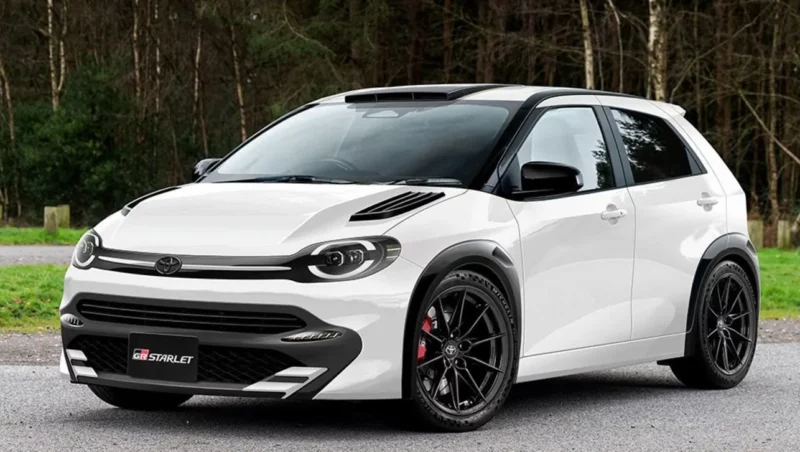
The news about the revival of the Starlet model has long been circulating online.
According to the Japanese publisher Best Car Web, Toyota is planning to reintroduce the Starlet model as a replacement for the discontinued Toyota Passo.
Not only that, the Gazoo Racing racing division also plans to produce a turbocharged hot hatch GR Starlet (unofficial name) that will serve as the basis for the WRC Rally 4 racing vehicle.
The new Starlet model may use the same TNGA-B platform as the Yaris, but with smaller dimensions.
Best Car Web estimates the dimensions of the Starlet to be 3,850 mm in length, 1,725 mm in width, 1,475 mm in height, with a wheelbase of 2,450 mm.
For comparison, the Toyota Yaris (TNGA platform) measures 3,940 mm in length, 1,745 mm in width, 1,500 mm in height, and a wheelbase of 2,560 mm.
Unlike the GR Yaris, which uses the G16E-GTS 1.6-liter turbo engine, the GR Starlet may use a more simplified powertrain.
According to sources, the new hot hatch will be equipped with a 1.3-liter turbocharged inline-three engine based on the earlier 1.6-liter turbo engine, producing about 150 hp, front-wheel drive system, and a six-speed manual transmission.
Due to the absence of the all-wheel-drive GR-Four system, it also contributes to a lighter weight, approximately 980 kg, or 300 kg lighter than the GR Yaris.
Additionally, the actual production model of the Starlet is expected to appear in 2026, while the rally car Starlet will showcase its prowess in the 2027 racing season.
Like other manufacturers, Toyota has also been affected by the decline in demand for electric vehicles.
According to the latest report from the Japanese newspaper The Mainichi, Toyota has reduced its global production target for electric vehicles by 30 percent by the year 2026.
The company is now aiming to produce around 1 million units, compared to the original plan of 1.5 million EV units.
Toyota, previously characterized as a ‘stubborn’ manufacturer, changed their electrification strategy early last year when their president Koji Sato announced a sales target of 1.5 million EV units by 2026.
The global EV market initially experienced rapid growth, thanks to the popular models produced by Tesla and BYD.
However, sales in the zero-emission segment have been slow as they have failed to attract interest from other consumer groups beyond early adopters due to high costs and charging infrastructure issues.
Throughout 2023, Toyota managed to sell 104,000 EV units, a fourfold increase compared to the previous year.
This figure is significantly small when compared to the total vehicle sales exceeding 10 million units.
In comparison to EVs, Toyota’s hybrid vehicles have been well-received as they offer a more practical solution in driving carbon neutrality missions.
Despite the plans to decrease EV production, Toyota will respond to current market demand by increasing production numbers for plug-in hybrid vehicles.
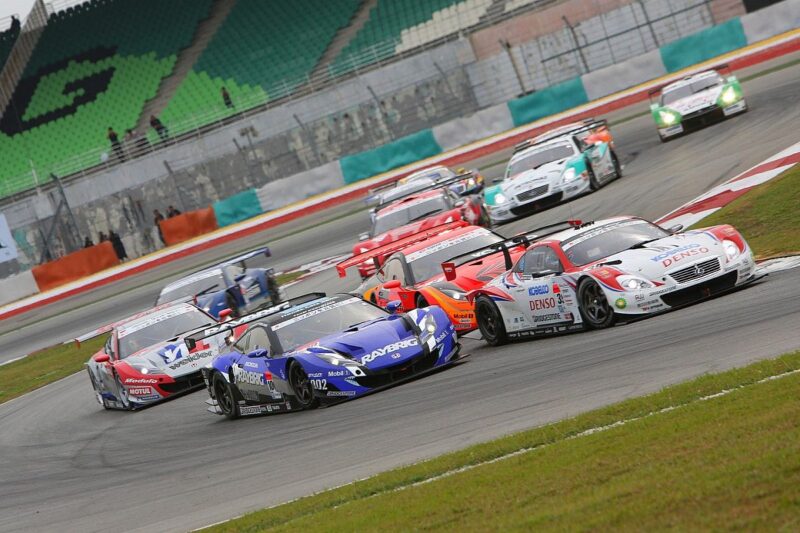
Perhaps not many are aware, but Malaysia was once the official location for the Super GT race, starting from 2000 and ending in 2013.
After 11 years of silence, the Super GT race is set to return and shake up the PETRONAS Sepang International Circuit for three seasons, from 2025 to 2027.
In relation to this, a signing ceremony for the agreement took place this afternoon between HARO Sports & Entertainment as the rights holder and promoter for the Malaysian leg of Super GT and GT Association (GTA) as the rights holder for Super GT.
The agreement was signed by Fahrizal Hasan (HARO Sports & Entertainment) and Masaaki Bandoh (President & CEO of GTA), and witnessed by YB Khairul Firdaus Akbar Khan, the Deputy Minister of Tourism, Arts, and Culture.
Also present at the signing event were Azhan Shafriman Hanif, CEO of the PETRONAS Sepang International Circuit, and S. N. Nanthan, Secretary General of the Motorsports Association of Malaysia (MAM).
Malaysia remains the only location outside of Japan for the 2025 racing season, after the last Super GT race outside Japan was held in Thailand in 2019.
Here are the locations for the Autobacs Super GT 2025 races:
Super GT consists of two main classes, namely GT500 featuring manufacturers such as Toyota, Honda, and Nissan, while the GT300 class comprises Subaru and Lexus participants.
This prestigious race was supposed to make a comeback in 2020, but it had to be canceled due to the global COVID-19 pandemic.
Interestingly, the Super GT teams and drivers describe the Malaysian rounds as a unique and quite challenging experience in track racing due to the extreme heat and unpredictable heavy rains, unlike the usual conditions experienced in Japan.
Super GT 2025 will bring various attractions for its fans, such as Race Ambassadors, open pit sessions, pit walks, grid walks, and the Circuit Safari, where fans have the opportunity to experience the action on the track up close.
The Road Transport Department (JPJ) today introduced the JPJePlate special plate design specifically for zero-emission vehicles (ZEV).
According to JPJ, three standards have been set for the special plate design inspired by European countries, such as:
1. Retro-reflective feature to enhance visibility at night and reduce accident rates.
2. Anti-cloning hologram sticker to minimize theft and fraud risks.
3. Integrated RFID technology that supports toll payments and vehicle parking.
The implementation of JPJePlate starts today (September 9, 2024) for new electric vehicles, with bookings available through the website jpjeplate.jpj.gov.my.
The new plate design is not mandatory for registered ZEVs, but owners can still make reservations as early as November.
A complete set of JPJePlate is priced at RM98/set, including front and rear plates, RFID mirror stickers, and standard delivery costs.
Additionally, JPJ has also launched a special registration number auction (NPI) with the “EV” index through the JPJeBid System starting today and ending on September 13, 2024, at 10:00 PM.
The “EV” registration number is reserved exclusively for ZEVs and cannot be registered on non-ZEV vehicles.
Similar to previous initiatives, a portion of the revenue from these NPIs will be channeled towards public initiatives such as free helmet exchange programs and B2 license training for the B40 group.
Fans and owners of the Nissan GT-R in Malaysia are invited to participate in the GT-R Festival taking place at Crowne Plaza Penang Straits City on October 4-6.
The 3-day, 2-night event is aimed at becoming the largest gathering of GT-R models to be immortalized in the Malaysia Book of Records.
Furthermore, the GT-R Festival also offers the opportunity for GT-R owners to personally meet Hiroshi Tamura, better known as the “Father of The Modern Nissan GT-R”.
The 62-year-old individual joined Nissan in 1984, working there for three years before moving to Autech, a subsidiary responsible for building GT-R vehicles.
He rejoined Nissan in 1993 in the product planning department, where he had the opportunity to develop the Nissan Skyline GT-R R34 model.
In 2006, Hiroshi Tamura was appointed as Chief Product Specialist, and since then he has been better known as the Modern GT-R Father.
For the GT-R Festival, there are two categories open to all GT-R owners as follows:
1. Elite
Valued at RM1,999, this category will be open to 250 participants, including a 3-day 2-night stay, dinner event, convoy, session with Hiroshi Tamura, photo session, exclusive GT-R Festival t-shirt, and 2 tickets to the Tokyo Auto Salon Kuala Lumpur.
2. Ultimate Elite
Priced at RM3,499, this category will be limited to only 20 participants, where each participant will receive the same benefits as the Elite category.
Additionally, participants in this category will also receive an exclusive GT-R Festival jacket, two VIP tickets to the Tokyo Auto Salon Kuala Lumpur 2024, and an exclusive dinner session with Hiroshi Tamura at Crown Plaza Penang Straits City.
The transmission, or gearbox, is one of the crucial components in a vehicle to ensure that every horsepower produced by the engine can be effectively transmitted to the road.
This is because internal combustion engines (ICE) can only generate efficient power within certain engine speed ranges, and each speed ratio is calculated and specified according to the engine output by manufacturers to maximize efficient power delivery in each gear.
It’s a different story for EVs.
Unlike ICE, electric motors can consistently generate maximum instantaneous power at any RPM range.
It can be said that most EVs in the market have a single-speed transmission, where the gear ratio has been meticulously calculated to maximize the efficiency of the electric motor.
Due to the already efficient operating system, most manufacturers believe that the use of multiple-speed transmissions will only add inefficiency, such as increased weight and production costs.
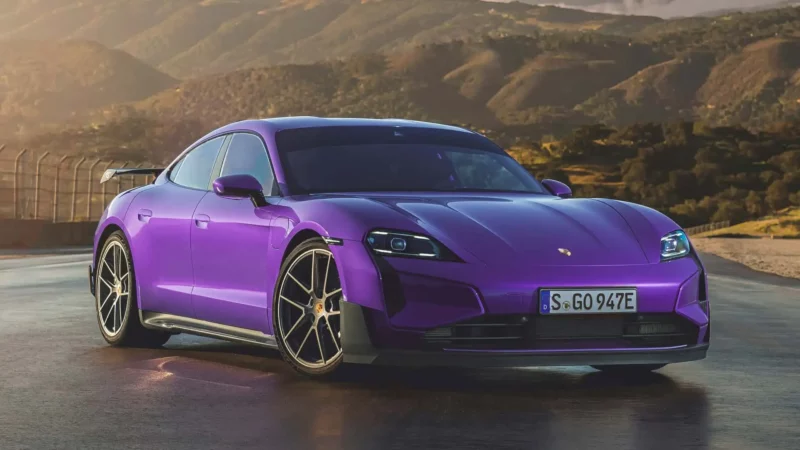
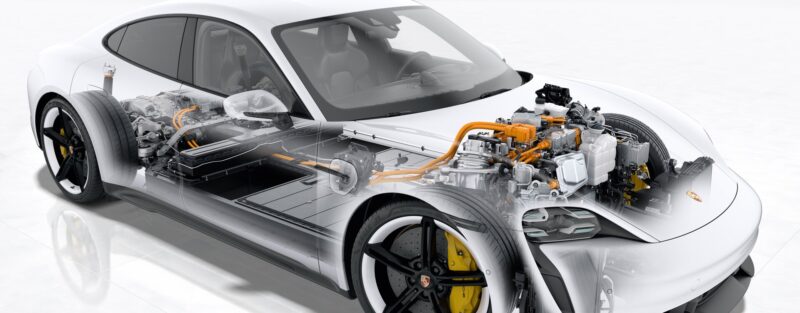
However, there are premium EV models like the Porsche Taycan that use a two-speed gearbox.
The first gear is designed to maximize acceleration, while the second gear ratio is designed to ensure efficiency and high power reserves even at high speeds.
Formula E racing cars even have three-speed transmissions!
So, what about certain manufacturers like Hyundai and Toyota?
Hyundai introduced the N e-shift feature, allowing drivers to simulate gear changes as if using an 8-speed DCT transmission in the Ioniq 5 N model.
Toyota, on the other hand, experimented by fitting a manual gearbox to the AE86 BEV model, complete with a foot clutch!
All of these efforts are made to ensure that the art of driving and manual gear changes will not disappear even when the world fully transitions to EVs one day.
A bitter fact that we must digest at present is that everyone now wants a car with flood-resistant specifications.
SUV. Crossover. Or whatever three-letter acronym introduced by every manufacturer to distinguish their products from others.
As a result, we can now see various types of crossover SUV models in the local market, and the victims, of course, are the sedan models.
The latest Peugeot 408 available in the Malaysian market is no exception to falling victim to the SUV frenzy.
Is it a model worth buying? Feel free to read our brief review until the end.
Exterior design
If the two previous generations featured sedan body shapes, the new generation Peugeot 408 is now a modern mishmash car built for those who dare to drive it on the road.
Fundamentally, the 408 still retains the sedan body shape, but with a liftback rear design before being embellished with crossover elements around the body.
This is not a new thing, as several other manufacturers also use the same design format, such as Citroen with the C3X, and Toyota through the Crown Crossover model.
Not everyone likes this format, but it could be a suitable model for those seeking something different.
On the road, the Peugeot 408 GT looks aggressive with its lion fang-shaped main headlights, rear lights with claw graphics, and 20-inch black Monolithe rims with a slightly… peculiar design.
With slightly higher dimensions compared to sedans in its segment, along with a ground clearance of 189 mm, it’s difficult to classify this Peugeot 408 as a crossover SUV. The writer prefers to call it a crossover sedan.
As emphasized, the design delivered by this Peugeot 408 is not for everyone, only for the brave.
Modern cabin, but…
The Peugeot 408 GT brings the Peugeot i-Cockpit 3D, which is far more modern than the previous 408.
It features a flat top and bottom steering wheel, a 10-inch digital cluster screen with a three-dimensional display, a 10-inch infotainment screen, and i-Toggles screen where the driver can set up to five different shortcut functions according to personal needs.
In standard, the Peugeot 408 GT variant we test-drove also comes with Nappa leather-wrapped seats that have been recognized by the Aktion Gesunder Rücken (AGR) independent body, which promotes back health.
There is also a built-in massage function with several modes inspired by animals such as cats and snakes available for the driver and front passenger.
With these mentioned modern features, comfort is indeed not a major issue.
Despite the presence of customizable shortcut function buttons, the writer still believes that frequently used functions such as climate control don’t need to be integrated into the main screen.
The infotainment screen from the factory offers a fairly clear and sharp graphic display, but could be improved with faster and smoother graphic movements.
It can be quite annoying when one wants to quickly lower the cabin temperature, but have to wait a few moments for the ‘loading’ graphic to finish playing.
Fortunately, the Peugeot 408 comes standard with wireless Apple CarPlay and Android Auto support, so most of the time, the driver’s eyes only need to focus on the navigation map display and the appropriate music selection played by the Focal Audio system with its 10 speakers.
Powerful Engine
For the Malaysian market, the Peugeot 408 is only offered with one engine option, which is the 1.6-liter turbo PureTech inline-4.
It is capable of churning out a high power of 218 hp @ 5,750 rpm and a torque of 300 Nm @ 2,000 rpm, delivered to the front wheels via an 8-speed automatic transmission.
Accelerating at traffic lights is not a weakness for this crossover sedan; in fact, on highways, the Peugeot 408 can outperform any naturally aspirated sedan.
For a full tank, the writer successfully recorded a mileage of 510 km.
Driving Experience
From the driver’s seat, one actually needs time to get used to the layout of the Peugeot 408 GT’s 3D i-Cockpit. This is because compared to other cars, you need to read the digital cluster screen from above the steering wheel. If set too high, you may struggle to see the meter panel.
Just like the infotainment screen, this digital cluster screen also displays graphics movements somewhat slowly for a modern car. It still offers an analog-style meter display but with a more concise interface.
Despite the asymmetrical steering wheel design, the Peugeot 408 still offers adequate handling responses, not overly sporty but still enjoyable, particularly when maneuvering around corners.
The Peugeot 408’s suspension components, consisting of MacPherson struts at the front and a multilink setup at the rear, are adequate when driving on well-paved surfaces where body roll is at an acceptable level. However, the high body style of the car is its main downside.
The main enemy of the Peugeot 408 is uneven road surfaces, especially when encountering potholes or road debris.
It’s even more frustrating when you’re enjoying a corner, and there are potholes or road debris scattered on the road where this sedan is quick to jump and ‘veer off course’ set by the driver.
Not all negative aspects are felt in the Peugeot 408. The most appreciated aspect is the cabin’s NVH (Noise, Vibration, Harshness) level, where any roughness and engine noise are effectively filtered to ensure the driver’s and passengers’ comfort throughout the journey.
Practicality
The Peugeot 408 GT still offers a practical cabin space for the whole family, even with its bold crossover sedan body style.
For instance, on the center console, there is a special slot for wireless smart device charging, followed by space below for other smart devices and a dedicated hole for placing your SmartTag device.
The cute transmission tunnel also contributes to a more spacious cabin. There is also storage space below the central armrest with separate openings, while for rear passenger comfort, second-row air conditioning vents are provided.
Although it may seem narrow from the outside, the Peugeot 408’s cabin actually provides sufficient headroom and legroom for adult passengers. However, the relatively small rear mirror structure makes it difficult for any old-school driver to look back when parking the car.
Fortunately, the Peugeot 408 comes with a clear 360-degree surround-view camera that allows us to observe the presence of obstacles in the surroundings.
Moreover, the Peugeot 408 offers a cargo space capacity of 536 liters, expandable to up to 1,538 liters when the second-row seats are folded down.
Price… a bit expensive
Behind the bold exterior and the aforementioned modern features, one thing that makes the Peugeot 408 not as appealing is the price tag.
For the Malaysian market, you can get the basic Allure version of the Peugeot 408 with pricing starting from RM146,055. Sounds reasonable, right?
However, for the GT variant equipped with additional premium features, the starting selling price is from RM196,055. Wise buyers may suggest adding a bit more money and buying a much larger and more comfortable D-segment sedan.
Therefore, the writer likes to reiterate the argument mentioned at the beginning of the article, “Peugeot 408: A ‘French Lion’ for the Brave.”
Sime Darby Motors, the official distributor of BYD vehicles in Malaysia, has introduced the 2024 BYD Seal Dynamic RWD variant as a complement to the existing electric sedan offerings.
Priced starting from RM163,800, the vehicle comes with a six-year or 150,000 km warranty, an eight-year (or 160,000 km) battery warranty, and an eight-year or 150,000 km powertrain warranty, making the BYD Seal Dynamic a more affordable choice.
Additionally, BYD is offering a complimentary Wall Box Home charger for the first 100 reservations.
Here are the key specifications of the BYD Seal Dynamic variant that you need to know:
Two color options
The BYD Seal Dynamic RWD is available in two color options: Cosmos Black and Aurora White.
Power
Equipped with a rear-wheel-drive electric motor, the BYD Seal Dynamic RWD can produce 201 hp and 310 Nm of torque. It can accelerate from 0-100 km/h in 7.5 seconds.
510 km Range
With a 61.44 kWh battery pack, the vehicle can offer a range of up to 510 km on a single full charge (NEDC data). For comparison, the BYD Seal Premium can travel up to 650 km, while the Performance variant can reach around 580 km.
High-Speed DC Charging
The BYD Seal Dynamic RWD comes with a 110 kW fast DC charging technology, along with vehicle-to-load (V2L) functionality, which enhances the practicality of the electric sedan, especially for outdoor activities.
Standard Features
As standard, the BYD Seal Dynamic RWD offers a cargo space of 400 liters, along with a 50-liter front trunk (frunk). It also features unique 18-inch rims wrapped in 225/50 R18 tires.
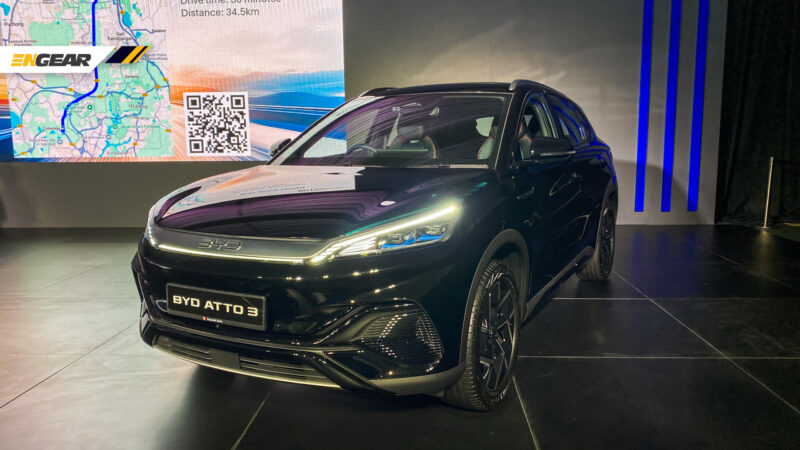
Alongside the launch of the BYD Seal Dynamic RWD, BYD Malaysia has upgraded the electric SUV offering, the BYD Atto 3 (priced from RM149,800), with enhanced features including:
-Battery capacity increased to 60.48 kWh
-Range now reaches 480 km (NEDC data)
-0-100 km/h acceleration in 7.3 seconds
-18 inch rim
-DC charging up to 88 kW
-one touch open/close tailgate
-8 speakers
-PM2.5 air filter
-multi-colour door handle ambient lighting with music rhythm
For the first 300 reservations, buyers of the 2024 BYD Atto 3 will receive a Wallbox Home Charger, a 3-year service package, and a 4-year road tax waiver.
Do you still remember the Nissan IDx sports concept car showcased eleven years ago?
It was one of the concept models that garnered a lot of attention, but unfortunately, it was not realized due to the relatively high development costs, coupled with lackluster demand.
Nevertheless, in 2024, Nissan is reported to be developing a third high-performance sports car model after the Z and GT-R.
Speaking to the media, Nissan’s Vice President of Global Product Strategy, Ivan Espinosa, shared plans to revive the iconic Silvia model, despite the shrinking sports car market.
“I am trying to make it happen. It is not easy, as the sports car market is increasingly shrinking.”
He revealed a vision where the Silvia would be reborn as an electric sports car (positioned between the Z and GT-R) so that this new model can comply with emission laws in as many countries as possible.
In this way, Nissan can increase production numbers to achieve the necessary economies of scale.
Furthermore, Nissan will not follow the footsteps of collaborative manufacturers in developing sports cars like the Toyota GR Supra/BMW Z4, and Toyota GR86/Subaru BRZ.
Instead, Nissan aims to independently develop this new Silvia model without assistance from any party.
Espinosa is confident that Nissan can proceed alone in developing this Silvia model, albeit acknowledging that this project is challenging and requires serious investment.
The future Nissan Silvia will not be an isolated model, considering that it will face fierce competition from other Japanese manufacturers.
For instance, Mazda is developing a new generation MX-5, Honda is presenting the Prelude sports car, and Toyota’s GR86 might be upgraded with a hybrid engine package.
Stellantis Malaysia has announced a promotion of a free 5-year maintenance service package effective from September 1, 2024.
This latest promotion applies to all Peugeot models and variants, including the 408, 2008, 3008, 5008, and the Landtrek pickup truck.
Customers who register their Peugeot vehicles starting from September 1st are eligible to enjoy the five-year free service promotion which covers the cost of spare parts for 10 services within five years, based on intervals of every 10,000 km or six months, whichever comes first.
Customers only need to pay for labor costs.
The Managing Director of Stellantis Malaysia, Jamie Francis Morais, said, “Our customers are our top priority, and we are excited to introduce this 5-year free service maintenance promo as part of our efforts to further elevate and enhance the PEUGEOT ownership experience.
“This 5 years of free service savings paired with our ongoing 7-year extended full coverage warranty is sure to give new PEUGEOT owners peace of mind, for longer.”
This limited offer is available at all authorized Peugeot dealerships nationwide.
For information, all Peugeot vehicles come with a seven-year warranty or a distance coverage of 200,000 km (whichever comes first) as a standard package.
It consists of a 3-year manufacturer’s warranty and an additional 4-year coverage similar to the manufacturer’s warranty.
Despite the sluggish trend in EV ownership, Hyundai has unveiled updates to its electric SUV model, the 2025 Ioniq 5.
The facelift for the 2025 model has been launched, marking the Ioniq 5 as the first model to be produced at the Metaplant Georgia.
The 2025 Hyundai Ioniq 5 brings about cosmetic changes, such as a new bumper, revised spoiler, more aerodynamic rims, and new color options.
Minimal changes have been made to the interior, including a redesigned steering wheel, upgraded center console, and the addition of physical buttons for commonly used functions.
The 2025 Hyundai Ioniq 5 also comes with a larger capacity battery package.
The Standard Range variant now features a 63 kWh battery (compared to the previous 58 kWh), increasing the driving range to 386 km from the previous 354 km.
Meanwhile, the Long Range variant is equipped with an 84 kWh battery, promising a range of over 499 km for the RWD version, or 451 km for the AWD version.
The Hyundai Ioniq 5 also becomes the first Hyundai model to come standard with NACS (North American Charging Standard) ports, allowing Ioniq 5 owners to use Tesla’s Supercharger network without requiring an adapter.
Finally, there is a new off-road variant called the XRT, featuring unique front design, black accents, digital camouflage pattern on the bumper and fender flare, and 18-inch matte black wheels wrapped in all-terrain tires.
Moreover, the Ioniq 5 XRT now offers 23 mm greater ground clearance, red-colored tow hooks, H-Tex upholstery, and XRT logos on the seats.
Malaysia’s Leading Automotive News | ENGEAR ENGLISH