All posts by Hanif Su'ib

Someone who loves driving manual cars but prefers riding an automatic scooter. Maybe it's an age thing.

2025 Mitsubishi Triton: Five new things we found – First Drive

The new generation Mitsubishi Triton has been officially launched for the local market last week after being introduced at the global level for over a year.

It can be said that almost every aspect of this pickup truck has been extensively redesigned, including the platform, engine, suspension system, cabin layout, and most importantly, a more rugged and bold appearance.

So, do the aforementioned changes have a significant impact on this Triton pickup truck?

Earlier this month, the writer and other media colleagues were invited to test drive the Mitsubishi Triton 2025 from the capital heading towards the East Coast.

Here is an overview of our experience after driving this pickup truck for two days:


1. More stable and confident driving

The Mitsubishi Triton 2025 utilizes an all-new platform with larger dimensions, making it appear more rugged on the road.

The new Triton also features a sturdier ladder-frame chassis, emphasizing the use of high-strength steel (1,180 MPa) to minimize weight gain.

Additionally, the new Triton is equipped with a suspension system with longer travel distance and thicker stabilizer bars, along with an electronic power steering (EPS) system, all contributing to a more stable and confident driving experience.

Based on our experience, the Triton offers easy-to-handle steering response, not too heavy or too light, making it easier for the driver to navigate throughout the journey.

In addition, the journey is more comfortable due to less vibration and noise perceived from inside the cabin throughout the journey, even when traversing various types of road surfaces.


2. More powerful new engine

In addition to the platform, the Triton 2025 now also features an all-new diesel engine.

Although the capacity has not changed much, the 2.4-liter turbo MIVEC engine (code name 4N16) now produces a high output of 204 PS and torque of 470 Nm.

Coupled with a 6-speed automatic transmission, the Triton does not require much effort to overtake cargo trailers or those seeking rental properties in the middle of the highway.

At standard highway speeds, driving the Triton felt agile and powerful, resembling the feeling of driving an SUV.

The typical Active Yaw Control (AYC) feature found in high-performance Mitsubishi models is also offered in the new Triton, providing more confidence, especially when navigating winding roads.

However, it should be noted that the Triton is still a pickup truck, and one must be aware of the limits and capabilities of a pickup truck, as well as the driver’s skills in handling a vehicle with a high center of gravity.


3. More confident off-road driving

We had the opportunity to test the handling of the Triton pickup truck on off-road routes in Janda Baik, followed by a special off-road driving session provided during the recent official launch.

To us, the combination of the platform, engine, suspension system, and the 4WD Super Select II system also provided advantages to the Triton in tackling more difficult and challenging routes.

Based on our experience, it was difficult for us to feel significant roughness inside the cabin even when the pickup truck was driven at high speed on dusty roads or over rocky terrain.

The power derived from the 2.4-liter diesel engine was also smoothly transmitted to the wheels to ensure the truck continued to move forward or overcome obstacles as directed by the driver.

With the use of EPS steering, handling on off-road routes also felt more assured, especially for those who may not be accustomed to handling larger vehicles.

The 4WD Super Select II system with on-the-fly mode selection operation is also very easy to use for adapting the pickup truck to various road surface conditions.

As standard, the Triton provides up to seven drive modes that can be selected through drive mode settings such as 2H, 4H, 4HLc, and 4LLc, not forgetting the Hill Descent Control (HDC) feature that allows the driver to control the vehicle while descending a slope without having to rely on the brakes..


4. Beast Mode makes the Triton look more rugged

Initially, it was difficult for the writer to accept the visual changes present in this new Triton.

When placed alongside the previous generation Triton, many may be inclined to choose the Triton with the sharper design of the Dynamic Shield.

For the new Triton, the Dynamic Shield element has been renewed with the Beast Mode theme, making the appearance of this Triton look more rugged.

The L-shaped LED daytime running lights are intentionally designed to resemble sharp eagle eyes, while the rear lights with T-shaped graphics further accentuate the breadth of this pickup truck.

Additionally, the somewhat boxy body design makes this Triton resemble an American pickup truck.


5. More modern, user-friendly cabin space

The new Triton incorporates the Horizontal Axis design element to make the layout of the dashboard neater and less obstructive to the view.

The writer greatly appreciates the combination of analog meters and a digital screen with a black background that is very easy to read and devoid of distracting fancy colors that could disrupt driving focus.

The new Triton also features large and easy-to-use physical buttons and controls.

This is an important feature because most old-school drivers, like the writer, rely on muscle memory to adjust settings such as temperature, fan speed, or simply change the direction of airflow without needing to frequently divert their attention while driving.

The central screen also does not need to be excessively large to the point of obstructing the field of vision, it is adequate and at the same time still offers the desired functions of most users – Apple CarPlay and Android Auto.

One thing the writer likes about the Triton is the air conditioning vent positioned on the ceiling, which requires cool breeze from the front to make the rear passengers comfortable.

The second-row seats are also comfortable to use with a less steep angle, but the structure of the headrests themselves makes the passengers sit a little more upright than usual.

One significant drawback present in the new Triton is the absence of a 360-degree surround camera feature, which may make you feel the driving experience with the Triton especially on narrow roads or slightly challenging off-road routes a bit difficult due to the increased dimensions of the Triton, which have become larger, wider, and taller.

The turning radius of this pickup truck has also increased due to the longer wheelbase compared to previous models.

If there are no third-row passengers, it is recommended to remove the center headrest as its position could disrupt the rearview mirror’s field of vision.

2025 Mitsubishi Triton, new platform & engine, five variants, starting from RM102k

So, what is your opinion on the all-new 2025 Mitsubishi Triton? Do you think it is a worthwhile purchase for this year?

We will share more information and details with you if given the opportunity to further test the Mitsubishi Triton in the future.


2025 Mitsubishi Triton First Drive

2025 Jaecoo J7 PHEV, 342 hp/525 Nm, estimated price RM170k, official launch this year

Jaecoo Malaysia today began the preview session for the new J7 PHEV SUV model that will be launched this year, located at Sunway Pyramid.

The plug-in hybrid SUV will be sold at an estimated price of around RM170,000 for the 2WD version.

Unlike the standard J7, which comes with a 1.6-liter turbo engine, the J7 PHEV is equipped with a fifth-generation hybrid powertrain, consisting of a 1.5-liter turbo engine (141 hp/215 Nm), electric motor (201 hp/310 Nm), and an 18.3 kWh battery pack.

Overall, the J7 PHEV is capable of generating up to 342 hp and a torque of 525 Nm, with acceleration from 0-100 km/h in just 8.5 seconds and a fuel consumption rate as low as 4.9 liters/100 km.

According to Jaecoo, the J7 PHEV can operate in zero-emission mode for up to 106 km, with an overall range reaching 1,300 km on a full tank of fuel.

The 2WD version comes with three driving modes, namely Economy, Standard, and Sports.

In terms of exterior, the design of the J7 PHEV does not show significant changes except for the aerodynamic 19-inch rims (235/50 R19 tires) and the battery charging port on the right side.

It also retains the MacPherson front suspension setup followed by a multilink at the rear, and the same dimension size as the petrol J7 model.

The cargo space of the J7 PHEV has also increased to 500 liters and can reach up to 1,265 liters when the second-row seats are folded.

The J7 PHEV cabin features include a 10.25-inch cluster screen, a 14.8-inch infotainment screen with Apple CarPlay and Android Auto support, and dual-zone climate control.

The most advanced safety features included are automatic emergency braking, adaptive cruise control, driver monitoring system, emergency lane-keeping assistance, intelligent high-beam assistance, lane departure warning, rear traffic warning, and traffic jam assistance.

There are three available colors, including black (Carbon Crystal Black), white (Crystal White), and silver (Moonlight Silver), all with a black roof.

Kia Niro Tri-Fuel can travel up to 1,600 km!

Hybrid cars still not sufficient to eliminate range anxiety?

Do not worry, as Kia now offers a hybrid crossover product that can travel up to 1,600 km, namely the Kia Niro Tri-Fuel.

It features a combination of a 1.6-liter Smartstream engine with 89 hp power along with a 43 hp electric motor, making the total power output approximately 126 hp and 264 Nm.

Unlike the regular Kia Niro Hybrid, the Kia Niro Tri-Fuel has two fuel tanks, consisting of a 41.6-liter petrol tank and a 40-liter propane (LPG) tank positioned under the cargo floor.

The third ‘tank’ present in the Kia Niro is actually a 1.3 kWh battery pack.

With two full tanks (along with the battery pack), the Kia Niro Tri-Fuel can be driven up to 1,600 km, while reducing CO2 emissions by 6 percent compared to the standard hybrid model.

To switch from petrol to LPG, the driver can press a special button provided alongside the ignition button, as well as check the remaining LPG fuel capacity.

The LPG system installation process is carried out by the gas equipment company BRC, but owners can still enjoy a full warranty for up to seven years or a mileage limit of 150,000 km.

According to Kia, Niro Tri-Fuel owners can save on fueling costs up to €5,000 (RM23,453).

The selling price of the Kia Niro Tri-Fuel starts from €34,450 (RM161,591) and can reach up to €39,200 (RM183,872) for the premium variant.

Currently, the sale of Kia Niro Tri-Fuel is limited to the Italian market only.

Jaecoo J7 PHEV successfully proves driving 1,300 km on one full tank

The Malaysian contingent and six other nations has successfully demonstrated that the Jaecoo J7 PHEV model is capable of traveling over 1,300 km on one tank of fuel and a full battery in a marathon event from Guangzhou to Wuhu, China last week.

The 13-hour journey, which began on October 16, witnessed the Jaecoo J7 PHEV achieving an emission-free distance of 125.2 km, or 19.2 km further than the official distance.

According to the specifications, the Jaecoo J7 PHEV is powered by a 1.5-liter TGDi engine with an electric motor, DHT (Dedicated Hybrid Transmission) transmission, and an 18.3 kWh battery pack, offering an electric driving range of 106 km, as well as the best fuel consumption rate in its class, approximately 5.99 liters per 100 km.

According to Jaecoo Malaysia’s Vice President, Emily Lek, “this success proves the excellence of Jaecoo’s Super Hybrid System (SHS) technology, which offers efficient and energy-saving driving and sets a new benchmark for efficient transportation.”

For the local market, the Jaecoo J7 PHEV will be offered in two variants, namely 2WD and AWD.

The 2WD variant comes with the options of Standard, Sport, and Economy driving modes, while the AWD version adds Sand, Mud, Snow, and Off-Road modes.

This plug-in hybrid SUV is set to be launched towards the end of this year, with distribution expected to start in February 2025.

2025 Geely Galaxy Starship 7 – midsize SUV with plug-in hybrid technology “Thor”

In the coming weeks, Geely is set to launch its latest SUV model in the Galaxy series, the Galaxy Starship 7.

This SUV is built on the new Global Energy Architecture (GEA) platform that supports the super electric hybrid “Thor” technology, referring to the plug-in hybrid (PHEV) powertrain configuration.

The mentioned Thor system consists of a 1.5-liter engine and a single electric motor that drives the front wheels, paired with a battery pack sourced from SVOLT.

According to Geely, there are two battery pack capacity options available, namely a 19.09 kWh that can offer an electric range of up to 101 km, or a 28.94 kWh with a zero-emission range of 150 km.

In terms of dimensions, the Geely Galaxy Starship 7 measures 4,740 mm in length, 1,905 mm in width, 1,685 mm in height, with a wheelbase of 2,755 mm.

This makes the Galaxy Starship 7 almost as large as SUV models like the BMW X3 and Mercedes-Benz GLC-Class.

Despite its somewhat futuristic name, the design of the Geely Galaxy Starship 7 appears quite conventional, reminiscent of the Porsche Macan/Cayenne models, especially at the rear.

As for the cabin space, the Galaxy Starship 7 features a large central infotainment screen, followed by a smaller digital cluster screen behind the two-spoke steering wheel.

The central console houses a wireless device charging slot, main control buttons, cupholders, and storage space at the bottom complete with additional USB slots.

More information is expected to be revealed closer to the official launch later this year. The most important question – will this be rebranded into a Proton car?

Subaru’s new hybrid system enables driving range of 1,000 km on a full tank

Subaru is set to launch the 2025 Subaru Crosstrek Hybrid crossover in the Japanese market this December.

This hybrid crossover model will be the first to utilize a new generation hybrid system, promising a driving range of up to 1,000 km on a full tank of fuel.

The powertrain unit consists of a newly developed 2.5-liter boxer engine, producing 158 hp and 209 Nm, paired with two electric motors and a 1.1 kWh lithium-ion battery pack.

One of the motors is used to drive the wheels with 118 hp/270 Nm, while another motor acts as a motor-generator unit.

Subaru states that the driving electric motor can be used as the main power source in various situations.

As expected from a Subaru, the Crosstrek Hybrid retains the symmetrical all-wheel-drive system.

The hybrid system promises a 20 percent increase in efficiency compared to the existing hybrid system.

Combined with a larger fuel tank (63 liters), Subaru claims the Crosstrek Hybrid model can be driven up to 1,000 km before needing to refuel.

Despite featuring a relatively small capacity battery pack, the Subaru Crosstrek Hybrid still offers zero-emission driving mode, even though the available range may not be as extensive as other PHEV cars on the market.

In addition to the benefits of an extended driving range and EV mode, the Subaru Crosstrek Hybrid also provides a 100V/1500W AC power outlet in the cargo space for off-grid activities.

A few months ago, Subaru’s Chief Technology Officer, Tetsuo Fujinuki, acknowledged that the boxer engine is not the ideal solution for achieving the desired efficiency.

“If you were just going for efficiency, horizontally opposed engines are not necessarily always the best option. But what would Subaru be without them? When you think about it, we are the only mass-market brand making horizontally opposed engines today.”

Introducing the MV3 Garuda Limousine, the official vehicle for new Indonesian president

Indonesian weapons manufacturer PT Pindad has unveiled a new SUV model that is used as the official vehicle for the eighth President of the republic, Prabowo Subianto.

Known as the MV3 Garuda Limousine, the all-white SUV presents a more exclusive image compared to the use of luxury sedans for previous presidents.

It measures 5.05 meters in length, 2.06 meters in width, 1.87 meters in height, and has a long wheelbase to ensure the comfort of VIP passengers inside.

According to PT Pindad, the Garuda Limousine is based on the MV3 Maung tactical vehicle with a four-wheel-drive system (4×4), but it is equipped with a 199 hp turbo diesel engine paired with an 8-speed automatic transmission.

The manufacturer has also prioritized safety features in the development of this special presidential vehicle.

With the use of composite armor and B5/B6 level bullet-resistant glass, the MV3 Garuda Limousine is capable of withstanding NATO 7.52 x 51 mm and M193 5.56 x 45 mm bullet attacks. It is also equipped with 21-inch rims wrapped in Run Flat tires.

Other features include automatic side steps, premium leather upholstery, rear passenger LCD display screen, a 360-degree surround camera system, and a body kit inspired by the parang batik design.

As a comparison, the military light utility vehicle Maung is equipped with a 2GD-FTV Toyota Hilux 149 hp, 400 Nm diesel engine mated to a 6-speed manual gearbox.

The version produced for the civilian is equipped with a 2.5-liter diesel engine sourced from the Isuzu D-Max pickup model.


MV3 Garuda Limousine


Maung 4×4

Stellantis Malaysia launches first multi-brand dealership with Allure Auto Old Klang Road

Stellantis Malaysia has announced the opening of the Allure Auto sales center located on Jalan Klang Lama, doubling as the first multi-brand showroom in Malaysia.

The dealership will house new Peugeot models alongside the recently launched Leapmotor brand and its all-new electric SUV, the Leapmotor C10.

This 1S sales center has ample space to display up to five vehicles at a time, in addition to providing comfortable customer areas, vehicle distribution space, and interactive displays.

The Jalan Klang Lama Allure Auto 1S center will be supported by a 2S center (service and spare parts) located in USJ1, shared with Peugeot Subang Jaya.

The facility will be staffed with certified Stellantis technicians, in addition to serving as a hub for major repairs and high-voltage system maintenance, body and paint repairs, diagnostics, and general maintenance.

To ensure smooth support for existing Peugeot customers, Allure Auto will collaborate with nearby authorized Peugeot distributors to handle any technical issues and provide comprehensive after-sales solutions.

According to Stellantis Malaysia’s CEO, Jamie Francis Morais, “I am delighted to introduce our first multi-brand distribution center in Malaysia designed to showcase various Peugeot vehicles and the new electric SUV, Leapmotor C10.

“Allure Auto has been an excellent distributor, and the second outlet (more to come in the future) demonstrates their commitment to offering an exceptional brand experience to our customers and expanding our network nationwide.”

2025 JAC T9 2.0L diesel and BEV versions previewed, price starts below RM120k, launch in Jan 2025

Evolvelectric Motors, the official distributor of JAC Motors vehicles in Malaysia, has launched the mid-size pickup truck model 2025 JAC T9 today.

For the local market, there are two powertrain options offered, namely the 2.0L turbo diesel version and the electric (BEV) variant.

Both versions of the T9 have the same dimensional size, measuring 5,330 mm in length, 1,965 mm in width, and 1,920 mm in height with a wheelbase of 3,110 mm.

The ground clearance is as high as 210 mm, with an approach angle of 27 degrees, departure angle of 23 degrees, and the capability to ford water up to 800 mm in depth.

The JAC T9 Grand-ES features a 2.0-liter turbo diesel inline-four engine with 167 hp @ 3,600 rpm and torque of 410 Nm @ 1,500-2,500 rpm, paired with a four-wheel-drive (4WD) system and an eight-speed ZF automatic transmission.

Meanwhile, the JAC T9 Grand-BEV is equipped with a combination of two electric motors.

The front axle motor produces 94 hp/176 Nm while the rear axle motor generates 215 hp/342 Nm, with a combined power reaching 516 Nm.

The CATL LFP battery pack with an 88 kWh capacity allows a range of up to 340 km (WLTP data).

The JAC T9 Grand-BEV also supports 11 kW AC charging (15-100% charge in 6 hours 50 minutes), as well as fast DC charging at 88 kW, allowing the battery to be charged from 30-80% in just 35 minutes.

Externally, the JAC T9 comes with features such as LED headlights, LED daytime running lights (DRL), LED taillights, side step boards, rear sports bar, and roof rails.

Moving into the cabin, the JAC T9 offers amenities such as a 7-inch cluster screen, a 10.4-inch center screen, Apple CarPlay and Android Auto support, six-way power-adjustable front seats, ambient lighting system, wireless device charging, and six speakers.

For the rear passengers, there are second-row air vents, additional USB ports, and power sockets for electronic devices.

Loaded safety features include seven airbags, a 360-degree surround-view camera, tire pressure monitoring system (TPMS), autonomous emergency braking (AEB), lane departure warning (LDW), lane-keep assist (LKS), adaptive cruise control (ACC), and traffic sign recognition system (TSRS).

It’s no surprise that both versions of the JAC T9 pickup truck received a five-star rating in the Australasian NCAP (ANCAP) new vehicle assessment.

The estimated selling price for the JAC T9 2025 pickup truck starts below RM120,000 for the diesel version, valid until December 31 for the first 300 customers, with a five-year unlimited mileage warranty.

Meanwhile, the JAC T9 Grand-BEV is priced below RM200,000 and comes with a six-year manufacturer’s warranty or a limit of 200,000 km. It is valid for the first 100 customers who book before December 31, 2024.


JAC T9 Grand-ES


JAC T9 Grand-BEV

JPJ opens bidding for ‘MADANI’ plate number, until this Wednesday

The Road Transport Department (JPJ) is accepting bids for Madani Series Special Registration Numbers (NPIs), with a minimum price of as low as RM100 beginning Saturday (Oct 19) until 10pm on Wednesday (Oct 23), through the JPJeBid System.

Datuk Aedy Fadly Ramli said that the NPI bid results would be issued on Thursday (Oct 24) and the registration number that was successfully bid must be registered within 12 months from the date the official bid result letter is issued.

“This bidding method is subject to the existing Terms & Conditions that have been set in the JPJeBid System,” he said in a statement on Sunday (Oct 20).

He said the minimum bid price for the number plate series was set according to category, namely RM20,000 for ‘Main Number’, RM5,000 (Premium Number), RM2,500 (Attractive Number), RM500 (Popular Number) and RM100 (Running Number).

Commenting on the NPI, Aedy Fadly said it was a government initiative to support the MADANI Malaysia agenda by promoting civic values.

He said the sale proceeds would be used to realise the implementation of initiatives under the Transport Ministry such as the MyLESEN programme, the Helmet Exchange programme, FlySISWA, Socso payments to taxi drivers and various other initiatives.

2024 Mitsubishi Xpander facelift, 3 things we dislike – Test Drive

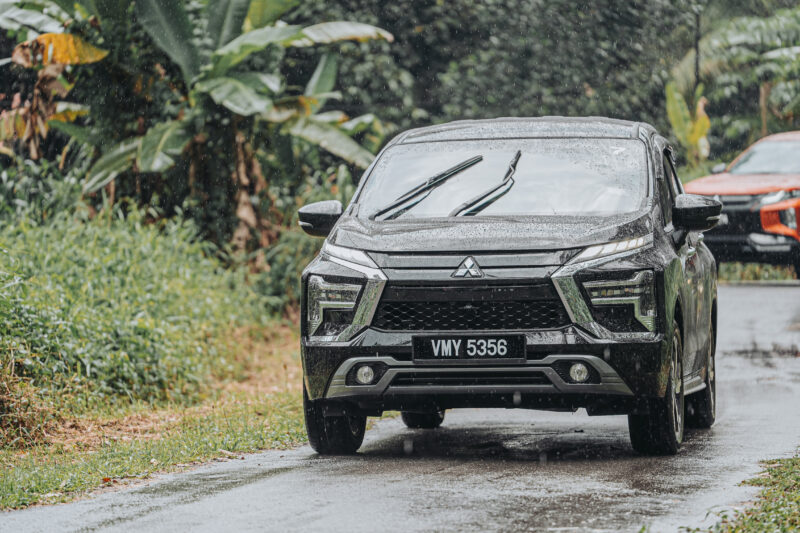
For the information of our readers, Mitsubishi Motors Malaysia has recently launched the facelifted version of the Xpander a few weeks ago.

A test drive review has also been published by us, and you can read the details through THIS link.

However, behind the positive aspects that we highlighted in the test drive article, there are a few shortcomings that can be improved and enhanced for the benefit of users in Malaysia.


1. Lackluster Acceleration

The Xpander facelift maintains the four-cylinder in-line 1.5-liter MIVEC engine producing 105 PS and 141 Nm of torque, paired with an automatic gearbox – similar to the pre-facelift model.

Therefore, the driving dynamics have not changed significantly, and the acceleration aspect is not the most powerful in its class.

For those with a heavy right foot, this Xpander facelift may not live up to expectations, especially when navigating hilly terrains.

However, for casual driving, it is more than sufficient, especially since the Xpander is fuel-efficient if driven correctly.


2. Headlights Look More Modern, but…

One thing the writer appreciates about the Xpander facelift is its updated and aggressive exterior design.

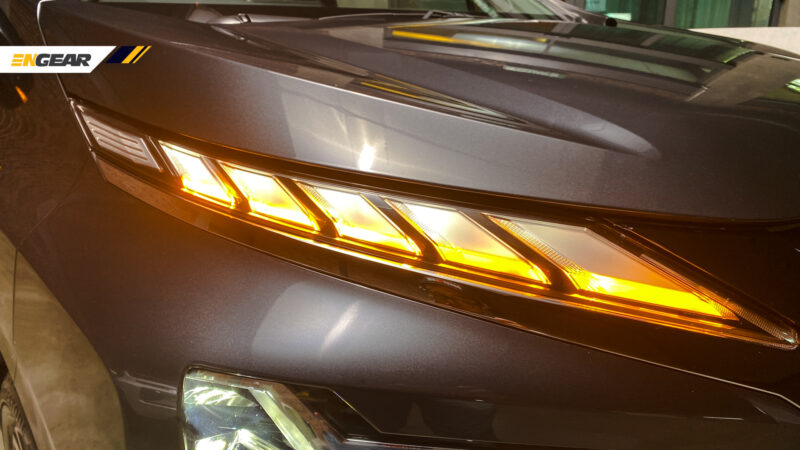
The headlights now feature a horizontal T-shaped design, while the daytime running lights are more advanced and brighter compared to the previous model which used fog lights as DRLs.

However, the downside is that the DRLs are integrated with the turn signals.

When the turn signals are activated, it may be difficult to see, especially for oncoming drivers, due to the DRLs not being dimmed together.


3. Price Factor and Included Features

The pricing factor might also make some users hesitant to acquire this latest Xpander model.

Its competitor, the Perodua Alza, starts at RM62,500, while its counterpart, the Veloz, is priced at RM95,000.

For budget-conscious consumers, this Mitsubishi Xpander might be overlooked due to its relatively higher price tag compared to its competitors, priced at RM99,980 even though it is assembled in the Pekan, Pahang plant.

Another aspect that we find challenging to deny is the standard safety factor present in this MPV model.

For the facelift version, the Xpander only offers very basic specifications, with just two airbags, while other competitors offer up to six airbags and more advanced ADAS features.

Regardless of the weaknesses listed in this article and the advantages present in the Xpander facelift, it is up to the readers to assess and choose the best option for their family’s use.

At the end of the day (and month), it is you who must take money out of your pocket, right?

Harman Kardon introduces Flow/Feel series for you to enjoy concert-quality audio in your car

Harman Kardon has introduced the latest audio system series Flow and Feel, designed for those seeking concert-grade audio quality in their vehicles.

The Flow series features the Flow 600CF and Flow 601CFS 165 mm powerful 360W speakers, complete with a 19 mm tweeter, 180W midrange woofer Flow 300S, and a 19 mm dome tweeter Flow 75T 360W.

Additionally, there is an offer for the 200 mm subwoofer underseat Flow 80 with 375W power, specially designed as an upgrade solution for BMW factory subwoofers and adaptable to various Audi and Porsche models.

For those looking for powerful bass without taking up much space, the Feel 700, a compact 165 mm subwoofer, is ideal for placement under the seat.

The Feel 700 boasts powerful performance with a built-in 125W RMS amplifier housed in a die-cast aluminum enclosure wrapped in automotive-grade fabric.

The Harman Kardon Flow speaker system will be available for purchase online at https://my.harmankardon.com/.

Alternatively, you can acquire the products at selected car accessory stores starting from October 17, 2024.

Below is the list of retail prices for each Harman Kardon Flow/Feel product:
Harman Kardon Flow 75T – RM580
Harman Kardon Flow 80 – RM1,480
Harman Kardon Flow 300S – RM2,180
Harman Kardon Flow 600CF – RM4,280
Harman Kardon Flow 601CFS – RM3,480
Harman Kardon Feel 700 – RM2,280

Ferrari F80, LaFerrari successor with 1,184 hp twin-turbo hybrid V6 engine!

Ferrari has finally unveiled the hypercar F80, the successor to iconic models like the GTO, F40, F50, and Enzo, following over a decade since the launch of the LaFerrari.

Despite not featuring the iconic V12 engine, the Ferrari F80 remains the most powerful model ever built by the Prancing Horse marque, boasting a total power output of 1,184 hp.

More than half of this horsepower is contributed by the 120-degree V6 engine, where the internal combustion engine alone can unleash a high 888 hp and 740 Nm, far surpassing the 296 GTB model.

The engine is aided by three electric motors, two at the front producing 282 hp each and a third at the rear generating 80 hp.

This makes the F80 the first Ferrari hypercar to feature all-wheel drive (AWD) system. Unfortunately, no EV mode is provided despite having three electric motors.

Instead, drivers can choose from three driving modes – Hybrid, prioritizing energy recovery and battery charging, Performance, and Qualify for full power.

There is a technology called Boost Optimization, where the system identifies sections on the track that need additional power thrust and is ready to unleash that power when necessary.

For this flagship model, the Ferrari F80 showcases a carbon fiber monocoque chassis, with the front and rear sub-frames made of aluminum.

This asymmetrical design provides a 1+1 seating configuration, allowing the driver’s seat to be adjusted while the passenger’s seat cannot.

The exterior of the F80 also features design cues from previous Ferrari models. For example, the front visor is inspired by the Daytona model, followed by angular front fenders and rear fenders reminiscent of the iconic F40.

The aerodynamic aspects of the F80 draw heavily from Ferrari’s expertise in Formula 1, capable of generating up to 1,000 kg of downforce at a speed of 249 km/h.

The CCM-R Plus brake system developed with Brembo offers 100% better mechanical strength than conventional carbon brakes, along with 300% better heat conduction rate.

There are two tire options – Michelin Pilot Sport Cup 2s or Pilot Sport Cup 2Rs, sized at 285/30 at the front and 345/30 at the rear.

In addition to sharing the same engine as the 296 GTB, the F80 also shares the same suspension system settings as the Purosangue.

The spool-valve Multimatic damping system can offer a balance between performance handling and quality driving, while sidelining the use of traditional anti-roll bars.

Not forgetting, the active safety system includes automatic emergency braking, lane departure warning, lane-keeping assistance, automatic high-beam assistance, and traffic sign recognition.

Only 799 units of the Ferrari F80 will be produced starting from the end of 2025, each commanding a starting price of €3.6 million (RM16.87 million).

Toyota believes majority of buyers will choose manual GR Corolla over automatic

For those who missed the boat, Toyota has previously updated the offering of the hot hatch 2025 GR Corolla model by adding the option of an 8-speed automatic transmission as an alternative to the manual transmission model.

The trend of transitioning to automatic models, which we commonly witnessed before, seems to have difficulty in infecting the GR Corolla enthusiasts.

According to CarBuzz report, Toyota expects that 80 percent of buyers will choose the manual GR Corolla model, while the rest will opt for the Direct Automatic Transmission (DAT) equipped model.

This proves that the GR Corolla buyers are a group of enthusiasts who still yearn for a driving experience as pure as possible.

There are some differences between the existing auto transmission in the GR Corolla compared to the GR Supra and GR86 models.

According to Toyota, the GR Corolla gearbox will use input from the brake pedal and throttle to calculate the optimum time for gear changes.

The auto version of GR Corolla also now comes with a launch control function that is not available in the manual model.

2024 GR GT Cup Asia: Taj Aiman emerges as champion, representing Asia at global finals this December

The final round of the 2024 Toyota Gazoo Racing (GR) GT Cup Asia concluded last weekend, with Taj Izrin Aiman emerging as the champion, surpassing 14 other participants from five ASEAN countries.

Accumulating a total of 65 points, Taj Aiman was crowned the individual champion of GR GT Cup Asia 2024, taking home a cash prize of US$ 8,000, followed by Andika Rama from Indonesia, the 2023 individual category champion, with a total of 57 points and a prize of US$4,500.

His fellow competitor Moreno Pratama secured the third position on the podium with 48 points and a cash prize of US$3,000.

This means that Taj Aiman and Andika Rama will represent Asia at the GR GT Global Finals on December 6th in Amsterdam.

Three races were featured, starting with the GR Yaris vehicles at the Sardegna Windmills rally circuit, followed by the GR Corolla Morizo Edition at the wet Nurburgring GP circuit, and finally the GR010 Hybrid vehicles at the Fuji International Speedway.

“I am truly at a loss for words. Despite facing technical difficulties and being unable to complete the race last year, I am extremely proud of the dedication and training that has paid off,” said Taj Aiman.

“I am very excited to continue training with Andika Rama in preparation for the Global Cup in Amsterdam.”

Andika Rama, representing Asia for the second time this year, added, “I am honored to represent Asia once again this year. Competing with Taj Aiman has been an incredible challenge.

“I pushed myself, but Aiman’s consistency and strategy in all three races were difficult to overcome. I am thrilled to have Aiman as a teammate as we prepare for the final round and cannot wait to make Asia proud.”

Three special awards were also presented to recognize outstanding performances by participants as follows:
• Driver of the Day – Taj Izrin Aiman (MY)
• Best Racecraft Driver – Russel Reyes (PH)
• Fastest Race Pace – Andika Rama (ID)

GR GT Cup Asia 2024 also welcomed Razer Inc. as the official partner, sponsoring a set of Razer BlackShark V2 X headsets designed to ensure smooth, clear, and comfortable communication among the racers.

Honda’s future EV will simulate the sound of the iconic models S2000, NSX, and HondaJet!

Driving an electric vehicle (EV) that is too quiet and smooth without any mechanical vibrations may not be suitable for everyone, especially those with an old-school soul.

So, Honda wants to ensure that their EV models to come will have unique driving characteristics and experiences.

During the recent 0 Tech Meeting 2024, Honda demonstrated a simulated driving concept that can mimic the characteristics of the brand’s high-performance iconic models.

Among them are the first generation Honda NSX, the hot hatch Civic Type R, the roadster S2000, the F1 machine, Honda CRX, and not forgetting the HondaJet personal jet!

In addition to displaying instrument panel themes based on the selected vehicles, this Honda e Digital UX Concept system can simulate the engine notes of the aforementioned models.

Fans of the loud VTEC engine roar will definitely not miss the chance to try this feature when it becomes available.

Honda will also use cabin vibration systems to create a driving experience akin to that of internal combustion engine cars.

According to The Drive, aside from the instrument panel themes and engine sound profiles, Honda is also experimenting with offering a more comprehensive experience, including introducing different tuning on the steering wheel, adjusting the pedal mapping, and the suspension system’s height.

Not to be missed, the simulated gear shifting feature using paddle shifters like those found in the Hyundai Ioniq 5 N model.

Tesla Robotaxi & Robovan, fully autonomous car without steering wheel and pedals

Elon Musk has finally fulfilled his ‘promise’ to introduce a Tesla car model without pedals and a steering wheel through the unveiling of the Robotaxi, also known as the Cybercab.

At first glance, the Robotaxi is a two-door coupe car that can only accommodate two people at a time and offers a fairly large cargo space.

Through its butterfly-wing doors, you can actually see the cabin of the Cybercab indeed has no steering wheel and pedals.

According to Elon Musk, the Robotaxi does not have a traditional charging port, as it relies entirely on wireless (inductive) charging.

There are no detailed specifications available regarding the electric propulsion unit used in the Robotaxi.

Interestingly, Elon Musk claims that the price of a Robotaxi will start below $30,000 (~RM130,000), with production planned to begin in 2026 or 2027.

Another concept model without a steering wheel showcased is the Robovan, which resembles a wheeled toaster. It lacks a front mirror, replaced instead by a large display screen inside.

The Robovan can accommodate up to 20 people at a time.

Both the Robotaxi and Robovan will rely on the Full-Self Driving autonomous driving software to operate on real roads.

Only time will tell whether this software can be trusted or not, given that Tesla already has a poor track record for the existing Full Self-Driving system in its current models.

We’ve tried Apple CarPlay on the 2025 Proton X70!

As everyone is aware, in the latest update, the Proton X70 C-segment SUV will come with Apple CarPlay and Android Auto as standard features for the 2025 model year.

Based on a brief test drive report by a colleague a few weeks ago, it seems that the feature is still not available for use.

Yesterday (October 15, 2024), we had the opportunity to try out the much-anticipated Apple CarPlay connection on the Proton X70 for media test driving purposes.

During the brief period of use, no significant differences were felt compared to the similar systems found in other modern cars.

Menus and applications such as Google Maps or Waze can be easily accessed on the 12.3-inch infotainment screen without much delay, and owners can also choose to use the phrases “Hey Proton” or “Hey Siri” to direct the system to perform specific operations while driving.

Those who are familiar with using Apple CarPlay will understand the importance of this system in a new car, especially when driving in urban areas.

For your information, this wireless Apple CarPlay feature will only be available for the 2025 Proton X70 model through over-the-air updates that will be implemented in stages.

The availability of the Android Auto feature will be announced later on.

2025 Mitsubishi Triton, new platform & engine, five variants, starting from RM102k

Mitsubishi Motors Malaysia has officially launched the new generation pickup truck 2025 Mitsubishi Triton, for the local market.

It will be available in five main variants, consisting of four double-cab variants and one single-cab variant designed for heavy-duty work.

Utilizing a completely new, more robust platform, the 2025 Triton offers larger dimensions, with a length of 5,360 mm (+55 mm), width of 1,930 mm (+115 mm), height of 1,815 mm (+35 mm), and a wheelbase of 3,130 mm (+130 mm).

As standard, the Triton comes with double wishbone suspension in the front, followed by leaf spring suspension at the rear aided by tuning for improved handling and comfort.

In addition to the new platform, the Triton also comes with the new MIVEC 4N16 diesel engine, producing 181 hp @ 3,500 rpm and a torque of 430 Nm @ 2,250-2,500 rpm.

The top variant, Athlete, features a two-stage turbo with Euro 5 standard, delivering high power at 204 PS @ 3,500 rpm and a torque of 470 Nm @ 1,500-2,750 rpm.

Moreover, the Athlete variant also includes an electronic power steering (EPS) system and the 4WD Super Select II system, offering up to seven driving modes (Normal, Eco, Gravel, Sand, Mud, Snow, Rock).

Only the two lowest variants (including the single-cab variant) are equipped with a six-speed manual gearbox, while the rest come with a 6-speed automatic gearbox.

The new Triton now features an upgraded Dynamic Shield design language with a “Beast Mode” approach.

Exterior features include LED headlights, LED daytime running lights (DRL), 18-inch rims (16 inches for lower variants), and T-shaped graphics on the rear lights.

The cabin uses a more modern Horizontal Axis concept, showcasing analog meters, a seven-inch LCD screen, a central touch screen with Apple CarPlay/Android Auto support, six climate control speakers, rear row air vents, premium leatherette-wrapped seats, leather-wrapped steering wheel, and leather-wrapped gear knob.

The base variant is equipped with a basic audio system that comes with 4 speakers, fabric seats, and urethane-wrapped steering wheel and gear knob.

In terms of safety, the Mitsubishi Triton comes with up to seven airbags, ABS, EBD, Hill Start Assist, Active Stability Control, Hill Descent Control (HDC), as well as advanced safety features such as Forward Collision Mitigation System, Adaptive Cruise Control (ACC), Blind Spot Warning (BSM), Lane Change Assist (LCA), Rear Cross Traffic Alert (RCTA), and High Beam Assistance (AHB).

For the local market, the selling prices of the Mitsubishi Triton 2025 are as follows:
Triton Single Cab (MT) – RM101,980
Triton GL (MT) – RM114,980
Triton GL (AT) – RM116,980
Triton Premium (AT) – RM145,980
Triton Athlete (AT) – RM165,980

As standard, the 2025 Mitsubishi Triton comes with a manufacturer’s warranty for five years or a mileage limit of 200,000 km (whichever comes first), except for the Mitsubishi Triton Athlete, which comes with an unlimited mileage warranty for five years, valid for registration until only December 31, 2024.


2025 Mitsubishi Triton Athlete

2025 Mitsubishi Triton Single Cab

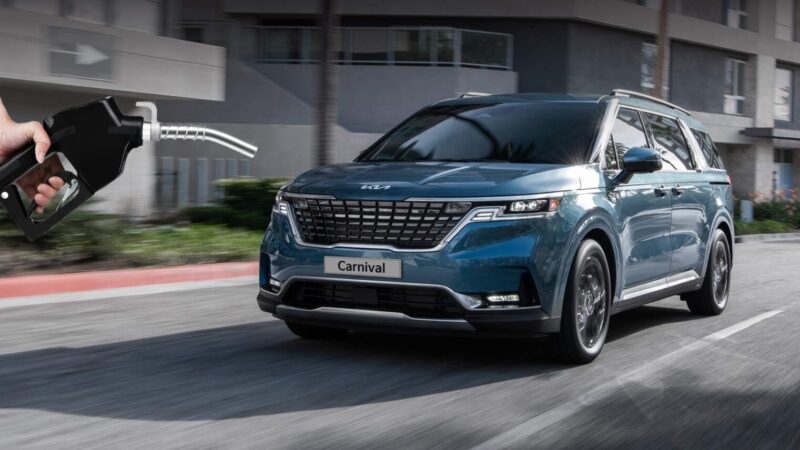
Bermaz offers diesel at RM1.05/liter for 5 years for new Kia Carnival buyers

Dinamikjaya Motors Sdn Bhd, the sole distributor of the Kia brand vehicles in Malaysia, has launched a special campaign for the Kia Carnival model.

The “Fuel-on-Us” campaign, which runs from October 1 to December 31, 2024, allows new Kia Carnival owners to enjoy subsidized diesel prices at RM1.05/liter for a period of five years without worrying about changes in fuel prices every week.

To participate in this campaign, customers must register their purchase of the Kia Carnival through any authorized Kia dealer during the campaign period.

Each purchase is eligible for only one application.

The Kia Carnival comes with a 2.2-liter turbo diesel engine producing 202 PS and 440 Nm of torque.

With a fuel tank capacity of 72 liters, the Kia Carnival offers a fuel consumption rate of 6.5 liters/100 km, providing a range of up to 850 km on a full tank of fuel.

In Malaysia, the Kia Carnival is offered in three main variants, with prices starting from RM198,500.