For the first time in history, Chinese automotive company BYD has successfully sold more vehicles than Ford.
During the third quarter (July-September), BYD sold 1.13 million vehicles, marking a 38 percent increase compared to the same period last year.
In comparison, Ford sold fewer than 40,000 vehicles during the same period, causing the manufacturer to drop one rank, becoming the seventh largest in the world.
However, for the period from January to September, Ford is still ahead of BYD with total sales of 3.3 million units, slightly more than BYD’s 3.25 million units.
It is not impossible that by the end of the year, BYD’s sales could reach 4 million, surpassing Ford’s total sales for the year 2024.
In addition to BYD, several Chinese automotive companies have also reported sales increases that could be concerning for Japanese, European, and American manufacturers.
For example, during Q3, Geely experienced a sales increase of 14 percent, reaching 820,000 vehicles, surpassing Nissan and trailing behind Honda at ninth place.
China’s third-largest manufacturer, Chery, recorded a 27 percent sales increase to 550,000 units, placing it in twelfth position.
Toyota’s sales, however, decreased by 4 percent to 2.73 million units, although the Japanese giant still leads the chart ahead of the VW Group, which saw a 7 percent decline to 2.17 million vehicles.
While Hyundai Motor Group remains comfortably in third place, it also reported a 3 percent sales decline to 1.77 million units.
In fifth place, Stellantis seems to need to work harder as the sales difference with BYD is only around 10,000 units.
Perodua is set to showcase something special at the Kuala Lumpur International Mobility Show (KLIMS) taking place this week.
Last weekend, Perodua began airing a teaser video for its electric concept model, EMO-II (Electric Mobility Online).
The 30-second video highlights the sporty design elements intended for the EMO-II.
Unique features include a glowing Perodua logo, a full-width front and rear LED light bar, and an aggressive bumper design.
Additionally, the rear of the EMO-II features a large diffuser component, along with a single fog light positioned in the center of the bumper.
According to previously revealed specifications, the Perodua EMO-II is powered by a single front-wheel-drive electric motor generating 68 PS/220 Nm, with a range of up to 450 km on a full charge.
The development of the EMO-II EV prototype was undertaken in collaboration with three local universities: UNITEN, UniKL, and UPM.
Meanwhile, the development of the powertrain technology was executed with a company based in Australia, as there are currently no similar EV models produced by Toyota or Daihatsu at this scale.
Perodua is expected to launch its first electric vehicle (EV) by the end of 2025.
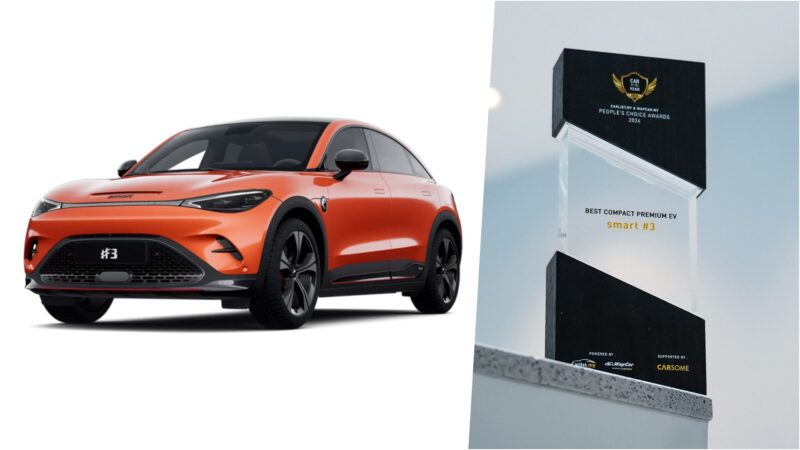
Smart Malaysia has announced that the smart #3 electric crossover has been awarded the title of Best Compact Premium EV at the 2024 Car of the Year (COTY) Awards organized by Carlist.my and Wapcar.
According to Zhang Qiang, the Chief Executive Officer of PRO-NET, “This award is a testament to our strong commitment to delivering an exceptional fully electric crossover experience for our customers.”
“The smart #3 has received an outstanding reception among Malaysians, and we are very grateful to the judges and the smart supporters for this recognition,” he further explained.
Officially launched in the middle of last year, the smart #3 is available in three main variants: Pro, Premium, and the sportier Brabus version.
The Pro and Premium variants are powered by a single rear-wheel-drive electric motor delivering 272 hp and 343 Nm of torque, while the Brabus variant features an additional electric motor on the front axle, bringing the total power output to 428 hp and 543 Nm.
As standard, the smart #3 offers a driving range of 455 km, or 415 km for the Brabus variant.
The smart #3 is priced from RM175,000 to RM255,000.
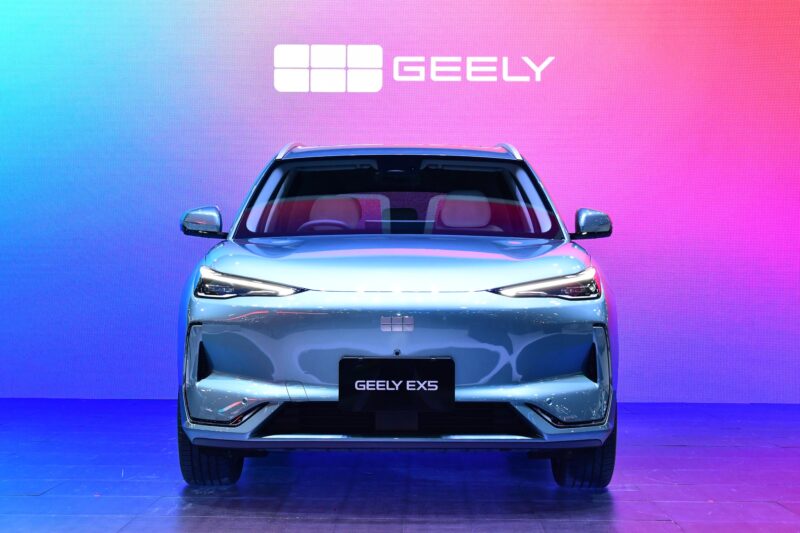
As we await the official launch of the Proton eMas 7, Geely has made a significant move by launching the Galaxy E5 model (or Geely EX5) in the Thai market.
Two variants are offered in the neighboring country: the Pro variant, priced at THB 859,000 (approximately RM111,000), and the Max variant, which costs THB 949,000 (approximately RM123,000).
The Geely EX5 shares similar specifications with the eMas 7, equipped with a single electric motor delivering 218 PS and 320 Nm of torque.
The Aegis 60.22 kWh battery pack provides a driving range of up to 495 km on a full charge, based on NEDC standards.
The Geely EX5 also supports 11 kW AC charging, allowing it to fully charge in 6.1 hours, as well as 100 kW DC fast charging, which enables charging from 30% to 80% in just 20 minutes.
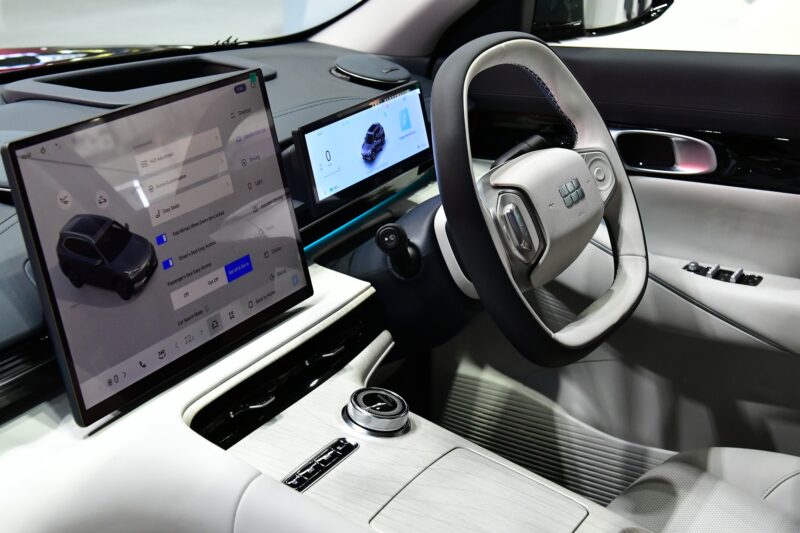
Unlike the Proton eMas 7, the Geely EX5 comes standard with Apple CarPlay connectivity.
With the official entry of the Geely brand into the Thai market, what will happen to the plans of the Chinese automotive giant to use the Proton brand for the ASEAN market and other right-hand drive markets?
Sime Darby Auto Performance (SDAP), the exclusive Porsche vehicle distributor in Malaysia, has launched the second-generation Porsche Macan SUV for the local market.
Unlike the first-generation model, the second-generation Macan is now offered exclusively in a fully electric version.
Here are some key facts you need to know about the 2025 Porsche Macan EV:
1. Four Variants
The Porsche Macan EV is available in four main variants:
Macan – RM430,000
Macan 4 – RM445,000
Macan 4S – RM525,000
Macan Turbo – RM635,000
With current EV incentives, the Macan EV is priced lower than the first-generation Macan.
2. RWD or AWD Options
Depending on the specifications, the Macan EV is equipped with either a single electric motor for rear-wheel drive (RWD) or a dual-motor version with an all-wheel drive (AWD) system.
3. Performance
Macan:
340 PS / 563 Nm (boost 350 PS)
0-100 km/h in 5.7 seconds
Top speed: 220 km/h
Macan 4:
387 PS / 650 Nm (boost 408 PS)
0-100 km/h in 5.2 seconds
Top speed: 220 km/h
Macan 4S:
448 PS / 820 Nm (boost 516 PS)
0-100 km/h in 4.1 seconds
Top speed: 240 km/h
Macan Turbo:
584 PS / 1,130 Nm (boost 639 PS)
0-100 km/h in 3.3 seconds
Top speed: 260 km/h
4. Range
All Macan variants come standard with a 100 kWh NMC (nickel manganese cobalt) battery pack.
According to Porsche, the Macan EV can achieve a range of up to 641 km for the base variant, 613 km for the Macan 4, 606 km for the Macan 4S, and 591 km for the Macan Turbo.
5. Charging
The Macan EV supports AC charging at 11 kW, allowing the battery to charge from 0 to 100 percent state of charge (SoC) in approximately 10 hours.
Additionally, DC fast charging of up to 270 kW enables users to charge the battery from 10 to 80 percent in as little as 21 minutes.
6. Dimensions
Compared to the previous model, the Porsche Macan EV measures 4,784 mm in length (+58 mm), 1,938 mm in width (+11 mm), 1,622 mm in height (+26 mm), and has a wheelbase of 2,893 mm (+86 mm).
7. Exterior Design
As an electric vehicle (EV), the exterior design of the Porsche Macan is heavily inspired by the electric sedan, the Taycan.
It features distinctive elements such as separated headlamps, with the upper cluster structure acting as the daytime running light (DRL) unit, while the main headlights are positioned in the bumper.
The rear is equipped with a full-width LED light bar, complemented by an adaptive spoiler that is cleverly integrated.
All four doors come with a frameless window design.
In addition, the Porsche Macan EV is also equipped with a system called Porsche Active Aerodynamics (PAA), which includes components such as active cooling flaps, underheadlight air curtains, Gurney flaps, and diffuser blades that allow this SUV to achieve a drag coefficient as low as 0.25.
8. Cabin Features
Similar to the exterior, the interior of the Macan is also inspired by the Taycan’s cabin.
It includes a 12.6-inch digital instrument cluster, a central 10.9-inch screen, and an optional 10.9-inch display in front of the passenger seat.
The infotainment system of the Porsche Macan runs on the Android Automotive OS and supports both Apple CarPlay and Android Auto.
The center console still features a cluster of physical buttons necessary for climate control.
9. Practicality
The Porsche Macan offers 540 liters of cargo space behind the second-row seats. If the rear seat backrest is folded down completely, the rear luggage compartment capacity increases to up to 1,348 litres.
In addition, there is an extra 84 liters of storage available in the front trunk (frunk).
Malaysia Airlines’ parent company, Malaysia Aviation Group (MAG), received the delivery of its first Airbus A330neo aircraft yesterday.
The A330-900 is the first unit of 20 aircraft leased from Avolon by MAG, setting new standards for fuel efficiency and passenger experience.
The Airbus A330neo is configured with a premium two-class layout featuring 297 seats, including 28 business class seats.
Meanwhile, the economy cabin can accommodate 269 passengers.
Among the amenities offered are spacious overhead storage, improved air quality, the latest in-flight entertainment system, and high-speed Wi-Fi connectivity.
MAS will use the A330neo aircraft for flights across Asia and the Pacific, as well as on selected routes to the Middle East.
MAG is the 20th company to join the group of global operators of the modern, fuel-efficient A330neo aircraft.
To date, Airbus has delivered over 140 units of the A330neo to airlines around the world.
In addition to the introduction of the limited edition A90 Final Edition model, Toyota Gazoo Racing has also updated the GR Supra Lightweight Evo as an equally impressive alternative.
The Lightweight Evo version retains the 3.0-liter inline six-cylinder turbo engine, delivering 382 hp and 500 Nm of torque, and is available with either a manual or automatic transmission.
This model features a more stripped-down design compared to the A90 Final Edition, with the GR Supra Lightweight Evo equipped with distinctive elements such as a carbon fiber ducktail spoiler, new matte black 19-inch wheels, and fins on the front wheel arches.
However, Toyota remains committed to enhancing the handling characteristics, equipping this model with larger Brembo brakes, revised camber angles on the front and rear wheels, and tuning of the electronic shock absorber control.
Additionally, Toyota engineers have reinforced several crucial components, including rubber bushings, rubber mounts, sway bars, and underbody braces.
Finally, the electric power steering system has been recalibrated to provide a better steering feel and handling response.
Inside the cabin, the GR Supra Lightweight Evo features Alcantara-wrapped seats adorned with GR logos, red seatbelts, and red stitching on the gear knob, giving it a sporty appearance.
According to Toyota, although production of the GR Supra A90 is coming to an end, this does not indicate that the model will be neglected.
On the contrary, the GR Supra will continue to thrive in various motorsport disciplines around the world.
Toyota has also indirectly confirmed that the GR Supra will receive a new generation successor, hinted at through an Easter egg featured in a short animated series called GRIP.
Mercedes-Benz Malaysia has announced a strategic partnership with prestigious hotels, golf course operators, and resorts to further expand its electric vehicle (EV) charging network nationwide.
The following is a list of hotels and golf courses involved in the initial phase:
Rasa Sayang Hotel by Shangri-La (Penang)
Marriott Hotel (Penang)
The RuMa Hotel & Residence (Kuala Lumpur)
Saujana Golf & Country Club (Kuala Lumpur)
Anantara Desaru Coast Resort & Villas (Johor)
Mercedes-Benz customers can now enjoy a variety of additional benefits at these locations by simply presenting their Mercedes-Benz card or app upon check-in.
According to Amanda Zhang, CEO and President of Mercedes-Benz Malaysia, “Mercedes-Benz is always at the forefront of driving the future of mobility and luxury through synergistic and meaningful collaborations.”
“By integrating electric mobility into the luxury lifestyle experience, we are redefining what it means to be a Mercedes-Benz customer,” she added.
She further explained that this long-term strategy aims not only to make electric vehicle ownership more accessible but also to enhance every touchpoint in the customer journey through customized solutions and meaningful partnerships that reflect the company’s commitment to innovation and sustainability.
Mercedes-Benz is employing a multi-channel approach to strengthen its EV charging infrastructure, which includes:
Charge@Home: Installation of wall chargers at homes
Charge@Retail: Providing EV charging outlets at Mercedes-Benz showrooms/service centers
Charge@Public: Charging facilities at hotels, resorts, and golf courses
Current Charge Point Operators (CPOs) partnered with Mercedes-Benz include EV Connection, ChargEV, and Gentari.
Whether we realize it or not, the Toyota GR Supra has now been around for five years since it was introduced in 2019.
Before the production of this rear-wheel-drive sports car comes to an end, Toyota Gazoo Racing has launched a limited edition model called the Toyota GR Supra A90 Final Edition.
The original inline-six 3.0-liter turbo engine has been tuned to achieve a power increase of 90 hp and 70 Nm, bringing the total to 435 hp and torque of 570 Nm.
Changes made include a revised airflow, the use of low back-pressure catalytic components, and optimization of engine operation control.
As a result, this Final Edition GR Supra can achieve a higher top speed of approximately 270 km/h.
To maintain peak performance at all times, Toyota has added a baffle plate to the engine oil pan to prevent uneven oil distribution under high G-forces.
The cooling system is enhanced with a radiator fan, a sub-radiator, and larger cooling fins on the differential cover.
Handling has been improved with an adjustable KW suspension system similar to that used in the GR Supra GT4 race car, accompanied by adjustments to the front and rear wheel camber angles for better grip, as well as an active differential control to reduce understeer.
In addition, Toyota has recalibrated the electric steering system for more dynamic, natural, and connected handling, and added a crossbar in the rear cargo space along with strengthened front and rear stabilizer bars.
Drivers will also experience improved cornering stability, thanks to wider Michelin Pilot Sport Cup 2 tires that are 10 mm wider, wrapping around lightweight 19-inch front and 20-inch rear rims.
The braking system has been enhanced with high-friction brake pads, front and rear floating drilled rotors, and stainless steel braided brake hoses.
Finally, all these upgrades would be incomplete without a more aggressive appearance.
The Toyota GR Supra A90 Final Edition features an aerodynamic body kit inspired by motorsport involvement, including a carbon fiber front spoiler, front bumper middle canard, front bumper side fins, carbon fiber hood vents, and a carbon fiber goose-neck rear wing.
Additionally, the A90 Final Edition borrows the titanium Akrapovič exhaust from the GR Supra GT4, ensuring a more powerful soundtrack.
Inside the cabin, the GR Supra is equipped with full Recaro Podium bucket seats featuring Alcantara cushion covers and a racy red color scheme for optimal and comfortable driving position, especially under high G-forces.
Production of the GR Supra A90 Final Edition is limited to just 300 units worldwide.
Do you remember the video game Need For Speed: Most Wanted, released in 2005?
Whether you realize it or not, the iconic image of the BMW M3 GTR has haunted us for almost 20 years, and now that model has been brought to life by BMW!
In collaboration with Electronic Arts, BMW has recreated the legendary M3 GTR and will showcase it at the BMW Welt Museum in Munich from November 27, 2024, to January 6, 2025.
The M3 GTR for NFS: Most Wanted is a real racing machine based on the M3 GTR E46, number #42, which was driven by Jörg Müller and J.J. Lehto for the BMW Motorsport team in 2001. It features a livery reminiscent of the hero car from the video game.
For racing purposes, BMW developed a V8 4.0-liter engine (code P60B40) capable of generating 444 hp.
The homologation laws in effect at the time led BMW to produce 10 units of the M3 GTR Strassenversion— the road-legal version.
With the same engine, the BMW M3 GTR Strassenversion delivered reduced power of 380 hp and was paired with a more conventional manual transmission.
This M3 GTR race car later inspired the design of the livery seen on the BMW GTR in NFS: Most Wanted, which became popular among video game fans in 2005.
You can actually ‘drive’ this machine by updating the Need For Speed: Unbound Vol. 9 game, which also features several new vehicle models, including the BMW S1000RR motorcycle.
This is the latest Grand Tourer model from Ferrari bearing a rather unusual and unique name – 12Cilindri.
Yes, 12Cilindri (pronounced as Dodici Cilindri) is the Italian translation for the term meaning 12 cylinders, indicating that this GT model continues to offer a V12 engine.
In terms of model hierarchy, the Ferrari 12Cilindri has been designed to replace the aging 812 Superfast.
Here are some key facts you should know about the Ferrari 12Cilindri entering the Malaysian market:
1. Engine
The Ferrari 12Cilindri is powered by a naturally aspirated (NA) 6.5-liter V12 engine, producing 830 hp at 9,250 rpm and 678 Nm at 7,250 rpm.
There is no hybrid assistance provided for this model; however, Ferrari has managed to comply with all established emission regulations.
2. Modifications Made
Several modifications have been made to this V12 engine, including the use of aluminum connecting rods to reduce rotational mass by 40 percent compared to steel connecting rods.
Additionally, there are aluminum alloy pistons, a lightweight, balanced crankshaft, and ‘sliding finger followers’ with a DLC (Diamond-Like-Carbon) coating borrowed from F1 technology, which reduces friction and enhances the mechanical efficiency of the engine.
3. Transmission
The Ferrari 12Cilindri comes with an eight-speed dual-clutch automatic transmission, promising a gear shift that is 30 percent faster than that of the 812.
Moreover, Ferrari has introduced a system known as ‘Aspirated Torque Shaping,’ which utilizes electronics to modify torque curves in third and fourth gear ratios.
4. Performance
Acceleration from 0-100 km/h is achieved in just 2.9 seconds, or 7.9 seconds to reach 200 km/h, before attaining a top speed of 340 km/h.
The Spider version is slightly slower, requiring 2.95 seconds to reach 100 km/h and 8.2 seconds to hit 200 km/h.
5. Chassis
The use of a full aluminum body structure makes the 12Cilindri chassis 15 percent stiffer.
Although longer than the 812 Superfast, the 12Cilindri features a wheelbase that is 20 mm shorter, contributing to improved agility in handling.
Essentially, a Ferrari 12Cilindri has a dry weight of around 1,560 kg, while the Spider variant is heavier, weighing approximately 1,620 kg.
6. Design
The front end of the 12Cilindri, reminiscent of wearing glasses, brings to mind the iconic 365 GTB/4 Daytona.
It is equipped with a 21-inch rim set at all four corners, fitted with Michelin Pilot Sport S5 or Goodyear Eagle F1 Supersport tires.
7. Aerodynamic Features
The Ferrari 12Cilindri combines passive and active aerodynamics to ensure a significantly lower drag coefficient (Cd) compared to the 812 Superfast.
For example, the underbody design maximizes vertical load generation, with louvres behind the front wheels to reduce excessive pressure in the engine bay, three vortex generators at the front underside, and active aerodynamic elements functioning between speeds of 60 km/h to 300 km/h to optimize downforce.
8. Cabin Equipment
No analog instrument cluster is provided; instead, the 12Cilindri relies heavily on digital displays, starting with a 15.6-inch screen in front of the driver, a central 10.25-inch screen, and an 8.8-inch screen for the passenger.
The steering wheel is borrowed from the 296 model, complete with capacitive control buttons.
In addition to the V12’s roar, passengers can also enjoy music from the Burmester audio system, which comes equipped with 15 speakers.
Additionally, Apple CarPlay and Android Auto functionalities are available.
9. Modern Technology
The 12Cilindri benefits from various standard modern features, such as ABS Evo, a brake-by-wire system, Slide Slip Control 8.0 (SSC 8.0) software, and an intelligent four-wheel steering system.
10. Pricing
For the Malaysian market, Ital Auto has set the starting price for the 12Cilindri at RM4.7 million for the coupe version, while the 12Cilindri Spider is priced at RM5.1 million.
The Japanese automotive manufacturer Nissan Motor Co is now in urgent need of finding long-term investors to stabilize its operations amidst restructuring and declining sales.
According to a recent report from The Financial Times, at least two unnamed Nissan executives have confirmed that the brand is seeking new investors.
Nissan is targeting institutional investors such as banking or insurance companies to replace part of Renault’s stake.
The source also indicated that the company may only have a 12 to 14-month window to survive.
Nissan was previously rescued from bankruptcy in 1999 by Renault, which purchased a 36.8 percent stake in the company.
In 2002, Nissan acquired a 15 percent stake in Renault, while Renault increased its stake in Nissan to 43 percent.
However, in 2023, Renault reduced its stake in Nissan to 15 percent, aligning with the percentage that Nissan holds in Renault.
In recent months, Nissan (and Mitsubishi) has reportedly been exploring collaboration with Honda to develop electric vehicles (EVs) and technology software as a way to address competition from Chinese companies.
The collaboration was officially announced in August, but the development has not been well received by former Nissan CEO Carlos Ghosn, who described the merger as a disguised acquisition.
“I can’t imagine for one moment how it’s going to work between Honda and Nissan unless it’s a takeover, unless it’s a disguised takeover by Honda of Nissan and Mitsubishi with Honda in the driver’s seat,” Ghosn said.
“It’s going to be a takeover, a disguised takeover.”
As a global giant in the telecommunications industry, Huawei has surprised the world by entering the automotive space through the AITO brand.
However, in the middle of last year, Huawei sold the AITO trademark and patents to the Seres Group.
In addition to AITO, Huawei has formed several collaborations focusing on premium electric vehicle (EV) products, including Avatr (Changan), Luxeed (Chery), Stelato (BAIC), and the latest ultra-luxury EV brand known as Maextro.
Maextro is a joint venture established between Huawei and JAC Group, targeting premium brands such as Bentley, Maybach, and Rolls-Royce with the introduction of its first model, the S800.
Essentially, the Maextro S800 is a premium electric sedan with a design heavily inspired by the sedans of Bentley, Rolls-Royce, and Maybach.
Features include a two-tone paint scheme resembling that of a Maybach, wheel designs similar to Rolls-Royce models, and chrome accents that evoke Bentley styles.
Moving to the rear, we see headlights that resemble those found on the Porsche Panamera.
The S800 boasts dimensions of 5,480 mm in length, 2,000 mm in width, 1,536 mm in height, and a wheelbase of 3,370 mm, allowing it to compete with the size of the Maybach S-Class, though it is slightly smaller than the Rolls-Royce Ghost and Phantom EWB.
The S800’s cabin features a four-seat configuration and is equipped with several luxurious amenities, including starry LED accents on the headliner and high-quality upholstery.
As a joint venture supported by Huawei, we expect the S800 to also come with several of the latest driver assistance technologies, including an AI-based system and Level 3 autonomous driving capabilities.
At this time, Huawei has not yet disclosed the details of the powertrain used in the Maextro S800 sedan, which is built on the Tuling Intelligent Chassis platform.
However, potential buyers can already reserve this electric sedan by placing a deposit as low as RMB 20,000 (approximately RM12,256), with the estimated sale price ranging from RMB 1 million to 1.5 million (approximately RM613,000 to RM919,000).
This positions the S800 directly in competition with the Mercedes-Benz EQS and BMW i7 in the luxury electric vehicle segment.
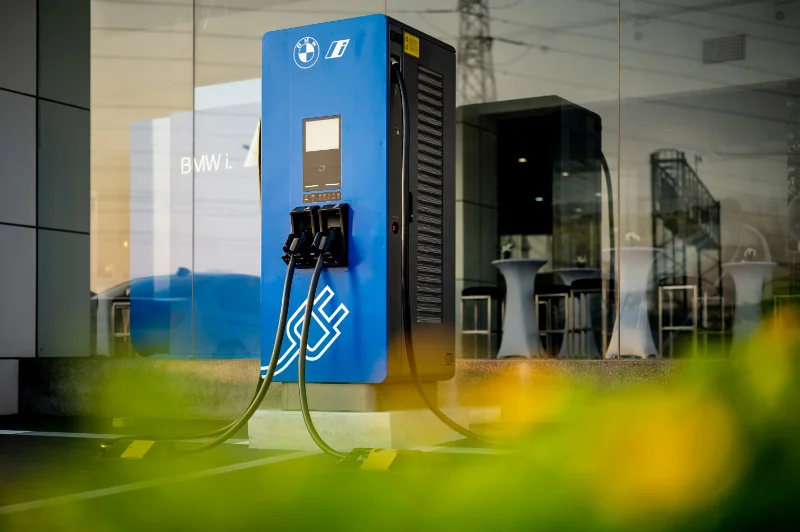
The government through the Ministry of Investment, Trade and Industry (MITI) aims to increase its target for the installation of direct current (DC) fast chargers to 1,500 units by 2025.
In connection with this, MITI will collaborate with the state governments of Selangor and Johor to ensure that each district has facilities for electric vehicles (EVs).
According to Deputy Minister Liew Chin Tong, this is part of the initiative to maintain the target of 10,000 EV charging stations by 2025.
Currently, there are approximately 500 DC chargers nationwide.
He further stated, in response to a question from Khoo Poay Tiong (PH-Kota Melaka), that the government has implemented various initiatives to support the development of the EV ecosystem and local industry.
“As of September 30, 2024, a total of 33,319 electrified vehicles (xEVs), including hybrids, plug-in hybrids, battery electric vehicles (BEVs), and fuel cell electric vehicles (FCEVs), have been sold, representing 5.11 percent of total annual sales. Additionally, 3,354 charging bays have been installed as of October 31, 2024,” he said.
You may have heard several times about the story of the Sultan of Brunei and his incredibly luxurious personal vehicle collection, which likely now spans into the thousands.
Among these vehicles, some are one-off models that do not exist in any other country, and there are likely some cars that have been used only once before being stored away in a warehouse.
Now, you can take a closer look at a small known selection of vehicles collected by the Sultan of Brunei, thanks to the Instagram account brunei_cars_2001.
All the photos captured here were taken around the year 2001, so we cannot ascertain the current condition of all the machinery in the inventory.
Here are five vehicle models we find particularly interesting to share with our readers:
1. McLaren F1
The Sultan of Brunei is perhaps one of the most ardent fans of the McLaren F1 models, considering he owns up to 10 units out of the 106 F1s ever produced.
In addition to the standard F1 model, there are also two F1 LMs, one F1 GT, and a McLaren F1 GTR built on the Ueno Clinic vehicle that won 24 Hours of Le Mans in 1995.
It features a 6.1-liter V12 engine capable of generating an impressive 627 PS and 650 Nm, matched with a six-speed manual transmission.
The McLaren F1 held the record as the fastest production car for several years before being eclipsed by the Bugatti Veyron and Bugatti Chiron.
2. Bugatti EB110 SS
The Sultan of Brunei also possesses at least four Bugatti EB110 SS supercars in his collection.
Three of these vehicles are colored yellow, black, and silver, while the fourth, also in black, is adorned with racing stripes in red, blue, and yellow.
This machine is powered by a 3.5-liter V12 engine with four turbochargers, producing 560 PS (or 603 PS in the Super Sport version), paired with a six-speed manual transmission.
It accelerates from 0 to 60 mph in just 3.4 seconds, reaching a top speed of 342 km/h.
3. Porsche 962
In addition to several models of the Porsche 911, the Sultan of Brunei has also collected units of the Porsche 959 and at least five Dauer Porsche 962s.
For your information, the Porsche 962 was originally built for Group C racing to replace the Porsche 956, with 13 units made for the road version.
The Dauer 962 uses the same engine as the race version 962, a flat-6 2,994 cc engine that can generate up to 730 PS and is paired with a five-speed racing transmission.
4. Bentley Dominator
The Bentley Dominator was produced in the 1990s and can be considered the predecessor to the ultra-luxurious SUVs that exist today, such as the Rolls-Royce Cullinan and the Bentley Bentayga.
However, it was not made for the general market.
Instead, Bentley produced only about six units of the Dominator model, all of which were designated for the personal use of the Sultan of Brunei.
Unfortunately, the specifications of this first luxury SUV from Bentley have never been disclosed by any party, including Bentley itself.
5. Ferrari F90
As a Ferrari fan, it’s impossible for the Sultan of Brunei’s inventory to be without a collection of supercars from the Prancing Horse brand.
There are at least seven Ferrari F40 models, which are highly coveted by automotive enthusiasts, several units of the F50, and three Ferrari F90 models, the existence of which may not be widely known.
Not to be confused with the more modern SF90, the Ferrari F90 was produced by Pininfarina under the special request of Prince Jefri Bolkiah, the brother of Sultan Hassanal Bolkiah.
Initially, the development of the F90 was completely unknown to Ferrari until the information leaked in 1988.
The project was managed by Enrico Fumia, head of the R&D department at Pininfarina, and the name F90 refers to “Ferrari of the 90s.”
All six units of the F90 use the Testarossa platform but come with entirely new body panels and are powered by a 390 PS engine that drives the rear wheels.
You can view the full (though possibly not complete) list of the Sultan of Brunei’s car collection through this Google Drive account link.
After a five-year hiatus, Proton’s official team, Proton R3 returned to compete in the Sepang 1000KM 2024 race in the Malaysian Touring Car (MTC) category.
This marks the first time Proton has raced using the S70 R3 vehicle since the launch of this C-segment sedan on November 28, 2023.
The race, which lasted for 181 laps, saw the Proton R3 team struggling with difficulties as car #81 was forced to retire as early as the 8th lap.
Another S70 car, numbered 82 and driven by Ariff Azmi and Alister Yoong, faced technical issues that caused them to lose over 40 minutes.
Despite the challenges faced, the Proton R3 team successfully completed the race, finishing in fifth place in the MTC class.
Roslan Abdullah, Chief Executive Officer of Proton Edar, stated, “While we aimed for another overall victory, the Proton R3 team is aware of the task of completing a brand-new racing vehicle to compete against teams that have been racing for the past three years.”
He further explained that the data and racing experiences gathered throughout the weekend would serve as the foundation for R3 to begin preparations for the 2025 racing season.
In positive news, in conjunction with the KLIMS 2024 event, Proton will also showcase vehicle #82 in the same condition as it finished the S1K race.
Boon Siew Honda has announced the return of the White Trico color option for the Honda RS150R underbone motorcycle, alongside two other attractive colors: Matte Blue and Silver.
With this latest update, the selling price of the Honda RS150R now starts at RM8,379 on the road, excluding insurance—an increase of RM80 compared to the previous offering.
As usual, the mechanical aspects of this motorcycle remain unchanged.
This means that the RS150R retains its 149.2 cc single-cylinder engine, capable of generating 15.8 hp at 9,000 rpm and 13.6 Nm of torque at 7,000 rpm.
The suspension system consists of telescopic forks at the front, followed by a single shock absorber at the rear, while the braking system is supported by disc brakes at both the front and rear.
Other features include an LED headlight system, a fuel tank capacity of 4.5 liters, and a digital LCD display.
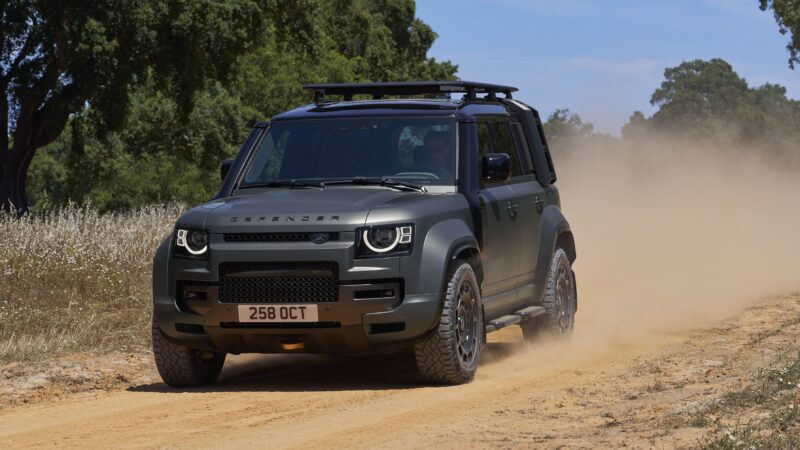
Land Rover has announced its participation in the 2026 Dakar Rally in a recent statement.
Not stopping there, Land Rover will also serve as the official vehicle partner of the Dakar Rally for three years starting next year.
This means that Land Rover will provide a fleet of Defender models for transportation and support vehicles for the Dakar Rally until 2028.
In addition, six modified Defenders will be supplied for route testing for the upcoming race.
While the Defender is renowned for its off-road driving capabilities, this marks the first time a formal Defender team has participated in the Dakar Rally.
According to JLR Motorsport Managing Director James Barclay, “Our first time ever with a factory entry into the Dakar means we are right at the beginning of our journey.
“We are conscious of how much we have to learn and achieve before taking the start in 2026, but we are already well under way and looking forward to the adventure.”
More details about the program will be revealed prior to the 2025 Dakar Rally.
The 47th edition of the Dakar Rally, located in Saudi Arabia, will take place from January 3 to January 17 next year, covering a route from Bisha to Shubaytah across the Rub’ al Khali (Empty Quarter) desert.
We must thank Toyota for continuing to produce a lineup of high-performance car models in the modern era for the enjoyment of its fans.
After years of rumors circulating, Toyota has finally confirmed that the iconic Celica nameplate will be making a comeback.
The announcement was made by Toyota’s Executive Vice President, Yuki Nakajima, in conjunction with the recent hosting of Rally Japan.
“Honestly, there are no signs (of the Celica) at this time. However, there are many people within the company who are eagerly awaiting the return of the Celica.
“So, I wonder if I can say this in a public forum, but we are developing the Celica!”
This latest development comes just weeks after Toyota hinted at new sports cars, including the Celica, GR GT3, and MR2, in the animated series GRIP, as well as updates to the existing lineup (GR86, GR Supra).
Interestingly, at the 2024 SEMA show, Toyota also seized the opportunity to showcase a concept car named the GR86 Rally Legacy Concept, inspired by the 1990s Celica GT-Four.
In addition to a Castrol-style livery, the GR86 is equipped with a GR Yaris engine producing 300 hp and 370 Nm of torque, paired with a GR-Four all-wheel-drive system to embody the Celica theme being brought back.
Are you excited about the return of the Celica name?
The government does not intend to allow vehicles owned by non-citizens to enjoy the RON95 subsidy, said the Ministry of Economy.
The ministry said the move was in line with the government’s objective to strengthen the country’s fiscal positition as stated in the 12th Malaysia Plan (12MP).
“The implementation of the RON95 subsidy in 2025 is expected to provide savings of RM3.6 billion to government expenditure, or a reduction of 21.9 per cent, to the total subsidy expenditure, if the subsidies are only given to the B85 group and citizens.
“By ensuring that the targeted RON95 subsidies do not involve non-citizens, it will give savings of RM0.3 billion (2.0 per cent) to the government,” said the ministry in a written reply on the Parliament website today.
The Economy Ministry said this in response to a question from Abdul Latiff Abdul Rahman (PN-Kuala Krai) on the ministry’s proposal to allow vehicles registered in Brunei to use RON95 in Malaysia.
The government will implement the targeted RON95 subsidy in the middle of 2025, covering 85 per cent of the people which will be determined based on Basic Expenditure of Decent Living (PAKW) of households.
Malaysia’s Leading Automotive News | ENGEAR ENGLISH