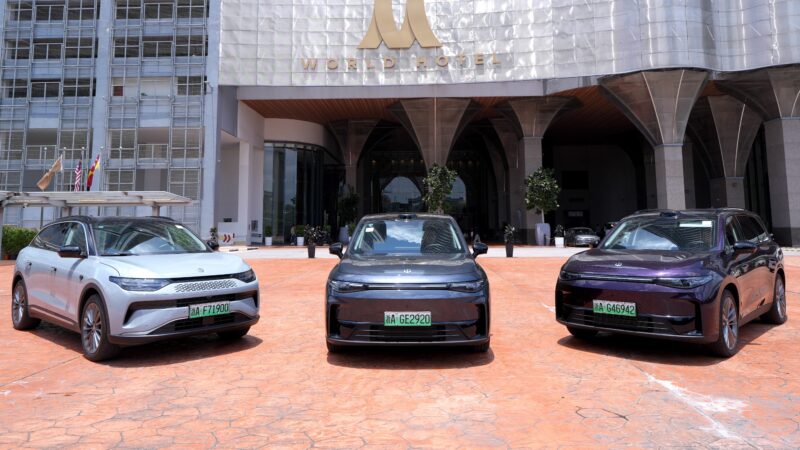
Proton New Energy Technology Sdn Bhd (Pro-Net) recently delivered three Proton e.MAS 7 electric SUVs to the management of Northport (Malaysia) Sdn Bhd for use by its auxiliary police force.
This achievement marks Northport as the first port operator in the country to utilize the e.MAS 7 in its fleet management, reinforcing its commitment to corporate ESG initiatives and sustainable transportation solutions.
The use of the Proton e.MAS 7 electric SUV will not only reduce fuel consumption, carbon emissions, and noise pollution, but its quiet and smooth ride will also make patrol operations more comfortable and reduce officer fatigue.
According to Zhang Qiang, CEO of Pro-Net, “We are delighted to be working with Northport, an organization that exemplifies sustainability.”
“Its use in Northport’s operations proves that electric vehicles are not just a vision of the future, but a solution that can be adopted today.”
Fakhrul Azhar Tajudin, CEO of Northport, said, “At Northport, we are committed to practicing a sustainable approach and supporting clean energy solutions.”
“As a port that is proud of its Malaysian identity, the selection of the Proton brand also reflects our support for local innovation and national industry development. With its balance of performance, safety and technology, the Proton e.MAS 7 is a suitable choice to meet the demanding operational needs of the port.”
Even though we’re only in the fourth month of 2025, scooter enthusiasts are already spoiled for choice with the variety of models available.
The 250cc scooter segment is particularly lively, with offerings from Japanese, Chinese, and local brands like Modenas.
One of the contenders is the Moda Sporter S.
The Moda Sporter S has been turning heads on the road.
Moda is a local brand owned by AFY Mobility Industries, the same company that holds the Suzuki motorcycle brand here.
Launched a few months ago, the Moda Sporter S aims to be the sportiest scooter option for Malaysians.
We had the opportunity to take this scooter for an extended test ride. Here are our impressions:
1. Appearance
The design of the Sporter S reminds us of a superbike from a well-known brand with a dedicated following.
The most obvious example is the front fascia with its twin headlight units.
From a distance, you might mistake the Sporter S for a muted superbike.
The LED headlights provide bright illumination for nighttime riding, but the rear of the scooter could use a more refined and cohesive design.
The positioning of the rear turn signals is somewhat odd, and the taillight appears dim during daylight riding.
Fortunately, the scooter is equipped with bright LED daytime running lights (DRL) and high-mounted front turn signals, making it easily visible to other road users.
The windscreen is manually adjustable for height.
The scooter’s floorboard is spacious, allowing riders to position their feet as needed.
The 6.2-inch instrument panel is clear and easy to read, with two display options: dark and light mode.
However, some important information is displayed in a small font size, making it difficult to read while riding.
Key notification icons are placed on a separate screen, preventing the digital meter from becoming too cluttered.
In Malaysia, two two-tone color options are available: red/white and gray/green.
2. Power
The Moda Sporter S is powered by a 244cc single-cylinder engine producing 24.8 hp at 8,500rpm and 22.5 Nm of torque at 6,500 rpm.
Among the B2 license-friendly scooters we’ve tested, the Moda Sporter S is quite agile and quick off the line.
Acceleration is smooth, noticeable, and enjoyable, perfect for riders who like to twist the throttle as soon as the light turns green.
Combined with a 13-liter fuel tank, the scooter can easily achieve a range of over 250 km.
It is undeniably a sporty scooter while offering good fuel economy.
3. Riding Experience
In our opinion, this scooter can be ridden casually, but it can also transform into a sporty machine.
The responsive throttle, upside-down front forks, and twin shock absorbers with preload adjustment contribute to this duality.
Based on our initial ride in Sepang, the rear suspension is quite firm.
This setup is suitable for leaning into corners but can be uncomfortable on uneven roads.
For the second ride, we adjusted the rear suspension for a more comfortable feel, especially when carrying a passenger.
Even with the softer setting, the passenger still complained of discomfort – perhaps due to being accustomed to softer suspension.
For solo riding, we found it more than adequate for enjoying a fun ride on winding roads while absorbing bumps to protect the rider’s back.
Speaking of the seat, we appreciate that Moda offers ample cushioning for moderately long rides.
Finally, the Moda Sporter S comes with twin 260 mm front rotors and 240 mm rear disc brake.
The braking system on the Sporter S is well-suited for Malaysian roads, especially in emergency situations.
Assisted by a two-channel ABS system, the standard brakes provide riders with more confidence to stop the scooter in a controlled manner.
4. Features We Appreciate
In addition to the above, the Moda Sporter S has advanced features that we really appreciate it.
For example, there is a built-in tire pressure monitoring system (TPMS), so riders will be more aware of unexpected changes during the journey.
The under-seat storage space is only 10 liters, making it suitable for storing essential items such as rain gear and important documents.
Unfortunately, a full-size helmet will not fit, and you may need to install an additional storage box at the rear.
There are also two small storage compartments in the front for storing smart devices, complete with a USB charging slot.
We appreciate the easy-to-operate function buttons, complete with lighting assistance, making the scooter look more expensive and premium.
One aspect that makes the Moda Sporter S worth considering is its relatively narrow size, making it suitable for use in busy cities like Kuala Lumpur.
Thanks to the higher-positioned side mirrors, we also didn’t have to worry about scratching other cars while weaving through traffic.
They can also be folded to facilitate entry into motorcycle parking areas in shopping malls, which are generally small and narrow.
The standard Timsun tires provide the necessary grip on both straight roads and winding routes.
Performance on wet roads is also not disappointing, and we believe aggressive riding on the track would not be a problem.
5. Shortcomings
There are several things that Moda could improve on the Sporter S scooter.
The first is the vibration of the side mirrors, even at speeds below 100 km/h, making it difficult for us to see vehicles coming from behind.
In addition, the adjustment angle of the mirrors is not very large.
Secondly, despite having a wide footrest, it is not balanced by a more comfortable front foot placement angle.
It feels too upright, making it difficult to achieve a more comfortable riding position, especially for those who like to ride long distances.
Thirdly, the scooter can certainly go faster, but at speeds exceeding the national highway limit, we felt unstable due to the handlebars feeling light.
Conclusion
The Moda Sporter S is the sportiest scooter currently available on the market.
With a selling price starting from just RM17,888, it offers a near-perfect package for fans of stylish and fast scooters without significantly impacting the monthly budget.
Congratulations to Moda Malaysia for producing a product that makes us smile.
On April 9, 2025, another automotive brand from Mainland China made its official debut in the Malaysian market, namely Jetour.
For the readers’ information, Jetour is one of the brands under the large Chery group, focusing on crossover and SUV models for small families and young buyers.
However, Jetour Malaysia is operated by a different entity, so this new brand indirectly poses a challenge to Chery and its premium sub-brand, Jaecoo.
The first model launched for the Malaysian market is the Jetour Dashing, a C-segment SUV with a captivating appearance and a competitive price tag.
In Malaysia, the Dashing, or Dàshèng, which means “monkey king,” is set to compete with well-known C-segment SUVs such as the Honda CR-V, Proton X70, and Toyota Corolla Cross.
With a selling price below RM120,000, can the Jetour Dashing serve as a better alternative?
Here’s our early review based on a brief test drive from Ara Damansara to Sekinchan.
Exterior
While most models in the C-segment SUV category here have rather safe yet boring designs, the Jetour Dashing arrives to break that tradition with a bolder and more prominent design.
Should we call it eclectic?
This is because the Dashing showcases a blend of imagery reminiscent of luxurious SUVs like the Lamborghini Urus, featuring daytime running lights (DRLs) that evoke Iron Man’s eye, a sporty coupe SUV profile, and a rear with chequered flag elements.
In our view, to enhance the sporty image of this SUV, the chrome elements on the sides could be darkened, and the exhaust tips should not be hidden behind that aggressive diffuser.
Some might argue that the Jetour Dashing has hints of Porsche SUV elements.
Your viewpoint has merit.
This is because the design of the Jetour Dashing is crafted by Hakan Saracoglu, a former Porsche designer responsible for significant models such as the 918 Spyder, Boxster, and Cayman.
The result is a C-segment SUV with a design that truly captures attention on the road, clearly setting it apart from competing models that possess a more family-oriented SUV image.
Interior
The layout of the Jetour Dashing’s dashboard follows the typical setup found in any Chinese-made SUV, particularly from the larger Chery family.
According to Jetour, the Dashing employs a ‘wrap-around’ approach that adapts elements from traditional Chinese house designs, followed by touches of German luxury cars dominating that area, as seen in the steering wheel and engine start button.
There is a dual-screen setup housing a 10.25-inch digital cluster and a 10.25-inch infotainment screen, with specific controls for the air conditioning system located below the central vents.
For the driver and front passenger, bucket-style seats provide a sporty theme that matches the overall concept.
These front seats can hold the body firmly, preventing side slips, although the design might be a bit tight, particularly for larger individuals.
One commendation must go to the Dashing for offering second-row seats that are surprisingly plush and comfortable, while also not providing an overly upright seatback angle.
Even though the exterior of this coupe-style SUV may seem compact, there is still ample headroom, as well as a flat floor structure providing additional legroom.
Indeed, sitting in the back feels more comfortable and satisfying (and accommodating for a full stomach) during the trip back to Ara Damansara, thanks to a cabin that remains quiet without external noise intrusion.
You only need a bit of patience to enjoy the cold airflow from the second-row vents, which can be challenging to adjust for directional airflow.
For passenger convenience, there are several available USB charging ports and a 50W wireless charging slot located on the center console.
Inside the Dashing cabin, you can also experience the unique feature of storing small umbrellas in special compartments located on each door panel, reminiscent of a Rolls-Royce!
Returning to the driver’s seat, we found the digital cluster display easy to read; however, it is equipped with somewhat slow graphical responsiveness.
This can be noticeable during acceleration phases, where the RPM needle movement is not smooth and does not synchronize with the engine’s roar when the accelerator pedal is pressed.
Additionally, you need to access the driving mode options (Eco/Sport) through the central screen since no special function button is provided for that.
Driving Experience
The Jetour Dashing is powered by a 1.5-liter inline-four turbo engine that produces 154 hp and 230 Nm of torque. Yes, it is the same engine used in the B-segment Chery Omoda 5 SUV.
The power is transmitted to the front wheels via a six-speed dual-clutch transmission.
On paper, it seems powerful; however, in the real world, we find it difficult to achieve an exhilarating response for smooth acceleration from a standstill in this SUV.
In fact, during the acceleration test, the Jetour Dashing struggles to compete with the performance shown by B-segment SUVs that often dominate the right lanes of highways.
So, who is the Jetour Dashing for?
In our opinion, the Jetour Dashing, with its Urus-like appearance, is more suited for those who prefer a more relaxed driving experience and are not in a hurry to chase traffic lights as they turn red. It doesn’t need to be driven fast to attract attention.
The stopping aspect is also commendable; however, in terms of handling, the Dashing may disappoint some who are expecting an exciting driving experience from this sporty-looking SUV.
This is because the MacPherson and Multilink suspension tuning on the Dashing is more inclined to provide a comfortable ride all the time, successfully absorbing all forms of bumps and road irregularities without causing significant jolts.
In simple terms, it is not designed for aggressive driving.
The steering response is light and easy to control, although it lacks the feedback and input you might seek, especially when navigating bends.
What we like about the Jetour Dashing is its commendable noise, vibration, and harshness (NVH) levels, where wind noise and engine roars are effectively filtered to keep the cabin quiet throughout the journey.
Safety Features Could Be Improved
As standard, the Jetour Dashing comes equipped with four airbags, an anti-lock braking system (ABS), Electronic Brake Distribution (EBD), Brake Assist, Electronic Stability Control (ESC), and Traction Control System (TCS).
Switching to the Prime variant that we tested, you will receive additional features, including two extra airbags (for a total of six) and basic driver assistance (ADAS) features such as lane departure warning, blind-spot monitoring (BSM), rear cross-traffic alert (RCTA), and a surround-view camera system.
Unfortunately, this Prime variant does not come standard with autonomous emergency braking (AEB) functionality, which is a significant shortcoming for a new model being sold in 2025.
Jetour Dashing: For Whom?
In a market already flooded with various family SUV models, we believe that the Jetour Dashing is more suited for those seeking a stylish SUV at a more affordable price.
It not only boasts an attractive design but also offers a spacious cabin that is comfortable for the entire family, practical, and loaded with modern features.
Most importantly, with a selling price of RM116,800, you may think twice about previously considering a more expensive competitor model.
Did you know that the European Union had recently proposed a ban on the use of carbon fibre in vehicle construction by the year 2029?
However, the proposal to prohibit the use of this lightweight material has been retracted, according to a recent report by Motor1 Italia.
In a legal amendment enacted last January, the EU intended to add carbon fibre to the list of hazardous materials, which includes mercury, lead, and cadmium.
This decision was based on concerns that during the vehicle disposal process, detached carbon fibre filaments could become airborne and pose a risk if they come into contact with human skin.
Authorities also determined that this material could damage the recycling machinery used.
The automotive industry accounts for 20 percent of global carbon fibre production.
Due to its lightweight and durable properties, carbon fibre has become an essential material for the construction of high-performance vehicles, including chassis, seats, and side mirrors. Some manufacturers even use the same material to create lighter rims.
Carbon fibre is also a primary material in electric vehicles, aimed at reducing weight and contributing to longer driving ranges.
Fortunately, the move to ban the use of this material will not be pursued.
If it had been, there would have surely been strong opposition from most automotive manufacturers worldwide.
MForce Bike Holdings has just launched the stylish cruiser model, the Benda LFC700 Pro, for the Malaysian market with a retail price of RM48,888 (excluding road tax and insurance).
Powered by a liquid-cooled four-cylinder 676 cc engine, the LFC700 Pro generates an impressive 92.5 hp at 11,000 rpm and a torque of 63 Nm at 8,500 rpm.
The engine is paired with a six-speed transmission, a sliding clutch system, and a chain final drive for more responsive and smooth gear shifting.
The suspension system features an inverted front fork that offers 100 mm of wheel travel, followed by a single air shock absorber with 35 mm of wheel travel.
The braking system uses dual 320 mm rotors at the front, with a 260 mm rotor at the rear, complemented by a two-channel ABS and traction control system (TCS).
Among the unique features of this cruiser are the RAM-air system located in the headlight housing, pop-up LED headlights on the sides, and a large-sized radiator.
All information can be accessed through a five-inch full-color TFT display, and there is a USB charging port available for use during rides.
The Benda LFC700 Pro offers a fuel tank capacity of 17 liters, along with an ergonomic seat height of 695 mm.
Suzuki Malaysia has recently launched the iconic 2025 SV650 for the local market, with a selling price of RM29,900.
This naked bike features a neo-retro design and is powered by a 645 cc V-twin engine that produces a maximum power output of 69.3 hp at 8,350 rpm and a torque of 59.9 Nm at 8,000 rpm.
The power is transmitted to the rear wheel via a chain drive and a six-speed transmission.
The SV650 is equipped with a telescopic fork at the front, followed by a single shock absorber at the rear.
The braking system consists of dual rotors at the front and a single rotor at the rear, aided by an ABS system.
In addition, other features include a full LCD instrument display, a 14.5-liter fuel tank, a seat height of 785 mm, Low RPM Assist, and the Suzuki Easy Start System.
There are three color options available: Pearl Vigor Blue/Metallic Mat Black No. 2, Pearl Mat Shadow Green/Metallic Mat Black No. 2, and Metallic Mat Black No. 2.
At the same time, Suzuki Malaysia has also introduced the AMI Suzuki Motorsport (ASM) racing team.
This team will compete in the MAM Malaysia Superbike Championship (MSBK) in the MSBK1000 category, as well as in MotoMSF under the MSF Superbike category.
The Road Transport Department (JPJ) will unify the Theory Course Curriculum Module (KPP01) for motorcycle and car licenses starting August 1, reports Bernama.
According to Transport Minister Anthony Loke Siew Fook, the one theory class policy was initiated as early as 2023; however, JPJ had been using separate modules for motorcycles and cars until now.
“The two previously separate KPP01 modules have been updated into a single learning module to place additional emphasis on safe driving,” he explained.
He further stated that more information regarding the requirements, implementation methods, and operational procedures will be announced by JPJ in due course.
Additionally, among the improvements to JPJ services that will be introduced are payment methods through the TnG e-wallet, as well as simplifying fine payments through the MyJPJ application.
It has also been reported that JPJ will introduce a new official portal that is more minimalist and organized, in line with current technology.
Leapmotor and Stellantis recently announced an initiative for a local assembly program (CKD) for Leapmotor vehicles in Malaysia.
With an initial investment of 5 million euros (RM24 million), this initiative is set to transform Stellantis’ plant in Gurun, Kedah, into a primary assembly hub for the ASEAN region.
This strategic move positions Malaysia further ahead in the industrialization of electric vehicles (EVs) in the region.
Additionally, by introducing advanced and accessible Leapmotor EVs, Stellantis aims to bring high-tech mobility solutions to Southeast Asia.
According to Stellantis India & Asia Pacific Chief Operating Officer Ashwani Muppasani, the Gurun plant was selected due to its strategic location and mature infrastructure, which will enable more efficient production and smooth distribution to other ASEAN markets.
This aligns with Stellantis’s framework of “Built in ASEAN for ASEAN.”
Meanwhile, Stellantis ASEAN Managing Director Isaac Yeo stated that the local assembly program for the Leapmotor model will commence at the end of 2025, starting with the Leapmotor C10 EV.
In addition to the Leapmotor C10 EV, Leapmotor also plans to expand the CKD program to include other models such as the C10 REEV and the compact SUV B10.
The executive sedan Volvo S90 has been available in the market since 2016 as an alternative to luxury sedans from Germany.
Following an update in 2020, Volvo is once again attempting to refresh its S90 offering with a second facelift model.
As expected, it features a design approach similar to the previously facelifted SUV model, the XC90.
Changes noticeable on the exterior include new headlight units with Thor’s hammer LED graphics, a redesigned grille and bumper, and rear lights featuring hammer-shaped graphics.
Inside the cabin, the Volvo S90 is equipped with an 11.2-inch central screen that also includes over-the-air (OTA) update functionality, along with sound insulation features for a quieter cabin.
The use of adaptive suspension contributes to a higher level of comfort.
In terms of power, this facelifted S90 is available with a choice of a 2.0-liter mild hybrid engine or a PHEV version that offers a zero-emission driving range of up to 80 km.
In less favorable news, the Volvo S90 facelift will not be available in the United States and Europe; instead, Volvo will focus on selling the S90 in China and several key Asian markets.
While other manufacturers have begun to pull the handbrake, Zeekr is ready to reignite the sporty wagon segment with the introduction of the 007 GT model.
The Zeekr 007 GT (also known as the Zeekr 7 GT in global markets) is built on the Zeekr 007 electric sedan and is the second shooting brake model after the Zeekr 001.
It features dimensions of 4,864 mm in length, 1,900 mm in width, a height of up to 1,445 mm, and a wheelbase approaching 3 meters (2,925 mm).
In comparison, the Zeekr 001 measures 4,977 mm in length, 1,999 mm in width, and has a wheelbase of 3,005 mm.
The Zeekr 007 GT is available in a single motor variant that produces 416 hp and 440 Nm of torque, accelerating from 0 to 100 km/h in just 5.2 seconds.
Meanwhile, the dual motor variant generates power up to 637 hp and 710 Nm, with a 0 to 100 km/h acceleration time of 3.8 seconds.
The Zeekr 007 GT utilizes a 75 kWh lithium iron phosphate (LFP) battery, offering a range of 650 km (CLTC data), while the 100 kWh nickel cobalt manganese (NCM) battery provides a driving range of 825 km.
The LFP battery supports the fastest charging in the world, where charging from 10% to 80% can be completed in just 10.5 minutes!
Inside the cabin, there is a 15.4-inch touchscreen, a digital cluster screen, and an augmented reality (AR) head-up display for driver use.
The center console features a cluster of function buttons located at the bottom of the screen, storage space, cup holders, and two wireless device charging slots.
The front seats have 14-way adjustability with heating, cooling, massage functions, and Nappa leather upholstery.
In terms of practicality, the Zeekr 007 GT cabin offers up to 36 storage spaces, an optional hidden refrigerator, and a cargo space of 1,737 liters when the second-row seats are folded.
Not stopping there, the Zeekr 007 GT also features an intelligent driving system, thanks to 31 sensors including LiDAR, 11 cameras, and 3 radar units that enable it to avoid obstacles at high speeds and stop automatically under certain conditions.
In China, the Zeekr 007 GT is priced starting from RMB 202,900 (approximately RM 121,876).
For several generations, the Subaru Outback has been recognized as a station wagon ready to tackle off-road adventures.
The recently launched seventh-generation model, coinciding with its 30th anniversary celebration, returns with a bolder appearance.
There are no details yet regarding the dimensions of this new off-road wagon.
However, the Subaru Outback is expected to offer a ground clearance of 220 mm, along with a more boxy design aimed at maximizing cabin space.
With a roofline that is 50.8 mm higher and a wider opening, the Outback’s cargo area now reaches up to 991 liters.
The front of the Outback features overlapping headlight designs and a larger grille structure, while the sides showcase more pronounced wheel arches.
The Outback’s roof rails can support a static load of up to 363 kg.
Inside the cabin, there’s a central 12.1-inch screen and a 12.3-inch digital cluster that supports wireless Apple CarPlay and Android Auto.
The HVAC (heating, ventilation, and air conditioning) control buttons remain in a physical format located beneath the central screen.
In terms of power, the 2026 Subaru Outback maintains a 2.4-liter turbo engine that now produces 260 hp, along with an optional 2.5-liter naturally aspirated engine generating 180 hp.
Both engines are paired with a CVT transmission and come standard with Subaru’s Symmetrical All-Wheel Drive system.
Looking for something more rugged?
The Subaru Outback is available in a Wilderness variant, which comes with several unique features.
For example, it includes a more aggressive front bumper complete with the word “SUBARU,” dull black body cladding, specific Wilderness accents, additional underbody protection, 17-inch wheels, all-terrain tires, and an electronically controlled suspension damping system.
Key off-road driving angles for the Wilderness model have also been improved compared to the standard Outback, with an approach angle of 20 degrees, a departure angle of 22.5 degrees, and a breakover angle of 21.2 degrees.
It can also tow loads of up to 1,500 kg, aided by a revised rear bumper and upgraded trailer hitch hardware.
Inside the cabin, the Outback Wilderness comes standard with water-resistant upholstery materials, with an option for ventilated Nappa leather.
To meet the practical needs of SUV drivers in urban areas, Continental Tyres has introduced a tire specifically designed for SUVs, the UltraContact UX7, which will be available starting in the second quarter of this year.
The new UltraContact UX7 is powered by SUV Confidence+ technology, focusing on three key aspects: safety, durability, and quieter driving.
The X-Force Macroblocks feature on the UX7 maximizes the contact area with the road, creating a wider footprint for improved handling and stability on all road surfaces.
It is also enhanced by the Adaptive Diamond Compound formulation for shorter braking distances on both wet and dry roads, along with unique Aqua Channels to improve water evacuation.
The construction of the UltraContact UX7 is reinforced with Robust360 Construction design, which includes reinforced steel belts to absorb shocks and a sturdier carcass structure to reduce the risk of tire damage.
The polymer chain in the Diamond Compound can enhance durability and prevent damage from cuts and debris—a crucial feature for ensuring higher durability and longer lifespan.
Finally, the UltraContact UX7 features a tread pattern that minimizes vibrations and reduces noise generation, along with Noisebreaker 3.0 technology to ensure a quieter and more serene cabin environment.
The UltraContact UX7 is available in sizes ranging from 15 to 22 inches, suitable for most crossover vehicles, mid-sized SUVs, and premium SUVs.
MForce Bike Holdings, in a recent statement, announced its withdrawal from participating in the 2025 Malaysia Autoshow due to several unavoidable factors.
However, MForce has its own plans, as they will be organizing the exclusive MForce Motoshow in 2026.
In addition to showcasing various motorcycle brands under MForce, there are plans to launch new models and display prototype models that will be released in the next three years.
The event will also feature a variety of exciting activities, including test ride sessions, stunt shows, and outdoor activities to attract the attention of the motorcycle owner community.
During the Malaysia Autoshow 2024 at MAEPS, Serdang, MForce received positive feedback from visitors.
Throughout the exhibition, MForce launched 18 new models in one day and showcased 80 models that will soon be available in the market.
About a year after the introduction of the facelifted GR Yaris model, Toyota still sees room for improvement in this compact sports car.
For the 2026 model update, Toyota Gazoo Racing has focused on several aspects.
One of the key updates is making the Direct Automatic Transmission (DAT) gearbox more responsive to driver input.
Additionally, handling and chassis control have been enhanced with the use of larger-diameter suspension component fasteners, combined with recalibrated shock absorbers and an electric power steering (EPS) system.
Buyers can also opt for a vertical parking brake inspired by rally sports for the new GR Yaris.
Not stopping there, Toyota now offers an aerodynamic body kit (Aero Performance Package), which includes a vented aluminum hood, front lip spoiler, fender vents, flat fuel tank cover, adjustable rear wing, and rear bumper air openings.
The Toyota GR Yaris continues to feature the three-cylinder G16E-GTS engine, generating 304 PS and 400 Nm of torque, paired with the GR-Four all-wheel-drive system and an option for either a six-speed manual transmission or an eight-speed automatic DAT.
In Japan, the GR Yaris is priced between 3,560,000 yen and 5,330,000 yen (approximately RM 109,859 to RM 164,480).
Among the major highlights on the national news website over the past few days is undoubtedly the official visit of the President of the People’s Republic of China, Xi Jinping, to Malaysia, which began on April 15 and will conclude on April 17.
During this visit, the official representative of the world superpower will travel in a specially built limousine, the Hongqi N701.
For your information, the Hongqi N701 is designed to replace the long sedan, the N501, which has been in use since 2018.
The Hongqi N701 has a length exceeding five meters, with a longer distance between the B and C pillars than usual.
As expected, the actual specifications of this official vehicle for the President of China remain a secret.
The sedan is not only equipped with a 6.0-liter turbo V12 engine, but it is also loaded with various safety features and protection against ballistic threats, as well as biological and chemical weapons.
Similar to “The Beast,” which is used by the President of the United States, the Hongqi N701 is a specially built vehicle and is not available for public use.
Source: Sultan Johor FB
This is not the first time a luxury vehicle from the Hongqi brand has made its debut in Malaysia.
In 2024, the Sultan of Johor was recognized as the first person in the world to own the luxury sedan from this brand, the Hongqi L5.
Unlike the more modern N701, the Hongqi L5 has a neo-retro appearance featuring round-shaped headlights.
This luxury sedan is powered by a 4.0-liter turbo V8 engine capable of producing up to 375 hp and 530 Nm of torque.
The government, through the Ministry of Works (KKR), is considering the construction of motorcycle lanes on new highways, according to a report by Bernama.
Minister of Works, Datuk Seri Alexander Nanta Linggi, stated that this initiative is part of a long-term effort to enhance the safety and comfort of motorcyclists.
This measure is also seen as necessary to address the high rate of motorcycle accidents in the country.
“We are aware of the statistics from the Malaysian Institute of Road Safety Research (MIROS), which indicate that many deaths in Malaysia are due to motorcycle accidents. This is something we are taking very seriously.
“As we move forward with constructing highways, we need to consider incorporating motorcycle lanes. Although the costs may be higher, if we are serious about addressing this issue, we must plan for safer infrastructure,” he told reporters.
The ministry will also collaborate with industry players like PLUS Malaysia Bhd to establish appropriate sheltered areas that motorcyclists can use during bad weather, especially in elevated highway areas.
“Many riders tend to stop under bridges or in emergency lanes when it rains. We have witnessed cases where motorcyclists were struck by vehicles that could not see them clearly during rain,” he added.
Nanta also acknowledged issues with the accuracy of navigation applications in motorcycle lanes, as raised by users, and has urged technology experts to address these problems.
Batik Air, in collaboration with Leapmotor Malaysia, has announced a private terminal transfer service for business class passengers at Kuala Lumpur International Airport (KLIA), Sepang.
Five units of the electric SUV Leapmotor C10 will be used to transport business class passengers from Gate G1 in the Main Terminal Building to Gate C1 in the Satellite Building and vice versa.
The Leapmotor C10 is a D-segment electric SUV capable of offering a driving range of up to 424 km (WLTP data).
To ensure guaranteed travel comfort, this SUV features ergonomic seating and OEKO-Tex Standard 100 textile material that is more durable and environmentally friendly.
In addition, the vehicle offers a spacious and comfortable cabin, along with a cargo space of 415 liters, which can be expanded to 1,410 liters to accommodate larger items.
This exclusive service provided by Batik Air is expected to reduce waiting times while complementing the bus services offered by Malaysia Airports during the temporary suspension of the aerotrain service.
Honda Malaysia has officially opened booking for their first electric SUV model, the Honda e:N1, which is set to launch in the second quarter (Q2) of 2025.
Built on the e:N Architecture F platform, the Honda e:N1 is powered by a front-wheel-drive electric motor producing 201 hp and 310 Nm of torque.
Its 68.8 kWh lithium-ion battery pack allows for a driving range of up to 500 km on a full charge (NEDC data).
With dimensions measuring 4,380 mm in length and 1,592 mm in height, and a wheelbase of 2,610 mm, it matches the size of the petrol version of the HR-V.
Features included in the e:N1 comprise two-tone 18-inch alloy wheels, LED headlights and taillights, a charging slot in the front grille, a white Honda badge, and the word ‘Honda’ emblem on the rear.
Safety features also include blind spot information (BSI), a cross-traffic monitoring system (CTM), in addition to nine advanced Honda SENSING safety functions.
Honda customers can place orders for the e:N1 on the website https://prebook.honda.com.my/ or via the HondaTouch app.
Honda Malaysia has also appointed eight authorized dealerships to handle any matters related to the e:N1 as follows:
Jaguar Land Rover Malaysia (JLRM) has announced the arrival of the new Defender V8 variant for the Malaysian market.
The Land Rover Defender V8 is available in two body styles: the Defender 110 and the Defender 130.
Both Defender V8 variants are powered by a 5.0-liter V8 engine with a supercharger, but each comes with its own unique power tuning.
The Defender 110 V8 produces 525 PS and 625 Nm of torque, with the capability to accelerate from 0 to 100 km/h in just 5.4 seconds.
Meanwhile, the Defender 130 V8 generates 500 PS and 610 Nm of torque, achieving 0 to 100 km/h in 5.7 seconds.
Both Defender V8 models are equipped with a quad-exhaust system to ensure a more powerful V8 soundtrack compared to other Defender variants.
The Defender 110 V8 for the Malaysian market features a five-seat configuration, with the second-row seats offering heating functions and a 40:20:40 split-folding feature.
In contrast, the Defender 130 V8 boasts a three-row seating arrangement that can accommodate up to eight passengers at once.
Additionally, the rear seats can slide and fold in a 60:40 split to maximize cargo space.
The Land Rover Defender V8 is now available in the Malaysian market, with a starting price of RM998,000 for the Defender 110 V8, and RM1.198 million for the Defender 130 V8.
GWM Malaysia has recently announced the opening of bookings for the luxurious off-road SUV model, the Tank 500 HEV, for the local market.
The Tank 500 HEV is fundamentally a seven-seater SUV, boasting dimensions of 5,078 mm in length, 1,934 mm in width, and 1,905 mm in height, with a wheelbase of 2,850 mm.
It is powered by a 2.0-liter inline four-cylinder turbo engine paired with a single electric motor that delivers 105 hp and 268 Nm of torque, along with a nine-speed automatic transmission.
Overall, the Tank 500 HEV produces an impressive total power of 346 hp and 648 Nm of torque.
In addition to its intelligent four-wheel-drive system (featuring the M-Lock capability), the GWM Tank 500 HEV offers an Intelligent All-Terrain system that includes 11 driving modes, a Tank Turn function, Off-road Cruise Control, and a transparent chassis view feature.
Among the cabin amenities are Nappa leather seats, an Infinity sound system, powered side steps, and massage and ventilation functions for the front seats.
Not to be overlooked are safety features such as six airbags, a high-strength body chassis, and advanced L2+ driver assistance systems.
The pre-order session for the GWM Tank 500 HEV is now open at all 14 authorized GWM dealership centers nationwide, with a starting price estimated to be below RM350,000.
Malaysia’s Leading Automotive News | ENGEAR ENGLISH