Introducing the second electric SUV that Proton will be launching in the coming months, the Proton e.MAS 5.
This model was first showcased at the Malaysia Autoshow 2025 in May.
Upon its launch, the Proton e.MAS 5 is expected to challenge competitors in the B-segment SUV market, such as the BYD Atto 2, and another electric SUV from Perodua.
Here are five things you need to know:
1. Dimensions
As a B-segment SUV, the e.MAS 5 measures 4,135 mm in length, 1,805 mm in width, 1,580 mm in height, and has a wheelbase of 2,650 mm.
Its ground clearance is 160 mm.
The cargo space offers 375 liters and can expand up to 1,320 liters with the second-row seats folded down.
There is also a front cargo space of 70 liters available.
2. Variants
Two main variants will be offered to consumers.
The e.MAS 5 Premium variant is equipped with a 40.16 kWh LFP CATL battery pack, providing a range of 325 km on a full charge (WLTP data).
The battery supports AC charging at 6.6 kW, and fast DC charging at 71 kW, enabling a charge from 30% to 80% in just 21 minutes.
There is also a Prime variant with a 30.12 kWh battery and a range of 250 km (WLTP data) or 310 km according to CLTC data.
3. Performance
The Proton e.MAS 5 is equipped with an 11-in-1 drive unit powering the rear wheels (RWD).
It produces a maximum power output of 114 hp and a torque of 150 Nm.
Acceleration from 0 to 50 km/h takes just 3.9 seconds.
The driving experience is enhanced by a MacPherson strut front suspension setup, followed by a multi-link setup at the rear, as well as an electric steering system.
4. Features
On the exterior, the Proton e.MAS 5 comes with LED lighting units, aerodynamic 16-inch rims, a dual-tone color scheme with a black roof, and neatly integrated door handles.
Interior features of the e.MAS 5 include a two-spoke steering wheel (with a two-tone finish), a central gear selector, an 8.8-inch digital display, and seats upholstered in faux leather.
The main screen measures 14.6 inches and includes the ATLAS Auto operating system, Apple CarPlay/Android Auto support, a mapping system with built-in charging station locations, and voice command support in both Malay and English.
5. Safety
The Proton e.MAS 5 is equipped with six airbags, ABS, Electronic Stability Control (ESC), a 360-degree camera, rear parking sensors, and the following Advanced Driver Assistance Systems (ADAS):
Adaptive Cruise Control (ACC)
Autonomous Emergency Braking (AEB)
Forward Collision Warning (FCW)
Lane Departure Warning (LDW)
Traffic Sign Recognition (TSR)
Front Vehicle Departure Warning (FVD)
Blind Spot Detection (BSD)
Lane Change Assist (LCA)
Rear Cross Traffic Alert (RCTA)
Rear Collision Warning (RCW)
Door Open Warning (DOW)
At this time, Proton has not yet disclosed the actual selling price of the e.MAS 5.
GWM Malaysia has announced an update for the Haval H6 HEV hybrid SUV model, which is now offered with a Phantom Black interior finish.
To enhance the premium and sporty image, the interior also features a matte silver trim and the use of soft-touch materials.
According to GWM Malaysia, this change aligns with user feedback regarding the hybrid SUV model.
Additionally, GWM Malaysia is extending the warranty period for the Haval H6 HEV’s battery from eight to ten years, or mileage of up to one million kilometers (whichever comes first).
This warranty is also transferable to subsequent owners, providing peace of mind along with ensuring better resale value for owners.
As standard, the Haval H6 HEV comes with the following warranty packages:
Manufacturer’s warranty: 7 years/200,000 km
Engine warranty: 10 years/1,000,000 km
HEV battery warranty: 10 years/1,000,000 km
HEV system warranty: 8 years/1,000,000 km
Meanwhile, subsequent owners can enjoy the following protections:
Unchanged manufacturer’s warranty
Engine warranty: 7 years/200,000 km
Continuing battery warranty: 10 years/1,000,000 km
HEV system warranty: 8 years/200,000 km
There are no changes in specifications, as the Haval H6 HEV is still powered by a 1.5-liter hybrid engine producing a total power output of 243 PS and 530 Nm.
In the Malaysian market, the Haval H6 HEV is priced starting from RM139,800.
Are you still pondering which electric vehicle (EV) is suitable for everyday use?
Within the price range of RM150,000, we are presented with various models such as the BYD Atto 3, Proton e.MAS7, and the latest MG S5 EV.
Officially launched in May 2025, the MG S5 EV is offered in three main variants, with the base model starting at RM115,900 and the premium version priced at RM135,900.
Engear TV was personally invited by MG Malaysia for a test drive session to experience the driving experience of this EV from Damansara to Kuantan, Pahang.
Can it prove to be a worthwhile option in its segment? Read our brief review below:
Design
Starting with the exterior design, the MG S5 adopts a safer approach, avoiding overly aggressive body lines.
The trend of split headlights at the front remains, complemented by slim LED lights stretching across the rear.
There are two rim size options available: 17 inches and 18 inches, with the latter available on the Lux Long Range variant that we tested.
As you can see, the MG S5 is a compact electric SUV, measuring 4,476 mm long, 1,849 mm wide, 1,621 mm tall, with a wheelbase of 2,730 mm.
Compared to rivals, the MG S5 is slightly smaller than the Proton e.MAS7 but boasts a wheelbase that is 10 mm longer than that of the BYD Atto 3.
The cargo space is rated at 453 liters, expandable to 1,441 liters when the second-row seats are folded flat.
Advanced and Driver-Friendly Cabin
Inside the cabin, the MG S5 features a 10.25-inch instrument cluster display with a relatively simple interface, paired with a central 12.8-inch screen that supports Apple CarPlay and Android Auto.
Undoubtedly, a myriad of vehicle functions has been integrated into the central screen, yet the menu displays are easy to navigate.
Most importantly, physical control buttons are conveniently located below the screen for essential functions such as temperature control, airflow speed, audio volume, and emergency lights.
Their placement is easily visible and reachable by the driver.
The center console provides a rotary PRND knob, cup holders, a slot for smart devices, and a wireless charging pad. Simple yet practical.
Overall, this makes the MG S5 EV a modern electric car that is very driver-friendly.
Comfort
One of the commendable aspects of the MG S5 is its comfort for family use.
The seats, upholstered in a combination of leather and fabric, provide a distinct level of comfort.
The long cushion dimensions support the thighs, making for a less-fatigue journey.
Head and legroom are also ample, thanks to the panoramic glass roof and flat floor structure.
The rear seatback angle is not overly upright, and I have no complaints about the rear space—it is indeed comfortable!
The noise, vibration, and harshness (NVH) levels are satisfactory, allowing us as passengers to relax peacefully while traversing the undulating East Coast Highway.
The efficiency of the single-zone air conditioning system was tested throughout the journey, functioning well even in sweltering weather.
However, we had one complaint: the air conditioning vents are relatively small, and at times, they are difficult to adjust for optimal airflow direction.
Driving Experience
By standard, the MG S5 is equipped with a rear-wheel-drive electric motor that delivers 170 PS and 250 Nm of torque—a unique feature in its segment.
We didn’t have the opportunity to test its 0-100 km/h acceleration, but the power generated by this compact electric SUV is sufficient enough for daily use.
The power delivery is smooth and not overly abrupt, and the steering response can be adjusted to feel slightly heavier as desired.
In addition to its rear-wheel drive, it features a sports car characteristic with a weight distribution ratio of 47:53, providing a sporty driving feel, though not at the level of performance sports cars.
For those seeking a family SUV that is enjoyable to drive, the MG S5 is a strong contender.
The tuning of the MacPherson strut suspension in the front and multi-link setup in the rear strikes a balance between comfort and driving dynamics that can bring a smile to your face.
This SUV handles corners well on the Karak International Circuit and can navigate uneven road surfaces, such as entering a durian orchard (it’s that season, right?).
The MG S5 also features a regenerative braking system and a single-pedal driving mode with adjustable settings according to preference.
Suitable for Long Journeys?
With a 62 kWh battery pack, the MG S5 can achieve a range of up to 430 km (WLTP data).
It supports DC fast charging of up to 150 kW, although unfortunately, AC charging is limited to just 7 kW.
In our experience, you can comfortably drive the MG S5 across state borders to visit family.
With several fast charging facilities along the main routes, you can now plan your journeys more effectively.
For the return trip, we drove the MG S5 from Kuantan with a battery capacity of 96 percent, maintaining a steady driving pattern throughout and arriving in Kuala Lumpur with 16 percent battery remaining.
With the DC fast charging station at Bamboo Hills, we seized the opportunity to take a short break and add range in under 15 minutes to ensure we arrived on time for the launch of yet another new model in Shah Alam.
Safety
By standard, the MG S5 EV comes equipped with an extensive array of safety features, including seven airbags, adaptive cruise control (ACC), lane-keeping assistance (LKA), traffic jam assistance (TJA), and autonomous emergency braking (AEB).
It also features a 360-degree surround camera system, which is particularly helpful at low speeds and in heavy traffic.
If you need to change lanes, simply activate your turn signal, and the camera system will display a clear image of the area outside the blind spot.
The MG S5 EV also encourages safe driving.
The speed limit warning system will alert you if the vehicle exceeds the allowed speed, which can be a bit distracting during your journey.
The good news is that the volume of this warning can be lowered. So, you can relax and enjoy the music from the six speakers without interruptions.
Conclusion
Based on a short test drive, the MG S5 EV can be considered an option for those seeking a unique electric SUV.
The weight distribution ratio and rear-wheel drive that are usually characteristics of larger segment SUVs can now be found in this SUV.
While it certainly doesn’t boast any overly advanced or ‘fancy’ features, the MG S5 offers a more affordable price point, providing a package of practicality, comfort, and driving experience that will surely bring a smile to your face.
Don’t be fooled by its ordinary appearance; we recommend you take the MG S5 for a test drive before making your decision.
iCaur Malaysia is inviting Malaysians to experience the true capabilities of the new electric SUV 03, which will be launched shortly.
The iCaur Public Roadshow will take place from June 20 to 22, 2025, at the Ground Floor Carpark (Old Wing) of 1 Utama Shopping Centre from 10:00 AM to 6:00 PM.
Several off-road themed challenges will be available, including:
iBreaker: Tests the capability of the iWD system in distributing torque to a single wheel.
iSlide: A steep climbing platform designed to test a 28° approach angle and a 32° departure angle.
iSee-Saw: A sharp contoured slope that tests chassis stiffness and axle articulation.
iSplash: A water wading course of 400 mm deep to showcase the electric SUV’s ability to traverse deep water.
The electric off-road SUV iCaur 03 made its debut at the 2025 Malaysia Autoshow.
It boasts dimensions of 4,406 mm in length, 1,910 mm in width, and 1,715 mm in height, with a wheelbase of 2,715 mm.
The cargo space is 450 liters, which can expand to 1,238 liters with the second-row seats folded down. There is also external storage with a capacity of 40 liters.
For off-road driving, the iCaur 03 offers a 28° approach angle and a 32° departure angle.
Initially, the iCaur 03 will be available in a 2WD variant, featuring a single electric motor producing 181 hp and 220 Nm of torque, along with a 65.7 kWh battery pack that provides a range of 426 km.
There will also be an all-wheel-drive (iWD) variant with 275 hp and 385 Nm of torque, capable of achieving a range of 418 km, thanks to a 69.8 kWh battery pack.
The chassis of the iCaur 03 is made from an aluminum frame, offering a weight reduction of up to 30%, a 30% increase in rigidity, and anti-corrosion features for up to 30 years.
The suspension system includes MacPherson struts at the front, followed by an H-Arm Multi-link setup at the rear.
Interestingly, iCaur Malaysia also announced the upcoming launch of a new range-extended electric vehicle (REEV) variant expected to arrive next year.
Other features available in the iCaur 03 include:
3.3 kW AC charging via a 3-pin connection, 6.6 kW AC charging (10 hours), and 80 kW fast DC charging (30 minutes)
V2L capability at 3.3 kW
A 9.2-inch cluster screen and a 15.6-inch central screen
Heating, ventilation, and massage functions for the front seats
Ventilation for the rear seats
50 W wireless charging slot for smart devices
Panoramic glass roof
Electric switch door opening
iROAD system with 12 driving modes (for the iWD variant)
8 speakers (12 Infinity speakers for the iWD variant)
Level 2.5 ADAS, including Emergency Lane Assistance (ELA), Adaptive Cruise Control (ACC), and Traffic Jam Assistance (TJA).
The estimated retail price is around RM145,000 for the 2WD variant and approximately RM155,000 for the iWD variant.
Introducing the most powerful Bentayga SUV ever produced, the 2025 Bentley Bentayga Speed and for those interested, orders for this model are now open through Bentley Kuala Lumpur.
Here are some key facts you need to know about the 2025 Bentley Bentayga Speed:
1. Power
This SUV is powered by a 4.0-liter twin-turbo V8 engine, producing 641 hp and 850 Nm of torque.
It can accelerate from 0 to 100 km/h in just 3.6 seconds before reaching a top speed of 310 km/h.
2. Driving Modes
There are four driving modes available, including Comfort, Bentley, and an enhanced Sport mode.
The Sport mode comes equipped with ESC Dynamic Mode settings for additional features such as Launch Control and Drift Mode.
3. Standard Features
The exterior is enhanced with 22-inch wheels or optional 23-inch wheels, which can be paired with a carbon ceramic brake system featuring 10-piston calipers for the front wheels (optional for the 22-inch wheels).
In addition to the standard sport exhaust system that effectively channels the V8 sound, buyers can opt for an Akrapovic titanium exhaust system.
The Bentley Bentayga Speed is now also equipped with the Bentley Dynamic Ride electronic anti-roll system and all-wheel steering, enhancing maneuverability on tight roads while contributing to high-speed stability.
4. Exterior Design
What sets the Bentley Bentayga Speed apart from other variants is its dark theme finish, replacing chrome components, including the headlight and taillight housings.
Furthermore, the exterior aesthetics are accentuated with a Styling Specification package, a black roof, and animated light projections by Mulliner when the doors are opened.
5. Speed-themed Cabin
The cabin of the Bentayga Speed features Precision Diamond Quilt pattern finishing, a Speed emblem on the seats, and a Dark Chrome Interior Specification package that replaces standard chrome finishes.
The instrument cluster display is also equipped with special graphics that reflect the true character of this SUV.
Other available features include Apple CarPlay/Android Auto support, USB charging ports, a PM2.5 cabin air filter, a 3D surround display, and Maneuver Assist functionality.
For the audio system, the Bentayga Speed comes with a Bentley Signature Audio unit, with upgrades available to either the Bang & Olufsen for Bentley or Naim for Bentley systems.
6. Price
The estimated starting price for the 2025 Bentayga Speed is around RM2.8 million, excluding additional costs for personalization packages.
Buyers can choose from over 80 color palettes, Blackline Specification for exterior accents, various dashboard finishes, the Front Seat Comfort Specification (with massage, ventilation, and additional adjustments), the Bentley Rear Entertainment package (featuring two 10.1-inch screens for rear passengers), and the Touring Specification (which includes a head-up display, night vision system, and additional safety features).
Earlier this month, Volvo announced the return of the iconic XC70 nameplate, complementing its existing SUV model lineup.
The XC70 is no longer a crossover wagon; instead, it has transformed into a true SUV model.
The Volvo XC70 is the first Volvo vehicle built on the Scalable Modular Architecture (SMA) platform. This platform has previously served as the foundation for the Lynk & Co 07 and 08 models.
According to information disclosed on the website of China’s Ministry of Industry and Information Technology, the Volvo XC70 PHEV will measure 4,815 mm in length, 1,890 mm in width, 1,650 mm in height, and have a wheelbase of 2,895 mm.
There will be options for 19-inch or 20-inch wheels.
Utilizing the SMA platform, the Volvo XC70 features a plug-in hybrid (PHEV) system that includes an electric motor and a 1.5-liter engine developed by Aurobay.
For your information, Aurobay is now part of the Geely-Renault joint venture known as Horse Powertrain.
For the Chinese market, there will be two battery pack options.
The base variant will come with a 21.22 kWh LFP CATL battery, allowing for an all-electric range of 100 km (CTLC data).
Meanwhile, the top variant will feature a 39.63 kWh NMC battery pack, enabling the XC70 to travel 180 km without a drop of petrol.
In terms of design, the XC70 adopts the styling used in the XC90 facelift, such as the Thor hammer-designed headlights and vertical LED taillight graphics.
It also features hidden door handles and a frameless window design.
Currently, the Volvo XC70 is being developed specifically for the Chinese market, responding to the growing demand for PHEV models with longer electric ranges there.
MG Malaysia has officially launched their latest EV model, the MG S5 EV 2025.
This electric SUV falls into the C-segment and will directly compete with the Proton e.MAS 7 and the BYD Atto 3.
In terms of dimensions, the MG S5 EV measures 4,476 mm in length, 1,849 mm in width, and 1,621 mm in height, with a wheelbase of 2,730 mm.
The cargo space is 453 liters and can reach a maximum capacity of 1,441 liters when the second-row seats are folded down.
For the local market, this electric SUV is available in three variants: Com, Com Long Range, and Lux Long Range.
The Com variant is offered with a 49 kWh lithium iron phosphate (LFP) battery pack, providing a range of 340 km, while the Com Long Range variant features a 62 kWh battery with a range of up to 430 km.
The Lux Long Range variant is exclusively equipped with the 62 kWh battery.
All variants come standard with a rear-wheel-drive electric motor producing 170 PS and 250 Nm of torque.
Additionally, the MG S5 EV supports AC charging at 7 kW and DC fast charging up to 120 kW, while the Lux variant offers faster DC charging of up to 150 kW.
This allows the MG S5 EV Lux to be charged from 10% to 80% State of Charge (SoC) in just 26 minutes.
Standard features on the MG S5 EV include LED headlights with LED daytime running lights (DRL), a new horizontal LED rear light, wireless Apple CarPlay and Android Auto support, a 10.25-inch digital cluster display, and a 12.8-inch central screen.
The Lux variant boasts additional features including 18-inch alloy wheels, a panoramic sunroof, a combination of leather and fabric seat upholstery, adjustable driver’s seat, heated steering wheel, wireless smartphone charging, a powered tailgate, a six-speaker audio system, and a surround-view camera.
Five color options are available: Arctic White, Monument Silver, Camden Grey, Dynamic Red, and Elegant Latte.
The retail prices start at RM115,900 for the Com variant, RM125,900 for the Com Long Range variant, and RM135,900 for the Lux variant.
The first 500 customers will receive benefits of savings of up to RM6,000, along with a complimentary 7 kW wall charging package. This means the starting price for the MG S5 EV is now as low as RM109,900.
Launched at Auto Shanghai 2023, the young brands Omoda and Jaecoo have successfully gained the trust of over 500,000 users worldwide with their lineup of crossover designs that have captivated the lifestyle segment.
This is an impressive achievement for a brand that has only been established for two years.
In addition, the brand has successfully entered 42 countries with more than 1,300 showrooms established globally, as well as garnering over seven million followers across various digital platforms.
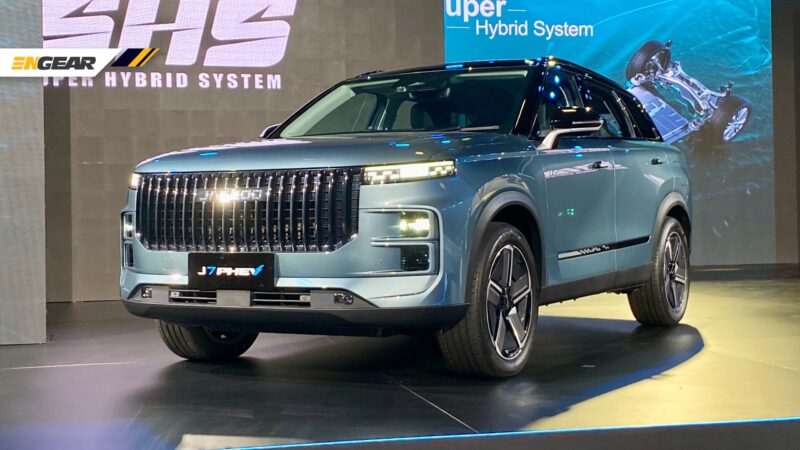
Moving forward, Omoda and Jaecoo will focus on the Super Hybrid System (SHS) technology spearheaded by the Jaecoo J7 PHEV.
With a combination of a fifth-generation 1.5TGDI DHE (Dedicated Hybrid Engine) and a hybrid DHT transmission, SHS can offer a total range of up to 1,200 kilometers.
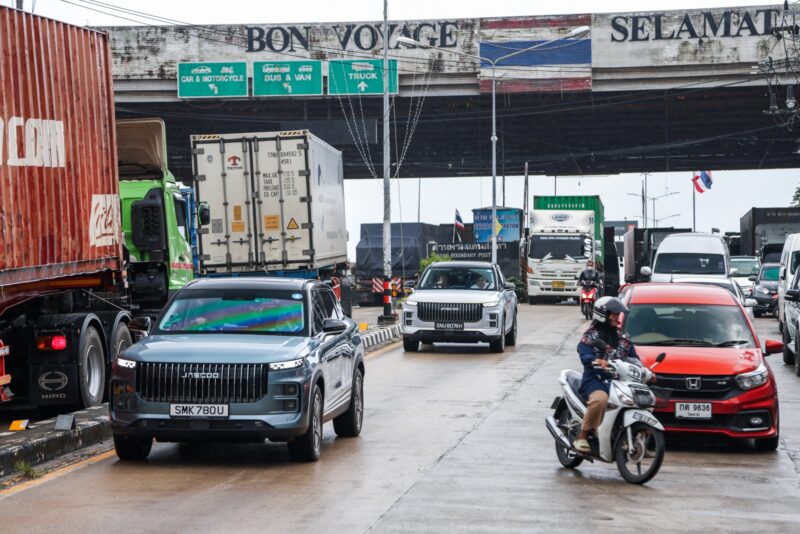
The efficiency of SHS has been proven through several long-distance driving tests previously conducted across three countries (Singapore, Malaysia, Thailand), achieving a record of 1,427.5 kilometers; in the Philippines with 1,488.8 kilometers; and in Mexico with 1,613.1 kilometers.
In conjunction with their second anniversary, Omoda and Jaecoo also unveiled several new models, including the Omoda C7 and Omoda C3, at Auto Shanghai 2025.
Here are some quick info of both models:
Omoda C7
– C-segment SUV
– Larger dimensions than the Omoda 5, yet smaller than the Omoda C9
– Shares the same Super Hybrid System (SHS) powertrain used in the Jaecoo J7 PHEV
– 1.5-liter turbo engine (156 PS/220 Nm) paired with an electric motor (204 PS/310 Nm)
– Total power output of 360 PS/530 Nm
– Overall range of up to 1,475 kilometers
– 15.6-inch infotainment screen that can be repositioned
Omoda C3
– B-segment SUV
– Futuristic spaceship-inspired design and body geometry
– ‘Starship Cockpit’ cabin design
– Set to be launched globally in October 2025
On April 9, 2025, another automotive brand from Mainland China made its official debut in the Malaysian market, namely Jetour.
For the readers’ information, Jetour is one of the brands under the large Chery group, focusing on crossover and SUV models for small families and young buyers.
However, Jetour Malaysia is operated by a different entity, so this new brand indirectly poses a challenge to Chery and its premium sub-brand, Jaecoo.
The first model launched for the Malaysian market is the Jetour Dashing, a C-segment SUV with a captivating appearance and a competitive price tag.
In Malaysia, the Dashing, or Dàshèng, which means “monkey king,” is set to compete with well-known C-segment SUVs such as the Honda CR-V, Proton X70, and Toyota Corolla Cross.
With a selling price below RM120,000, can the Jetour Dashing serve as a better alternative?
Here’s our early review based on a brief test drive from Ara Damansara to Sekinchan.
Exterior
While most models in the C-segment SUV category here have rather safe yet boring designs, the Jetour Dashing arrives to break that tradition with a bolder and more prominent design.
Should we call it eclectic?
This is because the Dashing showcases a blend of imagery reminiscent of luxurious SUVs like the Lamborghini Urus, featuring daytime running lights (DRLs) that evoke Iron Man’s eye, a sporty coupe SUV profile, and a rear with chequered flag elements.
In our view, to enhance the sporty image of this SUV, the chrome elements on the sides could be darkened, and the exhaust tips should not be hidden behind that aggressive diffuser.
Some might argue that the Jetour Dashing has hints of Porsche SUV elements.
Your viewpoint has merit.
This is because the design of the Jetour Dashing is crafted by Hakan Saracoglu, a former Porsche designer responsible for significant models such as the 918 Spyder, Boxster, and Cayman.
The result is a C-segment SUV with a design that truly captures attention on the road, clearly setting it apart from competing models that possess a more family-oriented SUV image.
Interior
The layout of the Jetour Dashing’s dashboard follows the typical setup found in any Chinese-made SUV, particularly from the larger Chery family.
According to Jetour, the Dashing employs a ‘wrap-around’ approach that adapts elements from traditional Chinese house designs, followed by touches of German luxury cars dominating that area, as seen in the steering wheel and engine start button.
There is a dual-screen setup housing a 10.25-inch digital cluster and a 10.25-inch infotainment screen, with specific controls for the air conditioning system located below the central vents.
For the driver and front passenger, bucket-style seats provide a sporty theme that matches the overall concept.
These front seats can hold the body firmly, preventing side slips, although the design might be a bit tight, particularly for larger individuals.
One commendation must go to the Dashing for offering second-row seats that are surprisingly plush and comfortable, while also not providing an overly upright seatback angle.
Even though the exterior of this coupe-style SUV may seem compact, there is still ample headroom, as well as a flat floor structure providing additional legroom.
Indeed, sitting in the back feels more comfortable and satisfying (and accommodating for a full stomach) during the trip back to Ara Damansara, thanks to a cabin that remains quiet without external noise intrusion.
You only need a bit of patience to enjoy the cold airflow from the second-row vents, which can be challenging to adjust for directional airflow.
For passenger convenience, there are several available USB charging ports and a 50W wireless charging slot located on the center console.
Inside the Dashing cabin, you can also experience the unique feature of storing small umbrellas in special compartments located on each door panel, reminiscent of a Rolls-Royce!
Returning to the driver’s seat, we found the digital cluster display easy to read; however, it is equipped with somewhat slow graphical responsiveness.
This can be noticeable during acceleration phases, where the RPM needle movement is not smooth and does not synchronize with the engine’s roar when the accelerator pedal is pressed.
Additionally, you need to access the driving mode options (Eco/Sport) through the central screen since no special function button is provided for that.
Driving Experience
The Jetour Dashing is powered by a 1.5-liter inline-four turbo engine that produces 154 hp and 230 Nm of torque. Yes, it is the same engine used in the B-segment Chery Omoda 5 SUV.
The power is transmitted to the front wheels via a six-speed dual-clutch transmission.
On paper, it seems powerful; however, in the real world, we find it difficult to achieve an exhilarating response for smooth acceleration from a standstill in this SUV.
In fact, during the acceleration test, the Jetour Dashing struggles to compete with the performance shown by B-segment SUVs that often dominate the right lanes of highways.
So, who is the Jetour Dashing for?
In our opinion, the Jetour Dashing, with its Urus-like appearance, is more suited for those who prefer a more relaxed driving experience and are not in a hurry to chase traffic lights as they turn red. It doesn’t need to be driven fast to attract attention.
The stopping aspect is also commendable; however, in terms of handling, the Dashing may disappoint some who are expecting an exciting driving experience from this sporty-looking SUV.
This is because the MacPherson and Multilink suspension tuning on the Dashing is more inclined to provide a comfortable ride all the time, successfully absorbing all forms of bumps and road irregularities without causing significant jolts.
In simple terms, it is not designed for aggressive driving.
The steering response is light and easy to control, although it lacks the feedback and input you might seek, especially when navigating bends.
What we like about the Jetour Dashing is its commendable noise, vibration, and harshness (NVH) levels, where wind noise and engine roars are effectively filtered to keep the cabin quiet throughout the journey.
Safety Features Could Be Improved
As standard, the Jetour Dashing comes equipped with four airbags, an anti-lock braking system (ABS), Electronic Brake Distribution (EBD), Brake Assist, Electronic Stability Control (ESC), and Traction Control System (TCS).
Switching to the Prime variant that we tested, you will receive additional features, including two extra airbags (for a total of six) and basic driver assistance (ADAS) features such as lane departure warning, blind-spot monitoring (BSM), rear cross-traffic alert (RCTA), and a surround-view camera system.
Unfortunately, this Prime variant does not come standard with autonomous emergency braking (AEB) functionality, which is a significant shortcoming for a new model being sold in 2025.
Jetour Dashing: For Whom?
In a market already flooded with various family SUV models, we believe that the Jetour Dashing is more suited for those seeking a stylish SUV at a more affordable price.
It not only boasts an attractive design but also offers a spacious cabin that is comfortable for the entire family, practical, and loaded with modern features.
Most importantly, with a selling price of RM116,800, you may think twice about previously considering a more expensive competitor model.
To meet the practical needs of SUV drivers in urban areas, Continental Tyres has introduced a tire specifically designed for SUVs, the UltraContact UX7, which will be available starting in the second quarter of this year.
The new UltraContact UX7 is powered by SUV Confidence+ technology, focusing on three key aspects: safety, durability, and quieter driving.
The X-Force Macroblocks feature on the UX7 maximizes the contact area with the road, creating a wider footprint for improved handling and stability on all road surfaces.
It is also enhanced by the Adaptive Diamond Compound formulation for shorter braking distances on both wet and dry roads, along with unique Aqua Channels to improve water evacuation.
The construction of the UltraContact UX7 is reinforced with Robust360 Construction design, which includes reinforced steel belts to absorb shocks and a sturdier carcass structure to reduce the risk of tire damage.
The polymer chain in the Diamond Compound can enhance durability and prevent damage from cuts and debris—a crucial feature for ensuring higher durability and longer lifespan.
Finally, the UltraContact UX7 features a tread pattern that minimizes vibrations and reduces noise generation, along with Noisebreaker 3.0 technology to ensure a quieter and more serene cabin environment.
The UltraContact UX7 is available in sizes ranging from 15 to 22 inches, suitable for most crossover vehicles, mid-sized SUVs, and premium SUVs.
In less than a month after the launch of the latest Jaecoo J7 PHEV model, another model is set to be launched soon – the Jaecoo J8.
Previewed earlier in 2024, the Jaecoo J8 is now on public display at One Utama Shopping Centre in Petaling Jaya from March 27-30.
The Jaecoo J8 has the following dimensions: 4,820 mm long, 1,930 mm wide, and 1,699 mm tall, with a wheelbase of 2,820 mm.
Thanks to its relatively long dimensions, the Jaecoo J8 is available in two configurations: two rows (five seats) or three rows (six seats).
The SUV is powered by a 2.0-liter turbo engine producing 249 PS and 385 Nm, paired with a eight-speed automatic transmission. It will be available in front-wheel drive or all-wheel drive (AWD).
The driving experience is further enhanced by a Continuous Damping Control (CDC) system, exclusive to the AWD variant, and a water wading depth of 450 mm.
Exterior features include full LED lighting, 20-inch alloy rims, embedded door handles, a Mercedes-style Panamericana grille structure, and a floating roof design.
The cabin layout is reminiscent of the Mercedes-Benz E-Class, featuring twin 12.3-inch screens and a panoramic sunroof.
The Jaecoo J8 2WD includes a 540-degree camera system, a Sony audio system with 12 speakers, and a cargo space of 738 liters.
The AWD version upgrades to a Sony audio system with 14 speakers, 10 airbags, an automatic fragrance system, NFC-based key system, power-adjustable first and second-row seats, ventilation for the driver, and leather and suede trim in the cabin.
The J8 AWD offers a significantly smaller cargo space of 200 liters, in contrast to the 2WD version.
The estimated selling price starts from RM195,000 for the 2WD version and goes up to RM220,000 for the AWD version.
Those interested in seeing the Jaecoo J8 SUV up close can visit One Utama Shopping Centre (GF Luxe) from March 27-31, Queensbay Mall (April 9-13), and the Malaysia Autoshow 2025 (May 8-15).
Note: The displayed Jaecoo J8 outside is a pre-production unit; final specs may vary.
Jaecoo Malaysia has confirmed that the Jaecoo J8 will make its public debut in the country at a roadshow to be held at 1Utama from March 27 to 30.
While this will be the first time the public has the chance to see the J8, we have already seen the SUV in person when it was showcased alongside the J7 in January 2024, albeit in a left-hand drive version.
At that time, the J8 was slated for launch in the fourth quarter of the same year but this did not happen, and instead, the Omoda C9 was launched in December.
Nevertheless, with the announcement of this roadshow, we can confidently say that the J8 will officially enter the Malaysian market in a few months.
The specifications for the J8 for our market have yet to be disclosed, but what we do know is that the J8 has a larger footprint compared to the J7, measuring 4,820 mm in length, 1,930 mm in width, 1,699 mm in height, and a wheelbase of 2,820 mm.
Inside, elements inspired by the Mercedes-Benz GLE can be seen in the square air vents and the large widescreen unit, which features two 12.3-inch displays sitting atop the dashboard.
Under the bonnet of the J8 lies a 2.0-litre turbo petrol engine that generates 245 hp and 385 Nm, transmitted to the wheels via a seven-speed dual-clutch gearbox. This model will be available in either two-wheel drive or all-wheel drive, though it is still uncertain whether Jaecoo Malaysia will offer one or both options.
The pricing has also yet to be revealed, but there are rumours suggesting it will be sold at around RM200,000.
The sixteenth generation of the Toyota Crown family is now available in Sedan, Crossover, and Sport versions.
If you’re looking for a much more practical Crown, the Crown Estate is the answer you need.
Toyota Japan has officially begun sales of the Crown Estate, which comes with the option of a hybrid electric vehicle (HEV) or plug-in hybrid electric vehicle (PHEV) powertrain.
Both systems utilize a 2.5-liter engine (code A25A-FXS) paired with two electric motors and an E-Four all-wheel-drive system.
In the Crown Estate HEV, the front motor output is enhanced by 50 percent compared to the Crossover and Sport models, aimed at improving acceleration, especially when carrying passengers.
Meanwhile, the Estate PHEV version is equipped with a lithium-ion battery pack that allows for a zero-emission driving range of up to 89 km.
Built on the TNGA-K platform, the Toyota Crown Estate measures 4,930 mm in length, 1,880 mm in width, 1,625 mm in height, with a wheelbase of 2,850 mm.
The suspension system features MacPherson struts in the front, followed by Multi-link setup in the rear.
Driving dynamics are enhanced with the inclusion of a Dynamic Rear Steering (DRS) system for more agile handling, as well as Adaptive Variable Suspension (AVS) to ensure passengers remain comfortable and enjoy a high-quality ride.
The exterior design of the Crown Estate follows the design language shared with its siblings.
The front features hammerhead shark-like elements with thinner daytime running lights, a neatly integrated grille structure in the bumper, and 21-inch wheels.
The cabin layout is similar to what is featured in the Crossover, Sport, and Sedan models, with a 12.3-inch cluster display paired with a similarly sized infotainment screen.
Using an island architecture, the dashboard layout is designed to minimize eye movement during driving.
The Crown Estate’s cargo space can accommodate up to 570 liters of goods, or up to 1,470 liters with the second-row seats folded flat.
Toyota also offers special items for this model, including seat cushions and a small table to use in that space, especially when engaging in outdoor activities.
In Japan, the Toyota Crown Estate is priced starting at 6,350,000 yen (RM190,457) for the HEV version, and can reach up to 8,100,000 yen (RM242,945) for the PHEV version.
Honestly, we believe Volvo has been one of the best manufacturers of beautiful wagon designs since the first model (the Duett) was introduced in 1953, and that reputation continues to this day.
However, the expertise that Volvo is known for may not be needed in the future.
According to CEO Jim Rowan in an interview with AutoExpress, the future of Volvo will no longer include wagon models; instead, the brand will focus on sedan and SUV models.
This represents a significant shift for a brand widely recognized for its elegant wagon tradition over the years.
Rowan explained that it’s quite costly to introduce different vehicle models to the market and keep them there.
“It’s more cost-effective to drive higher volumes through the same platform and body style,” he said.
With the absence of wagon models, Volvo aims to position its existing SUV lineup with various offerings, such as the Black Edition and Cross Country, which are more tailored for specific customer segments.
Interestingly, this recent announcement comes shortly after a statement from Volvo UK’s commercial director, Robert Deane, who admitted that the decision to stop selling the V60 and V90 models in 2023 was a mistake.
“When you tell customers that a model (wagon) is no longer available, they will start looking for alternatives from other brands,” he added.
Undoubtedly, aside from Volvo, several other manufacturers, such as Audi and BMW, still offer wagon models, even though that market is dwindling year by year.
Further explaining Volvo’s direction, Rowan stated that the company is intentionally narrowing its focus at this time.
“We’re making very conscious choices about where we want to play the game. Where we’re differentiating is with SUVs; nice high ride height, very safe – and we think we can protect that beachhead against the competition.
“It’s much easier than us becoming distracted by too many models.”
For 2025, Volvo has already planned to introduce five new models, including the ES90 sedan and the upcoming EX60 electric SUV.
One thing is clear: wagons are no longer a priority for Volvo at this time.
GWM Malaysia has announced that it has delivered its 500th Tank 300 to a customer recently.
According to the company, the milestone is a testament to the soaring popularity of the Tank 300 in Malaysia, where it has emerged as the top choice for off-road enthusiasts.
“We are incredibly proud to see the GWM Tank 300 making such an impact in Malaysia, mirroring its success in China,” said Cui Anqi, Managing Director of GWM Malaysia.
“This achievement highlights the trust and enthusiasm Malaysians have for our brand. We look forward to building on this momentum with our upcoming Tank lineup,” he added.
To mark the occasion, GWM Malaysia is offering a lifetime engine and transmission warranty for all first-hand GWM Tank 300 owners.
The company is also rolling out four exciting promotions for new and prospective Tank 300 owners:
Test Drive and Win: Take the Tank 300 for a test drive and stand a chance to win a travel voucher worth RM888.
Buy and Win: Drive home your very own Tank 300 and be in with a chance to win a travel voucher worth RM8,888.
Complimentary Service Package: Purchase Tank 300 and receive a 5-year free service package.
GWM Iron Cavalry Modification Kit Giveaway: Purchase the Tank 300 between March 1 and May 31, 2025 for a shot at winning an exclusive GWM Iron Cavalry modification kit. For this promotion, only one lucky winner will be selected.
The Jaecoo J7 PHEV has officially been launched in the Malaysian market, approximately four months after it was first previewed.
This SUV is priced at RM158,800 and is locally assembled at the Chery Malaysia production facility in Shah Alam, where the J7 is also produced.
As its name suggests, the J7 PHEV is essentially the plug-in hybrid version of the J7. It is powered by a 1.5-litre TGDI engine that produces 143 PS and 215 Nm of torque, complemented by an electric motor generating 204 PS and 310 Nm, giving it a total systemoutput of 347 PS and 525 Nm.
Power is transmitted to the wheels via a one-speed Dedicated Hybrid Transmission (DHT), enabling it to accelerate from 0 to 100 km/h in 8.5 seconds.
Another key component of the hybrid system is the 18.3 kWh Blade LFP battery, which offers an electric driving range of 106 km.
The BYD-sourced battery supports 6.6 kW AC charging, allowing it to charge from 30% to 80% in three hours, as well as 40 kW DC charging, which requires only 20 minutes for the same charge.
Alternatively, owners can use a standard three-pin 230 V residential socket, which takes approximately 8.5 hours for a full charge.
Jaecoo claims that the combination gives the J7 PHEV an overall range of up to 1,300 km (NEDC), with a fuel consumption rate as low as 4.77 litres per 100 km.
The performance of this powertrain in real-world driving conditions has already been proven. In January, five units of the J7 PHEV managed to cover a distance of 1,200 km (WLTP) on a long-distance trip from Singapore to Hatyai, Thailand, via Malaysia, using just one tank of fuel and a charge.
In terms of appearance, there is not much difference between the J7 and the J7 PHEV. However, the latter can still be distinguished by its blue ‘7’ logo, the ‘PHEV’ badge, aerodynamic 19-inch rims, and the battery charging port located on the right side.
The J7 PHEV is currently available in three colours, namely Khaki White, Carbon
Crystal Black and Moonlight Silver. Khaki White will be a limited to 100 units, after which Jarcoo will subsequently introduce an olive grey option.
Inside, you will find a 10.25-inch digital instrument cluster, a 14.8-inch infotainment screen with support for Apple CarPlay and Android Auto, as well as dual-zone climate control.
It is interesting to note that compared to its non-hybrid sibling, the J7 PHEV boasts a larger boot capacity of 500 litres, which can expand to 1,265 litres when the rear seats are fully folded down.
Safety features include automatic emergency braking, adaptive cruise control, driver monitoring system, emergency lane-keeping assistance, intelligent high beam assist, lane departure warning, rear cross-traffic alert, and traffic jam assist.
The J7 PHEV comes with a seven-year/150,000 km vehicle warranty and an eight-year/160,000 km warranty on its battery, power motor and power motor controller unit.
The eight-year warranty provides a 1 to 1 exchange when the state of health (SOH) of the battery falls below 70% during the warranty tenure.
Jaecoo also announced a special early bird package which qualifies all existing J7 PHEV bookings and bookings placed up to 2nd March 2025 for a 10-year/1,000,000 km warranty mileage extended engine and high voltage battery warranty.
The Porsche Macan has entered its second generation with the launch of this compact SUV in early 2024.
Like it or not, if you are interested in acquiring an entry-level SUV from Porsche, you will only be presented with the entirely electric Macan lineup.
This move is quite bold for Porsche, considering that the Macan was previously the best-selling model from the brand, surpassing its larger sibling, the Cayenne, globally.
The Porsche Macan EV—does it offer another EV experience just like any other electric vehicle on the road? Or does it still retain the distinctive Porsche identity?
Recently, we were invited by Porsche Malaysia to experience the driving dynamics of the Macan EV, specifically the Macan 4 variant, which carries a price tag of RM445,000.
Specifications
The Porsche Macan 4 is powered by two electric motors, producing 387 PS and a torque of 650 Nm, allowing for a 0-100 km/h acceleration in just 5.2 seconds.
The top speed is limited to 220 km/h, which is quite fast for an EV.
With a 100 kWh nickel manganese cobalt (NMC) battery pack, the Macan 4 can travel up to 613 km on a full charge.
The Macan EV also supports AC charging at 11 kW and DC charging up to 270 kW, enabling owners to charge the SUV’s battery in just 21 minutes (from 10% to 80%).
Exterior
Compared to the first-generation Macan, the Macan EV boasts larger dimensions (+58 mm in length, +11 mm in width, +26 mm in height), accompanied by a longer wheelbase (+86 mm).
These changes contribute to a more robust appearance, as well as a more spacious and comfortable cabin (which we will discuss later).
Moreover, we can describe the exterior design of the Macan EV as a larger Taycan, featuring stylish LED daytime running lights, a sporty roofline, and a full-width LED rear light strip.
Unlike the Taycan, entering and exiting the Macan cabin is easier, aided by the large frameless door openings.
Cabin
If the exterior resembles the Taycan, the layout of the Macan EV’s cabin is not significantly different from that of Porsche’s electric sedan.
For the Macan 4 variant we tested, it is equipped with a curved 12.6-inch digital cluster display, a 10.9-inch central screen, and an impressive head-up display featuring augmented reality technology.
What we appreciate about the Macan EV’s cabin is the similar driving experience to that offered by the Taycan sedan.
The steering wheel retains its round shape, complete with a rotary knob for changing driving modes and a small gear knob located adjacent to the central screen, along with separate climate control buttons positioned on the center console.
This means you no longer need to dive into the infotainment screen menu just to lower the temperature or increase the airflow.
A unique feature of the Porsche Macan EV is the presence of an analog-digital clock perched on the dashboard—a detail that many luxury car manufacturers have overlooked.
Practicality
As mentioned earlier, practicality is the main highlight of the Macan EV—especially when compared to the Taycan sedan.
In addition to easier entry and exit, the seating provided is also quite comfortable, holding the driver and front passenger securely, especially when this electric vehicle is pushed a bit aggressively.
The larger dimensions contribute to a more spacious and comfortable cabin, allowing for more headroom and legroom.
However, it is unfortunate that rear passengers may have to sit somewhat upright.
Most importantly, the Macan EV still offers a cargo space of 540 liters, or up to 1,348 liters when the second-row seats are folded down.
This is ample space for storing items, such as groceries during early-month shopping trips.
The absence of an internal combustion engine in the front provides a frunk (front trunk) of 84 liters—extra space for use if the rear cargo area is already filled.
Driving Experience
The Macan 4 comes equipped with two electric motors, meaning it features an all-wheel-drive (AWD) system.
With precise and quick throttle response, the 387 PS and 650 Nm of power can easily deceive the driver into thinking they are handling an SUV weighing over 2 tons.
What makes the Macan EV significantly better is its sharper and more precise handling, offering more feedback that communicates directly with the driver, making the driving experience feel more assured.
Driving the Macan EV often reminds me of the experience with the Taycan and Taycan Cross from some time ago.
Finally, the Macan 4’s suspension—even without the adaptive air suspension found in the Macan 4S and Macan Turbo—still provides a good balance between sporty handling and comfort for everyday use.
It remains stable on straight highways and does not make the driver feel uneasy when encountering winding roads.
Extra: Experience Losing Control at Sepang
After enjoying a drive across several highways, we were taken to the Driving Experience Center (DEC), located right next to the PETRONAS Sepang International Circuit.
Here, two sessions were provided: a slalom session with a high-speed handling session, along with another session to test driver skill on a hydraulic skid plate.
For a vehicle branded as Porsche, it was not difficult for us to maneuver the Macan EV through the slalom course.
The precise and sharp steering feedback, combined with the effective throttle pedal that controls power delivery from the battery to the wheels, and the suspension’s effectiveness in keeping the SUV stable during minimal body roll—even when driven aggressively—contributed to this ease.
However, during the second session, we experienced a loss of control in a Porsche valued under half a million for the first time.
This was the opportunity for the Porsche Macan EV to demonstrate the effectiveness of its stability control system when faced with a sudden loss of grip.
In my first attempt, I could manage the SUV’s loss of control at low speed, but I failed in my second attempt, which was conducted at a higher speed.
Why did I fail? Because the Macan EV I was handling hit the ‘barrier wall’ represented by a row of water fountains.
Despite feeling dissatisfied, it was a valuable lesson learned.
For drivers who are cautious like myself, the likelihood of experiencing a loss of control on the road is nearly zero.
However, such situations can still occur, especially when faced with heavy rain and slippery roads.
This underscores the need for every driver to possess the knowledge and skills to handle their vehicle in emergency situations.
Who Is the Macan 4 Suitable For?
Among the four main Macan variants offered in Malaysia, we believe the Macan 4 is more suitable for those looking to venture into owning a Porsche SUV.
While it features a twin electric motor setup, the power of 387 PS and 650 Nm is not excessively high; it remains reasonable and easy to control for a daily-use vehicle.
Furthermore, the standard AWD system not only contributes to handling and stability at high speeds, but it also ensures the required grip for all four wheels in various weather conditions and road surfaces.
With a range of 613 km and a reasonably light foot on the accelerator, you wouldn’t need to stop frequently to charge the Macan 4, even for trips that exceed two marhalahs.
Most importantly, for an electric SUV, the Macan 4 still manages to offer a balance between dynamic and sporty driving while not sacrificing comfort and practicality for everyday use.
Specifications of Porsche Macan 4
Configuration: Two electric motors
Power: 387 PS/650 Nm
Acceleration: 0-100 km/h in 5.2 seconds
Top speed: 220 km/h
Battery pack: NMC 100 kWh
Range: 613 km
DC charging: 270 kW, 10-80% in 21 minutes
AC charging: 11 kW, 0-100% in 10 hours
Price: RM445,000
Mercedes-Benz Malaysia today officially launched the ultra-luxurious Mercedes-Maybach EQS 680 SUV, with a starting price of RM1,088,888, excluding customization costs.
Powering the Maybach EQS 680 SUV are dual electric motors, delivering 658 hp and 950 Nm of torque.
The vehicle features several driving modes, including Eco, Sport, Offroad, and Individual.
A special MAYBACH mode replaces the traditional Comfort mode, prioritizing maximum comfort for rear passengers.
A 118 kWh battery pack provides a driving range of 500-608 km on a full charge and supports 22 kW AC charging and DC fast charging up to 200 kW.
Standard equipment on this luxury SUV includes AIRMATIC adaptive suspension, rear-wheel steering, 21-inch Maybach alloy wheels, DIGITAL LIGHT headlights, and illuminated running boards.
The Mercedes-Maybach EQS 680 SUV boasts a first-class rear cabin experience, complete with MANUFAKTUR leather upholstery, a Nappa leather headliner, electric sunshades, a dedicated infotainment system, and adjustable seats with heating, massage, and memory functions.
The driver is provided with a steering wheel featuring galvanized paddle shifters, wood trim, and heating, the MBUX Hyperscreen multimedia system, Apple CarPlay and Android Auto integration, and an augmented reality head-up display.
Additional features include a Burmester 4D surround sound system, ambient lighting, under-console storage, a cabin air filter, and Maybach-specific trim throughout the cabin.
Safety features encompass 11 airbags, the Driving Assistance Package Plus, Distronic Plus, Active Lane Keeping Assist, Active Steering Assist, Pre-Safe, Active Parking Assist, and Remote Parking functionality.
It’s no secret that Jaecoo Malaysia is set to expand its model lineup with the introduction of another SUV, the J7 PHEV.
The upcoming model was unveiled to the media last October and is scheduled for launch on February 28, with an estimated price of around RM170,000.
Although the J7 PHEV has not yet been officially launched, we were fortunate enough to be able to take it for a rather long distance drive last January.
To be exact, yours truly and a few other media representatives actually embarked on a journey from Singapore, through Malaysia to Hatyai, Thailand with just one tank of fuel and a single charge.
The trip aimed to demonstrate the real-world capabilities of Jaecoo’s Super Hybrid System in terms of fuel efficiency.
In other words, it was to discover just how far the J7 PHEV could travel without needing to refuel or recharge the battery.
So, what exactly is the Super Hybrid System? For the J7 PHEV, it comprises a 1.5-litre turbocharged four-cylinder engine paired with a Dedicated Hybrid Transmission (DHT) and an 18.3 kWh battery.
Altogether, the powertrain produces a total system output of 347 hp and 525 Nm of torque, enabling the J7 PHEV to accelerate from 0 to 100 km/h in just 8.5 seconds.
But as you may already know, speed is not the primary focus of this SUV. Its true strength lies in its fuel efficiency, with Jaecoo claiming it can achieve readings as low as 5.99 litres per 100 km.
With a 60-litre tank and a zero-emission driving range of 106 km courtesy of the battery, Jaecoo claims that the J7 PHEV can cover an impressive distance of 1,300 km on a single tank.
On paper, those figures are indeed impressive, but can the SUV prove its mettle in the real world?
I personally believe that the J7 PHEV is capable of covering the claimed distance, at least in theory. But as you may already know, fuel consumption and range depend on various factors, such as driving style, traffic conditions, weather, load, and more.
The three-day trip was undertaken with careful consideration, meaning that the car was driven within the national speed limit for most of the journey. I also made a conscious effort to avoid aggressive acceleration to maintain optimal fuel consumption.
Additionally, to maximise distance, I made use of the regenerative braking system at varying levels of braking force according to the driving conditions.
For instance, when cruising on flat roads, the braking force was set to a low level to allow the vehicle to coast for longer. In hilly areas, however, I increased the braking force to allow the battery to charge more rapidly.
Upon reaching our final destination in Hatyai, the trip computer showed a distance of 1,051 km, with 269 km of fuel range and 21 km of battery range remaining.
When these three figures are combined, the J7 PHEV theoretically could cover up to 1,341 km without needing to refuel or recharge through a cable.
While achieving this figure may be challenging under more realistic driving conditions, if an owner could record a distance of around 1,100 to 1,200 km, I believe that would still be incredibly worthwhile.
Just think about it – how many other SUVs in the same price range can boast such fuel savings? Furthermore, with the anticipated restructuring of the RON95 petrol subsidy set to roll out this year, the J7 PHEV emerges as a very wise choice for buyers in this segment.
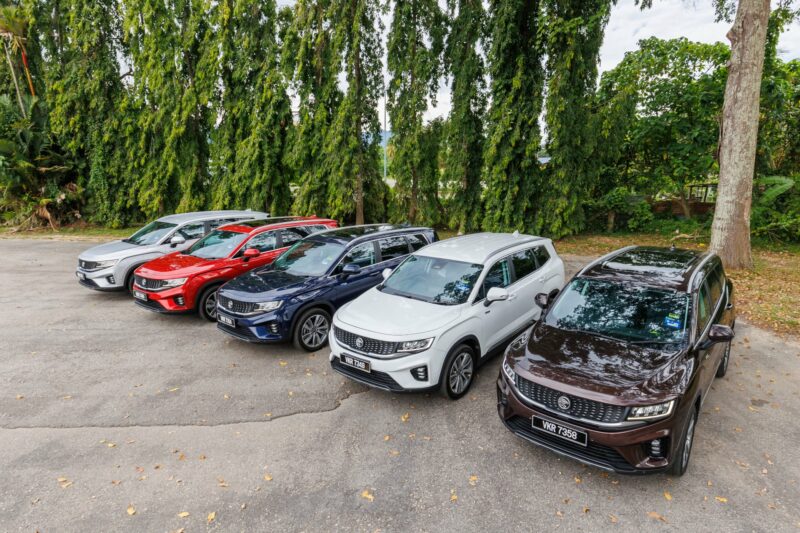
National automaker Proton in a statement said that its X-Series SUV lineup remains resilient in the market despite facing stiff competition from other brands vying for the same customer base.
X50
According to the automaker, the X50 has emerged as its best-selling SUV, with total sales of 23,647 units last year. The 2024 version, launched on 4 June, received an overwhelming response with a total of 8,000 bookings in the first month. A total of 13,780 units of the 2024 X50 were sold last year, accounting for 58.3% of the model’s total sales.
Meanwhile, the X50 Sport Edition (SE) received 941 orders, with 299 units registered in less than a month after its debut.
A recent survey of over 1,300 customers revealed that X50 owners were drawn to the vehicle primarily due to its combination of features, engine performance and spacious cabin.
X70
Proton’s first SUV, the X70, recorded sales of 5,628 units for the 2025 version. This makes up 62.6% of the total 8,992 units sold in 2024.
From the same recent survey, key reasons for purchase included fuel efficiency, features and engine performance.
Launched in August last year, the 2025 X70 is a comprehensive update to its predecessor, featuring revised exterior styling, new interior equipment and upgraded ADAS level 2 safety technology.
X90
The X90, Proton’s entrant in the D-segment SUV space, ended 2024 with 3,553 units delivered, maintaining its position as a market leader since its launch two years ago.
Proton reported that buyers were drawn to the X90’s driving performance, storage capacity and value for money. About 30% of buyers preferred the car for its strong driving performance, while 27% liked it because of its large storage compartments, good value for money and number of features compared to competitors.
The automaker added that X90 owners have families with children with a similar buying profile as X50.
“Thanks to our intelligent models, we have managed to raise the overall level of sophistication in cars offered to Malaysian buyers and while the strong market response to our current model lineup is testament to the trust and loyalty we have earned from our customers. Looking ahead, we remain dedicated to delivering vehicles that offer outstanding performance, features, and value,” said Roslan Abdullah, Chief Executive Officer of Proton Edar.
Malaysia’s Leading Automotive News | ENGEAR ENGLISH