Tag Archives: Porsche

It is super important to keep manual transmission – Porsche GT boss

Porsche is one of the few sports car manufacturers that remains committed to offering models with a manual transmission.

In some markets, you can still obtain a manual 718, but for the 911 family, this option is now limited to the GT3 and Carrera T variants only.

Despite being described as a nearly extinct transmission, Andreas Preuninger, Director of the GT Model Line at Porsche, believes it is important to continue fighting to preserve the manual transmission at Porsche.

Citing a report from Motor1, Preuninger stated, “From a personal point of view, it is very important to have a manual model.”

“I prefer manual and don’t mind shifting gears myself, especially on the track, knowing exactly that the PDK transmission is faster,” he added.

Preuninger also does not believe that stricter emissions laws will eliminate manual transmissions.

“(Manual) is lighter, which contributes to reductions in emissions and more efficient fuel consumption, and you also have more power at the wheels because the power loss in a manual transmission is lower compared to PDK,” he explained.

“In the real world, manual cars use less gasoline and produce fewer emissions compared to PDK. That is a fact.”

Porsche ends production of the 911 Dakar; last unit features special three-tone livery

There are two pieces of unfortunate news for Porsche 911 Dakar enthusiasts.

First, all 2,500 units have been sold and each has a designated owner.

Second, the last unit has now been completed.

Yes, the unit you see here is the 2,500th Porsche 911 Dakar, adorned with a custom three-tone livery as requested by its owner from Italy.

This special livery was created by Porsche’s Sonderwunsch division and features three distinct colors: Signal Yellow, Gentian Blue Metallic, and Lampedusa Blue, named after a Mediterranean island.

The wheels of the Porsche 911 Dakar are painted in Signal Yellow, accented with Lampedusa Blue on the rim edges.

Additionally, Lampedusa Blue accents are also applied to the LED headlights of the vehicle.

In the cabin, Signal Yellow accents and stitching dominate the center console, dashboard, and door panels, complemented by the 911 Dakar logo on the seats and matching color on the gear knob.

There are no power changes, meaning the 911 Dakar retains its 3.0-liter turbocharged flat-six engine producing 475 hp, paired with an eight-speed PDK transmission and an all-wheel-drive system.

Xiaomi SU7 Ultra Prototype ready to challenge the Porsche Taycan Turbo GT

The smart device manufacturer Xiaomi is not satisfied with its existing SU7 car product.

In order to provide a more intense competition to high-performance EVs in the market, the manufacturer is now unveiling the full carbon prototype model Xiaomi SU7 Ultra.

At the same time, Xiaomi also announced the debut of an electric power unit called the HyperEngine V8s.


It is not a typical V8 engine, instead, the HyperEngine V8s is an electric motor capable of producing a maximum power of 578 PS and a torque of 635 Nm, with a speed reaching 27,200 rpm!

In the SU7 Ultra model, Xiaomi combines two electric motors, the HyperEngine V8s, and a V6s electric motor, with a total output reaching 1,548 PS that powers all wheels!

With Pirelli P Zero tires, the Xiaomi SU7 Ultra can accelerate from 0-100 km/h in just 1.97 seconds, 0-200 km/h in 5.97 seconds, and reach 300 km/h in just 15 seconds.

The maximum speed is about 350 km/h.


The Qilin 2.0 battery pack, sourced from CATL, is specifically designed for racing, capable of discharging a peak power of up to 1,808 PS.

Although the battery pack has a SoC of about 20 percent, it is still capable of discharging power as high as 1,088 PS!

Unlike the standard SU7, the SU7 Ultra features a full carbon fiber body construction, complete with a body kit (front splitter and diffuser, rear wing, massive diffuser) said to generate a downforce of 2,145 kg at a speed of 350 km/h.

Yet, the Xiaomi SU7 Ultra is still a high-performance sedan with a weight close to 2 tons, or more precisely 1,900 kg.


The brake system consists of six-piston AP Racing calipers on the front and rear axles, as well as racing brake pads capable of withstanding temperatures above 800 degrees Celsius.

Under full braking conditions, the Xiaomi SU7 Ultra is capable of generating over 2.36G of deceleration, with a stopping distance of just 25 meters from 100-0 km/h.

Xiaomi plans to set a new record in the four-door electric sedan category at the Nurburgring Circuit in October.

Currently, the fastest record is held by the Porsche Taycan Turbo GT with a time of 7:07.55 minutes.


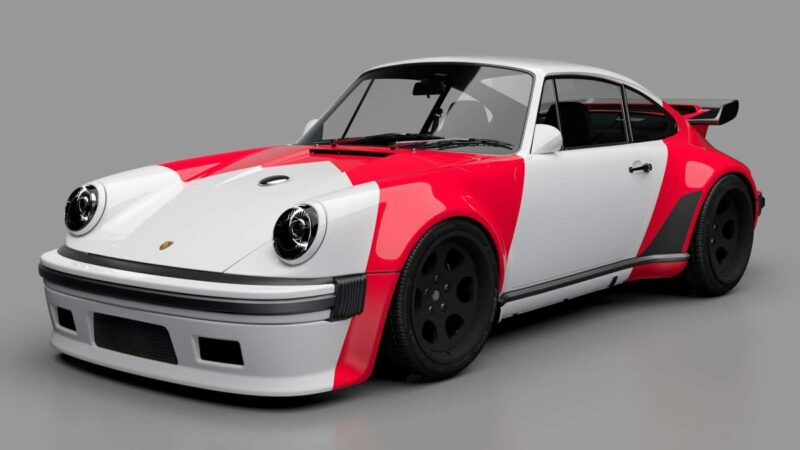
This 993 Porsche 911 is packed with an actual Cosworth F1 engine, making 625hp

LANZANTE returns with yet another 930 Turbo project. This time, the TAG Championship project is lighter and more powerful than before.

The latest restomod project from the UK company will only produce three 911 units with F1 engines, each representing three F1 victories by McLaren in the 1980s.

Each 930 Turbo will be fitted with a 1.5-liter twin-turbo V6 TAG TTE P01 engine. The F1 engine has been re-tuned by Cosworth with upgraded components such as pistons, valves, and camshafts.

It also receives lighter titanium turbos, certified by McLaren. Additionally, it is equipped with a new airbox, improved cooling, and a more robust exhaust system.

To control power delivery optimally, the engine is managed by a new ECU from Cosworth, providing 625hp and capable of revving up to 10,250rpm.

Power will be transmitted to the rear wheels through the original 993 gearbox with six speeds, but with custom ratios. This allows the 911 restomod to reach speeds of 320km/h.

Meanwhile, the brake system is provided by carbon-ceramic discs with four pistons at the front and rear. The wheels are 18-inch magnesium rims wrapped in Michelin Pilot Sport 4 tires.

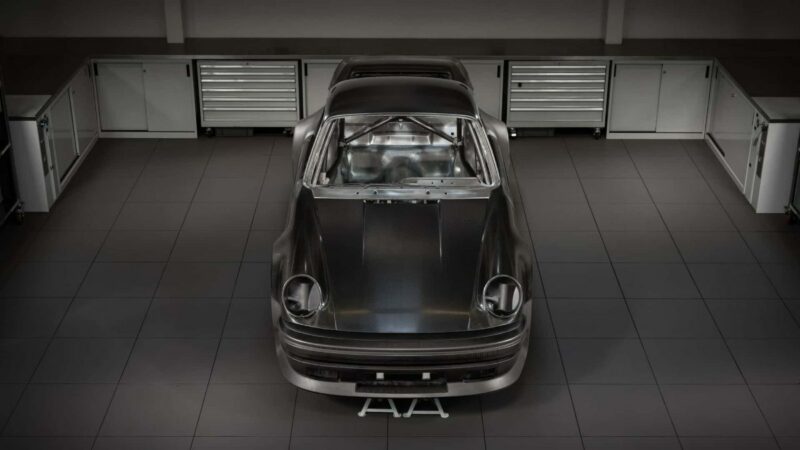
Not satisfied with just a powerful engine, Lanzante has also ‘shed’ weight from this 911. They have replaced original components such as the hood, doors, spoiler, roof, bumpers, and front splitter with carbon fiber. It is now 430kg lighter than the original.

The interior has also been put on a diet. No more power windows and mirrors. However, other comfort aspects are not neglected, as there is a lightweight air conditioning system. The seats are also lightweight Recaros with a six-point harness.

No price has been disclosed, but with a project of only three restomod units with race-spec components, it certainly won’t be cheap.

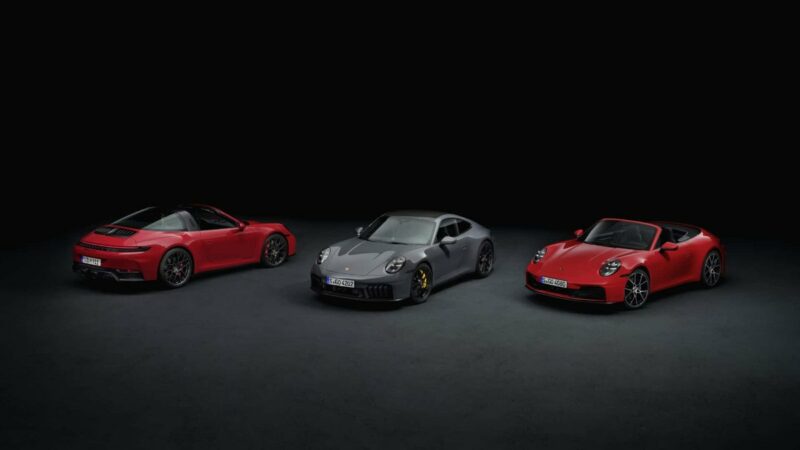
Porsche 911 hybrid arrives – Carrera GTS guise, 3.6-litre, 0-100 in 2.9s

THIS is big news. Despite only a facelift, the Porsche 911 is now entering a new era. This is because the sports car has received a hybrid for the first time in its history.

As we reported earlier, the Porsche 911 will become a hybrid, and it arrives to update the 992 generation (called 992.2) in the Carrera GTS variant.

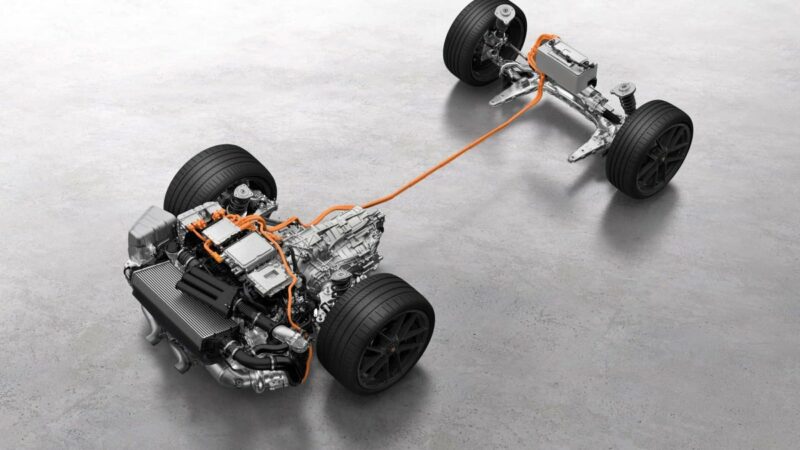
For 2025, the Porsche 911 Carrera GTS retains its identity with the rear-mounted flat-six engine, but now with an electric motor and an electric turbocharger. This boosts power to 532hp and 608Nm of torque.

The engine used is a new 3.6-liter unit replacing the previous 3.0-liter one. This engine alone produces 478hp and 569Nm of torque. The hybrid system replaces the previous twin-turbo package with a single electric turbocharger.

It functions like a traditional exhaust-gas turbocharger but with an 11kW (14.7hp) motor positioned between the turbine and the compressor. This motor can spin the turbo very quickly for a fast response, drastically reducing turbo lag. It can also send power back to the 400-volt battery.

There is also a generator motor of 32.6hp sandwiched between the flat-six engine and the 8-speed dual-clutch gearbox. Both are powered by a very small 1.9kWh battery located under the front hood.

The T-Hybrid powertrain is designed to enhance performance at all rpm ranges while operating at the ideal air-fuel ratio of 14.7:1 at almost all times. This hybrid also means no more manual transmission for the 911 Carrera GTS.

This new Porsche 911 Carrera GTS is heavier than the previous model, partly due to standard features like rear-wheel steering, but the additional power overcomes this weight increase. It is also the first Carrera GTS capable of accelerating to 100km/h in less than 3 seconds, specifically 2.9 seconds.

In addition to the T-Hybrid, the 2025 Carrera GTS receives a new active aerodynamic flap at the front for better cooling without compromising drag. There are also cosmetic changes on the front and rear, as well as new wheel options.

The rear tires are wider now, measuring 315/30/21, while the front remains at 245/35/20. Inside, the biggest change is the fully digital instrument cluster. Yes, no more analog tachometer needle.

The base 911 (992) Carrera 2025 receives turbos and an intercooler from previous GTS and Turbo models. This provides an additional 9hp while torque remains at 448Nm.

For 2025, only the Carrera and Carrera GTS receive facelifts, while other variations such as Turbo, GT3, GT3 RS, and GT2 will follow later. The Porsche 911 992.2 2025 is expected to arrive towards the end of this year.

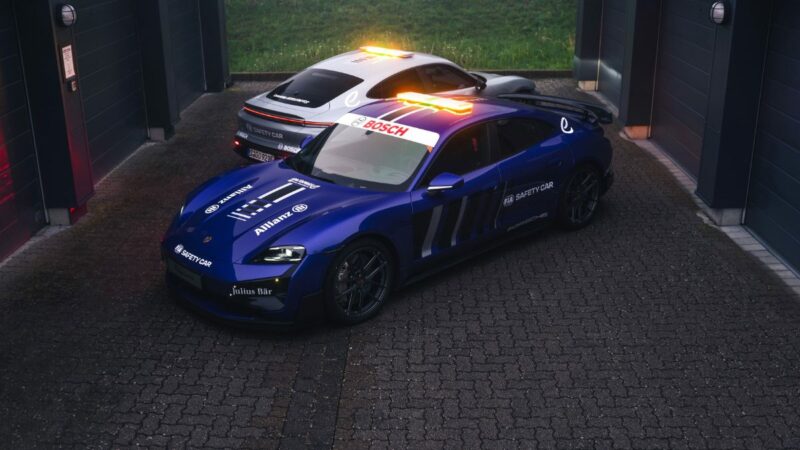
Two Porsche Taycan Turbo GTs for Formula E safety cars

The Porsche Taycan Turbo GT has been chosen as the safety car for Formula E. Two of Porsche’s most powerful EV units will make their first public appearance at the Berlin race on the upcoming 11th and 12th of May.

Thomas Laudenbach, Vice President of Porsche Motorsport, said: “Sustainability and electrification are crucial for Porsche, as evidenced through our motorsport activities – including the selection of the Taycan Turbo GT as the safety car.

“This is symbolic of what we learn from motorsport for various applications. In Formula E, it is crucial for electric sports cars, such as energy management.

“This is another reason why the Taycan has been enhanced in various aspects recently,” he said.

This new Taycan Turbo GT comes with more power and driving range, as well as faster charging capabilities. It has broken several records at the Nurburgring and Laguna Seca tracks.

With the Weissach package, it can accelerate from 0 to 100 km/h in just 2.2 seconds, and reach a top speed of 305 km/h.

The Attack Mode unleashes up to 120 kW of additional power. This technology is derived from the Porsche 99X Electric, the Formula E car that won the recent championship.

For the first time, two versions of these EV cars will shoulder the safety car duties. The first car is the Taycan Turbo GT in Purple Sky Metallic, while the other is in Shade Green Metallic.

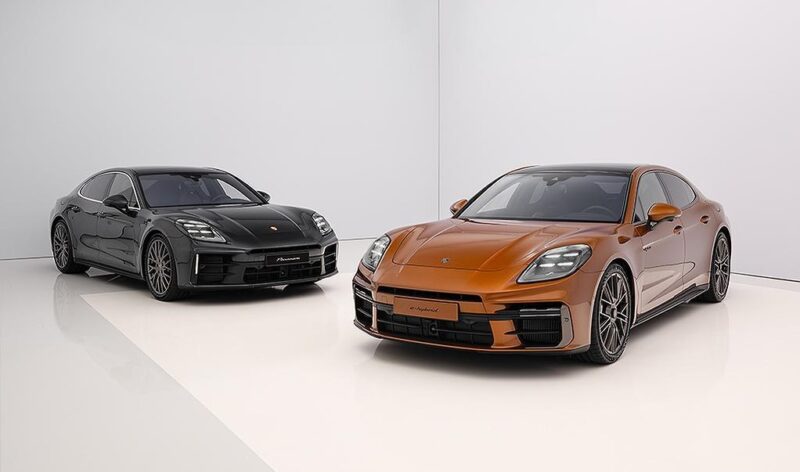
2024 Porsche Panamera now in Malaysia, features 2.9 V6, matrix LED, from RM1.3 mil

The new third-generation Porsche Panamera has now arrived in Malaysia, brought exclusively by Sime Darby Auto Performance (SDAP). This four-door sports sedan is offered at a starting price of RM1.3 million. Let’s see what you can get for this price.

This new Panamera is powered by a 2.9-liter V6 twin-turbo petrol engine capable of producing 353PS and 500Nm of torque. This represents an increase of 23PS and 50Nm compared to its predecessor.

With this output, the 2024 Porsche Panamera can accelerate from 0 to 100km/h in 5.1 seconds, with a top speed of 272km/h if given sufficient space.

In addition to being faster, braking performance has also been enhanced. Manufactured in Leipzig, Germany, this sedan is equipped with 360mm brakes with 6 pistons at the front and 330mm with 4 pistons at the rear. The electric booster in the braking system has been upgraded for better feel and precision.

The car features 19-inch rims wrapped in 265/45 tires at the front and 295/40 at the rear. The Panamera 2024 comes with a dual-chamber air suspension system with Porsche Active Suspension Management (PASM) as standard. This system can absorb impacts from uneven roads while ‘holding’ the car body for dynamic driving on the track. Rear-wheel steering can also be added for more precise handling.

Externally, the 2024 Porsche Panamera is equipped with matrix LED headlights with 32,000 pixels each, providing precise illumination up to 600 meters.

Inside the cabin, the Panamera has a design that Porsche describes as “balancing digital and analog control elements”. Essential controls are placed within the driver’s reach, while the gear lever is now located on the steering column.

There are two main displays on the dashboard, a 12.6-inch curved screen in front of the driver, and a 12.6-inch touch screen in the center. Additionally, there is a third 10.9-inch screen in front of the front passenger.

Technological features in the Panamera include the MyPorsche app (iOS only), Apple Carplay and Android Auto connectivity, massage seats, ambient lighting, Siri voice assistance, and enhanced driving assistance features.

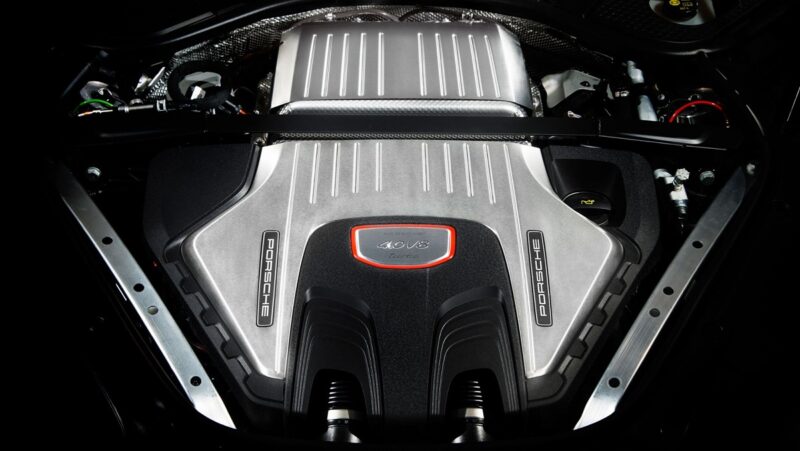
Porsche to use its V8 engine to into the next decade

The trend of downsizing engine capacity may be prevalent now, but Porsche seems unwilling to halt the use of V8 engines. Despite increasingly stringent emissions standards, engineers at Zuffenhaus are always one step ahead.

Their eight-cylinder engine has been fine-tuned to comply with the latest Euro 7 standards, even though its implementation has been postponed from 2025 to 2030.

In an interview with the Australian magazine Car Sales, Thomas Freimuth, the head of the Porsche Panamera model line, revealed that new components are being developed to comply with Euro 7 standards.

He stated, “We found that this engine is ready for Euro 7, no problem. We need to use some components that are currently under development, so we are ready with this V8 to comply with Euro 7 standards.”

Freimuth also mentioned that the permissible exhaust noise level is expected to decrease, with stricter legislation complicating the process of delivering more emotion to our Panamera V8.

However, even though the V8 will continue to be used beyond 2030, it is likely that not many Porsche models will be equipped with the 4.0-liter twin-turbo engine by the end of the decade.

In the Annual and Sustainability Report 2023, released last month, Porsche expects to sell over 80% electric vehicle models annually by 2030. Nevertheless, they emphasized that achieving this goal depends on “the demand of our customers and the development of electromobility in specific regions of the world.”

Porsche’s foray into electric vehicles began with the Taycan in 2019, followed by the fully electric second-generation Macan. The 718 Boxster and 718 Cayman are expected to follow suit in 2025.

The successor to the current Cayenne has also been confirmed to be an electric vehicle without an internal combustion engine. Meanwhile, the 911 won’t become a fully electric model this decade, but a hybrid version will debut in the middle of this year with the 992.2 facelift.

Porsche aims to continue using internal combustion engines (ICE) with nearly carbon-neutral synthetic fuel, which they are currently developing in Chile.

Porsche Leipzig plant awarded Factory of the Year

The Porsche production plant in Leipzig has been awarded the Factory of the Year by the consultancy firm Kearney, in collaboration with Süddeutscher Verlag Veranstaltungen and the magazine Produktion.

The sports car brand manufacturing facility has surpassed nearly 100 other factories worldwide. Last autumn, the jury panels visited this Leipzig plant.

Porsche utilizes the Smart Factory approach for a smart and connected plant. All processes are smart, efficient, and eco-friendly. For instance, the car ‘marriage’ process in the plant is intricate yet organized. The ‘marriage’ process involves the assembly of the chassis with the body of the car.

In Leipzig, this process can encompass three different powertrains – combustion engine, hybrid, or electric – in the same assembly line. Cameras are used for monitoring alongside automated measurement systems for checking screw threads.

In the painting section, whereas it was previously inspected by several individuals in a team, it now employs the Automatic Error Detection (AFE) process.

In just 70 seconds, two robots scan the entire outer surface of the car using light strips. Over 100,000 photos enable these robots to detect even minor errors.

Another aspect contributing to the Leipzig Porsche plant’s victory is sustainability and commitment to the local community. The Zero Impact Factory vision balances the economy, biodiversity, and air quality.

Since 2017, this plant has solely used electricity from renewable sources. It has been carbon-neutral since 2021, with part of the electric power being generated by the plant itself.

Porsche’s social commitment also contributes to education, culture, social issues, sports, and the environment. One strategy involves protecting various animal species in the plant’s vicinity for over 20 years. Species in the surrounding area include Heck cattle, Exmoor ponies, bees, and a variety of plants.

In 2002, the Leipzig plant commenced operations as Porsche’s second production center after Stuttgart. Currently, the Leipzig plant plays a pivotal role in the economy of central Germany, with over 4,600 employees building Macan and Panamera models here.

The Porsche Leipzig plant also houses the Porsche Experience Centre with an FIA-certified track and off-road courses.

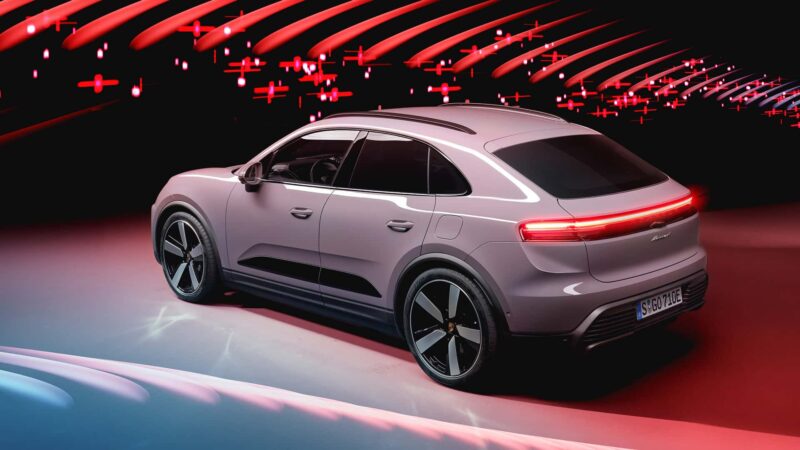
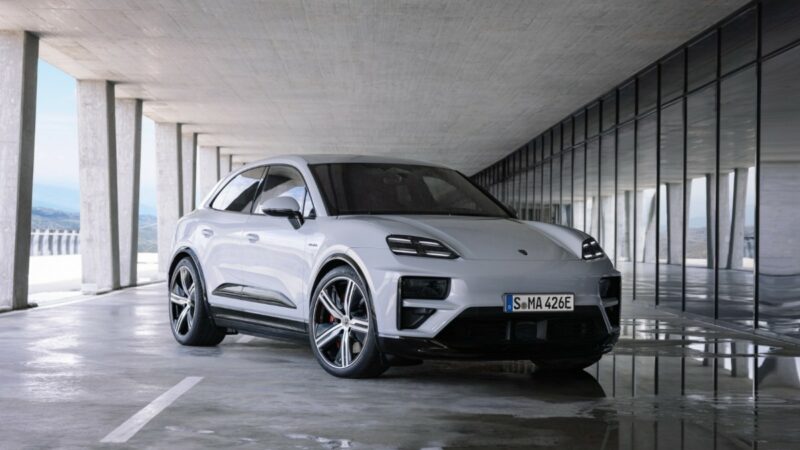
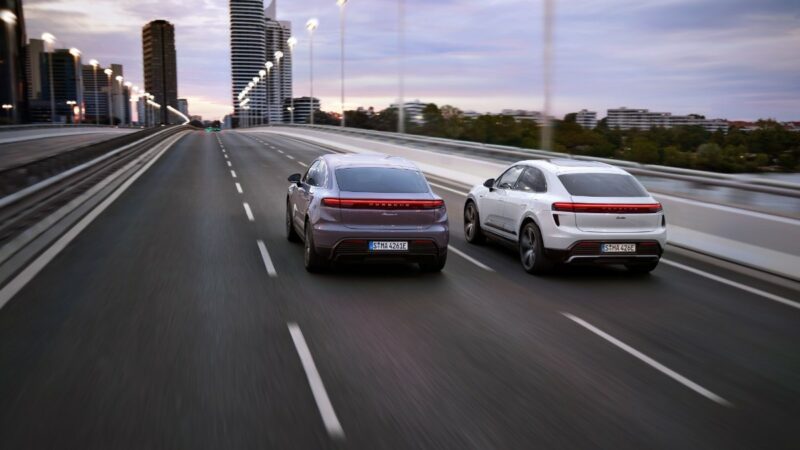
Second generation Porsche Macan now an EV – two variants, up to 630hp

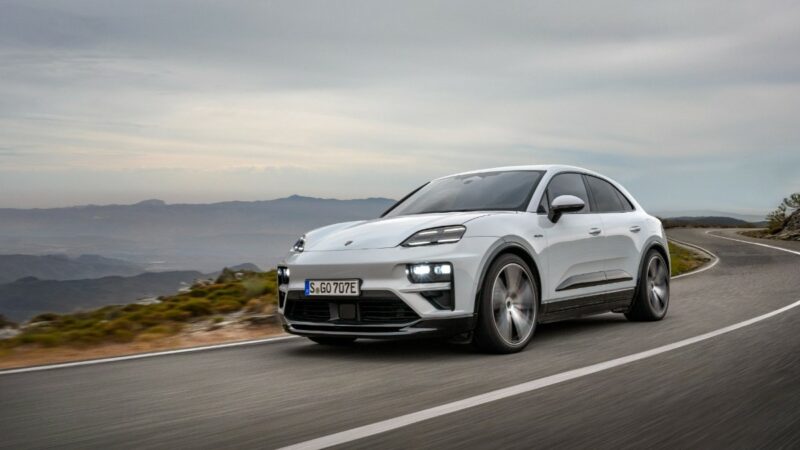
Ladies and gentlemen, here is the all-new, second-generation Porsche Macan. As reported previously, this SUV has evolved to become a fully electric vehicle (EV), no longer offered with an internal combustion engine (ICE).

Does this mean that the Porsche Macan has become a less appealing model? Not at all. It is offered with two options: the 402hp Macan 4 and the Turbo Macan with up to 630hp.

This new Porsche Macan is built on the Premium Platform Electric (PPE) developed in collaboration with Audi. This platform utilizes an 800-volt electrical architecture.

It is powered by a 95kWh Lithium-Nickel Manganese Cobalt battery, which can be fast-charged with up to 270kW DC chargers. The Macan 4 and Macan Turbo are driven by two synchronous permanent magnet electric motors. The rear motor rotates 180 degrees to provide a slightly rear-biased weight distribution.

As mentioned earlier, the maximum output for the Macan 4 is 402hp and 650Nm of torque, while the more powerful Macan Turbo generates up to 630hp and 1,130Nm of torque. However, these figures are based on Overboost mode during Launch Control.

What about performance? The Porsche Macan 4 can accelerate to 96km/h in 4.9 seconds, while the Macan Turbo can achieve the same in just 3.1 seconds. Their respective top speeds are 218km/h and 260km/h.

The maximum speeds for an EV seem quite high, don’t they? This is because the new Porsche Macan features a gear reduction system and does not use a two-speed gearbox like the one used in the Taycan.

As for the suspension, it utilizes a multi-link system at the front and rear. Air suspension and Porsche Active Suspension Management (PASM) are provided as standard. A new feature of the Macan is the rear-axle steering system, which can turn up to 5 degrees depending on the situation.

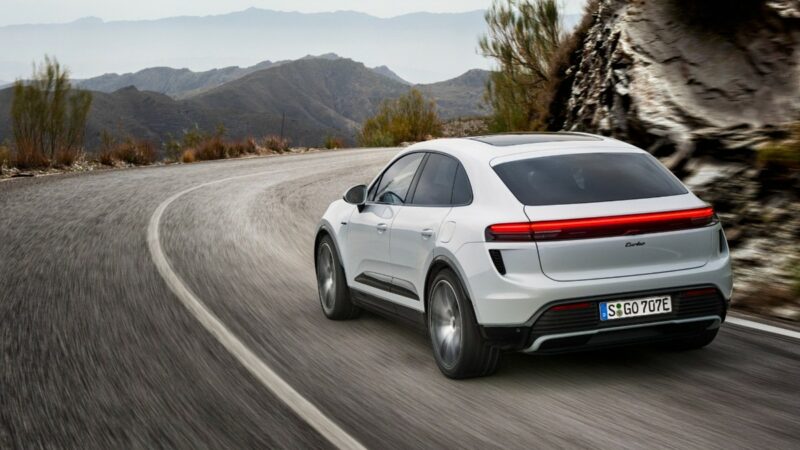
Now, let’s talk about the design. In this regard, it’s typical Porsche – an evolution rather than a revolution. The Macan retains a coupe-like shape, although it features Taycan-like daytime running lights at the front.

The front lights are now integrated into the bumper, and there is no longer a hood clamshell. Since there’s no engine, the hood is lower as well.

Porsche states that the Macan has a drag coefficient of only 0.25, achieved through active aerodynamics such as the rear spoiler, underbody paneling, and front bumper flaps.

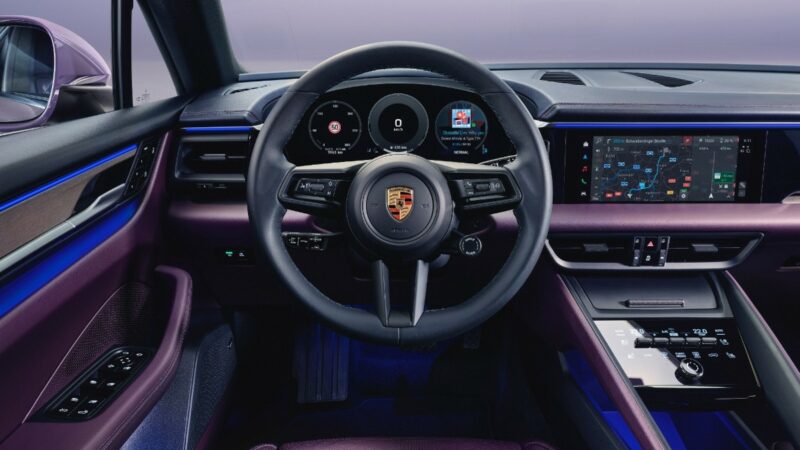
The interior space is similar to the latest Porsche models. It features a digital instrument panel with a curved screen, and in the middle, there is the latest generation infotainment system.

What is your opinion on the all-new, fully electric Porsche Macan generation?

Porsche Malaysia works with Krithin to inspire more dreamers

Similar to Ferry Porsche 75 years ago who wanted to build his dream sports car, Krithin Paul Pereira also has a dream.

An artist, designer, and engineer, Krithin also has a deep interest in sports cars. Despite having Cerebral Palsy, he overcomes challenges every day and expresses his passion through unique artistic works.

After making an appearance during the launch of the Porsche Cayenne CKD a few months ago, Krithin is now collaborating with Porsche Malaysia for a special project. He painted the Cayenne on a T-shirt to raise funds for Amirs Therapy Gym – where Krithin receives treatment.

Porsche Malaysia first met Krithin at the opening of the Porsche Club Malaysia office in Sungai Besi. Later, Krithin was invited by Porsche Malaysia to several important events, including the CKD Cayenne assembly plant in Kulim, Kedah, which is also the first Cayenne factory outside Europe.

Krithin’s work also attracted the attention and recognition of Porsche AG, and he received an invitation to visit the company’s factory in Stuttgart. Krithin had the opportunity to interact with designers and experience the sensation of driving the 911 GT3 on the Hockenheimring circuit.

“I would like to thank Porsche Malaysia for this opportunity. Amirs Therapy Gym holds a special place in my heart, where they help me build my physical and mental strength,” said Krithin.

“Despite facing various challenges in life, I always tell myself that I can do it because I am a limitless dreamer. And I also want to help others achieve their dreams in life,” he added.

Christopher Hunter, CEO of Sime Darby Auto Performance, representing Porsche Malaysia, said: “Since I met Krithin, he has inspired us in many ways. We gave him the opportunity to be with us for the launch of the Cayenne in Malaysia and now we are excited to continue this journey to inspire others as well,” said Christopher.

Porsche Macan EV in final testing phase, global premiere 25 Jan

PORSCHE engineers are preparing the all-new Macan, which now is also an electric model (EV), for its global debut soon.

The SUV is currently in its final phases and has undergone various extreme tests. As previously reported, this second-generation Macan is an electric model replacing the first generation after 10 years on the market.

The Porsche Macan EV is built on the Premium Platform Electric (PPE).  It remains a sporty Porsche but will become more efficient.

“When we develop a new model, it’s always about the driving dynamics and precision. That’s Porsche. It’s in our DNA. But it’s always about efficiency too. And design,” says Jorg Kerner, Vice President of the Macan Product Line.

The key to the new Macan’s aerodynamics is its drag coefficient (Cd) as low as 0.25. One of the challenges is maintaining the successful Macan identity while meeting new aerodynamic requirements.

This is achieved with Porsche Active Aerodynamic (PAA), which includes an active spoiler at the rear, active cooling flaps at the front, and a flat and closed underbody like a racing car.

Over 500km driving range

The Porsche Macan EV will be equipped with a 100kWh lithium-ion battery and 800-volt construction on the PPE platform.

This allows the Macan to receive fast DC charging up to 270kW, meaning the battery can be charged from 10 to 80 percent in just 22 minutes. AC charging remains at 11kW. The driving range is over 500km for all variants.

Tested and ready for global launch

The Macan EV is currently in its final testing phase, and prototypes with overall camouflage have been driven over 3.5 million km on test tracks and public roads worldwide.

“We cover all temperature ranges. From minus 30 degrees Celsius in Scandinavia to plus 50 degrees Celsius, as we experienced in Death Valley in California,” said Kerner.

“Of course, an SUV also has to work on any surface. That’s why we test not only on roads, but also off-road, on gravel, snow and ice.” he said.

Systems such as all-wheel drive, two electric motors, Porsche Traction Management, Launch Control, Porsche Active Suspension Management, all have been tested on these surfaces.

Look out for our report after the official launch of the Porsche Macan EV on January 25th.

Pre-production Porsche Taycan is 18 secs faster than Model S Plaid around Nurburgring

Porsche is currently working on a new variant of the Taycan that offers better on-track performance compared to existing variants.

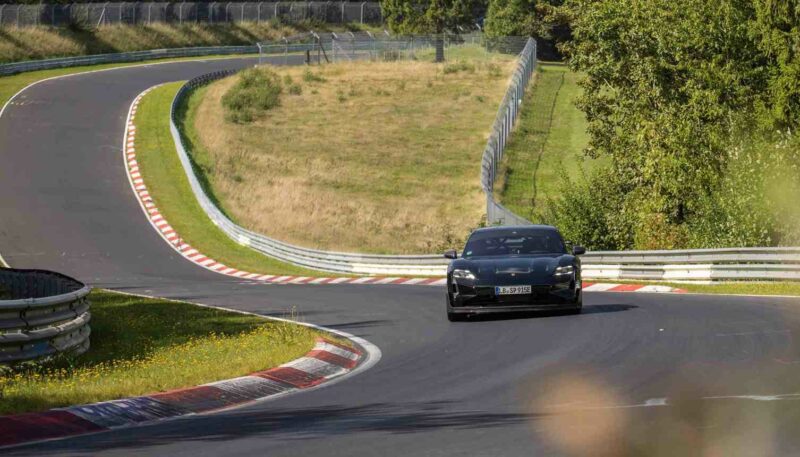
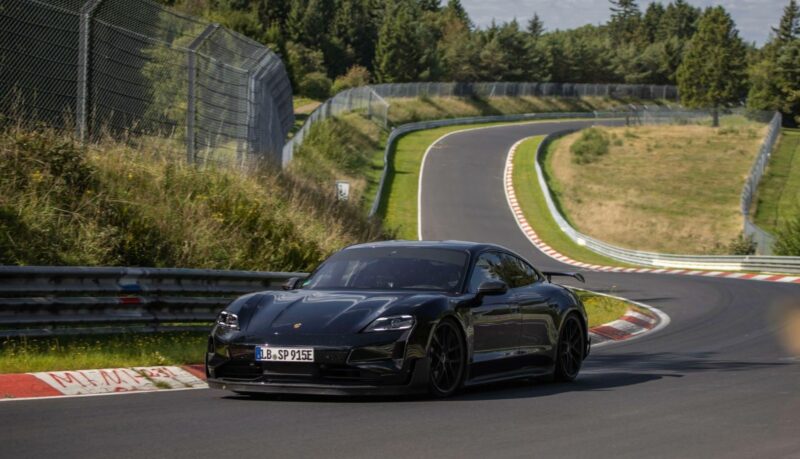
Although it’s not quite ready yet, the unnamed new variant has already put an impressive display of track prowess with a lap time of 7:07.55 minutes on the Nurburgring Nordschleife circuit.

The lap time clocked by the pre-production car is a whopping 26 seconds ahead of the record set by the Taycan Turbo S and almost 18 seconds quicker than that of the Tesla Model S Plaid.

To illustrate the speed of the new variant at the Nurburgring, Porsche said it would finish lapping the 20.8 km circuit 1.3 km ahead of the Taycan Turbo S.

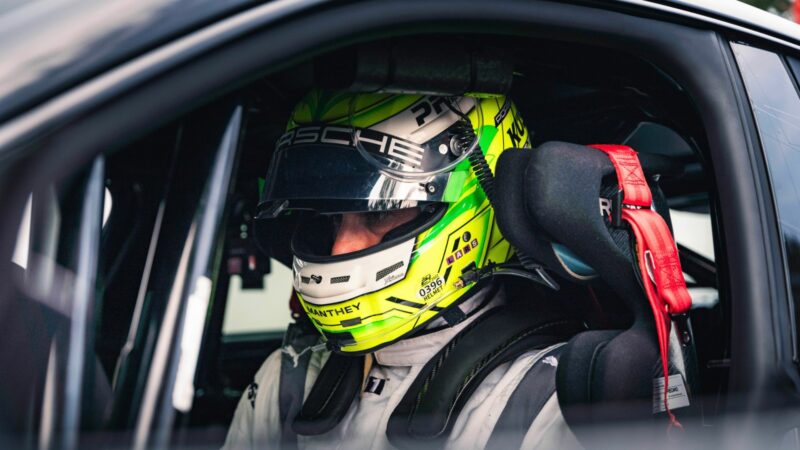
Driven by Lars Kern, the pre-production Taycan was equipped with a roll cage and bucket seats for safety reasons.

Details about the powertrain are undisclosed, but rumours suggest the variant comes with a tri-motor setup capable of generating a total system output of up to 1,000 hp.

An extra motor on the rear axle allows for better thermal management and advanced traction control.

As for the design, official images released by Porsche show a more aggressive design front bumper, a lip spoiler, as well as a rear spoiler. The wheels also appear to have a different design from the existing options.

According to Porsche, an onboard video of the complete lap will be published in mid-March.