Perodua wishes to thank the Malaysian government, especially the Ministry of Investment, Trade and Industry for clarifying its position on the National Automotive Policy (NAP) and its intended purpose which is to encourage investment that will benefit the country.
By having guidance in accordance with NAP, the automotive industry’s ecosystem will be further strengthened and creates significant economic spillover, ultimately fostering shared prosperity for all stakeholders.
This includes long-term sustainable employment, investments in infrastructure, human capital enrichment, research and development (R&D), commitment towards technology and technical sharing as well as development of local entrepreneurs involving local vendors and dealers.
Through the NAP’s Next Generation Vehicle (NxGV) vision, Malaysians will see greater value and innovation in mobility that would benefit a majority of Malaysians.
Such benefits include wider range of services offered by the players that suit customer preferences, add-on mobility services such as enhanced safety and mobile integration features leveraging on Internet technology.
The existing policy, vision and roadmap outlined by MITI work as a comprehensive, transparent and consistent guide for the automotive industry players.
Perodua also applauds MITI for their vision of a progressive Malaysian automotive industry that balances progress and openness for the benefit of all.
MITI’s commitment is fully supported by the Perodua Dealers Association (PDA) and the Perodua Suppliers Association (P2SA).
In a statement, P2SA explained that the requirements imposed by MITI consistently cover all brands, ensuring that the growth of the electric vehicle (EV) sector will not adversely affect the existing local ecosystem.
Say (or criticize) what you will about the Perodua Traz, but this is the most stylish SUV that Perodua has ever produced.
Although it arrived a bit late in the market, this twin of the Toyota Yaris Cross strives to maintain the widely recognized Perodua DNA.
It offers a spacious and practical interior, while also featuring modern technology.
We had the opportunity to test drive this SUV for several days, and here are our findings:
The Bold Design of the Traz
There’s no denying that the Perodua Traz shares many components with its twin, the Toyota Yaris Cross.
After all, it uses the same platform, the DNGA-B, as the Toyota Vios, Toyota Velos, and Perodua Alza.
However, its exterior can be distinguished by its unique grille design and more aggressive 17-inch rims.
I particularly like the Traz’s boxy and angular appearance, especially when viewed from the rear—it resembles a Lexus SUV with a Perodua badge.
For those wanting a more eye-catching look, the GearUp body kit is available.
Dimensions
In essence, the Traz presents much larger dimensions compared to the Ativa.
With a length of approximately 4,310 mm and a wheelbase of 2,620 mm, the Traz offers a spacious and comfortable cabin.
Its ground clearance of 210 mm is sufficient for Malaysian roads.
One of Traz’s main advantages is its substantial cargo space, around 471 liters.
Fold down the second-row seats, and you will have an even larger loading area with a nearly flat floor.
With a turning radius of just 5.2 meters, it excels in maneuverability, especially in tight urban areas.
Modern Cabin
Completing the sporty image of the Traz is a driver-oriented dashboard layout.
Honestly, the presence of old-school features like analog meters is something I truly appreciate.
They are simple and easy to read.
There is also a 4.2-inch TFT display, which is adequate for showing the necessary information.
The control buttons are large and easily accessible.
Thus, I had no issues reaching the controls and activating features while driving.
The sound quality from the Traz’s audio system is also satisfactory for someone who is not an audiophile.
It offers support for Apple CarPlay and Android Auto on the 9-inch screen, facilitating daily tasks that require navigation assistance.
However, Perodua should consider reducing the use of red accents on the dashboard, as they can be perceived as excessive.
Driving Experience
“Tekan, tekan pergi” is not the motto of the Traz, especially when compared to the turbocharged Ativa.
The Traz shares the same 1.5-liter (2NR-VE) engine found in the Perodua Myvi and Toyota Vios.
So don’t expect lightning-fast acceleration at traffic lights when the light turns green.
With a D-CVT transmission, the Traz is designed for a more relaxed driving experience, prioritizing comfort.
If you seek more energetic acceleration, simply switch to Power mode.
Even without a turbo engine, I prefer the driving dynamics of the Traz, which feel more stable compared to the Ativa.
The braking performance is also reassuring, although it could benefit from sharper steering tuning.
The handling feels somewhat stiff and less responsive than expected, particularly at higher highway speeds.
However, this is not a significant issue for most of Traz’s target demographic.
Thanks to its stable chassis, the Traz is actually enjoyable to drive through winding roads, even with standard Proxes CR1 tires.
Body roll is minimized, and at permissible speeds, the Traz can maintain its line through curves.
Comfort
One thing to commend is that the seats in the Traz are spacious and comfortable for adult passengers, both in the front and rear.
Unlike the Ativa, where the driver must sit upright, the driving position in the Traz feels more natural.
Honestly, these are among the best seats Perodua has ever produced.
With extended thigh support, they help reduce fatigue, especially during long journeys.
Manual adjustments? Not an issue.
At least, it decreases reliance on electronic devices in this SUV.
The NVH (Noise, Vibration, Harshness) aspect is also quite good, with the cabin remaining comfortably quiet.
Occasionally, focus may be slightly disrupted by engine noise when pushed hard.
The suspension tuning feels rather good for a Perodua, suitable for most road surfaces in Malaysia.
It absorbs road imperfections well, filtering and reducing vibrations to ensure a comfortable cabin experience—occasionally feeling like a rally car.
Safety
With features like ADAS, a 360-degree camera, a dashcam, and a five-star ASEAN NCAP rating, the Traz is a model worth considering.
However, among the features listed, there’s one downside: the absence of adaptive cruise control (ACC).
This omission can make the steering wheel feel somewhat empty, potentially deterring many prospective buyers.
However, try counting on your fingers how many times you really need (and activate) that feature while driving. Visits back to the hometown are occasional, right?
Conclusion
There are many options available in the B-segment SUV market right now.
In the price range of around RM100,000, there are SUVs that are overly powerful, overly sophisticated, and overly fuel-efficient.
Such features indeed excite the majority of today’s buying demographics, particularly the younger generation.
However, we shouldn’t overlook the group of consumers still seeking a modern vehicle with simpler, durable, and reliable technology, and more importantly, a lower ownership cost.
Therefore, the Perodua Traz is the ideal answer if you find yourself at a crossroads, searching for a suitable everyday SUV.
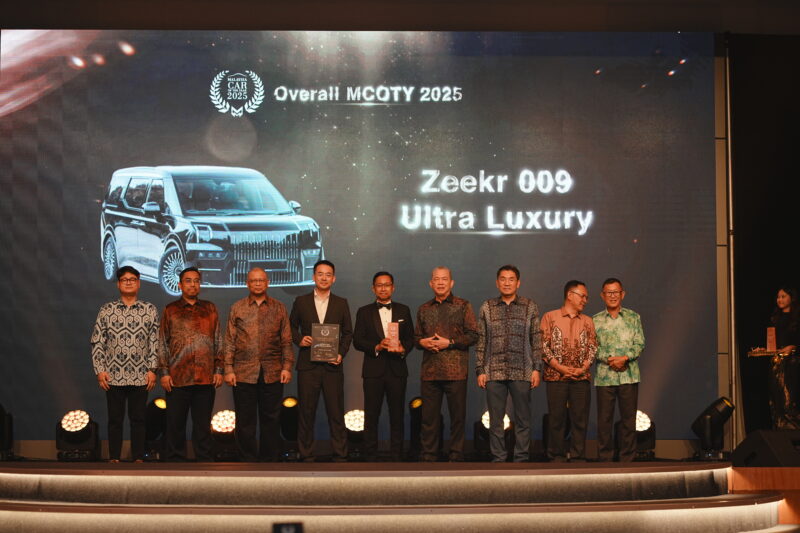
The overall 2025 Malaysia Car of the Year award has been presented to the luxurious MPV model, Zeekr 009 Ultra Luxury.
This marks the second consecutive year that electric vehicles have received the highest recognition, reflecting the ongoing development of EVs in the Malaysian automotive market.
The Zeekr 009 Ultra Luxury was chosen for setting a new benchmark in terms of advanced electric powertrain technology, high refinement levels, comprehensive safety features, and modern luxury amenities that come as standard.
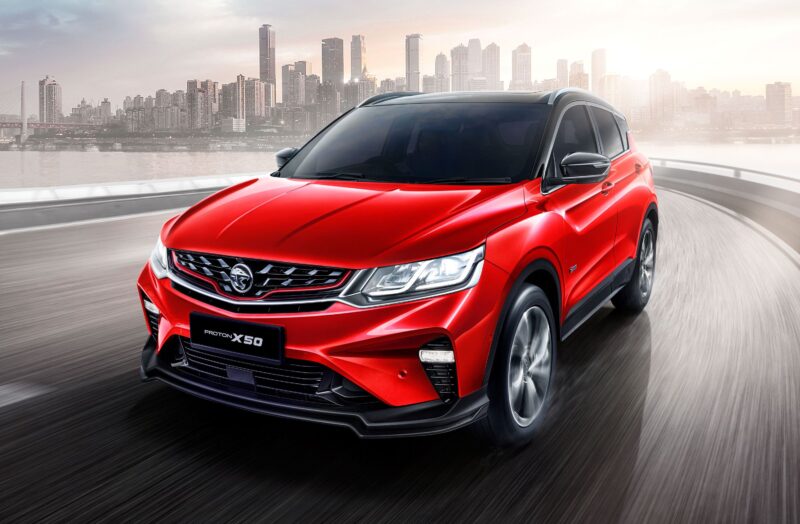
The Proton X50 1.5TD Flagship was awarded the “People’s Choice Award” for 2025, reflecting consumer sentiment regarding technology, energy efficiency, safety, and value.
Meanwhile, the “Automotive Person of the Year (APOY)” award was given to Dato’ Seri Zainal Abidin Ahmad, President and CEO of Perodua.
Under his leadership, Perodua has consistently recorded strong sales performance, significantly contributing to Malaysia’s Total Industry Volume (TIV).
He has also supported broader industry development through vendor development, workforce skill enhancement, and alignment with national automotive policies and sustainability, thereby reinforcing Perodua’s role as a pillar of Malaysia’s automotive sector.
Notably, the MCOTY 2025 awards saw a substantial number of recipients consisting of electrified vehicles, particularly fully electric models.
At the same time, this outcome reflects how hybrid powertrains and modern turbocharged internal combustion engines have become the new norm among high-performance vehicles.
“The Malaysia Car of the Year award reflects the extent of progress in our automotive industry, not only in scale but also in innovation and sustainability.
“The significant presence of electric vehicles among the main award winners demonstrates Malaysia’s readiness to embrace cleaner and smarter mobility solutions,” said Deputy Prime Minister YAB Dato’ Sri Haji Fadillah Haji Yusof.
He explained that this aligns with national and regional aspirations, as the government’s ongoing focus on energy transition opens opportunities for industry players to invest in green technology, strengthen local capabilities, and develop future mobility solutions.
The winners of 2025 MCOTY were selected through a transparent and comprehensive judging process, conducted by a panel of automotive journalists and experienced industry professionals.
Vehicles were assessed based on eight key criteria: Design, Safety, Ergonomics, Value, Practicality, Performance, Energy Efficiency, and Warranty. This comprehensive evaluation framework ensures that awards are granted to vehicles that are genuinely relevant in the real world and offer balanced excellence.
Perodua is increasing the number of sales outlets that can collect QV-E bookings to 34 selected locations in Peninsular Malaysia from its original 9 outlets in order to assist customers book their first Perodua EV.
“We have received healthy interest from potential customers from across the country, and we are now expanding our reach to include more locations so that our customers can book test drives and reserve their very own Perodua QV-E,” Perodua President and Chief Executive Officer, Dato’ Sri Zainal Abidin Ahmad said.
He said that Perodua is including manual bookings to simplify the process for its customers.
“Originally, we requested our customers to make their booking through our super-app, P Circle, but some of our customers asked to include the normal option of booking collection,” Dato’ Sri Zainal said.
He said that Perodua is also looking to simplify its terms and conditions for its battery leasing programme through an infographic explanation.
The BAAS is an independent service that is aimed to protect the customer and the environment. It charges a RM275 subscription (all-in and final monthly price) fee per month for 108 months (9 years).
On the payment amount, Perodua has capped the subscription to RM275 to ensure the customers are protected from future price hikes.
In addition, the electric battery will be wholly maintained by Perodua as part of the package designed to give peace of mind even beyond the 9-year period.
Perodua will also provide the administration assist in transferring the BAAS subscription to a new owner.
For example: if the current owner wishes to sell their Perodua QV-E, the Perodua’s Pre-Owned Vehicle Department will de-list the original owner’s name from the subscription programme and register the new owner.
The 108-payment requirement is also transferable, meaning if the current owner has already paid 50 months for the plan, then the new owner only needs to continue the 58 months remaining under the same plan.
Dato’ Sri Zainal said that the BAAS programme is Perodua’s commitment towards the safety and convenience of Perodua’s customers, while at the same time helping to preserve the environment by taking responsibility of the battery.
Perodua has officially launched its first electric vehicle (EV), named QV-E.
With a starting price of RM80,000, the Perodua QV-E is the first passenger car in Malaysia to come with a battery leasing scheme.
Here are some key facts you need to know:
1. Collaboration with Magna Steyr
The QV-E is a joint project between Perodua and Magna Steyr. A brand-new platform has been developed to accommodate various body shapes within the A and B segments.
This platform is not only for EVs but can also be adapted for hybrid drivetrains, as well as extended-range electric vehicles (REEVs).
2. Dimensions
The QV-E measures 4,170 mm in length, 1,800 mm in width, and 1,502 mm in height, with a wheelbase of 2,680 mm. It also offers a ground clearance of 158 mm.
When compared to its closest competitors, the QV-E has dimensional advantages with a length of 35 mm longer and a wheelbase 30 mm longer.
Additionally, the QV-E is significantly longer and wider but slightly lower compared to the Myvi model.
3. Performance
The Perodua QV-E is powered by a single electric motor delivering 201 hp and 285 Nm of torque, enabling acceleration from 0 to 100 km/h in just 7.5 seconds and a top speed of 165 km/h.
This makes the QV-E the fastest model ever produced by Perodua.
There are three driving modes: Eco, Normal, and Sport.
4. Battery
The 52.5 kWh battery pack from CATL allows this EV to travel up to 445 km on a full charge (NEDC data).
The QV-E supports AC charging at 6.6 kW, where the battery can be fully charged from 0 to 100 percent state of charge (SoC) in 8 hours.
For convenience, users can take advantage of DC fast charging at 60 kW, allowing the battery to charge from 30 to 80 percent SoC in just 30 minutes.
This battery also features a liquid cooling system and is rated IP68 (water) and IP69 (dust).
5. Exterior
The coupe SUV design of the QV-E brings a unique look not found in any existing Perodua model.
Standard features of the QV-E include 18-inch alloy wheels, LED headlights with daytime running lights (DRL), flush door handles, protective cladding on the sides, and a roof spoiler.
The charging port is located on the left front fender.
6. Cabin
In the cabin, there is a flat-bottom steering wheel, a 10.25-inch TFT digital cluster screen, a central screen of the same size, wireless support for Apple CarPlay and Android Auto, as well as a digital rearview mirror.
The QV-E still retains physical buttons for air conditioning controls located at the bottom of the air vents, along with a driving mode selection lever and a PRND rotary knob on the center console.
Other features include a driver’s seat with six-way power adjustment, automatic climate control, ambient lighting, a wireless smartphone charging slot, and partially leather-wrapped seats.
7. Safety
The QV-E comes equipped with six airbags, ABS (Anti-lock Braking System), EBD (Electronic Brakeforce Distribution), Brake Assist, Electronic Stability Control (ESC), Traction Control System (TCS), a dashcam, ISOFIX anchor points, and a Surround View Monitoring (SVM) system.
Active safety features include Autonomous Emergency Braking (AEB), Adaptive Cruise Control (ACC), Traffic Jam Assist (TJA), Highway Assist (HWA), Forward Collision Warning (FCW), Blind Spot Detection (BSD), Lane Departure Warning (LDW), Lane Keep Assist (LKA), and Rear Cross Traffic Alert (RCTA).
Additionally, there is a Child Presence Detector (CPD) for the second row seats, along with an Emergency Call System (SOS).
8. Battery as a Service
Perodua offers a battery leasing service to ensure guaranteed performance throughout a 9-year (108-month) contract period.
The monthly subscription fee (RM275 per month) will be added to the vehicle financing.
Under this program, the battery will remain the property of Perodua, but customers can fully own it after 9 years.
Once the battery reaches its End of Life, it must be returned to Perodua for proper disposal.
Perodua also installs battery tracking devices to minimize environmental risks if the battery is removed from the vehicle or left unused for an extended period.
This battery leasing program aims to alleviate customer concerns regarding the low resale value of EVs and the currently high costs associated with replacing EV batteries.
Perodua today is moving closer towards incorporating Mobility as a Service (MaaS) under its super App: P-Circle.
“The P-Circle offers mobility as a lifestyle as all these offerings covers a significant portion of our online services engagement under one super app,” Perodua President and Chief Executive Officer, Dato’ Sri Zainal Abidin Ahmad said.
“This diversification into tech-based business is in line with our future direction and the auto industry’s future in terms of convergence with consumer preference towards connecting their vehicles, and even homes with the Internet,” Dato’ Sri Zainal said.
“We foresee that this convergence to only grow stronger in the years to come, and we want to prove that we can innovate by providing all the services our customers’ needs before they ask for them – which is in line with our “We Go Beyond” philosophy,” he explained.
“A key component in MaaS is to offer drivers flexible solutions based on their travel needs and the package that we are offering fits right into that description,” he said.
One of the key components of the P Circle is the is the P Duit, an e-wallet, which makes payments easier for nearly all transactions in Malaysia.
“This feature will be useful for those looking to own our first EV (electric vehicle) as we have made an agreement with all charging point operators to agree to accept payments from our e-wallet,” Dato’ Sri Zainal said.
He added that “P Vehicle” will only made available after Perodua’s EV launch.
Dato’ Sri Zainal said that the P Guardian is a surveillance app offered together with P Charge where you can monitor the condition of your home from the camera attached to the P Charge.
The P-Circle app can be downloaded from the Apple App Store and Google Play App. The mobile charge and smartwatch can be purchased at any Perodua Sales and Service outlet nationwide.
Perodua has partnered with Maybank Islamic Berhad to offer Malaysia’s first Shariah-compliant Perodua Flexiplan financing program.
Powered by Maybank Islamic’s myimpact Drive Financing-i, this financing plan allows customers to enjoy the following benefits:
A highly competitive term Murabahah vehicle financing offer, with more affordable monthly payments for the first five years.
A competitive vehicle buy-back offer compared to market value, subject to terms and conditions.
Ownership flexibility – customers can either upgrade to a new vehicle model or retain their existing vehicle with a revised payment plan.
Under the Perodua Flexiplan, customers can choose to obtain models such as the Myvi, Axia (excluding Axia E), Ativa, and Aruz.
In the fifth year of this plan, customers have the following options:
To trade in their current vehicle for a new one, with a guaranteed buy-back value used to reduce the upfront payment and restart the five-year period.
To retain their current vehicle by settling the outstanding balance or extend financing for up to four more years under a new payment plan.
Perodua hopes that this new plan will enhance accessibility to vehicle ownership and provide customers with the option to easily switch vehicles according to their needs.
Dato’ Sri Zainal Abidin Ahmad, President and CEO of Perodua, stated, “Today, Perodua and Maybank Islamic are creating new history by collaborating to offer the best financing package to ensure that all parties benefit, especially our valued customers.”
“We believe that with the support of Malaysia’s largest bank, combined with the trust we have built with the Malaysian people, the Perodua Flexiplan will be well-received,” he added.
Meanwhile, Syed Ahmad Taufik Albar, Group CEO of Community, Services, and Finance of Maybank, said, “At Maybank Group, we are always committed to empowering customers with flexible, transparent, inclusive, and sustainable financial solutions, and Maybank Islamic myimpact Drive Financing-i reflects our value-driven approach.”
This new vehicle ownership plan also enriches the Shariah-compliant solution ecosystem for Perodua vehicle owners, including comprehensive takaful protection through Perodua Total Protect Plus, underwritten by Etiqa, as well as Credit Reducing Term Takaful as an additional protection layer for customers.
With this latest plan, Perodua and Maybank Islamic aim to set a new benchmark for vehicle ownership in Malaysia.
Perodua has signed a memorandum of understanding (MoU) with MyDigital ID to secure user authentication access as the compact car company further improves its journey in cashless transactions.
MyDigital ID is a secured and trusted National Digital Identity initiative, developed to enable Malaysians to seamlessly and safely access both government and private digital services. With a focus on security and privacy, MyDigital ID sets a new benchmark for trust and protection in the rapidly evolving world of mobility.
“This collaboration is the first of its kind for the country’s automotive industry as MyDigital ID being the country’s gatekeeper for authentication transactions enables us to further diversify our services to our customers specifically, and to all Malaysians in general,” said Perodua President and Chief Executive Officer Dato’ Sri Zainal Abidin Ahmad.
He said that the authentication process is a secured starting point to ensure all users are safeguarded by the country’s cyber security experts.
“Over the last six months, we have partnered up with several Malaysian bodies to further enhance the overall Malaysian experience through strategic partnerships with PETRONAS, Tenaga Nasional Bhd and Telekom Malaysia Bhd.”
“These other partnerships will offer a world of products and services to our future customers and we want our customers to be as safe as possible,” Dato’ Sri Zainal said.
“In addition, we are also supporting the government’s call for a more cashless society for convenience as well as leveraging on the robust cyber security feature provided by MyDigital ID,” he said.
“This strategic collaboration with Perodua demonstrates the important role of digital identity in accelerating digital transformation within the automotive industry,” said Mohd Azuddin Parman, Chief Operation Officer of MyDigital ID.
“The key is to ensure trusted digital identity verification while making digital interactions safer and more convenient. It empowers industries like the automotive to offer secure and user-friendly experiences for every customer. At the same time, we are contributing to the advancement of Malaysia’s digital economy,” Mohd Azuddin said.
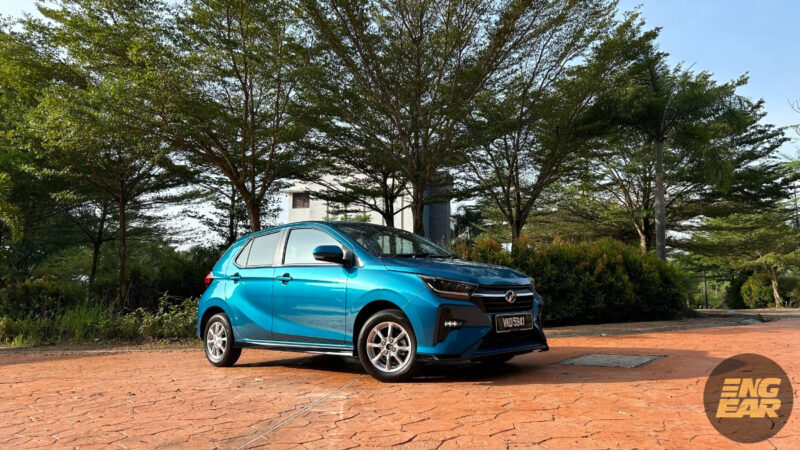
The Perodua Axia is an excellent choice as a first car. It is not particularly large, easy to drive, fuel-efficient, and still very much affordable, despite a slight price increase for the second generation model.
The Axia is available in four variants – G, X, SE, and AV – with prices ranging from RM38,600 to RM49,500. Thanks to the DNGA platform, new CVT gearbox, and the ASA 3.0 driver assistance system, it offers better value for money compared to the first generation model.
Speaking of which, ever wonder what are the maintenance costs for the Axia?
10,000 km service
The first service for the Axia is carried out at a mileage of 10,000 km. Three items need to be replaced: fully synthetic 0W-20 engine oil (RM140.50), a drain plug gasket (RM3.80), and an engine oil filter (RM12.50). No labour charges are incurred, resulting in a total amount to be paid of RM156.80.
20,000 km & 60,000 km services
In addition to the engine oil, drain plug gasket, and engine oil filter, Perodua will also replace the spark plugs (RM45.30) and the cabin filter (RM24.90). Including labour costs (RM89) and an 8% service tax (RM7.12), the total cost this time amounts to RM323.12.
30,000 km, 50,000 km, 70,000 km & 90,000 km services
When the odometer hits 30,000 km, Perodua will replace the engine oil, drain plug gasket, and engine oil filter. Along with a labour cost of RM65 and a service tax (RM5.20), the total cost is RM277.
40,000 km & 80,000 km services
A major service is required at the 40,000 km and 80,000 km points. This time, you will need to change the engine oil, the drain plug gasket, the engine oil filter, the air cleaner filter (RM54.30), spark plugs (RM45.30), brake fluid (RM26.40), and the cabin filter (RM24.90). Labour costs for this service reach RM99, bringing the total amount to RM414.62.
100,000 km service
Once the odometer hits six figures, you will need to spend RM452.08 on a service, which includes changing the engine oil, engine oil filter, drain plug gasket, spark plugs, cabin filter, CVT fluid (RM117.60), and CVT drain plug gasket (RM3.80).
Conclusion
The total cost of periodic servicing for the Perodua Axia amounts to RM2,992.36 for 100,000 km/five years of ownership. This means that, on average, owners will need to budget RM598.47 per year or RM49.87 per month for servicing.
This calculation is important as, in addition to the installment payments, customers should also consider servicing costs and other expenses such as fuel, insurance, and tolls before making a decision.
Perodua is currently preparing to launch its first electric vehicle (EV) in December this year.
This was confirmed by Sime Darby Group Chief Executive Officer, Datuk Jeffri Salim Davidson, as reported by the New Straits Times. According to him, the company will begin testing the EV in June.
He further added that the yet-to-be-named model received positive feedback when showcased at the Kuala Lumpur International Motor Show (KLIMS) 2024 in December last year.
“The EV space is where we see strong potential. The demand is growing, and we are positioning ourselves accordingly,” said Jeffri.
As previously reported, Perodua’s EV will feature a single front-wheel-drive electric motor with a power output of 68 PS and 220 Nm of torque, and a range of up to 450 km on a full charge.
Specifications regarding the battery are still unknown. However, Perodua President and Chief Executive Officer Datuk Seri Zainal Abidin Ahmad previously mentioned that it would be offered on a leasing basis to buyers.
He explained that this approach allows Perodua to sell the EV at a price of around RM80,000.
Yes, you read the headline right. English Premier League giants Manchester United have approached Malaysian automotive brand Perodua for discussions on a potential sponsorship.
This was revealed by Perodua chairman Tan Sri Asmat Kamaludin, who said that they are currently evaluating an offer from the 20-time EPL champions.
“I recently received a letter from Manchester United asking whether they could display the Perodua logo on their jerseys and whether we would be interested in sponsoring them.
“I usually don’t share such matters publicly, but I’m actually an Arsenal supporter. If I were to do that, it would feel rather unfair to Arsenal,” he quipped.
When asked about Perodua’s interest in sports sponsorship, particularly in local football, Asmat mentioned that interest from Manchester United demonstrates that the company is becoming increasingly recognised on an international level.
“We will consider it, especially for football in Malaysia,” he said.
The year 2024 saw Perodua not only achieving the highest vehicle registration record for the local market but also successfully ranking second in the ASEAN passenger vehicle sales chart for the same year.
This announcement was shared directly by Perodua with media practitioners during the ‘Up-Close & Casual With Perodua’ event yesterday.
According to the ASEAN passenger vehicle sales data for 2024, Perodua recorded sales of 358,000 units, surpassing Honda, which is now in third place with 303,000 units.
For the record, in 2023, Perodua ranked third with total vehicle sales of 330,000 units, behind Honda’s 351,000 units and Toyota, which was first with 752,000 units.
Since its establishment, Perodua has recorded a total of 5.1 million vehicles on the road.
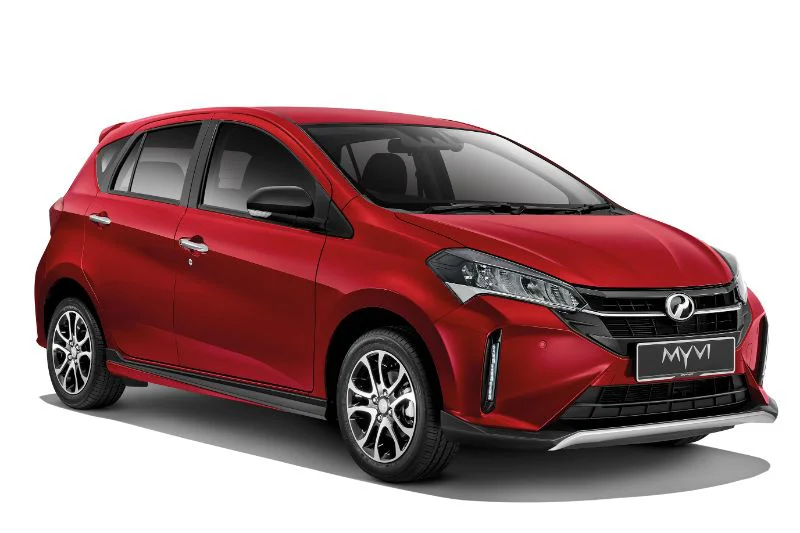
Among these, the Myvi remains the king of the road, with 1.487 million units, followed by the Perodua Axia (746,000 units), Perodua Kancil (709,000 units), and Perodua Alza (503,000 units).
Additionally, 2024 also saw Perodua exceeding its original production capacity of 320,000 units, with a total of 368,100 vehicles produced that year.
According to Dato’ Sri Zainal Abidin Ahmad, President and CEO of Perodua, “The record of 368,100 units was achieved by minimizing downtime according to the maintenance schedule, through dynamic coordination and planning with suppliers and distributors, and swiftly addressing challenges.”
For 2025, Perodua has allocated RM1.6 billion for model expenditure, much of which will be dedicated to factory improvements, stamping capacity upgrades, as well as new model development and tooling.
Meanwhile, Perodua anticipates a 4.9 percent decrease in production for 2025, forecasting a total of 350,000 units, along with a projected 3.7 percent reduction in registrations to 345,000 units.
“However, demand for our vehicles remains strong, with current back orders reaching 68,000 units, of which 28,000 orders have commitment letters issued without stock,” he further explained.
In terms of after-sales service, Dato’ Sri Zainal stated that the company aims to increase vehicle maintenance numbers this year to 3.7 million, representing a rise of 7.6 percent.
Perodua will also continue to support the nation’s automotive ecosystem with an estimated RM10.8 billion in local component purchases from suppliers in the country.
“2025 will be an exciting year for Perodua as we prepare the company and our strategic partners for any forthcoming changes. We believe that once these changes are complete, we will be able to strengthen our position both in this country and in the region,” he said.
Based on registration data released by the Department of Road Transport (JPJ) through the website data.gov.my, 2024 has been an excellent period for Perodua.
During this time, the brand recorded vehicle registrations totaling 358,100 units, securing the top spot once again.
In second place is Proton, with a total of 147,587 units registered, while Toyota comes in third with 127,202 units registered.
Interestingly, among the top 10 manufacturers, Chinese automotive brands have started to emerge, surpassing brands that were previously popular.
For example, Chery ranks fifth, beating out Mitsubishi and Mazda, while BYD has managed to secure the tenth position, ahead of Nissan, which ranks eleventh.
But do you know the list of the 10 most popular cars in Malaysia for 2024?
Perodua and Universiti Teknologi Malaysia (UTM) have signed a memorandum of understanding (MoU) to develop the country’s next generation of electric vehicles (xEV).
The MoU includes a comprehensive package that would cover educating and training future engineers in developing new technologies relating to xEV.
“We look forward to exploring a future where Malaysia can develop its own xEV technology and its benefits be shared with our future generation,” Perodua President and Chief Executive Officer Dato’ Sri Zainal Abidin Ahmad said.
“With this MoU, Perodua is taking a step further from our original mandate from being a vehicle for technological transfer to becoming an entity that drives technological development,” he said.
Perodua was established in 1993 to provide Malaysian with high-quality yet affordable cars while at the same time act as a company that can transfer technology into Malaysia.
This technology transfer was aimed at developing the national automotive ecosystem as well as improving technical and technological knowledge of Malaysians.
Prof. Dr. Rosli Md Illias, Deputy Vice-Chancellor (Research and Innovation) of Universiti Teknologi Malaysia (UTM), highlighted the collaboration’s potential to drive sustainable mobility in Malaysia.
“This collaboration’s underscores the importance of bridging the gap between academia and industry that can empower graduates with the skills and knowledge” he said.
The collaboration will empower UTM students and researchers while serving as a model for academia-industry partnerships, ensuring Malaysia remains competitive in the global automotive sector.
The MoU highlights six key elements, including enhancing UTM’s academic curriculum, establishing a satellite lab at UTM’s main campus, exchange of knowledge in automotive technology, exposure to xEV technology for academicians and engineers, collaboration in the field of academia and R&D, as well as development of talent and training programmes.
The MoU also offers both parties other areas of cooperation that are mutually beneficial to them.
Perodua has announced that it sold 358,102 vehicles for the year 2024, which is its all-time highest registration record surpassing its previous achievement of 330,325 vehicles in 2023, representing an 8.4% increase.
In terms of production, Perodua made 368,100 vehicles in 2024, its highest ever production volume over its 30-year sales history compared to its previous record of 343,400 vehicles in 2023, a jump of 7.2%.
“We have expanded far beyond our installed capacity of 320,000 units, showcasing dynamic synchronisation in meeting our shared objectives. This achievement shows our true potential and will be the benchmark for the industry in the years to come,” Perodua President and Chief Executive Officer Dato’ Sri Zainal Abidin Ahmad said.
“This achievement also proves that quality and quantity can move hand in hand if all communicate and coordinate well. In this regard, we wish to thank our staff for going above and beyond what we believe we can do.
“On the industry as a whole, we estimate that the total industry volume is more than 814,000 units for 2024, of which we captured 44%. In fact, based on the same numbers, we estimate that Perodua was the main growth driver last year,” he said.
On a quarter-to-quarter basis, Perodua registered 97,741 vehicles between October to December 2024, an increase of 0.7% from 97,098 vehicles recorded in the same quarter of 2023.
Meanwhile, the company sold 32,202 vehicles in December last year, an increase of 3.2% as opposed to 31,210 vehicles in December 2023.
In terms of after sales, Perodua saw an increase of 9.7% in vehicles intake to 3.4 million compared with 3.1 million in 2023.
“We believe 2025 will offer both new challenges and opportunities for us, as well as increased competition from newer automotive brands in the market,” Dato’ Sri Zainal said.
He added that despite these challenges, Perodua remains ready to continue its role in charting the way forward for the automotive industry.
“We wish to thank our shareholders, the government, our vendors, dealers, partners in the finance sector and especially our valued customers for their continued support,” Dato’ Sri Zainal said.
“To all Malaysians, we wish to thank you for your trust in us, and we will do our best to exceed your expectations on what we are capable of,” he concluded.
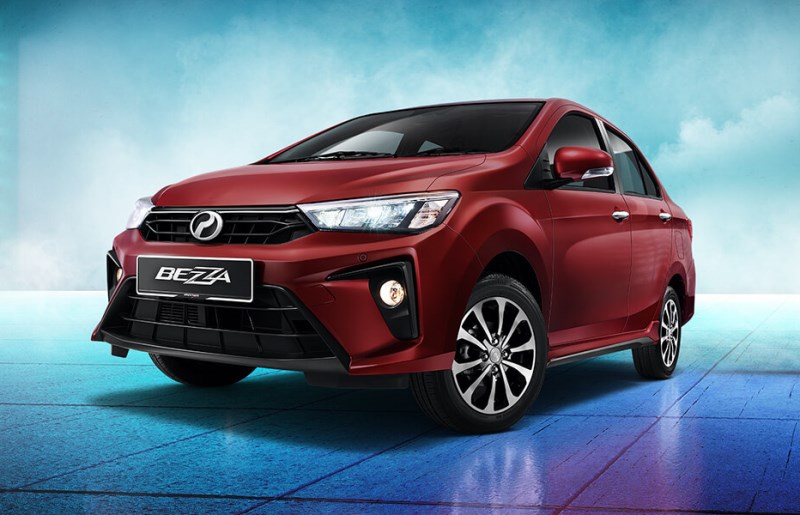
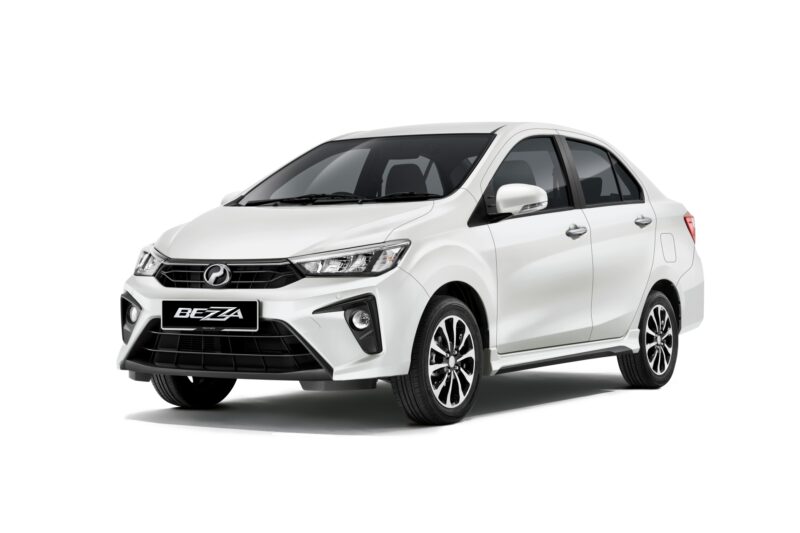
You may assume that the Perodua Myvi is still the ‘King of the Road’. Sadly that is no longer the case, as the title has been taken over by the Bezza, which recorded sales of 56,735 units last year.
In addition to its affordable price and practicality (this small car boasts a boot space of 508 litres!), the Bezza becomes a Malaysian favourite due to its low maintenance costs.
In this article, we will explore the service costs for the Perodua Bezza 1.3 automatic up to a mileage of 100,000 km or five years of ownership:
10,000 km
The first service for the Bezza must be carried out at a mileage of 10,000 km. Three items need to be replaced: full synthetic engine oil 0W-20 (RM161.10), drain plug gasket (RM3.80), and engine oil filter (RM12.50). No labour charge is applied, resulting in a total amount to be paid of just RM177.40.
20,000 km, 50,000 km & 70,000 km
For these three services, owners must replace the same three items: full synthetic engine oil 0W-20, drain plug gasket, and engine oil filter; however, this time, a labour charge of RM44.00 applies. Including 8% SST (RM3.52), the total amount payable is RM224.92.
30,000 km & 90,000 km
At a mileage of 30,000 km and 90,000 km, Perodua will add a cabin filter (RM24.20) to the list of items to be replaced, alongside the engine oil, drain plug gasket, and engine oil filter. With a labour cost of RM61 and 8% service tax (RM4.88), the total cost is RM267.48.
40,000 km & 80,000 km
Now it is time for major service. This time, you will need to replace the engine oil, drain plug gasket for the engine oil, engine oil filter, air filter (RM103.20), transmission oil (RM109.50), drain plug gasket for the transmission (RM3.80), and brake fluid (RM26.40). The labour cost for this service amounts to RM165, resulting in a total of RM598.50.
60,000 km
The items to be replaced are the same as for the 30,000 km and 90,000 km services: engine oil, drain plug gasket, engine oil filter, and cabin filter. However, for the 60,000 km service, Perodua will use 4 litres of engine oil instead of the usual 3.5 litres. The overall cost remains the same at RM267.48.
100,000 km
After reaching six figures, you will need to fork out RM480.96 for a service involving the replacement of 3.5 litres of engine oil, drain plug gasket, engine oil filter, and spark plugs (RM220.40).
Conclusion
The total cost of periodic servicing for the Perodua Bezza 1.3 automatic is RM3,332.56 for a mileage of 100,000 km/five years of ownership. This means that, on average, owners will need to spend RM666.51 annually or RM55.54 monthly on servicing.
This calculation is crucial because, in addition to the monthly installments, customers should also consider service costs and other expenses such as fuel, insurance, and tolls before making a decision.
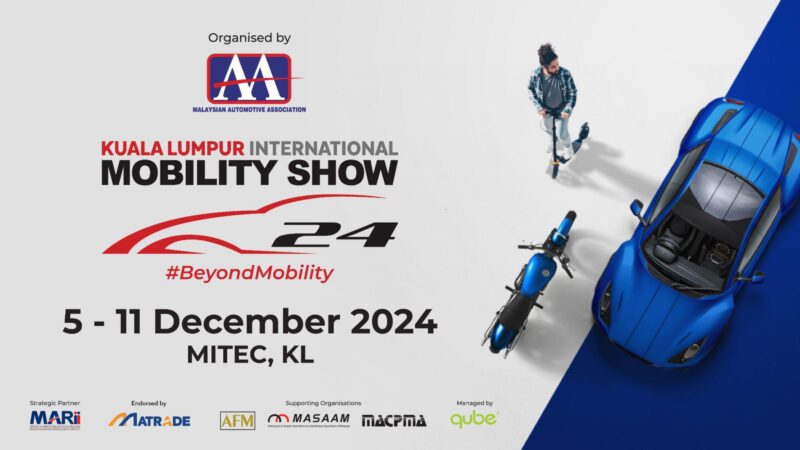
In case you missed it, the Kuala Lumpur International Mobility Show (KLIMS) 2024 is set to open its curtains from December 5 to 11, 2024 at the Malaysia International Trade and Exhibition Centre (MITEC).
According to organiser Malaysian Automotive Association (MAA), the event, themed ‘Beyond Mobility’, will feature nearly 70 exhibitors, with an exhibition area covering almost 30,000 square feet across two floors of the MITEC building.
For those planning to attend, here are some of the exciting cars that will make their appearance at the event:
Perodua EMO-II
Undoubtedly, Perodua is set to capture visitors’ attention with their electric concept model, the EMO-II (Electric Mobility Online). The concept car previews the production version of Perodua’s first electric vehicle, which is expected to be launched in the market later this year.
Proton e.MAS 7
Although not officially announced, Proton’s first electric vehicle, the e.MAS 7, is highly likely to make its debut at KLIMS 2024. It will be available with two battery pack options, with an estimated price of RM120,000.
Honda Prelude Concept
Another brand that will undoubtedly attract attention at KLIMS 2024 is Honda. In addition to its latest model lineup, Honda Malaysia has announced that it will also showcase the Prelude Concept, making Malaysia the first country in Asia, besides Japan, to exhibit the hybrid coupe.
Mazda CX-60
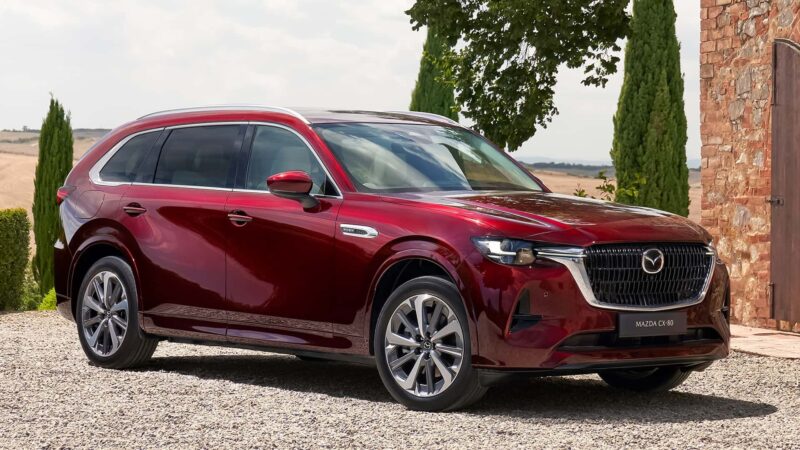
For devoted Mazda fans, Bermaz Motor will be showcasing two upcoming SUVs, the CX-60 and CX-80. Built on the SkyActiv Multi Solution Scalable Architecture platform, the former offers petrol, diesel, and plug-in hybrid (PHEV) powertrain options, with rear-wheel drive and all-wheel drive capabilities.
Mazda CX-80
Like the CX-60, the CX-80 also belongs to Mazda’s Large Product group but offers three rows of seating. The powertrain options are similar to the CX-60, featuring inline six-cylinder petrol and diesel engines, PHEV, an eight-speed automatic transmission, and AWD or RWD systems.
Toyota Camry
Following its launch in Thailand last October, the ninth-generation Toyota Camry (XV80) will make its debut in Malaysia this week. The D-segment sedan is powered by a 2.5-litre hybrid engine combined with an e-CVT transmission, producing a total system output of 227 PS.
Toyota Corolla Cross
In addition to the Camry, UMW Toyota Motor will also introduce the facelifted version of the Corolla Cross, which has already been open for orders since November. Along with a refreshed exterior design, the SUV will also feature several new enhancements, including an electronic parking brake, Auto Hold, and improved driver-assistance systems.
Nissan Kicks e-Power
As previously reported, the Nissan Kicks e-Power will be available as a fully imported version (CBU) from Thailand, with two variants: VL and VLT. It features a 1.2-litre three-cylinder petrol engine that acts as a generator to charge the battery pack, which in return powers the electric motor on the front axle.
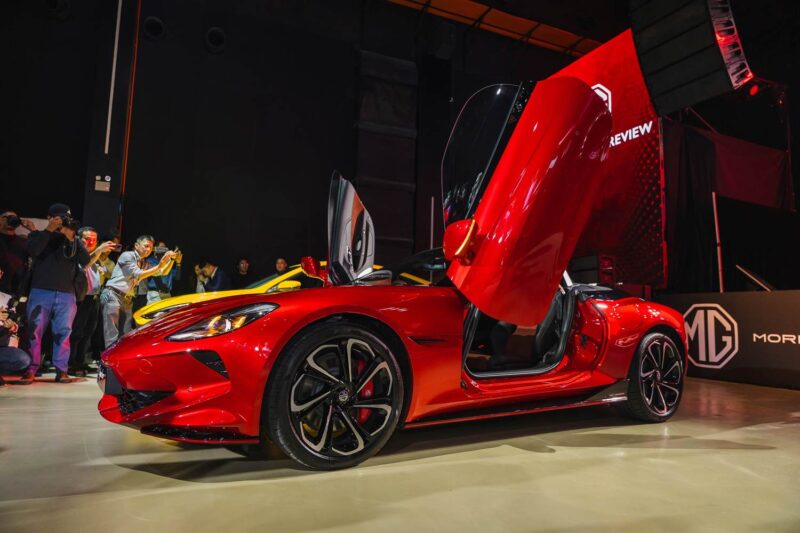
MG Cyberster
Without a doubt, among the standout cars at KLIMS 2024 will be the MG Cyberster, an electric roadster powered by two electric motors, delivering a combined output of 503 PS and 725 Nm. This allows it to accelerate from 0 to 100 km/h in just 3.2 seconds.
GWM Wey 80
Wey is a luxury sub-brand under Great Wall Motor (GWM). While it is still uncertain whether the luxury marque will be officially launched in the local market, it is certainly a possibility if the Wey 80 MPV receives a positive response at the show.
Perodua Sales Sdn Bhd (Perodua Sales) recently signed two Memoranda of Understanding (MoU) with Petronas Dagangan Berhad (Petronas Dagangan) and Gentari Sdn Bhd (Gentari) subsidiaries to enhance the retail experience for its customers through the integration of various services.
The first MoU – signed between Perodua Sales and Petronas Lubricants Marketing Sdn Bhd (PLMMSB), Mesra Retail & Cafe Sdn Bhd (Mesra), and Setel Ventures Sdn Bhd (Setel) – will provide Perodua customers access to new services at its service centres.
This includes the integration of Setel’s seamless digital payment feature into Perodua’s UFirst app, the establishment of Mesra for added convenience and the set-up of Perodua service centres at selected Petronas stations.
“Perodua Sales and PLMMSB have been partners for over 20 years and that partnership has proven mutually beneficial and we will further expand this partnership that will benefit our valued customers,” Perodua President and Chief Executive Officer, Dato’ Sri Zainal Abidin Ahmad said.
PLMMSB is the sole provider of all vehicle lubricants to Perodua Sales since 2004. In line with the country’s shift towards green mobility, both Perodua Sales and PLMMSB are to collaborate for a stronger commitment on sustainability-driven practices.
He said that the collaboration with Gentari would allow Gentari to set up charging facilities at Perodua service centres for the upcoming launch of Perodua’s EV, supporting Perodua customers in the transition to EVs.
“Overall, these MoUs will allow seamless cooperation between both national companies to serve our customers better,” Dato’ Sri Zainal Abidin said.
Meanwhile, the second MoU, signed between Perodua Sales and Gentari through Gentari Green Mobility Sdn Bhd, will see the latter setting up charging facilities at existing Perodua service centres in view of Perodua’s upcoming electric vehicles (EV) launch, thus easing its customers in the EV transition process.
Petronas has over 1,000 stations across the country, while Perodua has 194 sales and 209 service centres nationwide. With over 175 DC charging points, Gentari currently operates the largest licensed direct current (DC) charging network in Malaysia.
DMM Sales Sdn. Bhd. (DMMS), a subsidiary of the Daihatsu Malaysia Group and the largest Perodua dealership in Malaysia, celebrated a historic milestone with the official groundbreaking ceremony for the Perodua DMM Sales 3S Centre in Pasir Mas, Kelantan.
This will be DMMS’ 18th outlet nationwide and its first 3S (Sales, Service, and Spare Parts) Centre in the East Coast region, underscoring the company’s continued commitment to strengthening its presence and enhancing its service offerings in Malaysia.
Spanning a total of 84,506 square feet within the East Coast Economic Region (ECER) Pasir Mas Halal Hub, an investment of RM6.4 million has been allocated for the development of the Perodua DMM Sales 3S Centre here.
Managing Director of Daihatsu (Malaysia) Sdn. Bhd. Arman Mahadi said, “This centre will provide the new and existing Perodua customers in Kelantan with greater accessibility to Perodua’s high-quality vehicles, aftersales services, and genuine parts under one roof.”
“With this new facility, not only will it meet the automotive needs of this region, but it will also create job opportunities, enhance existing skills, and boost the socio-economic development of the people in Pasir Mas and its surrounding areas,” he added.
Chief Operating Officer of Perodua Sales Sdn. Bhd. Ybhg. Datuk JH Rozman Bin Jaafar said the new 3S Centre is part of a longterm strategy to bring Perodua closer to the people.
“Perodua has always placed a strong emphasis on being present in every corner of the country. Our vision is not simply to be the market leader but to be the brand that Malaysians trust and rely on,” he noted.
The project is expected to be completed by August 2025. As of today, DMMS, the largest Perodua dealership in Malaysia, operates 17 sales outlets, 13 service centres, and 2 body and paint centres across the country.
Minister of Investment, Trade and Industry Tengku Datuk Seri Zafrul Abdul Aziz said that MITI will assist in producing Malaysia’s first electric vehicle (EV) priced below RM100,000.
Tengku Zafrul further remarked that the ministry is confident Perodua will achieve this target by the end of 2025.
“The reason why we want to assist and facilitate Perodua is because we want to make EVs affordable.
“Perodua has been in discussion with MITI, and we are optimistic with its plan of achieving its target by the end of 2025,” he said.
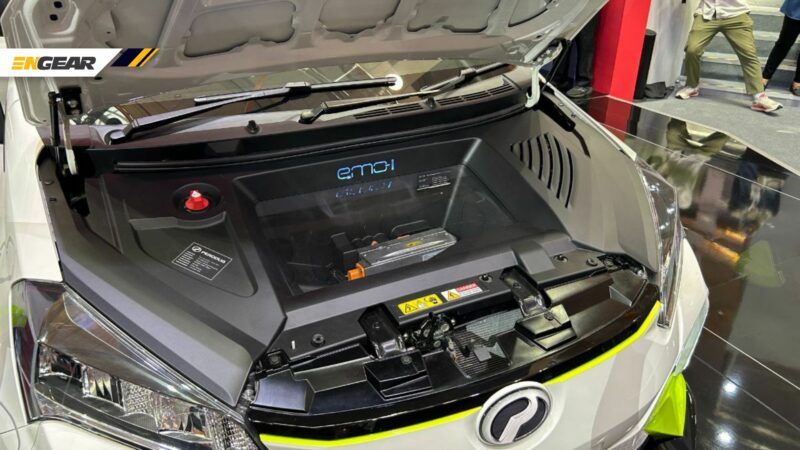
Details regarding Perodua’s EV have yet to be announced. However, the emo-1 (Electric Motion Online) prototype showcased in May offers some hints at the specifications of the finished product.
The prototype, built on the Myvi platform, is equipped with a 55.7 kWh battery pack, allowing for a driving range of up to 350 km. It features a front-wheel drive electric motor with an output of 161 hp and 220 Nm of torque.
Tengku Zafrul also said that as of September 2024, nearly 16,000 battery electric vehicles (BEVs) had been registered in Malaysia, surpassing the approximately 13,000 units registered in 2023.
“This positive momentum brings us closer to our target of achieving 20 per cent EVs of total industry sales by 2030,” he stated.
On charging infrastructure, he mentioned that in just three months, 565 new chargers have been added, bringing the total number of public charging stations to nearly 3,200 by the end of September.
“We aim to have 10,000 public chargers, reducing the ratio of chargers to EVs to one-to-nine (1:9) by the end of 2025” he added.
Malaysia’s Leading Automotive News | ENGEAR ENGLISH