Tag Archives: new generation

2026 Kia Seltos unveiled with a more aggressive image and larger dimensions

Kia has officially revealed the second generation of the B-segment Kia Seltos SUV for the global market.

Unlike its predecessor, the new Seltos is built on the K3 platform, contributing to its larger dimensions and aggressive image that aligns with Kia’s latest design language.

Here are some key facts you need to know:


1. Dimensions

The 2026 Kia Seltos measures 4,430 mm in length, 1,830 mm in width, and 1,600 mm in height, with a wheelbase of 2,690 mm.

These larger dimensions also provide a more spacious cabin, with cargo space now increased to 536 liters.

Depending on the variant, the Kia Seltos can be equipped with wheel sizes ranging from 16 inches to 19 inches.


2. Engine, Transmission, Drivetrain & Suspension

To start, the 2026 Kia Seltos will be offered with two engine options: a 1.6-liter T-GDI engine producing either 180 PS/265 Nm or 193 PS/265 Nm, and a 2.0-liter NA engine generating 149 PS and 179 Nm.

Kia has also listed various transmission options including a six-speed manual, six or seven-speed DCT, eight-speed automatic, and CVT.

The Kia Seltos will be available in front-wheel drive with a MacPherson/torsion beam suspension setup, while the AWD version will come with a multi-link setup at the rear.

A hybrid variant is expected to follow next year, featuring vehicle-to-load (V2L) functionality and Kia’s 3.0 smart regenerative braking system.

Driving modes include Eco, Normal, and Sport, along with a Terrain Mode (Snow, Mud & Sand) specifically for the AWD variant.


3. Aggressive Design

The Kia Seltos adopts the Opposites United design philosophy, presenting an image consistent with modern Kia vehicles.

Unique features include:

  • Vertical LED daytime running lights (DRL)
  • Headlights hidden within a wide grille structure
  • A floating roof design
  • Door handles integrated into the body
  • Vertical taillights connected by a horizontal LED bar

There is an X-Line variant that features dark gunmetal accents for a more rugged appearance, while the GT-Line variant has a sportier look with body color accents.

Three new colors have been introduced: Iceberg Green, Gravity Gray, and Magma Red.


4. Cabin

The layout of the cabin in the 2026 Kia Seltos more closely resembles offerings in Kia’s electric vehicles, featuring a dual 12.3-inch display and dedicated climate control panels.

The Seltos also incorporates Shift-by-Wire (SBW) technology, placing the gear shift lever on the steering column to enhance the practicality of the center console.

Other features included in the Seltos cabin are:

  • A panoramic sunroof
  • 64-color ambient lighting
  • 24-degree adjustable second-row seating
  • Harman Kardon/Bose audio system


5. Safety

Finally, the 2026 Kia Seltos is equipped with a range of advanced safety features (ADAS) that include functions such as:

  • Highway Driving Assist 2 (HDA 2)
  • Lane Following Assist 2 (LFA 2)
  • Forward Collision-Avoidance Assist 2 (FCA 2)
  • Safe Exit Warning (SEW)
  • Surround View Monitor (SVM)
  • Parking Collision-Avoidance Assist-Reverse (PCA-R)
  • Parking Distance Warning-Front/Side/Reverse (PDW-F/S/R)

2026 Mercedes-Benz GLB: EQB replacement with over 600 km range

Mercedes-Benz has announced the arrival of the all-new 2026 GLB-Class compact SUV, set to replace the first-generation GLB that has been on sale since 2019.

The 2026 GLB will also serve as the successor to the EQB, initially offering only an electric drive version for users.

Here are a few key facts you need to know:


1. Shared Platform with CLA

The 2026 GLB is built on the Mercedes-Benz Modular Architecture (MMA) platform, the same one used for the CLA-Class sedan models.

It is the second model to emerge from the MMA platform, but with improved practicality.


2. Dimensions

This new generation of the SUV retains the iconic boxy shape of the GLB but with larger overall dimensions.

It now measures 4,732 mm in length, which is 98 mm longer than the previous GLB, with a width of 1,861 mm (+27 mm) and a height of 1,687 mm (-14 mm).

The wheelbase has been extended to 2,889 mm, which is 60 mm longer.

Due to these changes in dimensions, the new GLB offers a turning radius of 11.9 meters.

Cargo capacity starts at 480 liters (540 liters for the 5-seater version) and can be expanded to 1,605 liters (1,715 liters for the 5-seater version).

There is also a front trunk space of 127 liters.


3. Exterior

The exterior design of the new GLB follows a similar approach to modern Mercedes models like the CLA.

The front features smaller headlight units, star-shaped DRL graphics, and a full-width LED light bar connecting the two light housings.

The rear section is reminiscent of the EQXX Concept, with slim vertical light bars connected by a full-width LED light strip.

The star-shaped graphics also adorn the LED light bar.


4. Interior

No longer showcasing a rugged layout, the 2026 GLB now features the Mercedes Superscreen setup, which consists of three separate screens (a 10.25-inch cluster screen, a 14-inch infotainment screen, and a 14-inch passenger screen).

All screens operate using the fourth-generation MBUX system, which includes artificial intelligence capabilities.

In addition to a five-seat configuration, the GLB will also be available in a seven-seat version.

A panoramic electrochromic glass roof featuring an optional starry sky setting is also available.


5. Electric Drive

Initially, there will be two electric drive variants offered to users.

The base GLB 250+ with EQ Technology comes with a rear-wheel-drive electric motor producing 268 hp and 335 Nm (boosting to 454 Nm), achieving 0-100 km/h in just 7.4 seconds.

The 85 kWh battery pack allows for a range of 630 km on a single charge, supported by an 800-volt electrical architecture.

Meanwhile, the GLB 350 4Matic with EQ Technology adds an electric motor on the front axle, generating a total output of 349 hp and 515 Nm, accelerating from 0 to 100 km/h in just 5.5 seconds.

The range is approximately 615 km, which is impressive for an all-wheel-drive model.


6. New Variants to Follow

Mercedes has also confirmed that a base-level electric version of the GLB will follow next year, along with three hybrid variants featuring 48-volt technology.

2026 Toyota Hilux debuts in Thailand

Toyota Motor Asia (TMA) has officially unveiled the 9th generation of the Toyota Hilux pickup truck, which will be available starting in 2026.

Here are some key facts you should know:


Powertrain Options

The new Hilux continues with a 2.8-liter turbo diesel engine (code 1GD-FTV) that can be paired with either a 6-speed manual transmission (204 PS/420 Nm) or a 6-speed automatic transmission (204 PS/500 Nm).

Toyota is also offering an electric version of the Hilux (Travo-e in the Thailand market), powered by two electric motors with a total output of 196 PS.

With a 59.2 kWh lithium-ion battery pack, the Hilux Travo-e has a range of 315 km (NEDC data).

Aligned with a multi-pathway approach, Toyota will develop a hydrogen fuel cell model (FCEV) to be introduced in Europe and Oceania starting in 2028.


Chassis

This new generation Hilux retains the IMV (Innovative International Multi-purpose Vehicle) platform but has been enhanced with various modern technologies.

These enhancements include a mechanical upgrade called Dynamic Cloud, which encompasses:

  • Additional connection points on the body frame for a sturdier and more stable structure
  • Suspension tuning for smoother handling
  • Hydraulic engine mounts to reduce vibration impacts
  • A larger steering shaft for more responsive control


Exterior Design

The 2026 Hilux features visual changes such as:

  • A Cyber Sumo front face with thinner headlight units
  • The addition of side steps on the truck bed
  • Neater rear lights
  • Newly designed 18-inch alloy wheels


Cabin Space

The layout of the new Hilux cabin showcases a theme of Robust Simplicity with the following features:

  • A 12.3-inch digital cluster screen
  • A 12.3-inch central screen
  • Climate control buttons with a digital display
  • Land Cruiser-style steering wheel and gear knob
  • More ergonomic seat design

Additionally, the new Hilux comes with an electric parking brake system with Auto Brake Hold functionality, as well as electronic power steering (EPS).


Safety Features

All variants of the Hilux sold in the Thai market come equipped with standard safety features such as rear parking sensors, a rearview camera, rear cross-traffic alert (RCTA), and a blind spot monitoring system (BSM).

Furthermore, the Toyota Safety Sense 3 (TSS) package now includes improved pre-collision and lane-keeping assist functions, along with a panoramic view monitoring system (PVM) and Multi-Terrain Monitor (MTM).

2026 Toyota Hilux BEV

Toyota Corolla Concept revealed: is this the next-gen Corolla?

In conjunction with the upcoming Japan Mobility Show 2025, Toyota seizes the opportunity to unveil several eye-catching concept models.

Among them is the Toyota Corolla Concept, which is expected to herald a new chapter for the world’s best-selling nameplate.

The concept model makes its appearance in a campaign titled “To You, Toyota.”

Several details can be observed, including:

  • A front design resembling a more modern hammerhead shark, complete with full-width LED lights.
  • No traditional grille structure.
  • The presence of ventilation ducts on the engine hood.
  • A simpler rear design featuring full-width LED pixel lights, a ducktail spoiler, and the word “Corolla” in the center.
  • A charging port cover on the front fender.

The use of conventional side mirror designs and door handles strongly suggests that this sedan has specifications more similar to those of an actual production version.

Did you notice the charging port cover we mentioned earlier?

This provides another hint indicating that the Corolla is likely to be offered as an electric sedan, or possibly as a plug-in hybrid electric vehicle (PHEV), similar to the Prius.

More details will be revealed in the lead-up to the Japan Mobility Show 2025, which will kick off on October 29.

2026 Nissan Sentra makes its debut in America

Nissan has introduced the new generation of the C-segment sedan, the 2026 Sentra, for the United States market.

Unlike previous models, the new Nissan Sentra features a fresher design, reminiscent of the Nissan Ariya electric SUV, particularly at the front.

Here are some key facts you should know:


1. Chassis

The new Sentra retains the CMF-CD platform from the previous model, albeit with larger dimensions. It measures 4,656 mm in length (+15 mm), 1,825 mm in width (+10 mm), and 1,448 mm in height (down 2 mm), with a wheelbase remaining at 2,712 mm.

Despite using the old platform, Nissan has improved the chassis stiffness, which is now 6 percent stiffer, alongside dynamic dampers in the steering system to reduce vibrations.

The suspension system now features new shock absorbers.


2. Engine

There are no mechanical changes, meaning the 2026 Sentra still comes with a 2.0-liter engine (code MR20DD) that produces 149 hp and 198 Nm of torque. The power is channeled to the front wheels through a CVT Xtronic transmission.


3. Design

As mentioned earlier, the 2026 Sentra showcases an evolution of the V-motion design, resembling modern Nissan models like the Ariya, Note, and Qashqai.

The LED projector headlights are slimmer, and the daytime running lights will appear dark when turned off.

The lighting unit of the Sentra will also emit rhythmic light when the car is unlocked.

The side does not feature the floating roof element anymore, while the rear showcases a new wide horizontal light design.

Depending on the variant, the Sentra can be equipped with wheel sizes ranging from 16 to 18 inches, as well as a two-tone color scheme with a Super Black roof.


4. Cabin Space

The interior of the Sentra presents a tidier and minimalist layout, featuring twin 12.3-inch displays, touch-sensitive climate control panels, and support for Apple CarPlay and Android Auto.

Other features include a 64-color ambient lighting system, heated steering wheel, wireless charging slot, and TailorFit upholstery.

Depending on the variant, the Sentra can be equipped with features like wireless Apple CarPlay/Android Auto connectivity and a Bose audio system with eight speakers.


5. Safety

The 2026 Nissan Sentra offers standard safety features such as intelligent cruise control, blind spot intervention, autonomous emergency braking, forward collision warning, lane departure avoidance, and a total of 10 airbags.

Additional features include the ProPILOT system and an intelligent surround monitoring system (IAVM) with a moving object detection function, which is especially useful in parking areas.

2025 Nissan Roox offers spacious cabin despite compact dimensions

This is the fourth generation of Nissan’s kei car, the 2025 Roox.

Notably, this model shares the same platform as the Mitsubishi Delica Mini and the eK Space, which bears a design more similar to the Roox.

The design of the Roox is quite similar to its predecessor; however, it features a new headlight design that conveys a premium MPV image.

Designed based on the ‘Roomy x Max’ concept, the Roox offers a more spacious cabin while maintaining the small dimensions typical of kei cars.

Compared to the previous generation, the overall interior length has increased by 115 mm to 2,315 mm.

In addition, the Roox provides the best knee space in its class, allowing children to comfortably stand to change clothes when the vehicle is stationary.

The cargo space is also quite generous, measuring approximately 675 mm in length, which can accommodate four 48-liter luggage bags.

The sliding door opening is 650 mm wide, while the rear seat can be moved up to 320 mm.

Several additional storage compartments are available, including large cup holders, a glove compartment, a device holder, and a covered space behind the display screen.

Additionally, there is a 12.3-inch display screen, among the largest ever fitted in any kei car.

The Roox also introduces a first for the kei car class: the Intelligent Around View Monitor, featuring the Invisible Hood View function.

The ProPILOT safety system now includes smart emergency braking (AEB), rear cross-traffic alert (RCTA), smart blind-spot collision avoidance (ISB), and blind-spot warning (BSW).

Buyers can choose from up to 17 color options, including six two-tone colors for the Standard and Highway STAR variants.

The estimated starting price is 1.6 million yen (approximately RM46,000).

The engine specifications are likely unchanged, still featuring the 658 cc powertrain that generates 52 hp and 60 Nm of torque.

New generation Mitsubishi Delica Mini, eK Space debut in Japan

Mitsubishi Japan has unveiled two kei car models set to launch soon: the new-generation 2025 Delica Mini and 2025 eK Space.

Reservations for both models are now open, with prices starting at approximately 1.95 million yen (RM56,000) for the Delica Mini and from 1.75 million yen (RM50,000) for the eK Space.


Delica Mini

In terms of appearance, one might assume that the second generation of the Delica Mini remains unchanged due to its identical front design. Even the dimensions haven’t changed.

However, upon closer inspection, it can be said that nearly all body panels have been redesigned.

The headlights, featuring a U-shaped graphic, are now larger, accompanied by a thicker grille structure and Dynamic Shield elements that match the body color.

The A-pillar has also become more vertical to create a roomier cabin space.

The hood, front fenders, and doors now showcase distinct body lines, while the D-pillar is thicker compared to the previous model.

According to Mitsubishi, the new Delica Mini features Kayaba Prosmooth shock absorbers, which also come with different settings for the all-wheel drive model.

Inside the cabin, the dashboard layout has been updated, featuring a seven-inch cluster screen and a central 12.3-inch screen integrated into a single panel, along with a newly designed two-spoke steering wheel.

In the center, there is a rotary dial for selecting driving modes, including Power, Normal, Eco, Gravel, and Snow.

Lastly, the Delica Mini is equipped with an Advanced Driver Assistance System (ADAS) and a surround monitoring system that utilizes four camera sensors.


eK Space

The eK Space is a third-generation model introduced alongside the Delica Mini.

Unlike the Delica Mini, the eK Space presents a more elegant front without rugged elements such as body cladding and a skid plate.

The cabin layout is similarly designed to the Delica Mini, but the eK Space offers only three driving modes: Power, Normal, and Eco.

No details have been disclosed regarding the engines to be used in either the Delica Mini or the eK Space.

The previous Delica Mini was available with a choice of a naturally aspirated three-cylinder 658 cc engine producing 51 hp, or a turbo engine generating 63 hp.

2026 Mazda CX-5 – third-gen SUV features a more luxurious design and minimalist cabin

After nine years of the second generation of the Mazda CX-5 dominating the roads, Mazda is now ready to introduce the third generation of this compact SUV to the world.

Not many details have been revealed, but it is certain that the new generation CX-5 offers a larger dimensional package, a refreshed Kodo design, and an entirely new cabin layout.

Here are several things you need to know about the 2026 Mazda CX-5:


Dimensions

The CX-5 features dimensions of 4,690 mm (+140 mm) in length, 1,860 mm (+20 mm) in width, and 1,695 mm (+10 mm) in height.

The wheelbase measures approximately 2,775 mm (+75 mm).

These size changes are expected to enhance the cabin space, making it appear more spacious and larger, along with a bigger cargo area (+61 liters).


Exterior Design

Undoubtedly, the Kodo design featured in previous CX-5 models is among Mazda’s most beautiful works.

For the third generation, this approach has been reworked for a more stylish appearance, especially with the Signature Wing grille, sharper headlights, and a sportier bumper.

The rear now resembles its larger siblings, the CX-70/CX-80, but the Mazda logo has been removed and replaced with just the word “MAZDA.”


Minimalist Cabin

Mazda is well-known for its minimalist cabin design approach in its latest models, and the 2026 CX-5 is no exception.

The dashboard layout is now more streamlined, with the center housing a 15.6-inch screen featuring an integrated Google system.

Unfortunately, Mazda has taken the effort to minimize the presence of functional buttons to the extent that all controls are now integrated into the large screen.

Additionally, there is a 10.25-inch digital cluster screen behind the steering wheel, which no longer features the M logo.

For lower variants, Mazda offers a 12.9-inch central screen.


Engine Options

The 2026 Mazda CX-5 will be available with several engine options.

The existing 2.5-liter Skyactiv-G engine (187 hp/251 Nm) will continue to be offered, while a mild hybrid e-Skyactiv G 2.5-liter version (140 hp/238 Nm) will be available in Europe.

Mazda also confirmed that the hybrid variant will be equipped with the entirely new Skyactiv-Z engine, promising significantly higher performance and efficiency.

This new generation of the CX-5 is expected to make its debut in the European market by the end of this year, followed by other markets by the end of 2026.

2026 Nissan Leaf already faces issues before it even hits the market

Before it could even be assembled and sold globally, the new generation 2026 Nissan Leaf has reportedly encountered problems.

According to a report by Reuters citing Kyodo News, Nissan is forced to cut the production of the new Leaf due to export restrictions on rare earth metals imposed by China.

These restrictions have impacted the supply of components necessary for Leaf production.

In addition to Nissan, the export limitations set by China are also affecting several automotive manufacturers, including Ford and Suzuki.

The third generation of the Nissan Leaf was introduced last month, marking a shift from its traditional hatchback design to an electric crossover that shares the same AmpR Medium platform as the Nissan Ariya EV.

The 2026 Nissan Leaf will also be the first Nissan model to adopt the NACS (North America Charging System) charging standard, making it compatible with the Tesla Supercharger network.

2026 Nissan Leaf – no longer a hatchback but an electric crossover, 487 km range

2026 Nissan Leaf – no longer a hatchback but an electric crossover, 487 km range

This is no longer the electric Leaf you’ve known for years; it is in fact the third generation of the Nissan Leaf, which has transformed into an electric SUV.

This subcompact crossover (segment B) shares the same AmpR Medium platform used by the Nissan Ariya EV.

Here’s some brief information you need to know:


1. Power

The base version of the Nissan Leaf is powered by a front-wheel-drive electric motor producing 174 hp and 344 Nm of torque, equipped with a 52 kWh battery pack.

Meanwhile, the top variant is powered by an electric motor generating 214 hp and 354 Nm, along with a liquid-cooled 75 kWh lithium-ion battery pack.


2. Range

The Nissan Leaf can travel up to 487 km, which is farther compared to the 2024 Leaf model.

Versions equipped with larger wheels can achieve a range between 416 km and 463 km.

The range for the lowest variant will be announced later.


3. Charging

The Nissan Leaf supports fast charging, allowing the battery to be charged from 10% to 80% in just 35 minutes.

Interestingly, this new Leaf is equipped with two charging ports: the NACS port (compatible with Tesla chargers) and the J1772 port.

While the Leaf for the European market retains the CCS port, the Japanese version is equipped with a CHAdeMO port.


4. Aerodynamic Body

The design of the Nissan Leaf body clearly draws inspiration from popular American-made EV models.

The front features sharp LED headlights connected by a horizontal LED light bar, while the rear showcases an integrated spoiler and deliberately darkened light housings.

According to Nissan, the Leaf 2026 offers a drag coefficient as low as 0.25.


5. Dimensions

The Nissan Leaf 2026 measures 4,350 mm in length, 1,810 mm in width, and 1,550 mm in height, with a wheelbase of 2,690 mm.

In comparison, the second-generation Nissan Leaf measures 4,490 mm in length, 1,788 mm in width, and 1,530 mm in height, with a wheelbase of 2,700 mm.

It is shorter than its predecessor but has a taller profile.


6. Cabin

This new platform provides advantages for the Leaf 2026 in terms of a flatter floor structure.

It also features a pair of 12.3-inch display screens or a 14.3-inch screen for the highest variant, complete with integrated Google software, alongside Apple CarPlay and Android Auto.

The top variant is also equipped with a Bose audio system with 10 speakers and a head-up display screen.

There’s also an option for a panoramic roof with electrochromic technology that doesn’t require physical shades to block sunlight.

The cargo space in the Nissan Leaf is 437 liters.


7. Safety

As standard, all versions of the Leaf 2026 come equipped with ProPilot Assist, which includes features such as forward collision warning, automatic emergency braking, high beam assist, and lane departure warning.

Additional features include a 3D surround monitoring system, a transparent hood view system, and a wide-angle front view feature.

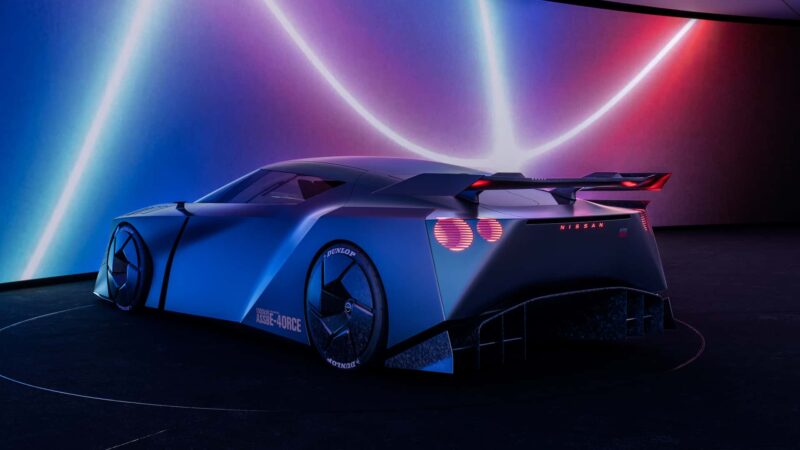
Nissan working on new generation GT-R: will it remain ICE or become an EV?

Despite facing uncertain current conditions, Nissan still has its plans for upcoming models. One of Nissan’s main objectives is to focus on its high-performance sub-brand, Nismo.

According to Arnauld Charpentier, Nissan’s Vice President of Marketing and Regional Mobility, “I see a bright future for Nismo. We will position it as the brand’s focal point.”

Nissan has not disclosed details about any Nismo models, but it is certain that the new Nissan GT-R will be part of those plans.

“There are teams working on this project. When and how, honestly, we don’t know,” he stated.

He also did not specifically mention whether the GT-R would continue with its original formula (internal combustion engine) or switch to full electric (EV).

“Whether the Nissan GT-R is an electric car or hybrid, it must remain a sports car. However, if it performs the same as an electric SUV, that would be a concern.

“We need to redefine the perception of sports cars,” he added.

What is clear is that niche products like the GT-R may not be a priority for Nissan at this moment.

Realistically, Nissan is planning to cut up to 20,000 jobs and close up to seven factories worldwide.

Additionally, Nissan aims to streamline its product portfolio by eliminating up to six vehicle platforms and targeting a reduction in parts complexity by up to 70 percent.

2026 Toyota RAV4 debuts with HEV and PHEV engine options

Here it is—the sixth generation of Toyota’s compact SUV RAV4 has just been launched globally.

Built on the latest platform of the Toyota New Global Architecture (TNGA), the RAV4 features styling that is more in line with the existing model lineup such as the bZ, Camry, and Prius.

What do you need to know about the RAV4 2026?


1. Variants

Toyota offers three main variants:

  • Core – Urban styling
  • Adventure – A bolder appearance with off-road friendliness
  • GR Sport – A more engaging driving experience


2. Dimensions

Compared to the previous generation, the new RAV4 is significantly longer at 4,600 mm, while maintaining a width of 1,855 mm and a wheelbase of 2,690 mm.

The Adventure and GR Sport variants come with a wider measurement of 1,880 mm.


3. HEV and PHEV Powertrain Options

The new generation RAV4 is available only in hybrid (HEV) and plug-in hybrid (PHEV) versions.

The RAV4 HEV is powered by a 2.5-liter engine with an option for front-wheel drive (FWD) producing 226 hp or all-wheel drive (AWD) producing 236 hp.

The PHEV variant, on the other hand, is equipped only with an AWD system, achieving a total power of 320 hp and an emissions-free range of up to 150 km.

Additionally, the RAV4 PHEV supports vehicle-to-home (V2H) functionality, fast DC charging (up to 80% charge in 30 minutes), as well as improved off-road driving performance.


4. Exterior Design

Like other modern Toyota vehicles, the RAV4 features a shark-inspired front design.

The rear light housing is designed with simpler LED graphics, and the word “RAV4” is centered on it.

Depending on specifications, there are wheel size options of 17, 18, or 20 inches.


5. Cabin Space

With a dashboard structure that is 40 mm lower, the RAV4 offers a wider field of vision.

Utilizing an island architecture approach, the RAV4’s dashboard is designed to facilitate the driver’s access to the screen and essential function buttons, while minimizing eye movement during driving.

Unique features in the RAV4 cabin include a central console cover that can serve as an armrest or a tray for placing items.

The cargo space in the RAV4 now boasts a capacity of 749 liters, which is 16 liters larger than the previous model.

Finally, the RAV4 is Toyota’s first model to utilize the Arene software developed by Woven by Toyota, encompassing both infotainment system operations and advanced safety features of Toyota Safety Sense 4.0 (TSS 4.0).


6. RAV4 Adventure

Compared to the simpler Core model, the RAV4 Adventure offers unique features such as:

  • Wider dimensions
  • More prominent body protection plastics
  • Simpler wheel design
  • A more squared-off front bumper
  • Larger, vertical grille openings
  • A taller nose structure
  • Roof rail fittings


7. RAV4 GR Sport

Also noteworthy is the GR Sport variant, designed for those seeking a combination of practicality and a more thrilling driving experience in one package.

In terms of appearance, the RAV4 GR Sport is given an aggressive bumper featuring both a front spoiler and a rear spoiler to enhance aerodynamics and handling stability.

The RAV4 GR Sport also benefits from a wider track (+20 mm), special suspension and steering tuning, and a lighter aluminum wheelset.


8. TSS 4.0 System

The Toyota RAV4 is also the first Toyota model to feature TSS 4.0 safety equipment.

Among the new features included in the RAV4 are a sudden acceleration prevention system and an emergency driving stop system (EDSS) in case of any unforeseen circumstances involving the driver.

2026 Mitsubishi Eclipse Cross set to debut as an EV

To strengthen its presence in the European market, Mitsubishi will rely on models produced by Renault for badge engineering.

Most recently, Mitsubishi is set to launch an all-electric SUV, the Eclipse Cross EV, based on the Renault Scenic E-Tech platform.

Previously, Mitsubishi has introduced several models based on Renault, including the Colt (Clio), ASX (Captur), and Grandis (Symbioz).

Based on a teaser video that was uploaded, several features can be identified, such as aerodynamic wheel design, front grille pattern, hidden door handles, and the Eclipse Cross and EV badges.

To differentiate it from the donor model from Renault, Mitsubishi will also apply its Dynamic Shield design language to the new model.

This C-segment SUV is expected to retain the specifications found in the Scenic E-Tech, with either a single electric motor delivering 168 hp or a dual-motor version producing 215 hp, along with battery pack options of 60 kWh and 87 kWh.

Additionally, the Eclipse Cross EV will feature a five-seat configuration, with a cargo space of 545 liters, a Google-based infotainment system, and various ADAS safety features.

Third gen Nissan LEAF now a crossover with 600 km driving range

The Nissan LEAF battery electric vehicle has been on the global market since 2010 and has endured through two generations in a hatchback body style.

However, for the third generation, the Nissan LEAF has been redesigned as a crossover to align with the market demand, which leans more towards larger-bodied models.

Built on the CMF-EV platform owned by the Renault-Nissan-Mitsubishi alliance, the new LEAF features increased overall dimensions, though it is slightly shorter compared to the existing LEAF.

From the showcased design, it is evident that the LEAF borrows many styling elements from the Ariya EV and boasts a drag coefficient of 0.25.

Nissan has not disclosed further specifications for the LEAF.

However, according to Nissan Europe’s product chief, Francois Bailly, the new LEAF is capable of offering a real-world driving range exceeding 598 km.

He added that the LEAF will also receive the latest Google-based infotainment system, complemented by advanced driver assistance systems.

2025 Hyundai Palisade, for those who are allergic to minivans

Whether one realizes it or not, the Hyundai Palisade has now entered a new generation after making its debut in 2018.

Unlike its predecessor, the second generation of the Hyundai Palisade 2026 boasts a sturdier design without overly busy body lines.

In terms of dimensions, the Hyundai Palisade 2026 is now 5,060 mm long (+65 mm), 1,980 mm wide (+5 mm), 1,805 mm tall (+55 mm), and has a wheelbase of 2,970 mm (+70 mm).

From the side profile, the added dimensions result in a shorter front overhang and a longer rear overhang.

It resembles a Range Rover.

This luxurious appearance is further enhanced by a relatively large and wide grille, followed by a cluster of gigantic LED daytime running lights that also serve as turn signal indicators visible from a distance.

The layered lighting theme continues at the rear, though without the transverse LED bar that is currently in trend.

Inside the cabin, the Palisade features a layout that is far more luxurious, akin to a Genesis brand vehicle.

The dashboard houses a twin 12.3-inch screen in a single curved panel, adorned with wooden trim, ambient lighting, a steering wheel similar to the Range Rover model, and a cluster of controls for the infotainment and cabin temperature systems.

In Korea, the Hyundai Palisade is also available in a nine-seat version, where the ninth seat is a small bench between the front seats that can be converted into a center console.

For other markets, the Palisade remains available in seven- or eight-seat versions.

In the seven-passenger version, the second-row seats come with electric adjustability (including reclining and folding), massage functions, and a tilting walk-in feature for easy access to the third row.

Cargo space can also be maximized to 615 liters simply by moving the third-row seats slightly forward.

Drivers are also given the freedom to adjust the position and angle of the second and third-row seats through the infotainment screen menu.

It is worth noting that the Hyundai Palisade 2026 still retains the same unibody platform as its predecessor, although it has been upgraded.

Despite sharing the same platform, the new Hyundai Palisade does not retain the 3.8-liter V6 engine, instead replacing it with a 2.5-liter turbocharged inline-four engine that produces 277 hp and 422 Nm of torque.

The hybrid version, which consists of the 2.5-liter turbo engine, a single electric motor (72 hp/264 Nm), and a 1.65 kWh lithium-ion battery pack, can generate up to 330 hp, with a driving range exceeding 1,000 km!

In addition to the new engines, the Hyundai Palisade is the first Hyundai SUV to feature a technology known as Electronic Controlled Suspension (ECS).

This ECS system uses navigational data and sensors to adjust vehicle movements throughout the journey, prioritizing enhanced passenger comfort.

Furthermore, the new Palisade offers a quieter cabin using thicker glass and additional sound insulation around the windows.

The second-generation Hyundai Palisade 2026 is set to be sold in the Korean market starting at ₩43,830,000 (approximately RM135,724).