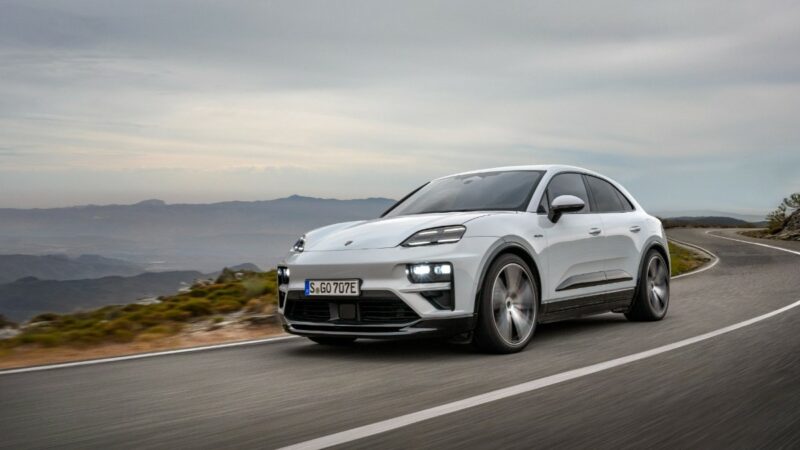
The Porsche Macan has entered its second generation with the launch of this compact SUV in early 2024.
Like it or not, if you are interested in acquiring an entry-level SUV from Porsche, you will only be presented with the entirely electric Macan lineup.
This move is quite bold for Porsche, considering that the Macan was previously the best-selling model from the brand, surpassing its larger sibling, the Cayenne, globally.

The Porsche Macan EV—does it offer another EV experience just like any other electric vehicle on the road? Or does it still retain the distinctive Porsche identity?
Recently, we were invited by Porsche Malaysia to experience the driving dynamics of the Macan EV, specifically the Macan 4 variant, which carries a price tag of RM445,000.
Specifications

The Porsche Macan 4 is powered by two electric motors, producing 387 PS and a torque of 650 Nm, allowing for a 0-100 km/h acceleration in just 5.2 seconds.
The top speed is limited to 220 km/h, which is quite fast for an EV.
With a 100 kWh nickel manganese cobalt (NMC) battery pack, the Macan 4 can travel up to 613 km on a full charge.
The Macan EV also supports AC charging at 11 kW and DC charging up to 270 kW, enabling owners to charge the SUV’s battery in just 21 minutes (from 10% to 80%).
Exterior

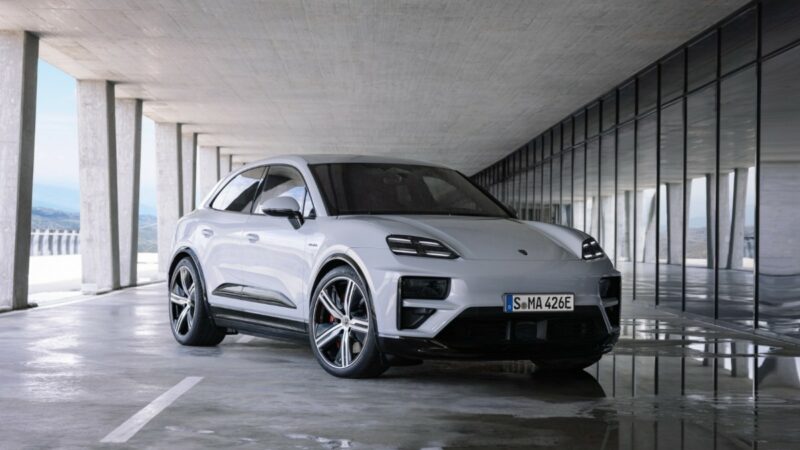
Compared to the first-generation Macan, the Macan EV boasts larger dimensions (+58 mm in length, +11 mm in width, +26 mm in height), accompanied by a longer wheelbase (+86 mm).
These changes contribute to a more robust appearance, as well as a more spacious and comfortable cabin (which we will discuss later).
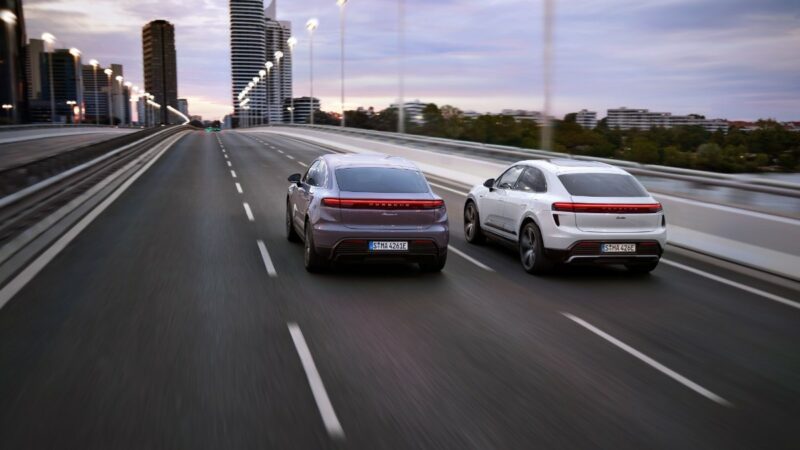
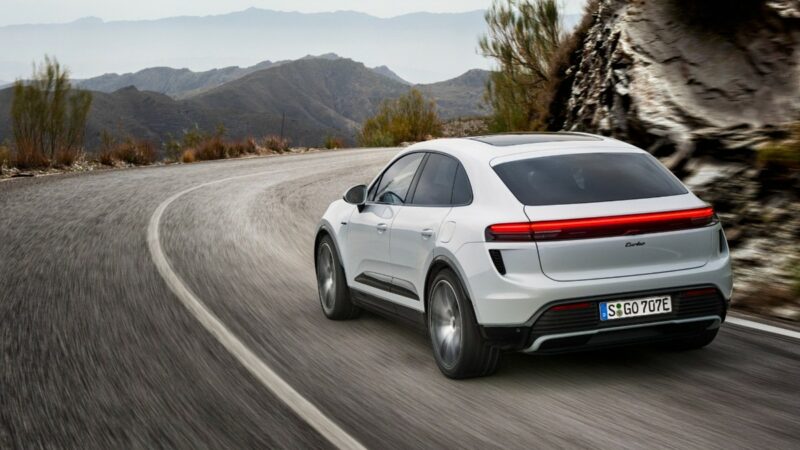
Moreover, we can describe the exterior design of the Macan EV as a larger Taycan, featuring stylish LED daytime running lights, a sporty roofline, and a full-width LED rear light strip.
Unlike the Taycan, entering and exiting the Macan cabin is easier, aided by the large frameless door openings.
Cabin

If the exterior resembles the Taycan, the layout of the Macan EV’s cabin is not significantly different from that of Porsche’s electric sedan.
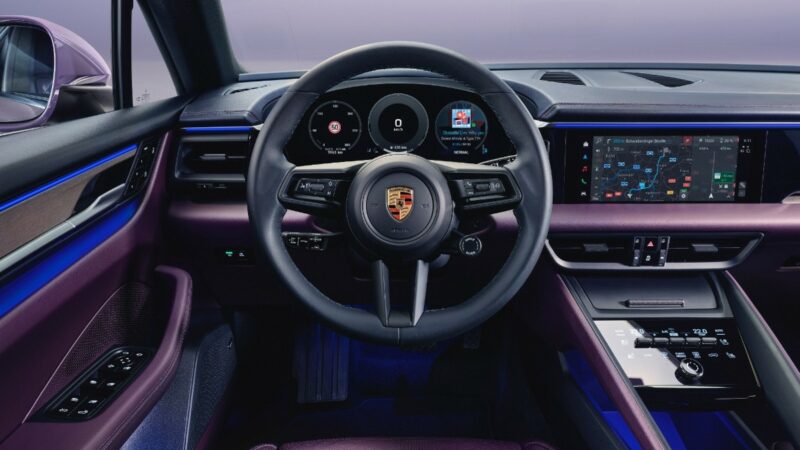
For the Macan 4 variant we tested, it is equipped with a curved 12.6-inch digital cluster display, a 10.9-inch central screen, and an impressive head-up display featuring augmented reality technology.
What we appreciate about the Macan EV’s cabin is the similar driving experience to that offered by the Taycan sedan.


The steering wheel retains its round shape, complete with a rotary knob for changing driving modes and a small gear knob located adjacent to the central screen, along with separate climate control buttons positioned on the center console.
This means you no longer need to dive into the infotainment screen menu just to lower the temperature or increase the airflow.
A unique feature of the Porsche Macan EV is the presence of an analog-digital clock perched on the dashboard—a detail that many luxury car manufacturers have overlooked.
Practicality


As mentioned earlier, practicality is the main highlight of the Macan EV—especially when compared to the Taycan sedan.
In addition to easier entry and exit, the seating provided is also quite comfortable, holding the driver and front passenger securely, especially when this electric vehicle is pushed a bit aggressively.
The larger dimensions contribute to a more spacious and comfortable cabin, allowing for more headroom and legroom.
However, it is unfortunate that rear passengers may have to sit somewhat upright.


Most importantly, the Macan EV still offers a cargo space of 540 liters, or up to 1,348 liters when the second-row seats are folded down.
This is ample space for storing items, such as groceries during early-month shopping trips.
The absence of an internal combustion engine in the front provides a frunk (front trunk) of 84 liters—extra space for use if the rear cargo area is already filled.
Driving Experience

The Macan 4 comes equipped with two electric motors, meaning it features an all-wheel-drive (AWD) system.
With precise and quick throttle response, the 387 PS and 650 Nm of power can easily deceive the driver into thinking they are handling an SUV weighing over 2 tons.
What makes the Macan EV significantly better is its sharper and more precise handling, offering more feedback that communicates directly with the driver, making the driving experience feel more assured.

Driving the Macan EV often reminds me of the experience with the Taycan and Taycan Cross from some time ago.
Finally, the Macan 4’s suspension—even without the adaptive air suspension found in the Macan 4S and Macan Turbo—still provides a good balance between sporty handling and comfort for everyday use.
It remains stable on straight highways and does not make the driver feel uneasy when encountering winding roads.
Extra: Experience Losing Control at Sepang

After enjoying a drive across several highways, we were taken to the Driving Experience Center (DEC), located right next to the PETRONAS Sepang International Circuit.
Here, two sessions were provided: a slalom session with a high-speed handling session, along with another session to test driver skill on a hydraulic skid plate.

For a vehicle branded as Porsche, it was not difficult for us to maneuver the Macan EV through the slalom course.
The precise and sharp steering feedback, combined with the effective throttle pedal that controls power delivery from the battery to the wheels, and the suspension’s effectiveness in keeping the SUV stable during minimal body roll—even when driven aggressively—contributed to this ease.
However, during the second session, we experienced a loss of control in a Porsche valued under half a million for the first time.

This was the opportunity for the Porsche Macan EV to demonstrate the effectiveness of its stability control system when faced with a sudden loss of grip.
In my first attempt, I could manage the SUV’s loss of control at low speed, but I failed in my second attempt, which was conducted at a higher speed.
Why did I fail? Because the Macan EV I was handling hit the ‘barrier wall’ represented by a row of water fountains.
Despite feeling dissatisfied, it was a valuable lesson learned.

For drivers who are cautious like myself, the likelihood of experiencing a loss of control on the road is nearly zero.
However, such situations can still occur, especially when faced with heavy rain and slippery roads.
This underscores the need for every driver to possess the knowledge and skills to handle their vehicle in emergency situations.
Who Is the Macan 4 Suitable For?


Among the four main Macan variants offered in Malaysia, we believe the Macan 4 is more suitable for those looking to venture into owning a Porsche SUV.
While it features a twin electric motor setup, the power of 387 PS and 650 Nm is not excessively high; it remains reasonable and easy to control for a daily-use vehicle.
Furthermore, the standard AWD system not only contributes to handling and stability at high speeds, but it also ensures the required grip for all four wheels in various weather conditions and road surfaces.
With a range of 613 km and a reasonably light foot on the accelerator, you wouldn’t need to stop frequently to charge the Macan 4, even for trips that exceed two marhalahs.
Most importantly, for an electric SUV, the Macan 4 still manages to offer a balance between dynamic and sporty driving while not sacrificing comfort and practicality for everyday use.
Specifications of Porsche Macan 4

Configuration: Two electric motors
Power: 387 PS/650 Nm
Acceleration: 0-100 km/h in 5.2 seconds
Top speed: 220 km/h
Battery pack: NMC 100 kWh
Range: 613 km
DC charging: 270 kW, 10-80% in 21 minutes
AC charging: 11 kW, 0-100% in 10 hours
Price: RM445,000