Last month, Koenigsegg introduced a hypercar called the Sadair’s Spear, which is a more radical version compared to the Jesko Attack and Jesko Absolut.
Although it does not bear the name Jesko—after Christian von Koenigsegg’s father—the Sadair’s Spear itself is named after a racehorse ridden by Jesko von Koenigsegg in his last race in 1976.
Built on the foundation of the Jesko Attack, Sadair’s Spear features several unique characteristics.
Among these is a more aggressive aerodynamic package, complete with an active dual-blade rear wing.
The rear dimensions have been slightly extended to ensure better airflow, followed by redesigned air intakes for a more effective cooling system.
The overall weight of the vehicle has been successfully reduced by 35 kg, bringing the total to just 1,320 kg, thanks to the installation of lighter internal and mechanical components, as well as the removal of 2.58 kg of sound insulation.
Additionally, all four corners of the wheel arches are fitted with seven-spoke turbine rims made from carbon fiber, wrapped in wider Michelin Pilot Cup 2 tires.
As for the cabin, buyers can opt for a six-point safety harness as an add-on feature.
It is not as barren as one might expect, considering Koenigsegg still offers modern features such as wireless smartphone charging and USB charging ports in the cockpit.
In terms of power, the Koenigsegg Sadair’s Spear is equipped with a 5.0-liter twin-turbo V8 engine paired with a nine-speed Light Speed Transmission (LST).
Running on regular fuel, the engine can produce 1,300 hp and a torque of 1,000 Nm, available from 2,700 rpm, or 1,500 Nm at 5,100 rpm.
Switching to E85 fuel, the horsepower figures for the Sadair’s Spear can reach up to 1,625 hp!
Only 30 units of the Sadair’s Spear will be produced, and the less pleasant news is that all units are already sold out.
Porsche has recently stunned the world with the unveiling of the 963 RSP, a street-legal version of the Porsche 963 LMDh race car.
The Porsche 963 RSP is a one-off unit, where “RSP” actually stands for Roger S. Penske.
Yes, he is a former racer and the owner of the racing team Team Penske, which has won championships in various prestigious competitions, including IndyCar, IMSA, and the FIA World Endurance Championship.
His name was chosen to honor his contributions to enhancing the Porsche brand.
The idea to create the 963 RSP came from Timo Resch, President and CEO of Porsche Cars North America, who drew inspiration from the legendary 917 race car.
To make it suitable for use on public roads, several modifications were made to the 963 RSP.
These include changes to various body panels, the addition of fender vents, a modified rear wing, and the installation of turn signals, brake lights, and a horn.
All four corners are fitted with 18-inch OZ wheels wrapped in Michelin tires.
The ground clearance has also been slightly raised, aided by a softer suspension setup thanks to the use of adjustable Multimatic DSSV dampers.
The exterior of this machine is coated in a special Martini Silver color, highlighted with satin black accents.
The cabin of the 963 RSP has also been adjusted for greater comfort on the road.
The carbon fiber race seats have been directly taken from the racing machine but have been upholstered by hand and feature real padding, while the entire cabin is wrapped in tan leather and Alcantara.
The steering wheel and door panels are also wrapped in leather.
Additionally, there is a cup holder produced using 3D printing, and a special compartment on the driver’s side for storing a helmet or a special laptop that controls the car’s software.
Finally, there is a plaque on the door displaying the chassis number along with the date and location of assembly.
The Porsche 963 RSP is powered by a 4.6-liter hybrid V8 engine paired with a seven-speed sequential Xtrac transmission taken directly from the actual race car.
However, a remapping has been performed on the electric motor unit and the motor generator (MGU) to ensure smoother power delivery.
As standard, the 963 RSP can produce 680 horsepower.
As a finishing touch, Porsche has also created a custom carbon helmet along with a Snap-On tool set featuring leather-wrapped handles.
Although described as a street-legal machine, the Porsche 963 RSP has only received permission from the French government to be driven in certain events.
According to Autocar, the cost to build a Porsche 963 RSP is around €5 million (approximately RM24 million).
Once upon a time, real production cars with over 1,000 hp were quite difficult to find.
However, with current technological advancements, it has now become commonplace for every manufacturer to compete in producing cars capable of unleashing up to two thousand horsepower, whether internal combustion engine or electric-powered.
As long as more advanced technologies exist, the race for the highest horsepower will not cease.
Below is a list of the most powerful new production cars that exist on this planet:
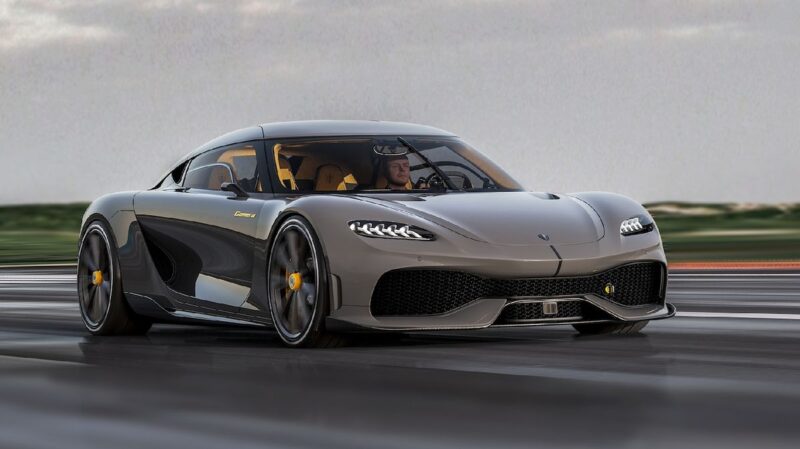
1. Koenigsegg Gemera
The Koenigsegg Gemera is a four-seater grand tourer equipped with a 5.0-liter hybrid V8 engine capable of generating up to 2,300 hp and 2,750 Nm of torque.
Looking for a less powerful version? You can opt for the inline-three-cylinder 2.0-liter hybrid variant, with a total output of 1,400 hp and 1,800 Nm of torque.
Even this might not be produced by Koenigsegg in the near future, as the majority of Gemera owners prefer the V8 engine.
2. Lotus Evija
Lotus, well-known for its lightweight cars, has ventured into producing electric sports/supercars.
Introduced in 2019, the Evija features four electric motors, each producing 503 PS of power, with a total power output of 2,011 hp and 1,704 Nm of torque.
This limited-production sports car can travel a distance of up to 346 km, thanks to its 93 kWh battery pack.
3. Aspark Owl
Despite its name not sounding Japanese, the Aspark Owl is actually an electric sports car developed by the engineering firm Aspark from the Land of the Rising Sun.
With four electric motors (one for each wheel), the Aspark Owl can deliver 1,984 hp and 2,000 Nm of torque.
Its 69 kWh battery pack allows it to travel up to 451 km on a single full charge.
4. Pininfarina Battista
Another powerful electric supercar on the list produced by Automobili Pininfarina GmbH.
It is also powered by four electric motors with a combined output reaching 1,900 hp and 2,300 Nm of torque.
A full battery charge enables this car to travel up to 450 km.
5. Rimac Nevera
This Rimac-built supercar shares the same factory used to assemble the Pininfarina Battista.
The Rimac Nevera is equipped with four electric motors driving each wheel, producing 1,888 hp and 2,360 Nm of torque, achieving a top speed of 412 km/h – one of the fastest EVs in the world.
6. Hennessey Venom F5
Hennessey Special Vehicles began producing the Venom F5 sports car in 2020, offering various options to its customers.
Regardless of the sold-out versions or the Roadster version currently being produced, each unit comes with a twin-turbocharged 6.6-liter V8 engine, generating up to 1,817 hp and 1,617 Nm of torque.
Maximum speed? Over 500 km/h!
7. Bugatti Tourbillon
The Bugatti Tourbillon is a hybrid sports car set to be produced starting from 2026.
Limited to only 250 units, the Bugatti Tourbillon features a V16 engine with a displacement of 8,355 cc paired with three electric motors.
The engine alone can produce 986 hp/900 Nm, but with the help of the electric motors, the Tourbillon can reach a power output of 1,775 hp and 3,000 Nm.
0-100 km/h in just 2.0 seconds, followed by 0-200 km/h in under five seconds, while 0-400 km/h is accomplished in less than 25 seconds before reaching a top speed of 380 km/h.
8. Koenigsegg CC850
Built as a tribute to the CC8S model, the Koenigsegg CC850 is a limited-production car celebrating the 50th birthday of its founder, Christian von Koenigsegg.
Borrowing the twin-turbocharged 5.0-liter V8 engine from the Jesko model, the CC850 outputs 1,385 hp and 1,385 Nm, or 1,185 hp when using regular fuel.
9. SSC Tuatara
The SSC Tuatara was originally powered by a twin-turbocharged 6.9-liter V8 engine, but the engine capacity has been reduced to 5.9 liters to allow it to reach a higher redline (8,800 rpm).
According to SSC, the Tuatara is capable of producing up to 1,350 hp and 1,735 Nm of torque, or up to 1,750 hp when using E85 fuel.
10. Czinger 21C VMax
The car in this final list is produced by the American automotive manufacturer, Czinger Vehicles.
The 21C is essentially a hybrid sports car with a 2.88-liter V8 engine paired with three electric motors, delivering 1,250 hp and 1,830 Nm of torque.
Acceleration from 0-96 km/h takes just 1.9 seconds before reaching a maximum speed of 407 km/h!
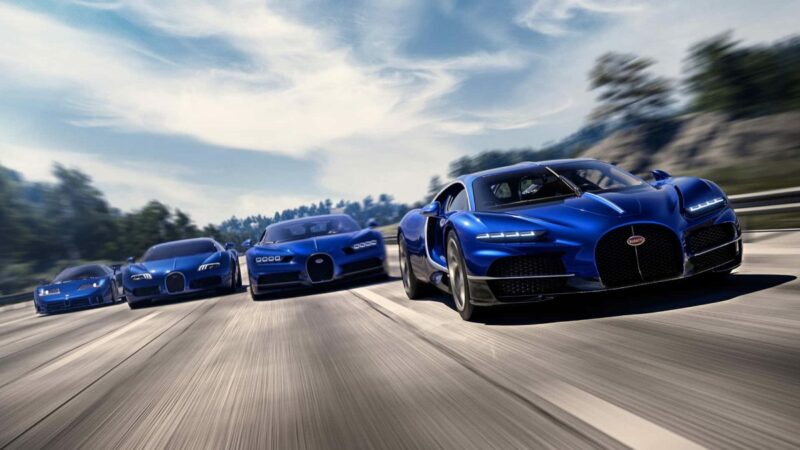
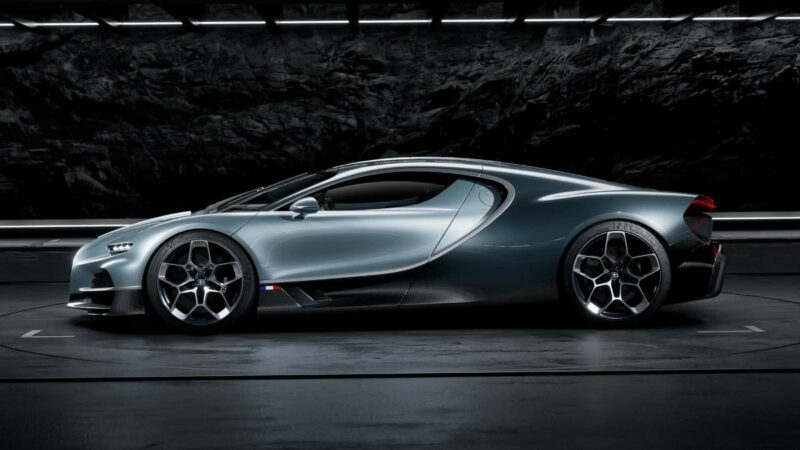
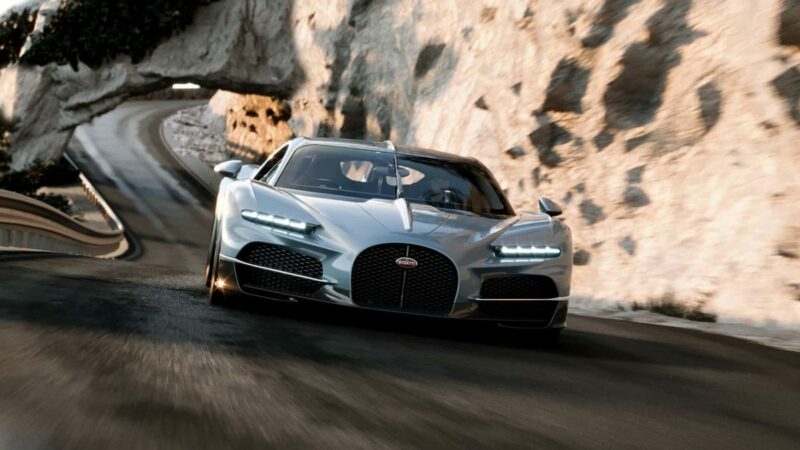
Although at first glance it may appear to be a Chiron, this is the Bugatti Tourbillon, a completely new model. The monocoque chassis, suspension, and engine are all new.
Let’s delve into the details and engine figures first. As reported earlier, Bugatti will be releasing a hypercar with a new 16-cylinder engine, here it is.
Behind the cockpit of this Tourbillon is the jam-packed 8.3-liter V16 naturally-aspirated hybrid engine capable of spinning up to 9,500rpm and producing 1,000hp on its own.
But this is not the Tourbillon’s overall output. This is because it receives hybrid assistance developed by Cosworth. There are two electric motors on the front axle, and a third motor at the rear along with the engine.
A 25kWh battery pack supplies 800hp to this electric system, making the total output 1,800hp. Combined with Michelin Pilot Sport Cup 2 tires, the Bugatti Tourbillon can accelerate to 100km/h in just 2 seconds.
Then, if you continue to press the pedal to the floor, 200km/h is reached in 5 seconds, and 300km/h in under 10 seconds.
A maximum speed of 380km/h is achieved in less than 25 seconds. Then, if you have the special Speed Key, the Tourbillon’s rear spoiler will ensure the car remains stable up to 444km/h.
Although more complex and more powerful, Bugatti states that the Tourbillon is lighter than the Chiron. It also uses an 800-volt system and can be driven up to 60km in electric mode.
Watch enthusiasts will notice that the Tourbillon showcases many mechanical components that require precision and high quality. It is equipped with electrically powered dihedral doors, and three analog displays for instruments designed by the watchmaker, Switch.
These displays are fixed on the steering column. In the center console, there is a row of aluminum switches, rotary knobs, and crystal buttons to start the V16 engine.
All of these are designed to give the Tourbillon a timeless look. In terms of external design, you will immediately recognize it as a Bugatti at first glance. This Chiron-like design is equipped with a diffuser that starts from the rear of the cabin, almost invisible from a normal view.
The air intakes in the front lamps channel air into large side air inlets, then the iconic horseshoe grille in the front ‘feeds’ air to the radiator while generating downforce.
The active rear spoiler, as usual, also functions as an air brake. The Tourbillon comes with a completely new suspension that is 45 percent lighter than the Chiron.
The Bugatti Tourbillon is expected to enter the market in 2026 with the first 250 units to be produced. Prices start at 3.6 million Euros (RM18.2 million).
THE Ferrari 12Cilindri, while packing a punch with its powerful engine, falls short in the nomenclature department. The name does not do justice to its remarkable performance.
The 12Cilindri proudly boasts a 6.5-liter naturally-aspirated V12 engine, generating an impressive 819hp and 678Nm of torque.
Placed in a front-mid configuration with a characteristic long front hood, it embodies the classic Ferrari aesthetic. The front-mid configuration, positioned ahead of the cabin but behind the front axle, ensures optimal balance.
This V12 unit has a longstanding heritage, dating back to the Enzo. Remarkably, the 12Cilindri achieves stringent standards without hybrid assistance or electrification. This allows the engine to deliver its peak power with unadulterated sound and force.
The V12 engine incorporates Aspirated Torque Shaping technology, utilizing electronics to modulate torque delivery in gears three and four. Paired with an 8-speed automatic gearbox located at the rear for weight distribution, it boasts a 30% faster gear shift compared to its predecessor, the 812.
Ferrari claims the 12Cilindri accelerates from 0 to 100km/h in just 2.9 seconds and achieves 200km/h in under 7.9 seconds. The Spider variant, slightly less swift, accomplishes 0 to 100km/h in 2.95 seconds and reaches 200km/h in 8.2 seconds. Both models boast a top speed exceeding 340km/h.
The Ferrari 12Cilindri is equipped with advanced chassis control systems, including Side Slip Control 8, four-wheel steering, a choice of 20 or 21-inch rims, and Michelin Pilot Sport S 5 or Goodyear Eagle F1 Supersport tires. The chassis is also 15% stiffer than its predecessor, the 812.
As expected, the 12Cilindri comes with a high price tag, retailing at USD423,000 (RM2.006 million) for the coupe and USD466,000 (RM2.209 million) for the Spider. Given Ferrari’s high demand for V12 engines, these models are likely to be quickly sold out.
In conclusion, while the Ferrari 12Cilindri impresses with its power and performance, its nomenclature may not reflect its true capabilities. However, it is anticipated that the allure of Ferrari’s V12 engines will continue to drive strong consumer demand.
POWERED by an 8.0-litre quad-turbo W16 engine that packs 1,850 PS and 1,850 Nm, the Bugatti Bolide is an insanely fast track car.
But to set the fastest lap times, sheer power alone won’t be enough because a car also needs powerful brakes. This is where Brembo comes into the picture.
For the Bolide project, Brembo racing engineers worked in close collaboration with Bugatti to develop a unique brake system that could match the car’s colossal power.
Following two years of demanding testing and development, they came up with a carbon-carbon system that is on par with the technology that goes into LMh/LMDh and Formula 1 machinery.
At the front, there are 390 x 37.5 mm carbon discs clamped by two eight-piston monobloc calipers, each with four high-performance pads 25 mm thick. According to Bugatti, the front brakes are Brembo’s largest carbon-carbon brake ever.
At the rear, Bugatti uses two six-piston monobloc calipers paired with 390 x 34 mm carbon discs. These calipers also have four pads but slightly thinner at 24.5 mm. While not as big as their front counterparts, the rear brake system’s specifications match that of the LMDh racing class.
The presence of this carbon-ceramic brake system not only gives the Bolide adequate braking power but also helps reduce its overall weight, with each disc weighing only 3.175 kg.
Interestingly, Brembo engineers also helped designed the air ducts on the Bolide to enhance cooling. As a result, 85-90% of the airflow is directed to the discs and pads, with a smaller portion reaching the calipers.
Malaysia’s Leading Automotive News | ENGEAR ENGLISH