Tag Archives: hybrid

GWM Haval H6 HEV: the choice of 6,000 Malaysians!

Amidst the influx of hybrid and electric models entering the Malaysian market, the GWM Haval H6 HEV has proven its prowess.

It is not just a newcomer but a leading choice trusted by 6,000 owners since its launch in October 2024.

This success places it as the second best-selling hybrid in the country, reflecting consumers’ confidence in the technology it brings.

With a price point of RM139,380, the Haval H6 HEV offers a balance of luxury, smart technology, and long-term value that is hard to match in its class.

Record of 6,000 Units!

The figure of 6,000 units is not just a sales statistic; it represents significant market acceptance, indicating that Malaysian consumers are now seeking tried-and-tested options.

As the market becomes increasingly crowded with various new Hybrid Electric Vehicles (HEVs) and Plug-in Hybrid Electric Vehicles (PHEVs), the Haval H6 HEV has transitioned from being a newcomer to a well-established hybrid choice.

This confidence is rooted in real-world performance, not just marketing promises, reassuring buyers that they are choosing an SUV that has been well-received by thousands of families across the nation.

Freedom of Travel Without Disruption to Lifestyle

What sets the Haval H6 HEV apart is its ability to adapt to the realities of driving in Malaysia without requiring a change in daily habits.

As a self-charging hybrid model, owners need not worry about charging schedules or seeking out charging stations, as it offers complete daily convenience.

The 2-speed Dedicated Hybrid Transmission (DHT) technology ensures seamless and responsive power transitions between the petrol engine and electric motor.

This efficiency is evident, enabling a mileage of up to 1,000km on a full tank.

Moreover, this SUV set an ASEAN record with an extraordinary distance of 1,242km, making it an ideal companion for long journeys, such as trips back to the hometown, without the need for frequent refueling.

At the same time, the Haval H6 HEV continues to offer impressive performance with a maximum power output of 243 PS and torque of 530 Nm, delivering a robust, smooth, and responsive driving experience, even when fully loaded.

Premium Design and Family Comfort

The Haval H6 HEV is designed as a next-gen intelligent family SUV, combining iconic aesthetics with practical functionality.

Its exterior stands out with a rugged form, Signature Waterfall Intelligent LED headlights, and 19-inch alloy wheels that convey a confident style.

Inside the cabin, a panoramic sunroof creates an expansive ambiance, while ventilated front seats and a negative ion air purification system ensure passenger comfort and health.

For family logistics, the Haval H6 HEV offers a spacious boot with a capacity of 560 liters, ample for daily goods and travel bags.

When the rear seats are folded down, this capacity can expand to 1,485 liters, providing maximum flexibility to accommodate a variety of family needs, from daily shopping to long-distance travel.

Smart Technology and Comprehensive Safety

The Haval H6 HEV not only offers comfort but is also equipped with driving technologies that facilitate daily tasks.

Drivers benefit from a 10.25-inch digital meter, a Head-Up Display (HUD), and an infotainment system with a 12.3-inch screen, including Apple CarPlay and Android Auto connectivity.

In terms of safety, the Haval H6 HEV features Level 2 Advanced Driver Assistance Systems (ADAS), providing added confidence to drivers and making every journey safer for the whole family.

Some of the included features are Adaptive Cruise Control (ACC) with automatic braking, Lane Keep Assist (LKA), and Blind Spot Detection (BSD), acting as extra eyes while driving.

Additionally, a 360° camera with Transparent Chassis display and automatic parking assistance ensures that this SUV is easy to maneuver, even in tight spaces or busy urban areas.

Long-Term Value and Peace of Mind

GWM understands that for families in Malaysia, peace of mind is a top priority when investing in a vehicle.

As a sign of confidence in its technology’s durability, the Haval H6 HEV comes with a comprehensive 10-year warranty for the engine and HEV battery, an 8-year warranty for the hybrid system, and 5 years of free servicing.

This extensive warranty package, combined with a mileage of up to 1,000 km, proves that it is not just a marketing promise.

With a growing community of 6,000 owners, the Haval H6 HEV stands firm as a low-stress, proven, and trusted choice for the driving realities in Malaysia.


2026 Honda CR-V officially launched in Malaysia – new hybrid variant, starting from RM178,200

Honda Malaysia has announced updates to the Honda CR-V SUV model lineup for the year 2026.

A new variant has been introduced: the base e:HEV E variant, which replaces the turbo E variant of the CR-V.

The selling prices are as follows:

  • e:HEV E – RM178,200
  • V AWD – RM181,900
  • e:HEV RS – RM195,900

New features of the 2026 Honda CR-V

Among the changes introduced to the CR-V are a new Blazing Red Pearl color and 18-inch alloy wheels with a Sparkle Silver finish.

The e:HEV variant features alloy wheels with a Berlina Black finish, along with a darker hairline film finish on the dashboard (in the RS model).

The CR-V also comes with new standard features across all variants, which include:

  • A 9-inch Display Audio screen with support for Google Audio Services, Apple CarPlay, and wireless Android Auto
  • A Digital Key that allows owners to lock and unlock the vehicle using a smart device
  • A Blind Spot Information System (BSI) replacing the Honda LaneWatch feature
  • A Cross Traffic Monitor (CTM)

The hybrid Honda CR-V is powered by a 2.0L e:HEV engine with an output of 184 PS and 335 Nm of torque.

There are three driving modes: EV Drive, Hybrid Drive, and Engine Drive, while the Individual Drive Mode can be customized to the driver’s preferences.

2026 Nissan Serena e-Power officially launched in Malaysia – five variants, priced from RM154,800

Edaran Tan Chong Motor Sdn Bhd (ETCM) has officially launched the 2026 Nissan Serena e-Power hybrid MPV for the Malaysian market.

The 2026 Nissan Serena e-Power arrives as a locally assembled (CKD) unit and is available in five distinct variants:

  • Serena X: RM154,800
  • Serena X Plus: RM159,800
  • Serena Highway Star: RM169,800
  • Serena Premium Highway Star: RM174,800
  • Serena Shiro Premium Highway Star: RM179,800

Early bird customers will benefit from rebates of up to RM5,000 and an accessory package valued at RM8,000.

The e-Power System

The vehicle is driven by Nissan’s proprietary e-Power system, which consists of:

  • A 1.4-liter naturally aspirated (NA) engine acting solely as a power generator.
  • An electric motor producing 163 PS and 315 Nm of torque.
  • A 1.77 kWh lithium-ion battery pack.
  • A single-speed automatic transmission.

The Serena e-Power boasts impressive efficiency with a fuel consumption rate as low as 5.4 liters per 100 km, providing a total driving range of up to 1,000 km.

It also features the e-Pedal function, allowing for single-pedal driving.

The chassis setup utilizes MacPherson struts at the front and a torsion beam for the rear axle.


Exterior Features

On the outside, the Serena e-Power showcases Nissan’s signature V-Motion front grille design. Standard exterior highlights include:

  • Three-tier LED projector headlamps with Auto Leveling.
  • LED boomerang-style taillights.
  • Dual-side sliding doors with automatic opening.
  • 16-inch alloy wheels wrapped in 205/65R16 tires.
  • A signature Dual Back Door for easier access in tight spaces.

The Highway Star variants and above receive additional aerodynamic front and rear bumpers, LED fog lamps, and dual-sided electric power sliding doors.


Interior and Technology

The base Serena X variant comes equipped with:

  • A 7-inch digital instrument cluster and a 9-inch infotainment touchscreen.
  • Apple CarPlay and Android Auto support.
  • Dual-zone automatic climate control.
  • Water-repellent fabric seats and dual USB charging ports.
  • Safety Suite: Intelligent Forward Collision Warning (IFCW), Intelligent Emergency Braking (IEB), Blind Spot Warning (BSW), Lane Departure Warning (LDW), and Rear Cross Traffic Alert (RCTA).

The X Plus adds leatherette upholstery, V-Kool tint film, and a 14-inch roof-mounted monitor.

Stepping up to the Highway Star variant introduces:

  • Larger 12.3-inch digital cluster and 12.3-inch infotainment screens.
  • Wireless Apple CarPlay and Android Auto.
  • Folding tables for second-row passengers, a wireless device charger, and six USB ports.
  • ProPilot System: Including Intelligent Cruise Control, Lane Intervention, and Blind Spot Intervention.
  • Intelligent Around View Monitor (360-degree camera) with Moving Object Detection (MOD).

The Premium Highway Star further enhances the cabin with Premium Black Nappa leather upholstery, a 14-inch roof monitor, and V-Kool window film.

The range-topping Shiro Premium Highway Star features Luxurious White Nappa leather, a motorized 14-inch roof monitor, a powered tailgate, and LED side sill plates.


Color Options

Color availability varies by variant:

  • X & X Plus: Brilliant White and Diamond Black.
  • Highway Star: Turquoise Blue, Dark Metal Grey, Brilliant White, and Diamond Black.
  • Premium Highway Star & Shiro: Exclusive two-tone finishes featuring a contrasting black roof.

2026 Toyota Corolla Cross HEV GR Sport updated, price remains unchanged

UMW Toyota Motor (UMWT) has announced updates for the 2026 Corolla Cross HEV GR Sport SUV model.

The model is now available at all authorized Toyota showrooms nationwide, with a retail price remaining at RM148,800.


Cosmetic Changes

For the 2026 model year, the Corolla Cross HEV GR Sport receives cosmetic updates in the following areas:

  • Front grille for improved airflow
  • Front and rear skid plates
  • Fog lamp housings

Other exterior features remain unchanged, including:

  • Bi-LED headlights, DRLs, and sequential turn signals
  • Clear rear light housing
  • Roof rails
  • 18-inch GR Sport alloy wheels

Cabin features are also retained, including:

  • 12.3-inch digital display screen
  • 10.1-inch Display Audio screen
  • Apple CarPlay and Android Auto support
  • Start button with GR logo
  • 8-way power adjustable driver’s seat

Hybrid Engine

The Toyota Corolla Cross HEV GR Sport is powered by a 1.8-liter VVT-i hybrid engine.

This engine produces 98 PS/142 Nm and is paired with a 71 hp/163 Nm electric motor, a 6.5 Ah NiMH battery pack, and an E-CVT transmission.

Safety

As standard, the Corolla Cross HEV GR Sport comes equipped with seven airbags, ABS, VSC, TRC, and the following features:

  • Pre-Collision System (PCS)
  • Lane Departure Alert (LDA)
  • Dynamic Radar Cruise Control (DRCC)
  • Lane Tracing Assist (LTA)
  • Automatic High Beam (AHB)
  • Blind Spot Monitoring System (BSM)
  • Rear Cross Traffic Alert (RCTA)
  • Tire Pressure Monitoring System (TPMS)
  • 360-degree camera

Special GR Sport Features

Finally, this GR Sport model is equipped with special tuning on the steering wheel and suspension for a sportier handling experience.

2026 Nissan Serena e-Power set to launch this March, priced between RM160k-RM180k

Edaran Tan Chong Motor Sdn Bhd has announced that the new Nissan Serena e-Power model will be launched in March 2026.

This locally assembled (CKD) model will be sold at a price range of RM160,000 to RM180,000.

During a test drive organized with media representatives, Christopher Tan, the Executive Vice President of ETCM, announced that they have received 400 bookings for the MPV model thus far.

The Nissan Serena e-Power 2026 will be offered in Premium Highway Star specification.


e-Power System

It is powered by the e-Power system, which consists of a 1.4-liter engine that acts as a power generator for the electric motor (163 PS/315 Nm), paired with a 1.769 kWh lithium-ion battery pack.

With a single-speed automatic transmission, the Serena e-Power offers fuel consumption as low as 5.4 liters per 100 km, with a driving range of up to 1,000 km.

It also features a one-pedal driving function or e-Pedal.

The Serena e-Power utilizes a MacPherson strut setup at the front and a torsion beam for the rear axle.


Exterior

In terms of exterior design, the Serena e-Power features a V-Motion front grille, three-layer LED projector headlights with Auto Levelling function, boomerang-style LED taillights, and automatic sliding doors on both the left and right.

Standard equipment includes 16-inch wheels wrapped in 205/65R16 tires, which prioritize both comfort and presence.

The Serena e-Power also inherits the Dual Back Door feature from the previous Serena model.


Interior

Cabin features include seats with Zero Gravity technology, black Nappa leather upholstery, second-row captain’s chairs complete with armrests and four-way sliding functions, a foldable table for second-row passengers, and an additional 14-inch display screen.

There is also a 12.3-inch TFT display, a 12.3-inch infotainment screen, support for Apple CarPlay and Android Auto, a climate control panel with a digital display, wireless charging slots, and six USB ports.


Safety

The Serena e-Power is equipped with six airbags, ABS, EBD, Brake Assist, Hill Start Assist (HSA), ISOFIX anchors, Vehicle Dynamic Control (VDC), and Traction Control System (TCS).

Advanced safety features include a semi-autonomous ProPilot system, Intelligent Around View Monitor (IAVM), Smart Moving Object Detection (MOD), Intelligent Forward Collision Warning (IPFCW), Intelligent Emergency Braking (IEB), Driver Attention Warning (IDA), Lane Departure Warning (LDW), Blind Spot Warning (BSW), and Rear Cross Traffic Alert (RCTA).


Colour Options

The Nissan Serena e-Power will be available in four two-tone colour options: Turquoise Blue, Dark Metal Gray, Brilliant White, and Diamond Black, all featuring a black roof.

Toyota Vios in Thailand gets hybrid engine and GR Sport variant

After three years since the introduction of the fourth-generation Vios, Toyota Thailand has finally announced the arrival of a hybrid (HEV) variant for this B-segment sedan.

The introduction of the HEV variant will complement the existing Yaris Ativ offering, where the non-hybrid version comes only with a 1.2-liter engine producing 94 PS and 110 Nm.

What You Need to Know About the Toyota Vios HEV:


1. Powertrain

The Vios hybrid variant is equipped with a 1.5-liter inline four-cylinder engine with the code 2NR-VEX, generating 91 PS and 121 Nm. This is paired with an 80 PS electric motor producing 141 Nm and a lithium-ion battery pack.

The total power output reaches 111 PS, distributed to the front wheels via an E-CVT transmission.

Three driving modes are provided: Eco, Normal, and Sport.

According to Toyota, the Yaris Ativ HEV is capable of achieving a fuel consumption rate of approximately 3.6 liters per 100 km.


2. Exterior Changes

Only two hybrid variants are offered in the Thai market: Premium and GR Sport.

Roughly, not many changes are noted in the exterior of the Yaris Ativ HEV Premium, aside from the new 16-inch wheel design, HEV logo, and dark chrome finish on the upper grille and metallic grey on the lower section of the front grille.

A hidden change is that the fuel tank now has a capacity of 36 liters.


3. Yaris Ativ HEV GR Sport

This variant stands out with a sportier body kit, including a redesigned front bumper, new 17-inch alloy wheels, a more prominent rear diffuser, and a black rear spoiler.

Additionally, it features recalibrated suspension, complete with front and rear stabilizer bars, and a revised electric steering system.


4. Interior

Standard features of the Yaris Ativ HEV include synthetic leather seats, a 64-color ambient lighting system, automatic climate control, PM2.5 air filtration, and a 10.1-inch infotainment screen that supports wireless Apple CarPlay and Android Auto.

The Yaris Ativ HEV GR Sport also includes a GR logo trim and a Pioneer audio system with six speakers.


5. Safety Features & Pricing

Lastly, the safety equipment includes Toyota Safety Sense, which consists of adaptive cruise control (ACC) with Lane Keeping Assist (LKA), blind-spot monitoring, rear cross-traffic alert, and six airbags.

In the Thai market, the Yaris Ativ HEV is priced starting at THB 719,000 (approximately RM93,131), while the GR Sport variant is priced at THB 769,000 (approximately RM99,608).

2026 Toyota Land Cruiser now with more powerful hybrid package – 457 hp, 790 Nm

Toyota continues to strengthen its position in the hybrid segment with the introduction of the 2026 Land Cruiser HEV model.

Launched for the Middle Eastern market, the Land Cruiser 300 Series is powered by a self-charging hybrid system, which consists of a 3.5-liter twin-turbo V6 engine and a single electric motor.

Overall, the Land Cruiser HEV is capable of generating 457 hp and torque of up to 790 Nm, making it the most powerful Land Cruiser variant currently available.

This power is transferred to the four-wheel drive system via a 10-speed automatic transmission.

In terms of appearance, not much has changed except for the updated front bumper design, which is specific to this variant.

The rear features the “457 TT” and “HEV” emblems, indicating that it is a hybrid SUV.

The cabin space has also seen minor changes, with an updated instrument cluster now featuring specific graphics alongside a 12.3-inch infotainment screen.

A notable difference from the standard Land Cruiser model is the smaller fuel tank capacity, which is approximately 68 liters compared to 80 liters in the regular model.

Lastly, a power outlet is provided in the rear cargo area.

In the UAE, the Toyota Land Cruiser HEV is priced starting from AED 389,900 (approximately RM 450,000) for the VXR trim, and AED 409,900 (approximately RM 473,000) for the GR Sport trim.

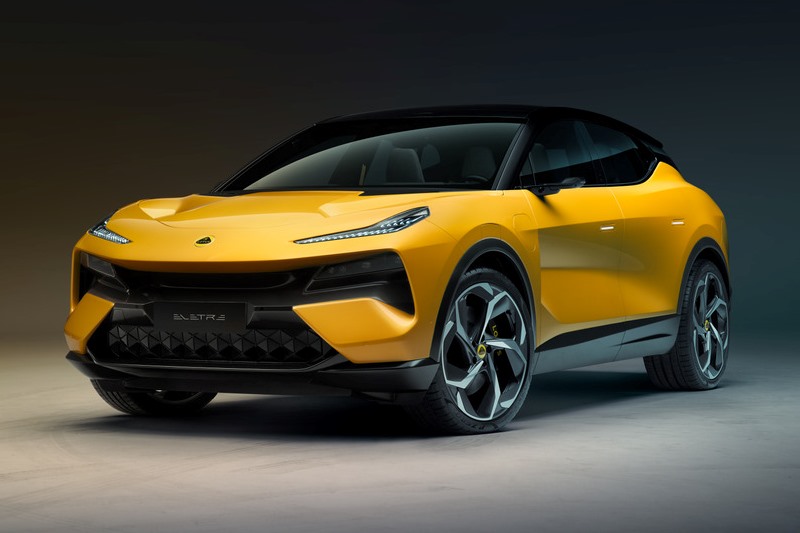
Lotus makes a U-Turn, abandons plans to become an EV brand

The reluctance of luxury car buyers to switch to electric vehicles (EVs) has prompted Lotus to cancel its original plan to become a fully electric brand by 2028.

This change was confirmed by Lotus CEO Feng Qingfeng when he addressed media representatives at the recent Guangzhou Motor Show.

“I believe that fuel-powered vehicles still have a long life cycle,” he stated, noting that most Lotus drivers average 30,000 kilometers per year.

This means that driving range is an important factor for customers, which leads some of them to be less interested in switching to EVs.

According to Qingfeng, range anxiety is not the only issue raised.

“The penetration rate of pure electric vehicles in the luxury car segment is slow because luxury car engines are already powerful, and the driving experience similar to eight-cylinder and twelve-cylinder engines shows strong performance.

“The increase in power offered is not significant, so some customers are not particularly interested in making the switch,” he added.

Feng Qingfeng explained that Lotus will develop “Super Hybrid” technology that features ultra-fast 900-volt charging, as well as an internal combustion engine with forced induction turbo to provide a range of up to 1,094 kilometers.

Currently, Lotus has not disclosed which model will receive this new hybrid system, but it is likely to be better suited for models such as the Eletre and Emeya, rather than sports cars like the Emira.

Hybrid or EV, which one is for you?

IN the past, buying a car used to be a simple affair. However, with the advancements in technology, the car purchasing process has become rather elaborate as Malaysians need to take into account plenty of factors before signing on the dotted line.

For instance, when it comes to engines, the options available today are not limited to just pure petrol or diesel. Depending on the make, potential buyers can now opt for hybrid powertrains if efficiency is what they aim for.

Or, if buyers no longer wish to use internal combustion engines in the name of the environment, they are encouraged to make the switch to EV, which will cost from as low as RM100,000.

In other words, car buyers now have multiple factors to mull over to make sure that the car they purchase actually meets their needs. Understanding the differences between hybrid and EV should be a good start.

Definition

Essentially, all hybrid cars have two power sources – an internal combustion engine (ICE) and an electric motor powered by a battery pack.

Depending on the type of hybrid system, the ICE and electric motor can propel the wheels together or separately. This depends on the vehicle’s speed, the remaining battery charge, and other factors.

Plug-in hybrid electric vehicles (PHEV) have a longer electric driving range because they come with a larger motor and battery. In addition to regenerative braking, the battery can be replenished from an external source, just like an EV.

Unlike hybrid cars, electric cars do not have conventional engines and rely solely on the electric motor to move.

Most EVs have one or two electric motors, along with a large battery pack located at the bottom of the chassis. EV batteries typically support both AC and DC charging.

Advantages of hybrid

In general, hybrid powertrains work well to reduce fuel consumption, with some systems also promising better acceleration performance.

Fuel savings vary based on the hybrid system. For example, a mild-hybrid system does not offer significant fuel savings compared to a PHEV largely due to the fact that it can’t operate solely in EV mode.

Although heavier than traditional ICE cars, hybrid cars generally have enough grunt to keep things fun. They may not be as fast as EVs, but hybrid powertrains can combine the power of the engine and electric motor to provide strong acceleration.

Additionally, hybrid users do not need to worry about charging the battery because a hybrid battery does not require charging. It can be recharged using regenerative braking. This, however, does not apply to PHEVs as their batteries still need to be plugged in for a full charge.

Advantages of EV

Obviously, EVs do not use any fuel at all, making them the right choice for those looking to reduce their monthly expenses, especially with the impending petrol subsidy rationalisation.

Of course, consumers still need to factor in charging costs, but at least they have the freedom choose charging stations that offer charging rates within their budget.

Speaking of budget, EV users in Malaysia have the opportunity reduce their ownership costs as road tax for EVs is free until the end of 2025.

Performance-wise, EVs are generally faster than hybrid cars due to the electric motor’s ability to generate maximum torque as soon as the accelerator is pressed.

The absence of an ICE also makes EVs much quieter and smoother on the road, giving passengers a sense of luxury.

Which one should I choose?

At the end of the day, understand your needs before making a decision. Hybrids are suitable if you want a daily that’s super reliable and fuel-efficient. They offer a longer driving range than EVs and charging not something to fret about.

Hybrids, or more precisely, PHEVs, are a good option for those who feel like they want to transition to EVs but are not ready to do so yet. This is because PHEVs come with an electric driving mode, while users also get to familiarise themselves with charging.

Driving an EV is fun, and its acceleration can be addictive, but it also has a limited range. Therefore, choose an EV only if you have more than one car and do not live far from work.

In addition to range and the anxiety that comes with it, you also need to consider the public charging infrastructure, which is far from ready. The number of charging stations is growing but there will be times where you come across a charging point that’s unusable due to some technical issues. So, the more, the merrier.

The best way to reduce your dependence on public chargers is by installing a home charger but this is only possible if you live in a landed property.

Intense Competition Forces Honda to Close One Factory in Thailand Next Year

Honda Motor is reported to be closing one of its manufacturing plants located in the Ayutthaya region next year due to the intense competition it is facing.

According to a Reuters report, the manufacturer plans to consolidate vehicle production at the Prachinburi plant, while the Ayutthaya plant will be converted into a parts production hub.

Honda is also reported to be making additional investments at the Prachinburi plant to enable them to switch from assembling internal combustion engine vehicles to producing hybrid engine vehicles.


Honda’s first vehicle assembly plant in Thailand was opened in the Ayutthaya region in 1996, while the second plant was opened in Prachinburi in 2016.

Intense competition from Chinese automotive manufacturers has seen Honda settle for sales below the 100,000 units over the past four years.

In fact, since 2019 the total production figures recorded by the two plants in Thailand have decreased from 228,000 units to below 150,000 units in the same period up until last year (2023).

Mazda CX-50 2025 now utilizes Toyota hybrid technology

Mazda has updated its compact crossover offering, the Mazda CX-50 for the 2025 model year, where it now utilizes hybrid powertrain borrowed from Toyota.

Specifically, the 2025 Mazda CX-50 hybrid variant has been equipped with the Toyota Hybrid System, consisting of a 2.5-liter inline-four cylinder engine, three electric motors, a small-capacity battery pack, and electronically controlled CVT transmission.


The same setup used in several Toyota models now delivers a total output of 219 hp and 221 Nm of torque for the 2025 CX-50.

Although the system comes from Toyota, Mazda engineers have fine-tuned the hybrid powertrain to offer smooth pedal response and a more engaging driving dynamics.

Furthermore, the hybrid version of the Mazda CX-50 can now offer the ability to tow loads weighing up to 680 kg.

While other CX-50 variants still retain the 2.5-liter Skyactiv engine producing 187 hp/251 Nm, and a 2.5-liter turbo engine capable of generating as much as 256 hp and 433 Nm of torque.


Externally, the 2025 CX-50 has received a redesigned front bumper, followed by unique alloy wheels in 17 or 19 inches.

The mentioned hybrid variant gets exclusive features such as red leather upholstery, while other variants receive updates like Alexa integration and additional safety features such as lane departure warnings and Smart Brake Support that now supports pedestrian detection during the night.

In the United States, the Mazda CX-50 is available starting at $30,300 (RM142,046), while the hybrid variant starts at $33,970 (RM159,251).


Honda Prelude confirmed for UK, hybrid sports coupe utilizing the Civic platform

Honda has previously revived the iconic Integra name for use in the American and Chinese markets.

Despite sporting a different appearance, it still brings one notable similarity – using the base of the Honda Civic.

Now, another iconic name is set to be given a new lease of life, that is the Honda Prelude where this two-door sports car is expected to be offered in the European market in the coming decade.


Similar to the two mentioned Honda Integra models, this new generation Honda Prelude will also be built based on the Honda Civic platform.

In addition to being offered in left-hand drive (LHD) and right-hand drive (RHD) versions, Honda is expected to market the Prelude sports car with the e:HEV hybrid technology that already exists in the current Civic model.

In its current configuration, the naturally aspirated 2.0-liter hybrid engine is capable of producing up to 181 hp and 232 Nm of torque, but there are reports that the figures will be increased to 208 hp specifically for the Prelude model.

This new generation Honda Prelude also promises an enjoyable driving experience that can be achieved through the perfect balance between driving dynamics and fuel efficiency.


Certainly, chief engineer Tomoyuki Yamagami has previously emphasized that the Honda Prelude will not be a sportier model than the Honda Civic Type R.

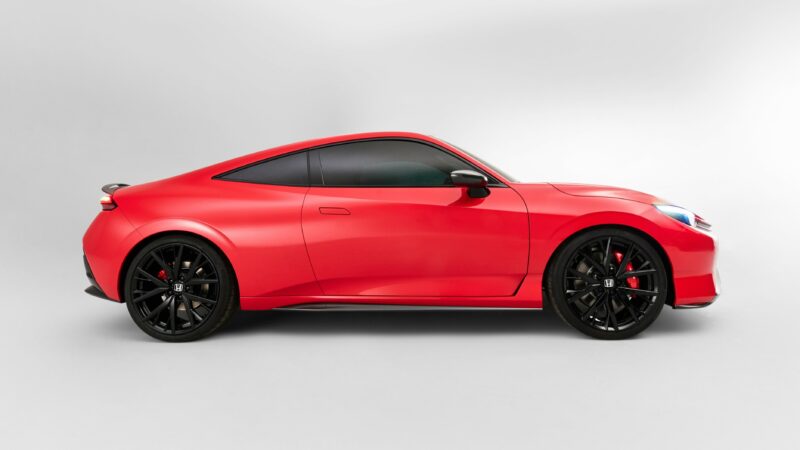
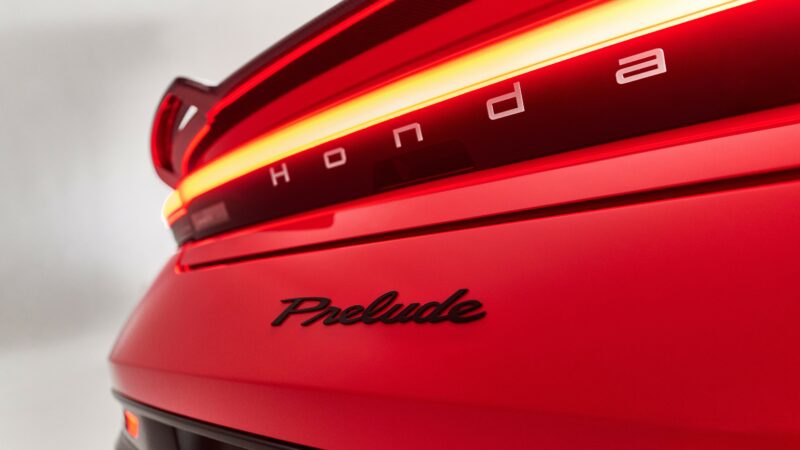
Based on the official images provided, this red Honda Prelude does not bring significant design changes compared to the concept unit showcased during the 2023 Japan Mobility Show.

All four wheel arches are now paired with 20-inch black rims, followed by red brake calipers and a carbon fiber body kit to match.

So far, Honda has not revealed details regarding the cabin design, but considering the low hood structure and high windshield, it can offer a wider field of vision.

The good news is that this sixth-generation Honda Prelude will be showcased to the public at the Goodwood Festival of Speed taking place this week.

Proton EMAS is a concept with 1.2-litre engine and 16.5kWh battery, displayed at 2010 Geneva Motor Show

Last night, Proton launched the e.MAS, their sub-brand for fully electric vehicles (EVs) that will begin entering the market by the end of this year. As a generation that experienced the era of Friendster and Myspace, this reminds the writer of the Proton EMAS concept from more than a decade ago.

The Proton EMAS is a concept designed by the firm Italdesign Giugiaro. The name EMAS stands for Eco Mobility Advance Solution, which also obviously means “gold” in English. Eco Mobility Advance Solution also technically means that EMAS is designed for energy-efficient vehicle solutions.

Therefore, it is equipped with a 1.2-liter 3-cylinder engine that generates 20hp at 1,500rpm and 47hp at 3,500rpm. The torque is 107Nm at 2,500rpm. This engine, weighing only 56kg, is paired with a 16.5kWh battery pack and 370-volt battery cells, making the Proton EMAS a hybrid range extender.

The EMAS can accelerate from 0 to 96km/h in 14 seconds and reach a maximum speed of 169km/h. It can travel up to 563km per tank. The design of EMAS is based on the Toyota iQ platform, including the suspension and steering, but all other aspects are new from Proton. It has MacPherson suspension at the front and a torsion beam at the rear.

Proton first revealed the EMAS concept to the public at the 2010 Geneva Motor Show, one of the most prestigious automotive exhibitions in the world.

The Proton EMAS also comes in several variants. The standard EMAS is a 5-door version with four seats, while the EMAS3 is a 3-door with a 3+1 seating configuration. There is also the EMAS Country, with SUV styling and higher suspension. If you notice, the EMAS Country looks similar to the Iriz Active, doesn’t it? The writer believes the Iriz Active takes inspiration from the EMAS Country.

The writer still remembers reading and seeing this EMAS concept during university and truly hopes it becomes a reality model sold to the public. Perhaps the EMAS could be a competitor to the Myvi?

At the Geneva Motor Show, Proton’s then-CEO, Dato Syed Zainal, said, “The goal is to produce a global car for the world market.” According to him, there were only 17 to 24 months left before entering production, which should have started in 2012 or 2013.

However, the Proton EMAS never became a reality.

Do you still remember the Proton EMAS concept? The writer is sure that the Tiktok generation has never heard of it.

Photo source: Paultan.org and Wikipedia

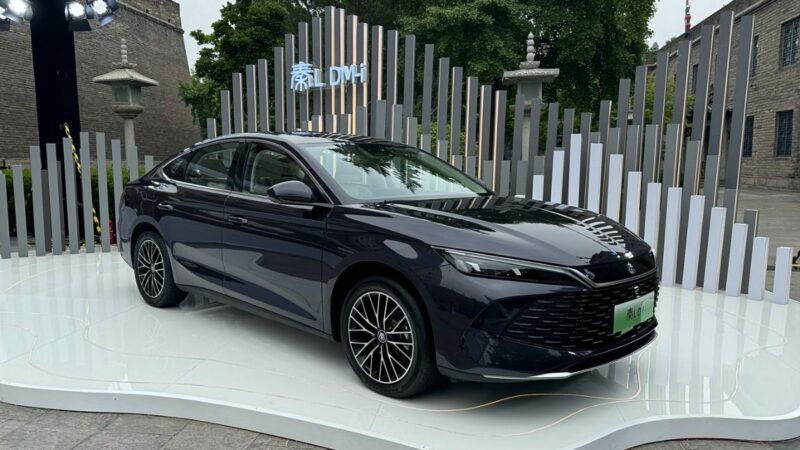
BYD Qin L is a PHEV car with up to 2,100km range

The BYD Qin L was launched at an event in Xi’an, China, with five variants priced between 99,800 Yuan (RM64,846) and 139,800 Yuan (RM90,836). Interestingly, its PHEV hybrid system can provide a driving range of up to 2,100km per tank.

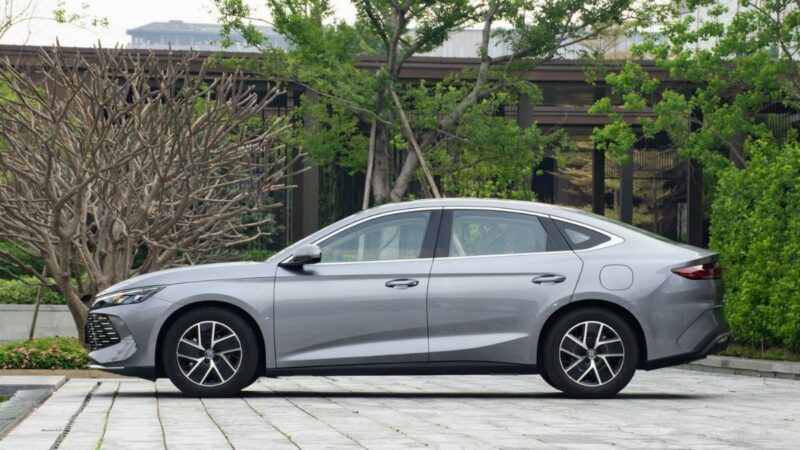
The Qin L is part of BYD’s Dynasty lineup, featuring dragon face aesthetics, a symbol of China’s national animal. As a result, the Qin L boasts a new chrome bar character line, a large grille, and prominent side lines. Interestingly, it retains conventional door handles, rather than retractable or flush types.

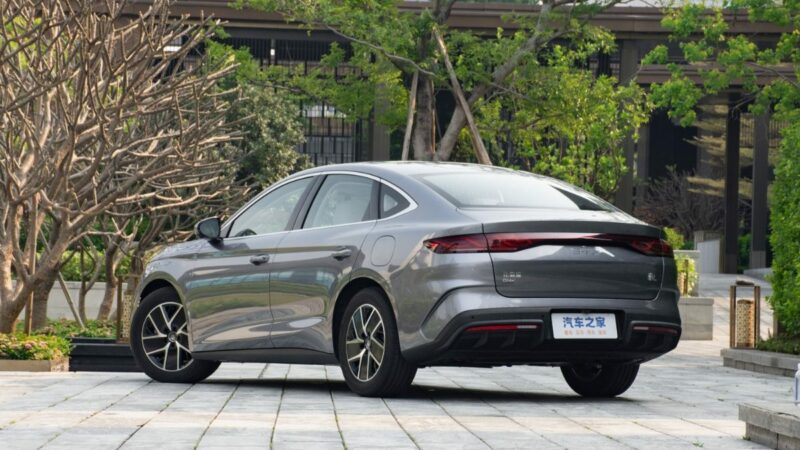
The rear design showcases continuous illuminated lights from side to side, with graphics inspired by traditional Chinese knots.

In terms of dimensions, the BYD Qin L measures 4,830mm in length, 1,900mm in width, and 1,495mm in height, with a wheelbase of 2,790mm. It employs MacPherson suspension at the front and multi-link at the rear. The interior is also inspired by Chinese paintings and features numerous knot-shaped graphics.

There are physical buttons near the gear lever, along with a 15.6-inch rotating central screen and an 8.8-inch digital instrument display. Standard features include six airbags, NFC smart phone key, automatic air conditioning, and six speakers.

The high-spec model comes with a panoramic roof, DiPilot L2 system, power seats at the front, dashcam, 18-inch rims, an eight-speaker audio system, and seat heaters and coolers. The key to the 2,100km driving range lies in the new PHEV (plug-in hybrid) system, ensuring high efficiency operation of the engine and electric motor, with fuel consumption as low as 2.9 liters/100km.

The PHEV version utilizes a 1.5-liter engine delivering 99hp and 126Nm of torque. The lower variant has an electric driving range of 80km, using a 10.08kWh battery and a 160hp/210Nm electric motor.

The higher variant features a 15.874kWh battery providing an electric driving range of up to 120km. It utilizes a more powerful EHS160 motor generating 214hp and 260Nm of torque. This model is capable of achieving a range of up to 2,100km per petrol tank.

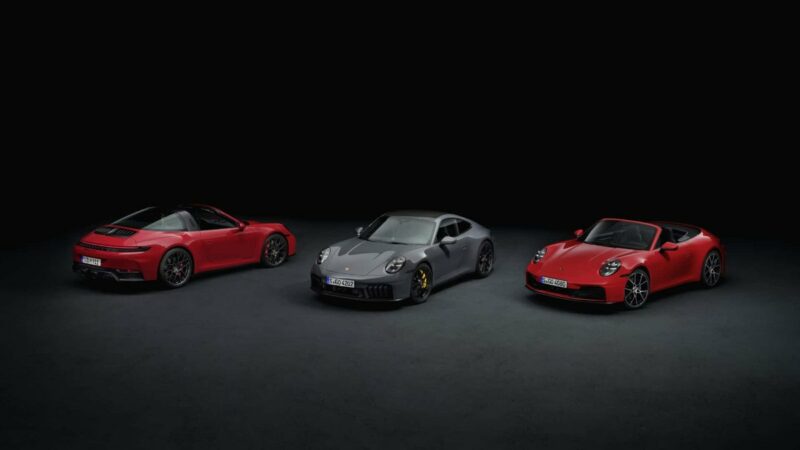
Porsche 911 hybrid arrives – Carrera GTS guise, 3.6-litre, 0-100 in 2.9s

THIS is big news. Despite only a facelift, the Porsche 911 is now entering a new era. This is because the sports car has received a hybrid for the first time in its history.

As we reported earlier, the Porsche 911 will become a hybrid, and it arrives to update the 992 generation (called 992.2) in the Carrera GTS variant.

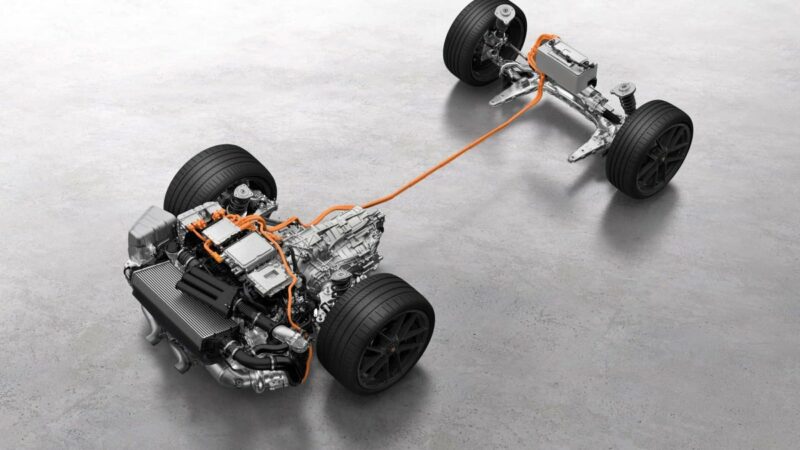
For 2025, the Porsche 911 Carrera GTS retains its identity with the rear-mounted flat-six engine, but now with an electric motor and an electric turbocharger. This boosts power to 532hp and 608Nm of torque.

The engine used is a new 3.6-liter unit replacing the previous 3.0-liter one. This engine alone produces 478hp and 569Nm of torque. The hybrid system replaces the previous twin-turbo package with a single electric turbocharger.

It functions like a traditional exhaust-gas turbocharger but with an 11kW (14.7hp) motor positioned between the turbine and the compressor. This motor can spin the turbo very quickly for a fast response, drastically reducing turbo lag. It can also send power back to the 400-volt battery.

There is also a generator motor of 32.6hp sandwiched between the flat-six engine and the 8-speed dual-clutch gearbox. Both are powered by a very small 1.9kWh battery located under the front hood.

The T-Hybrid powertrain is designed to enhance performance at all rpm ranges while operating at the ideal air-fuel ratio of 14.7:1 at almost all times. This hybrid also means no more manual transmission for the 911 Carrera GTS.

This new Porsche 911 Carrera GTS is heavier than the previous model, partly due to standard features like rear-wheel steering, but the additional power overcomes this weight increase. It is also the first Carrera GTS capable of accelerating to 100km/h in less than 3 seconds, specifically 2.9 seconds.

In addition to the T-Hybrid, the 2025 Carrera GTS receives a new active aerodynamic flap at the front for better cooling without compromising drag. There are also cosmetic changes on the front and rear, as well as new wheel options.

The rear tires are wider now, measuring 315/30/21, while the front remains at 245/35/20. Inside, the biggest change is the fully digital instrument cluster. Yes, no more analog tachometer needle.

The base 911 (992) Carrera 2025 receives turbos and an intercooler from previous GTS and Turbo models. This provides an additional 9hp while torque remains at 448Nm.

For 2025, only the Carrera and Carrera GTS receive facelifts, while other variations such as Turbo, GT3, GT3 RS, and GT2 will follow later. The Porsche 911 992.2 2025 is expected to arrive towards the end of this year.

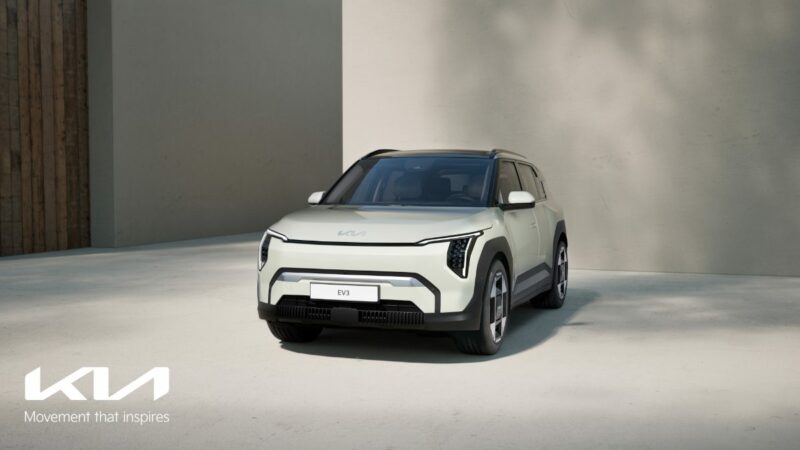
Kia EV3 made global debut – Up to 600km range, Volvo EX30 rival?

KIA continues to expand their lineup of electric vehicles (EVs) with the introduction of the EV3, a compact SUV. This model joins the existing lineup, including the EV5, EV6, and EV9.

The Kia EV3 is built on the E-GMP (Electric-Global Modular Platform) but does not feature the 800-volt architecture found in the EV6 and EV9. Instead, it comes with a 400-volt architecture similar to the EV5, enabling DC charging from 10 to 80 percent in 31 minutes.

With a full charge, it can be driven up to 600km based on WLTP cycle. This range applies to the Long Range model, while the Standard Range variant offers a slightly shorter distance.

Power is supplied by nickel manganese cobalt (NMC) batteries, known for offering better power and longer lifespan.

Both variants are equipped with the same electric motor, mounted on the front axle. This motor has an output of 201hp and 283Nm of torque, allowing the EV3 to accelerate to 100km/h in 7.5 seconds. The maximum speed is limited to 170km/h.

The Kia EV3 is equipped with eDTVC (Electric Dynamic Torque Vectoring Control) for optimal grip, as well as a new feature called i-Pedal 3.0, which functions as regenerative braking.

The EV3 offers a cargo space of 460 liters, and since it has no engine, it also has an additional 25 liters of space under the front hood.

In terms of appearance, the Kia EV3 features the ‘Tiger Face Star Map’, a result of the design of the DRL (Daytime Running Lights) and main headlights. The grille also comes in two different bumper design options, depending on the variant.

Despite its boxy and angular shape, the Kia EV3 maintains aerodynamics, with a drag coefficient as low as 0.263.

The cabin design showcases a minimalist concept. There is a single horizontal air vent, dividing the dashboard into two sections. Several physical buttons are located on the center console.

The screen on the dashboard is quite large, consisting of a 12.3-inch instrument display, a 12.3-inch infotainment display, and a 5-inch air conditioning panel.

Some parts of the cabin are made from recycled materials, with the option of Air, Earth, or Water trim.

Other features include the Harman Kardon audio system, AI assistance, Automotive Content Platform, and ADAS (Advanced Driver Assistance Systems).

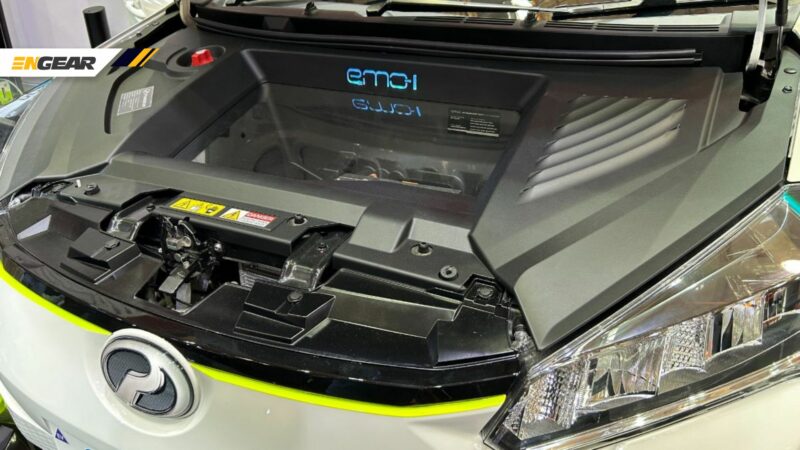
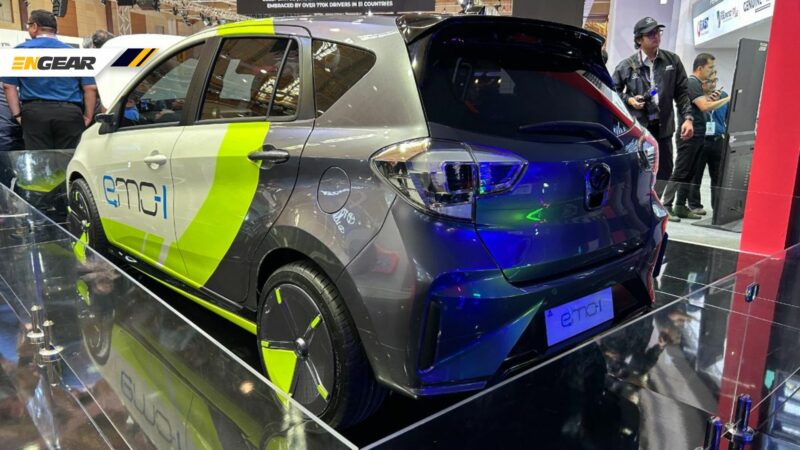
Perodua showcases first working EV prototype, up to 350km range

PERODUA has unveiled its first electric vehicle (EV) prototype – known as the Myvi Conversion – which will serve as the foundation for the compact car manufacturer in developing its electric technology.

As the name suggests, the prototype is based on the Myvi but equipped with a 55.7kWh battery pack, providing a driving range of up to 350km. It features a single electric motor at the front wheel, delivering an output of 161hp and 220Nm of torque.

The EV prototype consists of three main components: the power bench, the power converter system, and the overall frame design, all made in Malaysia.

Meanwhile, the development of the power conversion technology is carried out in collaboration with a company based in Australia. Perodua is also cooperating with three local universities for this project.

“The process of developing the power bench is carried out by Perodua in collaboration with three local universities, namely Universiti Tenaga Nasional, Universiti Kuala Lumpur, and Universiti Putra Malaysia,” said Perodua’s President and Chief Executive Officer, Dato’ Sri Zainal Abidin Ahmad.

“This collaboration aims to fully understand the technology used.”

This collaboration, which began in September 2022, sees Perodua and the three universities working together to develop the EV power converter system from the basic stage.

The collaboration opens up opportunities for all parties to enhance their expertise and capabilities in the field of EV.

It is understood that Perodua’s first EV model is planned to be launched at the end of 2025 with a price not exceeding RM100,000.

“We chose the Perodua Myvi as the model of choice for this project because it is our car model that has won the hearts of most Malaysians,” said Zainal.

“Although the actual appearance of our EV is different from what is being showcased here, rest assured that Perodua’s electric car will make its presence in the market.

“Meanwhile, we invite the public to visit the Perodua booth at the Malaysia Auto Show 2024 to see the Perodua Myvi Conversion for themselves and participate in various attractive campaigns that we have prepared.

“We also welcome customers to interact with our staff here to obtain further information about Perodua, such as our newly implemented Standard Outlet aimed at providing a seamless experience to customers at our 3S center,” said Dato’ Sri Zainal.

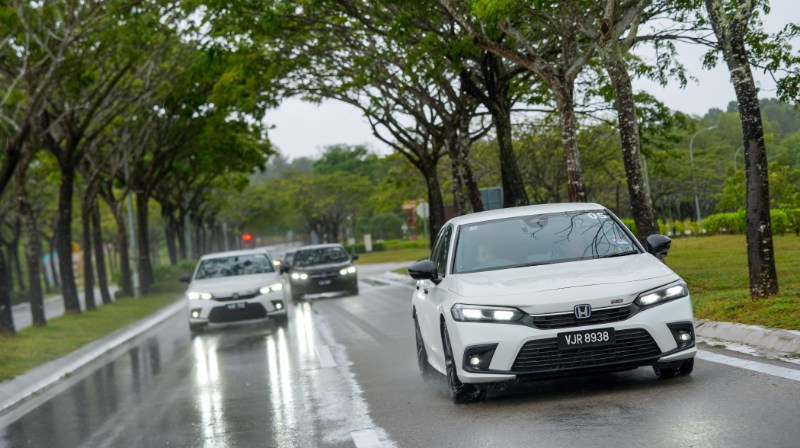
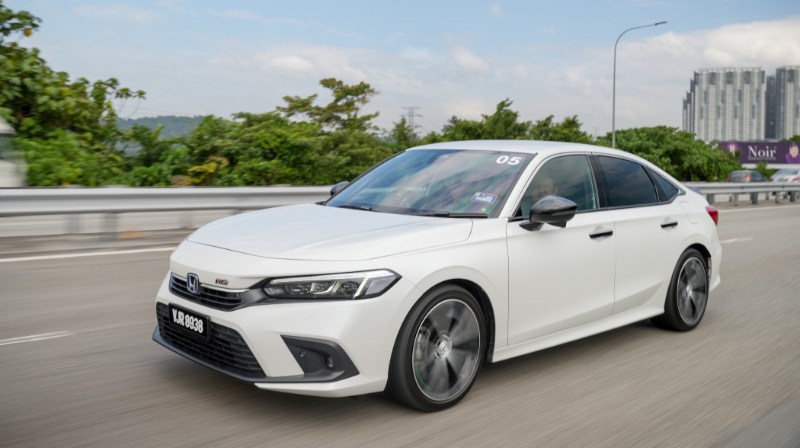
Honda Civic e:HEV RS Hybrid named the 2023 Malaysia Car of the Year

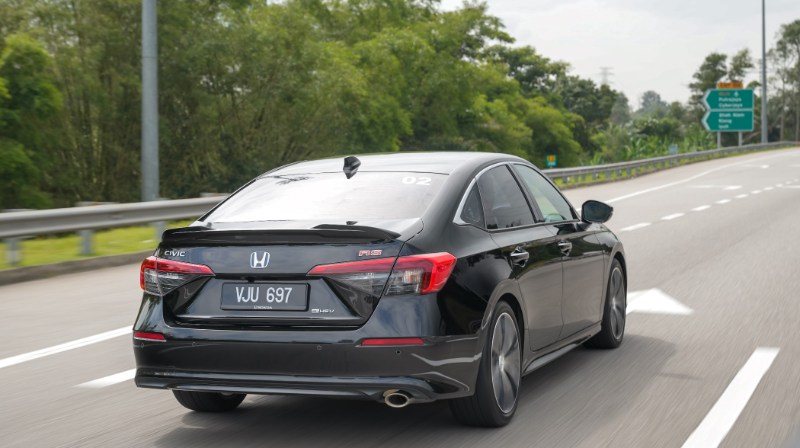
THE 19th Malaysia Car of the Year (MCOTY) recently concluded, and the prestigious title of Overall Car of the Year was awarded to the Honda Civic e:HEV RS Hybrid.

The annual program which serves as a platform for automotive enthusiasts and experts to recognize and celebrate the best new cars in Malaysia, unanimously picked the Honda Civic e:HEV RS Hybrid for its technology which eliminates power-robbing gearboxes, whether CVT or hydraulic, and for providing the best energy regeneration of all current hybrids in Malaysia.

With 121 new cars nominated for this year’s award, the competition was fierce and represented a diverse range of vehicles. The judging panel consisted of 10 esteemed automotive journalists and two professionals from the legal and medical fields.

These judges evaluated the cars based on several criteria, including design, technology, safety, and value for money. As a result of their analysis, the 121 nominated cars were divided into seven main categories, with 13 winners emerging as the best in their respective segments.

One interesting aspect of the MCOTY program is the People’s Choice award, which is determined through online polling using smartphone to implement one person one vote from a list of 25 cars nominated by the judges and a team from the Malaysia Automotive Robotics IoT Institute.

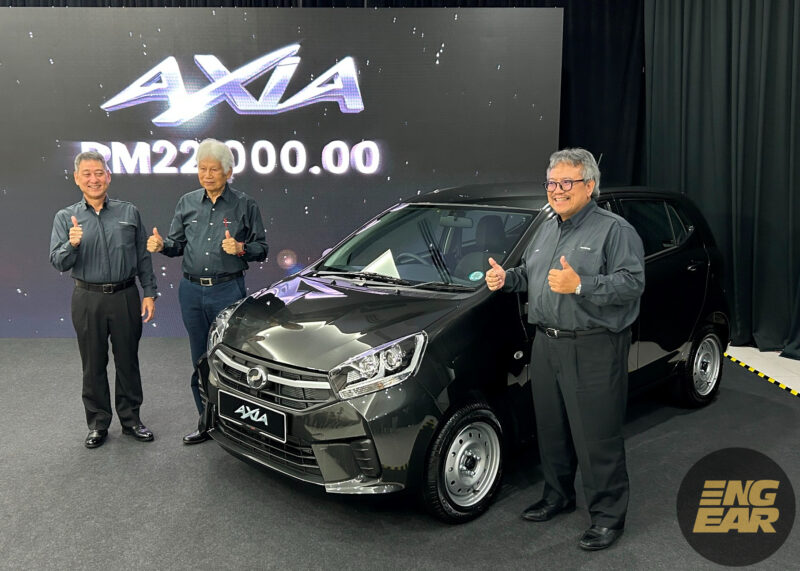
This year, the Perodua Axia E took home the People’s Choice award in the mass market category, while the BMW iX1 xDrive30 M Sport won the hearts of the public in the premium market. Interesting to see that Malaysians selected an EV in the premium market segment.

In addition to the winners, the judges also made Honourable Mentions of three outstanding cars that defied convention.

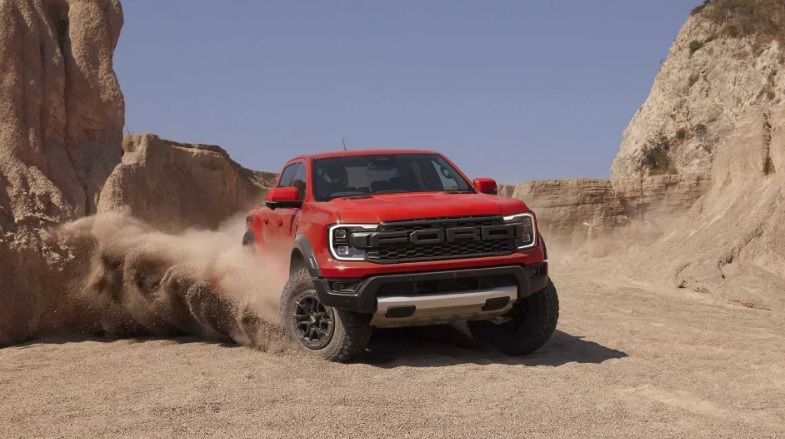
The Ford Ranger Raptor 3.0 V6 petrol twin turbo was acknowledged for its outstanding performance, being described as a supercar in pick-up guise.

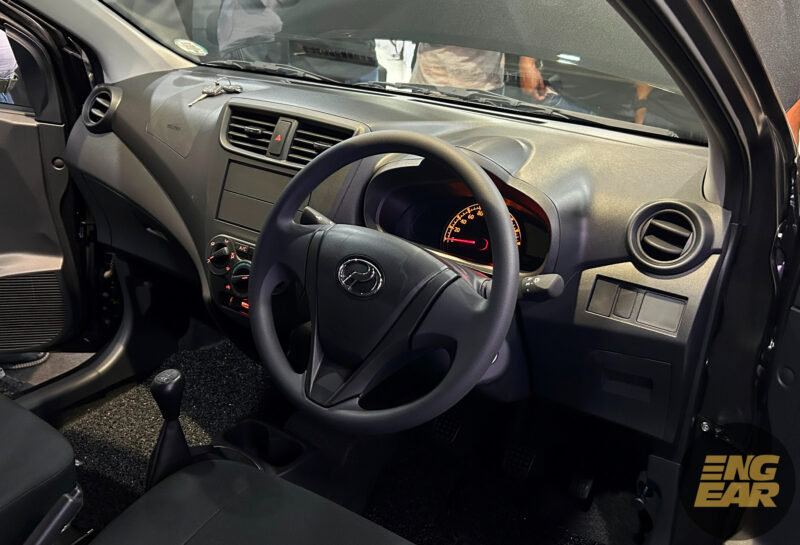
The Perodua Axia 1.0 E received recognition for its affordability, with its price tag of RM22,000 making it one of the best value-for-money cars in the world. Despite criticism regarding its safety standards, the judges argued that the Axia E is still much safer than motorcycles.

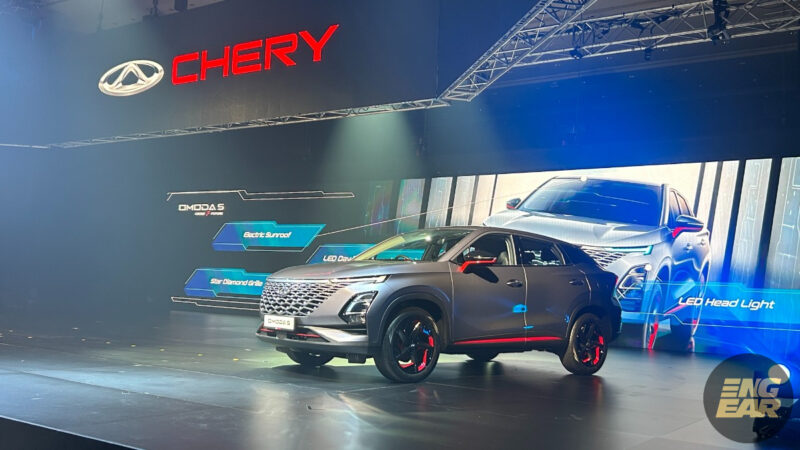
Third, the Chery Omoda 5 was commended for its warranty, as it was launched with an unprecedented 1 million km warranty for the first 3,000 buyers. This imaginative brand-building exercise caught the attention of the judging panel.

Winners of the 19th Malaysia Car of the Year Awards:

A) Sedan and Hatchback:

Below: RM110,000: Toyota Vios 1.5G
RM111,000 to RM249,000: Honda Civic e:HEV RS Hybrid
Above RM250,000: Mercedes-Benz C300 AMG Line

B) Crossover

Below RM200,000: Toyota Corolla Cross Hybrid 1.8
Above RM200,000: Mazda CX-8 2.2D 2WD

C) Electric Vehicles (EV)

Below RM200,000: BYD Dolphin Premium Extended
Above RM200,000: Volvo C40

D) Hybrids

Below RM 250,000: Toyota Corolla Cross Hybrid 1.8
Above RM 250,000: Volvo XC90 Recharge T8 Ultimate.

E) SUV

Below RM250,000: Kia Sorento 2.2 diesel AWD
Above RM250,000: Lexus RX 350 Luxury 2.4 T

F) Trucks

Ford Ranger 2.0 XLT Plus Double Cab 4×4 WildTrak

G) MPV

Kia Carnival 2.2D 11-seater

H) Overall Car of the Year

Honda Civic e-HEV RS Hybrid

I) People’s Choice

Mass Market: Perodua Axia
Premium market: BMW iX1 xDrive30 M Sport

J) Honourable Mentions

Performance: Ford Ranger Raptor 3.0 petrol twin-turbo V6
Affordability: Perodua Axia 1.0 E (manual)
Warranty: The Chery Omoda 5

K) Charge Point Operator of the Year

Gentari

L) Person of the Year

Ahmad Hadri Haris