Tag Archives: carbon neutrality

2025 JMS: Toyota’s 3 new principles to achieve the vision of Mobility for All and Carbon Neutrality

Toyota’s multi-pathway approach, which has been in place for several years, goes beyond achieving carbon neutrality through modern technologies such as hydrogen fuel cell vehicles (FCEV), hybrids (HEV), plug-in hybrids (PHEV), and battery electric vehicles (BEV).

It also includes more sustainable solutions that can be adapted to local contexts, such as the use of biofuels and compressed natural gas (CNG).

By offering low-emission and zero-emission mobility solutions that are more accessible, Toyota can meet the needs of various user segments in Asia.

At the same time, it can provide lasting value benefits to individuals and society.

The three new principles being implemented by Toyota under this Multi-Pathway Approach are Best in Town, Customer Comes First, and Start by Doing.


Best in Town

This philosophy emphasizes delivering the best products and services that meet the unique mobility needs of each Asian market.

One example provided is the global IMV platform, introduced in 2002, which aims to create a platform that can support various vehicles to cater to the mobility needs of developing markets.

Akio Toyoda stated, “We cannot satisfy customers by promoting the number of vehicles; what matters is being the best in the city.”


Customer Comes First

At the Japan Mobility Show 2025, Toyota introduced its brand lineup—Century, Lexus, Gazoo Racing, Toyota, and Daihatsu—each playing a unique role based on the principle of “Mobility for All.”

This aligns with Toyota’s theme “To You,” introduced this year, emphasizing that no one should be left behind.

Ultimately, the multi-pathway approach to achieving carbon neutrality offers a variety of sustainable solution options for users.


Start by Doing

To achieve its goals, action must be taken immediately.

For this purpose, Toyota has initiated several projects in collaboration with various partners, including the Commercial Japan Partnership Technologies Corporation (CJPT), which drives the logistics industry toward an era of efficiency and carbon reduction fueled by data.

Additionally, the Toyota Mobility Foundation’s (TMF) community projects aim to improve safety, reduce congestion, and enhance accessibility.

Toyota believes that mobility is not just a mode of transportation but rather a means to access opportunities, connections, and a better quality of life.

According to Masahiko Maeda, CEO of Toyota Motor Corporation’s Asia region, “At Toyota, we believe that achieving the Mobility for All and Carbon Neutrality goals requires more than just one solution for vehicles, energy, and data.”

“We believe the future of mobility is ours to create through collaboration, shared purpose, and collective action. As a result, we can build an ecosystem that brings smiles to people across the Asia region.”

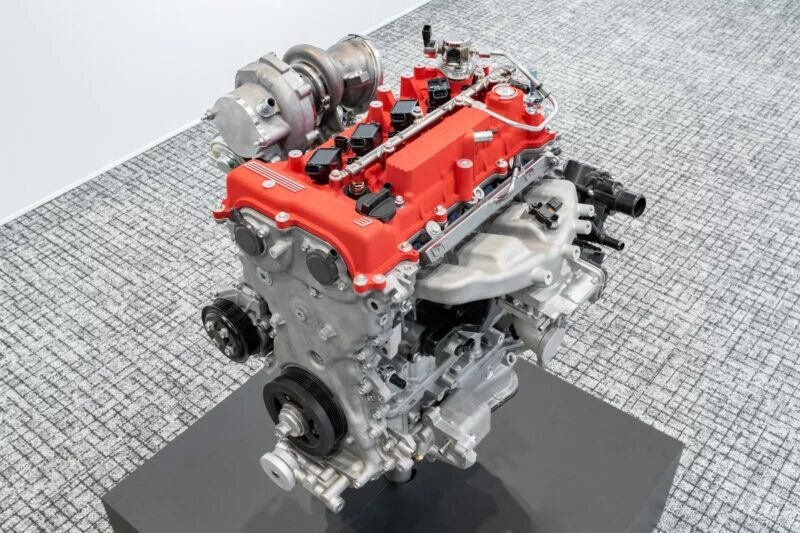
Toyota hopes the new 2.0L turbo engine can surpass the legendary 2JZ

As previously reported, Toyota is developing a new generation of inline four-cylinder engines, 1.5 and 2.0 liters, in order to achieve carbon neutrality targets.

With a more compact and lighter size, the new generation engines are expected to be more powerful while also offering better fuel efficiency.

Toyota holds high hopes for the new engines, to the extent that one of the company’s engineers believes it can surpass the highly popular 2JZ engine among enthusiasts. This was revealed by a journalist from Kuruma News attending an event hosted by Lexus recently.

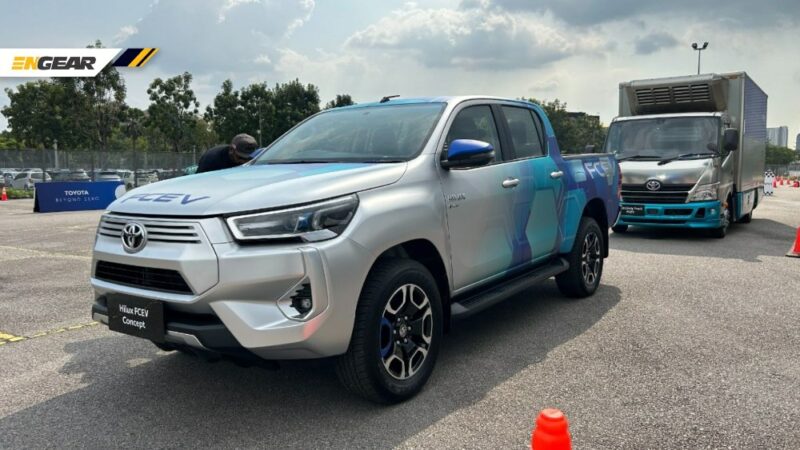
At the event, Japanese media practitioners were given the opportunity to test the Toyota Hilux and Lexus IS equipped with the new 2.0-liter turbo engine.


Both models have different power outputs, with the Hilux generating 300 hp at a redline of 6,200 rpm, while the Lexus IS is capable of producing 400 hp with a higher redline (7,100 rpm).

According to Kuruma News, despite the differing power outputs, both models have almost no turbo lag and, at the same time, offer an enjoyable driving experience.

Another Japanese media outlet, Best Car Web, revealed that Lexus may be developing a prototype Lexus RC with 600 hp. The prototype model is said to have a six-speed manual gearbox and is being developed for motorsports.

It is not impossible that one day this 600 hp prototype RC model will also be offered under the high-performance Lexus F division.

Beyond Zero showcases Toyota’s ideas on carbon neutrality

If you have been following the developments in the automotive industry, you will notice that Toyota does not believe that battery electric vehicles (BEVs) or EVs are the sole solution to carbon neutrality.

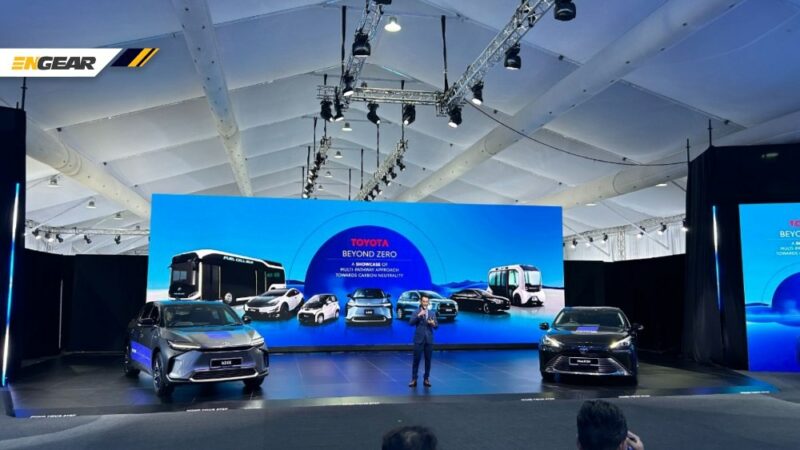
Instead, they are confident that there are several other ways to achieve it. Thus, Toyota is presenting Beyond Zero, an initiative of the brand towards Carbon Neutrality by 2050.

The event, which runs from February 20th to 28th and held at the Malaysia Technology Park, showcases a transformation initiative that demonstrates the brand’s commitment to sustainable and environmentally friendly practices.

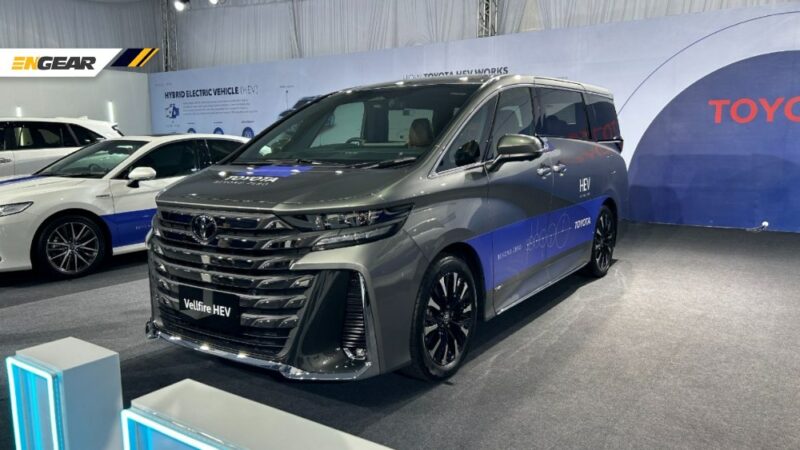
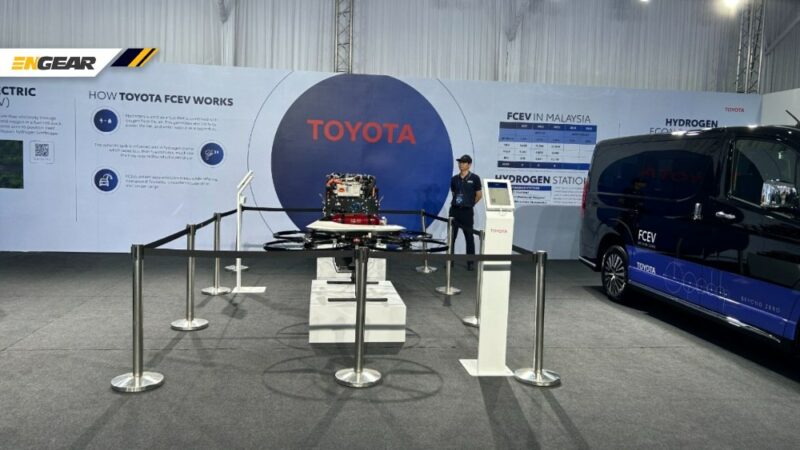
The Beyond Zero event was symbolically launched to showcase a diverse approach with various electrification technologies, including Hybrid Electric Vehicles (HEVs), Battery Electric Vehicles (BEVs), and Fuel Cell Electric Vehicles (FCEVs).

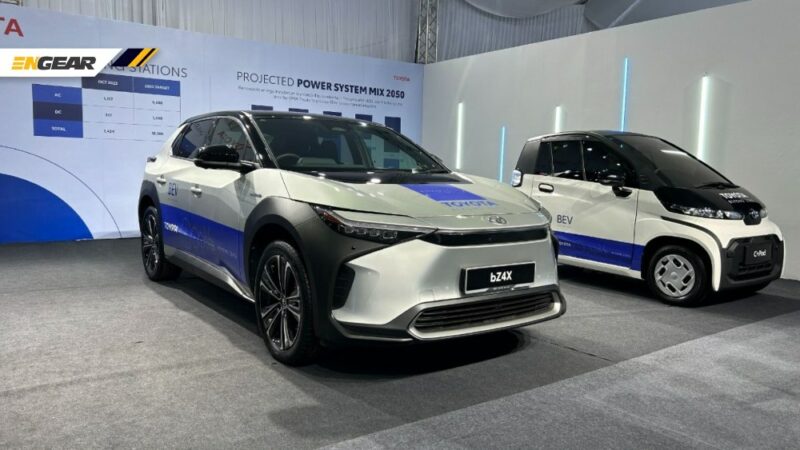
Among the BEV models presented are bZ4X, Hilux BEV REVO-e, and C+pod. For FCEVs, the models featured include Mirai, GranAce FCEV, and Hilux FCEV.

The Beyond Zero event is open to various guests to learn about sustainability initiatives and new technologies, and to test drive specific vehicles from February 20th to 28th, 2024.

The Minister of Investment, Trade, and Industry, YB Senator Tengku Datuk Seri Utama Zafrul Tengku Abdul Aziz, who officiated the event, praised UMW Toyota (UMWT) for the company’s commitment to sustainable practices and environmental conservation.

“Recognizing the importance of Malaysia’s transition to sustainable energy, we are driven by global commitments and the potential for economic diversification and energy security,” he said.

“Malaysia, recognized as the best country in Southeast Asia in the 2023 Energy Transition Index by the World Economic Forum, is on the right track to become a regional leader in energy transition.”

“Toyota’s innovative efforts in clean energy, through its diverse approach, are indeed aligned with our nation’s goals.”

The President of UMWT, Datuk Ravindran K. said, “We acknowledge the existence of various challenges and opportunities nationwide in our efforts to pursue a multi-pathway approach and implement appropriate life cycle actions in line with each national interest and Sustainable Development Goals (SDGs) of the country.”

“Recognizing the unique landscape of the Malaysian automotive industry, as well as its position as a major producer of electrical and electronic products in Southeast Asia, it is important for us to position ourselves appropriately in this journey.”