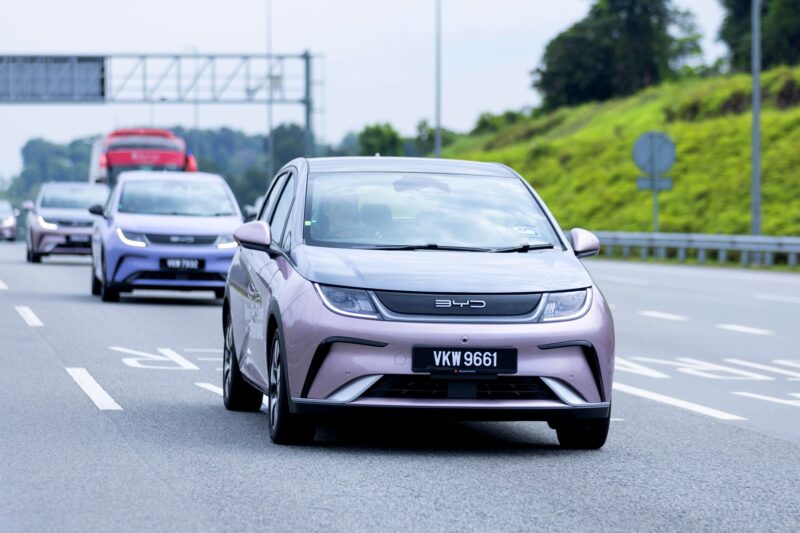
Sime Darby Motors (SDM) has announced that it has sold over 10,000 BYD vehicles nationwide since being appointed the official distributor of the brand in September 2022.
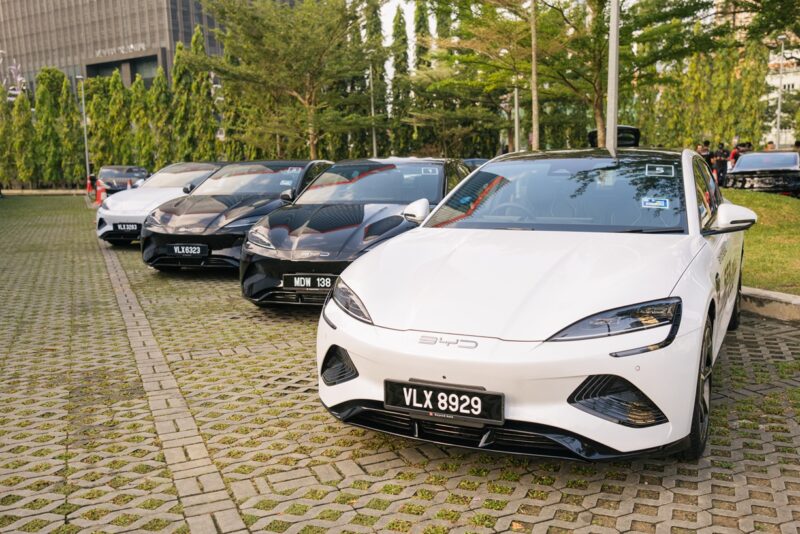
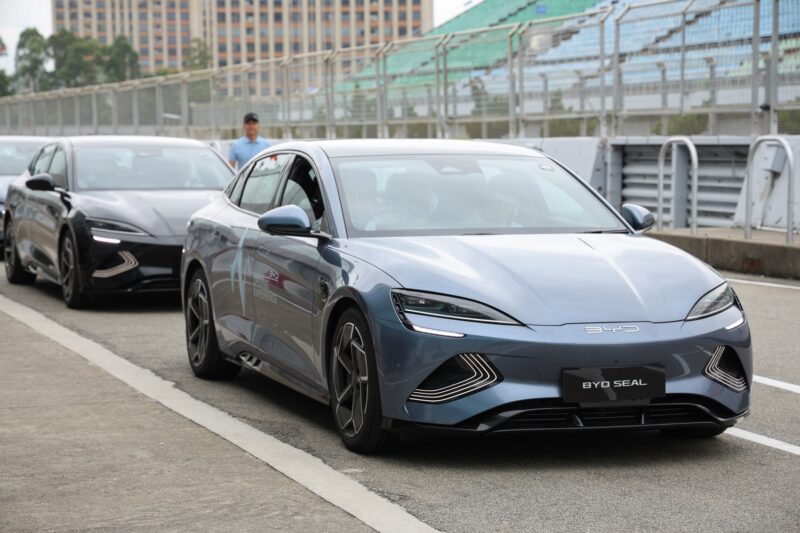
To celebrate this achievement, Sime Darby Motors recently organised the ‘BYD Dream Drive Melaka 2024’ convoy, which was joined by over 60 BYD vehicles.
According to the company, Melaka was chosen to coincide with this year’s 50th anniversary of diplomatic relations between Malaysia and China, making it an apt destination given its historical connections with China dating back to the 15th century.
Jeffrey Gan, the Managing Director of Southeast Asia at Sime Darby Motors, stated the milestone reflected the growing adoption of electric vehicles in the region and Sime Darby’s strong position as a leader in EV.
“Our commitment to providing the best experience and services through this strategic partnership with BYD has contributed to this success,” he added.
Eagle Zhao, the Managing Director of BYD Malaysia, added, “This milestone reflects the trust and support of our customers who embrace the future of mobility with BYD. It’s been an incredible journey with Sime Darby Motors and we look forward to elevating sustainable driving experiences in Malaysia.”
BYD Malaysia said it has set its sights on reaching the next 10,000 cars milestone in a shorter timeframe.
Meanwhile, Sime Darby Motors plans to expand the BYD network in Malaysia to 30 showrooms by the end of this year. Currently, there are 26 BYD showrooms nationwide. This consists of 19 dealer partners, with 16 3S centres and 10 1S centres.
If you recall from last August, we listed the top five electric vehicles (EVs) available for prices between RM100,000 and RM150,000.
Notably, all five EVs in that list were from Chinese brands. However, this isn’t necessarily a drawback, as many EVs from that country offer impressive performance, technology, and features at affordable prices.
In this article, we present the top five EVs priced between RM150,000 and RM200,000, which still includes candidates from Chinese brands. But this time, there’s good news for those wanting to try EVs from European brands, as there are three models that may suit their preferences:
Volvo EX30 Plus (RM188,888)
Recently launched in the Malaysian market, the Volvo EX30 may not be entirely European, as it uses a platform made by Geely—also employed in the smart #1 and Zeekr X—and is assembled in China. However, it is undoubtedly a true Volvo.
The Thor Hammer LED lights signify that it is a Volvo, and the minimalist interior showcases various sustainable materials, which is in line with the brand’s strategy. For performance enthusiasts, you’ll be pleased to know that the Plus variant can accelerate from 0 to 100 km/h in just 5.3 seconds. Want something faster? You can opt for the Ultra Twin Performance variant but that is priced above RM200,000.
BYD Seal (RM163,800 – RM199,800)
In this writer’s opinion, no EV list would be complete without BYD. Within the price range of RM150,000 to RM200,000, you can acquire the flagship Seal sedan, which is available in three variants: Dynamic, Premium, and Performance.
These variants differ in performance (with the Performance being the fastest at 0-100 km/h in 3.8 seconds) and range (the Premium can travel the farthest at 570 km). Interestingly, regardless of the chosen variant, buyers get a nearly identical list of features and specifications.
XPeng G6 (RM165,000 – RM185,000)
XPeng is a new EV brand from China introduced in Malaysia by Bermaz, alleviating concerns about after-sales service, as Bermaz is well-experienced in this area.
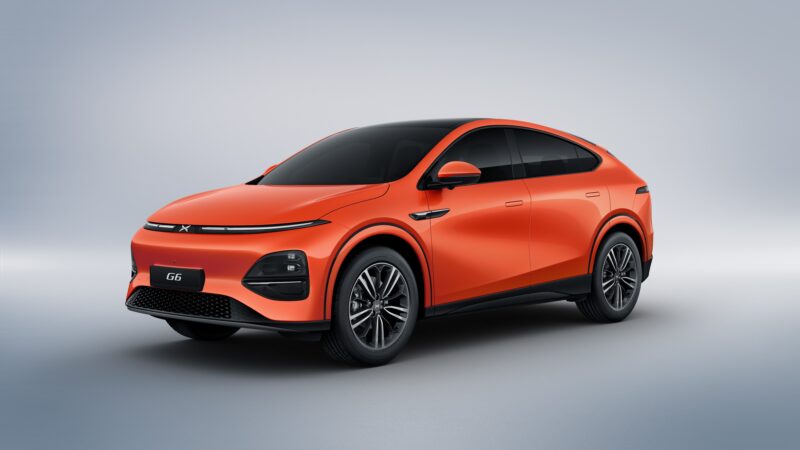
The G6 is XPeng’s first ever model available in Malaysia, offering a premium coupe SUV design along with advanced technologies such as the Smart Electric Platform Architecture 2.0 with an 800V architecture, the XOpera surround sound system, and XPILOT 2.5 safety features for well under RM200,000.
smart #3 Pro (RM175,000)
Similar to the Volvo EX30, the smart #3 could be seen as an Eurasian blend, combining technology from an Asian company (Geely) with European design (specifically German, as it was designed by Mercedes-Benz).
The Pro is the entry-level variant in the #3 lineup. At RM175,000, it offers good value for those interested in the smart brand as it packs 272 PS and 343 Nm of torque, can reach 0 to 100 km/h in a scant 5.8 seconds, and has a range of up to 325 km on a full charge, which is 10 km further than the #1 Pro.
MINI Electric Cooper SE (RM193,888)
This writer believes many readers of Engear TV are fans of MINI. The second generation of the MINI Electric Cooper is viewed as a more worthwhile investment, featuring not only a more modern design but also vastly increased power and range.
Launched in Malaysia last July, the new Cooper SE is powered by a single electric motor on the front axle, producing 218 PS and 330 Nm (an increase of 34 PS and 60 Nm), allowing it to accelerate from 0 to 100 km/h in 6.7 seconds. With a larger battery capacity of 54.2 kWh, it provides a range of 402 km on a full charge, almost double the range of the previous model.
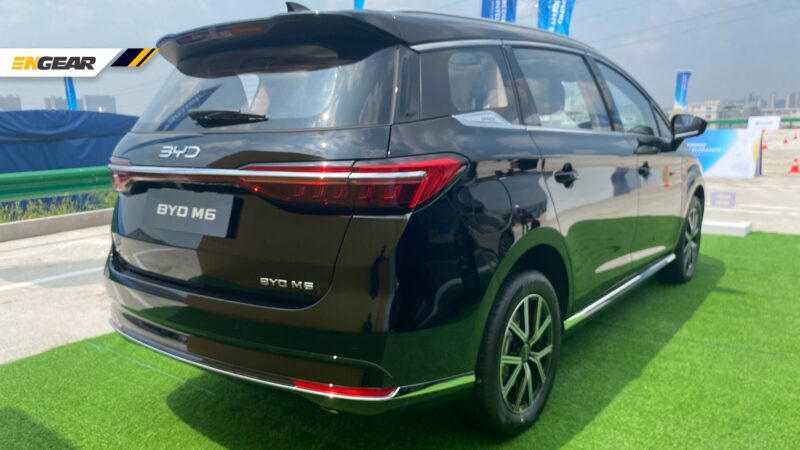
BYD is set to further expand its electric vehicle lineup in Malaysia with a new MPV called the M6.
In a recent media Q&A session in Changsha, China, Liu Xueliang, General Manager of BYD Asia-Pacific Auto Sales Division, confirmed that the fully-electric MPV will enter the Malaysian market this year.
However, the exact launch date is still unknown, along with the specifications and variants that will be offered.
It is expected that the specifications for the Malaysian market will not differ significantly from those available in Indonesia and Thailand.
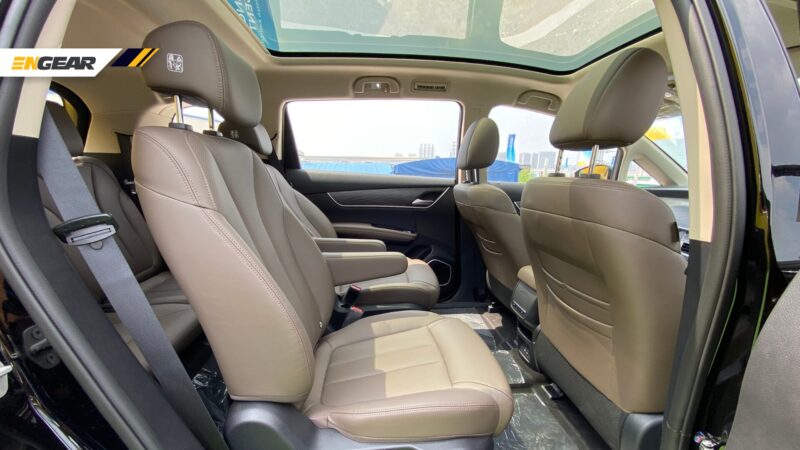
In Indonesia, the M6 can be hand in six- or seven-seat configurations, while in Thailand, it is available only as a six-seater.
Both markets offer two output variants. The base variant, powered by a front axle electric motor, has 163 PS and 310 Nm of torque, whereas the more powerful variant (known as Superior in Indonesia and Extended in Thailand) gets 204 PS and 310 Nm from the same single-motor setup.
As with other BYD EVs, juice for the motor is supplied by an LFP battery, with a capacity of 55.4 kWh for the base variant and 71.8 kWh for the Superior/Extended variants. This equals to an NEDC range of up to 420 km for the former and 530 km for the latter.
The base M6 supports 85-kW DC fast charging, while the Superior/Extended can accommodate up to 115 kW, allowing the battery to be charged from 10% to 80% in just 40 minutes. Meanwhile, AC charging is limited to 7 kW for both variants.
The M6 can be considered a replacement for the e6, which was supposed to launch in Malaysia after the Atto 3. Compared to the e6, its exterior design aligns more closely with recent BYD models, featuring a silver grille that connects to the projector LED headlights.
On the side, chrome trim is generously applied on the window frames and side skirts, while the rear boasts a full-width light strip accompanied by a chrome strip. Unlike the Atto 3, the M6 ditches the “Build Your Dream” wording with the more understated “BYD” badge.
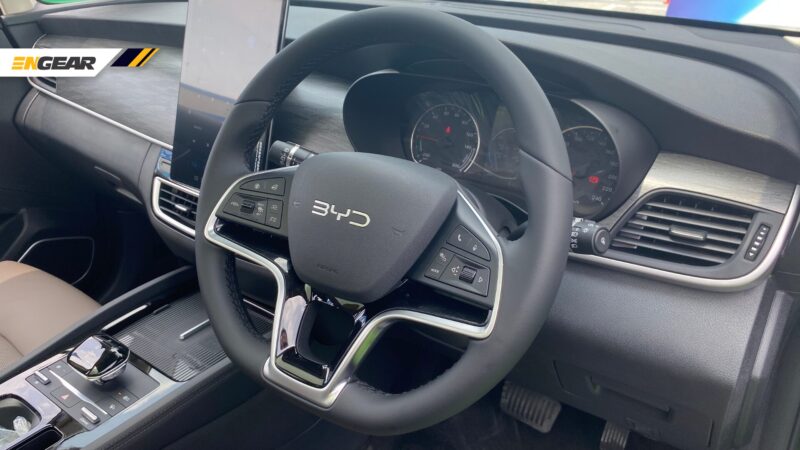
While the interior is evidently more conventional compared to the Atto 3 or Dolphin, the M6 still offers a comprehensive equipment list, which includes a 12.8-inch rotating screen, dual wireless charging, keyless entry, a panoramic glass roof, and automatic air conditioning, to name a few.
In terms of safety, the M6 comes equipped with six airbags and plenty of ADAS features such as Autonomous Emergency Braking, Adaptive Cruise Control, Lane Centring Assist, Emergency Lane Keeping Assist, and Blind Spot Monitoring.
As for pricing, the M6 is sold for between 379 million to 429 million rupiah (approximately RM102,968 to RM116,481) in Indonesia, while in Thailand, it starts from 829,900 baht to 929,900 baht (around RM106,014 to RM118,788).
Sime Darby Motors, the official distributor of BYD vehicles in Malaysia, has confirmed in a statement that the BYD models sold in the country are not involved in the recall campaign announced by BYD in China.
According to Sime Darby Motors, the recall is limited exclusively to vehicles sold in the Chinese market.
In the recall announcement, BYD Auto Industry Co., Ltd. and BYD Automobile Co., Ltd. stated that they are recalling “certain domestically produced Dolphin and Yuan Plus (also known as the Atto 3) electric vehicles.”
“The batches and models recalled within the China mainland region do not pertain to markets outside of the China mainland region,” the company said.
On September 30, CarNewsChina reported that BYD had recalled a total of 96,714 units of the Dolphin and Yuan Plus due to a potential fire risk.
Of this total, 87,762 units were manufactured between February 4, 2023, and December 26, 2023, while the remaining 8,952 units were produced between November 2, 2022, and June 19, 2023.
According to the China-based portal, there was a defect in the manufacturing process of the electric power steering column assembly (CEPS) controller.
When the equipment tool cover is closed, it may interfere with the capacitors on the controller circuit board, leading to micro-cracks in the capacitors.
These cracks could enlarge when the vehicle is in use, potentially resulting in a short circuit and an increased risk of fire.
To eliminate safety risks, BYD dealer representatives will install insulating pads on the control components free of charge.
In addition to the Denza D9 and M6, BYD now has another offering that looks capable of shaking things up in the MPV segment.
Known as the BYD Xia, it comes as the flagship model in the automaker’s Dynasty series. It is reportedly named after the oldest dynasty in Chinese history, which began ruling in 2070 BC.
Measuring 5,145 mm in length, 1,970 mm in width, and 1,805 mm in height, the Xia is 105 mm shorter, 10 mm wider, and 115 mm lower than the D9. Its wheelbase is 3,045 mm, which is 65 mm shorter than that of the D9.
Without the influence of Mercedes-Benz as seen on the D9, the exterior design of the Xia is evidently not as opulent. This makes sense, as BYD targets the mass market, while Denza is BYD’s very own sub-brand specialising in luxury vehicles.
Nevertheless, the Xia is still visually appealing thanks to the trademark ‘Dragon Face’ design element and a large grille at the front, along with a vertical tail light that runs across the back.
The interior has yet to be revealed, but according to CarNewsChina, the Xia will offer seven seats in a 2+2+3 configuration, alongside features such as a large touchscreen and a flat-bottom steering wheel.
The Xia is equipped with a fifth-generation DM-i plug-in hybrid powertrain, which reportedly combines a 1.5-litre turbocharged engine with 200 hp and an electric motor with 268 hp.
The powertrain is said to offer an electric driving range of up to 200 km, suggesting it may be equipped with a high-capacity Blade battery.
Additionally, the Xia utilises an adjustable suspension system with an electromagnetic DiSus-C system, similar to that used in the Tang and Han models. Other bells and whistles include the DiPilot ADAS and the DiLink 150 cockpit system.
The Xia is set to enter the Chinese market this year, with a starting price of 300,000 yuan (RM182,756). This makes it more affordable than the D9, which is priced between 339,800 yuan and 469,800 yuan (RM207,010–RM286,210).
FACTORS such as tax and duty exemptions, as well as the influx of new and exciting models into the local market have made electric vehicles (EVs) increasingly popular in Malaysia.
According to a report from Berita Harian, the registration of new EVs in the country has reached 10,700 units in the first half of this year, representing an increase of more than twice the 4,400 units achieved in the same period last year.
EVs, in general, are stuffed with a plethora of new technologies but thanks to the aforementioned tax and duty exemptions by the Malaysian government, the prices are rather reasonable, starting from just RM100,000.
For those who are looking to switch to EVs without having to spend too much, here are five attractive EVs priced between RM100,000 and RM150,000:
BYD Dolphin
The Dolphin was launched back in July 2023 with two variants to choose from, namely the Dynamic Standard Range (SR) and the Premium Extended Range (ER). Prices start from RM100,530 for the former and RM125,530 for the latter.
The difference between the two lies in the range and charging speed. The SR offers a range of up to 410 km (based on the WLTP cycle), while the ER can go up to 490 km on a full charge.
GWM Ora Good Cat
Those who are in the market for a stylish EV may consider the Ora Good Cat, which was officially launched by GWM Malaysia. There are two two variants – 400 Pro (RM113,800) and 500 Ultra (RM143,800).
Concerned about the quality of Chinese-made cars? Fret not as the Ora Good Cat comes with a 5-year/150,000 km vehicle warranty and an 8-year/180,000 km warranty for the battery, electric motor, and control unit.
MG4
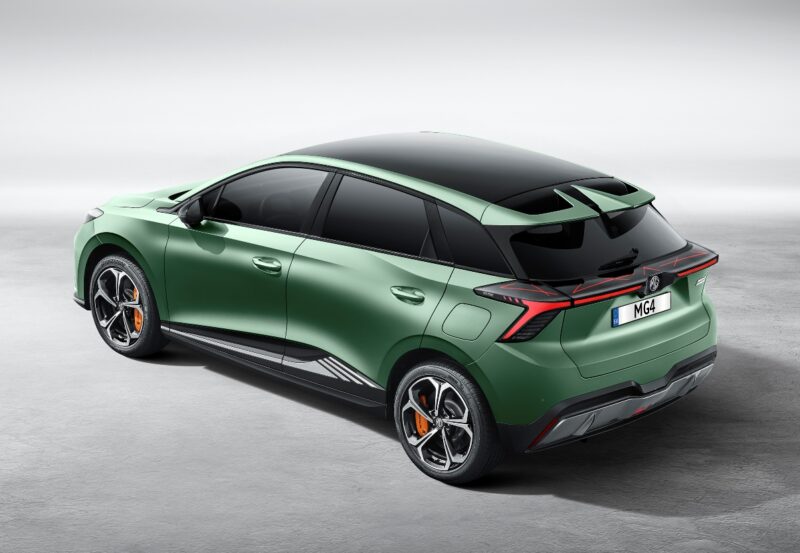
The MG4 is one of the two EVs launched by SAIC Motor Malaysia Sdn. Bhd. back in March this year. It is a hatchback with a bold exterior design, a perfect fit for young individuals who want to stand out on the road.
What’s interesting about the MG4 is that is available in Standard, Lux, Lux Extended Range variants, with prices ranging from RM103,900 to RM148,900. There’s also a high-performance guise called the XPower, slightly exceeding the RM150,000 mark.
GAC Aion Y Plus
Introduced by WTC Automotif at the Malaysia Autoshow 2024 last May, the Aion Y Plus is essentially an SUV but thanks to its roomy interior, coupled with front seats that can be fully reclined, it feels more like an MPV.
Two variants are offered – Elite and Premium, with sales prices ranging from RM119,800 to RM135,800. Both variants are equipped with a lithium iron phosphate battery (dubbed Magazine Battery 2.0) with a capacity of 63.2 kWh that boasts a range of up to 490 km.
Chery Omoda E5
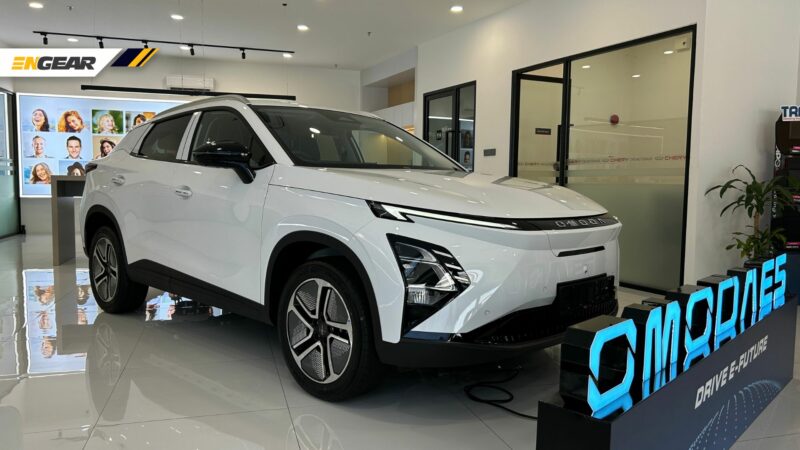
Another electric SUV available below the RM150,000 mark is the Chery Omoda E5, which can be yours from RM146,800. It is essentially the electric version of the ICE-powered Omoda 5, which means you are getting a vehicle with similar styling and size but with a an electric motor driving the front wheels.
The Omoda E5 comes equipped with a 61 kWh battery, offering a driving range of up to 430 km. The battery can be charged from 30 to 80% in just 28 minutes. To sweeten the deal, Chery Malaysia is offering a one-to-one exchange if the battery’s state of health falls below 70% during the warranty period.
The electric vehicle (EV) market in Malaysia is heating up with the presence of various attractive models from all over the world.
The two EV brands currently hotly discussed are Tesla and BYD. The former made its mark in the local market with the launch of the facelifted Model 3 last October.
Meanwhile, the latter has introduced three EVs so far, with Seal being the latest offering to compete directly with the popular Model 3.
During a recent test drive, this writer found that the Seal has the right formula to go toe to toe with its closest rivals, but like most other cars, it still has some weaknesses.
Here are five things we don’t like about the Seal:
Two badges is one too many
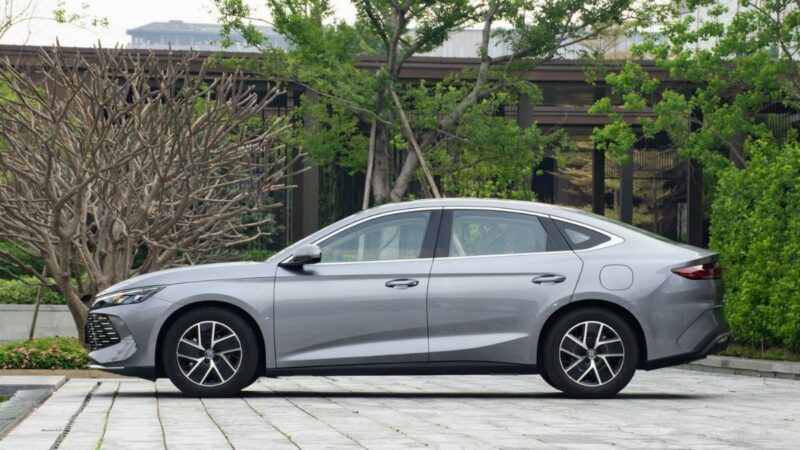
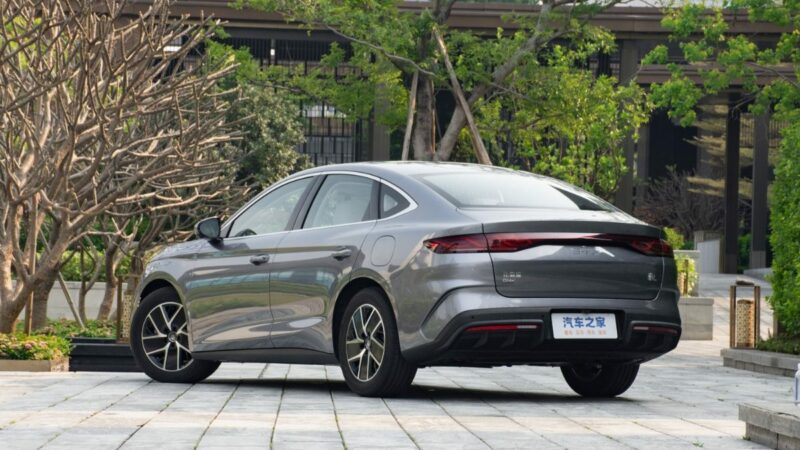
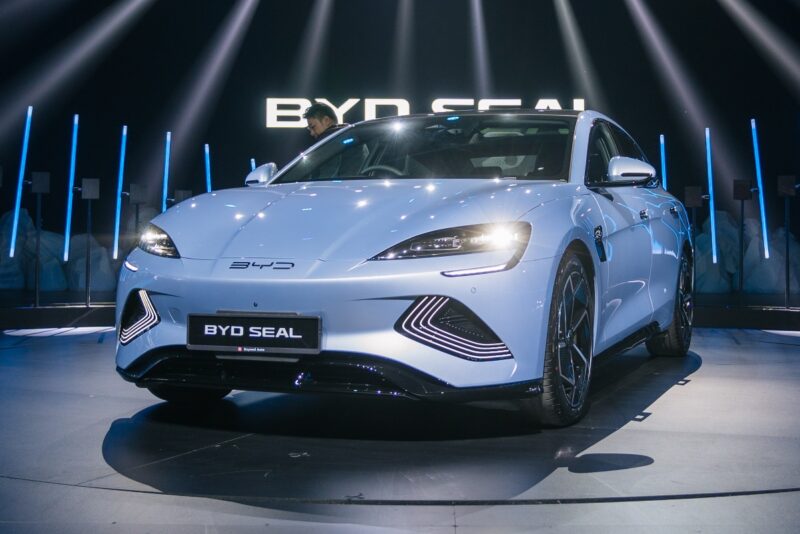
For this writer, the Seal is one of the best looking cars, if not the best looking, in its segment. It has a sleek, sporty four-door sedan shape, which is further highlighted by strong character lines, 19-inch wheels, and a rear diffuser, to name a few.
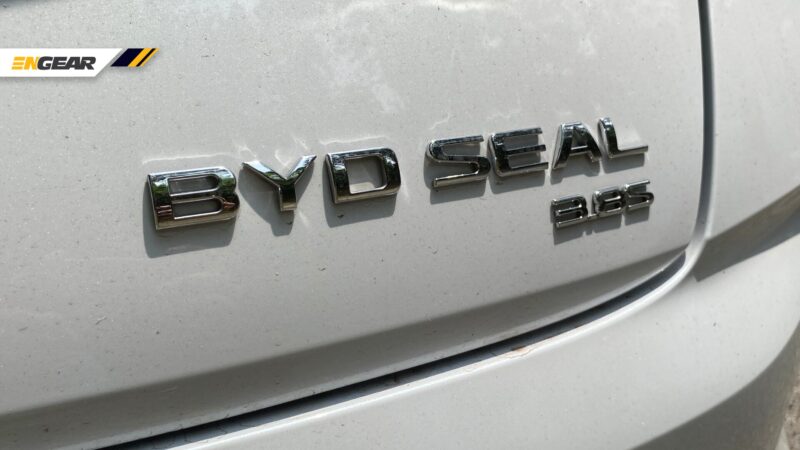
However, BYD unnecessarily placed two ‘BYD’ badges at the rear – one in the centre and another in the bottom corner of the tailgate. The automaker also put a ‘3.8s’ badge under the ‘BYD Seal’ lettering to let the tailgaters know how fast this car can sprint from 0 to 100 km/j. This isn’t necessary and makes the Seal look cheap.
There’s a large panoramic roof, but…
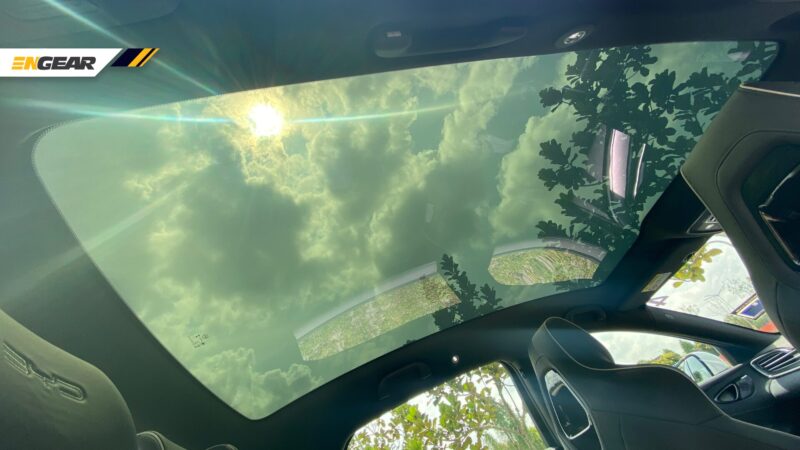
The Seal comes standard with a large panoramic sunroof, which offers great views at night but can turn the cabin into a sauna during the day when the sun is directly overhead.
Surprisingly, the car lacks a power sunshade for the panoramic sunroof. Instead, BYD provides two piece of sunshades that have to be manually placed, which is quite annoying for a car costing nearly RM200,000.
Overly sophisticated controls
This writer is aware that in order to design a clutter-free, minimalist cabin, automakers try to minimise the amount of physical knobs and buttons as much as possible, and integrate the functions into the infotainment system.
But it needs to be said that not all vehicle functions need to be digitised. One good example is the air-conditioning system. In the Seal, even the AC vents adjustment is done via the large display. Sometimes, less is more.
Slow charging
Despite using a 800V architecture commonly found in luxury EV models, Seal only supports fast charging up to 150 kW, which lower than many other 800V EVs on the market.
For AC charging, the Malaysian-spec Seal can only support up to 7 kW, taking approximately 15 hours for a full charge, whereas in Europe, this model comes with an 11 kW AC charger.
Limited boot space
Despite its longer and wider dimensions compared to most C-segment sedans, Seal has a relatively small boot space of only 400 litres. There’s an additional 53-litre storage space under the bonnet but it’s not that spacious.
In comparison, the Model 3 has a whopping 682 litres of boot space while the B-segment sedan Honda City offers 519 litres of storage space in the back.
BYD has reportedly agreed to invest $1 billion in an assembly plant in Turkiye as part of its efforts to further expand its brand into the European region.
BYD’s Chairman Wang Chuanfu and Turkiye’s Minister of Industry and Technology Mehmet Fatih Kacir signed an investment deal in Istanbul, witnessed by President of Turkiye, Recep Tayyip Erdogan.
Local media reports claim the manufacturing plant will have an annual production capacity of up to 150,000 vehicles and is expected to create around 5,000 job opportunities.
The plant is expected to commence operations by the end of 2026. However, the specific models to be assembled at the upcoming facility are currently unknown.
The deal comes hot on the heels of the European Union (EU) slapping extra provisional tariffs of up to 38% on EVs imported from China.
To make matters worse for the Chinese manufacturers, Turkiye had previously announced a 40% import tariff on all vehicles from China to protect its automotive industry.
But by establishing an assembly plant in Turkiye, BYD can now bring its cars into Europe without having to deal with the import tariffs, as Turkiye is part of EU’s Customs Union.
China is the world’s largest EV producer, and with the fierce price war in the country, Chinese EV makers have been aggressively exporting their cars overseas.
The influx of Chinese EVs has led several countries to impose high tariffs not only on EVs but also various goods from China to protect their economies.
One way to avoid these tariffs is by starting local assembly operations. BYD has started making its move in the Old Continent with the announcement of assembly plants in Hungary and Turkiye.
On top of that, the brand has recently launched an assembly plant in Rayong, Thailand, cementing its presence in the Southeast Asian region.
The Chinese automotive manufacturer BYD has recently launched the opening of its first vehicle assembly plant in the Southeast Asia region.
The plant, located in Rayong, Thailand, has a production capacity of approximately 150,000 units per year and will serve as the assembly location for its four key models, namely Dophin, Atto 3, Song, and Sealion.
Additionally, one of BYD’s subsidiaries is reported to be establishing a battery production plant at the same location.
Thailand has traditionally been a hub for assembly and regional car exports, long dominated by Japanese manufacturers such as Toyota, Honda, and Isuzu.
By 2030, the country aims to transition 30 percent of its annual production of 2.5 million vehicles to electric vehicles (EVs). As a result, BYD plans to make Thailand its manufacturing hub for exports to the ASEAN market and other countries.
In addition to Thailand, the EV company is also reportedly planning to open its second ASEAN assembly plant in Indonesia by 2026.
Harmony Auto, a leading vehicle distributor group from China, today launched its first BYD 3S center at Hartamas Shopping Centre.
Covering an area of approximately 8,000 square feet, this 3S center provides a variety of facilities designed to enhance the customer experience.
It consists of a spacious vehicle display area, a luxurious waiting lounge for customers, special consultation rooms, and a vehicle delivery area.
For added comfort, the customer reception area for post-sales transactions – combining modern design with personalized service processes for each customer – seamlessly extends from the shopping center car park.
There are six parking spots available outside, each equipped with four charging stations for use by BYD owners.
With meticulous design plans, this center not only facilitates customer access but also reflects BYD’s commitment to sustainable mobility solutions.
Liang Xinyue, BYD’s General Manager for Asia-Pacific, who launched the premises, said, “The opening of the BYD Hartamas outlet in a mall not only brings new vitality to the Malaysian market but also injects new momentum into introducing Malaysia’s green travel”.
He added that the location is ideal as it offers both the convenience of shopping for BYD products and customer car servicing.
Liang believes that the number of BYD customers in Hartamas and the surrounding areas is growing, and the opening of this new center aims to meet the demand from customers looking for environmentally friendly vehicles.
Harmony Auto’s BYD Center is also equipped with a Service and Parts Center set to be completed in the fourth quarter of this year.
With the 3S center fully operational, the BYD Hartamas 3S center will be the first located within a shopping center.
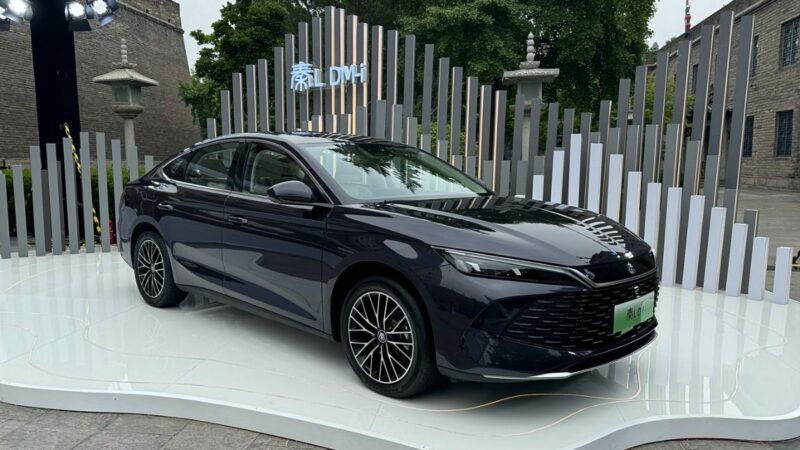
The BYD Qin L was launched at an event in Xi’an, China, with five variants priced between 99,800 Yuan (RM64,846) and 139,800 Yuan (RM90,836). Interestingly, its PHEV hybrid system can provide a driving range of up to 2,100km per tank.
The Qin L is part of BYD’s Dynasty lineup, featuring dragon face aesthetics, a symbol of China’s national animal. As a result, the Qin L boasts a new chrome bar character line, a large grille, and prominent side lines. Interestingly, it retains conventional door handles, rather than retractable or flush types.
The rear design showcases continuous illuminated lights from side to side, with graphics inspired by traditional Chinese knots.
In terms of dimensions, the BYD Qin L measures 4,830mm in length, 1,900mm in width, and 1,495mm in height, with a wheelbase of 2,790mm. It employs MacPherson suspension at the front and multi-link at the rear. The interior is also inspired by Chinese paintings and features numerous knot-shaped graphics.
There are physical buttons near the gear lever, along with a 15.6-inch rotating central screen and an 8.8-inch digital instrument display. Standard features include six airbags, NFC smart phone key, automatic air conditioning, and six speakers.
The high-spec model comes with a panoramic roof, DiPilot L2 system, power seats at the front, dashcam, 18-inch rims, an eight-speaker audio system, and seat heaters and coolers. The key to the 2,100km driving range lies in the new PHEV (plug-in hybrid) system, ensuring high efficiency operation of the engine and electric motor, with fuel consumption as low as 2.9 liters/100km.
The PHEV version utilizes a 1.5-liter engine delivering 99hp and 126Nm of torque. The lower variant has an electric driving range of 80km, using a 10.08kWh battery and a 160hp/210Nm electric motor.
The higher variant features a 15.874kWh battery providing an electric driving range of up to 120km. It utilizes a more powerful EHS160 motor generating 214hp and 260Nm of torque. This model is capable of achieving a range of up to 2,100km per petrol tank.
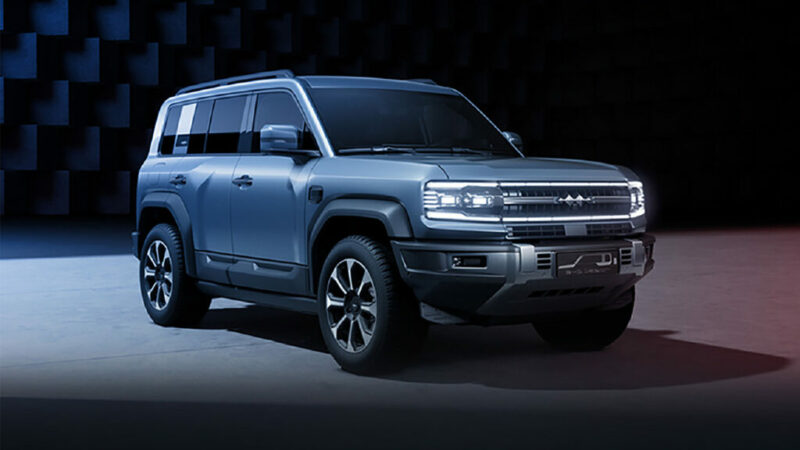
BYD has officially introduced its first pickup truck, the Shark, in Mexico. BYD Chief of Americas Stella Li said Mexico was chosen due to the increasing demand for pickup trucks in the country.
It is interesting to note that the Shark was launched just hours after Joe Biden announced a tariff increase from 25% to 100% on EVs from China.
Reuters reported that BYD does not have any plans to sell the Shark in the United States.
As previously reported, the Shark uses a new plug-in hybrid powertrain known as the DMO (Dual-Mode Off-Road).
The PHEV powertrain features a combination of a 1.5-litre turbo petrol engine and two electric motors that generate a total power of 430 hp, allowing the Shark to accelerate from 0 to 100 km/h in 5.7 seconds.
The battery specifications are not disclosed, but this truck offers an electric driving range of up to 100 km (NEDC cycle) and a total driving range of 840 km. The fuel consumption rate is approximately 7.5 litres per 100 km.
Like the Leopard 5, the Shark is built on a ladder frame chassis. It measures 5,457 mm in length, 1,971 mm in width, 1,925 mm in height, and has a wheelbase of 3,260 mm, making it larger than the Ford Ranger and Toyota Hilux.
The chassis is combined with an independent suspension system at the front and rear, which BYD claims can offer a balance between handling performance and comfort.
The Shark is a true and true pickup truck, so it boasts a maximum towing capacity of up to 2,500 kg. The truck bed offers a cargo space of 1,450 litres with a payload limit of 835 kg. For off-road driving, there are three selectable modes: Sand, Mud, and Snow.
Inside, you will find several elements synonymous with the BYD brand, including a 12.8-inch rotating touchscreen infotainment system and a 10.25-inch digital instrument cluster.
Additionally, it features wireless Apple CarPlay and Android Auto, the “Hi BYD” voice command system, karaoke function (microphone sold separately), a 50W wireless charger, and a 12-inch head-up display.
The safety system includes six airbags and ADAS features such as Adaptive Cruise Control (ACC), Intelligent Navigation System (ICC), Forward Collision Warning (FCW), Rear Collision Warning (RCW), Rear Cross Collision Warning (RCTA), Rear Cross Collision Braking (RCTB), and more.
In Mexico, the Shark is available in two variants, namely the GL and GS. The selling price starts from 899,980 pesos (RM250,356) for the former and 969,800 pesos (RM269,777) for the latter.
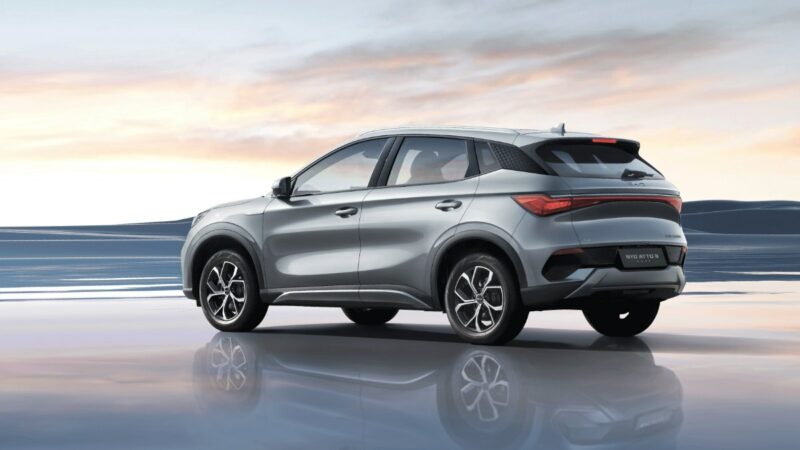
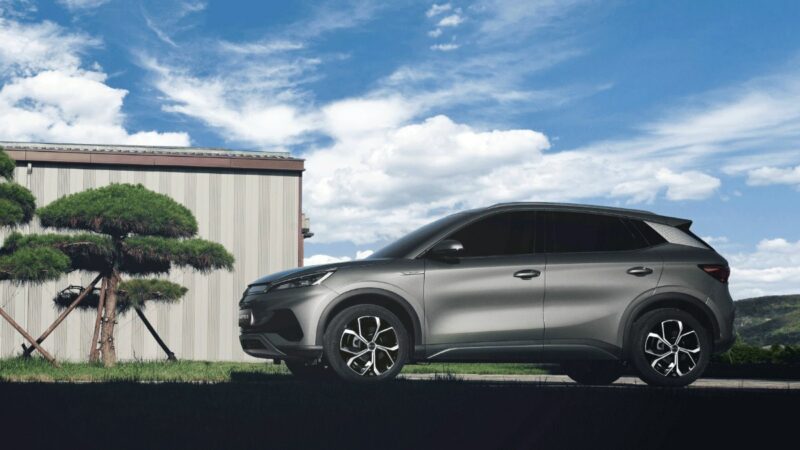
BYD Atto 3 can be considered a new electric vehicle (EV) model in the market. Sime Darby Motors, as the official distributor, has introduced the updated BYD Atto 3 2024.
The updates for the Atto 3 include its exterior aesthetics. This EV SUV has received a new black graphic on the D-pillar, and the BYD logo at the back replaces the previous “BUILD YOUR DREAMS” inscription.
Furthermore, the interior cabin can be chosen with two color themes, namely Black-Dark Blue or Dark Blue-Light Grey, according to your preference. A new Cosmos Black body color has also been added, in addition to the existing colors.
In terms of technology, the BYD Atto 3 2024 is equipped with wireless charging and a larger 15.6-inch screen (previously 12.8-inch) that is still rotatable. Connectivity to Android Auto and Apple Carplay is still offered as usual.
There are no changes to the power generation system. This means that the Atto 3 is still powered by a front electric motor with an output of 201hp and 310Nm, sufficient for acceleration from 0-100km/h in 7.9 seconds.
The electric motor is powered by LFP (lithium iron phosphate) batteries, providing a driving range of 345km (WLTP cycle).
The BYD Atto 3 supports AC 7kW and DC charging up to 70kW, in addition to V2L functionality.
This EV is offered in only one variant for 2024, priced at RM149,800. You can also choose from three warranty packages ranging from 6 years/150,000km to 8 years/150,000km.
BYD recently announced that its first pickup truck will be called the Shark, making it the automaker’s latest model to be named after marine animals after the Dolphin, Seal, and Sea Lion.
Set to make its debut at the Beijing Motor Show, the Shark will reportedly feature BYD’s latest plug-in hybrid powertrain known as DMO (Dual-Mode Off-Road).
Details regarding the powertrain are scarce but according to reports, it may feature a combination of a 1.5-litre turbo petrol engine and two electric motors just like the Fang Cheng Bao 5.
In the Fang Cheng Bao 5, the ICE-eletric motor combo generates a total system output of 680 PS and 760 Nm. The off-road SUV is also said to offer an electric range of up to 125 km or up to 1,200 km in hybrid mode.
Apart from the PHEV version, there is a possibility that the Shark will also be offered in a full electric version somewhere in the future.
As far as design is concerned, recent leaked photos of the Shark show that the pickup truck has a front fascia resembling that of the Ford Ranger.
The cabin looks a tad watered down compared to other BYDs, featuring a digital instrument panel, central display, flat-bottom steering wheel, and a row of switches arranged adjacent to the gear lever on the center console.
Will the Shark swim its way to the Malaysian market? There is no official announcement yet, but BYD has previously stated that it plans to sell the pickup truck globally.
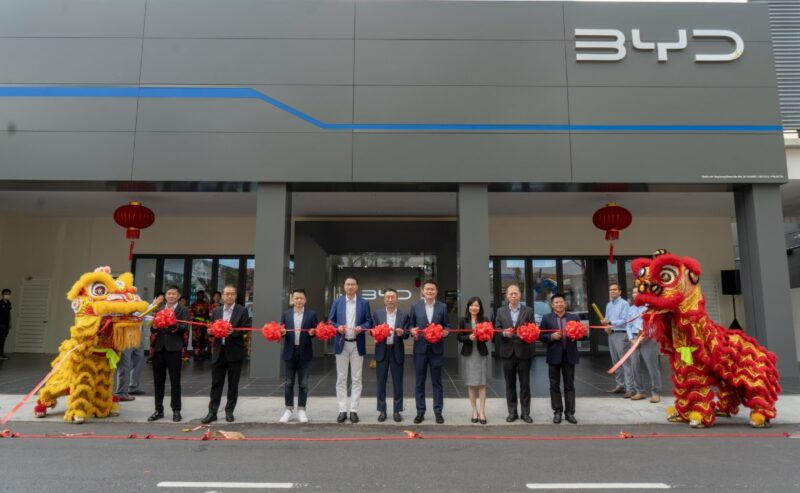
BYD, a rapidly expanding electric vehicle (EV) manufacturer, has announced the official opening of its new 3S center in Melaka.
Located in the heart of the historical city, the 3S center is managed by BYD Sing Kwung Motors, providing sales and after-sales services to BYD customers in the area.
“We are excited to inaugurate our newest 3S center in Melaka, showcasing our dedication to serving customers in Malaysia,” said Mr. Jeffrey Gan, Managing Director of Southeast Asia, Sime Darby Motors Malaysia.
“The newly opened 3S center will offer a range of services, including sales consultations, test drives, and after-sales services,” mentioned Mr. Ng Sin Yean, Managing Director of BYD Sing Kwung Motors.
“Customers can explore BYD’s latest electric vehicle models known for their technological sophistication, performance excellence, and eco-friendly features,” he added.
With the opening of this new 3S center, BYD underscores its commitment to sustainable transportation and innovation in Melaka.
BYD aims to establish 30 retail outlets across the country by the end of 2024.
SIME Darby Motors (SDM) recently announced that it has received over 1,300 bookings for the BYD Seal within four days after its launch.
Due to the overwhelming demand for the electric sedan, SDM has extended its early booking campaign until 3 March 2024.
Through this campaign, customers who place a booking for the Seal through the official website or at BYD showrooms nationwide before the 3rd of March will receive a complimentary home charger and RM800 worth of Gentari/ChargEV charging credit.
Seal is offered in two variants, namely Premium and Performance, with prices starting at RM179,800 and RM199,800 respectively.
The Premium variant comes with a single electric motor on the rear axle producing 313 PS and 360 Nm, enabling it to accelerate from 0 to 100 km/h in 5.9 seconds.
Meanwhile, the Performance variant features a dual-motor configuration generating a total power of 530 PS and 670 Nm. With all-wheel drive (AWD), it only takes 3.8 seconds to accelerate from 0-100 km/h.
Both variants use the same 82.56 kWh LFP Blade battery but the Premium gets a driving range of 650 km while the more powerful Performance has 580 km of range. Both figures are based on the NEDC cycle.
THE Geneva Motor Show 2024 saw the unveiling of the Denza D9, marking the entry of the sub-brand into the European market.
For your information, Denza is a joint venture between BYD and Mercedes-Benz. The influence of the German car manufacturer is rather evident on the exterior and interior of the luxury people-mover.
Specifications for the European market have not been revealed yet, but it is expected to be similar to the Chinese market version, where the D9 is offered in plug-in hybrid and electric versions.
The PHEV version features a 1.5-litre petrol engine producing 137 hp/231 Nm, and a single electric motor with 228 hp/340 Nm on the front axle. This combination generates a total power of 296 hp/571 Nm, allowing it to accelerate from 0 to 100 km/h in 9.5 seconds.
With the addition of a rear electric motor, the AWD model enjoys a significantly higher output of 401 hp/681 Nm and a faster 0-100 km/h acceleration of 7.9 seconds.
On the other hand, the electric version of the D9 is driven by a front axle electric motor producing 308 hp and 360 Nm of torque. This version takes 9.5 seconds to reach a speed of 100 km/h.
Customers can also opt for the AWD model packing 369 hp and 470 Nm. The higher output reduces the 0-100 km/h acceleration time to just 6.9 seconds.
Both variants use a 103.4 kWh LFP Blade battery that provides a driving range of around 600 km for the AWD model and 620 km for the FWD model. These figures are based on the CLTC cycle.
Like most luxury MPVs currently in the market, the D9 has a boxy shape, electric sliding doors, and a large grille – with different designs to distinguish between the PHEV and EV versions.
Its size is also similar to its closest competitors, with a length of 5,250 mm, a width of 1,960 mm, a height of 1,920 mm, and a wheelbase of 3,110 mm.
Its large dimensions (larger than the LM) provide the D9 with spacious interior space, with almost every nook and cranny wrapped in luxurious leather.
The D9 features a 2-2-3 configuration with captain seats in the second row. You’ll find the cabin packed with plenty of features including a rear-seat entertainment system, control panels for the second-row seats, LED ambient lighting, a mini fridge, and a Dynaudio audio system.
According to reports, the D9 will be available in the European market by the end of this year.
THE competition in the electric supercar segment is about to heat up with the arrival of a new competitor from BYD’s luxury arm YangWang.
Simply called U9, the electric supercar is priced 1.68 million RMB (RM1.12 million) in its home market, with delivery set to commence this summer. The U9 made its first appearance in January last year, alongside the U8 SUV.
Like the SUV, the U9 is built on the e4 Platform featuring four electric motors, one powering each wheel. The setup gives the U9 a mind-boggling total output of 1,300 hp and 1,680 Nm.
It goes without saying that this is the fastest car ever produced by BYD so far. 0-100 km/h accelaration takes just 2.36 seconds, while the maximum speed is rated at 309.19 km/h.
Crazy numbers but the drawback is that driving range but the performance means some range has to be sacrificed. BYD claims a range of just 450 km based on the lenient CLTC cycle.
The U9’s 80 kWh LFP battery supports dual-plug charging at capacities of up to 500 kW, which takes 10 minutes to refill the battery from 10% to 80%. It can also be charged via a 7 kW AC charger, which takes about seven hours to complete a 10-80% charge.
The U9 has 12 sets of active and passive aerodynamic packages to reduce drag coefficient and enhance heat dissipation efficiency. It is also equipped with the iSus-X Intelligent body control system, which can raise the suspension by up to 75 mm at a speed of 500 mm per second.
Needless to say, the unique suspension system makes the U9 more agile in corners, but as you may have seen before, it also allows the supercar to “dance” and “jump”. Not only that, with one motor on each wheel, this car can also perform a tank turn.
Inside, the U9 uses the DiLink150 platform powered by a 5G chip. Specifically designed for track driving, it boasts an intelligent racing assistantance, providing extensive track driving services with detailed information on nearly 30 racetracks across China.
Other creature comforts include a 14-way adjustment for the driver and passenger seats, Dynaudio Evidence high-end audio system, and ambient lighting system with 127 colour options, to name a few.
AT long last, the BYD Seal hasbeen officially launched in the Malaysian market. It is the third BYD electric vehicle (EV) to be introduced into the country by Sime Darby Motors, following the Atto 3 and Dolphin.
For our market, the fully electric sedan from the Ocean Series lineup is offered in two variants, namely Premium and Performance, with prices starting at RM179,800 and RM199,800 respectively.
The Premium variant comes with a single electric motor on the rear axle producing 313 PS and 360 Nm, enabling it to accelerate from 0 to 100 km/h in 5.9 seconds.
Meanwhile, the Performance variant features a dual-motor configuration generating a total power of 530 PS and 670 Nm. With all-wheel drive (AWD), it only takes 3.8 seconds to accelerate from 0-100 km/h.
Additionally, the range-topping variant is equipped with Intelligent Torque Adaption Control (iTAC) and Frequency Selective Damping (FSD) shock absorbers on the front and rear.
Both variants use the same 82.56 kWh LFP Blade battery but the Premium gets a driving range of 650 km while the more powerful Performance has 580 km of range. Both figures are based on the NEDC cycle.
For charging, the Seal comes standard with a 7 kW AC charger taking 15.2 hours for a 0-100% charge. It also supports DC fast charging up to 150 kW, capable of charging from 10% to 80% in 37 minutes.
The list of features between the two variants is somewhat similar. For the exterior, standard features include LED front and rear lights, LED daytime running lights, soundproof double-glazed glass for the windshield and front doors, and 19-inch alloy rims.
Malaysian buyers will be able to choose from four exterior colours – Cosmos White, Aurora White, Atlantis Grey, and Arctic Blue. However, Arctic Blue is exclusive to the Performance variant.
Inside, you will find leather upholstery, eight-way power-adjustable and four-way lumbar support for the driver’s seat, heating and ventilation for the front seats, dual-zone air conditioning, and a PM2.5 air filtration system in both variants.
The infotainment system includes a 15.6-inch rotating touchscreen, a 10.25-inch digital instrument cluster, two wireless chargers, four USB ports, and a Dynaudio audio system with 12 speakers.
The driver assistance system is the same for both variants, consisting of Adaptive Cruise Control, Automatic Emergency Braking, Lane Departure Warning, Lane Departure Prevention, Emergency Lane Keeping Assist, Rear Cross Traffic Alert, Blind Spot Detection, among others.
The Seal comes with a six-year/150,000 km vehicle warranty, an eight-year/160,000 km battery warranty, and an eight-year/150,000 km drive unit warranty.
To sweeten the deal, the first 800 buyers will receive a free wallbox charger and RM800 worth of Gentari/ChargEV charging credits.
WHILE Tesla maintains its position as the world’s largest electric vehicle (EV) manufacturer in 2023, its competitor, BYD, has set a new record as the leading new energy vehicle producer globally.
Throughout 2023, BYD successfully distributed approximately 3,024,417 new energy vehicles, including EVs, hybrids, and hydrogen-powered vehicles.
This achievement has placed BYD among the top 10 largest vehicle manufacturers in the world. Out of this total, 1.57 million units comprised electric vehicles (for comparison, Tesla sold 1.8 million units), while another 1.4 million consisted of plug-in hybrid vehicles (PHEVs).
In recent years, BYD has consistently narrowed the gap left by Tesla. In 2022, BYD’s sales figures were nearly 400,000 units lower than Tesla’s, but the difference was reduced by almost half in 2023.
Furthermore, in the fourth quarter of 2023, BYD successfully surpassed Tesla in EV sales, indicating a significant challenge ahead for the American EV manufacturer to maintain its leadership position in the coming year.
Malaysia’s Leading Automotive News | ENGEAR ENGLISH