Did you know that Audi’s first five-cylinder engine debuted in 1976 with the Audi 100?
In celebration of its upcoming 50th anniversary next year, a group of Audi apprentices from Neckarsulm, Germany, has created a special project named the Audi GT50.
The project took six months to complete under the supervision of instructors and was personally monitored by Timo Engler, the Head of the Automotive Technology, Logistics, and Business Management Training unit.
At first glance, the Audi GT50 draws heavily from the design heritage of Audi’s racing history, such as the Audi 90 Quattro IMSA GTO.
Beneath its futuristic appearance, the Audi GT50 actually started as an RS3 sedan before the entire exterior was stripped away to accommodate body panels made from lightweight fiberglass-reinforced plastic.
The rear features a large diffuser and spoiler for enhanced aerodynamics.
The roof is sourced from an actual Audi 80.
For the cabin space, the team removed all original RS3 equipment and replaced it with genuine racing gear.
In fact, they even constructed their own roll cage, which took approximately two weeks to complete.
Powered by a 2.5-liter TFSI five-cylinder engine, this vehicle is capable of generating up to 394 horsepower and 500 Nm of torque.
In addition to the Audi GT50, the group of apprentices from the Audi Neckarsulm facility has previously developed unique concept models such as the Audi RS6 GTO and NSU Prinz.
The Road Transport Department (JPJ) recently announced a recall campaign involving 41,688 vehicles.
In a press release, the department stated that this initiative aims to inspect the vehicles due to defects in their structure, equipment, or systems, in addition to preventing potential accidents.
According to JPJ, each affected owner will be contacted by their respective vehicle manufacturers to schedule an inspection appointment.
Any components associated with the identified issues will be replaced, and the cost of replacements will be borne by the respective vehicle manufacturers.
JPJ will also monitor the implementation of this recall campaign to ensure that all affected vehicles are confirmed as safe.
A list of the affected vehicles can be referenced in the gallery below:
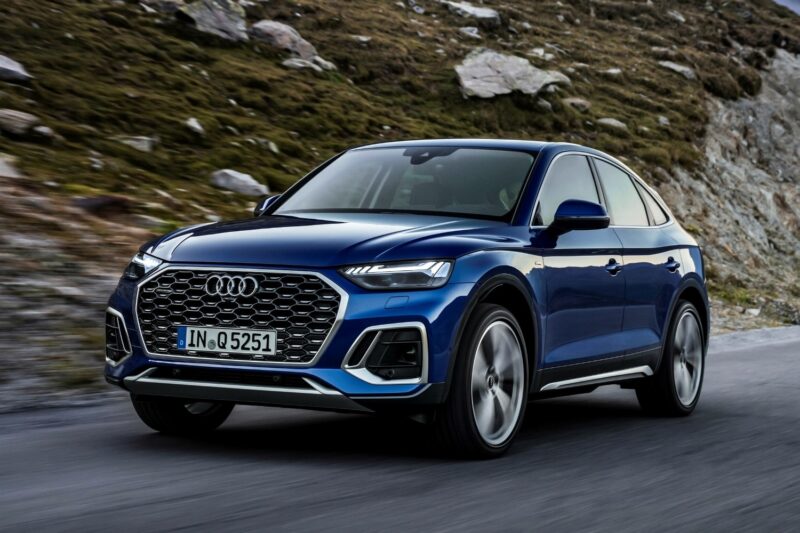
PHS Automotive Malaysia, the official distributor of Audi vehicles in Malaysia, has announced an updated retail pricing for the Audi Q5 Sportback.
Available in the sole S-Line TFSI 2.0 Quattro variant, the Q5 Sportback is now priced at RM370,223.60 on the road, without insurance. This makes the coupe-style crossover RM145,000 cheaper than before.
For extra peace of mind, customers can opt for the Audi Assurance Package, which offers an additional warranty of three years (bringing it to five years/150,000 km) and a three-year/45,000 km maintenance service. All Audi vehicles come with a five-year roadside assistance.
The Q5 Sportback features a 2.0-litre TFSI four-cylinder engine that produces 249 PS from 5,000 to 6,000 rpm and 370 Nm from 1,600 to 4,500 rpm.
Coupled with a seven-speed S tronic transmission and Quattro all-wheel drive system, it can achieve fuel consumption as low as 8.0 L/100 km.
The exterior design of the Q5 Sportback is highlighted by an S-line kit that gives it a masculine appearance, a Singleframe grille, LED headlights with washers, and 20-inch alloy wheels.
Stepping inside the cabin, you’ll find Nappa leather upholstery, a premium Bang & Olufsen audio system with 19 speakers and a 16-channel amplifier, 12-way electric front seats, complete with electric lumbar support and memory function for the driver, as well as a three-zone climate control system.
Safety and driver assistance features include adaptive cruise control, lane change warning, lane change assist, parking assistance, and a 360-degree camera. At the back, there’s a 510-litre boot space that offers ample room for all travel essentials.
For the Malaysian market, the Q5 Sportback is available in six colours – Mythos Black, Navarra Blue, Glacier White, Chronos Grey, Daytona Grey and Floret Silver.
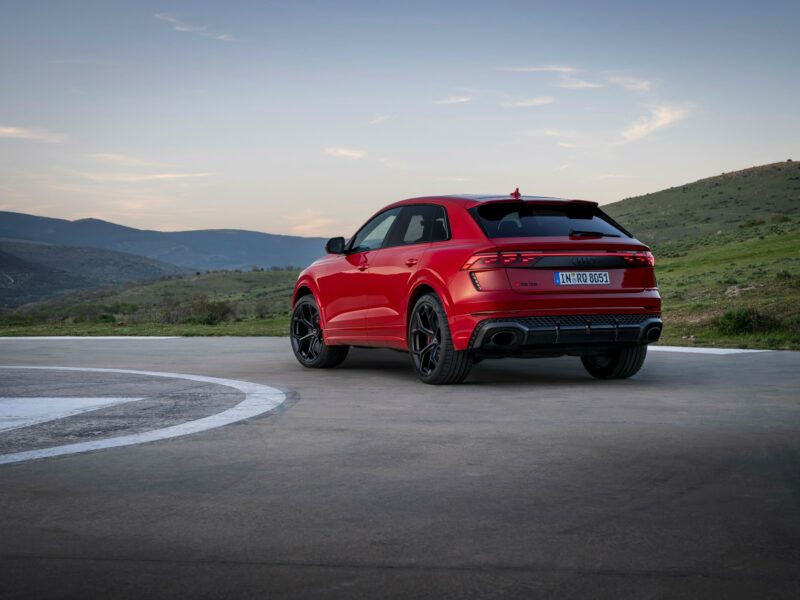
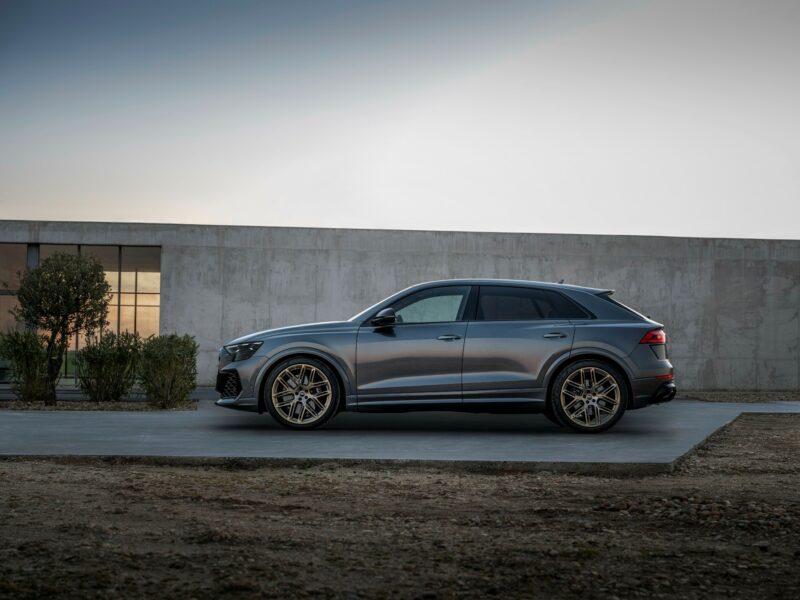
WHAT you are looking at is Audi Sport GmbH’s most powerful series-produced combustion model, the RS Q8 performance.
Under its bonnet sits a 4.0-litre twin-turbo V8 engine tuned to produce 640 PS and 850 Nm of torque. Paired with an eight-speed Tiptronic automatic transmission and the quattro all-wheel-drive system, it only takes 3.6 seconds to accelerate from 0 to 100 km/h.
Even more impressively, this powerhouse has also claimed the title of the fastest SUV at the Nürburgring with a time of 7 minutes and 36.698 seconds, two seconds quicker than the previous record holder, the Porsche Cayenne Turbo GT, and almost six seconds faster than the previous RS Q8.
In addition to the potent engine, a significant part of the RS Q8 performance’s on-track capabilities is contributed by the adaptive air suspension system with specific tuning for the RS model.
Furthermore, it is equipped with a mechanical center differential as part of the quattro all-wheel-drive system. It is tasked with distributing engine power to the front and rear axles at a ratio of 40:60.
In case of slippage, no more than 70% of the drive torque is applied to the front and up to 85% to the rear axle, giving the SUV more precise cornering, less understeer, and more exact turn-in.
Audi also offers the RS Q8 performance with an electromechanical active roll stabilization system (eAWS) that essentially minimises lateral movements of the body.
As an alternative to the performance version, customers can opt for the base RS Q8 with 600 PS and 800 Nm on tap.
For this version, acceleration from 0-100 km/h is completed in 3.8 seconds. The standard electronically limited top speed is 250 km/h but customers can have it increased to 280 km/h or a maximum of 305 km/h as an option.
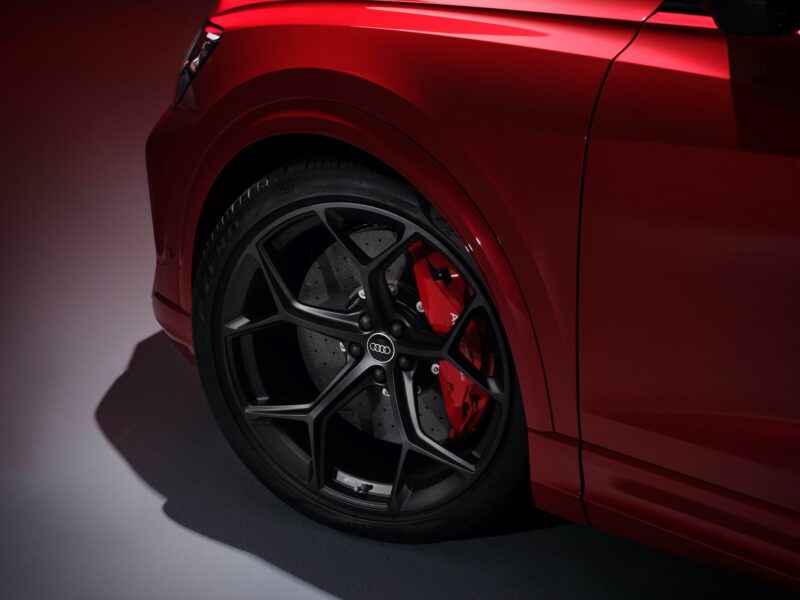
For more potent performance, the base RS Q8 can be fitted with the available dynamic package plus, which includes eAWS, the quattro sport differential, and the RS ceramic braking system (standard on the RS Q8 performance).
There’s also an all-wheel steering system, which is standard on both versions, that functions to reduce the turning radius.
In Germany, the RS Q8 can be ordered starting from June 27 this year with prices ranging from 141,900 euros (RM716,317) for the base version and 155,700 euros (RM785,960) for the performance model.
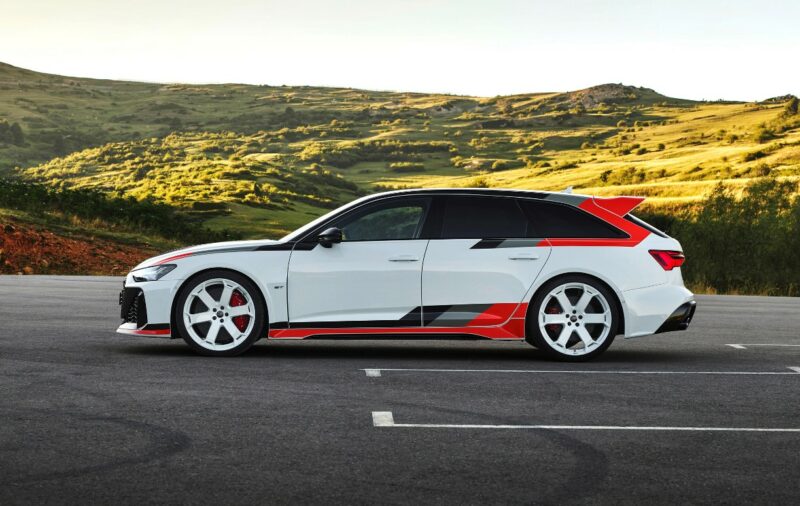
You may have forgotten about it but about three years ago, Audi introduced the RS6 GTO Concept that took inspiration from the Audi 90 quattro IMSA GTO race car.
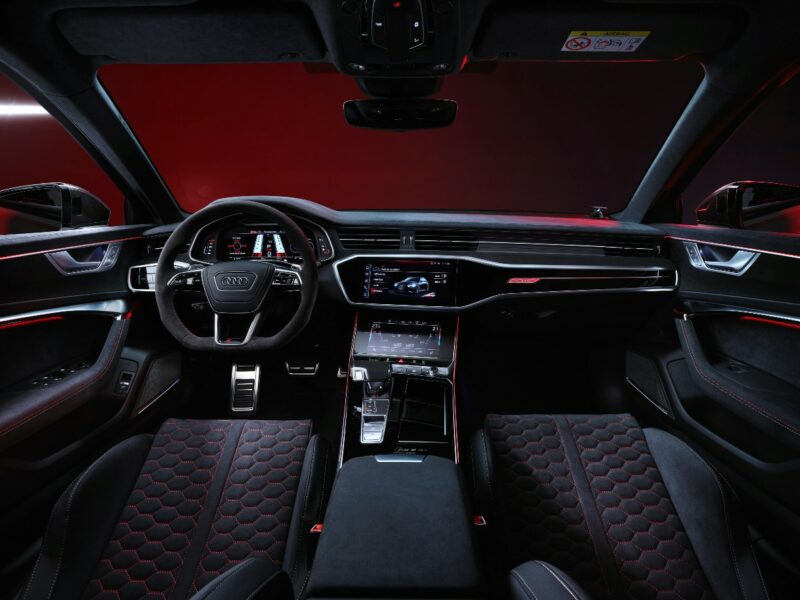
That concept car now has made it to production through a limited edition model known as the RS6 Avant GT.
Only 660 units of the GT will be offered, all of which will be assembled at Böllinger Höfe, where the R8, e-tron GT quattro and RS e-tron GT are built in small-series production.
As you can see, the RS6 Avant GT is not exactly a carbon copy of the RS6 GTO but there are some elements that have been carried over from the concept car.
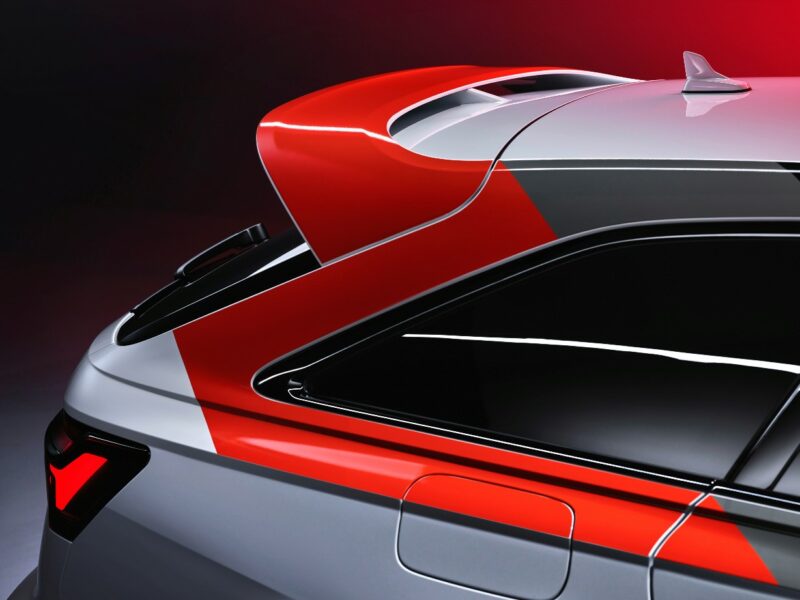
These include the Singleframe and the air intakes finished entirely in high-gloss black, integrated air outlets behind the front wheels, and the distinctive double wing.
The livery on the RS6 Avant GT appears slightly different from that of the RS6 GTO but still retains the traditional Audi Sport colours of black, grey, and red.
In addition, the wagon also comes with a fully redesigned hood and fenders manufactured from carbon fibre, marking the first time the RS6 Avant has received such addenda.
The wheels come in 22-inch sizes and are available in glossy white, glossy black, or matte black, depending on the chosen body colour.
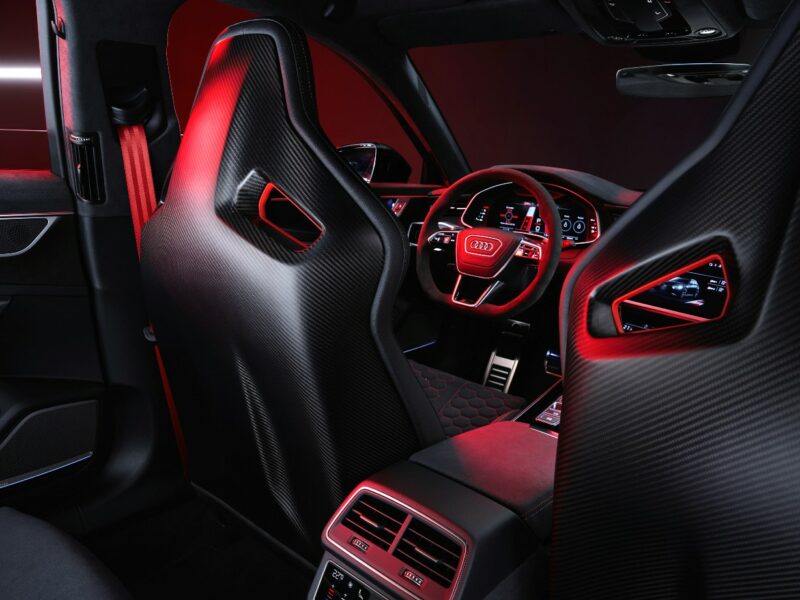
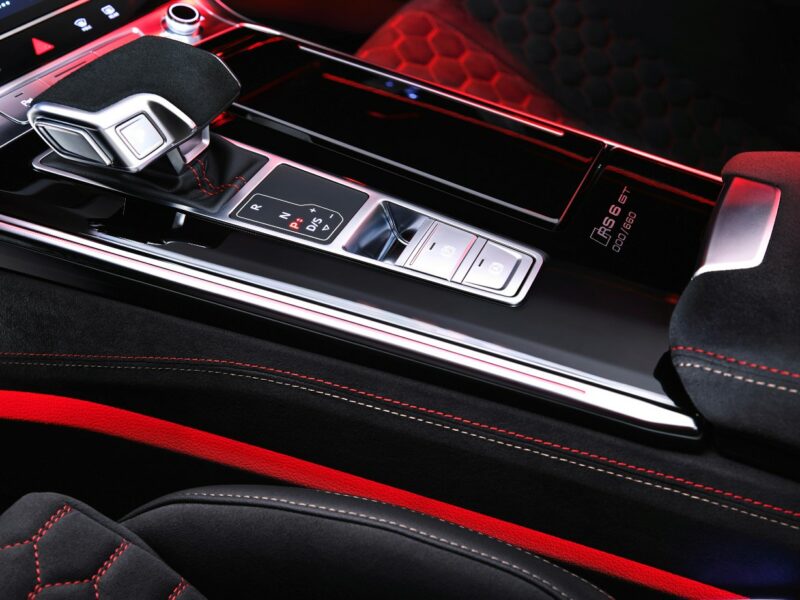
Meanwhile, the black interior is enhanced by numerous accents in the red and copper, which can be found on the steering wheel, the sides of the center console, the center armrest and door armrests and the floor mats.
The RS6 Avant GT comes standard with RS bucket seats wrapped in leather and Dinamica upholstery. The seats are also adorned with Express Red honeycomb stitching in the center and copper trims on the outer seams.
Included are also Dinamica microfibre trims on the dashboard, centre console, and doors, red seat belts, and the car’s serial number on the centre console.
Like the RS6 Avant Performance, the GT is powered by a 4.0-litre bi-turbo V8 TFSI engine that produces a whopping 630 PS and 850 Nm.
However, in terms of performance, this one is even more impressive, accelerating from 0-100 km/h in just 3.3 seconds, making it 0.1 seconds faster than the Performance version.
For the 0-200 km/h sprint, the GT needs only 11.5 seconds to accomplish, while the maximum speed is rated at 305 km/h.
To make it more agile on corners, Audi has installed an adjustable coilover suspension system as standard. It lowers the ride height by 10 mm compared to the RS6 Avant and offers a perfect combination of dynamics and comfort.
Alternatively, customers can opt for the RS sport suspension plus with Dynamic Ride Control (DRC) or the RS adaptive air suspension.
Other goodies found in the GT include stiffer stabiliser bars (30% in the front, 80% in the rear), reworked quattro sport differential on the rear axle, and 285/30 Continental Sport Contact 7 tyres
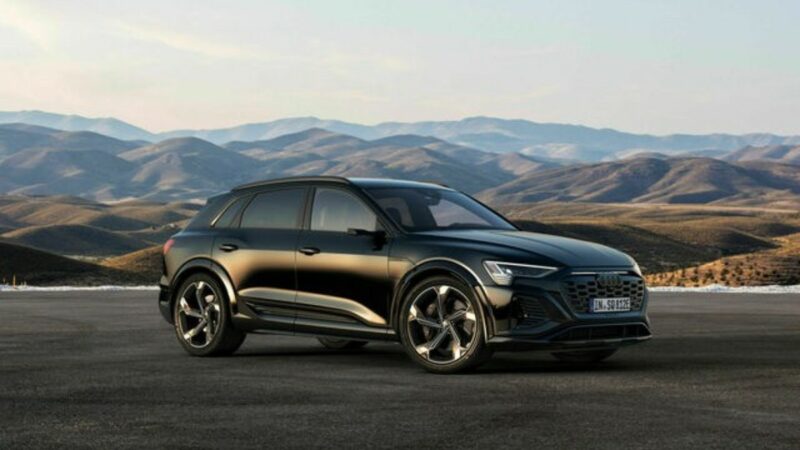
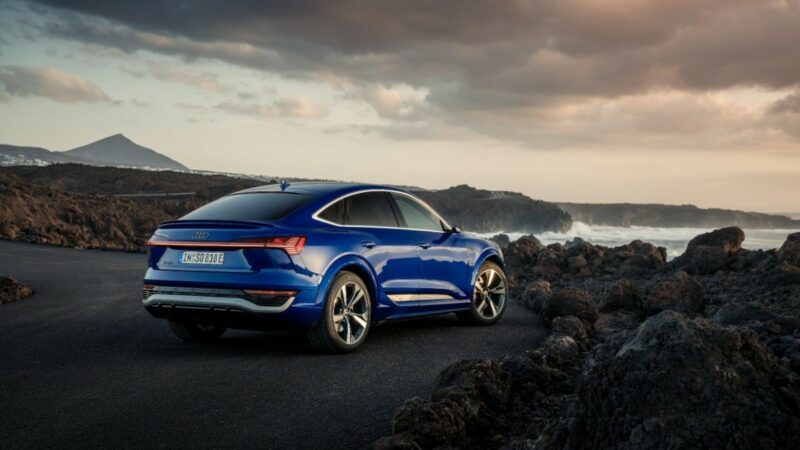
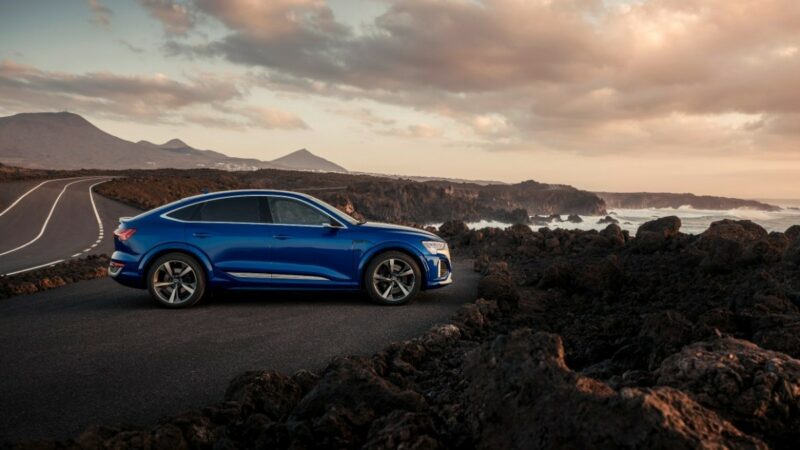
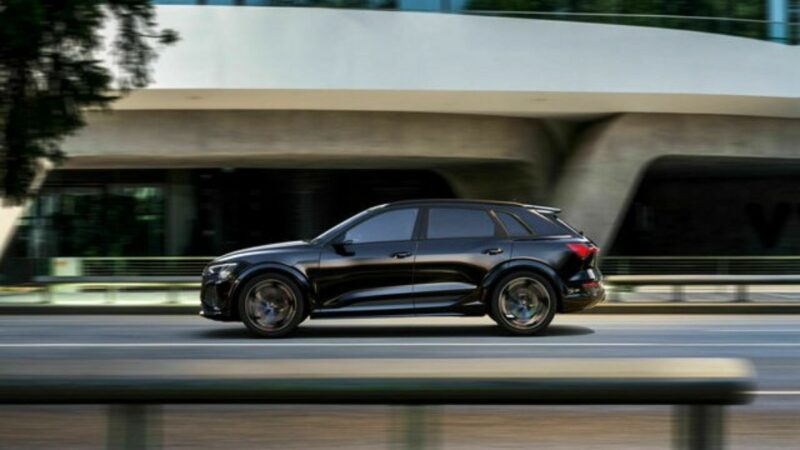
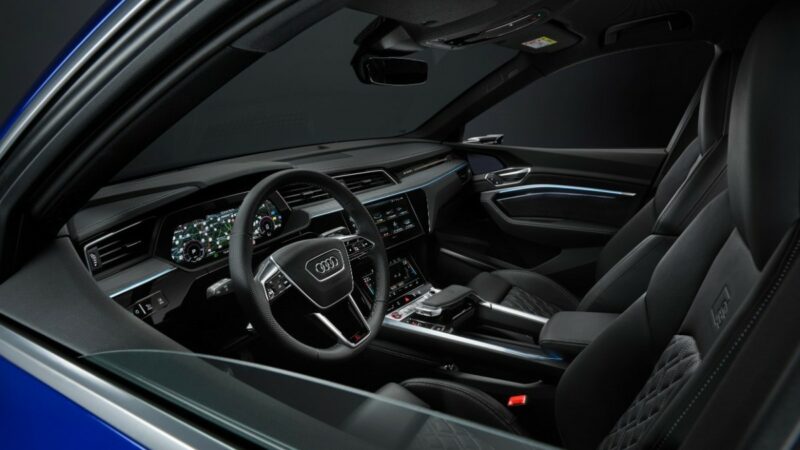
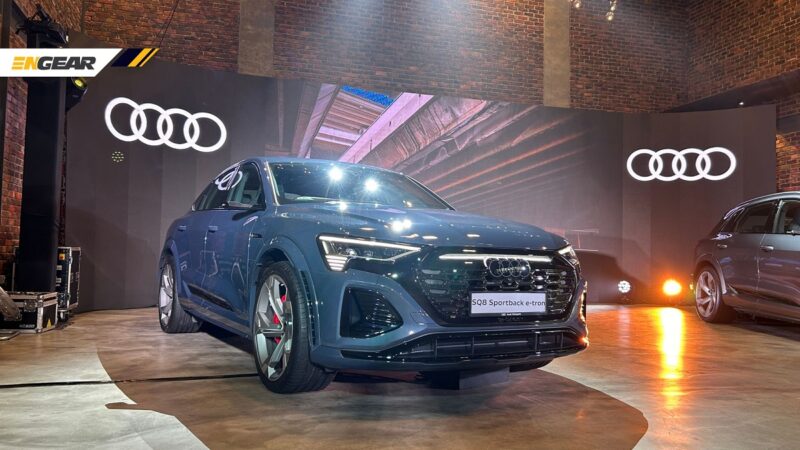
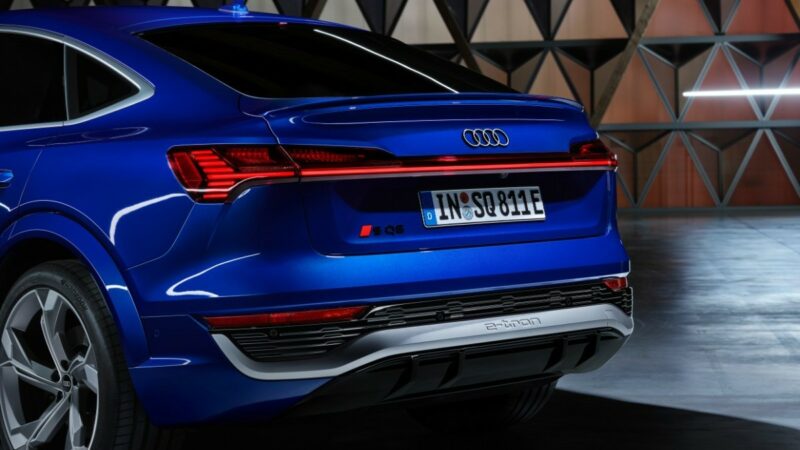
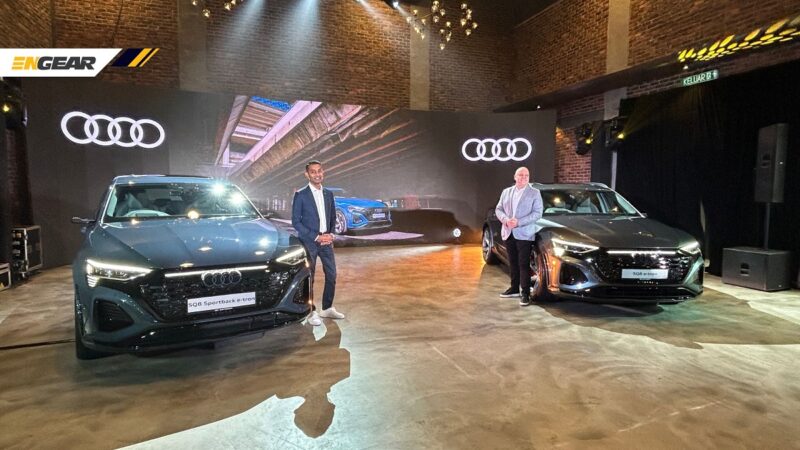
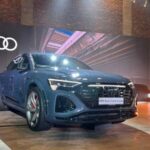
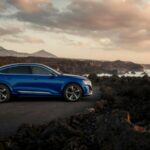
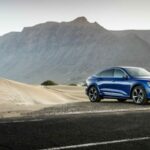
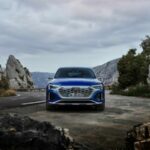
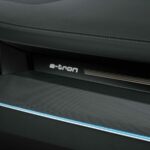
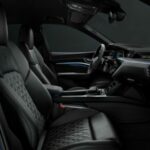
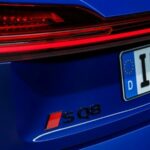
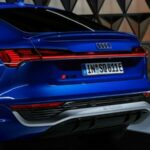
PHS Automotive Malaysia (PHSAM) today launched two new electric (EV) models for the Malaysian market, namely the Audi SQ8 e-tron and SQ8 Sportback e-tron. Both models are distinguished by their body shapes, with the Sportback being the more sporty coupe version.
The Audi SQ8 e-tron is offered at a starting price of RM519,990, while the SQ8 Sportback e-tron is priced at RM529,990.
Three electric motors
The Audi SQ8 e-tron becomes the first officially introduced EV model in Malaysia with a three-electric motor setup – one at the front axle and two at the rear. These three electric motors are asynchronous, operating independently.
The front motor generates 166hp, while each of the rear motors produces 131hp. The total output for the SQ8 e-tron reaches 496hp and 973Nm of torque.
This allows the heavy SUV EV to accelerate to 100km/h in just 4.5 seconds, with a maximum speed of 210km/h.
The two independent rear electric motors are used to precisely distribute power based on driving conditions such as uneven roads or corners.
Charging
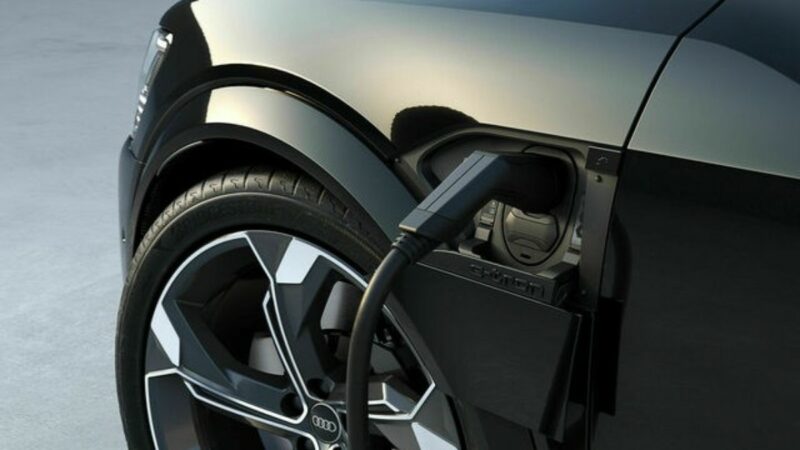
The Audi SQ8 e-tron and SQ8 Sportback e-tron can be charged up to 170kW for DC, enabling the battery to reach from 10 to 80 percent in just 31 minutes. With a full charge, this SUV can be driven for up to 471km.
For AC charging, it uses a 22kW capacity, requiring nine to 11 and a half hours depending on various factors.
Luxurious and sporty aesthetics
Both models come in an S package, indicating a sportier design. The widened bumper design is now more expressive, while the wheel arch panels with optimized air flow present a more muscular image.
The Singleframe grille, which is an Audi signature (with projector lights), is further emphasized by the Digital Matrix LED headlights. Interestingly, these lights have 1.3 million micro mirrors that can be adjusted up to 5,000 times per second to provide optimal illumination without dazzling other drivers.
Aerodynamics are crucial for EVs, and the Audi SQ8 e-tron has a low drag coefficient (Cd) of between 0.24 and 0.27, helping to achieve longer driving distances.
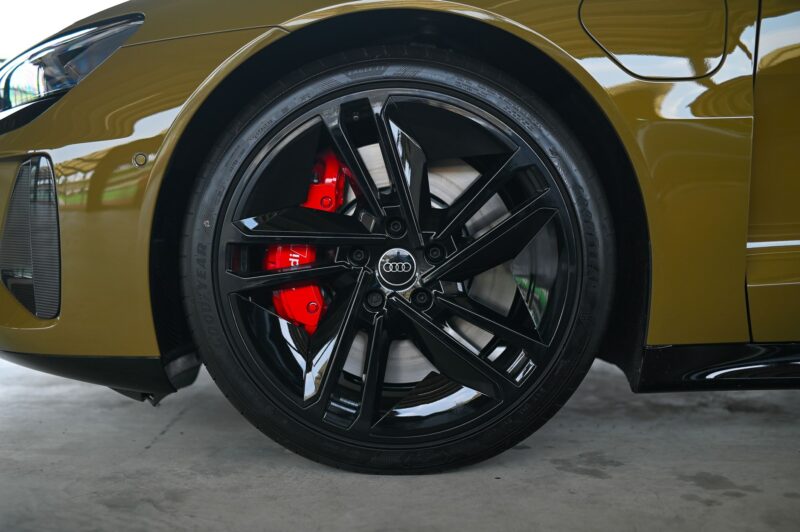
Other features include red brake calipers, carbon fiber side mirror housings, black roof rails, and 22-inch Interferenz Audi Sport rims.
“With the introduction of the new SQ8 e-tron through the classic SUV design and the more sporty Sportback design, we are now offering a high-powered Q8 e-tron variant for those seeking a more exhilarating driving experience with Audi’s dynamic and efficient technology,” said PHSAM CEO, Denyu Bostandzhiev.
“The Q8 e-tron and e-tron GT model families were launched in Malaysia in June last year and have received positive feedback,” he added.
The SQ8 e-tron comes in seven color options – Magnet Gray, Ultra Blue, Chronos Gray, Mythos Black, Plasma Blue, Daytona Gray, and Glacier White.
Both models are covered by a 5-year warranty, a 3-year scheduled maintenance package, and 5-year roadside assistance.
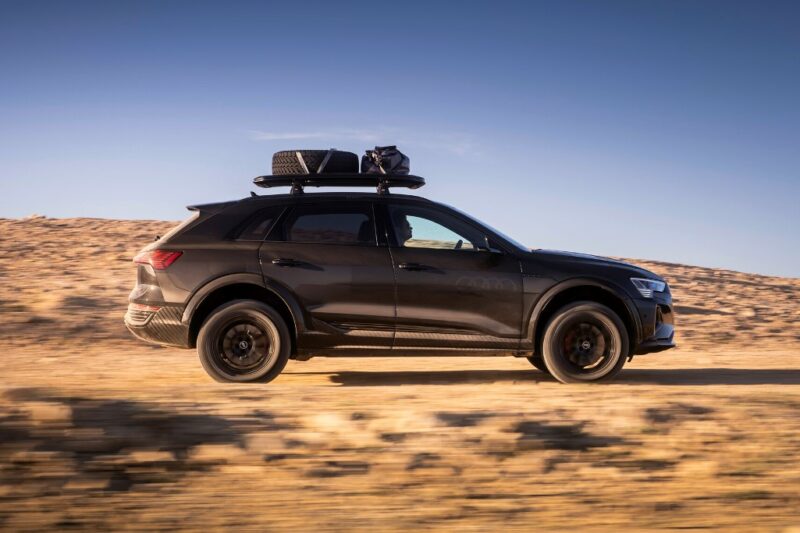
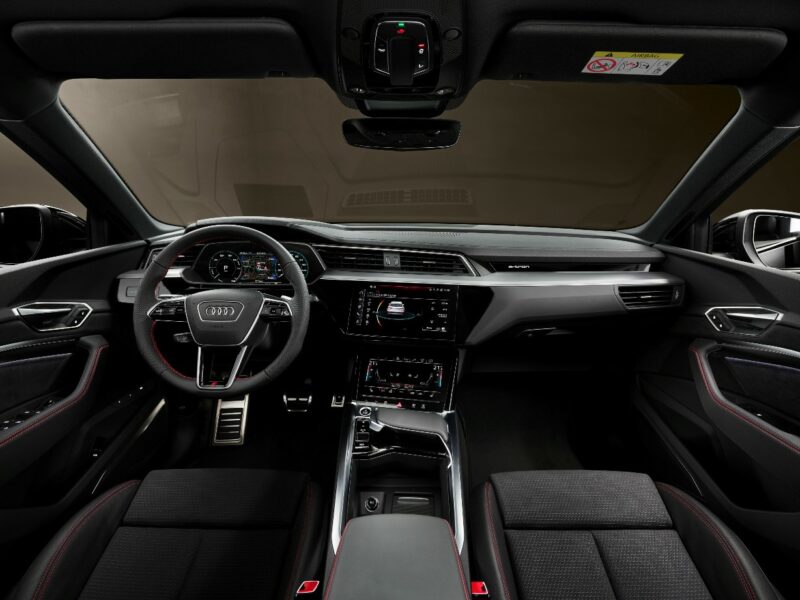
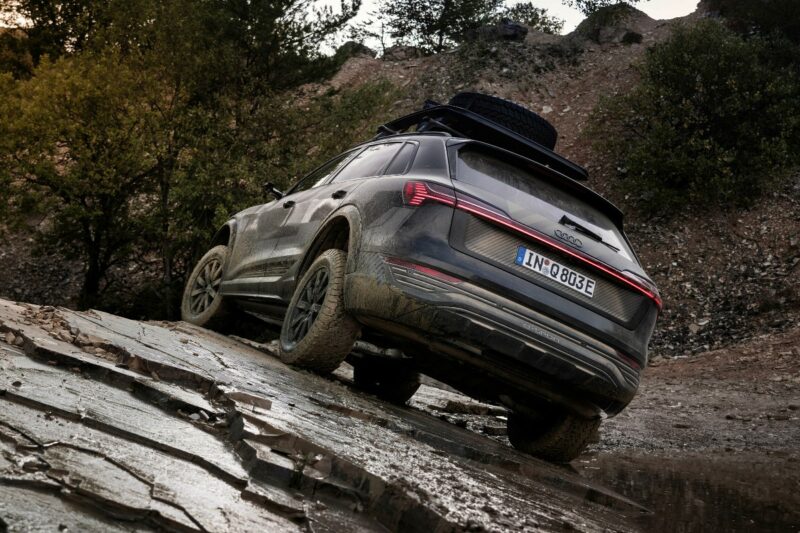
AUDI will be competing in this year’s Dakar Rally with a RS Q e-tron designed specifically for the gruelling endurance race. To mark its participation, the automekr has introduced the new Q8 e-tron edition Dakar, inspired by the rally car.
According to Audi, only 99 units of the edition Dakar will be made available. It will open for booking in the first quarter of this year, with a starting price of 120,000 euros (RM608,211) in Germany.
The Q8 e-tron edition Dakar is based on a Q8 advanced 55 e-tron quattro. It is equipped with a 114 kWh battery offering a driving range of up to 487 km. The battery powers a pair of electric motors making 402 hp (300 kW) and 664 Nm of torque.
With standard tyres, the Q8 e-tron edition Dakar can accelerate from 0 to 100 km/h in 5.8 seconds. All-terrain General Grabber AT3 tyres increases the century sprint time by a tenth of a second to 5.9 seconds. The top speed is limited to 200 km/h.
While the chunky tyres render the SUV a little slower, they provide a higher ground clearance (+31 mm) and better grip on rocky or snowy surfaces.
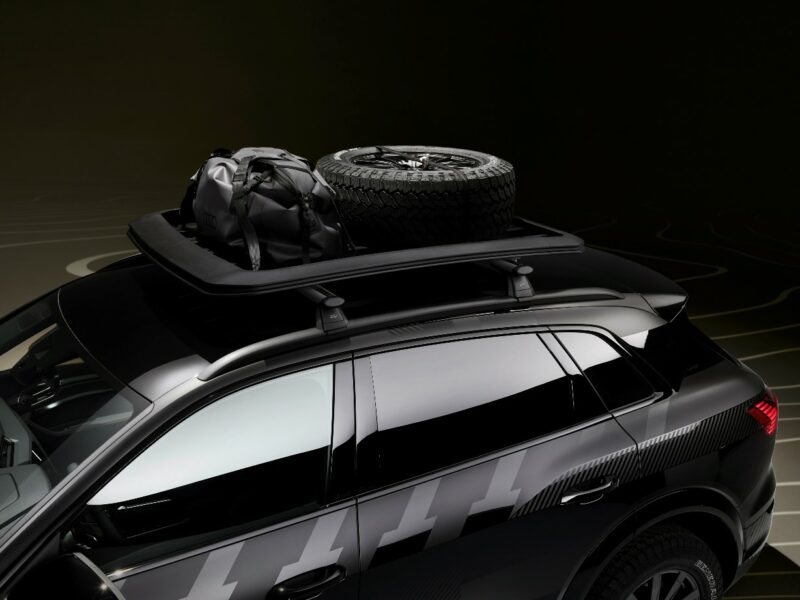
The edition Dakar also comes standard with a roof rack capable of carrying up to 40 kg of load. Included are a bag for the rack and straps for attaching accessories.
In the base setting, the vehicle has a ground clearance of 206 mm. At higher speeds, it gradually lowers – by 15 mm at 85 km/h, 17 mm at 100 km/h, and 13 mm at 120 km/h. Audi says the control strategy for the air suspension was revised for off-road driving.
Meanwhile, its approach, ramp, and departure angles are 20, 26, and 19 degrees, respectively. Audi also claims a water wading depth of up to 300 mm.
The four rings brand also offers plenty of optional acessories, which include decals inspired by the RS Q e-tron, ambient light package plus, second high-voltage heater to monitor heating power, Bang & Olufsen Premium Sound System with 3D sound and virual side mirros.
In addition to the AT rubbers, each unit of the Q8 e-tron edition Dakar comes with a set of summer tyres along and 20-inch wheels in 5-V spoke S design.
IF you were a wealthy individual looking to own an electric vehicle (EV), you’ll be delighted to see the wide range of options you have. Naturally, at a higher price range, most of the choices are tempting to say the last but dare I say that none stand out like the Audi e-tron GT.
At first glance, you know that the e-tron GT is an EV designed specifically for elegant and well-to-do individuals like yourself.
People around you will be saying you should’ve bought the Porsche Taycan because it’s a Porsche and it’s much faster. True, on paper, its Zuffenhausen twin is faster, but it won’t make you feel like Tony Stark with its space-age design.
Great looks aside, as a four-door sedan with a driving range of 458 km on a full charge, the e-tron GT can serve as a daily, whether you are single or happily married with kids.
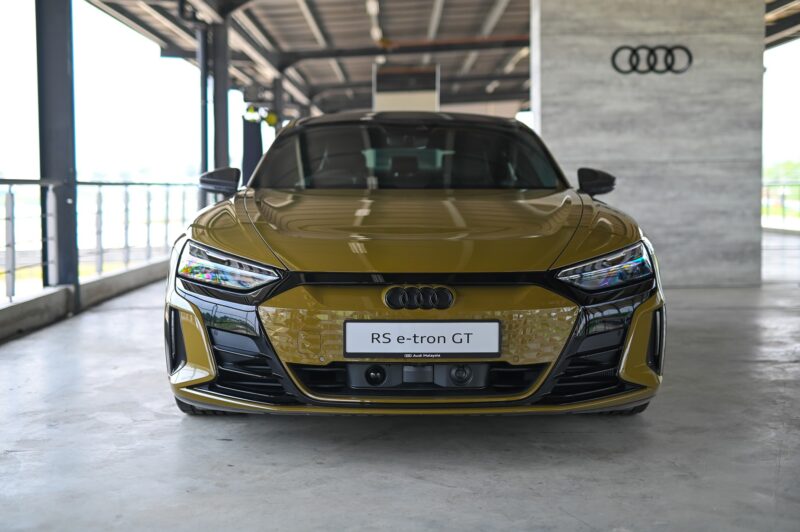
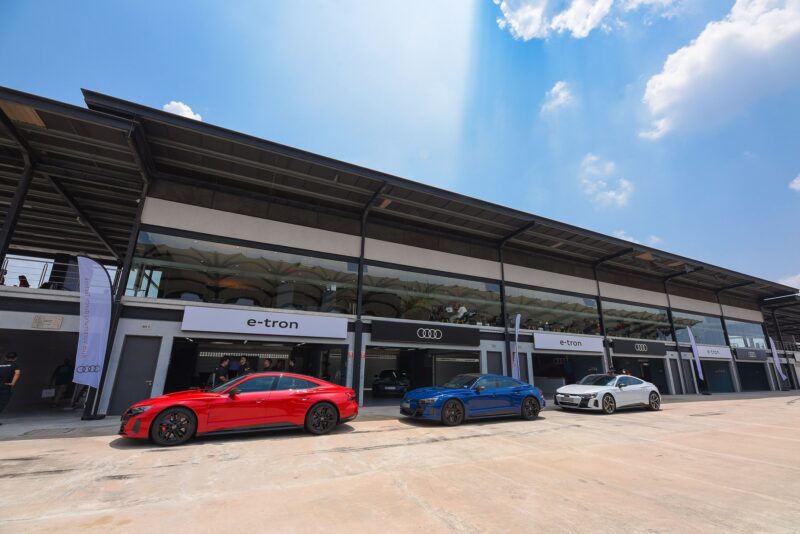
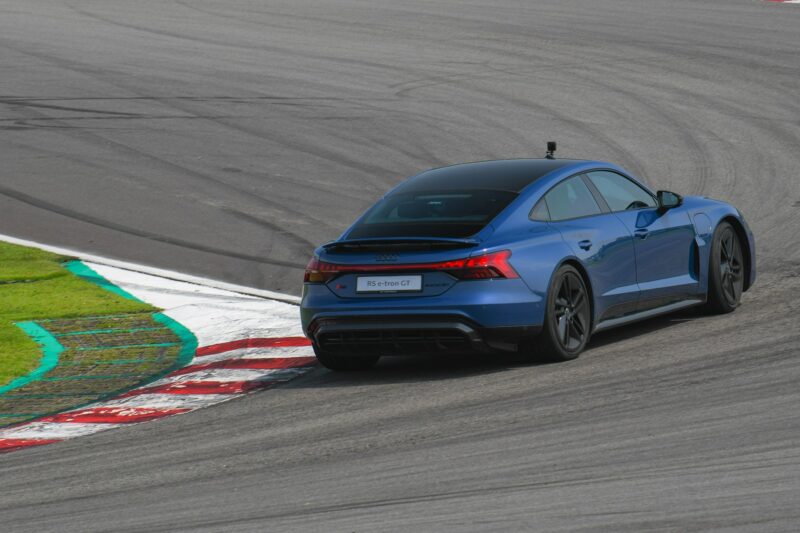
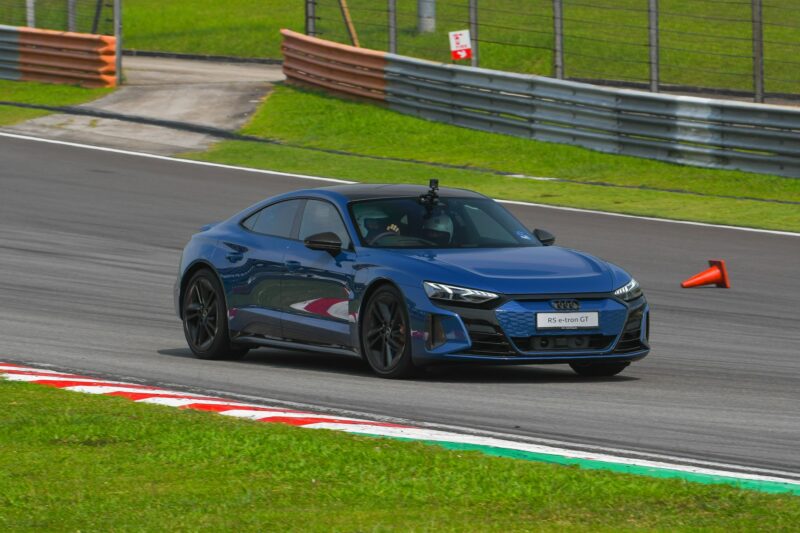
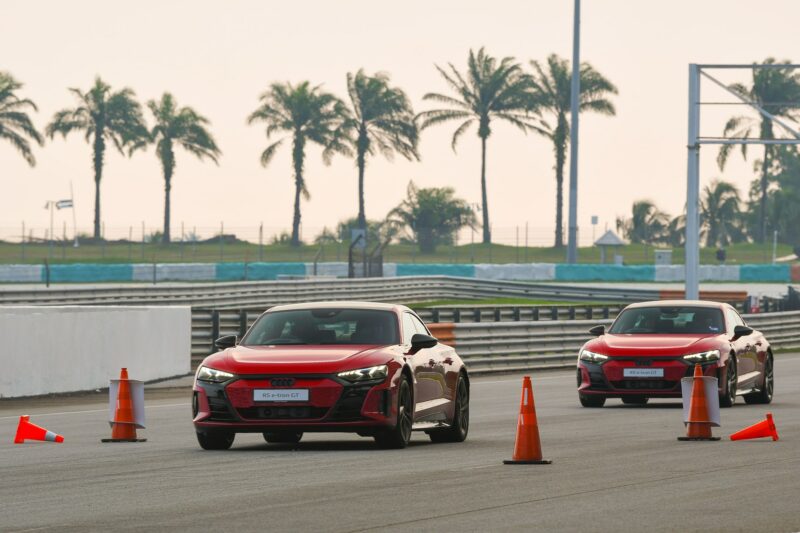
However, you should also know that this car is always ready to perform on the track. Recently, this writer was invited by Audi Malaysia to experience the e-tron GT quattro and RS e-tron GT’s on-track capabilities at the Sepang International Circuit.
The Audi Driving Experience event was limited to the souther section of the circuit (South Paddock). The driving activities were divided into two parts: a drive around the circuit and an acceleration test on the straight after Turn 14.
For the first round, I was given the opportunity to get behind the wheel of an e-tron GT quattro, the entry-level variant equipped with two electric motors producing a total output of 476 PS and 630 Nm.
As soon as it left the pit, a firm step on the throttle pedal brought the car to life and from that point, it accelerated like a true track weapon. My head was pushed back slightly against the headrest, indicating the e-tron’s strong pulling power.
The brochure says this model only takes 4.5 seconds to reach 100 km/h from a standstill but it definitely felt much faster than that. Not that it matters to most buyers but it’s certainly good to know that your EV is capable of doing earth-shattering accelerations.
One of the advantages of driving an EV is that torque is always readily available. In a high-speed circuit like Sepang, this comes in very handy as it allows you to exit corners quickly. And what’s amazing is that this can be done repeatedly.
In addition, Audi’s proprietary quattro all-wheel drive system plays a crucial role in providing high levels of grip on the tarmac, especially when facing chicanes at Turn 12 and Turn 13.
Next, the writer had the opportunity to try the RS e-tron GT, which is essentially a more powerful variant of the e-tron that also comes with higher equipment levels.
Like the base version, it also has an electric motor on each axle, but the power output is higher at 598 PS and 830 Nm. The difference in power can be felt clearly, and for tis writer, this variant feels more ‘wild’ when unleashed on the circuit.
However, it comes with several additional features that make it more formidable dynamically compared to the base version.
First up is the air suspension system. With adaptive dampers at the front and rear axles, the system is capable of lowering the car by 10 mm at 90 km/h and another 12 mm when the car is traveling at speeds of 180 km/h and above.
Not only that, the RS e-tron GT is also equipped with a rear-wheel steering system. At around 50 km/h, this system will turn the rear wheels in the opposite direction of the front wheels to provide a smaller turning radius.
At 80 km/h, the rear wheels will turn in the same direction as the front wheels, which in turn makes the car more stable, especially when taking corners at high speeds.
Another advantage of the RS version is the differential lock on the rear axle. In the context of circuit driving, this component uses torque vectoring to make the car more agile when entering sharp corners in addition to increasing the grip when exiting.
For the acceleration test session, the writer only did it with the RS e-tron GT. Here, the overboost function plays a significant role as it increases power to 646 PS for a temporary period to allow the car to come off the line as quickly as possible.
On paper, the RS model accelerates from 0 to 100 km/h in a mere 3.3 seconds, but the writer managed to do it in 3.2 seconds, based on the acceleration gauge displayed on the instrument panel.
In fact, some media members were able to achieve this acceleration in just 3.1 seconds, showing that in certain conditions, the RS e-tron GT is actually faster than what’s claimed.
Conclusion
Nobody buys an EV for track driving but if you happen to purchase an Audi e-tron GT or RS e-tron GT, keep in mind that you have a versatile, track-capable EV at your disposal.
You might be wondering if driving range pose a hindrance for spirited driving on the track. For an EV that can be driven for over 400 km on a single charge, I think it’s safe to say that a track day session at a racetrack is definitely doable. Taking into account the length of the Sepang circuit, which is 5.543 km, you can actually drive the e-tron GT for dozens of laps before the battery charge comes down to an alarming level.
Audi e-tron GT quattro Specifications
Price: RM588,790
Power: 476 PS (530 PS with overboost)
Torque: 630 Nm (64o Nm with overboost)
Battery: 93.4 kWh