Good news for Mitsubishi enthusiasts in Miri, Sarawak.
Mitsubishi Motors Malaysia (MMM) has announced the “Drive Your Ambition” festival, which will take place on January 18-19, 2025, at ParkCity Eastwood, Miri, from 10:00 AM to 6:00 PM.
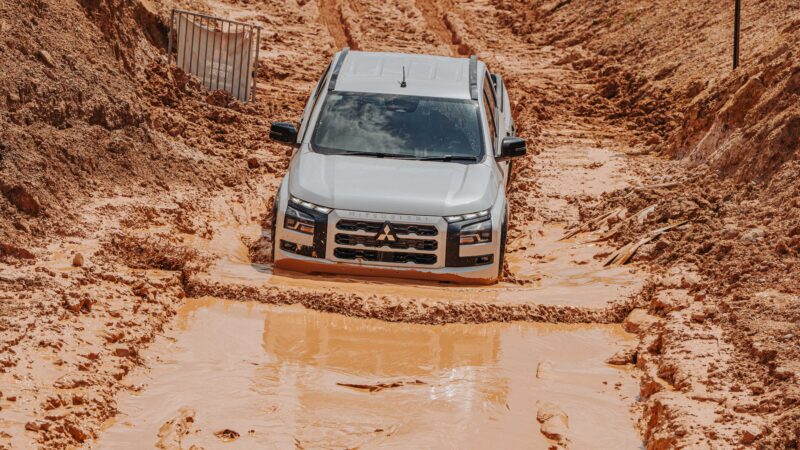
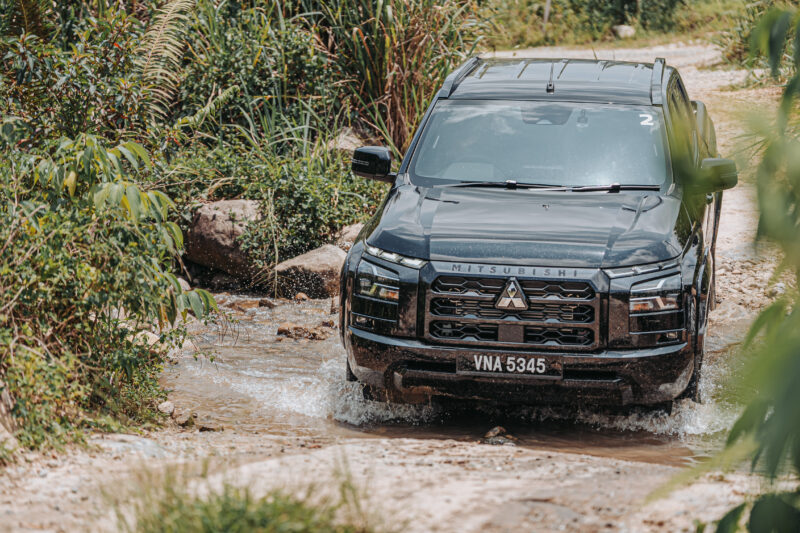
Visitors can experience the prowess of the Super Select 4WD-II system and the seven driving modes available on the Triton through test drive sessions that navigate various challenging terrains, including side traverses, water crossings, hill climbs, muddy paths, and articulation courses.
For fans of single cab pickups, the Triton Single Cab is available for test drives, showcasing a one-ton capacity for transporting palm oil over the prepared obstacle course.
MMM is also offering attractive promotions for the Triton model, such as Diesel Rewards and a 2-year free service package.
Visitors who book a brand-new Triton pickup at the festival location will receive a Naturehike cooler box valued at RM150. Additionally, those participating in the Triton obstacle test drive will receive exciting merchandise, including a Naturehike bench and a Triton tote bag.
Moreover, a variety of engaging activities are planned for the whole family, along with performances by local artists such as Dabra Sia on January 18 and Azam Pitt the following day.
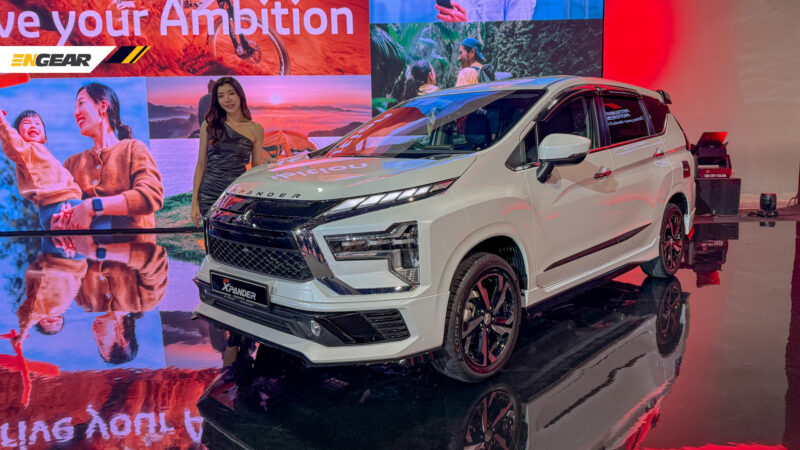
Mitsubishi Motors Malaysia (MMM), the official distributor of Mitsubishi vehicles in Malaysia, has announced the availability of three additional accessories for the popular 2025 Xpander MPV model.
Limited to only 200 units, the 2025 Xpander is now equipped with an Around-View Monitor (AVM), front and rear dashcam (DVR), and leatherette seat upholstery.
These enhancements are the ideal choice for those seeking a stylish vehicle that also offers better value.
The facelifted 2025 Mitsubishi Xpander was launched in September 2024, featuring a more modern appearance along with improved cabin features.
It still retains the 1.5-liter naturally aspirated engine producing 105 PS and 141 Nm of torque, paired with a four-speed automatic transmission.
The 2025 Mitsubishi Xpander is priced at RM104,980 on the road without insurance.
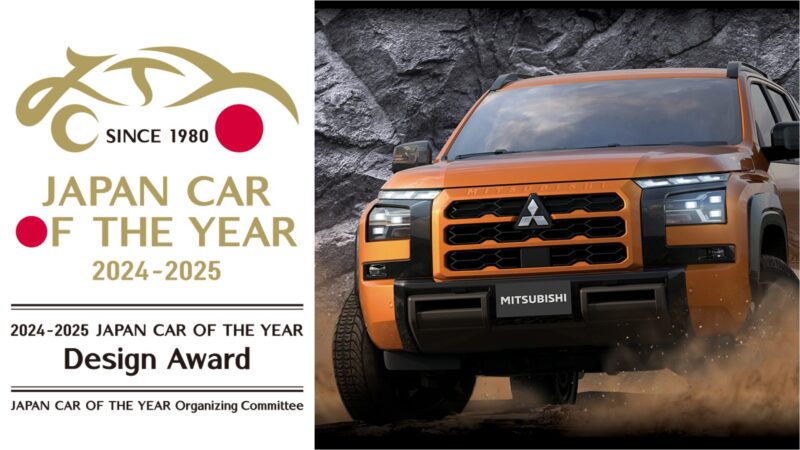
Mitsubishi Motors Corporation (MMC) has announced that the Mitsubishi Triton pickup truck has won the Best Design award at the Japan Car of the Year (COTY) 2024-2025.
This marks the second time Mitsubishi Motors has received this award, following a similar achievement with the Mitsubishi Delica kei car in the 2023-2024 JCOTY edition.
The judges unanimously selected the Mitsubishi Triton for its captivating image as a four-wheel drive (4WD) model, encouraging customers to explore a new lifestyle.
The sixth-generation Mitsubishi Triton was successfully launched in the Malaysian market last October, with five variants available, including a single cab variant.
This all-new Triton not only boasts a ‘Beast Mode’ image but also benefits from a new platform, engine, suspension setup, and a cabin design that emphasizes both modern aesthetics and practicality.
For more details about the Mitsubishi Triton, you can read the link below:
Mitsubishi Motors Malaysia is providing special promotions throughout the 2024 Kuala Lumpur International Mobility Show (2024 KLIMS) held from December 5 to December 11, 2024.
Malaysians are invited to visit the Mitsubishi Motors Malaysia booth located on Level 2, where the theme “Drive Your Ambition” will be showcased, reflecting the brand’s commitment to innovation, challenges, and customer-centric values.
Additionally, customers who book and register a brand-new Mitsubishi Triton or Xpander at the MMM booth or any MMM exhibition center will receive a package that includes fuel subsidies and free maintenance for two years.
According to MMM CEO Ikeda Shinya, “We want to offer fuel to our customers so they can go further, ensuring they reach their destinations without worry during the year-end festive season.
“Furthermore, we aim to provide a free maintenance package, giving our customers peace of mind and allowing them to enjoy a hassle-free ownership experience.”
In addition to showcasing the latest models, MMM will also display a variety of genuine accessories for the Triton and Xpander models that cater to the lifestyle needs of Mitsubishi Motors customers.
MMM has also announced the launch of the MAX Leasing vehicle leasing program in collaboration with ALD MHC Mobility Services Malaysia.
This program offers a more manageable alternative to direct vehicle purchases, featuring more stable interest rates and a comprehensive service network to support the growth of vehicle leasing.
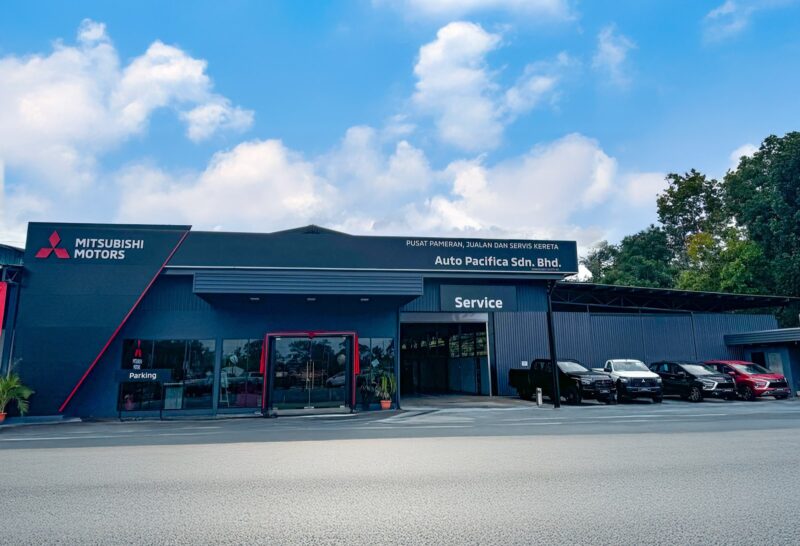
Mitsubishi Motors Malaysia (MMM), in collaboration with its dealer partner Auto Pacifica Sdn Bhd, has launched its second 4S centre in Sarawak.
With the opening of this latest facility, MMM now operates eight 4S centres nationwide.
Located at Lot 4168, Block 24, Jalan Datuk Mohd Musa, Kota Samarahan, this 4S centre is ideally positioned along the main road connecting Kota Samarahan to Kuching, making it easily accessible for customers in the area.
Spanning 21,700 square feet, the centre embodies Mitsubishi Motors’ brand identity and aligns with the global brand message ‘Drive Your Ambition’.
It also features a variety of amenities, including a service centre with multiple service bays and a body and paint shop, a lounge equipped with Wi-Fi, and a children’s corner.
“As MMM introduces new Mitsubishi Motors models in Malaysia, our goal is to enhance customer convenience by expanding our network of showrooms and service centers. The opening of this new showroom in Kota Samarahan is a strategic step towards reaching untapped locations and extending our services to a broader audience,” said Shinya Ikeda, Chief Executive Officer of MMM.
Ikeda further added that Auto Pacifica has been a trusted partner of Mitsubishi since 2009, and this marks the company’s third outlet in Bumi Kenyalang.
“With its modern showroom facilities and advanced service equipment, we are confident that our Mitsubishi customers in Kota Samarahan will receive exceptional service and support,” he said.
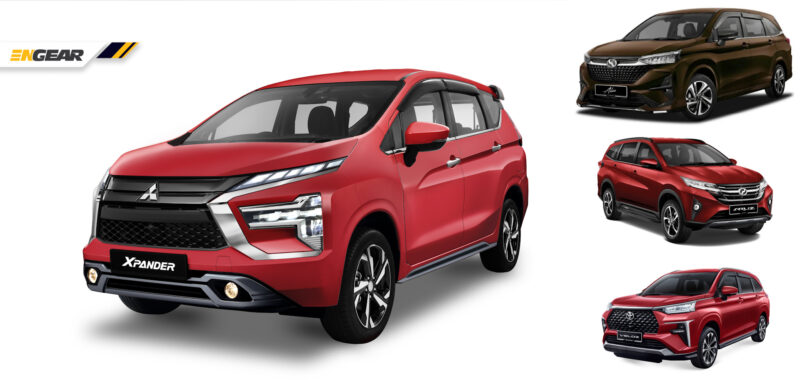
The Mitsubishi Xpander, despite arriving late to the market, has managed to maintain its position as the best-selling non-national MPV model.
With the launch of its facelift model just a few months ago, Xpander is poised to further strengthen its influence, particularly among the ‘cool dad’ demographic.
For those seeking a family car, a 7-seater MPV is one of the suitable options in Malaysia.
Aside from the Xpander, which other MPV models can be considered?
The Xpander directly competes with three other MPV models, namely the Perodua Alza, Perodua Aruz, and Toyota Veloz, all within a price range of around RM100,000, following the discontinuation of models such as the Honda BR-V, Nissan Grand Livina, and Proton Exora.
So, what sets the Xpander apart from its three competitors?
1. Price
Here is a comparison of the selling prices for the Xpander, Alza, Aruz, and Veloz:
Mitsubishi Xpander: RM99,980
Toyota Veloz: RM95,000
Perodua Aruz: RM72,900
Perodua Alza: RM62,500
2. Dimensions
In terms of size, the Xpander has an advantage due to its larger dimensions compared to its competitors.
Here are the dimensional comparisons for the four MPV models:
Xpander: 4,475 mm x 1,750 mm x 1,720 mm (WB: 2,775 mm)
Veloz: 4,475 mm x 1,750 mm x 1,700 mm (WB: 2,750 mm)
Aruz: 4,435 mm x 1,695 mm x 1,705 mm (WB: 2,685 mm)
Alza: 4,425 mm x 1,730 mm x 1,670 mm (WB: 2,750 mm)
Based on this comparison, the Xpander excels in width and height, as well as having a longer wheelbase, contributing to a more spacious cabin.
3. Cargo Space
All MPV models come with a three-row seating arrangement, but the cargo space provided in the back is relatively limited, and you may need to fold down the third-row seats.
The Xpander offers a standard rear space of 495 liters, whereas other competitors like the Aruz provide only 213 liters.
Alza and Veloz share a similar cargo space of 137 liters each.
4. Engine Performance
In terms of power, all four models are equipped with a 1.5-liter naturally aspirated engine.
Except for the Aruz, which comes with a rear-wheel drive (RWD) setup, the other three models utilize a front-wheel drive (FWD) configuration.
The three listed MPV models have advantages regarding safety features, leaving a significant gap in comparison to the Xpander.
As standard, the Aruz, Alza, and Veloz are equipped with six airbags, not to mention advanced safety features such as Autonomous Emergency Braking (AEB), collision warnings, and seatbelt reminders.
Both Alza and Veloz come with additional features like steering correction, front vehicle movement warnings, pedal malfunction warnings, and rear cross-traffic alerts, making these two models particularly appealing.
In contrast, the Xpander offers basic safety features, including two airbags, without any advanced safety technologies.
Regardless of the advantages and disadvantages of each model, we are confident that you have your own reasons for making your choice that aligns with your budget and needs.
Honestly, I’m not someone who enjoys driving pickup trucks, but my recent experience with the 2025 Mitsubishi Triton is still fresh in my memory.
Apart from its more refreshed appearance, the new Triton now features a new platform and engine, a tuned suspension system, and a more user-friendly cabin layout.
In short, this new Triton offers impressive on-road performance, while still being capable of tackling tougher and more challenging off-road routes.
However, in my opinion, there are three shortcomings that Mitsubishi should address to make the Triton a more valuable offering, justifying every ringgit spent.
1. Absence of a 360-Degree Camera
Did you know that the 2025 Triton uses a new platform that provides larger dimensions—longer, wider, and taller?
This means that this sixth-generation pickup truck is the largest model ever produced in Triton’s history.
Unfortunately, this increase in size does not come with a 360-degree (or 540-degree) camera feature.
The lack of this feature makes driving a bit challenging, especially when navigating narrow areas or winding through overgrown paths that lack clear routes.
The fairly high front bonnet structure at times makes me feel less confident when driving in tight spaces.
2. Subtle Steering Vibrations Can Make Driving Fatiguing
Based on my experience, I found that the steering response of the new Triton is very easy to handle, even though the Triton has grown in size.
The Lane Change Warning (LCA) feature enhances driving safety, as it only vibrates when the driver is detected not using the turn signal to change lanes.
The absence of Lane Keeping Assist (LKA) isn’t a significant issue. However, what I noticed is that the steering system of the Triton produces subtle vibrations while driving on the highway.
For short-distance driving, this slight vibration is not a problem, but it can become tiring for the driver over longer distances.
3. Rear Headrest Structure Is Not Passenger (or Driver) Friendly
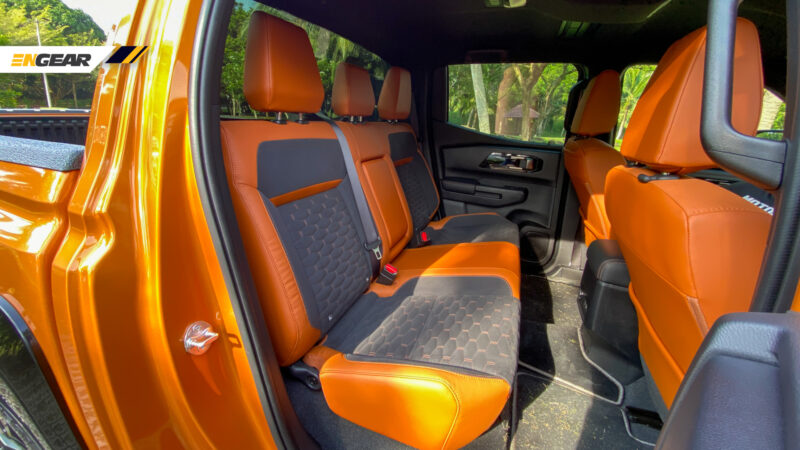
When I switched to the rear seats, I found that the rear bench of the 2025 Triton offers a comfortable reclining angle that isn’t too upright.
However, this comfort is hindered by the headrest structure, which does not adequately support a comfortable head position.
If you observe, the second-row passenger headrests are tilted forward. Therefore, rear passengers may feel slightly more upright than usual.
The position of the center headrest can also obstruct the rearview mirror’s field of vision, so it’s advisable to remove that headrest if your pickup truck isn’t carrying extra passengers.
You can read our findings and review of the 2025 Mitsubishi Triton at the link below:
At the Philippine International Motor Show, Mitsubishi Motors unveiled a three-row seating SUV concept named DST.
Mitsubishi announced that the DST Concept will be realized as an actual production model, set to be launched in 2025.
With the introduction of the DST, Mitsubishi aims to further expand its SUV product portfolio (including Pajero Sport, Xforce & Xpander Cross) in the ASEAN market, and it is not designed to replace existing products.
Here are some facts you need to know about the Mitsubishi DST Concept:
1. Monocoque Chassis SUV
The Mitsubishi DST is built on a unibody platform and does not rely on a ladder-frame platform.
It is likely to share the same platform used in the Xforce B-segment SUV model.
2. Gravitas & Dynamism Theme
In addition to the Dynamic Shield elements that are the hallmark of Mitsubishi vehicles, the exterior of the DST Concept also emphasizes the Gravitas & Dynamism design theme.
This design concept is presented through the boxy body shape offering spacious and comfortable cabin space, even with the presence of the third-row seats.
The use of contoured fenders, large-diameter tires, and high ground clearance further accentuate the rugged and athletic character of this SUV, especially on the road.
3. Elements unlikely to exist in the actual production model
Typical of a concept car, the DST possesses several unique features.
These include frameless door design, absence of door handles, digital side mirrors with a special display screen on the dashboard, and an extended roof solar panel.
It is highly likely that all of these features will be revised to suit the specifications of the actual production model.
4. Premium cabin space
For the interior, Mitsubishi employs soft-touch materials on the door panels and dashboard.
The trend of a digital screen with a single curved display is also used in the DST Concept, followed by a somewhat futuristic center console and a new two-spoke steering wheel design.
There is no information available regarding the cargo space capacity, possibly limited based on the third-row seating image provided by Mitsubishi.
5. Front-wheel-drive SUV, 5 driving modes
Mitsubishi has not disclosed the powertrain that will be used in the actual production version of the DST Concept.
However, it is certain that the DST will have a front-wheel-drive (FWD) system complemented with five driving modes: Normal, Tarmac, Gravel, Mud, and Wet.
For reference, the previously launched Mitsubishi Xforce was equipped with a 1.5-liter engine producing 103 hp paired with a CVT transmission driving the front wheels.
The new generation Mitsubishi Triton has been officially launched for the local market last week after being introduced at the global level for over a year.
It can be said that almost every aspect of this pickup truck has been extensively redesigned, including the platform, engine, suspension system, cabin layout, and most importantly, a more rugged and bold appearance.
So, do the aforementioned changes have a significant impact on this Triton pickup truck?
Earlier this month, the writer and other media colleagues were invited to test drive the Mitsubishi Triton 2025 from the capital heading towards the East Coast.
Here is an overview of our experience after driving this pickup truck for two days:
1. More stable and confident driving
The Mitsubishi Triton 2025 utilizes an all-new platform with larger dimensions, making it appear more rugged on the road.
The new Triton also features a sturdier ladder-frame chassis, emphasizing the use of high-strength steel (1,180 MPa) to minimize weight gain.
Additionally, the new Triton is equipped with a suspension system with longer travel distance and thicker stabilizer bars, along with an electronic power steering (EPS) system, all contributing to a more stable and confident driving experience.
Based on our experience, the Triton offers easy-to-handle steering response, not too heavy or too light, making it easier for the driver to navigate throughout the journey.
In addition, the journey is more comfortable due to less vibration and noise perceived from inside the cabin throughout the journey, even when traversing various types of road surfaces.
2. More powerful new engine
In addition to the platform, the Triton 2025 now also features an all-new diesel engine.
Although the capacity has not changed much, the 2.4-liter turbo MIVEC engine (code name 4N16) now produces a high output of 204 PS and torque of 470 Nm.
Coupled with a 6-speed automatic transmission, the Triton does not require much effort to overtake cargo trailers or those seeking rental properties in the middle of the highway.
At standard highway speeds, driving the Triton felt agile and powerful, resembling the feeling of driving an SUV.
The typical Active Yaw Control (AYC) feature found in high-performance Mitsubishi models is also offered in the new Triton, providing more confidence, especially when navigating winding roads.
However, it should be noted that the Triton is still a pickup truck, and one must be aware of the limits and capabilities of a pickup truck, as well as the driver’s skills in handling a vehicle with a high center of gravity.
3. More confident off-road driving
We had the opportunity to test the handling of the Triton pickup truck on off-road routes in Janda Baik, followed by a special off-road driving session provided during the recent official launch.
To us, the combination of the platform, engine, suspension system, and the 4WD Super Select II system also provided advantages to the Triton in tackling more difficult and challenging routes.
Based on our experience, it was difficult for us to feel significant roughness inside the cabin even when the pickup truck was driven at high speed on dusty roads or over rocky terrain.
The power derived from the 2.4-liter diesel engine was also smoothly transmitted to the wheels to ensure the truck continued to move forward or overcome obstacles as directed by the driver.
With the use of EPS steering, handling on off-road routes also felt more assured, especially for those who may not be accustomed to handling larger vehicles.
The 4WD Super Select II system with on-the-fly mode selection operation is also very easy to use for adapting the pickup truck to various road surface conditions.
As standard, the Triton provides up to seven drive modes that can be selected through drive mode settings such as 2H, 4H, 4HLc, and 4LLc, not forgetting the Hill Descent Control (HDC) feature that allows the driver to control the vehicle while descending a slope without having to rely on the brakes..
4. Beast Mode makes the Triton look more rugged
Initially, it was difficult for the writer to accept the visual changes present in this new Triton.
When placed alongside the previous generation Triton, many may be inclined to choose the Triton with the sharper design of the Dynamic Shield.
For the new Triton, the Dynamic Shield element has been renewed with the Beast Mode theme, making the appearance of this Triton look more rugged.
The L-shaped LED daytime running lights are intentionally designed to resemble sharp eagle eyes, while the rear lights with T-shaped graphics further accentuate the breadth of this pickup truck.
Additionally, the somewhat boxy body design makes this Triton resemble an American pickup truck.
5. More modern, user-friendly cabin space
The new Triton incorporates the Horizontal Axis design element to make the layout of the dashboard neater and less obstructive to the view.
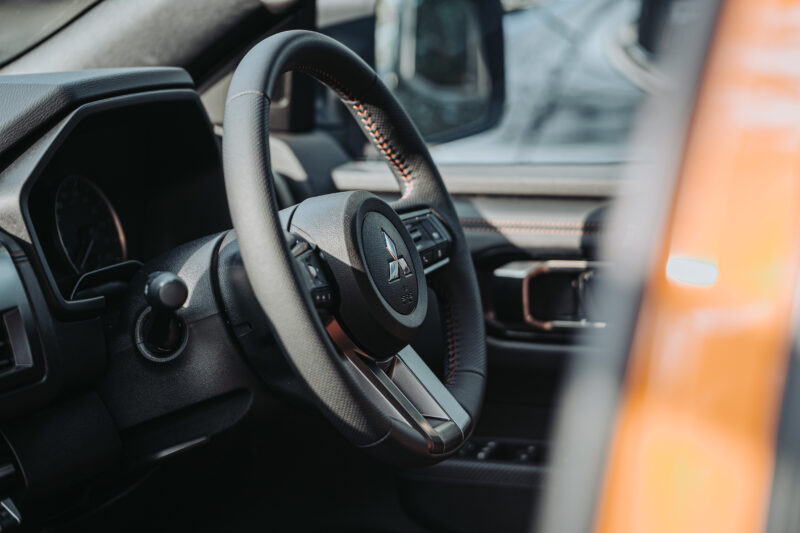
The writer greatly appreciates the combination of analog meters and a digital screen with a black background that is very easy to read and devoid of distracting fancy colors that could disrupt driving focus.
The new Triton also features large and easy-to-use physical buttons and controls.
This is an important feature because most old-school drivers, like the writer, rely on muscle memory to adjust settings such as temperature, fan speed, or simply change the direction of airflow without needing to frequently divert their attention while driving.
The central screen also does not need to be excessively large to the point of obstructing the field of vision, it is adequate and at the same time still offers the desired functions of most users – Apple CarPlay and Android Auto.
One thing the writer likes about the Triton is the air conditioning vent positioned on the ceiling, which requires cool breeze from the front to make the rear passengers comfortable.
The second-row seats are also comfortable to use with a less steep angle, but the structure of the headrests themselves makes the passengers sit a little more upright than usual.
One significant drawback present in the new Triton is the absence of a 360-degree surround camera feature, which may make you feel the driving experience with the Triton especially on narrow roads or slightly challenging off-road routes a bit difficult due to the increased dimensions of the Triton, which have become larger, wider, and taller.
The turning radius of this pickup truck has also increased due to the longer wheelbase compared to previous models.
If there are no third-row passengers, it is recommended to remove the center headrest as its position could disrupt the rearview mirror’s field of vision.
For the information of our readers, Mitsubishi Motors Malaysia has recently launched the facelifted version of the Xpander a few weeks ago.
A test drive review has also been published by us, and you can read the details through THIS link.
However, behind the positive aspects that we highlighted in the test drive article, there are a few shortcomings that can be improved and enhanced for the benefit of users in Malaysia.
1. Lackluster Acceleration
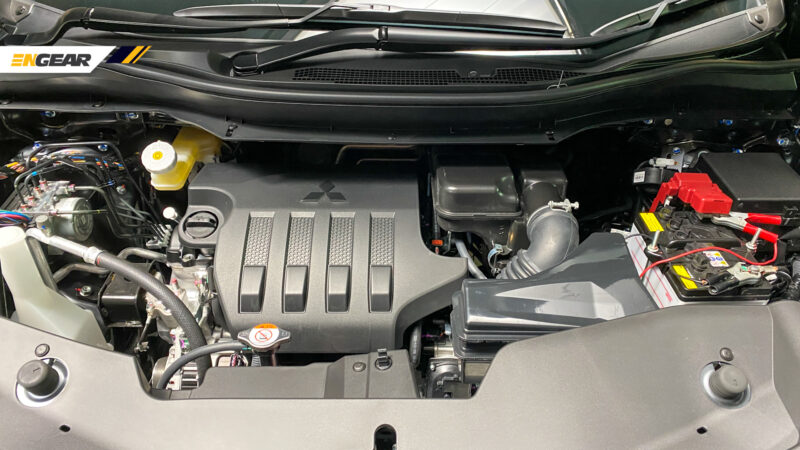
The Xpander facelift maintains the four-cylinder in-line 1.5-liter MIVEC engine producing 105 PS and 141 Nm of torque, paired with an automatic gearbox – similar to the pre-facelift model.
Therefore, the driving dynamics have not changed significantly, and the acceleration aspect is not the most powerful in its class.
For those with a heavy right foot, this Xpander facelift may not live up to expectations, especially when navigating hilly terrains.
However, for casual driving, it is more than sufficient, especially since the Xpander is fuel-efficient if driven correctly.
2. Headlights Look More Modern, but…
One thing the writer appreciates about the Xpander facelift is its updated and aggressive exterior design.
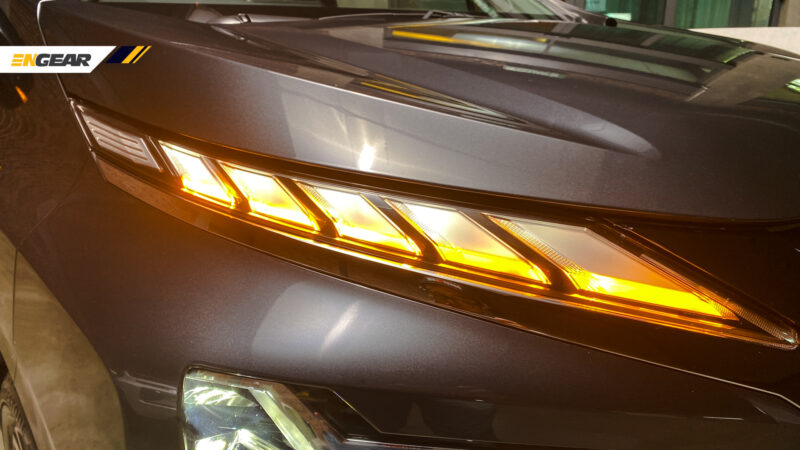
The headlights now feature a horizontal T-shaped design, while the daytime running lights are more advanced and brighter compared to the previous model which used fog lights as DRLs.
However, the downside is that the DRLs are integrated with the turn signals.
When the turn signals are activated, it may be difficult to see, especially for oncoming drivers, due to the DRLs not being dimmed together.
3. Price Factor and Included Features
The pricing factor might also make some users hesitant to acquire this latest Xpander model.
Its competitor, the Perodua Alza, starts at RM62,500, while its counterpart, the Veloz, is priced at RM95,000.
For budget-conscious consumers, this Mitsubishi Xpander might be overlooked due to its relatively higher price tag compared to its competitors, priced at RM99,980 even though it is assembled in the Pekan, Pahang plant.
Another aspect that we find challenging to deny is the standard safety factor present in this MPV model.
For the facelift version, the Xpander only offers very basic specifications, with just two airbags, while other competitors offer up to six airbags and more advanced ADAS features.
Regardless of the weaknesses listed in this article and the advantages present in the Xpander facelift, it is up to the readers to assess and choose the best option for their family’s use.
At the end of the day (and month), it is you who must take money out of your pocket, right?
Mitsubishi Motors Malaysia has officially launched the new generation pickup truck 2025 Mitsubishi Triton, for the local market.
It will be available in five main variants, consisting of four double-cab variants and one single-cab variant designed for heavy-duty work.
Utilizing a completely new, more robust platform, the 2025 Triton offers larger dimensions, with a length of 5,360 mm (+55 mm), width of 1,930 mm (+115 mm), height of 1,815 mm (+35 mm), and a wheelbase of 3,130 mm (+130 mm).
As standard, the Triton comes with double wishbone suspension in the front, followed by leaf spring suspension at the rear aided by tuning for improved handling and comfort.
In addition to the new platform, the Triton also comes with the new MIVEC 4N16 diesel engine, producing 181 hp @ 3,500 rpm and a torque of 430 Nm @ 2,250-2,500 rpm.
The top variant, Athlete, features a two-stage turbo with Euro 5 standard, delivering high power at 204 PS @ 3,500 rpm and a torque of 470 Nm @ 1,500-2,750 rpm.
Moreover, the Athlete variant also includes an electronic power steering (EPS) system and the 4WD Super Select II system, offering up to seven driving modes (Normal, Eco, Gravel, Sand, Mud, Snow, Rock).
Only the two lowest variants (including the single-cab variant) are equipped with a six-speed manual gearbox, while the rest come with a 6-speed automatic gearbox.
The new Triton now features an upgraded Dynamic Shield design language with a “Beast Mode” approach.
Exterior features include LED headlights, LED daytime running lights (DRL), 18-inch rims (16 inches for lower variants), and T-shaped graphics on the rear lights.
The cabin uses a more modern Horizontal Axis concept, showcasing analog meters, a seven-inch LCD screen, a central touch screen with Apple CarPlay/Android Auto support, six climate control speakers, rear row air vents, premium leatherette-wrapped seats, leather-wrapped steering wheel, and leather-wrapped gear knob.
The base variant is equipped with a basic audio system that comes with 4 speakers, fabric seats, and urethane-wrapped steering wheel and gear knob.
In terms of safety, the Mitsubishi Triton comes with up to seven airbags, ABS, EBD, Hill Start Assist, Active Stability Control, Hill Descent Control (HDC), as well as advanced safety features such as Forward Collision Mitigation System, Adaptive Cruise Control (ACC), Blind Spot Warning (BSM), Lane Change Assist (LCA), Rear Cross Traffic Alert (RCTA), and High Beam Assistance (AHB).
For the local market, the selling prices of the Mitsubishi Triton 2025 are as follows:
Triton Single Cab (MT) – RM101,980
Triton GL (MT) – RM114,980
Triton GL (AT) – RM116,980
Triton Premium (AT) – RM145,980
Triton Athlete (AT) – RM165,980
As standard, the 2025 Mitsubishi Triton comes with a manufacturer’s warranty for five years or a mileage limit of 200,000 km (whichever comes first), except for the Mitsubishi Triton Athlete, which comes with an unlimited mileage warranty for five years, valid for registration until only December 31, 2024.
Mitsubishi Motors Malaysia officially opens the third Mitsubishi 3S (Sales, Service & Spare Parts) center in the state of Terengganu.
The opening of this new 3S center expands the Mitsubishi Motors dealer network to 61 outlets nationwide.
Managed by Lajina Motors Sdn Bhd, this 3S center also showcases the Mitsubishi Motors brand identity, in line with the global message “Drive Your Ambition”.
Spanning 3,600 square feet, the 3S center also features a customer waiting area complete with Wi-Fi, a dedicated children’s area, and a comprehensive service center with multiple service bays available.
The 3S center is located at Lot 3309-3310, Jalan Padang Luas, Taman Pelangat 2, 22000 Jerteh, open from Saturday to Thursday (8:45 am-5:15 pm) and closed every Friday.
According to CEO of Mitsubishi Motors Malaysia, Shinya Ikeda stated, “Considering MMM is planning to launch several new models, we want to ensure our customers have broader coverage and accessibility to exhibition centers and service centers near them.
“Lajina Motors has been with Mitsubishi since 2015, and this is their second 3S outlet in Terengganu. With comfortable facilities and advanced equipment, I am confident that our customers in Jerteh are in good hands,” he added.
Despite arriving to the Malaysian market quite late, the Mitsubishi Xpander has managed to become the best-selling non-national MPV, with over 40,000 units sold.
We believe the influence of the Xpander will strengthen here with the introduction of the Xpander 2024 facelift model, which was launched last month.
Especially for fathers looking for a suitable vehicle for family use.
Last week, Mitsubishi Motors Malaysia invited media practitioners to experience the driving experience of the Xpander facelift heading towards Malacca.
Based on the drive, what we can conclude is that the Xpander facelift can still be an ideal vehicle for contemporary family use.
Here are 5 things u need to know after driving the Xpander facelift:
1. More modern exterior appearance
Overall, the design of the Xpander has not changed much, except for the front fascia that now features a more modern and sleek Dynamic Shield design.
The T-shaped LED headlamps are enhanced with a cluster of LED lights that combine daytime running lights (DRL) and turn indicator lights.
The grille design also looks sleeker on the facelift model.
For the rear end, the redesigned lamp shape now features a T-shaped graphic that contributes to the changes in the rearview mirror shape.
Those opting for the Xpander Plus variant will receive additional features such as window visors and a black rear spoiler that is not overly aggressive but still manages to provide a sporty image.
Lastly, all four wheel arches are fitted with 17-inch rims wrapped in Bridgestone Ecopia tires.
2. More refined cabin space
Significant changes have been made to the cabin space, where the layout of the dashboard is now more refined.
As standard, the Xpander facelift still offers a 9-inch infotainment screen, a 4.2-inch TFT cluster screen with analog meter display, climate control with a digital display, and a steering wheel inspired by the Evo X sedan.
Despite coming with basic functions, the leatherette-wrapped seats remain comfortable to use, especially for long journeys.
The writer’s favorite feature is the available space provided when the new Xpander facelift replaces the physical handbrake with an electronic brake button.
It looks more organized and at the same time does not make the driving experience of this Xpander less practical.
You should know that the Xpander facelift now comes with several advanced features like wireless Qi smart device charging slot, front and rear driving recorders, and most importantly a 360-degree camera.
The use of soft-touch materials in certain areas also enhances a premium driving experience.
3. Practicality for the whole family
Compared to its competitors, the Xpander facelift has its own advantages, namely a more spacious cabin due to its larger dimensions.
There are no issues accommodating passengers in the third row seats as they are indeed comfortable to use.
If there are no additional passengers, the seats can be folded to provide a space of 837 liters, in addition to three additional hidden storage spaces in the cargo area.
Furthermore, there are plenty of small storage spaces provided around the cabin, especially in the door panels, small trays on the dashboard, a drawer under the front passenger seat, and small pockets behind the front seats.
4. Driving dynamics
What hasn’t changed with the Xpander facelift is the inline four-cylinder 1.5-liter engine producing 105 PS and 141 Nm of power, mated to a 4-speed automatic transmission.
Yes, it sounds somewhat outdated, considering that the average competitor is equipped with CVT or DCT transmissions.
It’s not the most modern gearbox, but it is retained to ensure owners need not worry about the durability and reliability of this component.
As a result, it can be said that the driving experience of the Xpander has not changed much in terms of power delivery and acceleration offered.
It still manages smooth gear changes, and at the same time, the issue of gear hunting does not haunt the driver during downshifts or hill climbs.
We experienced this on winding roads around Hulu Langat, but for regular highway driving, the engine and gearbox combination is more than sufficient.
At the same time, we can feel that the noise, vibration, and harshness (NVH) levels in the Xpander facelift cabin have improved compared to the previous model.
The engine noise is effectively filtered, while wind noise is only noticeable after exceeding 160 km/h.
5. Handling
Another aspect that makes the writer understand why the Xpander is the top choice is the comfort it offers.
If the previous Xpander already proved its own comfort for long journeys, this Xpander facelift takes it up another notch.
According to Mitsubishi, the rear suspension of this MPV has been retuned with larger shock absorbers to ensure a more comfortable driving experience.
It’s not surprising that we struggled to feel any significant roughness when the tires met uneven road surfaces.
To say the handling is on par with the Evo X would be a lie. But the Xpander facelift can be well-controlled on straight roads as well as on winding roads without disturbing the comfort of passengers in the back.
However, due to the higher ground clearance (225 mm), stability is felt to be somewhat lacking, especially when traversing crosswinds on the highway.
This may also be due to the use of Bridgestone Ecopia tires, which were felt to have less grip compared to the Toyo Proxes CR1 tires used in the previous model, although they are quieter.
One thing for sure, as a driver of the Xpander facelift, you need not worry about traversing uneven routes in rural and suburban areas, thanks to the higher ground clearance package compared to other competitors.
Based on the test drive conducted recently, the Mitsubishi Xpander 2024 facelift seems to be a viable choice for families in Malaysia, especially for those who prioritize comfort and practicality.
Mitsubishi is set to unveil a concept model for a seven-seater SUV at the 2024 Philippine International Motor Show from October 24-27.
Based on the teaser images released, the new model appears to share the front-end design with the Xforce SUV, while the grille design resembles that of the Outlander.
Another image showcases a rather stylish C-pillar design, followed by more prominent shoulder lines.
As usual, no detailed information regarding the model has been disclosed, whether it concerns its size or its platform (monocoque or pickup truck) at the moment.
One possibility is that this model is expected to replace the current Outlander offering, given that the new generation Outlander is now much more advanced and premium for the ASEAN market.
Considering the design similarities, we anticipate that this concept model is a hint towards the presence of a three-row seating version of the Xforce, in line with the brand’s commitment to produce models suitable for ASEAN drivers.
If this holds true, the concept model might possibly share the same 1.5-liter heart used in the Xforce, producing 103 hp paired with a CVT transmission driving the front wheels.
More information will be revealed towards the end of this month.
Mitsubishi has introduced the upgraded version of the Outlander PHEV, which will begin sales in Japan this autumn, followed by 20 European markets in the spring of next year.
According to Mitsubishi, the petrol variant is scheduled to launch in 2025. Both versions will be entering the North American, Australian, and New Zealand markets soon.
As before, the Outlander PHEV is powered by a 2.4-litre four-cylinder petrol engine making 134 hp and 203 Nm. Augmenting the ICE is a front electric motor generating 114 hp and 255 Nm, and a rear electric motor contributing 134 hp and 195 Nm.
The combination of the internal combustion engine and dual electric motors provides the Outlander PHEV with a total output of 302 hp, allowing the SUV to accelerate from 0 to 100 km/h in 7.9 seconds.
With a larger fuel tank capacity of 53 litres, Mitsubishi claims that the Outlander PHEV can achieve a hybrid driving range of up to 844 km. Official tests also indicate it has fuel consumption as low as 0.8 l/100 km and emissions of 18 g/km.
A notable update to the Outlander PHEV’s powertrain is the lithium-ion battery pack, which is now 40% larger, with a capacity of 22.7 kWh, providing an electric driving range of 86 km based on the WLTP cycle.
Efficiency and performance can be further maximised with three drive modes: EV, Series Hybrid, and Parallel Hybrid.
The EV mode allows the vehicle to operate entirely on electric power, while the Series Hybrid mode uses the engine to generate electricity as needed. In Parallel Hybrid mode, both the electric motor and engine work in unison.
Additionally, the Outlander PHEV features Normal, EV, Save, and Charge modes. In EV mode, the SUV is capable of reaching a maximum speed of 135 km/h.
Mitsubishi says the battery pack can be charged using Type 2 and CHAdeMO chargers, and it also supports vehicle-to-home charging capabilities for emergency situations.
For the chassis, Mitsubishi has tuned the tyres, shock absorbers, and spring rates to enhance ride comfort, while the dual pinion assist electric power steering has been engineered for more manageable steering and increased feedback.
Moreover, the S-AWC (Super All Wheel Control) system now offers enhanced grip in all driving conditions, with seven selectable modes: Normal, Eco, Power, Tarmac, Gravel, Snow, and Mud.
In terms of appearance, not much has changed for the 2025 model year, except for the grille and the addition of 20-inch wheels. Inside, the Outlander PHEV now features a 12.3-inch digital instrument panel, a 12.3-inch touchscreen, and a Dynamic Sound audio system with 12 speakers from Yamaha.
The safety kit includes features such as Forward Collision Mitigation, Rear Automatic Emergency Braking, Blind Spot Warning with Lane Change Assist, Lane Departure Warning, Lane Keeping Assist, Adaptive Cruise Control, Traffic Sign Recognition, and a Driver Monitoring System.
Mitsubishi Motors Malaysia (MMM) today officially opened bookings for the sixth generation of the 2024 Mitsubishi Triton pickup truck model.
Offered in five variants, the estimated selling price of the Mitsubishi Triton starts from RM102,000 for the Single Cab variant, and from RM170,000 for the Triton Athlete variant.
The all-new Mitsubishi Triton brings significant exterior and interior changes.
It now features the new Beast Mode design language, a new 2.4-liter turbo diesel engine (4N16) capable of generating 184 PS/350 Nm of torque (Single Cab), or as high as 204 PS/470 Nm for the highest variant.
The new Triton also comes with a newly developed mega frame chassis offering durability and robustness, as well as a larger body size compared to the previous model.
The new suspension system now offers enhanced handling stability and driving comfort, accompanied by the Super Select-II four-wheel drive system and seven driving modes.
The safety aspect of this pickup truck has been enhanced with Active Yaw Control function, and the most advanced driver assistance systems (ADAS).
It also offers modern conveniences such as wireless device charging slot, support for Apple CarPlay and Android Auto, as well as various storage spaces available inside the cabin.
Finally, for those in need of a workhorse, the Triton Single Cab offers the largest cargo deck in its segment, with dimensions of 2,340 mm width and 1,580 mm length.
For the first 500 customers who book the Mitsubishi Triton 2024 pickup truck, they will receive a 60-liter foldable storage box valued at RM450.
The much-anticipated seven-seater MPV model has finally been officially launched by Mitsubishi Motors Malaysia, namely the 2024 Mitsubishi Xpander facelift.
This new Xpander still retains the inline-four 1,499 cc MIVEC engine capable of producing 105 PS @ 6,000 rpm and a torque of 141 Nm @ 4,000 rpm.
Power is transmitted to the front wheels through a 4-speed automatic transmission, unlike the Xpander models in the international market which are already equipped with a CVT gearbox.
In terms of dimensions, the facelifted Xpander measures 4,475 mm in length, 1,750 mm in width, 1,730 mm in height, with a wheelbase of 2,775 mm.
It also offers a turning radius as small as 5.2 meters and a ground clearance of 225 mm, among the best in its class.
There are two variants offered for the Malaysian market, namely the Xpander and the Xpander Plus.
As standard, both variants are equipped with modern T-shaped main headlights (front and rear), LED daytime running lights, foldable side mirrors, and two-tone 17-inch alloy rims.
Regarding the cabin space, both variants come with features such as a 4.2-inch TFT digital cluster screen, a large nine-inch central screen, support for Apple CarPlay and Android Auto, automatic digital climate control buttons, a new design four-step adjustable steering wheel, and six speakers.
The base variant is only equipped with black trim on the bumpers, fabric-covered seats, and a reverse camera, while the Plus variant includes additional features such as:
-leatherette-covered seats
-360-degree surround camera system
-front and rear driving video recording cameras
-wireless device charging slot
-door visors
-rear spoiler
-scuff plate
-silver trim on the front and rear bumpers
Safety features included are two airbags, ABS, EBD, Brake Assist, Auto Hold, Hill Start Assist, Traction Control (TC), Active Stability Control (ASC), Emergency Stop Signal (ESS), seatbelt reminders, and ISOFIX seat anchors.
For the Malaysian market, the 2024 Mitsubishi Xpander facelift is priced from RM99,800 to RM109,980 for a limited time until 31st Disember 2024.
Mitsubishi Motors Malaysia (MMM) has announced the opening of bookings for the seven-seater MPV model Mitsubishi Xpander 2024 facelift.
According to the CEO of Mitsubishi Motors Malaysia, Shinya Ikeda said, “Xpander has not only gained popularity in Malaysia, but it is also popular in the ASEAN region.
“MMM introduced the Xpander to the Malaysian market in 2020, and last month we celebrated 40,000 Xpander owners on the road. As the number one non-national MPV model, the Xpander is now one of the most important models for Mitsubishi Motors,” he added.
The facelift version brings cosmetic changes, where the 2024 Xpander now features more modern and aggressive lighting units, body kits along with a rear spoiler that cater to an active lifestyle taste.
The Xpander also offers a ground clearance of 225 mm, the best in its class, and a cargo space of 837 liters when the second-row seats are folded flat.
Furthermore, the Xpander facelift comes with features such as a driving video recorder camera and an electric parking brake to enhance the overall driving experience.
For the Malaysian market, the Xpander 2024 is still powered by a 1.5-liter inline-four engine generating 105 PS and 141 Nm, paired with a four-speed automatic gearbox, compared to the CVT transmission in other ASEAN markets.
For a limited time, the Mitsubishi Xpander 2024 facelift can be pre-ordered at the price of RM115k, where the first 500 customers who place orders through the Mitsubishi Online Showroom will receive a Naturehike Camping Wagon valued at RM400.
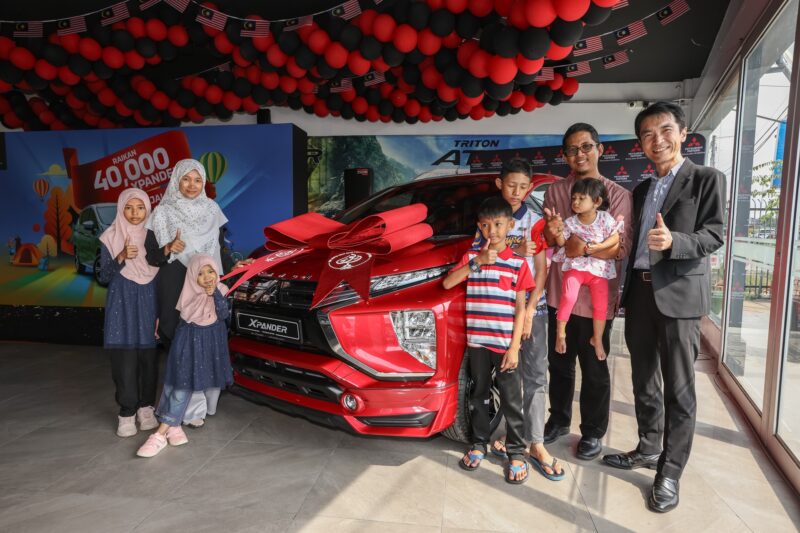
Mitsubishi Motors Malaysia, the official distributor of Mitsubishi vehicles in Malaysia, recently announced a significant milestone as the production of the seven-seater MPV, Xpander, has surpassed the 40,000 units mark.
The 40,000th Xpander owner, Puan Zaty Ewany, a teacher and mother of five children from Pasir Puteh, Kelantan, was honored at an event held at MMM’s authorized distributor, RIF Auto Sdn Bhd.
MMM’s CEO, Shinya Ikeda, personally presented a RM10,000 vacation voucher to Puan Zaty Ewany.
“When we launched the Xpander in late 2020, our vision was to create a vehicle that not only meets various customer needs but also enriches their lifestyle,” he stated.
The Mitsubishi Xpander was updated for ASEAN market in 2021 with a more aggressive look, while retaining the 1.5-liter 4A91 engine producing 105 PS and 141 Nm.
Earlier this year, a hybrid version was introduced in the Thailand market featuring a 1.6-liter 4A92 engine with 95 PS/134 Nm paired with an electric motor of 116 PS/255 Nm.
Mitsubishi Motors, through the Mitsubishi Ralliart team, aims for the championship title in the Asia Cross Country Rally 2024 (AXCR 2024) scheduled to take place from August 11 to 17.
In the competition set to be held in the central and southern regions of Thailand, the Mitsubishi Ralliart team will feature up to four new-generation Triton pickup trucks, accompanied by a support vehicle lineup consisting of the Delica D:5, Outlander PHEV, and the kei car Delica Mini!
The Triton vehicles have already undergone performance testing, covering a distance of 800 km on regular roads and off-road routes back in late June, followed by a shakedown session on August 6 to ensure they are in optimal condition for this year’s competition.
According to team director Hiroshi Masuoka, “Apart from improving driving performance and increasing tire width, we have also enhanced the rear suspension by leveraging expertise acquired from our former Dakar Rally champion, the Pajero.
“Modifications have also been made to its original strength, such as handling extreme routes, so that the rally cars used this time can deliver the performance we expect.”
As mentioned earlier, the Mitsubishi Ralliart team will feature four Delica D:5 minivans, the Outlander PHEV SUV, and a Delica Mini kei car as support vehicles.
One of the four Delica D:5 units will be used personally by team director Hiroshi Masuoka for route inspections to be used by the rally vehicles, equipped with special suspension that raises ground clearance by 20 mm.
All Mitsubishi Ralliart support vehicles are equipped with Work CRAG T-GRABICII alloy rims (Work Emotion M8R rims for the Outlander PHEV) and Yokohama GEOLANDER off-road tire wraps.
Furthermore, all six support vehicles will showcase body graphics matching those of the Triton rally vehicles.
A total of 67 vehicles will compete in this year’s AXCR event, comprising 46 in the auto category, 19 in the motorcycle category, and 2 in the sidecar category.
The opening ceremony will take place on August 11 in the Surat Thani region, southern Thailand, and will conclude at Skywalk Kanchanaburi on August 17.
Malaysia’s Leading Automotive News | ENGEAR ENGLISH