Visitors to the Festival Super GT Malaysia 2025, scheduled from June 26 to 28, will have a chance to take home a Toyota GR Supra valued at RM650,000.
This grand prize is brought to you by HARO Sports & Entertainment, the rights holder and promoter for the Super GT Malaysian round.
To qualify, you simply need to make a purchase using Mastercard from June 1 to June 28 for the following tickets:
Main Grandstand (RM250)
GT Suite (RM350)
GT Live! Rock Zone (RM500)
GT Club Paddock (RM2,000)
Experience Package (RM5,000)
Ultimate Package (RM12,000)
Dream Package (RM15,000)
Purchases of K1 Grandstand tickets do not qualify for the lucky draw.
The name of the lucky winner will be announced live during the post-race concert, GT Live!
In addition to the GT300 and GT500 Super GT races, the PETRONAS Sepang International Circuit will also host the second round of the Vios Challenge Season 8, along with the inaugural GR86 Cup Malaysia Series.
Furthermore, Malaysian fans can look forward to wildcard entries from two local drivers, Jazeman Jaafar and Adrian D’Silva, competing in the GT300 class.
Both drivers will race in the Aston Martin Vantage GT3 EVO of team EBM, with Jazeman teaming up with Kerong Li, while D’Silva will partner with Earl Bamber.
The Festival Super GT Malaysia 2025 will also be enlivened by the presence of a booth from the Japan Football Association (JFA), where fans can purchase exclusive Samurai Blue merchandise, including replica uniforms and traditional happi coats.
Alternatively, you can visit the Festival Super GT Malaysia locations at Sungei Wang Plaza (May 29 – June 1 & June 6 – 8) and Lot 10 (June 3 – 5) to participate in a variety of exciting activities, including chances to win admission tickets and exclusive merchandise.
This cafe racer is the E-VO, the first electric motorcycle from the Wuyang Honda brand designed for the Chinese market.
This modern retro machine is powered by an electric motor with a peak power of 20.5 hp (15.3 kW) or a continuous power of 11 hp, and can reach a top speed of 120 km/h.
There are two battery options available: 4.1 kWh and 6.2 kWh.
The 4.1 kWh version features a dual battery setup, offering a range of up to 120 km, and can be charged in 1 hour and 30 minutes.
A charging time of one hour is achievable if the owner uses a conventional car charger.
Meanwhile, the 6.2 kWh version comes with a three-battery setup that provides a range of 170 km.
It can be charged in 2 hours and 30 minutes at home or in 1 hour and 30 minutes using a car charger.
Riding performance is enhanced by three power modes (Eco, Normal, Sport), complemented by inverted telescopic front forks and a single shock absorber at the rear.
Standard features of the E-VO include a seven-inch TFT display, a tire pressure monitoring system, a front-facing riding camera (with an additional rear unit for the 6.2 kWh model), and a seat height of 765 mm.
The two-battery version of the E-VO weighs approximately 143 kg, while the three-battery version weighs 156 kg.
In China, the Wuyang Honda E-VO is priced from CNY 29,999 to CNY 36,999 (RM17,683 to RM21,809).
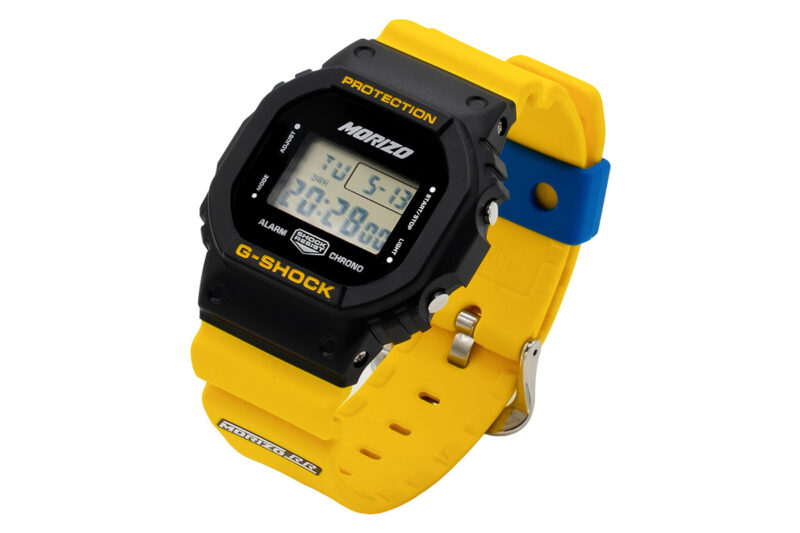
Toyota Gazoo Racing has announced the release of a limited edition G-Shock watch in conjunction with the Fuji Super TEC 24 Hour Race at Fuji Speedway (May 31 – June 1).
The Morizo x G-Shock DW-5600 will be sold in limited quantities and is also available on the official Toyota Gazoo Racing online store on Rakuten JP.
Using the G-Shock DW-5600 model as a base, this special edition watch was designed by Morizo, the alias of Toyota’s prominent figure, Akio Toyoda.
It features details such as a yellow color scheme, a yellow G-Shock logo, and MORIZO’s signature, which appears when the light is turned on, along with a cartoon illustration of Morizo on the case back.
Additionally, it boasts the Morizo logo on the watch face and the Morizo RR logo on the watch strap.
The Morizo x G-Shock DW-5600 is priced starting at JPY 22,000 (RM654) via Rakuten JP.
The Ministry of Transport has announced that the pilot testing of the point-to-point speed monitoring system (AWAS) has not yet begun, according to Berita Harian.
Currently, there is no information regarding the scheduled start date for the new system, and any developments will be announced in due course.
In a prior report, it was stated that this artificial intelligence (AI)-based system will be tested at two major highway locations: from the Genting Sempah Tunnel to the Gombak Rest Stop (KLK), and from the Senawang Toll Plaza to the Simpang Ampat Toll Plaza (PLUS).
There are also plans to install the system at locations that are frequent accident hotspots, such as the Menora Tunnel to Sungai Perak Rest Stop (PLUS).
Transport Minister Anthony Loke previously mentioned that the implementation of this system was expected to begin this June.
This new system is designed to replace the existing static camera method, which is deemed ineffective in reducing vehicle speeds.
If drivers are detected arriving earlier than the expected time, a fine will be automatically issued through the vehicle registration number detection system.
The system is also capable of detecting if drivers stop as a tactic to evade detection.
Despite facing uncertain current conditions, Nissan still has its plans for upcoming models. One of Nissan’s main objectives is to focus on its high-performance sub-brand, Nismo.
According to Arnauld Charpentier, Nissan’s Vice President of Marketing and Regional Mobility, “I see a bright future for Nismo. We will position it as the brand’s focal point.”
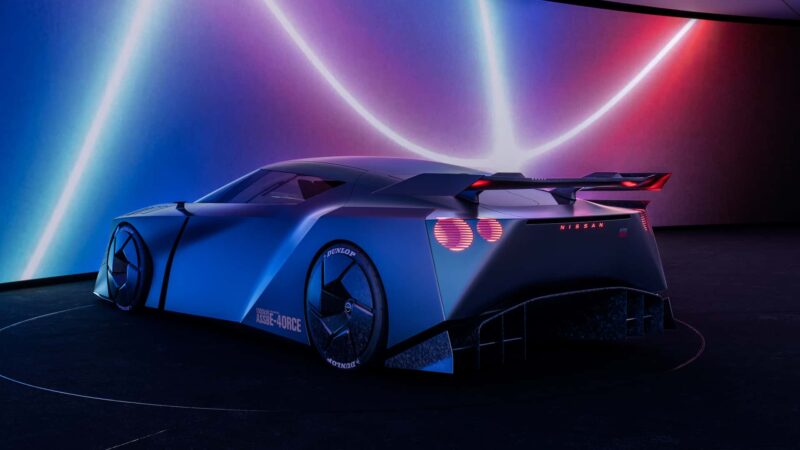
Nissan has not disclosed details about any Nismo models, but it is certain that the new Nissan GT-R will be part of those plans.
“There are teams working on this project. When and how, honestly, we don’t know,” he stated.
He also did not specifically mention whether the GT-R would continue with its original formula (internal combustion engine) or switch to full electric (EV).
“Whether the Nissan GT-R is an electric car or hybrid, it must remain a sports car. However, if it performs the same as an electric SUV, that would be a concern.
“We need to redefine the perception of sports cars,” he added.
What is clear is that niche products like the GT-R may not be a priority for Nissan at this moment.
Realistically, Nissan is planning to cut up to 20,000 jobs and close up to seven factories worldwide.
Additionally, Nissan aims to streamline its product portfolio by eliminating up to six vehicle platforms and targeting a reduction in parts complexity by up to 70 percent.
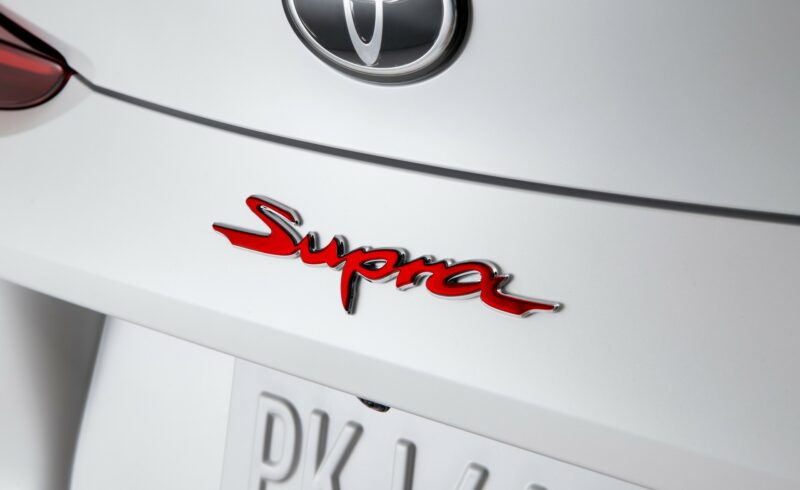
With the introduction of the GR Supra A90 Final Edition, it signals the impending end of this sports car model.
Production for the fifth generation of the GR Supra is scheduled to conclude in the spring of 2026.
For context, the Toyota GR Supra is the ‘twin’ model to the BMW Z4, with both models being exclusively assembled at the Magna Steyr factory in Austria.
With the end of production for the BMW Z4, there is little reason for the manufacturer to continue producing the GR Supra, especially since both sports cars are low-volume models.
The good news is that the legacy of the GR Supra will be continued with the arrival of a new generation model.
This was confirmed by Cooper Ericksen, Senior Vice President of Product Planning and Strategy at Toyota North America, in an interview with MotorTrend.
“It makes sense for us to have a new generation Supra. However, when and how it will happen is still undetermined.”
“For this new model, there will definitely be a time gap. The question is, how significant will that time gap be?” he added.
This question is quite valid, as the GR Supra A90 made its debut after a long hiatus, with nearly two decades passing since the production of the A80 model was discontinued in 2002.
“Our goal is to minimize that time gap for the new generation GR Supra.”
He further explained that the existing GR Supra has reached a stage where it now has a Final Edition model and the reasoning is simple: the investment is no longer worth it to continue meeting increasingly stringent regulations.
“The new GR Supra needs a new home (platform). The question at this point is, when can we obtain that new home to build it?”
Eriksen emphasized that the company is committed to producing the new generation GR Supra “with or without a partner.”
“We have to wait and see. Our dream is to create a fantastic new generation product that will be loved by our fans.”
Proton has announced the appointment of Ainol Azmil as Acting Deputy Chief Executive Officer, taking over the role from Roslan Abdullah.
Ainol Azmil will report to Dr. Li Chunrong (Chief Executive Officer of Proton) and will continue to manage his existing portfolio in Corporate Strategy and Group Technical Procurement.
According to Dr. Li Chunrong, “Proton welcomes Ainol Azmil as Acting Deputy Chief Executive Officer and is confident in his ability to assume this temporary position.”
“At the same time, Proton wishes to express its highest appreciation to Roslan Abdullah for his contributions to the company and wishes him success in his future endeavors.”
Roslan Abdullah served as Deputy Chief Executive Officer for five years, during which he helped strengthen Proton’s position in Malaysia and facilitated the company’s entry into the EV market through the Proton e.MAS 7 model.
The Malaysian Anti-Corruption Commission (MACC) seized various assets worth RM32 million believed to belong to a highway concessionnaire with the title ‘Tan Sri’, following an investigation into the misappropriation of highway construction sukuk funds in the Klang Valley, according to Bernama.
According to a source, among the items seized were handbags, jewellery, luxury vehicles, watches and cash after the MACC Investigation Division searched two residences belonging to the individual in the capital.
The source stated that in the search, MACC seized 217 luxury watches of various brands estimated to be worth about RM5 million, 27 handbags worth over RM1 million and jewellery valued at RM4 million.
“During the search, MACC also seized nine luxury vehicles such as Bentley, Mercedes-Benz and Range Rover worth almost RM7 million,” it said.
The source added that following the search, MACC also found a storage containing various types of luxury liquor in another residence estimated to be worth about RM3 million and believed to be linked to money-laundering activities.
“In the same operation, MACC also seized another luxury residential unit in the capital estimated to be worth around RM12 million, which is believed to belong to the individual,” he said.
The source also explained that all goods and assets were seized for the purpose of further investigation under the MACC Act 2009 and the Anti-Money Laundering and Anti-Terrorism Financing Act (AMLA) 2001.
Amid challenges with financial issues, Nissan has officially unveiled the sixth generation of its urban hatchback, the Nissan Micra 2026.
Unlike its five predecessors, the Nissan Micra now functions as a fully electric vehicle (EV).
Here are some quick facts you need to know:
1. Renault Platform
This B-segment hatchback is not developed entirely by Nissan; instead, it uses the CMF-B (or AmpR Small) platform.
Along with sharing the same body as the Renault 5, the Nissan Micra also features similar electric drive unit specifications.
2. Power
The base variant of the Nissan Micra is powered by a 121 hp/225 Nm electric motor, with a 40 kWh battery pack that provides a range of 310 km.
The most powerful version is equipped with a 148 hp/245 Nm electric motor and a 52 kWh battery pack, allowing for a driving range of 408 km.
3. Dimensions
Unlike the fifth-generation Micra, the new Micra has shorter dimensions (3,920 mm), but it is wider (1,800 mm) and has a longer wheelbase (2,540 mm). In fact, the Micra is also wider compared to the original Renault 5.
4. Design
Due to sharing its body with the Renault 5, several elements from the donor model still exist, such as the side windows, the side mirror housing structure, the wide C-pillar, and the hidden rear passenger door handle.
Unique to the Nissan Micra is the oval-shaped round headlight and taillight design inspired by the Concept 20-23 model.
As standard, this EV comes equipped with 18-inch wheels featuring three design options.
Additionally, the Nissan Micra features multi-link suspension settings at the rear—a characteristic typically found in more expensive car segments.
5. Interior
The driver-oriented dashboard layout found in the Renault 5 has been fully integrated into the Nissan Micra EV.
There is a 10.1-inch digital cluster screen supported by a matching center screen deliberately positioned facing the driver.
Besides the NissanConnect infotainment system, which includes built-in Google services, it also supports connections to Apple CarPlay and Android Auto.
The start button is located between the two screens, while the transmission lever is positioned on the steering column, close to the start button.
6. Production
The Nissan Micra EV will be assembled at the Renault ElectriCity factory located in Douai, France—which has been producing the Renault 5 since 2024. This EV is expected to enter the European market by the end of 2025 as a 2026 model.
Motul Asia Pacific recently announced the launch of its high-performance synthetic lubricant, 7000 4T, for the Malaysian market.
The 7000 4T motorcycle lubricant is an evolution of the H-Tech 100 product line, which has been adapted with the latest lubricant technology and standards.
With a 100% synthetic formulation featuring uniform molecular characteristics, Motul 7000 4T is designed to reduce friction, improve efficiency, and lower fuel consumption.
Additionally, the Motul 7000 4T promises smoother engine response, better protection, and reliability for daily rides under various conditions.
This product is suitable for most four-stroke motorcycle models available in Malaysia and exceeds the industry standards for wet clutch compatibility according to JASO MA2 and API SP.
It is available in four viscosity grades: 5W40, 10W30, 10W40, and 10W50, and is offered in 1L and 1.2L bottle sizes.
Each 7000 4T bottle is made from 50% recycled plastic and is 100% recyclable, reflecting Motul’s commitment to sustainability and reducing environmental impact.
BMW Motorrad Malaysia has announced the official selling price for the 2025 BMW R 1300 GS Adventure, available at all authorized dealers nationwide, starting from RM148,500.
The adventure motorcycle was showcased for the first time at the 2025 Malaysia Autoshow held recently.
In terms of power, the R 1300 GS Adventure is powered by a 1,300 cc twin-cylinder boxer engine that produces 145 hp and 149 Nm of torque, paired with a six-speed transmission.
It can accelerate from 0 to 100 km/h in just 3.4 seconds and reach a top speed exceeding 200 km/h.
The BMW R 1300 GS Adventure features a completely new design, including a redesigned chassis supported by the Dynamic Suspension Adjustment (DSA) system.
There are four riding modes available: Rain, Road, Eco, and Enduro, along with the optional Riding Modes Pro for a more personalized performance.
Additionally, the R 1300 GS Adventure is equipped with a Tire Pressure Monitoring System (TPMS), Dynamic Traction Control (DTC), Hill Start Control (HSC), Front Collision Warning (FCW), Lane Change Warning, Dynamic Cruise Control (DCC), Engine Drag Torque Control (MSR), and Dynamic Brake Control (DBC).
There is an option to add the Shift Assist Pro functionality for the standard variant, as well as the Automated Shift Assistant for the three other variants (Style GS Trophy, Triple Black, and Option 719).
As standard, the BMW R 1300 GS Adventure comes with a Touring package that adds features such as chrome manifolds, navigation devices, and mounts for aluminum storage boxes.
Other features include a 6.5-inch TFT display, USB charging slots, a 30-liter fuel tank, a top case with a capacity of 37 liters, aluminum side cases with a capacity of 73 liters, and LED lighting.
The selling prices are as follows:
BMW R 1300 GS Adventure Standard – RM148,500
BMW R 1300 GS Adventure Triple Black – RM153,500
BMW R 1300 GS Adventure GS Trophy – RM153,500
BMW R 1300 GS Adventure Option 719 Karakorum – RM164,500
Nissan is reportedly facing the possibility of selling its headquarters building located in the Minato-Mirai 21 district of Yokohama, Japan.
A report from Nikkei Asia claims that the headquarters building has been listed as one of the assets Nissan needs to divest by the end of March 2026.
The newly appointed CEO of Nissan, Ivan Espinosa, announced that there are several assets of Nissan that are set to be sold, although he did not specifically mention the headquarters complex.
According to a local real estate agent, the Nissan headquarters complex is estimated to be worth over 100 billion yen, or approximately RM2.95 billion.
Even if Nissan no longer owns the building, the company will continue to lease the property from the new owner to maintain its operations as usual.
This approach is similar to what McLaren employed after the supercar manufacturer sold its headquarters located in Woking as a way to reduce debt.
The sale of the headquarters building is one of the strategies Nissan is implementing to significantly cut costs after facing a loss of $4.5 billion (RM18.95 billion) last year.
Nissan will also be closing up to seven global factories, including two domestic plants (known as the Oppama and Shonan plants), and will lay off 20,000 workers.
Additionally, development for certain models will be halted, and the company plans to streamline its existing platforms to just seven in order to reduce parts complexity by up to 70 percent.
Here it is—the sixth generation of Toyota’s compact SUV RAV4 has just been launched globally.
Built on the latest platform of the Toyota New Global Architecture (TNGA), the RAV4 features styling that is more in line with the existing model lineup such as the bZ, Camry, and Prius.
What do you need to know about the RAV4 2026?
1. Variants
Toyota offers three main variants:
Core – Urban styling
Adventure – A bolder appearance with off-road friendliness
GR Sport – A more engaging driving experience
2. Dimensions
Compared to the previous generation, the new RAV4 is significantly longer at 4,600 mm, while maintaining a width of 1,855 mm and a wheelbase of 2,690 mm.
The Adventure and GR Sport variants come with a wider measurement of 1,880 mm.
3. HEV and PHEV Powertrain Options
The new generation RAV4 is available only in hybrid (HEV) and plug-in hybrid (PHEV) versions.
The RAV4 HEV is powered by a 2.5-liter engine with an option for front-wheel drive (FWD) producing 226 hp or all-wheel drive (AWD) producing 236 hp.
The PHEV variant, on the other hand, is equipped only with an AWD system, achieving a total power of 320 hp and an emissions-free range of up to 150 km.
Additionally, the RAV4 PHEV supports vehicle-to-home (V2H) functionality, fast DC charging (up to 80% charge in 30 minutes), as well as improved off-road driving performance.
4. Exterior Design
Like other modern Toyota vehicles, the RAV4 features a shark-inspired front design.
The rear light housing is designed with simpler LED graphics, and the word “RAV4” is centered on it.
Depending on specifications, there are wheel size options of 17, 18, or 20 inches.
5. Cabin Space
With a dashboard structure that is 40 mm lower, the RAV4 offers a wider field of vision.
Utilizing an island architecture approach, the RAV4’s dashboard is designed to facilitate the driver’s access to the screen and essential function buttons, while minimizing eye movement during driving.
Unique features in the RAV4 cabin include a central console cover that can serve as an armrest or a tray for placing items.
The cargo space in the RAV4 now boasts a capacity of 749 liters, which is 16 liters larger than the previous model.
Finally, the RAV4 is Toyota’s first model to utilize the Arene software developed by Woven by Toyota, encompassing both infotainment system operations and advanced safety features of Toyota Safety Sense 4.0 (TSS 4.0).
6. RAV4 Adventure
Compared to the simpler Core model, the RAV4 Adventure offers unique features such as:
Wider dimensions
More prominent body protection plastics
Simpler wheel design
A more squared-off front bumper
Larger, vertical grille openings
A taller nose structure
Roof rail fittings
7. RAV4 GR Sport
Also noteworthy is the GR Sport variant, designed for those seeking a combination of practicality and a more thrilling driving experience in one package.
In terms of appearance, the RAV4 GR Sport is given an aggressive bumper featuring both a front spoiler and a rear spoiler to enhance aerodynamics and handling stability.
The RAV4 GR Sport also benefits from a wider track (+20 mm), special suspension and steering tuning, and a lighter aluminum wheelset.
8. TSS 4.0 System
The Toyota RAV4 is also the first Toyota model to feature TSS 4.0 safety equipment.
Among the new features included in the RAV4 are a sudden acceleration prevention system and an emergency driving stop system (EDSS) in case of any unforeseen circumstances involving the driver.
Earlier this month, Volvo announced the return of the iconic XC70 nameplate, complementing its existing SUV model lineup.
The XC70 is no longer a crossover wagon; instead, it has transformed into a true SUV model.
The Volvo XC70 is the first Volvo vehicle built on the Scalable Modular Architecture (SMA) platform. This platform has previously served as the foundation for the Lynk & Co 07 and 08 models.
According to information disclosed on the website of China’s Ministry of Industry and Information Technology, the Volvo XC70 PHEV will measure 4,815 mm in length, 1,890 mm in width, 1,650 mm in height, and have a wheelbase of 2,895 mm.
There will be options for 19-inch or 20-inch wheels.
Utilizing the SMA platform, the Volvo XC70 features a plug-in hybrid (PHEV) system that includes an electric motor and a 1.5-liter engine developed by Aurobay.
For your information, Aurobay is now part of the Geely-Renault joint venture known as Horse Powertrain.
For the Chinese market, there will be two battery pack options.
The base variant will come with a 21.22 kWh LFP CATL battery, allowing for an all-electric range of 100 km (CTLC data).
Meanwhile, the top variant will feature a 39.63 kWh NMC battery pack, enabling the XC70 to travel 180 km without a drop of petrol.
In terms of design, the XC70 adopts the styling used in the XC90 facelift, such as the Thor hammer-designed headlights and vertical LED taillight graphics.
It also features hidden door handles and a frameless window design.
Currently, the Volvo XC70 is being developed specifically for the Chinese market, responding to the growing demand for PHEV models with longer electric ranges there.
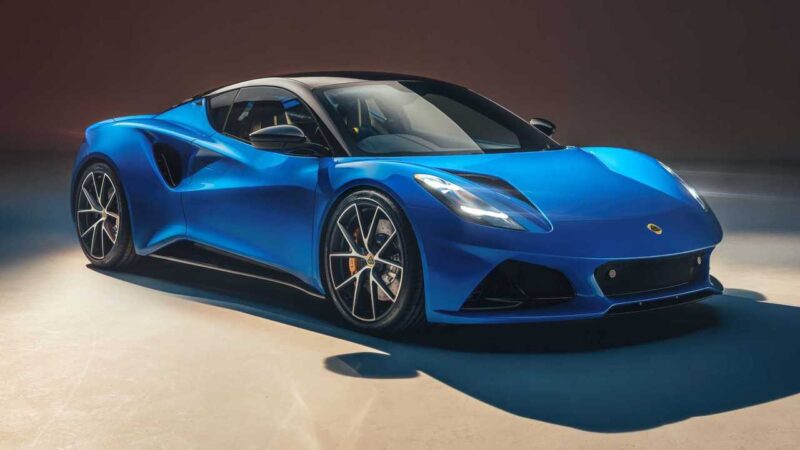
The Lotus Emira is currently the only pure internal combustion sports car still offered by Lotus to its enthusiasts.
Before production of this model ends in 2027, Lotus is reportedly planning improvements to the model, particularly for the United States market.
According to recent reports from Autocar, Lotus is considering a V8 engine for the Emira.
Its CEO, Feng Qingfeng, stated that the brand is exploring the feasibility of a V8 engine to replace the currently used V6 engine.
The Lotus Emira is available with a 3.5-liter supercharged V6 sourced from Toyota, or a 2.0-liter engine from Mercedes-AMG.
Feng dismissed the idea of increasing the power of the existing V6 engine, citing that the Toyota engine is unable to meet the stricter Euro 7 standards.
Lotus previously planned to gradually phase out the V6 offering to make way for the AMG-powered model.
However, with strong demand for the six-cylinder model in the United States, Lotus is prompted to consider the proposal of installing a larger engine.
Lotus Europe CEO, Matt Windle, told Autocar, ““The US is an incredibly important market for us for the car. It always has been. So we’re looking at the market demand for the product going forward.”
He further explained that the company is exploring several options that could be implemented to ensure the full potential of the Emira can be realized, including possibly matching engines from existing suppliers—most likely Mercedes-AMG.
Take a look at this concept model alongside the Saloon Concept from Honda’s 0 Series.
Yes, both of these models are car concepts featuring a wedge body shape. The only difference is that one carries an italic “H” logo, while the other has a straight “H” logo.
This dark black vehicle is actually the Hyundai Obsidian Concept, designed by transportation design student Dominik Anders, with full support from Hyundai itself.
This full-scale model was showcased alongside the Kia EV2 Concept during the 2025 Car Design Event held in Munich.
Unfortunately, no details have been released at this time.
However, we can observe several features such as a horizontal LED pixel light bar at the front, pixel taillights, aerodynamic rims, and an aggressive diffuser at the rear.
It also features a flatter, more level roof design aimed at maximizing cabin space.
What are your thoughts on this latest concept from Hyundai? Should it be brought to life?
This might be the most beautiful and elegant concept car ever produced by BMW – the Concept Speedtop.
It is a wagon, or more precisely, a shooting brake with two seats, featuring classic BMW elements like the shark nose and a small kidney grille structure.
The BMW Concept Speedtop is actually built on the Skytop concept model, which was originally constructed on the M8 platform. It’s not surprising that both models share a very similar design approach.
However, unlike the Skytop, the Speedtop focuses primarily on practicality.
As you can see at the rear, it now offers ample cargo space to accommodate small items.
BMW showcases a color combination of Floating Sunstone Maroon that transitions to Floating Sundown Silver on the roof.
Meanwhile, the cabin is adorned with a two-tone leather finish of Sundown Maroon/Moonstone White, complemented by accents in Floating Sunstone Maroon in several areas.
Like the Skytop, the Speedtop is expected to be powered by a 4.4-liter V8 engine capable of generating up to 617 horsepower – making it BMW’s most powerful V8 engine ever produced.
It has been reported that only 70 units of the Speedtop will be produced, each expected to carry a price tag of £430,000 (approximately RM2.45 million).
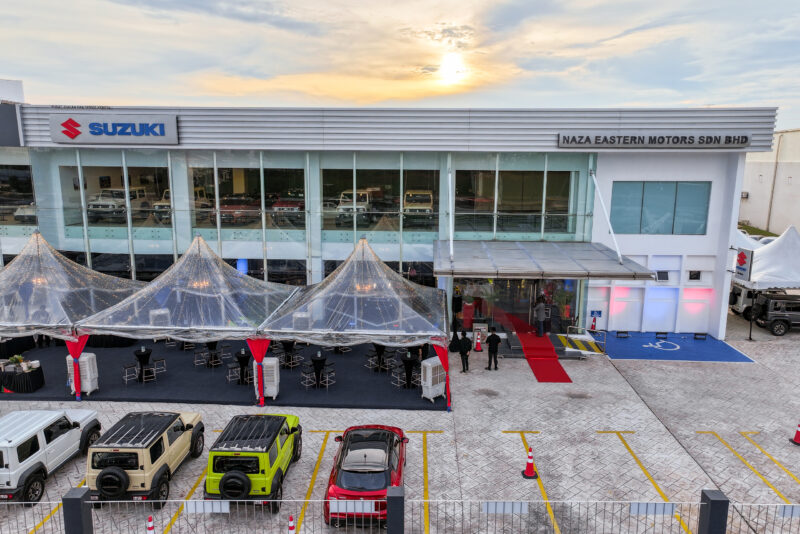
NAZA Automotive Group, through its subsidiary Naza Eastern Motors, has officially opened Malaysia’s first flagship Suzuki Cars showroom in Petaling Jaya, adjacent to the NAZA Auto Mall.
The 5,000-square-foot showroom serves more than just as a sales outlet; it now offers a more comprehensive customer experience.
In addition to featuring the latest design and corporate identity of Suzuki, the showroom also provides an on-site service counter, lifestyle areas, a children’s corner, and private discussion rooms.
It will also serve as an exclusive exhibition space for the lineup of Suzuki models that will be marketed in Malaysia.
According to Dato’ Jasmy Ismail, Chairman of NAZA Automotive Group, the official opening of this showroom reflects NAZA Auto’s vision to strengthen its business while deepening its engagement with customers in Malaysia.
“It embodies our strategic alignment to focus on key high-impact segments such as Suzuki, which remains one of the most trusted and dynamic brands in the urban and compact mobility space.
“This facility is not just about displaying cars; it is a space to create a more meaningful customer journey by offering value beyond the products and ensuring that Suzuki continues to grow as a preferred brand in Malaysia’s highly competitive automotive industry.”
In line with the official opening of the Suzuki Petaling Jaya showroom, customers can look forward to exclusive mid-year promotions and loyalty programs designed for both new customers and existing Suzuki owners.
Further details regarding the Mazda EZ-60 electric SUV have been revealed through the website of the Chinese Ministry of Industry and Information Technology.
According to preliminary reports, the Mazda EZ-60 is equipped with a single electric motor producing 255 hp, capable of reaching a top speed of 185 km/h.
In terms of dimensions, the SUV measures 4,850 mm in length, 1,935 mm in width, 1,620 mm in height, and has a wheelbase of 2,902 mm, placing it in the mid-size SUV category.
The EZ-60 features a futuristic and minimalist cabin layout, with a floating 26.45-inch 5K display, a two-spoke steering wheel, and side display screens.
Additionally, the front seats come equipped with a zero-gravity function, premium upholstery, ventilation, heating, massage features, built-in speakers in the headrest, and wireless charging slots.
Mazda has also disclosed that this SUV weighs approximately 2,180 kg and has a weight distribution ratio of 47:53, compared to 50:50 for the extended-range version (EREV) of the EZ-60.
For your information, the Mazda EZ-60 EREV combines a 255 hp electric motor with a 1.5-liter engine that serves only as a power generator, along with a 31.73 kWh LFP battery pack.
This configuration allows the EZ-60 EREV to travel up to 160 km on a zero-emission drive.
Interestingly, since its debut last month, Mazda has received interest for 20,000 pre-orders for the EZ-60.
While the sale price has not been disclosed, local automotive websites suggest that the price for the EZ-60 starts from RMB 150,000 to RMB 300,000 (approximately RM 88,000 to RM 175,000).
For most VIPs, VVIPs, and VVVIPs in Malaysia, the default vehicle frequently seen on the roads is none other than the most popular boxy MPVs: the Toyota Alphard/Vellfire.
This has been a common sight for the past 23 years, proving how essential such vehicles are for this demographic.
However, this situation may change with the introduction of several premium minivan models in the current market, which are available with electric (EV) and plug-in hybrid (PHEV) powertrain options.
One model that is already challenging the status quo is the Denza D9, a premium minivan from the luxury brand BYD.
Officially launched earlier last year, the Denza D9 is a three-row premium MPV that comes with a more affordable price tag compared to the Alphard/Vellfire duo—starting from RM259,000 to RM309,000 for the highest variant.
For this brief two-day, one-night test drive session, we were ‘challenged’ to experience the premium features that the Denza D9 aims to offer, starting from the Denza showroom on Jalan Klang Lama to Desaru, Johor.
Day One: Experience as a Boss
As soon as you open the sliding door, the Denza D9 provides a second-row layout featuring captain seats with a comprehensive package: headrest and footrest, heating and ventilation functions, 10-point massage, and zero gravity settings that can be adjusted via a separate touch screen on the armrest.
There are also wireless smart device charging slots and USB Type-C ports for both middle-row seats.
Feeling thirsty after a day of meetings? The Denza D9 includes a 6.8-liter refrigerator that can be set to temperatures between negative 6 and 50 degrees Celsius, enough to hold a few small bottles of water.
Additionally, there is a picnic table that can be unfolded from behind the front row seats. However, in our opinion, it might be more practical if the table were positioned closer to the second-row seats, to truly give that authentic business class flight feeling.
Want to maximize the second row? The Denza D9 does not offer a ‘boss switch’ function for the front passenger seat. Instead, you can access the ‘boss key’ menu through that small screen.
The use of premium Nappa upholstery makes for a more comfortable and less tiring travel experience.
Moreover, the noise, vibration, and harshness (NVH) levels in the Denza D9’s cabin are commendably low.
Tire noise is barely noticeable, and the use of double-glazed glass ensures that the sound of heavy rain doesn’t disturb the passengers’ sleep.
Importantly, with the standard smart adaptive suspension system DiSus-C, the Denza D9 is capable of providing a unique level of comfort throughout the journey.
Day Two: Working as a Driver for VIPs
After thoroughly enjoying the experience of being a VIP, on the second day, the writer ‘switched careers’ to take on the role of a driver responsible for bringing two VIPs back to Kuala Lumpur.
Upon entering the cockpit, the first thing the writer wants to commend is the driver’s seat adjustment, which is both comprehensive and perfectly suited for the task at hand.
It offers the essential support a driver needs, featuring eight adjustment levels, along with lumbar support, ventilation functions, and an adjustable headrest.
The center console still houses the gear knob and several physical buttons for key functions, such as drive mode selection, opening the side sliding door, and the rear door, plus a special button for accessing the refrigerator in the center.
The 10.25-inch cluster screen provides easily readable graphics; however, it would be better if it included a simpler analog theme option. Not all drivers prefer a screen filled with various information.
Fortunately, there is a head-up display (HUD) provided, allowing all crucial information to be read without requiring significant eye movement while driving.
The centrally located 15.6-inch screen is indeed large enough and supports Apple CarPlay and Android Auto, along with an easily navigable menu display and several shortcut buttons.
As a driver, this layout is genuinely appreciated, as it prevents the writer from fumbling to find and adjust vehicle settings, ensuring the two VIPs in the back remain comfortable without disturbance.
Driving Experience
In terms of dimensions, the Denza D9 is considerably larger compared to the Alphard/Vellfire duo, which is prevalent on the roads today.
However, it was not difficult for the writer to handle this premium MPV due to the large outward visibility, aided by a surround camera that ensures no body panels are scratched when entering narrow areas.
You can choose a softer and more relaxed steering tuning (Comfort mode) or a slightly heavier (Sport mode), depending on the conditions. However, most of the time, the writer preferred using Sport mode for a more natural response.
The driving modes available in the Denza D9 do not offer comprehensive settings.
This is because when Sport mode is selected, it only adjusts the ECU settings; you still need to enter the main screen menu to change the suspension, steering, and brake response settings as needed.
Speaking of suspension settings, based on our two-day driving experience, we found that the Denza D9 is more comfortable when using Sport settings.
In this condition, the body roll of this premium MPV is at an acceptable level, unlike in Comfort mode, where the body roll is more pronounced. Perhaps this mode is better suited for smoother and well-maintained road conditions.
Ideal for Long Journeys
The Denza D9 has advantages in terms of its powerful electric powertrain.
The unit we drove over the course of two days is the Premium AWD variant, equipped with a dual motor setup, with one motor for each axle.
The front axle is powered by an electric motor producing 308 hp and 360 Nm, while the rear axle is supported by a 60 hp and 110 Nm electric motor. Total power output? 369 hp and 470 Nm, with an acceleration performance of just 6.9 seconds from 0 to 100 km/h.
Based on the driving experience the other day, the acceleration of the Denza D9 feels sufficiently powerful, smooth, and linear. Achieving speeds above the national speed limit does not require overly aggressive throttle action.
Simply pressing the throttle gently, this premium MPV can easily reach triple-digit speeds, and most importantly, the passengers in the back are hardly affected by the driver’s actions.
Is the Denza D9 suitable for long journeys? Yes!
Range anxiety is not a concern you need to think about, as this MPV can travel up to 580 km (NEDC data) on a full charge, thanks to the standard 103.36 kWh battery pack.
Moreover, with numerous fast charging facilities available along the main routes in Peninsular Malaysia, it makes it easier for you to transport VIPs to their destination without unnecessary worry.
Just stop at any fast charging facility, such as Johor Premium Outlet or major Rest & Relaxation (R&R) stops, and you can charge the Denza D9’s battery from 30% to 80% state of charge in just 30 minutes.
This is because the Denza D9 MPV is standardly equipped to support DC fast charging up to 166 kW.
Conclusion
Based on our brief driving experience the other day, we believe the Denza D9 can be a premium MPV option worth considering, especially for those looking to move away from the typical VIP vehicles available on the market.
It offers a powerful zero-emission driving package, a spacious and quiet cabin filled with various premium features, and importantly, at a price that is not overly expensive.
Starting at just RM259,000, you can get the front-wheel-drive version of the Denza D9, or opt for the Premium AWD variant to enjoy all the features we’ve mentioned.
Most interestingly, the Denza D9 is offered with cross-border warranty coverage across three countries (Singapore, Malaysia, and Thailand), meaning that if you venture into these neighboring countries, you can still enjoy roadside assistance and after-sales service similar to what is provided in Malaysia.
Denza D9 Specifications
Drivetrain: Dual electric motors
Power: 369 hp, 470 Nm
Drive: All-wheel drive (AWD)
Acceleration: 6.9 seconds (0-100 km/h)
Battery: LFP Blade, capacity 103.36 kWh
AC charging: 11 kW
DC charging: 166 kW
Range: 580 km (NEDC data)
Suspension: MacPherson strut/Multi-link, adaptive DiSus-C system
Dimensions: 5,250 mm x 1,960 mm x 1,920 mm
Wheelbase: 3,110 mm
Turning radius: 5.95 m
Cargo space: 410 liters – 2,310 liters
Malaysia’s Leading Automotive News | ENGEAR ENGLISH