Rimac has recently broken the world record set by its competitor Koenigsegg with the hypercar Nevera R.
Not just one, not two, but a total of 24 world records have been shattered by the Rimac Nevera R, including 23 previous records held by the standard Nevera.
Here are some of the speed records broken by the Rimac Nevera R:
0-60 mph: 1.66 seconds
0-100 km/h: 1.72 seconds
0-100 mph: 2.96 seconds
0-200 km/h: 3.95 seconds
0-300 km/h: 7.89 seconds
0-200 mph: 9.25 seconds
0-400 km/h: 17.35 seconds
100-200 km/h: 2.22 seconds
200-250 km/h: 1.65 seconds
200-300 km/h: 3.89 seconds
0-100-0 km/h: 3.32 seconds
0-200-0 km/h: 8.58 seconds
0-300-0 km/h: 14.49 seconds
0-400-0 km/h: 25.79 seconds
0-250-0 mph: 25.79 seconds
Quarter-mile acceleration: 7.90 seconds
One-mile acceleration: 19.71 seconds
Top speed: 431.5 km/h
Compared to the standard Nevera, the Rimac Nevera R generates an impressive 2,107 hp from its four electric motors.
Additionally, it features a new aerodynamic package, including a fixed rear wing and a larger diffuser, which produces 15 percent more downforce and enhances aerodynamic efficiency by 10 percent.
Each Rimac Nevera R is priced at €2.3 million (approximately RM11.44 million), with only 40 units set for production.
Last month, Koenigsegg introduced a hypercar called the Sadair’s Spear, which is a more radical version compared to the Jesko Attack and Jesko Absolut.
Although it does not bear the name Jesko—after Christian von Koenigsegg’s father—the Sadair’s Spear itself is named after a racehorse ridden by Jesko von Koenigsegg in his last race in 1976.
Built on the foundation of the Jesko Attack, Sadair’s Spear features several unique characteristics.
Among these is a more aggressive aerodynamic package, complete with an active dual-blade rear wing.
The rear dimensions have been slightly extended to ensure better airflow, followed by redesigned air intakes for a more effective cooling system.
The overall weight of the vehicle has been successfully reduced by 35 kg, bringing the total to just 1,320 kg, thanks to the installation of lighter internal and mechanical components, as well as the removal of 2.58 kg of sound insulation.
Additionally, all four corners of the wheel arches are fitted with seven-spoke turbine rims made from carbon fiber, wrapped in wider Michelin Pilot Cup 2 tires.
As for the cabin, buyers can opt for a six-point safety harness as an add-on feature.
It is not as barren as one might expect, considering Koenigsegg still offers modern features such as wireless smartphone charging and USB charging ports in the cockpit.
In terms of power, the Koenigsegg Sadair’s Spear is equipped with a 5.0-liter twin-turbo V8 engine paired with a nine-speed Light Speed Transmission (LST).
Running on regular fuel, the engine can produce 1,300 hp and a torque of 1,000 Nm, available from 2,700 rpm, or 1,500 Nm at 5,100 rpm.
Switching to E85 fuel, the horsepower figures for the Sadair’s Spear can reach up to 1,625 hp!
Only 30 units of the Sadair’s Spear will be produced, and the less pleasant news is that all units are already sold out.
One of the unique features of electric vehicles (EVs) is the one-pedal driving mode. This mode simplifies the driving process by allowing the driver to control both acceleration and deceleration with just a single pedal.
However, studies have shown that excessive reliance on this feature can lead to slower driver reactions, especially in emergency situations.
For safety reasons, China will introduce new legislation that prohibits manufacturers from setting the one-pedal mode as the default driving system.
According to a report by The Paper, the new regulations will come into effect on January 1, 2027.
Additionally, there are two changes to standards that will take effect earlier, on January 1, 2026.
One of these changes mandates that every new EV must ensure that the brake lights illuminate when the deceleration process, triggered by energy recovery systems, exceeds 1.3 m/s².
This measure is deemed necessary to reduce the risk of rear-end collisions and to warn other road users.
Another change, which has been implemented at a slower pace compared to other continents, is the requirement for every new vehicle to be equipped with an anti-lock braking system (ABS).
The ABS has been mandatory in Europe since 2004, prior to being adopted by other markets.
Who would have thought that this agile little crossover from Lexus was a direct response to a request from Akio Toyoda, the driving force behind Toyota?
During the early stages of development, Akio, also known as Morizo, asked the R&D team to create a casual car that could be driven on weekends, much like a beloved pair of sneakers.
The result is a luxurious compact crossover with an attractive design and a fun driving experience – the Lexus Breakthrough Crossover, or LBX.
The Lexus LBX is the smallest production car ever produced by Lexus and is positioned below the Lexus UX.
Although it is built on the GA-B platform, which serves as the foundation for the European market Yaris Cross, the LBX is more than just a badge-engineered product.
Design
Compared to the European specification Yaris Cross, the LBX has a more robust appearance.
This is achieved through more rounded wheel arches, wider and more pronounced fenders, and larger tire sizes.
Moreover, the shoulder line of the LBX is lower compared to the Yaris Cross, creating an almost snowman-like appearance from the front, side, and rear views.
Masahiro Sasaki, a racer and Toyota test driver, explains that this design gives the LBX a more balanced look and a lower center of gravity.
As a result, the LBX appears sturdy even when stationary in a parking spot, and even more so when driven on the road.
Interior Space
For me, the Lexus LBX is best described as a casual car to drive on weekends without compromising practicality.
Yes, the rear passenger space may seem small, and it is better suited for children or petite adults.
As for cargo space? It offers about 315 liters, which is ample for grocery shopping. Alternatively, if you fold down the second-row seats, you will have a cargo area of up to 992 liters.
Lexus seems to have focused heavily on the Tazuna concept, especially in the driver’s cockpit.
There are not many physical function buttons; only essential functions are retained.
The intention? To ensure that the driver’s attention remains on the road.
The control buttons on the steering wheel may appear vacant without any functions, but in reality, you can easily set shortcut buttons for various operations.
You’ll just need to keep an eye on the head-up display to see what operations are being activated or deactivated, such as adjusting the fan speed or changing the music playing.
Initially, it may take some time to get used to this setup, but over time, I have come to prefer this method as it minimizes eye movement while driving.
Additionally, the Lexus LBX offers plush seating that is comfortable and firmly supports the driver – a feature that’s hard to find in any car in a similar segment.
The 9.8-inch central screen displays easily accessible menus and supports connections to Apple CarPlay and Android Auto.
The 12.3-inch digital cluster screen is also easy on the driver’s eyes, and most importantly, the analog meter theme is still present!
The start drive button is positioned fairly high next to the instrument cluster, making it easy for the driver to see and reach.
Honestly, this is exactly what I expect from a Lexus: a luxury car that still prioritizes the needs of the driver.
Modern Features for Convenience
Inside the LBX cabin, you will find up to four USB Type-C charging ports, along with a wireless Qi charging slot for smart devices.
A Mark Levinson audio system with 13 speakers is ready to accompany you during spirited weekend drives.
Door operations are made easy with the e-Latch system; simply press the lever on the door panel (as well as the door handle outside) with just one finger, and the door will open.
Although the center console appears somewhat narrow for fitting two arms at once, it is still equipped with the necessary operational buttons for the driver.
Hybrid Engine with EV-like Behavior
One of the most exciting aspects of driving the Lexus LBX is its powerful hybrid engine performance.
Unlike typical Chinese hybrid cars that use turbo engines, the LBX offers a naturally aspirated (NA) 1.5-liter hybrid engine with the code M15A-FXE.
This engine, with an output of 90 hp and 120 Nm of torque, is paired with an electric motor producing 93 hp and 185 Nm, resulting in a combined output of around 136 hp.
The efficient eCVT transmission ensures that every brisk acceleration in the LBX can be fully enjoyed by the driver, especially when taking off from traffic lights or toll plazas.
After enjoying the curves, I returned to a more relaxed pace, navigating the central roads. Most of the time, the vehicle prioritized EV driving mode, creating a quieter and more comfortable atmosphere.
At times, I recorded a zero-emission driving ratio of 50 percent over a distance of 78 km.
Handling and Comfort, Perfectly Balanced!
As standard, the Lexus LBX features a MacPherson strut setup in the front, complemented by a simpler torsion beam system in the rear.
On paper, it may seem commonplace, similar to B-segment SUVs currently available in the market.
However, what sets the LBX apart is Lexus’s tuning of its handling, which distinguishes its performance from other SUVs.
During my test drive, I found it difficult to pinpoint negatives; the LBX felt stable and glued to every corner while effectively absorbing road imperfections.
In short, it strikes a balance between handling stability and driving comfort, further enhanced by the Vehicle Braking Posture Control function to reduce pitch and roll effects.
Additionally, the steering responsiveness is sufficiently tactile, adhering to every command from the driver without feeling overly light.
The harmonious integration of its chassis with a short wheelbase, powerful engine, efficient transmission, and suspension makes the Lexus LBX a remarkable product in its segment.
It’s hard to describe this feeling in words; you need to experience the LBX first-hand if given the chance.
The sound of the three-cylinder engine is also minimal, merely a whisper in your ears, especially when the accelerator is pressed hard. However, most of the time, the cabin remains quiet and comfortable.
Safety Features
As standard, the LBX comes equipped with safety features, including eight airbags, as well as the Lexus Safety System+, which encompasses functions such as:
Autonomous emergency braking
Adaptive cruise control with stop-and-go functionality
Lane-keeping assistance
Active steering assistance
Traffic sign recognition system
Blind spot monitoring system
Door opening warning
Automatic high beam assist
Conclusion
With a price tag of RM268,888, I must admit that the LBX is not a luxury car designed for everyone, nor is it suitable as a first car.
It has drawbacks that may be difficult to compromise on; however, it offers a package that can bring a smile to the driver after a long week of driving an SUV or MPV.
Much like a favorite pair of shoes, it is perfectly suited for when you need it.
Specifications for the Lexus LBX (RM268,888)
Engine: 1.5-liter inline three-cylinder NA (code M15A-FXE)
In conjunction with the Goodwood Festival of Speed, Hyundai took the opportunity to launch the high-performance electric sedan, the Ioniq 6 N.
The Hyundai Ioniq 6 N is the second high-performance EV produced by the South Korean manufacturer, following the introduction of the Ioniq 5 N in 2023.
Here are the details:
Power
The Ioniq 6 N is powered by two electric motors, delivering a total output of 601 hp and 740 Nm of torque.
With the N Grin Boost function, this power can surge to 641 hp and 770 Nm, but only for a duration of 10 seconds.
Acceleration from 0 to 100 km/h can be achieved in just 3.2 seconds, before reaching a top speed of nearly 260 km/h.
Chassis
According to Hyundai, the chassis of the Ioniq 6 N has been refined with a focus on improving handling, including suspension geometry with this sole purpose.
It is also equipped with electronically controlled dampers, complete with sensors that allow the vehicle to adjust damping based on current driving conditions.
Drivers can also take advantage of the N Drift Optimizer and N Torque Distribution functions for an exhilarating power control experience.
Braking System and Wheels
To bring the powerful N electric machine to a stop, Hyundai has fitted it with four-piston calipers and 15.7-inch rotors at the front, along with single-piston calipers and 14.1-inch rotors at the rear.
All four corners feature 20-inch wheels.
The Hyundai Ioniq 6 N utilizes specially developed 275/35R20 Pirelli P-Zero 5 tires designed specifically for this model.
Aerodynamics
Compared to the standard Ioniq 6 model, the Ioniq 6 N is equipped with a more sporty body kit, featuring a more aggressive bumper and front splitter.
For improved aerodynamic performance, the Ioniq 6 N comes with a ducktail rear wing and wider fenders.
For Drivers
In addition to the mentioned features, the Ioniq 6 N boasts an upgraded N e-shift system designed to minimize performance loss and enhance sound quality.
There is also an N Ambient Shift Light system that synchronizes with the ambient lighting when ‘gear shifts’ occur.
Finally, the N Active Sound+ feature offers three unique sound options: “Ignition,” inspired by motorsports; the nostalgic EV sound “Evolution”; and the futuristic theme “Lightspeed.”
How far can it go?
The Hyundai Ioniq 6 N is equipped with an 84 kWh battery pack, offering a range of up to 468 km on a full charge according to WLTP data.
For comparison, the Ioniq 5 N can travel up to 356 km using a similar battery setup.
Color Options
This high-performance EV is available in Performance Blue Pearl, Abyss Black Pearl, Serenity White Pearl, Nocturne Gray Metallic, Nocturne Gray Matte, and Gravity Gold Matte.
After nine years of the second generation of the Mazda CX-5 dominating the roads, Mazda is now ready to introduce the third generation of this compact SUV to the world.
Not many details have been revealed, but it is certain that the new generation CX-5 offers a larger dimensional package, a refreshed Kodo design, and an entirely new cabin layout.
Here are several things you need to know about the 2026 Mazda CX-5:
Dimensions
The CX-5 features dimensions of 4,690 mm (+140 mm) in length, 1,860 mm (+20 mm) in width, and 1,695 mm (+10 mm) in height.
The wheelbase measures approximately 2,775 mm (+75 mm).
These size changes are expected to enhance the cabin space, making it appear more spacious and larger, along with a bigger cargo area (+61 liters).
Exterior Design
Undoubtedly, the Kodo design featured in previous CX-5 models is among Mazda’s most beautiful works.
For the third generation, this approach has been reworked for a more stylish appearance, especially with the Signature Wing grille, sharper headlights, and a sportier bumper.
The rear now resembles its larger siblings, the CX-70/CX-80, but the Mazda logo has been removed and replaced with just the word “MAZDA.”
Minimalist Cabin
Mazda is well-known for its minimalist cabin design approach in its latest models, and the 2026 CX-5 is no exception.
The dashboard layout is now more streamlined, with the center housing a 15.6-inch screen featuring an integrated Google system.
Unfortunately, Mazda has taken the effort to minimize the presence of functional buttons to the extent that all controls are now integrated into the large screen.
Additionally, there is a 10.25-inch digital cluster screen behind the steering wheel, which no longer features the M logo.
For lower variants, Mazda offers a 12.9-inch central screen.
Engine Options
The 2026 Mazda CX-5 will be available with several engine options.
The existing 2.5-liter Skyactiv-G engine (187 hp/251 Nm) will continue to be offered, while a mild hybrid e-Skyactiv G 2.5-liter version (140 hp/238 Nm) will be available in Europe.
Mazda also confirmed that the hybrid variant will be equipped with the entirely new Skyactiv-Z engine, promising significantly higher performance and efficiency.
This new generation of the CX-5 is expected to make its debut in the European market by the end of this year, followed by other markets by the end of 2026.
The Ministry of Transport (MOT), through the Road Transport Department (JPJ), has increased the quota, by 10,000, for the MyLesen B2 programme this year, with a total allocation of RM3.5 million according to Bernama.
Its Minister Anthony Loke said the move was made following the encouraging response to the initial 15,000 quota, which was almost fully taken up, with 14,581 participants, 97 per cent of whom are youths, having joined the programme.
“I discussed with JPJ earlier. This year, we have implemented the programme for nearly 15,000 participants. In the first six months alone, it was almost fully taken up. Starting mid-year, we will increase the quota by 10,000 nationwide, with allocations provided through initiatives under the ministry,” he said.
“The cost of obtaining the licence is RM350 per participant. I also urge schools to help identify students who ride motorcycles without a licence, as they are the main target group for this initiative. We want to help them get the licence; we do not want young people riding motorcycles to school without a licence. That is why the role of schools is crucial,” he told reporters today.
Loke said this after the presentation of the state-level MyLesen B2 driving licences, which was also attended by JPJ director-general Datuk Aedy Fadly Ramli and Negeri Sembilan JPJ director Hanif Yusabra Yusuf.
The Seremban Member of Parliament said that the programme reflects the government’s commitment to assist the B40 low-income group, in improving their socio-economic status and household income through job opportunities, particularly in the gig economy, while also aiming to produce competent and safe drivers.
He added that the initiative also enables the target group to obtain a Class B2 motorcycle licence legally, in an easier and more affordable manner.
“I don’t want to hear of any school students riding motorcycles without a licence. This is a reminder—riding without a licence is illegal and puts lives at risk. Driving institutes must also ensure that these individuals are properly trained,” he said.
Loke also expressed hope that the young recipients of the licence would serve as ambassadors, by setting good examples within their communities, promoting road safety awareness, the importance of obeying traffic rules, and encouraging prudent, careful, and responsible riding.
Before it could even be assembled and sold globally, the new generation 2026 Nissan Leaf has reportedly encountered problems.
According to a report by Reuters citing Kyodo News, Nissan is forced to cut the production of the new Leaf due to export restrictions on rare earth metals imposed by China.
These restrictions have impacted the supply of components necessary for Leaf production.
In addition to Nissan, the export limitations set by China are also affecting several automotive manufacturers, including Ford and Suzuki.
The third generation of the Nissan Leaf was introduced last month, marking a shift from its traditional hatchback design to an electric crossover that shares the same AmpR Medium platform as the Nissan Ariya EV.
The 2026 Nissan Leaf will also be the first Nissan model to adopt the NACS (North America Charging System) charging standard, making it compatible with the Tesla Supercharger network.
You may have lost faith in Jaguar given the brand’s new direction.
However, Mitsuoka is the answer you’ve been searching for to rekindle that long-lost ‘aura.’
Introducing the Mitsuoka Viewt Royal Edition, inspired by the design of the classic Jaguar Mk2 from the 1960s.
The Mitsuoka Viewt has actually been on the market since 1993, originally based on the Nissan Micra and March.
For this latest offering, Mitsuoka has now adopted the popular Toyota Yaris as its foundation.
This new Viewt Royal Edition is a special edition featuring three exclusive colors: Royal Green, Royal Red, and Royal White.
Similar to the standard Viewt, the Viewt Royal Edition comes equipped with chrome front and rear bumpers, round-shaped headlights, and a chrome grille.
Inside the cabin, the Viewt Royal Edition boasts Royal Brown faux leather trim on the seats, door panels, and lower dashboard section.
Utilizing the TNGA-B platform, the Viewt shares the same engine options as the Yaris, including a 1.0-liter engine with 68 hp, a 1.5-liter engine (producing either 118 hp or 123 hp), and a 1.5-liter hybrid engine with 114 hp, available with either a six-speed manual transmission or CVT.
In addition to front-wheel drive, the Viewt is also available in an all-wheel-drive variant, only for the 1.5-liter and 1.5-liter hybrid models.
In Japan, the Mitsuoka Viewt is priced starting at 3.85 million yen (approximately RM112,000) and can go up to 5.13 million yen (approximately RM150,000).
Continental Tyre Malaysia has announced the arrival of its latest tire products, EcoContact 6 and EcoContact 6Q, for the local market.
Designed for everyday driving, these tires provide comfort, low rolling resistance, and efficiency that contributes to better fuel economy.
Continental has incorporated ContiSilent™ technology—an innovation involving polyurethane foam absorption that can reduce internal noise by up to 9dB, ensuring a quieter and more comfortable driving experience.
High-tech silica compounds optimize the tires’ rolling resistance, while the asymmetric rib design and tread geometry enhance grip and stability on both wet and dry roads, as well as help reduce carbon dioxide emissions.
The EcoContact 6Q features a unique tread pattern and Advanced Green Chili 2.0 compound, designed to adapt to road conditions, providing enhanced rolling resistance and fuel savings.
In addition to being compatible with internal combustion engine vehicles and hybrid engines, the EcoContact 6 and 6Q tires are also suitable for electric vehicles (EVs).
Sizes range from 15 inches to 21 inches and are available at all authorized Continental dealers, as well as through Continental’s official stores on e-commerce platforms like Shopee, TNG eWallet, and Lazada.
The Road Transport Department (JPJ) has announced the suspension of an officer found guilty of overtaking on a double line, as seen in a video that has gone viral on social media.
In addition to the suspension, the officer involved has also been fined, subjected to a driving ban of departmental vehicles, and reassigned to a group position at the JPJ Headquarters until the investigation is completed.
Following this incident, the JPJ has also initiated further investigations into other offenses committed by the officer for additional action.
In the viral video, a JPJ vehicle, a Honda CR-V, was seen overtaking heavy vehicles on a bend that had double lines.
JPJ expresses its highest appreciation and urges the public to continue reporting violations committed by road users through the MyJPJ app or via email at aduantrafik@jpj.gov.my.
The Rally Finland event, set to take place from July 31 to August 3, will witness the debut of a vehicle specially developed by Toyota Gazoo Racing and powered by hydrogen.
The rally vehicle in question is the Toyota GR Yaris Rally2 H2 Concept, built on the proven GR Yaris Rally2 chassis.
Developed at the TGR-WRT headquarters located in Jyväskylä, Finland, the true capabilities of this hydrogen rally vehicle have also been tested on roads around the area, including the gravel surfaces typically used in Rally Finland.
For its inaugural appearance, the GR Yaris Rally2 H2 Concept will be driven by four-time world champion Juha Kankkunen, who is also the deputy principal of the TGR-WRT team.
The combination of Toyota and hydrogen engines is not unfamiliar in the world of motorsports.
Hydrogen-powered internal combustion engines were used in racing through the Corolla vehicle in 2021, during the Super Taikyu endurance racing series.
This technology was showcased on the European rally stage for the first time in 2022 with the experimental GR Yaris H2 at the FIA World Rally Championship round in Belgium, driven by Akio Toyoda and Juha Kankkunen.
Unlike the GR Yaris Rally1, which uses a four-cylinder inline engine, the GR Yaris Rally2 uses the same engine found in the production version of the GR Yaris, which is the G16E-GTS 1.6-liter turbo unit.
However, the fuel supply and injection systems have been modified to accommodate hydrogen fuel.
More importantly, this engine still manages to deliver performance, as well as the sound and sensations that rally fans crave, all while achieving near-zero emissions—a feat that is challenging for any high-performance EV to provide.
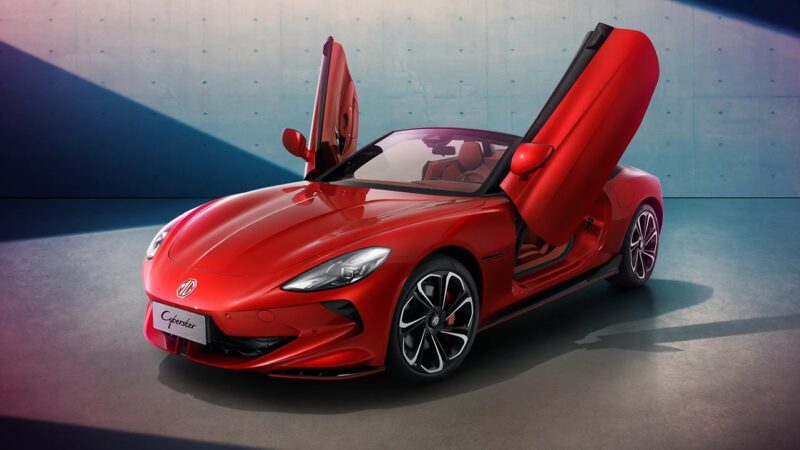
MG Motor Malaysia has announced the introduction of a new rear-wheel drive (RWD) variant of the electric roadster, the MG Cyberster.
With the arrival of the RWD variant, the MG Cyberster is now available starting at a price of RM299,900, while the Cyberster 4WD is priced at RM319,900.
In terms of specifications, the Cyberster RWD is powered by a rear-wheel drive electric motor that produces 340 PS and 475 Nm of torque.
It accelerates from 0 to 100 km/h in just five seconds, while the 77 kWh battery pack offers a driving range of up to 508 km.
The Cyberster RWD also supports DC fast charging, allowing the battery pack to be charged from 10% to 80% in just 38 minutes.
Other features include 19-inch alloy wheels and a Brembo braking system that provides control corresponding to its performance.
In terms of design, both the Cyberster RWD and 4WD variants showcase similar styling elements, including LED headlamps and a low silhouette that highlights a Kammback-style rear design.
The cabin of the Cyberster is inspired by motorsports, featuring leather and Alcantara finishes, sport seats with lumbar support, a 10.25-inch digital display, a seven-inch touchscreen, and two additional seven-inch screens.
Four attractive color options are available: Dynamic Red, Camden Grey, Inca Yellow, and English White.
MG Malaysia also offers a red soft top as a RM2,000 option in addition to the standard black roof.
Malaysians can take a closer look at the all-new MG Cyberster RWD during the “Dare to Love” roadshow series, taking place at 1 Utama (Old Wing) from July 9 to July 13.
Customers who place an order for the MG Cyberster during this period will receive a one-year unlimited JomCharge charging package, a complimentary 7kW AC wall charger, and a limited edition diecast MG Cyberster model.
The Malaysian Road Transport Department (JPJ) has announced a recall campaign affecting 8,322 units of vehicles from three brands.
Of this total, 5,123 units of the Kia Rio UB (model years 2010-2017) are being recalled due to a potential risk of short circuits that could cause a fire in the hydraulic electronic control unit (HECU).
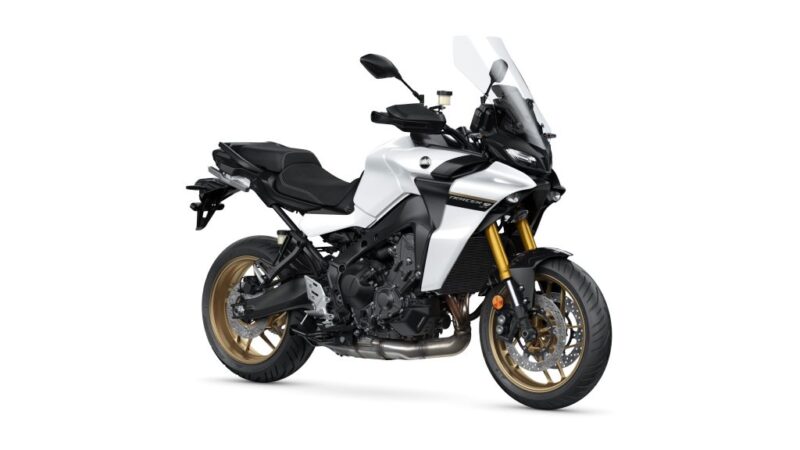
Meanwhile, 1,649 units of the Yamaha MT-09 and 1,369 units of the Yamaha Tracer 9 GT (models manufactured from November 2021 to February 2025) are also being recalled due to malfunctioning Throttle Position Sensor (TPS) components.
Additionally, 149 units of the 2023-2024 Tenere 700 are affected by clutch operation issues that could interfere with gear shifting.
Mercedes-Benz Malaysia has also announced a recall involving 32 units of various models (S-Class, GLC-Class, AMG SL, EQE, and EQS) due to improperly reinstalled fuse boxes that may compromise the system’s functionality.
All affected owners will be contacted by their respective vehicle manufacturers to arrange inspection appointment slots.
According to JPJ, any components involved in the recall will be replaced at no cost to the owners.
Chery Malaysia has officially launched the new B-segment SUV, the Chery Tiggo Cross 2025, for the local market.
Here is a brief overview of what you need to know about this competitor to the Proton X50 and Honda HR-V:
Dimensions
The Chery Tiggo Cross measures 4,318 mm in length, 1,830 mm in width, 1,670 mm in height, and has a wheelbase of 2,610 mm.
The cargo space is 380 liters, or 350 liters for the hybrid version.
As standard, the Chery Tiggo Cross 1.5T comes with 18-inch wheels, while the HEV version is equipped with 17-inch wheels.
Engine
The Chery Tiggo Cross is powered by a 1.5-liter turbo engine producing 147 PS and 210 Nm of torque, matched with a six-speed DCT transmission.
Fuel consumption is approximately 6.3 liters per 100 km.
The Chery Tiggo Cross HEV combines a 1.5-liter naturally aspirated engine with 96 PS and 120 Nm of torque with an electric motor providing 204 PS and 310 Nm of torque, a 1.8 kWh battery pack, and a hybrid DHT transmission.
The HEV version offers a 0-100 km/h acceleration time of 8.9 seconds with a fuel consumption rating as low as 5.4 liters per 100 km.
Suspension & Brakes
Both versions of the Chery Tiggo Cross are equipped with MacPherson strut front suspension and a torsion beam at the rear.
The braking system consists of vented discs for the front axle and solid rotors for the rear axle.
Exterior Features
As standard, the Chery Tiggo Cross includes features such as LED headlights, LED daytime running lights (DRL), LED taillights, roof rails, and a sporty roof spoiler.
Additionally, it features automatic lighting and a “Follow Me Home” function.
Interior Space
For the interior, the Chery Tiggo Cross offers features such as a dual 10.25-inch screen with Apple CarPlay and Android Auto support, a 540-degree surround camera system, six speakers, and a six-way adjustable driver’s seat with lumbar support.
Other features include ambient lighting, a 15W wireless smartphone charging slot, dual-zone automatic climate control, remote start assist, and keyless entry.
Safety Features
The Chery Tiggo Cross 1.5T is equipped with six airbags, passive safety assistance features (ESP, HAC, EBA, TCS), a tire pressure monitoring system (TPMS), and several advanced driver assistance systems (ADAS) including:
Lane Departure Warning (LDW)
Blind Spot Monitoring System (BSD)
Rear Traffic Cross Alert (RTCA)
Lane Keep Assistance (LDP)
Adaptive Cruise Control (ACC)
Front Collision Warning (FCW)
Autonomous Emergency Braking (AEB)
Meanwhile, the Tiggo Cross HEV has an additional airbag and comes with ADAS features such as:
Door Opening Warning (DOW)
Rear Collision Warning (RCW)
Rear Traffic Brake System (RTBS)
Lane Change Assistance (LCA)
Multiple Collision Braking (MCB)
Traffic Jam Assistance (TJA)
Integrated Cruise Control (ICC)
Intelligent Speed Assistance (ISA)
Pricing
Chery Tiggo Cross 1.5T is sold at a starting price of RM88,800, while the Chery Tiggo Cross HEV is offered at a special price starting from RM99,800, valid for the first 2,000 customers until September 30, 2025.
The writer had the opportunity to test drive several small Volvo models before, including the Volvo V40 and the Volvo XC40 and C40 crossovers.
This time, it’s the turn of the smallest production model ever created by the Scandinavian manufacturer, the Volvo EX30.
It comes exclusively as an electric crossover, with no internal combustion engine options available.
Despite being available only in an EV version, the EX30 is not a model to underestimate.
It has a package that can meet the needs of every user—offering style, practical space, and performance capable of outperforming larger SUVs, especially when you choose the Ultra Twin Performance variant, which we drove for this test.
Here’s a summary of our experience after enjoying the EX30, priced at RM228,888, for several days.
Exterior Appearance
Yes, in terms of design, it’s hard to deny that this is a Volvo SUV.
Just look at the headlights with Thor hammer-shaped LED graphics, the front end without a grille displaying the minimalist Volvo logo, and the rear lights—all reminiscent of the Volvo EX90.
Its size is indeed quite compact, measuring 4,223 mm in length, 1,837 mm in width, 1,555 mm in height, and a wheelbase of 2,650 mm, making it smaller than its siblings, the XC40 and C40.
However, small does not mean the EX30 is less practical; the details can be found in the next section.
Practicality
Volvo seems clever in providing a comfortable and practical cabin space in the EX30.
Due to the absence of a speaker system (it has only a Harman Kardon soundbar on the dashboard), there is ample space on the door panels.
The center console appears simple, but when the weather is warm, you can place a cool drink in a pull-out cup holder that can be hidden away when not in use.
Is that not enough? The floor console is also provided, along with additional hidden compartments for smaller items and space in the console tunnel.
The glove box is positioned in the center for easy access by both the driver and front passenger.
Although it looks small from the outside, the Volvo EX30 offers a cargo space of 318 liters, which can expand up to 718 liters when the second-row seats are folded flat in a 60:40 ratio.
This is large enough to accommodate items up to 1.64 meters long and 0.86 meters high.
If you need to head to Ikea for furniture shopping, you can refer to the storage guide graphic provided on the rear tailgate.
Still not enough? There’s a frunk that offers a capacity of seven liters.
Extremely Minimalist to the Point of Confusion
Want to know why Volvo can provide such extensive space?
It’s because Volvo has taken minimalist design to an extreme level, requiring me to ‘reset’ my mindset each time before starting my journey.
The window buttons have been relocated to the center—like cars from the old days—and there are only two buttons available.
You need to press an extra button to open the rear passenger window.
To control the temperature of the air conditioning system? Use the central display screen.
To adjust the steering settings and side screens? Again, it’s done through the central display.
Want to open the glove box? Yes, you also need to press the menu on the central screen.
Fortunately, to start my journey, I didn’t have to scroll through the central screen to switch to Drive mode. The gear shift lever is provided in the steering column, complete with cruise control mode (you only need to pull the lever down once after entering Drive mode).
Finishing Touches
One commendable aspect of the Volvo EX30 is its extensive use of sustainable materials within the cabin.
For example, the upholstery for the seats, dashboard, and doors is made from recycled materials such as denim, hemp, and a wool blend.
The use of these materials does not compromise the comfort factor throughout the driving experience.
What I particularly like is the seating that fully supports the lower legs, along with the comfortable armrest panel on the door.
However, if you look closely, the plastic finishes in certain areas seem inconsistent with the luxurious image Volvo is trying to portray in the EX30. After all, it is made from recycled plastic.
Agile Driving on the Road
The Ultra Twin Performance variant of the EX30 comes equipped with two electric motors that produce 422 hp and 543 Nm of torque, allowing it to accelerate from 0 to 100 km/h in just 3.6 seconds.
With its small, agile body package, the EX30 has no trouble outperforming any sports car out there.
Its suspension tuning is excellent, effectively absorbing all the imperfections found on the road and providing a delightful driving experience, especially when encountering curves.
To be frank, I believe the suspension tuning in the EX30 is significantly better compared to its bigger siblings, the XC40 and C40.
Most of the time, the power delivered by the rear motor is sufficient, and I hardly relied on the Performance mode for the AWD system (which has to be accessed through the central screen).
The NMC 69 kWh battery pack allows you to achieve an impressive driving range of 450 km, making it well-suited for urban driving.
The steering response is also quite good, ensuring that the EX30 stays precisely on its intended path.
Unexpected Off-Road Capability
Clearly, the Volvo EX30 has its unique strengths, making it suitable as an everyday vehicle.
However, one unexpected advantage I discovered is the comfort it offers when the Volvo EX30 is taken off-road (more appropriately, soft-road).
I admit that this EV is already quite comfortable on paved roads, but when the tires hit gravel paths, the EX30’s suspension system effectively filters out all the roughness of unpaved roads.
It’s perfect for driving across rough terrain, allowing you to enjoy outdoor weekend activities like picnicking by the river or camping on the beach.
Given this impressive potential, it’s no surprise that Volvo showcased the EX30 Cross Country version earlier this year for those who seek a more rugged driving experience in this compact EV.
Will the EX30 Cross Country be realized in the future? We can only wait and see what plans Volvo has for this electric SUV.
Charging
The 69 kWh NMC battery supplied in the Volvo EX30 supports AC charging at 11 kW, taking eight hours for a full charge.
If you’re short on time, simply charge the EX30 at any fast-charging station, as this EV supports DC charging up to 153 kW.
In just half an hour, the 69 kWh battery can be charged from 10% to 80% state of charge.
Alternatively, you can visit any shopping center with fast-charging facilities, allowing you to shop for your desired items while the vehicle charges.
One feature I particularly like about this EV is the Google-based mapping system that displays the estimated battery state of charge upon arrival at your destination or after a round trip.
Safety
As a Volvo, the EX30 is equipped with nearly comprehensive safety features in this compact package.
These include adaptive cruise control, traffic jam assistance, collision avoidance assistance, autonomous emergency braking, lane keeping assistance, lane departure warning, blind spot monitoring, and rear cross-traffic alert.
Ironically, it also features a driver attention monitoring system that alerts the driver if it detects a lack of attention on the road.
What can you expect from a car that crams all sorts of settings and functions into a single 12.3-inch screen?
Essential information such as speed, battery state of charge, traffic light notifications, and gear position (RND) is displayed at the top of the screen.
During driving, I find myself looking to the left to ensure that this EV is being driven at the speed allowed by law.
Or every time my left finger pushes the lever to activate the turn signal.
Or each time I feel the cabin temperature is too cold and want to adjust the air conditioning.
It would be more pleasant if the EX30 had a separate screen behind the steering wheel, so that eye movement would be minimized compared to having to rely entirely on the central screen.
Directly installing a head-up display screen would probably be more practical.
Conclusion
For an urban-use EV, I find the Volvo EX30 has a solid foundation and an attractive design, making it suitable for young people with active lifestyles.
That is, if you don’t mind the overly minimalist dashboard layout presented in this Volvo.
Try taking the time to get used to it, and it won’t be a major issue.
However, it can be somewhat problematic for old-school drivers like me, who are still adjusting because we’re used to physical buttons and controls.
In terms of driving, the EX30 is certainly suitable as an everyday car, enjoyable to drive, and, most importantly, it does not compromise practicality and safety elements, which are the primary foundations of the Volvo brand.
However, if you aren’t concerned about all-wheel-drive performance or the panoramic glass roof, you can opt for a lower variant (priced from RM189k) to enjoy a longer driving range.
Specifications of the Volvo EX30 Ultra Twin Performance (RM228,888)
Suzuki Motor Corporation has announced the arrival of two new neo-retro motorcycle models in the 800 cc class, namely the GSX-8T and GSX-8TT, for the global market.
Although both models utilize the more modern GSX-8 platform, they can be distinguished through their styling, where the GSX-8T draws inspiration from the classic T500 motorcycle.
It features a round LED headlight housing, a uniquely designed fuel tank and seat, as well as handlebars complete with end-mounted mirrors.
Meanwhile, the more muscular design of the GSX-8TT takes its inspiration from machines of that era, such as the Yoshimura GS1000.
The GSX-8TT retains the same headlight housing as the GSX-8T model; however, this section is refined with angular fairings, followed by a radiator guard and an engine under-cowl.
In terms of power, both the GSX-8T and GSX-8TT are powered by the same 776 cc parallel-twin engine found in any of the GSX-8 models, delivering 80 hp at 8,500 rpm and 77 Nm of torque at 6,800 rpm.
Additionally, they are equipped with a cross balancer component designed to reduce vibrations.
Both motorcycles feature a steel frame and an aluminum swingarm, KYB upside-down front forks, KYB rear shock absorbers, and a Nissin braking system consisting of dual 310 mm rotors at the front and a single 240 mm rotor at the rear.
The fuel tank has a capacity of 16.5 liters, while the seat height is as low as 810 mm (815 mm for the GSX-8T model).
As standard, the GSX-8T and GSX-8TT come equipped with electronic aids such as a bidirectional quickshifter, Suzuki Easy Start, traction control, Suzuki Drive Mode Selector (SDMS), and Low RPM Assist.
The full-color TFT display shows all the important information required by the rider, including the RPM meter, speed, and gear position.
In June 2025, Proton reported total sales of 11,069 units, bringing its year-to-date (YTD) sales figure to 72,156 units.
This positions Proton as the second-largest brand in the industry, despite a 21 percent decline in total industry volume (TIV) to 53,500 units compared to 68,007 units in May.
Proton’s market share for June is estimated at 20.7 percent, reflecting an increase of 1.1 percent compared to the previous month and up 1.2 percent from the YTD figure of 19.5 percent.
According to Proton, the decline in automotive sales in June was influenced by external factors such as increased tensions in the Middle East and the expansion of the Sales and Service Tax (SST), which negatively affected buyer sentiment.
So far, the Proton Saga continues to top the chart as Proton’s best-selling car with 5,206 units sold, followed by the Proton X50 (1,657 units), Proton S70 (1,402 units), Proton Persona (1,171 units), Proton X70 (533 units), Proton Iriz (288 units), and Proton X90 (174 units).
Meanwhile, the only EV model, the Proton e.MAS 7, concluded the first half of 2025 with 4,253 units sold in the domestic and export markets, achieving a 24 percent market share.
Proton’s vehicle exports surged by 56.8 percent to 414 units in June 2025 compared to June 2024, resulting in a total export figure for the first half of the year that increased by 39.9 percent to 2,250 units.
Proton anticipates that these figures will continue to rise as the Proton e.MAS 7 model is introduced in more countries in the future.
Returning to the local market, Proton is expected to launch the facelifted X50 model this July, featuring changes in design, engine specifications, and enhancements to the ADAS 2.0 system.
Hap Seng Trucks Distribution (HSTD), the authorized distributor of Mercedes-Benz Vans in Malaysia, recently launched the new electric minivan model, the 2025 Mercedes-Benz EQV 300.
Offered in a single Avantgarde variant, the EQV 300 is powered by a 204 PS electric motor with a torque of 365 Nm, paired with a 90 kWh battery pack.
With a full charge, the EQV 300 can travel up to 418 km.
The EQV 300 also supports AC charging at 11 kW, allowing for a 10-hour charging time, as well as fast DC charging at 110 kW, in which the battery pack can be charged from 10% to 80% in just 45 minutes.
This seven-seater minivan is equipped with LED lighting units, 17-inch alloy wheels, a panoramic glass roof, as well as an electric tailgate and sliding doors.
The cabin features dual 12.3-inch MBUX display screens, Apple CarPlay and Android Auto support, a Burmester audio system, automatic climate control, ambient lighting with 64 color options, Lugano leather upholstery, and wireless smartphone charging facilities.
In terms of safety, the EQV 300 is equipped with features such as a 360-degree camera, Hill Start Assist (HSA), a blind spot monitoring system, a tire pressure monitoring system, Active Distance Assist Distronic, Active Brake Assist, and airbags covering the front, side, and all A-D pillars.
The Mercedes-Benz EQV 300 Avantgarde is priced starting from RM450,000.
Every purchase includes a free Wallbox charging package, a complimentary three-year maintenance package, and a special RM10,000 booking rebate.
As standard, the EQV 300 comes with a two-year warranty (or a mileage limit of 200,000 km, whichever comes first), and a battery warranty of up to eight years or 160,000 km, whichever comes first.
Hap Seng Trucks Distribution will also hold a roadshow at Bangsar Shopping Centre from July 21 to July 27, where Malaysians can get a closer look at the EQV 300 model.
Malaysia’s largest annual Kustom &Counter Culture event, Art of Speed, is set to once again shake the grounds of the Malaysia Agro Exposition Park, Serdang (MAEPS) on July 26-27 this year with the theme “Kustom Ada Gaya”.
As always, AOS will feature several special guests, including Shige Suganuma, Hiro “Wildman” Ishii, and Hey Murakami (Mooneyes), Brendon Vetuskey (Hot Wheels), Mark Hawwa (The Distinguished Gentleman’s Ride Australia), along with various custom motorcycle builders from around the world.
Three modified motorcycles from abroad will also be on display: the BMW R18 “Ground 0” by Yuichi Yoshizawa from Custom Works Zon, a Harley-Davidson Knucklehead chopper by Masa Sugihara (Luck MC), and a Harley-Davidson Flathead by Ben Forster (Benflathead).
Additionally, AOS has announced five new collaborations:
AOS x Hot Wheels Collection – the first Porsche 911 left & right convention cars in Southeast Asia
AOS x FK – the latest shoe design
AOS x High Cultured – a local streetwear brand
AOS x XOCKS
AOS x Mooneyes – celebrating a decade of excellence
AOS is also introducing the World of Wheels (WOW), a special Show & Shine segment that will provide high-quality photography experiences for vehicle owners, managed by NoEqual.co.
It is reported that more car and motorcycle entries will be accommodated for AOS 2025, spanning classic to contemporary categories.
Winners of Best of Show in both the car and motorcycle categories will qualify to participate in The 33rd Annual Yokohama Hot Rod Custom Show in December 2025.
As always, AOS wouldn’t be complete without Hot Wheels, with Hall C set to be lively with the 3rd edition of the Hot Wheels Collectors Convention Malaysia (HWCCM), bringing together Hot Wheels enthusiasts from across the country.
A variety of exciting activities will include rare Hot Wheels displays and collections, a Swap Buy & Sell event, sharing sessions, and HW custom competitions.
Not to be missed, a lineup of fantastic artists will light up the SoundCircus Takeover 2025, including Noh Salleh, Ruffedge, Romantic Echoes, and Restore Iboe, all taking place in Hall A.
For a limited time, AOS is offering Early Bird tickets for RM35.00 (Weekend Pass) and RM40.00 (Sunday Pass) while stocks last. Visitors can also obtain VIP Parking valet tickets for RM30.00, allowing them to park on the Ground Level, Hall D, valid for one day of admission.
Malaysia’s Leading Automotive News | ENGEAR ENGLISH